Retail News CRM

Tag: SK Telecom

  • SK Telecom more than doubles Q2 profit

    SK Telecom more than doubles Q2 profit

    SK Telecom more than doubled its net profit during the second quarter due to factors including a record performance at chipmaker SK Hynix.

    The operator reported a net income of 620.5 billion won ($555.06 million), up 113.2% year-on-year. Revenue meanwhile grew 1.8% to 4.35 trillion won and operating income increased 3.9% to 423.3 billion won.

    But it was a challenging quarter for the operator’s core telecommunications business, with operting income on a non-consolidated basis falling 3.3% year-on-year to 462.3 billion won due to increased marketing expenses and depreciation costs from the 2.6-GHz spectrum acquired last year.

    Despite this non-consolidated revenue edged up slightly to 3.11 trillion won, due to increased mobile data usage and increased sales in new business areas including IoT solutions.

    Revenue from the SK Broadband division meanwhile increased 1.9% year-on-year to 730.1 billion won and the unit reported a record-high quarterly operating income of 31.6 billion won.

    Internet commerce arm SK Planet meanwhile posted a 5.4% increase in sales to 275 billion won, but still recorded an operating loss of 35.1 billion won.

    “Despite the challenges in the mobile telecommunications market, SK Telecom posted improved results due to the strengthened performance of its main subsidiaries,” SK Telecom CFO Ryu Young-sang commented.

    “SK Telecom will become a global leading ICT company by achieving meaningful growth in media and IoT, while maintaining leadership in the mobile network operations business.”

    The company is also planning to connect its AI platform to other services, including mobile services, media, commerce and its T Map mobile navigation service to generate differentiated big data it can use to provide customized products and services.

  • SK Telecom making quantum random number generator

    SK Telecom making quantum random number generator

    SK Telecom has developed a prototype of an ultra-compact quantum random number generator (QRNG) chip configured with entropy source and a deterministic random bit generator (DRBG).

    A QRNG generates true random numbers without any kind of pattern, meaning that it is ideal for use in cryptography.

    However, so far, the cost and size of QRNGs currently on market have prevented widespread adoption.

    With the successful development of an ultra-small QRNG chip measuring 5mm by 5mm, SK Telecom expects that it will soon be able to embed QRNG to a wide variety of IoT products, including autonomous vehicles, drones and smart devices, to dramatically enhance the level of security for IoT services.

    Although the price of each QRNG chip has not been set yet, the company said that it will be the lowest price ever for a QRNG.

    Meanwhile, SK Telecom is also developing a QRNG in the form of USB and PCIe. While the QRNG chip has to be embedded from the beginning of the product development, QRNG in the form of USB or PCIe can be simply connected to any product already on market to provide genuine randomness.

    “Understanding the importance of data and data security, SK Telecom has focused on developing quantum cryptography technologies to guarantee secure transmission of data in areas including artificial intelligence (AI), IoT and autonomous driving,” said Park Jin-hyo, SVP and head of Network R&D Center of SK Telecom.

    “We will continue to work with partners, both home and abroad, to accelerate the popularization of quantum cryptography and strengthen our presence in the global market,” said Park.

  • SK Telecom conducts 5G trials in 3.5-GHz

    SK Telecom conducts 5G trials in 3.5-GHz

    SK Telecom, Samsung and Nokia have jointly conducted a 5G trial demonstration using the 3.5-GHz frequency band.

    The operator worked with Samsung to develop a 3.5-GHz 5G end-to-end network comprising a 5G virtualized core, virtualized RAN, distributed baseband and radio unit and test device based on the 3GPP 5G new radio (NR) standards established so far.

    The 3GPP has standardized the key physical component technologies of the 5G air interface. The companies’ trial 5G NR system has been developed based on this specification, incorporating innovations including subcarrier spacing of 60 kHz, transmit time interval (TTI) length of 0.25ms to reduce latency and low-density parity-check channel coding.

    SK Telecom has also collaborated with Nokia to co-develop 5G base station equipment and test devices for 3.5-GHz spectrum, achieving Gbps level throughput during a field trial near the operator’s Bundang Office Building.

    The trial also involve the measurement of link quality depending on the distance between a moving vehicle and base station to generate data to be used in the design of optimal 3.5-GHz 5G networks.

    SK Telecom plans to deploy commercial networks using both 28-GHz or another above 6-GHz frequency and the 3.5-GHz band, using the former in highly-concentrated areas and the latter to achieve wide area coverage.

    “With the successful demonstration of 5G communications using the 3.5GHz spectrum, SK Telecom has secured all key technologies for building commercial 5G networks using 3.5-GHz and 28-GHz frequency bands,” SK Telecom SVP and head of network R&D Park Jin-hyo said.

    “We will maintain our leadership in 5G by enhancing our technologies for both above 6-GHz and below 6-GHz frequencies, while playing an active role in the standardization and commercialization of 5G technologies.”

  • SK Telecom sets distance record with quantum repeater

    SK Telecom sets distance record with quantum repeater

    SK Telecom has announced it has developed and successfully tested a quantum repeater over a 112km pilot fiber network.

    The repeater can dramatically extend the distance of quantum communication, and could pave the way for the application of quantum cryptography to commercial LTE networks.

    Quantum cryptography is the most secure form of communications equipment known that cannot be broken with any existing hacking technology. But the previous maximum transmission distance of 80km has been viewed as the largest obstacle to the commercialization of the technology.

    SK Telecom said its new Trusted Repeater can dramatically extend the distance of quantum key distribution (QKD), and has set a new QKD distance record of 112km. For example, the company would be able to transmit quantum keys from Seoul to Busan, at a distance of 460km, by installing five repeaters.

    The operator plans to work with global partners to apply quantum cryptography solutions including the repeater to commercial networks worldwide.

    “SK Telecom has opened a new chapter in the field of quantum technologies by developing the Trusted Repeater, an enabler for long-distance quantum communication,” said Park Jin-hyo, senior vice president and head of network technology of SK Telecom’s R&D Center.

    “SK Telecom will continue to focus on developing key quantum cryptography technologies and building a related ecosystem.”

    The company has been developing quantum cryptography technologies since 2011 at its Quantum Tech lab. In February, SK Telecom entered an agreement with Nokia to cooperate on the quantum cryptography business, and jointly established the Quantum Alliance with Deutsche Telekom.

  • SK Telecom to build O2O platform with Bluebell

    SK Telecom to build O2O platform with Bluebell

    SK Telecom has signed a memorandum of understanding (MOU) with Bluebell Korea to cooperate on bringing cutting-edge ICT to the luxury retail industry.

    Bluebell Group is a leading operator of luxury brands in Asia, which also specializes in consulting, and has eight branches in Asia distributing products from over 100 brands. Bluebell Korea is in charge of distributing luxury goods to duty free shops and shopping malls in Asia.

    Under the MOU, SK Telecom and Bluebell Korea will work together to build an O2O (offline to online) platform to enhance travelers’ shopping convenience; bring innovative changes to luxury goods stores and distribution channels; and develop luxury goods based on ICT.

    SK Telecom plans to apply its industry-leading ICT – including its cloud-based digital signage platform “Smart Signage” and IoT-based location tracking solution – to luxury brand stores and goods so as to increase customer loyalty and sales of luxury brands.

    The luxury industry has so far strictly adhered to the craftsmanship of products and traditional sales channels – that is, offline stores. However, a slowdown in market growth coupled with the rise of young, tech-savvy consumers who are taking up a growing share of luxury spending is driving new changes in the conservative industry.

    “Through the MOU with Bluebell Korea, SK Telecom expects to bring innovative changes to the luxury market through the application of its state-of-the-art ICT including IoT technologies,” said Cha In-hyok, EVP and head of IoT business division at SK Telecom.

    “The convergence between ICT and the luxury retail industry will not only create new business opportunities for both parties but also deliver enhanced value and experience for customers.”

  • SK Telecom, Nokia team on quantum cryptography

    SK Telecom, Nokia team on quantum cryptography

    SK Telecom and Nokia have teamed up to conduct joint research and development in the field of quantum cryptography for network transport.

    The operators are collaborating to achieve interworking between SK Telecom’s Quantum Key Distribution System (QKD) and Nokia’s next-generation optical transport system by the second half of 2017.

    The first prototype from the collaboration – the Quantum Transport System – was shown off at Nokia’s booth at Mobile World Congress 2017 last week.

    SK Telecom said quantum cryptography is expected to replace existing security mechanisms in all areas at risk of data hacking, including national defense, finance, autonomous vehicles and the IoT.

    In line with this projection, SK Telecom and Nokia have also agreed to cooperate in the area of quantum random number generation, which will be required to apply quantum cryptography to IoT devices.

    SK Telecom has developed a quantum random number generator within the world’s smallest CMOS Image Sensor (CIS) based silicon, measuring just 5x5mm. The company expects to tape out engineering samples of the chip in the second quarter and commercially launch it by the end of the year.

    “Since opening Quantum Tech Lab in 2011, SK Telecom has been making constant efforts to develop quantum cryptography technologies,” SK Telecom CEO Park Jung-ho said.

    “Based on the cooperation with Nokia, SK Telecom will create a new paradigm and ecosystem in the field of ICT.”

  • 11street Thailand launched by SK Planet

    11street Thailand launched by SK Planet

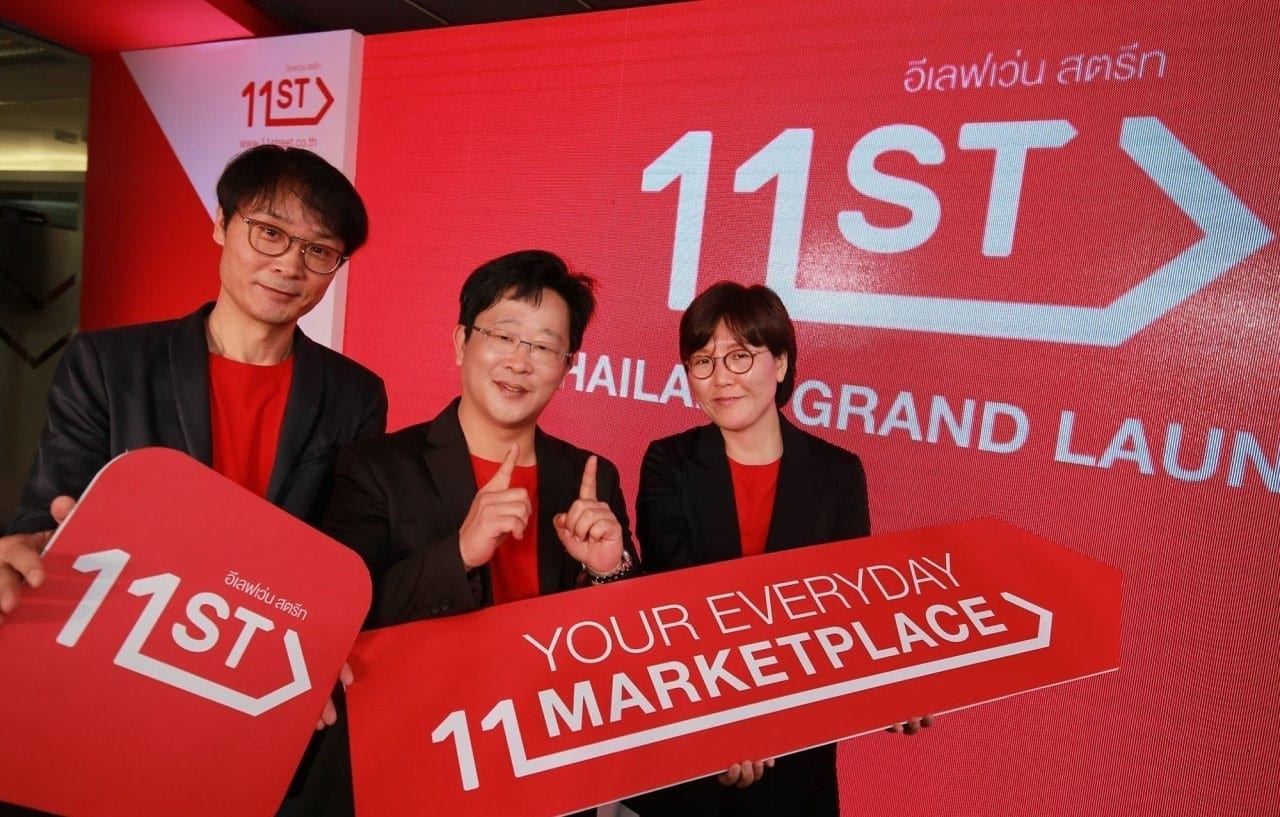
    Korean-headquartered online marketplace 11street has launched in Thailand.

    Parent company SK Planet says 11street Thailand is the first Korean-owned eCommerce marketplace to open in the Southeast Asian nation.

    An opening ceremony was held at Bangkok’s CentralWorld shopping centre this week, and prominent advertising livery has appeared on BTS stations to promote the brand.

    Korean actor Song Joong-ki and Thai actress Mew Nittha, who feature in marketing for the business, attended the launch event.

    Thailand is the fourth overseas market for SK Planet, a division of SK Telecom. It follows Turkey, Indonesia and Malaysia.

    11Street Thailand will offer “millions of trendy high-quality products at competitive prices,” the company said.

    “11Street will be a leading eCommerce firm that promotes the Korean wave in retail industry,” 11Street Thailand CEO Jeon Hong-cheol said. “We expect our entrance to Thailand will stimulate Korean manufacturers and ICT firms to make their presence felt in Southeast Asian markets.”

  • SK Telecom, CAT to launch IoT network in Thailand

    SK Telecom, CAT to launch IoT network in Thailand

    SK Telecom has teamed up with Thai state-owned operator CAT Telecom for a project to deploy a LoRa-based IoT network and services in Thailand.

    Under the agreement, the operators plan to deploy a LoRa-based IoT pilot network in Bangkok and Phuket and launch IoT pilot services from April.

    SK Telecom will be responsible for deploying LoRa-based IoT networks in central areas of Bangkok and the entire Phuket province. The company has also been contracted to provide consulting services.

    In Phuket, SK Telecom and CAT will initially launch a LoRa-based vehicle location tracking service, and plan to follow this up with more IoT services including smart metering and smart street lighting services.

    In central Bangkok, the companies plan to offer an IoT-based location tracking service for tourists, designed to prevent children and the elderly from going missing near the Grand Palace during the mourning period recently deceased king Bhumibol Adulyadej.

    “SK Telecom will contribute to the growth of the ICT industry in Thailand by working together with CAT Telecom in the area of IoT, while nurturing a new ICT ecosystem by cooperating with many related companies,” SK Telecom EVP and head of IoT Cha In-hyok said.

    “Going forward, SK Telecom will collaborate with CAT Telecom in more areas to create more success stories in Thailand and other Southeast Asian markets.”

    SK Telecom and CAT also announced that Tree Pay, the joint venture established by the two companies as well as Korean digital payment company NHN KCP, has launched a payment gateway service in Thailand.

    Tree Pay will combine technologies from SK Telecom and NHN KCP to develop an innovative payment gateway supporting online, offline and mobile payment. CAT will meanwhile work with the Thai government to develop business opportunities for the new venture.

  • SK Telecom Q3 profit falls 15.6%

    SK Telecom Q3 profit falls 15.6%

    SK Telecom has reported a 15.6% year-on-year decline in net profit for the third quarter to 322.1 billion won ($281 million), due to factors including the impact of Samsung’s Galaxy Note 7 recall.

    Operating revenue fell 0.4% to 4.24 trillion won due to a decrease in revenues at retail unit PS&M following the recall. ARPU also declined 2.1% year-on-year and 0.8% sequentially to 35,471 won.

    But revenue from SK Telecom and subsidiaries SK Broadband and SK Planet all increased quarter-on-quarter, and net income grew 10.7% over the same period due to equity-method income from semiconductor division SK Hynix.

    The operator added around 301,000 new subscribers during the quarter, taking its total to nearly 29.5 million. Of these, over 20.5 million are LTE subscribers, a penetration rate of 69.8% Monthly churn decreased by 0.1 percentage point to 1.4%.

    SK Telecom revealed that its mobile navigation T Map grew to reach 9.18 million monthly users by the end of September, around three months after its launch

    Looking ahead, the operator said it is focused on strengthening its core competitiveness as a mobile network operator, while using its nationwide LoRa and LTE-M IoT networks to deploy services that enhance customer convenience.

    “We expect that our strategy to fully open up major platforms including T Map and T Phone will lead to a successful outcome in the mid-to long-term,” SK Telecom CFO and head of strategy and planning Hwang Keun-joo said.

    “SK Telecom will accelerate its transformation into a next-generation platform company and keep developing customer-oriented products and services.”

  • SK Telecom signs MOU with Telkom Indonesia

    SK Telecom signs MOU with Telkom Indonesia

    SK Telecom today announced that it signed a Memorandum of Understanding (MOU) with Telkom Indonesia (PT Telekomunikasi Indonesia), the largest telecommunications services company in Indonesia, to cooperate in new business areas including IoT, media and smart products/Lifeware.

    The MOU signing ceremony took place at Telkom headquarters located in Jakarta, Indonesia on May 12, 2016, and was attended by Lee Eung-sang, Executive Vice President and Head of Global Business Division of SK Telecom, and Indra Utoyo, Chief Innovation Strategy Officer of Telkom.

    Under the MOU, the two companies will work together to develop new business opportunities in the areas of smart city and IoT services. To this end, SK Telecom plans to introduce to Telkom its IoT platform ThingPlug and share its knowhow in deployment and operation of LoRa networks with the aim to jointly develop IoT technologies and services that are tailored to the Indonesian market/customers. Building on this, the two companies will also discuss the idea of building a joint venture for their IoT business within the next two years.

    SK Telecom and Telkom also agreed to collaborate in the development of cloud-based TV services/solutions for Telkom customers by utilizing SK Telecom’s media solution ‘Cloud Streaming.’

    Furthermore, the two companies agreed to work together to introduce SK Telecom’s laser pico projector ‘UO Smart Beam Laser’ to the Indonesian market. Going forward, SK Telecom plans to join hands with PINS, Telkom’s distribution subsidiary, to launch more UO-branded products – including UO Smart Beam 2 (pico projector) and UO Linkage (portable Hi-Fi audio) – in Indonesia.

    “Through the MOU, SK Telecom will work closely with Telkom to develop mutually-beneficial business opportunities in diverse areas including IoT, smart city and media,” said Lee Eung-sang, Executive Vice President and Head of Global Business Division of SK Telecom. “Building on this partnership, the two companies will continue to make joint efforts to expand their presence beyond the Indonesian market.”

  • Cellphone makers switch to budget handsets after law change

    Cellphone makers switch to budget handsets after law change

    South Korea’s mobile phone makers are breaking away from their premium-oriented smartphone lineups to churn out cheaper phones as consumers are more price-conscious due to tougher subsidy rules, industry watchers said Wednesday.

    Samsung Electronics Co. recently rolled out its latest mid-end phone, the Galaxy A8, at an about 20 percent discounted price compared with the flagship Galaxy S6, and the budget phone Galaxy J5 for less than 300,000 won (US$259).

    It also started selling the Galaxy Folder, with a price tag similar to the J5 model, which is designed to woo older generations, who need fewer features.

    Samsung’s move came after the Galaxy Grand Max, a low-end model that was released in January, became a smash hit in Korea, with 700,000 units sold so far, watchers said.

    LG Electronics Inc., Samsung’s smaller rival, has also been bolstering its budget phone lineup, unveiling five new models this year, including the LG Volt, the G style and the LG Bello II.

    Industry watchers said such a shift in their lineup strategy is attributable to the enactment of a new law in October last year, which caps the phone subsidies that mobile carriers can provide to retail stores at 330,000 won.

    Although the law was revised to restrict excessive incentives that had led to cutthroat competition, it has prompted consumers to look for cheaper phones because of the reduced subsidies.

    As part of a bid to diversify portfolios, SK Telecom Co., the top mobile carrier in the country, is apparently mulling launching a cellphone rental service in a joint project with its information technology service unit.

    If the rental business kicks off in Korea in fall as widely forecast, it will bring a significant change in the market landscape as it will be an unprecedented move and affect other rivals, market watchers said.

    Skeptics, however, played down its growth potential because the device has more personal elements like banking details and photos compared with other common rental products.

  • 7-Eleven Smart Convenience Store

    7-Eleven Smart Convenience Store

    Customers of a 7-Eleven convenience store in South Korea can literally go dancing in the aisles…

    The new 7-Eleven Smart Convenience Store allows customers to enjoy virtual reality based on IT technologies. On the second floor of its Chinese Embassy store in Seoul’s Myeongdong, 7-Eleven placed six smart tables where customers can enjoy web surfing, gaming and watching Youtube videos in partnership with SK Telecom.

    Among the six tables, one features virtual reality technology. If a customer pushes a button saying “Together with Hyeri” (a member of K-pop girl group Girl’s Day), he or she will appear on a wide screen in the floor standing together with Hyeri, a spokesmodel for 7-Eleven.

    Customers can dance with Hyeri, and even take photos with the idol star. The photos will be forwarded directly to the customer’s smartphone.

  • SK Telecom Wins Most Innovative Telecom Project Award

    SK Telecom Wins Most Innovative Telecom Project Award

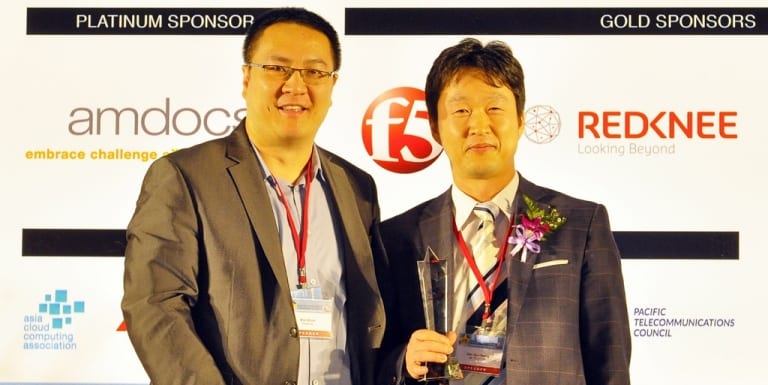
    SK Telecom won the Most Innovative Telecom Project (MITP) award on May 20 from the Telecom Asia Award (TAA) held in Jakarta, Indonesia, the company said.

    SK Telecom could win the Most Innovative Telecom Project award because TAA recognized the company’s continuous efforts for LTE technology development, particularly the commercialization of the “3 band LTE-A,” which provides a speed of 300Mbps maximum, SK Telecom said.

    TTA is held by Telecom Asia, a Hong Kong-based media company specializing in information technology, SK Telecom said. TTA has been awarding Asian companies for providing communication services or technologies, SK Telecom said.

    Park Jin-hyo, head of the network technology institution of SK Telecom, said that the company will continually innovate its network technology, with ambitions of being the world’s representative mobile communication company.

  • New know-how guarantees buying revolution

    New know-how guarantees buying revolution

    Think about purchasing with no trolley. New know-how on show in Korea this week demonstrates how shoppers can buy groceries in a grocery store, scan the barcodes of the merchandise they need to purchase and have them delivered at house at their comfort.

    The idea was mentioned by an SK Telecom official on the World IT Present 2015, the most important IT exhibition in Korea, held at Coex .

    Korean cellular carriers are specializing in cubicles the place guests can expertise day by day life with future communications applied sciences.

    For instance, SK Telecom, the most important cellular service in Korea, ready a mannequin house the place guests can expertise its “Sensible Residence Service” app, which lets customers activate and off numerous units present in abnormal homes like door locks, dehumidifiers, boilers and fuel valves. They will regulate lighting of their houses a thoughts boggling 36,000 methods.

    SK additionally recreated a big grocery store as a part of its exhibit. Within the demo retailer, guests can expertise its “Sensible Shopper” app, which helps customers make straightforward purchases by scanning product barcodes.

    To not be outdone, KT unveiled its GiGA Path know-how that mixes Wi-Fi and long-term evolution networks to help cellular connections which are 4 occasions quicker than these provided by present know-how. The corporate pledged to be the primary on the planet to unveil a 5G cellular community, with a deliberate launch in time for the 2018 PyeongChang Winter Olympic Video games.

    At SME cubicles, corporations exhibited promising know-how reminiscent of three-dimensional printers, versatile joint robots, drones and wi-fi recharging techniques for cellular units and digital automobiles.

    In the meantime, Samsung Electronics and LG Electronics launched their newest TV and different IT merchandise. Samsung exhibited ultra-high-definition (SUHD) televisions and new flagship smartphones together with the Iron Man restricted version of the Galaxy S6 Edge. LG displayed natural light-emitting diode (OLED) televisions, its newest flagship handset and smartwatches.

    A customer to the present stated, “With the exhibition, we will think about our future lives. Nevertheless, it’s a pity that it couldn’t differentiate itself from the Cellular World Congress held earlier this yr.”

  • Google Play Korea faces telco challenge

    Google Play Korea faces telco challenge

    Korea’s three largest mobile network operators – SK Telecom, KT and LG Uplus – are to merge their individual app stores to create a new destination One Store.

    The combining of the offers of T Store, Olleh Market and U Plus Store will represent a significant challenge to the Google Play Korea app store.

    The three mobile operators invited 350 app developers and mobile business representatives to the introduction of the unified platform, which is scheduled to be launched in May, at SK Planet’s Supex Hall in Pangyo on March 20.

    Korean developers have had a difficult time registering their apps to the carriers’ three stores, as each had different policies and procedures. These issues should be mitigated with the launch of One Store, and app operators will also benefit from an integrated data management system that will provide information related to customers, downloads and sales.

    App users will also benefit from One Store, as they’ll be able to preserve their purchase history even if they change carriers, and access unified customer app reviews.

    Lee Jae-hwan, the head of SK Planet’s Digital Content department, said the One Store project has been initiated to create an app store that can compete with Google Play. Representatives of the three mobile operators also mentioned that cost savings resulting from the operation of the unified system would be used to invest in Korean developers’ IT projects.

    It was also announced that T Store’s most recent software development kit (SDK) will be fully compatible with the new One Store SDK.