Retail News CRM

Tag: Smartphones

  • China’s Smartphone Market Sees Contraction; Huawei Reclaims Top Spot Amidst Decreased Shipments

    China’s Smartphone Market Sees Contraction; Huawei Reclaims Top Spot Amidst Decreased Shipments

    After six consecutive quarters of growth, China’s smartphone market showed signs of contraction during the second quarter of this year. The International Data Corporation (IDC) reported a decrease in shipments from the top four out of five brands, attributing this to a dip in consumer demand.

    Apple, which holds the fifth position in China’s smartphone market, experienced a 1.3% year-on-year decrease in shipments in the second quarter, equating to a shipment of 9.6 million units. While still marking a decline, this represents a notably smaller decrease than the 9% drop witnessed in the first quarter of the year. This is believed to be due in part to adjustments in the pricing of specific iPhone 16 and 16 Pro models, which are eligible for government subsidies.

    Despite this, Apple’s share of the market increased, growing from 13.7% in the March quarter to 13.9% in the June quarter. However, this still marks the eighth consecutive quarter in which Apple’s market share has declined.

    Huawei, the Shenzhen-based technological powerhouse, regained its position at the top of the market after more than four years, seizing an 18.1% market share. Huawei shipped approximately 12.5 million phones during the second quarter, a 3.4% year-on-year decrease.

    Xiaomi, holding the fourth position in the market, was the only smartphone manufacturer to record an increase in shipments during the last quarter. Vivo, standing at second place, witnessed the most significant decline in the top five brands, with shipments decreasing by 10.1%.

    Overall, China’s smartphone shipments fell by 4.0% year-on-year to 69 million units in the second quarter. This decline came as the momentum spurred by government subsidies began to falter amid more wide-ranging economic weaknesses.

    Senior research analyst at IDC, Arthur Guo, commented on the broader economic challenges faced by the industry, stating that consumer confidence remains low. Guo suggested that a significant boost in smartphone demand is unlikely in the near future and projected a more multifaceted landscape for the market in the second half of the year.

    Questions & Answers

    What was the rate of decline in China’s smartphone market during the second quarter?
    The rate of decline in China’s smartphone market during the second quarter was 4.0%.

    Which brand reclaimed the top spot in China’s smartphone market?
    Huawei regained the top position in China’s smartphone market after over four years.

    What was the only brand among the top five to record growth in shipments during the last quarter?
    Xiaomi was the only brand among the top five to record growth in shipments during the last quarter.

  • Asian smartphone sales still lead world

    Asian smartphone sales still lead world

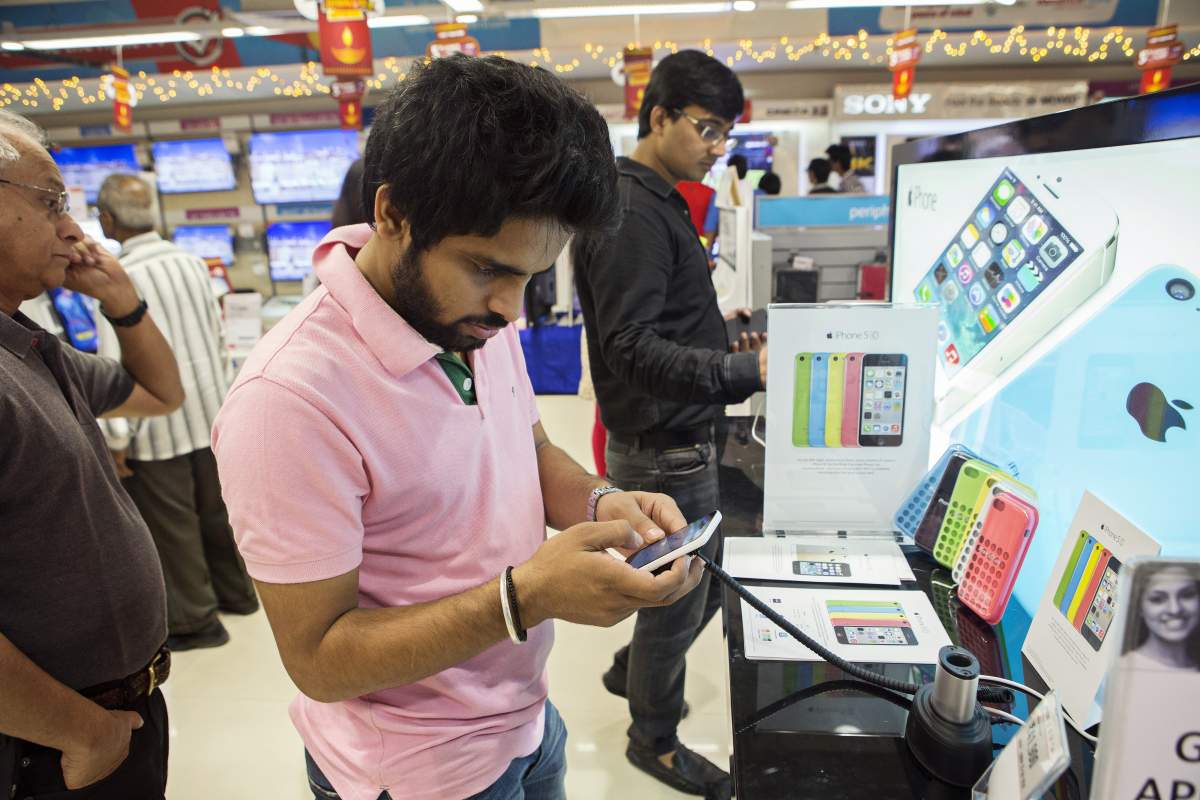
    Asian smartphone sales still lead the world market, with Asia Pacific tipped to remain the fastest-growing region this year.

    Handsets are the main consumer electronic product bought both online and in stores across the region, according to a new study by market research company GFK.

    The study shows 85 per cent of consumers polled across Asia Pacific have bought a consumer electronic item in the past 12 months, half of these purchases made over the internet. Across the 10 markets surveyed, a smartphone was the leading purchase.

    India, Vietnam and Indonesia had the highest incidence of smartphone purchases during the period.

    GFK head of retail, APAC, Jake Shepherd, says developing countries in the region have been strong drivers of consumer electronic sales.

    “The huge, yet largely untapped, potential of the eCommerce industry in these markets is growing rapidly with deepening internet penetration and adoption of connected technology.”

    While all product categories report online sales, offline sales still tend to dominate, says the report. For instance, while 69 per cent of Vietnamese consumers bought a consumer electronic product in the past 12 months, only 20 made the purchase online.

    Shepherd says the consumer purchase journey generally involves seeking information to help with making decisions. In APAC, 44 per cent of consumers do online research before buying a smartphone, with most people checking customer review sites and the manufacturer or brand’s website. Talking to family, friends or colleagues ranks next on the list as an influential information source, especially in Hong Kong and Taiwan where one in four consumers say this helps them make their decision.

    Only 19 per cent of consumers make their decisions based on in-store experiences, and Shepherd says it is important for businesses have a good understanding of the entire path to purchase to effectively formulate shopper strategies.

    For the online survey, during February and March, GFK questioned nearly 6500 regular internet users between 18 and 55 years across 10 Asia Pacific countries – Australia, Hong Kong, India, Indonesia, Malaysia, Philippines, Singapore, Taiwan, Thailand and Vietnam.

    GFK has more than 13,000 researchers and market intelligence from more than 100 countries.

  • Smartphone exports to Vietnam plunge in deepest fall in Southeast Asia

    Smartphone exports to Vietnam plunge in deepest fall in Southeast Asia

    Shipments of smartphones to Vietnam plunged 30% year-on-year in the first quarter, the deepest decline among the five major Southeast Asian markets, according to a new report.

    Malaysia came second from bottom in terms of negative growth, down 29% year-on-year. Thailand saw shipments drop 1%, according to market research company Counterpoint.

    The five main Southeast Asian markets, including Indonesia and the Philippines, saw an overall drop in shipments of 13%.

    Counterpoint analyst Glen Cardoza said that consumer sentiment has not fully recovered in Vietnam.

    He added that inflation in Southeast Asia has affected buyer sentiment, leading to a decrease in demand for new phones.

    A report by another market research company showed that 2.5 million smartphones were sold in Vietnam in the first two months, down 30% year-on-year.

    “This year, people started to tighten their spending right from January,” said a representative of a smartphone retail chain.

    Cardoza said that another reason for the first quarter decline was that Vietnam had received many shipments in the last quarter of last year.

    Counterpoint data also shows that economic challenges have not affected the high-end segment.

    Samsung posted the biggest sales in Vietnam in the first quarter and claimed 21% of the market, followed by Oppo at 20%, Vivo with 14%, Xiaomi 14%, Realme 12% and Apple 7%.

    However, all brands saw a decline compared to the same period last year, except for Apple which posted growth of 18%.

  • Global smartphone shipment slowdown could hurt Vietnam

    Global smartphone shipment slowdown could hurt Vietnam

    Manufacturing hubs like Vietnam and South Korea could be hurt this year as global smartphone shipments suffered its worst quarterly drop on record, signaling a cool down in consumer demand.

    Shipments declined 18.3% year-on-year in the December quarter to a little over 300 million units, U.S.-based International Data Corporation said Thursday.

    Xiaomi’s shipment volume declined steepest at 26.3%, followed by vivo (down 18.9%) and OPPO (down 15.9%).

    For the year, global shipments fell 11.3% and marked the lowest total for a decade, the researchers said.

    “We have never seen shipments in the holiday quarter come in lower,” Nabila Popal, research director at IDC.

    Along with inflation and economic uncertainties, Covid lockdowns in China were another factor that hurt the industry, including Apple Inc.’s iPhone sales, she said. “Heavy sales and promotions during the quarter helped deplete existing inventory rather than drive shipment growth.”

    Smartphones are among the largest exports for Korea and a key source of income for Vietnam as Samsung Electronics operates factories in both countries.

    Samsung last quarter reported its biggest profit fall in over a decade, primarily led by a drop in demand for semiconductors. The company’s exposure to smartphone sales is amplified by its role as the leading provider of memory and displays for the industry.

  • Smartphone exports drop in November

    Smartphone exports drop in November

    Smartphone exports fell nearly 10% in volume and 7.4% in value in November after the country’s largest manufacturer, Samsung Vietnam, lowered production the second time this year.

    According to the General Statistics Office, Vietnam produced 20.6 million phones in November, and export of phones and phone components was worth $5 billion. This is the third month the export value of phone and components has dropped.

    Smartphone production in the first 11 months decreased by over 7% year-on-year. Most of the smartphones produced in Vietnam are exported to the western market.

    Typically, phone output increases before Christmas, but it has dropped this year because inflation pressures have prompted companies to limit production.

    Of the total smartphone output in Vietnam, Samsung Vietnam contributes half. The tech giant recorded an export turnover of over $34 billion in the first half of this year, accounting for more than 18% of the country’s total.

    Samsung Vietnam has reduced smartphone production twice this year, the first time in the first half of the year over Covid-19 impacts and the second early November.

    Vietnam recorded a total export turnover of $342.21 billion in the first 11 months, while import turnover was $331.61 billion, resulting in a trade surplus of $0.78 billion, according to the General Statistics Office. The surplus in the same period last year was $0.6 billion.

  • UK carrier Vodafone launches new refurbished phone range

    UK carrier Vodafone launches new refurbished phone range

    As many of us know, premium smartphones are powerful and, at least in theory, last longer. But one huge downside is that they also come with a premium price tag, which not everyone can afford. So, if you want an expensive phone but don’t want to spend a lot of money on a handset, and you live in the UK, you can now buy a phone from Vodafone’s latest refurbished range, which the carrier just recently launched. As the mobile operator stated in its announcement, its new offerings can help “price-conscious customers get the phone they want for less.”

    For example, clients can get a refurbished iPhone SE (2022) 64GB for £261 on a 36-month payment contract. The regular price of the phone is £451, so by buying a refurbished model, you are saving £190.

    As for the other phones that Vodafone is currently offering, you can buy a refurbished model of the iPhone 13, the iPhone 12, the iPhone XR, the iPhone 11, the Samsung Galaxy S21, and the Samsung Galaxy S20 FE. Furthermore, the carrier is offering a two-year warranty on every Pay Monthly refurbished phone. According to the announcement, Vodafone is the only major UK mobile operator to offer such a warranty.

    If you hesitate whether to buy a renewed phone or not, Vodafone assures that its refurbished handsets are in “Great” or “Pristine” condition. Also, every phone has passed a visual and diagnostic check, which ensures that all devices work without issue. Vodafone also stated that these phones have been deep cleaned and securely data wiped, and if there is any problem, you can take advantage of Vodafone’s 14-day no-quibble money-back guarantee.

    However, if you want to get a brand new phone with a great discount, you should check out our best Vodafone phone deals. Or, if you are rolling with another carrier, you can visit our top Virgin Media phone deals, best O2 phone deals, three phone deals, and EE phone deals.

  • US becomes biggest buyer of Vietnam smartphones

    US becomes biggest buyer of Vietnam smartphones

    The U.S. has surpassed China to become the biggest buyer of smartphones and parts from Vietnam in the first six months with a purchase value of $6.61 billion, up nearly 54 percent year-on-year.

    It was followed by China at $6.45 billion, up nearly 17 percent, according to Vietnam Customs.

    Exports of smartphones and parts to the EU fell 7.7 percent to $3.3 billion.

    Vietnam’s top import market of smartphones and parts was South Korea at $5.1 billion, up 28 percent year-on-year.

    It was followed by China at $4.2 billion, down 0.1 percent.

    Vietnam’s exports of these items to all markets reached $29.17 billion in the first six months, up 16.4 percent year-on-year.

  • Apple looking to further diversify chip suppliers, reportedly finding new partner for the iPhone 14 Pro

    Apple looking to further diversify chip suppliers, reportedly finding new partner for the iPhone 14 Pro

    Apple is gearing up for the launch of the iPhone 14 series (which is inching ever so closely as we approach the fall), and it now seems Cupertino is set on not allowing any supply chain shortages to create issues. Reputable industry insider Ming-Chi Kuo now reports that Apple is looking to further expand its suppliers for the iPhone 14 series and has now added a new partner.

    According to Kuo, SG Micro (headquartered in China) has now passed quality certification for chips for the higher-end iPhone 14 models (meaning the iPhone 14 Pro and Pro Max). The company is likely to take orders for PMICs (power management integrated circuitry – basically a chip to manage power) in the second half of this year for the upcoming iPhones.

    This is the first time that said company would supply components for higher-end iPhones. According to the industry insider, this partnership will continue in the future, so that Apple can avoid future supply chain risks.
    Recently, Kuo said that some iPhone 14 display panel suppliers, as well as memory suppliers, have had supply issues; however, he doesn’t believe this will make a big impact on mass production. It seems that, at least according to Kuo, Apple is on track with the iPhone 14 production.
    As a quick recap, this year we expect there to be a more significant gap between the non-Pro iPhone models and the Pro versions. The iPhone 14 Pro and the iPhone 14 Pro Max are expected to be the only models to come with Apple’s latest processor (the A16), while the non-Pro variants are said to come with this year’s iPhone 13 chip.

    On top of that, the Pro iPhone 14 models will come with a new design for the Face ID sensors and the selfie camera, getting rid of the notch which will remain for the non-Pro iPhone 14 and iPhone 14 Max. We also expect the Pros to come equipped with an always-on display.

    The four phones are to be unveiled sometime in the fall, probably September.

  • Honor sees gains as China smartphone sales fall

    Honor sees gains as China smartphone sales fall

    Former Huawei unit Honor posted the fastest growth in China’s smartphone market in the first quarter, even as overall handset sales fell 14% year-on-year to levels close to those seen in the pandemic-ravaged first quarter of 2020.

    Android handset brands Vivo and Oppo, both under the privately owned BBK Electronics, claimed the largest share of first quarter sales, with 19.7% and 18% of the market respectively, research firm Counterpoint Research said.

    Apple, which was China’s top-selling vendor in the previous quarter for the first time in six years thanks to the release of the iPhone 13, was the third-largest seller in Q1, claiming 17.9% of the market.

    Honor made the biggest gains in Q1, taking the fourth biggest slice of sales with 16.9%, with sales up 15.5% on the previous quarter. Huawei Technologies sold its Honor unit in December 2020 to a consortium of agents and dealers as U.S. sanctions crippled the parent’s smartphone sales.

    Huawei, once China’s best selling brand, held 6.2% of the market in the first quarter.

    Chinese retail sales lagged in the key coastal economic regions of Guangdong and Jiangsu in the first quarter, with areas hit by COVID-19 outbreaks also showing particular weakness, regional data showed.

  • Smartphone sales down last month

    Smartphone sales down last month

    Smartphone sales in Vietnam plunged 28 percent year-on-year in the third quarter as shops were shut and mobility restrictions blocked deliveries.

    Sales started to fall in August and plunged deeply in September, a report by market research company Counterpoint revealed, without giving specific figures.

    Around 70 percent of smartphone stores in Vietnam were closed in July, which increased online sales at one of the biggest smartphone chains in Vietnam by 5.9 percentage points to 17.5 percent between July and August, the report noted.

    Electronics chain CellphoneS in July stated its sales had dropped by 70 percent at the time, while another chain Di Dong Viet switched to distributing food.

    In the third quarter, Samsung led in sales with 49 percent of the market, the highest ever, up 13 percentage points year-on-year.

    Oppo came second with 19 percent of sales, down 1 percentage point, followed by Xiaomi at 13 percent, down 4 percentage points.

    5G smartphone sales accounted for 20 percent of the total in the third quarter, with the ratio expected to rise this quarter as network operators plan to expand their 5G services.

    A media representative of Counterpoint said that as restrictions are relaxed, workers begin to return to industrial parks, and the vaccination ratio increases, smartphone sales in Vietnam could rebound before the end of the year.

  • China October smartphone shipment grows 30.6% from a year ago

    China October smartphone shipment grows 30.6% from a year ago

    According to the China Academy of Information and Communications (CAICT), China’s shipment of smartphones grew 30.6% year-on-year to 32.7 million handsets in October. This is a significant increase from a year ago, in October 2020, when shipments reached 25 million.

    An increase in shipment, compared to the decline experienced in the first half of the year, is largely driven by the release of the latest Apple iPhone 13 in China in September.

    When iPhone preorders were first released in September, demand was so high that Chinese retail websites reportedly went down. During the initial phase, as many as 5 million preorders were placed, signaling Apple’s continued popularity in the country.

  • Samsung to expand northern Vietnam plant

    Samsung to expand northern Vietnam plant

    Samsung is set to expand its plant in the northern province of Bac Ninh this year to increase its production capacity of foldable devices.

    The company would kick off the expansion project within the second half of this year, targeting full operation by the end of 2021 or early next year at the latest.

    This is to increase Samsung’s annual production capacity of foldables by 47 percent from the current 17 million to 25 million.

    Experts say once Samsung completes the expansion, the company would be able to produce 10 million units of Galaxy Z Fold models and 15 million units of Z Flip models a year.

    Samsung’s decision to ramp up capacity is mainly driven by soaring market demand. Its third-generation foldable models recorded 920,000 pre-orders in South Korea, 1.8 times more than its latest smartphone Galaxy S21, the report stated.

    “Samsung’s factories that make foldable devices are already operating at full capacity. Samsung has no option but to expand its facilities,” a source told the newspaper.

    It will likely add three more production lines to its current seven, which would allow the company to manage the production volume more flexibly, the source added.

    Samsung, the biggest foreign investor in Vietnam, has six plants and is building a new research and development center in Hanoi, which would open next year. Around 3,000 Vietnamese engineers are set to be employed there.

    The South Korean company has invested over $17.7 billion in Vietnam, has 110,000 employees and exported over $56 billion worth of products last year.

  • Xiaomi rewards its first ever customers with a refund

    Xiaomi rewards its first ever customers with a refund

    Back in 2011 Xiaomi launched the Mi 1 in China, and thus entered the increasingly competitive smartphone market, eventually overtaking goliaths such as Apple and Samsung, at least according to some research agencies.

    The successful Chinese phone maker is offering a reward to some of its first customers – those who bought the aforementioned Xiaomi Mi 1 ten years ago.

    According to Xiaomi, its first Android phone sold 184,600 units, so if we imagine that all of those who bought a Mi 1 are eligible and request the refund, that equates to about $57 million in refunds, or around $309 for each person.

    Of course, Xiaomi’s first users were all in China and conditions are sure to apply, plus it’s likely that the refunds are in the form of store credit. But in any case, this is a fun way for Xiaomi to acknowledge and thank the people who invested in the then-young company with their trust and hard-earned money.

    And what’s the successful company up to now? From its humble beginning with the Mi 1, running Android 3 on one gigabyte of RAM, the Chinese company’s most recent flagship is the Mi 11 Ultra, which we reviewed earlier this year and found to be solid.

    Also, recent Xiaomi Mi 12 spec rumors hint that Xiaomi’s next premium smartphone will be quite a flagship killer, possibly boasting a 200-megapixel camera and supporting wireless charging of up to 100 watts.

    If you’re a fan of Xiaomi, you may also want to check out our list of the best Xiaomi phones to check out in 2021.

  • H1 surge in phone, laptop sales

    H1 surge in phone, laptop sales

    Vietnam’s largest electronics retailers, Mobile World and FPT Shop, saw H1 mobile phone and laptop sales in the first half of the year.

    Mobile World posted total revenues of nearly VND62.5 trillion ($2.7 billion) and pre-tax profits of more than VND2.5 trillion in the six-month period.

    Of this the sales of mobile phones, laptops and relevant accessories was over VND15.6 trillion, a year-on-year increase of 7 percent.

    The Mobile World management board said the sales performance was really impressive because hundreds of the company’s stores have had to temporarily shut down or restrict sales amidst the Covid-19 pandemic.

    The FPT Digital Retail Joint Stock Company, which runs FPT Shop, earned total consolidated revenues of over VND9 trillion and consolidated before-tax profits of VND76 billion in the first half of this year, realizing over half and two-thirds of its annualized plan, respectively.

    Up to 85 percent of the total revenues came from mobile phone, laptop and accessories sales, which grew 13 percent year-on-year.

    While mobile phone sales grew 16 percent on year for Mobile World and laptop sales remained unchanged, FPT Shop saw a 31 percent year-on-year surge in laptop sales to over VND1.3 trillion.

    As of end June, Mobile World had 936 stores, up 23 stores over late 2020, but down from nearly 1,100 stores in late 2017. Meanwhile, FPT Shop had 625 stores, up 30 stores against late last year.

    According to Counterpoint Research, smartphone sales in Vietnam in the second quarter of this year grew 11 percent year-on-year.

    Meanwhile GfK has reported that sales of gaming laptops in the country grew 217 percent in the first five months of the year.

  • Oppo may enter the gaming smartphone market

    Oppo may enter the gaming smartphone market

    Asian handset manufacturers like to be in the front lines when it comes to new technology, so it’s no wonder that many of them have already jumped on the mobile gaming bandwagon. What’s surprising is that there are still brands that haven’t yet entered the gaming smartphone market, even though it’s still considered a niche category.

    In any case, we’ve just learned that at least one of the companies that hasn’t yet launched a gaming smartphone is about to join the fray, Oppo. The Chinese company is working on a gaming smartphone that strongly resembles the Asus ROG Phone 5.

    The phone was spotted on the European Union Intellectual Property Office (EUIPO), but apart from some renders, there’s really no information about the unannounced gaming smartphone.

    On the bright side, the pictures reveal quite a few things about the phone, such as the quad-camera setup, the bezel-less display, and the 3.5mm audio jack at the bottom. Although these images prove that the phone exists (even if just as a project), it’s not 100% certain that Oppo will go ahead with the launch. Time will tell whether or not Oppo will pick up the pace and join other brands that have already launched at least one gaming smartphone, such as Asus, Lenovo, Razer and Xiaomi.