Tag: social media

  • Love, Bonito to open in Funan Mall

    Love, Bonito to open in Funan Mall

    Online fashion retailer Love, Bonito is about to open its third and largest physical store yet, at Funan mall.

    Set to offer a “thoughtful and feminine” retail experience, the store will have customer touch points such as “Instagrammable” spots, and an express counter for click-and-collect orders.

    “More importantly, the store will hold dedicated and designated space for us to bring our community together to experience the brand, via workshops and events,” Rachel Lim, Love, Bonito co-founder said.

    The store will also offer personal stylists on demand who will be ready to give fashion advice to customers.

  • New Instagram feature turns your Story into a sing-along

    New Instagram feature turns your Story into a sing-along

    Remember when Instagram was known for its photo filters? Back in the day, when Instagram added a new filter to the app, it was a newsworthy story. In 2016, the site added its Stories feature (copied from Snapchat) and last year Instagram had more than one billion monthly active users. Facebook bought Instagram for approximately $1 billion back in 2012, and daddy’s deep pockets allow Instagram to continue developing new features.

    For example, Instagram revealed that users can now automatically add song lyrics to a Story. To do this, they will have to add a music sticker to their story and search for a song. If lyrics are available for the song selected, the user will be able to choose from different fonts and designs for the words to the song. Members will also be able to edit which part of the song to play on their Stories. Once someone selects that Story to view, the lyrics will appear automatically. If someone taps on the lyrics, they will be able to hear the song continue playing and learn more about the artist who sings it. Before this feature was added, an Instagram user could add music to a Story, but if he wanted the lyrics to appear, they would have to be typed out by the member.

    The new feature is available in all markets that support the use of Instagram’s music stickers. To add the music sticker, after you create a photo or text for your Story, tap on the sticker icon at the top of the screen. Then click on the Music sticker and select a song. If lyrics are available for that tune, you’ll see them on the screen even while you preview your Story. If lyrics are not offered for the song you select, a notification saying this will appear at the top of the screen.

  • Instagram’s standalone Direct app is Obsolete

    Instagram’s standalone Direct app is Obsolete

    Facebook has a habit of frequently testing changes (both big and small) for its extensive library of crazy popular social networking services, but while most new features added to Instagram tend to stick, enriching the app’s functionality or expanding its reach, others never get to see daylight or move past the public testing phase.

    Instagram Direct is part of the latter category, reportedly “going away” some time “in the coming month” after making a limited global debut way back in December 2017. This was actually a standalone app rather than something built directly into the main Instagram interface, but technically, the thing never got a proper, wide-scale release. Instagram (or rather Facebook) also didn’t do much to promote the service, which essentially cloned one of the core features of arch-rival Snapchat.

    Namely, Instagram Direct was largely focused on enabling message exchanges between users, with Instagram friends instantly added to one’s list upon signing up and, of course, support for fun face filters to spice up your photos and videos. If that sounds useful in any way, fret not, as Instagram Direct conversations will automatically move to the main Instagram app, where you’ll be able to continue enjoying the same messaging features as before. After all, private messaging has been supported by Instagram since 2013.

    As the company was quick to highlight in a short statement after the imminent death of the standalone Direct experience ironically started making the Twitter rounds, Instagram Direct will remain the “best place for fun conversations with your friends.” Just not in a separate app, whose tests are being “rolled back” after merely exceeding a million Android installs in Google Play and receiving largely mediocre iOS user reviews.

  • Instagram test designed to make users more trusting of content

    Instagram test designed to make users more trusting of content

    When Instagram first launched, it was known for the filters that users could apply to their photos, which would then be shared among members. The company was acquired by Facebook in 2012 for a reported $1 billion. Instagram is not as well known as Facebook is for inflaming the passions of subscribers by spreading fake news and political propaganda. Still, a report published says that steps are being taken to prevent the dissemination of false posts over the platform. Instagram is currently running tests with fact checkers.

    Facebook currently employs 52 firms that it has partnered with to conduct fact checks. If content found on a particular Facebook post is proven to be false by one of the fact checkers, the post’s distribution through users’ news feed is reduced. And not surprisingly, Instagram’s policy is basically the same. Stephanie Otway, a spokesperson for the app says, “Our approach to misinformation is the same as Facebook’s — when we find misinfo, rather than remove it, we’ll reduce its distribution.” That means flagged posts will be removed from the Explore tab and the hashtag result page, but it will stay up on the author’s page. That limits the readership of these polarizing posts to those who have made a decision to subscribe to authors who disseminate such information.

    But there is a big difference between the two sites. The content on Instagram is not nearly as news-oriented as it is on Facebook, especially since the platform doesn’t have hyperlinks inside captions or member comments. Thus, the hysteria is more subdued than on Facebook where a single lie could turn millions of members into a foaming at the mouth crazy. So unlike Facebook, photos that are fake won’t be labeled and there will be no warning shown to Instagram members who want to share these images.

    “We all know any kind of images and pictures are a main driver of misinformation in any platform. Alerting those who share (false posts) like they do on Facebook would be best. But perhaps it is only the beginning of their actions there, I suppose. Even though there are plenty of problems regarding misinformation inside Facebook’s many platforms, they are still the ones who are taking the combat of misinformation more seriously.”-Tai Nalon, Director Aos Fatos

    Lees ook:

  • Instagram test hides an important Feature

    Instagram test hides an important Feature

    Some Twitter and Instagram users read a lot into the number of Likes a certain tweet or post receives. For example, subscribers to both social media apps might decide to skip certain tweets or posts that don’t amass many Likes, considering them to be recommendations. Twitter CEO Jack Dorsey said last year that he is not a fan of the Like button, and Twitter says that users trying to write posts that generate a large number of Likes could be trying to gain approval from their fellow posters. This would be a form of social-media addiction. As a result, we could see Twitter eventually remove the heart-shaped icon that readers of a tweet tap to show that they Like a message.

    While neither Twitter nor Instagram is removing Likes just yet, Instagram is testing a new look that will prevent readers from seeing the number of Likes received by a post. The only one who will be able to get that number will be the person who actually wrote the message. This was discovered by the tireless Jane Manchun Wong (@wongmjane), who sent out a tweet with this information. Wong, who loves to “reverse engineer apps,” notes that Instagram writes, “We want your followers to focus on what you share, not how many likes your posts get.”

    Based on the comments that Wong’s tweet received, apparently many are upset about this, especially since they believe that Instagram is removing Likes completely. Again, users will still have the ability to Like a post, but the author of the post will be the only one who sees how many each message has received. And again, this is only a test and we have no idea when or if Instagram will eventually roll out this update to all of its users.

  • Twitter is growing at an impressive Pace

    Twitter is growing at an impressive Pace

    Twitter is not the world’s most popular social networking service, but one number considered essential for the prosperity of the San Francisco-based company continues to grow at a healthy pace, which should keep investors relatively happy for the foreseeable future.

    Interestingly, the metric Twitter is focusing on as the “best way to measure” its success counts so-called monetizable daily active users rather than the MAU (monthly active usage) number generally employed by rivals to flaunt their progress. These monetizable daily active users (mDAUs), which are defined as Twitter users who logged in or were otherwise authenticated and accessed the platform on any given day through its website or apps that are able to show ads, have surged a solid 11 percent year-on-year, to 134 million in the January – March 2019 timeframe.

    The same number is up 6 percent from 126 million reported for the final quarter of 2018, which suggests a pretty great trend for Twitter in terms of user engagement and monetization opportunities. That’s especially notable as multiple recent market reports have claimed Facebook’s usage figures are on the decline, possibly due to the many controversies and scandals surrounding the social media giant’s data harvesting policies and privacy protecting strategies (or lack thereof).

    Then again, there might be another reason why Twitter is choosing to shift its focus away from average MAUs. While that number has also grown from 321 million people in Q4 2018 to 330 million during Q1 2019, there were actually more monthly active users on the platform this time last year. Namely, 336 million people, so although Twitter seems to have gotten better at making money, its efforts to snatch users from Facebook, Instagram, or Snapchat aren’t exactly working.

    Instead of trying new things to pull that off like finally adding the ability to edit tweets, Twitter plans to no longer share its MAUs with the public starting next quarter. That’s certainly an interesting, albeit not entirely original tactic, as Facebook has recently began focusing on the combined usage numbers of all its products.

    As far as money goes, Twitter is doing pretty well, generating total Q1 revenues of $787 million (up 18 percent year-on-year), as well as an operating income (aka profit) score of $94 million, compared to $75 million in the first three months of 2018.

  • Change your Instagram password Immidiatly

    Change your Instagram password Immidiatly

    An updated entry made yesterday to a post on the Facebook blog reveals that the company left millions of Instagram passwords in a “readable format.” Originally, Facebook said that “tens of thousands” of Instagram customers were involved. Facebook says that normally its login systems are designed to “mask passwords using techniques that make them unreadable.”

    The good news is, if you believe Facebook, its investigation has shown that no one from inside or outside the company accessed these passwords. Of course, since Facebook updated its original blog post after one month increasing the number of passwords affected, who knows what they might say in another month?

    “In line with security best practices, Facebook masks people’s passwords when they create an account so that no one at the company can see them. In security terms, we ‘hash’ and ‘salt’ the passwords, including using a function called “scrypt” as well as a cryptographic key that lets us irreversibly replace your actual password with a random set of characters. With this technique, we can validate that a person is logging in with the correct password without actually having to store the password in plain text.”-Facebook

    Last month, Facebook admitted that it stored hundreds of millions of passwords in plain text dating back to 2012. At the time, it was estimated that 200 million to 600 million accounts had their passwords exposed to as many as 20,000 Facebook employees.

    Facebook purchased Instagram for approximately $1 billion back in 2012. The company suggests that subscribers to Facebook, Instagram or WhatsApp use two-factor authentication when signing in. Besides entering a password, a code is sent to the subscriber’s smartphone that is also required for a successful login. To set this up, go to the settings menu from your Facebook app and click on “Security and Login.”

  • Facebook could combine two important parts

    Facebook could combine two important parts

    Facebook is split into so many products these days that it’s hard to keep track to everything the social app has to offer if you’re not a hardcore user. News Feed, Stories, Messenger are just some of the features that Facebook has made available to users throughout the years.

    The reason Facebook split its app into so many pieces is quite simple: monetization. Well, it appears that the social giant has found a way to make even more money by combining, rather than dividing, two of these features: News Feed and Stories.

    The changes spotted by software engineer Jane Manchun Wong indicates that Facebook is testing a new format that will combine News Feed and Stories into a one swipeable, hybrid carousel.

    It will allow standard feed posts and ads to be placed inside Stories in the same carousel so that users would be tempted to swipe through them more often than not, which translates in more views and better monetization of content.

    The GIF posted by Jane shows how a user seamlessly switches between a News Feed story and a Stories video, inside the hybrid carousel. The feature has been discovered in the Android version of Facebook, but if the company does indeed plan to make it available, it will be present on all supported platforms.

  • Lush UK to closing down most social media accounts

    Lush UK to closing down most social media accounts

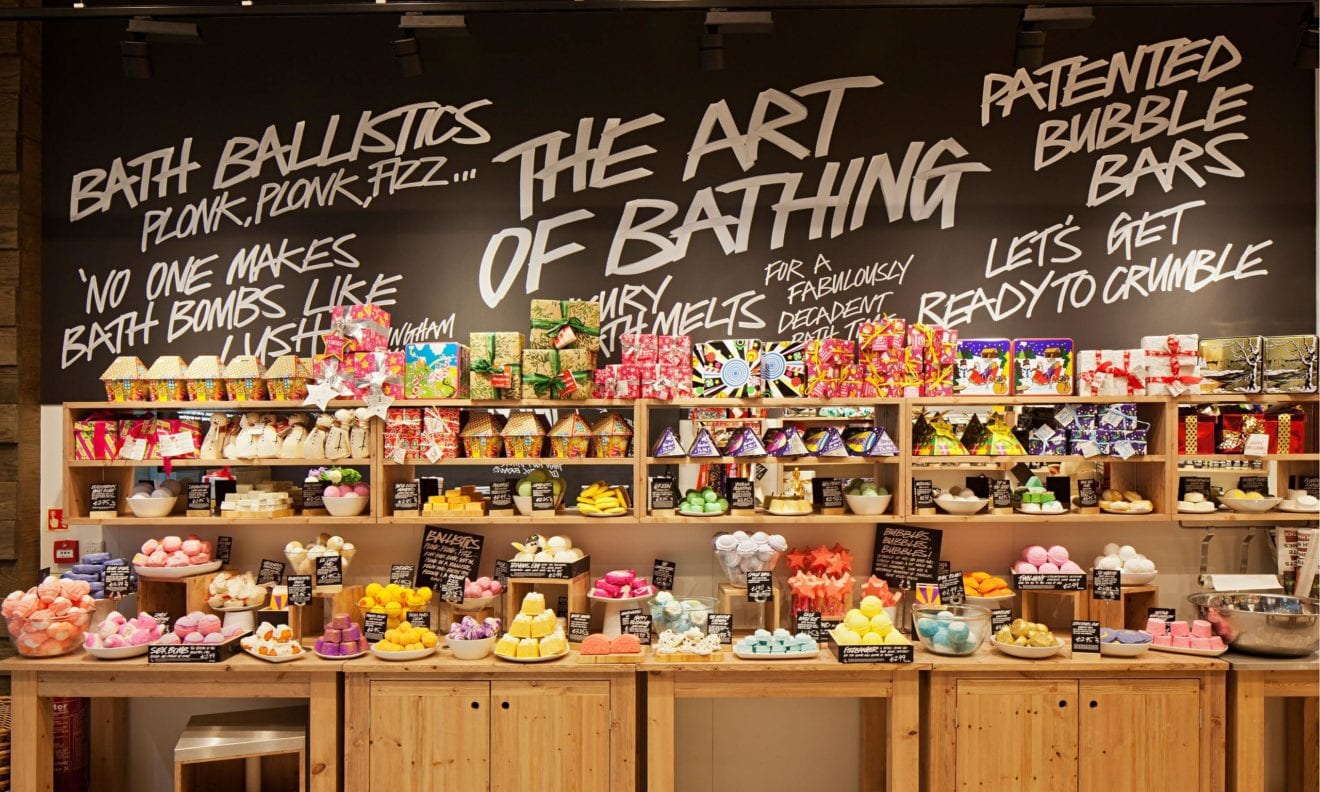
    Beauty and well-being retailer Lush UK will close its social media accounts this week, citing disillusionment with the algorithms and pay-to-display policies determining how they appear in their customers’ feeds.

    The firm will shut down Lush UK, Lush Kitchen, Lush Times, Lush Life, Soapbox and Gorilla across Facebook, Twitter and Instagram. US accounts will remain active for the time being.

    Lush will instead attempt to connect with followers via its website chat feature or through more traditional means of communication, although it may still work with social media opinion leaders to provide “an opportunity for our customers to connect one-on-one with people within Lush”.

    The shutdown will silence Twitter, Facebook and Instagram channels followed by hundreds of thousands of fans.

    “We don’t want to limit ourselves to holding conversations in one place, we want social to be placed back in the hands of our communities – from our founders to our friends,” the firm announced.

  • Twitter makes a change in Limiting your Followers

    Twitter makes a change in Limiting your Followers

    In an effort to stop spammers from taking over Twitter, the social media app is limiting the number of followers that can be added to an account on a single day. Previously that number was 1,000 and a tweet from the Twitter Safety account reveals that the new cap is 400. This is supposed to prevent spammers from adding a large number of followers and then deleting them in a “bulk, aggressive or indiscriminate manner” that violates Twitter’s rules.

    By adding all these followers, spammers hope that the majority will follow them back. Those that do will soon find a number of spams in their timeline. Those that don’t will soon be unfollowed by the spammers. This is a cycle that continues over and over again. In a series of tweets, Twitter’s Yoel Roth explains that lowering the number of followers a day from 1,000 to 400 won’t stop the spammers, but it will slow them down. The 400 limit will “make each spam account less effective, slower, and more expensive to operate.”

    Roth adds that Twitter decided to make the new cap 400 because it allows people to follow the accounts they’re interested in while it stops the most spam. Almost half of the accounts that were following 400 Twitter users per day were engaged in churning, which is defined as “repeatedly following and unfollowing the same accounts” in an attempt to grow the number of followers that a Twitter subscriber has. He adds that 99.87% of Twitter use will be unaffected by this new rule.

  • Six great marketing lessons Learned from MarketingPulse

    Six great marketing lessons Learned from MarketingPulse

    “Great ideas should be scary,” advocates Marcelo Pascoa, head of global brand marketing at Burger King, one of the keynote speakers at the recent MarketingPulse event in Wanchai. “When new things come to be, it is often associated with fear. So, my advice to marketers is: be very afraid! If you sleep well the night before your project launches, then the promotion wouldn’t be too spectacular.”

    Pascoa’s projects are known to be bold and daring, even making fun of competitors in the market. One example was a marketing stunt in which people were asked to open the Burger King app at a McDonald’s to win a free burger. As a result, there was a huge leap in interest in the Burger King app and it became the most downloaded app on the store. He said that knowing your work aligns with the brand value is key when facing challenges and criticism. “My biggest fear is being irrelevant. Marketers live in fantasies where they control everything, but social media has proved that we cannot control everything.”

    MarketingPulse second edition

    Pascoa was one of many speakers at the second edition of MarketingPulse, Asia’s premier conference for marketers and brands, held at the Hong Kong Convention and Exhibition Centre. Organised by the Hong Kong Trade Development Council (HKTDC), the key morning session at the event, “Dear Brands, Let’s Sail to the Future!”, featured a heavyweight line-up of industry experts who shared their tricks and tips on how to keep ahead of marketing trends to develop successful brand stories.

    Respect cultural differences

    Endeavor is a brand focusing on entertainment, sports and marketing services. Bozoma Saint John, the company’s chief marketing officer, shared her success stories at Endeavor and in previous high-profile marketing roles at Uber and Apple Music.

    St John recounted some of the marketing stunts that helped to push her brands, from inviting Beyonce to perform at the Super Bowl and promoting Apple Music’s breakup song services through private chat messages between three famous black actresses, to featuring two superstar athletes sharing their thoughts on cultural differences during an Uber ride. These stunts were not only successful in capturing the attention of consumers, but also raised discussions on cultural issues relevant to society as a whole.

    “I am addicted to popular culture,” she declared. “I am always fascinated by the latest and most trendy things and would like to know how they come to be and how they connect with history. People working in the marketing sector represent various cultural differences between different places. We have to know its meaning, why it comes to be, and how cultures interact in order to use popular culture as a marketing tool.”

    Saint John pointed out that there are currently tensions in society which make it important for marketers to understand different communities well and build connections through various emotions in order to avoid controversies such as cultural appropriation.

    Think before you speak

    One of Hong Kong’s best-known creative talents, Juno Mak, creator at Kudos Films, began his presentation by sharing his experience in the entertainment industry and explaining how marketing became part of his everyday life.

    “We do not need to be a businessman to do marketing, as we are already marketing ourselves in our daily lives − our sitting posture, our favourite colours, and our watches, these are all making a promotion out of a life. When you know yourself better, you will know how to do marketing,” he said.

    Mak also made the bold suggestion that we should abandon two things: our resumes, and thoughts that come from the mouth, not the head.

    “Things you write in your resume are tasks completed in the past. But we have to think: what’s next? We should also give up on thoughts that come from our mouths, as they might be copies of other people’s ideas. Thoughts should come from your head − a creation that you agree with.”

    Storytelling techniques

    Jonathan Mildenhall, co-founder and CEO of TwentyFirstCenturyBrand and former chief marketing officer at Airbnb, offered the audience a whole new definition of marketing in the 21st century. “Marketers create assets for the company, including its finance, consumers, employees and cultural assets. Marketing with a clear focus creates unparalleled value,” he said.

    Mildenhall emphasised that storytelling techniques are key to any marketing campaign.

    “I am 100 per cent a supporter of emotional storytelling. If a marketing campaign does not contain a story behind it, it is only market pollution. Stories help us build a signature super-brand that people care about.”

    He shared his experience at Airbnb to illustrate how consumption begins with emotion − for example, bringing the room in a Van Gogh painting to life, or sharing true stories from the community to bring out cultural values.

    “We rationalise our choice of consumption after we create the emotion,” he explained.

    Understanding local tastes

    Keiei Sho, executive officer, GM of overseas business division at Calbee, distributed his company’s popular grilled corn sticks to conference visitors to demonstrate how market tastes can change.

    “People used to say that the corn sticks were too hard and that consumers would not like them,” he said, before revealing that sales were now in the region of US$300-400 million. Sho recounted Calbee’s history, explaining that after the Second World War, Japan was left with devastated industries and faced food shortages. Calbee stepped in to manufacture prawn crackers using the flour left behind by the US Army and shrimps from the Seto Inland Sea, which proved to be a hit.

    The company continues its creative legacy, recently working with 47 Japanese prefectures to create a successful campaign by developing 47 different flavours of chips.

    “We collaborated with local governments to learn about local tastes, hoping to know what would resonate with consumers, while showcasing promotions from various prefectural governments on the back of the bag,” he explained.

    Using its advantages in the areas of food safety and convenient packaging, the brand has continued to push the envelope by launching breakfast food items to attract Chinese visitors and promoting Kyoto’s breakfast culture using online celebrities.

    Embracing consumer insights

    The lingerie brand created by Michelle Cordeiro Grant, founder and CEO of Lively, has embraced the concepts of female empowerment and body acceptance. The company created a new definition of what sexiness means, building a brand that brings community, experience and products together.


    Advocating “high style and comfort”, the brand has been communicating with 100 brand ambassadors right from the start to learn about consumers’ needs and elicit useful feedback. Many of Lively’s new underwear lines are launched in accordance with customer preferences.

    Grant said Lively is an experience-focused brand, with its retail stores devoting only 30 per cent of the space to products while the rest is used for events such as hip-hop experiences and movie nights.

    “Lively is an organism with a human soul,” she said. “Normally, females purchase underwear once or twice a year, while our consumers purchase underwear on average four to five times per year. This shows that they are purchasing not out of their ‘needs’, but their ‘desires’.

    “This is key to how we create our market share.”

  • Instagram is preparing to implement a new feature

    Instagram is preparing to implement a new feature

    Instagram is an already hugely popular photo and video-sharing social networking service, with over 1 billion monthly active users as of last year, but believe it or not, there’s still plenty of room for growth, mostly due to the many security and privacy scandals surrounding its parent company’s core platform. At the same time, it’s pretty crazy to think Instagram has reached this insane level of mainstream success without ever offering some basic features.

    Case in point, a fast-forward option for those 15-second clips you can add to your stories or the up to 60-second videos allowed to be uploaded to one’s Instagram profile. Incredibly enough, that’s not yet a thing, even though the video social component has enriched Instagram’s focus and functionality years ago. But according to a Twitter userknown for her very reliable work discovering unreleased features for apps like Facebook and Instagram, the long-awaited video seek bar is currently being tested internally.

    Jane Manchun Wong has the GIF to prove that claim, and indeed, the feature works as expected, with no unnecessary bells and whistles. Unfortunately, we can’t be sure this will roll out to the masses anytime soon, although given its simplicity and potential popularity, we don’t see what could possibly hold off its wide-scale rollout. Once that happens, you’ll presumably be able to both go forward and back in time in any given Instagram video instead of waiting for the whole thing to unfold, then play it back from the beginning if only a small part of it caught your attention.

    Interestingly, this seems to be only one of several Instagram add-ons in the pipeline, alongside a delay and warning for posting comments identified as potentially offensive, a new “Trusted Devices” section in the app’s two-factor authentication settings, and a couple of changes targeting Creator Accounts, aka high-profile influencers. It remains to be seen how many of these features will go public and when.

  • Regulating Facebook could hinder small businesses

    Regulating Facebook could hinder small businesses

    Digital platforms provide a host of challenges for governments. Questions about how to best protect privacy, democracy, and speech online become more pressing every year.

    But policies that affect online platforms also affect international trade. Many Australian small businesses rely on digital platforms to stay on par with their international competitors.

    As Australia starts tackling the challenges wrought by digital platforms, policymakers should be careful not to undo the good things that stem from an evermore connected world. That includes the critical role of these platforms in helping retailers sell their products to overseas customers.

    Platforms facilitate exports

    As my new research with colleague Danielle Parks shows, digital platforms appear to significantly reduce the economic distance and trade costs between buyers and sellers.

    Take Facebook, for example. Facebook is both a social networking platform and digital market platform, where Facebook’s Marketplace helps business owners connect with potential customers.

    The social networking interface allows buyers and sellers to message each other and exchange information about what the seller has, and what the buyer wants. Meanwhile, Marketplace features like identity verification and buyer ratings help to facilitate connections more quickly, and with more trust, than might otherwise be possible.

    There isn’t a lot of large-scale data on cross-border e-commerce, so researchers must get creative to study digital platforms and trade. The findings are extraordinary.

    One study found that 97% of US-based eBay sellers export product to overseas buyers. Another found the “economic effect of distance” to be 65% smaller on eBay. In other words, the digital platform reduces the challenges of selling to people in other countries.

    Research conducted by PayPal showed that 79% of US small businesses on its platform sell to foreign markets. And PayPal merchants that exported, outperformed businesses in general. Interestingly, that finding held for coastal and non-coastal businesses, and for rural and urban businesses alike.

    In our new study, we surveyed Australian businesses on Facebook. We found that those with a Facebook presence were 63% more likely to export their products internationally than other businesses. The propensity to export was higher across all business sectors and nearly all company sizes.

    This emerging pattern shows how world markets are opening up to smaller businesses that might not otherwise be able to compete with their larger, multinational rivals. These findings can partly be attributed to export-prone firms being more likely than others to use digital platforms. But there is no question that the platforms can also enable trade.

    Most governments recognise the need to dismantle barriers to foreign market access, and any new policies regarding digital platforms should not make it harder for small and medium sized businesses to engage in trade.

    How regulation could hurt small businesses

    The Australian Competition and Consumer Commission (ACCC) is currently conducting an inquiry into digital platforms at the request of the treasurer.

    The ACCC’s preliminary report recognises how digital platforms have revolutionised the ways consumers and businesses communicate with one another. The report also highlights concerns over data privacy and the influence of bad actors producing and spreading misinformation.

    The final report, expected in June, will make policy recommendations that aim to address these concerns. But these policies could also inadvertently threaten the revenue streams of businesses that advertise on these platforms or that use them to facilitate online sales.

    Restrictions on the cross border flow of consumer information could interfere with everyday business practices. For example, a key advantage of e-commerce, especially for small businesses, is using search engine techniques to reach larger audiences, and target potential customers. So, search engine restrictions could limit the way businesses target customers with advertising, therefore limiting a business owner’s ability to reach customers abroad.

    Other regulations could restrict business owners from storing the personal information of customers – such as credit card information, consumer preferences and purchase history. That would then limit businesses in how they interact with customers at home and abroad.

    What’s happening at the moment

    Australia is not alone in considering these tough issues. The landscape of digital data flows, data privacy, and e-commerce is a work in progress for governments across the globe.

    The EU recently enacted data privacy regulation called the General Data Protection Regulation (GDPR), which is designed to:

    […] fundamentally reshape the way in which data is handled across every sector, from health care to banking and beyond.

    Meanwhile, the United States Congress will likely consider new internet privacy legislation this year.

    Provisions on digital data flows have been included in major recent international trade agreements. Both the United States-Mexico-Canada Agreement (USMCA) and the Trans Pacific Partnership (TPP) bar data localisation requirements. That means foreign companies would only be allowed to work in a country if they built out or leased separate data infrastructures in that country – a costly endeavour, especially for smaller businesses.

    On the other hand, USMCA and TPP do not allow participating countries to require that platforms disclose their source code or algorithms. These provisions do not necessarily preclude countries from adopting privacy protections, but they do make it easier for platforms like Facebook to operate without fear that they will be asked to handover important intellectual property.

    As the government considers the Australian Competition and Consumer Commission report, one thing should be clear: any policy changes should not overlook the role of these platforms in helping Australian small businesses sell goods to customers in the global marketplace.

  • Facebook strikes deal with SK to pay data fees

    Facebook strikes deal with SK to pay data fees

    Facebook reportedly finally agreed to pay data traffic fees to SK Broadband after two years of negotiations. According to local media reports Sunday, the social media giant and internet provider agreed to a two-year network usage deal to set up a cache server for temporary data storage and provide fast Facebook access to SK Broadband users. While the two companies did not confirm the exact sum, Facebook will reportedly pay more than what it previously proposed during negotiations.

    SK Broadband is not the first internet provider that Facebook will be paying in the country. In 2015, it signed a contract with KT to open a cache server. The two companies are currently working on renewing the contract after it expired last July.

    The new deal with SK Broadband comes after Facebook faced negative press for inconveniencing users while trying to avoid paying network fees to SK Broadband and LG U+.

    In late 2016 and early 2017, the social media giant re-routed non-KT users to its server in Hong Kong when they tried to connect to the platform, slowing down access considerably. The Korea Communications Commission charged the company 396 million won ($353,900) in fines and ordered it to change its practices.

    Following the agreement with SK Broadband, the social media giant is expected to open up a cache server with the internet provider.

    The company is also reported to be working with LG U+ on a similar deal.

    The recent deal highlights the question of whether other foreign IT giants will follow suit and pay data traffic fees to Korea’s network providers.

    Many Korean businesses have complained that current laws and practices hurt domestic firms. Naver and Kakao, for example, pay around 70 billion won and 30 billion won every year to Korea’s three network providers to compensate for their high traffic volume, while Google and Netflix – which are thought to be responsible for half of Korea’s data traffic together with Facebook – pay none.

  • Era when eggs taking over Instagram

    Era when eggs taking over Instagram

    Eleven days ago, the anonymous Instagram account world_record_egg posted its first image, what appears to be a simple stock photo of a brown egg. “Let’s set a world record together and get the most liked post on Instagram,” the caption read. The photo has now reached that goal, with over 42 million likes as of Tuesday afternoon. It blew past the previous record holder over the weekend, the first photo Kylie Jenner shared of her daughter Stormi, which garnered only around 18.5 million likes after it was posted last year.

    It is easy to root for the Instagram egg and its other nihilistic siblings, like the halved white onion that only wants more Twitter followers than President Donald Trump.

    These accounts are not inherently interesting or important—many of them post barely any content at all—but they are made so because the internet decides they should win the attention lottery. In an era of rampant spam, thirst traps, and stolen memes, the egg became popular by straightforwardly asking for likes and nothing else. It is absurd. It is delightful. It feels righteous, charitable even, to help these accounts amass larger online followings than those of world leaders or members of the Kardashian family.

    Anything can be mapped onto the canvas of a blank brown egg, and so thousands of remixes have predictably been created that riff on the original. Ellen DeGeneres, for her part, put Kylie Jenner’s face on the egg on Monday, in the hopes that by putting them together, she can attract more engagement than the two most popular Instagram posts combined.

    Why did this egg take off where others have failed, that’s not clear. But the creator is clearly familiar with some of the engines of online fame. They tagged a number of people and publications that regularly cover viral memes like LADBible, Mashable, BuzzFeed, the Daily Mail, and YouTube star PewDiePie in the egg photo itself. Once the account took off, they began to sell “official” merchandise, including T-shirts that say “I LIKED THE EGG,” which go for $19.50. A request for comment sent to the email listed on the egg’s Instagram page went unanswered.

    The account behind the egg, which has nearly 6 million followers, is also an incredibly valuable marketing vehicle. Brands could spend thousands of dollars to advertise with it, according to sources in the influencer marketing industry who spoke with Recode. When the egg goes out of style, its creator could also sell the account or pivot to sharing another type of content with the massive audience they’ve already attracted.

    The egg’s creator may instead simply continue to try to profit off the popular meme, as other viral food sensations have before them. In 2014, after Zack Brown went viral for raising more than $55,000 on Kickstarter to make potato salad, he threw a potato-themed party and two years later released a potato salad cookbook. Carter Wilkerson—the teen who became famous in 2017 after Wendy’s promised a year of free chicken nuggets if he achieved 18 million retweets—went on to sell nugget-themed apparel for charity. Max Miller, the guy behind the half onion, also sells merchandise and claims a portion of sales are donated to charity too.