Tag: social media

  • Twitter will start testing its long-anticipated downvote feature globally

    Twitter will start testing its long-anticipated downvote feature globally

    Downvoting on Twitter has been in testing since summer last year, and the feature is now finally expanding for testing to more users. The button will be available to a select group of users around the world, as the company seems to have received positive feedback about the feature since the initial testing performed last July.

    Twitter said in a post that the company has learned a lot about the types of replies that users don’t find relevant, based on the feedback from the initial testing period. Now, the test will be expanded to the web, as well as both iOS and Android users.

    The number of downvotes a reply to a tweet gets will not be visible to the public; however, users will be able to see how many downvotes they got on a reply they published. During the first testing period, Twitter had made available several different versions of downvoting. For example, some users had both upvote and downvote buttons, while others had a downvote button next to the heart option.

    A third version of the test had thumbs up and thumbs down to indicate upvoting and downvoting. Twitter has not said whether the global tests will have the same options.

    According to Twitter, the majority of users have downvoted because a reply has been perceived as offensive, not relevant, or both. Additionally, downvoting has also become a convenient way to flag content you don’t want to see, according to the social media giant.

    But Twitter is a bit late to the party. For example, Reddit has used downvotes since it started back in 2015. Facebook, on the other hand, has tested downvotes in 2018, but the feature never made it to an official global release. On the other hand, Instagram has an option for users to hide likes if they wish to.

    Twitter Safety stated that so far, the experiment with downvoting has been a positive experience and that people who had tested it said that it improves the quality of conversations on the platform.

    It’s not only downvoting that Twitter has been recently working on. The social media platform has been busy performing tests on different features bound to improve the experience users have when visiting Twitter and socializing with others on the platform.

    The most recent feature that we reported on is reportedly dubbed Articles, and it could allow users to create blog-like posts on the platform that don’t suffer from the 280-character limit. The feature seems to be in the works and was discovered by reverse engineer Jane Manchun Wong.

    Another interesting feature that Twitter seems to be working on is called Tweet Take, which would allow you to use your camera to add a video or photo reaction to your retweets. When you tap on the retweet button, you would be able to activate your camera to record your reaction, which will then be displayed on the timelines of your followers with the tweet embedded in it.

    Currently, this feature is in its testing period, available to select iOS users.

    On top of that, Twitter is also testing a new composer bar, which will be located above the bottom navigation bar, and its aim is to replace the floating compose button, so that adding photos, videos, and starting a Space conversation can become easier. This feature is again up for testing on iOS (selected users).

    And last but not least, recently we reported on the fact that Twitter will be changing its “Trusted Friends” feature (still in development) into a feature dubbed “Flock”. A Flock can contain up to 150 people.

  • Meta warns that it’s possible to shut down Facebook and Instagram in Europe

    Meta warns that it’s possible to shut down Facebook and Instagram in Europe

    Meta, formerly known as Facebook, has warned that it may need to shut down its Facebook, Instagram, and other products and services in Europe if it is unable to process user data on both US-based and Europe-based servers. The warning comes after a change in European laws requiring users’ data to be kept and processed on only European servers.

    In a report to the US Securities and Exchange Commission, Meta stated that the data transfer between countries or regions is ‘critical’ to its ‘operation.’ Meta also shared its fear that if it’s unable to transfer data between the US and countries in Europe, it could impact the way it currently provides its services and its ability to target ads.

    Europe has Standard Contractual Clauses (SCCs) for international data transfers. As Meta stated in its report, in August 2020, it received a draft decision from the Irish Data Protection Commission (IDPC), which stated that Meta’s data transfers between the US and Europe are against the General Data Protection Regulation (GDPR) and must be suspended.

    Although the decision by the IDPC was only a draft, Meta suspects that a final decision may be issued in the first half of 2022. According to the company, if it can’t rely anymore on the SCCs and if a new data transfer framework is not introduced, its fear will become a reality, and it won’t be able to offer many of its products in Europe, Facebook and Instagram included. This, like Meta said, ‘would materially and adversely affect’ its business and financial condition.

    At this moment in time, Meta’s warning is only a possible future, and it doesn’t mean it will ever happen. But let us know what you think. Do you think that Meta may indeed shut off its Facebook and Instagram platforms in Europe, or do you think that these are only empty words?

  • See which five new features Instagram is rumored to be working on

    See which five new features Instagram is rumored to be working on

    It looks like Instagram is working on a few new features. Leaker Alessandro Paluzzi, a mobile developer, and a reverse engineer shared on Twitter that Instagram could be working on:

    • An option to share Reels directly on Facebook
    • Improving the Story and Reels editor’s guidelines
    • Enabling you to leave a message if you can’t answer a video or audio call
    • Business users to be able to receive audio calls without a visible phone number
    • The ability to share upcoming live videos as a Story and outside Instagram

    An option to share Reels directly on Facebook

    From the tweet below, we can see that a new “Share to Facebook” option would be available in the Reel’s sharing menu, possibly enabling you to share your Reel directly to Facebook without the need for additional steps.
    Currently, if a user wants to share a Reel on Facebook, they have to enable the “Recommend on Facebook” option, then they have to choose “Turn on for this Reel,” and then the user has to return and try sharing the Reel on Facebook.

    Apparently, Instagram wants to make its platform as easy as possible to use.

    As we can see from the shared Tweet, Instagram has been working on improving its guidelines in the Story and Reels editor. When the user tried to move the written text to the bin icon, a guideline appeared, which told the user how to delete the text.

    As demonstrated in the Tweet, Instagram is working on a “Reply” button that would appear along with the “Accept” and “Decline” call options when a user receives a video or audio call and can’t take the call at that moment. When a user taps the new “Reply” button, a few default responses would appear, along with the option to send a custom reply message.

    Currently, if a business user wants to be reachable through audio calls on Instagram, they must reveal their phone number. From the Tweet, we see that this may become a thing of the past, and everyone may be able to start a call with a business account without the need for a phone number.

    Want to share a live video as a Story? It looks like Instagram is working on a way to make it possible. From the tweet below, we see two new possible options for sharing a live video: “share to Story” and “share externally.”

    The “share externally” feature would possibly enable you to share your live video outside of Instagram, but currently, there is no information on how exactly this feature would work.

    There you have it, not one, not two, but five new features that may come to Instagram. Sadly, there is no information on when we could expect them to be released.

    Something that we do know, however, is that Instagram has begun rolling out the ability to express yourself via your own virtual avatar in direct message chats and in Stories. Currently, this new feature is available only in the US, Canada, and Mexico, but in the coming months, it will be available in more countries as well.

  • Longer Instagram Reels could soon be a thing

    Longer Instagram Reels could soon be a thing

    According to a new leak, Instagram could be working on allowing users to create longer Reels than is currently possible. Alessandro Paluzzi, a popular tipster and reverse engineer on Twitter who has released many a juicy preview of upcoming app updates, has discovered that the Meta-owned platform is preparing to introduce a 90-second limit on Instagram Reels, to replace the current 60-second cap on publications.

    While it’s not a guarantee, Paluzzi has been right many times before, and using his skills as a mobile developer to reverse-engineering the Instagram app allows him to see strings of code from upcoming updates that are invisible to the rest of us.

    Instagram Reels, giving users the ability to create short-form video clips, launched back in 2020. It was modeled after TikTok, which was already exponentially growing in popularity just for this reason. After Instagram Reels took off immediately, YouTube decided to copy the platform and create its own version of TikTok, which it called YouTube Shorts.

    Although Shorts are still a beta feature on YouTube, they have already become massively popular with the top creators, who are using them to capture viewers’ attention on upcoming videos, advertise their merch, make announcements, or post quick updates on how their lives are going.

    And now, Instagram seems to be paving the way for another possible change to short-form video style by raising the upper limit to video length, which is still at 60 seconds for YouTube Shorts.

    While some people are getting excited at the prospect of adding even more material to their Reels, other have expressed concern that this won’t help users succeed on the platform, because people’s attention spans are only getting shorter—not longer.

    Remember, from back in the day when YouTube became popular, the algorithms have been favoring increasingly shorter and shorter videos. TikTok’s most popular posts are under a minute long, as are the relatively new YouTube Shorts. Do you think 90-second Reels will take off, or nah? Do let us know in the comments!

  • TikTok honors Holocaust Remembrance Day

    TikTok honors Holocaust Remembrance Day

    On Thursday, January 27, the world celebrated International Holocaust Remembrance Day—and viral media platform TikTok has joined in to do its part in memorializing the holiday, and combatting antisemitism on the platform.

    Yesterday, TikTok officially announced that it would be offering new tools and features to combat the spread of hate speech and marginalization, as well as provide users with educational content to counter any misinformation on the platform.

    To do this, TikTok has partnered with UNESCO and the World Jewish Congress to display a new banner across the screen, which users will see when they search for certain Holocaust-related phrases. The banner reads, “Remember to consult trusted sources to prevent the spread of hate and misinformation,” a text accompanied by a link to aboutholocaust.org.

    World Jewish Congress President Ronald S. Lauder, stated that “the World Jewish Congress is proud to partner with UNESCO and TikTok in making factual and reliable information about the Holocaust available to the TikTok community,” as recorded in TikTok’s official blog post.

    “TikTok allows us to reach a new audience,” he continued, “some of whom may be uninformed about the horrors of the Holocaust and therefore be potentially susceptible to misinformation. We welcome the platform taking responsibility and leveraging its reach to stop the spread of antisemitism and Holocaust denial.”

    January 27 marks the date of the liberation of Auschwitz-Birkenau—the largest Nazi concentration camp—in 1945. It is a day on which the whole world gathers to remember the millions of people who were killed in the Holocaust during World War II.

    However, TikTok’s decision to spread awareness about antisemitism isn’t limited to the Holocaust Remembrance Day holiday, nor to a week, or even month, after the event. According to the blog post, this will be a permanent change to the platform, implemented along with the provision of new educational reading material on TikTok’s main Discover page.

  • TikTok testing new Video Avatar Tools, audio-only live streams, and more

    TikTok testing new Video Avatar Tools, audio-only live streams, and more

    TikTok is testing a couple of new features, and thanks to social media expert Matt Navarra (who has a great track record of revealing them) we have some inside information on how they look and what they actually do.

    TikTok experimental features at a glance:

    1. Video Avatar Tools
    2. Keyword filtering
    3. Group Chat shareable link invite
    4. Audio-only live streams
    5. Screen sharing in live

    1. Video Avatar Tools

    The first new feature is very similar to Apple’s Memoji, and will allow users to create a digital avatar based on a selfie shot. First you’ll need to choose a face template, which you would be able to subsequently edit with expressions based on your own face.

    “The feature lets you use your phone’s camera to take a selfie with a fun facial expression which your avatar will match,” wrote Navarra on his Twitter page.

    The screenshots, posted by Navarra, don’t explain the exact way this feature works, and whether it would be capable of tracking and mimicking your face in real time, or it would only be able to pre-record short video avatars/still images.

    2. Keyword filtering

    There’s also an interesting keyword filtering feature in the works, apparently. Contrary to the way most filtering options work, the TikTok keyword filtering will allow you to hide content from your feeds.

    Adding a keyword or hashtags to your filter will result in videos containing these words in the description or stickers not showing in your For You page or Following feeds. Advertisement containing these “filtered” keywords may still appear, though.

    3. Group Chat shareable link invite

    Also in the code, dug up by Navarra, lies a string suggesting that a new Group Chat feature is being developed. TikTok users will have the option to invite people to a group chat via a shareable link.

    TikTok has a Group Chat feature but you need to manually invite people by sending a video or creating a group chat in inbox and selecting the users you want to invite. The shareable link invite feature simplifies the process.

    4. Audio-only live streams

    TikTok is experimenting with the option to allow users to join live streams with audio-only, trying to hop on the Clubhouse train, even though the popularity of the app and all of its clones has plummeted in recent months.

    Twitter Spaces is a recent example and the company recently rolled out a new feature called Record and Replay, allowing users to record their conversations and make them available for anyone who wants to listen at a later time.

    5. Screen sharing in live streams

    This one is pretty interesting, as per the code: “Screen sharing allows viewers to see what’s on your screen in real time, including camera, audio, notification, and other alerts.”

    The ability to share your screen with friends will give TikTok creators new tools to enhance their material, new ways to make tutorials, and make live streams more interesting in general.

    TikTok provided an official statement to SocialMediaToday, shedding light on the idea behind these new experimental features:

    “We’re always thinking about new ways to bring value to our community and enrich the TikTok experience. Currently, we’re experimenting with ways to give creators tools to express themselves on TikTok.”

  • TikTok is testing paid subscriptions to allow creators to charge for their content

    TikTok is testing paid subscriptions to allow creators to charge for their content

    A TikTok spokesperson said that TikTok is testing paid subscriptions. This new feature would allow TikTok creators to charge followers with a subscription to their content.

    TikTok’s spokesperson didn’t provide specific information about the testing and how this new feature may work. The spokesperson also didn’t provide any information about pricing or possible subscription plans.

    Currently, TikTok has a few monetization features in place to enable its creators to earn more. Fans can send money to creators via their profiles, and viewers can purchase virtual gifts using the app and then send them to creators, which they can exchange for real money.

    TikTok said, “We’re always thinking about new ways to bring value to our community and enrich the TikTok experience.”

    The Information report comes right after Instagram revealed that it had begun testing a similar subscription feature. As previously reported, Instagram’s subscription feature is currently available only to ten content creators, but Instagram said that this number would increase in time. The prices of Instagram’s subscriptions may vary from $0.99 to $99.99 per month, and creators will be able to select the prices of the subscriptions themselves. Subscribers will have access to exclusive Instagram Stories as well as Instagram Live, which is a real-time video stream.

  • Snapchat announces changes to protect teens from strangers, drugs

    Snapchat announces changes to protect teens from strangers, drugs

    It’s a jungle out there, and in the 21st century, it’s a cyber jungle we’re talking about. According to research done by Pew Research Center back in 2018, “95% of teens have access to a smartphone, and 45% say they are online almost constantly.”

    The most popular platforms among teenagers are YouTube, Instagram, and Snapchat, and the companies behind these services are constantly launching new features in order to protect the youth.

    Instagram, for example, introduced a slew of features back in December last year that let parents set time limits, and urge teens to “take a break.” And now it’s time for Snapchat to follow suit. The company announced on its official blog a couple of changes aimed to protect teens from strangers, potential harassment, and drugs. A new feature has been added to Quick Add –
    Snapchat will no longer show users aged 13-17 as friend suggestions to other people unless they have a certain number of friends in common.

    “We recently added a new safeguard to Quick Add, our friend suggestion feature, to further protect 13 to 17-year-olds. In order to be discoverable in Quick Add by someone else, users under 18 will need to have a certain number of friends in common with that person — further ensuring it is a friend they know in real life,” reads part of the official announcement.

    Another sensitive topic when it comes to minors is drugs. Eight teens lost their lives after overdosing on drugs allegedly bought on Snapchat during the past two years, and the company faced heavy criticism and demand to up its drug-fighting game.

    In the latest update, Snapchat shared the progress it made with its drug-detecting algorithms, and also introduced two new partners to the Heads Up portal – Community Anti-Drug Coalitions of America (CADCA), and Truth Initiative.

    “88% of drug-related content we uncover is now proactively detected by our machine learning and artificial intelligence technology, with the remainder reported by our community. This is an increase of 33% since our previous update. When we find drug dealing activity, we promptly ban the account, use technology to block the offender from creating new accounts on Snapchat, and in some cases proactively refer the account to law enforcement for investigation,” wrote the company.

    Snapchat is also working on new parental control features that will allow parents to monitor their children’s activity on the app. These tools have been in the making since last Fall, and according to Snapchat, they will be rolling out in the coming months.

    “In the coming months, we will be sharing more details about the new parental tools we are developing, with the goal of giving parents more insight into who their teens are talking to on Snapchat, while still respecting their privacy.”

    Snapchat started the year with a slew of new features – including Bitmoji reactions, Poll Stickers, Chat Reply, and an improved Calling interface, although they are all related to the user experience on the platform. It’s nice to see that the company is also trying to make the popular chatting app a safer place for teens.

  • The FTC’s attempts at splitting up Meta are continuing

    The FTC’s attempts at splitting up Meta are continuing

    The Federal Trade Commission (FTC) has been trying to break up Meta for quite some time now, due to alleged anti-competitive practices the company did: pretty much, the act of buying rising possible competitors Instagram and WhatsApp has been considered as anticompetitive by the FTC. It had filed a lawsuit last year, and the “amended and more detailed” version of it was now allowed to proceed.

    The documentation provided by CNN’s Brian Fung shows that the social media giant has again tried to dismiss the case; however, the judge didn’t agree with its argument and allowed the case to move forward.

    This lawsuit was initially filed back in December of 2020, and it indeed accused the social media giant of anti-competitive practices. According to the complaint, Facebook violated antitrust regulations with the purchase of Instagram and WhatsApp (which have been rising rivals to it) in an attempt to eliminate possible competition.

    Back in June, the complaint was dismissed by a federal court, and the main reason for this decision was the lack of evidence that Facebook is indeed a monopoly in its market. Despite the dismissal though, the FTC went ahead with a 3-2 vote to refile the complaint.

    As many of you may have probably heard so far, many regulators (not only in the United States but in Europe as well) have been scrutinizing tech giants for at least a couple of years now. The reason: supposed anti-competitive practices. And it’s not only Facebook but Google, as well as Apple, that have been under the radar of antitrust entities.

    Many of these antitrust regulations, research, proposals, or lawsuits are continuing for years. In some of the cases, tech giants have been found to behave in an anti-competitive manner, and of course, fined by commissions quite heavily.

    One of the more recent cases was involving Google vs the EU court, and the Mountain View tech giant ended up having to pay a fine of $2.8 billion. In this particular case, the fine was due to the fact Google had paid phone makers to have Google Search pre-installed on Android phones.

    Additionally, back in July, Google was ruled to stand trial for recording and disseminating private conversations of people who accidentally activated Google Assistant.

    On the other hand, both Apple and Google are currently being investigated for their alleged monopoly by a UK watchdog. In this case, we are talking about the mobile operating systems Android and iOS; for which the two companies have been alleged to hold a monopolistic position on the global market.

    Facebook is one of the big tech companies that US regulators are looking to split up, but it is not the only one. The effort to empower healthy competition (at least, according to the US regulators) could end up affecting all four big companies (Apple, Google, Facebook, and Amazon), and any of these might have to go against similar complaints that we have reported on above. This means that technically, US regulators might try to split up Amazon, Google, and Apple.

    Back in June last year, five bills were introduced aimed at these four tech giants, because of their domination in online shopping, search dominance, and entertainment. Basically, anti-trust practices. All of this comes to say that these tech companies have been having quite a hard time with regulators across the globe for their alleged monopolies over the mobile (or generally the tech) market.

    In summary, the tech giants are facing scrutiny all over the world. Australia and India have also aimed laws at reducing their monopolistic power.

  • Instagram adds three new features in time for Christmas

    Instagram adds three new features in time for Christmas

    Instagram keeps on adding new features – such as the ability to post a 60-second video as a Story, and the planned content creators subscription service that is coming up soon. Now, just in time for the holiday season, the Facebook-owned company is adding three new features to the basket – Playback, Reel Visual Replies, and Profile Embed.

    Instagram head Adam Mosseri shared the news on his Twitter account, along with a cool short video to explain the new features in more detail. The new features are rolling up as we type, so be sure to check for updates and update your Instagram app when the new version hits your region.

    Now, back to the new features. The first one is called Playback and it’s pretty self-explanatory. It’s a way to relive old memories in form of Instagram stories. You must have at least three of those posted in order for Instagram to suggest you this feature, and it could contain up to 10 stories in total. The Playback feature will probably vanish after 2022 rolls in but Instagram could bring it back again next year.

    Next in line is Reel Visual Replies – this feature allows creators to take a comment and feature it in a 60-second Reel. In practice, this feature should increase engagement, and give creators a new tool to answer questions, and create more content. The Reels Visual Replies option can be found near the comment reply icon.

    The last new feature is called Profile Embed, and it’s the ability to embed an entire profile everywhere, thus offering a snapshot to their Instagram universe. While the first two features are already rolling out globally, this one is US-only.

  • Chinese social media Weibo closes 7% lower in Hong Kong debut

    Chinese social media Weibo closes 7% lower in Hong Kong debut

    Weibo officially launched its secondary listing on the Main Board of the HKEx on Wednesday. The public offering price of the stock was HK$272.80. On the first day, Weibo closed 7% lower at HK$253.20.

    One of the leading social media platforms in China, Weibo secondary listing raised about HK$385 million. Its main listing is in the US.

    As a pioneer and leading social media in China, Weibo has been leading the industry’s development and innovation for years, with a rapidly growing user base. In September 2021, Weibo had 573 million MAUs and 248 million average DAUs.

    In addition to a large and diverse user base, there are also significant connections and interactions among users on Weibo. In June 2021, its users generated 15.7 billion monthly social interactions on the platform, including the activities of like, comment, repost, and follow. As of June 30, 2021, Weibo had 318 billion “follow” relationships existing on its platform. During the track record period, Weibo’s ratio of average DAUs to MAUs remains as high as 43% to 45%, demonstrating users’ high engagement and stickiness to the platform.

    Weibo offers the most comprehensive coverage of content categories. Its users can create, discover, consume and share various formats of content, including text, photo, video, live streaming, audio, and topic. In June 2021, Weibo had 46 content verticals, such as celebrities and entertainment, humor, media, variety shows, and TV programs, fashion, cosmetics, finance, and games. Among these content verticals, 28 of them each has over 10 billion monthly views.

    In addition, Weibo attracts a large number of content creators who remain highly engaged and active on the platform. In June 2021, Weibo had 41.9 million monthly active content creators, and top content creators reached 2.3 million.

  • Major new features coming to Meta’s Portal smart display

    Major new features coming to Meta’s Portal smart display

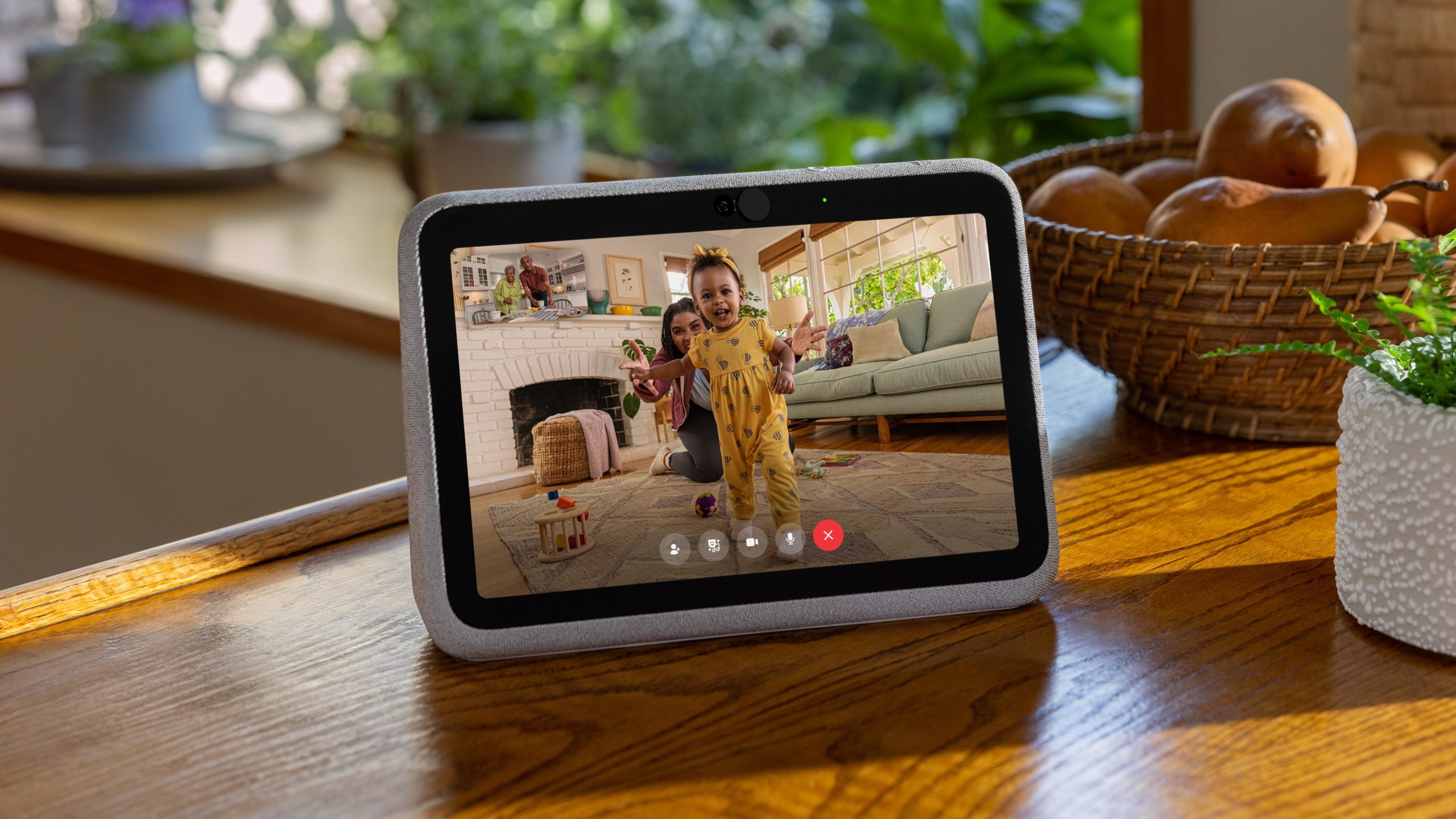
    The Portal smart display has been updated quite a few times with new features. After rebranding itself from Facebook to Meta, the social network has decided to turn its attention to the device once again.

    Earlier today, Meta announced that it has added new ways for Portal owners to use Facebook Assistant on the device. A new ability to let the Portal capture a moment during a Messenger call is now available for users, and the best thing is that it can be used hands-free by saying “Hey Portal, take a photo.”

    The update also adds the Alexa touch interface, which allows users to manage smart home devices, routines, alarms, music, smart doorbells and more by touch or directly from the Alexa app.

    As mentioned earlier, Meta is now rolling out new ways for users to stay connected with their Facebook friends on Portal, hands-free. Facebook Assistant can pull up a friend’s profile or recent posts. Portal owners can now say “Hey Portal, show me Stories” or ask about recent posts, responses and photos.

    Meta is adding group AR Effects that let people on a Messenger call to experience the same effects at the same time. Additionally, three new augmented reality games will be available for Portal owners via Facebook Assistant: Quizbee, Sequencer, and Port-a-Pet.

    Furthermore, Meta announced that starting today support for Microsoft Teams will be available on Portal, Portal+ and Portal Go. Finally, later this month, ESPN will expand from Portal TV to include Portal, Portal+ and Portal Go in the United States.

  • CEO Jack Dorsey leaves Twitter “effective immediately”

    CEO Jack Dorsey leaves Twitter “effective immediately”

    Jack Dorsey, who co-founded the popular Twitter social media site back in 2006, is stepping down as CEO of the company effective immediately. Replacing Dorsey will be Twitter chief technology officer Parag Agrawal.

    In a statement, Dorsey said, “I’ve decided to leave Twitter because I believe the company is ready to move on from its founders. My trust in Parag as Twitter’s CEO is deep. His work over the past 10 years has been transformational. I’m deeply grateful for his skill, heart, and soul. It’s his time to lead.”

    The 45-year-old Dorsey is also CEO of Square, a mobile payments company he co-founded. Dorsey will remain a member of the Twitter board until his current term expires at the  2022 stockholders meeting. Salesforce President and COO Bret Taylor will take over from Patrick Pichette as Chairman of the Board. Pichette will remain on the board as chair of the Audit Committee.

    The controversial social media site hopes to at least double its annual revenue by the end of 2023 while reporting 315 million monetizable daily active users by the end of that year. But these are goals that now are up to Mr. Agrawal to reach. As of last month, Twitter counted 206 million daily active users or 187 million monetizable daily active users worldwide. In the U.S., Twitter has 37 million monetizable daily active users.

    Dorsey had been removed as CEO of Twitter in 2008 before returning in 2015 when Dick Costolo left. Since Dorsey’s return on October 5th, 2015, Twitter shares have risen 85%. Shares of Dorsey’s other public company, Square, have risen 1,566% since the firm went public on Nov. 19, 2015. Investors initially took Twitter shares 11% higher to 52.27. But the stock has given up all of its gains and is now down more than 1% for the day at $46.49.

    Dorsey, as you might expect, took to his @jack Twitter page to confirm the news and to leave a long message to his followers. In it, Dorsey writes, “I want you all to know that this was my decision and I own it. It was a tough one for me, of course. I love this service and company … and all of you so much. I’m really sad … yet really happy. There aren’t many companies that get to this level. And there aren’t many founders that choose their company over their own ego. I know we’ll prove this was the right move.”

    Twitter became known worldwide as the platform used by former President Donald Trump who used the platform to float policy, attack opponents, and comment on the world as he saw it. Using Twitter in this fashion allowed the public to get an unprecedented and transparent look at the thoughts of a president.

    Twitter executive Vijaya Gadde, two months after Trump was inaugurated in 2017, said, “To me, there’s nothing better than having a political discourse in plain and open view and having access to your elected officials and being able to hold them accountable. In that sense, I think it’s a great thing because this wasn’t always possible before.” But Twitter permanently banned Trump on January 8th of this year, two days after the attack on the U.S. Capitol by Trump supporters who believed his lie about the election being stolen.

    At the time, Twitter announced the ban with a statement that read, “After close review of recent Tweets from the @realDonaldTrump account and the context around them — specifically how they are being received and interpreted on and off Twitter — we have permanently suspended the account due to the risk of further incitement of violence.”

  • Meta looking into launching its own retail stores in the US

    Meta looking into launching its own retail stores in the US

    Facebook’s parent company Meta is looking into opening its own retail stores in the United States, according to a report.

    The stores will largely be used to show off the business’ physical goods, such as its virtual reality headsets and video chat tablets which are already sold in other chains across the country, and allow customers to try them out in a bid to get them hooked into Meta’s forthcoming ‘metaverse’.

    “Today we are seen as a social media company, but in our DNA we are a company that builds technology to connect people, and the metaverse is the next frontier just like social networking was when we got started,” Meta CEO Mark Zuckerberg said when announcing Facebook’s name change.

    The first Meta flagship store is likely slated for Burlingame, California. The store was likely going to be called the ‘Facebook Store’, though it remains to be seen if this will still be the case after the business’ rebrand last week.

    Meta is late to the party on launching its own physical stores, with fellow tech giants Amazon and Google both having launched their own stores in the last few years.

    However, with its roughly 2.9 billion monthly active Facebook users globally as of the third quarter of 2021 (according to Statista), the business has a large pool of potential consumers to market itself toward.

  • Twitter brings Super Follows to everyone with an iPhone

    Twitter brings Super Follows to everyone with an iPhone

    Twitter announced it has begun testing a new monetization feature aimed at Twitter iOS users in early September. The so-called Super Follows feature is meant to allow Twitter users with more than 10,000 followers to earn a monthly revenue by offering an extra level of content and interaction as a monthly subscription.

    Initially, Super Follows was only available to select users in the US and Canada, all Twitter users on iOS will have access to the new feature. As mentioned earlier, if you’re a Twitter user with more than 10k followers and you live in the United States, you can apply to become a “super followed” content creator.

    There are three types of monthly subscriptions content creators can choose to offer to their followers: $2.99, $4.99, and $9.99. You don’t have to be in the United States to “super follow” someone, but you must have an iPhone to be able to use the feature.

    According to Twitter, content creators can earn up to 97% of the revenue from Super Follows subscriptions, as the company won’t take more than 3% share until you exceed $50,000 in lifetime earnings. After that point, Twitter’s share will increase up to 20% of future earnings.