Tag: southeast asia

  • Thailand Pivots Tourism Strategy to Target High-Value Visitors

    Thailand Pivots Tourism Strategy to Target High-Value Visitors

    Thailand has announced a pivot in its inbound tourism strategy toward high-value international travellers as of September 2026, dropping its long-standing pursuit of mass arrivals as visitor numbers struggle to reach pre-Covid levels.

    According to an analysis by Michael Baker, the Thai government is seeking to raise the demographic profile of its overseas visitors and spruce up the country’s international image.

    Targeting Quality Over Volume

    Marketing funds will now target higher-spending overseas visitors rather than mass-market volume. Across Asia, travel patterns are shifting under changing geopolitical conditions and government efforts to upgrade tourist spending.

    Total international arrivals still lag behind 2020 benchmarks. Instead of discounting package tours to fill hotel rooms and transport networks, state campaigns target visitors who spend heavily on premium hospitality, dining, and retail.

    Implications for Mall Operators and Brands

    Department store operators and luxury retailers in Bangkok and Phuket must now adjust customer acquisition. Upscale shopping centres could gain if basket sizes grow, even with footfall below historical peaks.

    Budget operators face steeper risks. Discount duty-free counters and mass souvenir chains rely on large tour groups for margins, leaving them exposed to sustained declines in passenger headcounts.

    Regional Shifts in Travel Demographics

    Destinations across Southeast Asia are fighting for the same affluent travellers. Thailand wants to lock in this spending base before rival hubs draw them away with flexible visa schemes and new luxury developments.

    Success depends on service quality and local infrastructure justifying higher trip expenses, especially as regional competition widens.

    Execution and Market Response

    Previous recovery drives relied on volume discounts to stimulate trade. Today, state tourism bodies and commercial partners must coordinate retail promotions, luxury offerings, and flight routes toward higher-yielding markets.

    Retailers and hotel operators are tracking quarterly per-visitor spending data to measure whether bigger individual receipts can offset the drop in total arrivals.


  • Southeast Asia Savvy Online Shoppers Spend 31% More at $11.5 Billion

    Southeast Asia Savvy Online Shoppers Spend 31% More at $11.5 Billion

    Discerning online buyers in Southeast Asia spend 31 per cent more each month than general consumers. Across six regional economies, they will generate 11.5 billion dollars in annual marketplace sales in 2026.

    A joint study from Lazada and commerce analytics group Cube defines roughly 24 per cent of regional consumers as savvy shoppers. Another 18 per cent sit immediately below that threshold. These buyers demonstrate distinct commercial habits. They cross-check merchandise across channels, inspect merchant credentials, and routinely pay premiums for guaranteed authenticity and transaction safeguards.

    How purchasing behavior splits across markets

    Penetration of these higher-spending consumers varies widely by country. The Philippines leads Southeast Asia with 36 per cent of its online buyers qualifying as savvy. Indonesia follows at 28 per cent and Vietnam at 25 per cent. Thailand registers 22 per cent, while Malaysia records 20 per cent. Singapore sits at the bottom of the regional ranking at 9 per cent.

    Friction points also differ across borders. Shoppers in Malaysia and Vietnam report product verification as their primary hurdle during online purchases. Buyers in Singapore, Indonesia, and the Philippines cite buyer protection and seller confidence as their main challenges. Thai consumers report an even split between verification and security concerns.

    Value replaces pure price discounts

    Shoppers across Southeast Asia show an increased willingness to invest time to secure better transactions. About 43 per cent of surveyed consumers spend extra time searching for improved offers. Another 41 per cent delay purchases to find better timing. Meanwhile, 36 per cent conduct detailed price comparisons before checking out.

    Price concessions lose traction when they compromise trust. Only 14 per cent of consumers say they would sacrifice authenticity indicators for a lower price. Just 13 per cent would forfeit purchase protections to obtain a steeper discount. Among savvy buyers, 47 per cent state they will pay extra fees for certified order protection, compared to 30 per cent among general consumers.

    Discovery moves outside marketplace walls

    Transaction journeys now start well before buyers enter marketplace apps. The study finds that 83 per cent of savvy consumers discover products outside primary marketplace catalogs, compared to 42 per cent of general buyers. 86 per cent consult third-party information channels during purchase evaluation. A full 91 per cent verify seller track records across external web sources.

    Savvy consumers also buy more frequently and spread their spending across competing channels. Some 58 per cent shop online several times each week, compared to 35 per cent of baseline consumers. Mall environments capture 53 per cent of this cohort, compared to 40 per cent for general shoppers. Multi-homing is standard practice. About 82 per cent of savvy shoppers actively use all three major marketplace platforms across the region, against 61 per cent among the general shopper base.

    Commercial demands on digital merchants

    For marketplace merchants and brand principals, the findings demand a recalibration of promotional spending. Pure discounting drives immediate volume. However, higher-value shoppers demand verified supply chains, fast dispute resolution, and consistent branding across external touchpoints before committing their baskets.

    “Southeast Asia’s eCommerce market is no longer defined by whether consumers shop online, but by how confidently and effectively they do so,” said Simon Torring, Co-Founder of Cube.

    Platform operators now face the operational task of retaining these multi-homing consumers as growth shifts from user acquisition to basket optimization. Marketplaces that fail to guarantee authenticity will see the most profitable quartile of regional demand migrate to rival platforms offering tighter brand verification standards.

  • Philippine Cash Remittances Reach Seven-Month High of $3.2 Billion in July

    Philippine Cash Remittances Reach Seven-Month High of $3.2 Billion in July

    Cash remittances sent home by overseas Filipinos rose 1.9 percent year on year to $3.2 billion in July, according to the Bangko Sentral ng Pilipinas.

    That is the highest single-month inflow since December 2025. Inflows reached $3.5 billion that month.

    Commercial bank transfers gained 2.3 percent through the first seven months to reach $20.4 billion. Full-year remittances should reach $36.6 billion under central bank projections. That would represent a 2.7 percent increase over 2025.

    Currency weakness and household purchasing power

    Growth came as the Philippine peso weakened toward 63 against the US dollar. A softer peso yields more local currency per transferred dollar. While that often prompts overseas workers to trim wire volumes, total dollar values climbed anyway.

    Retail chains and packaged goods suppliers rely on these monthly transfers to sustain basic basket sales. Headline inflation remains above the central bank’s 3 percent target. Because of that, grocers need family incomes bolstered by overseas cash to maintain volume growth.

    Top source markets and correspondent banking channels

    The United States generated the largest share of reported funds, followed by Singapore and Saudi Arabia. North America hosts major global remittance and correspondent banking clearing hubs. That concentration skews the reported US total higher, the central bank noted.

    These inflows anchor domestic private spending for mall landlords, department stores, and consumer goods distributors across Manila and regional urban centers. Retail foot traffic slowed in the third quarter due to Middle East tensions and severe monsoon storms at home. Steady foreign transfers kept merchant revenue afloat.

    Remittances continue to demonstrate resilience and remain a critical buffer for the Philippine economy.

    Rebound from second-quarter deceleration

    July’s 1.9 percent pace marked a rebound after remittance growth slipped to multi-year lows in June. Overseas workers continue to prioritize family allowances despite economic uncertainty across host countries.

    Banks and digital money platforms have cut cross-border transfer friction to boost deposit volumes. Faster processing sends household liquidity straight to local checkout counters without clearing delays.

    What to watch through year-end

    Monetary officials will track third-quarter figures to see if transfers match the $36.6 billion annual projection. Store operators will focus on whether fourth-quarter holiday transfers match the $3.5 billion seasonal peak recorded at the close of 2025.

  • VinFast Affiliate GSM Launches First Overseas Motorbike Service in Jakarta

    VinFast Affiliate GSM Launches First Overseas Motorbike Service in Jakarta

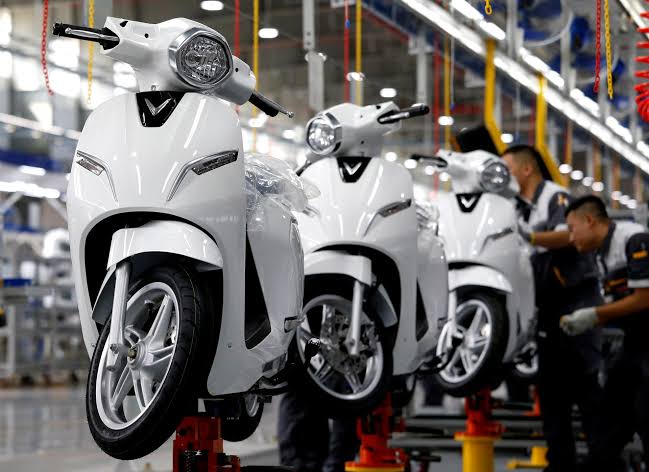
    Vietnam’s electric taxi operator Green and Smart Mobility (GSM) launched VinFast electric motorbike taxis in Jakarta in September 2026. The rollout is its first two-wheeler passenger service outside Vietnam.

    This expansion deepens the Vingroup affiliate’s presence in Southeast Asia’s largest economy, potentially creating another sales channel for the loss-making EV producer. GSM previously launched electric car services in the Indonesian capital.

    Fleet deployment across Jakarta

    Operating locally as PT XANHSM Green and Smart Mobility Indonesia, the company integrated two-wheeler bookings into its consumer app alongside its Green Car and Green Premium tiers. Local operating centres recruit drivers directly, using VinFast electric scooters built for commercial urban transit.

    Jakarta is the first overseas market for GSM’s two-wheeler taxi model. In Vietnam, the company already runs extensive fleets of electric cars and scooters across major cities, including Ho Chi Minh City and Hanoi.

    Captive demand for VinFast

    Commercial volume from the expansion flows directly to VinFast. The Vietnamese automaker remains loss-making as it scales production. Internal fleet sales through GSM absorb factory output and build brand visibility in new export territories.

    Deploying fleets creates instant street-level exposure in congested Southeast Asian capitals. For vehicle manufacturers entering price-sensitive markets without established dealer networks, a proprietary ride-hailing platform serves as both a test fleet and a live showroom.

    Competition in Indonesian ride-hailing

    Entering Jakarta puts GSM into direct competition with dominant incumbents Grab and GoTo’s Gojek. Both operate massive two-wheeler networks across Indonesia. Established players rely primarily on gig drivers who own their vehicles. GSM instead operates a dedicated fleet structure, controlling vehicle standardisation and battery charging infrastructure.

    High capital costs for vehicle procurement, fleet maintenance and charging support present clear financial risks in a market with strictly regulated motorcycle fares and severe price competition. GSM bets that lower operating and maintenance costs per kilometre will offset the capital outlay of deploying new electric two-wheelers.

    Regional footprint and next steps

    Parent conglomerate Vingroup is pushing to build an international footprint for its transport ecosystem. GSM has expanded rapidly across Southeast Asia and Central Asia, entering Laos and Kazakhstan with fleet operations running exclusively on VinFast hardware.

    Regulatory approvals for broader route operations and expanded driver recruitment across greater Jakarta will determine how quickly GSM scales beyond initial central deployment zones.

  • Anthropic to Open Fifth Asia-Pacific Hub in Singapore in October

    Anthropic to Open Fifth Asia-Pacific Hub in Singapore in October

    Anthropic will open its first Southeast Asian office in Singapore this October, establishing its fifth Asia-Pacific base as enterprise competition with OpenAI escalates across regional markets.

    Singapore ranks second globally out of 121 countries for per-capita usage of the company’s Claude model, trailing only Australia.

    The Singapore hub follows earlier regional openings in Tokyo, Seoul, Bengaluru and Sydney. Dale Finlay, who spent six months leading regional go-to-market operations at OpenAI, will head Anthropic’s Southeast Asian expansion.

    The Race for Regional Enterprise Accounts

    Enterprise demand across Southeast Asia is shifting from experimental trials to operational software integration. By setting up physical operations in Singapore, Anthropic gains direct access to regional corporate headquarters, financial institutions and digital commerce operators evaluating large language model providers.

    OpenAI established its Asia headquarters in Singapore in late 2024 and recently moved to secure 100,000 square feet of office space at Shaw Tower. OpenAI also recruited former Meta South Asia head Sandhya Devanathan to direct its ASEAN and Australian operations, establishing an aggressive commercial baseline that Anthropic must now counter with local technical support and enterprise sales teams.

    Singapore as the AI Gateway

    Singapore has committed more than SG$1 billion ($770 million) to upgrade national artificial intelligence capabilities and infrastructure. That funding and regulatory clarity have attracted a dense cluster of American software developers, including Cognition and Sierra, which chose the city-state for their regional headquarters.

    Hardware developers are following the same path. San Francisco-based note-taker manufacturer Plaud opened its regional base in Singapore, expanding its local team from 10 to 100 staff in nine months while committing SG$20 million ($15.7 million) to local engineering and product development across twelve regional markets.

    Execution and Talent Pressures

    For enterprise software vendors, the primary hurdle in Southeast Asia is localized multilingual workflow deployment rather than raw compute availability. Corporate buyers require models that handle fragmented languages and regional compliance standards without compromising data security.

    The competition between Anthropic and OpenAI will center on poaching senior enterprise sales talent and securing multi-year integration contracts with regional conglomerates before the close of the fiscal year.

  • Malaysia Q2 Retail Sales Growth Falls Short as Spending Tightens

    Malaysia Q2 Retail Sales Growth Falls Short as Spending Tightens

    Malaysia recorded weaker than expected retail sales growth in the second quarter. Households curbed discretionary spending under persistent cost of living pressures.

    Store operators were caught off guard. They had anticipated stronger post-holiday consumption across shopping malls and high street locations.

    Squeeze on Household Budgets

    Shoppers across urban centers like Kuala Lumpur redirected budgets toward essential groceries and basic utilities. They cut visits to apparel boutiques, specialty food outlets and consumer electronics chains. That left retailers managing slower foot traffic, smaller basket sizes and rising price sensitivity across mid-market categories.

    Department stores and specialty chains felt the sharpest pinch during the quarter. Food and beverage operators also saw customers trade down to cheaper meals and cut back on cafe visits.

    Operator Margins and Inventory Risk

    This slowdown creates inventory friction for regional retailers that built up stock expecting resilient consumer demand. Excess seasonal merchandise forces heavier discounting. Gross margins take the hit while operating overheads, logistics costs and mall service charges stay high.

    Commercial landlords face tougher lease renewal talks as tenant turnover risk mounts. Shopping center operators across Southeast Asia counted on domestic spending to balance uneven tourist arrivals. A local slowdown weakens tenant revenue-sharing agreements and dampens rental reversion rates.

    Broader Southeast Asian Pattern

    Similar patterns are playing out across neighboring markets, including Thailand and Indonesia. Post-pandemic retail rebounds there also gave way to cautious household budgeting. Earlier quarterly gains relied on festival spending, but momentum vanished once promotional cycles ended.

    Retail groups are now recalibrating third-quarter procurement orders and delaying non-critical store refits. Attention turns to upcoming third-quarter performance data and year-end holiday order books to gauge whether revenue stabilizes before 2027.

  • Vietnam’s Tevo Secures $10 Million from Singapore’s PvX

    Vietnam’s Tevo Secures $10 Million from Singapore’s PvX

    Vietnamese tech platform Tevo secured $10 million this week from Singapore investment firm PvX to fund customer acquisition and accelerate platform expansion.

    The capital injection gives the company fresh liquidity to expand its user base across Vietnam while upgrading its underlying product infrastructure.

    Capital Allocation and Expansion Targets

    Tevo directed the proceeds straight toward customer acquisition campaigns, technical hiring, and regional partner integrations. The company plans to scale its operations beyond initial metropolitan hubs, focusing on higher transaction volumes and deeper user engagement across consumer touchpoints.

    For Singapore-based PvX, the transaction broadens its portfolio footprint in Vietnam, where digital consumption continues to outpace broader regional averages. The investment structure reflects an ongoing appetite among Southeast Asian venture capital firms for digital operators that demonstrate direct paths to unit profitability rather than unchecked market share land-grabs.

    Shifting Dynamics in Vietnam Tech Financing

    Regional capital deployment into Vietnamese digital businesses has shifted over the past two years toward firms with proven customer retention. Early-stage consumer platforms across Southeast Asia previously relied on aggressive discount subsidies, but investors now demand tighter payback periods on acquisition spending.

    The primary operational risk for Tevo sits in user retention once direct marketing spend moderates. Digital consumer acquisition costs across Ho Chi Minh City and Hanoi rose over the last eighteen months as domestic operators competed for the same demographic of smartphone users.

    Cross-Border Deal Momentum

    Cross-border funding from Singapore into Vietnamese consumer and technology startups maintained momentum following several mezzanine and early-stage rounds closed earlier this year. Regional funds continue to route investments through Singapore holding entities to back Vietnamese operating assets in retail, logistics, and consumer services.

    Market observers will watch Tevo’s net subscriber growth figures and its next operational disclosures in early 2027 to see how effectively the $10 million round translates into retained user volume.

  • Skechers Expands Asian Performance Lines 1 Year into Private Ownership

    Skechers Expands Asian Performance Lines 1 Year into Private Ownership

    Skechers is pushing deeper into performance categories across Asia as it evolves from a footwear brand into a broader lifestyle and sportswear business. In an interview with Inside Retail in September 2026, Cedrick Tan explained how the company adapts its strategy across diverse regional markets.

    The push comes 1 year into life as a privately held company. Skechers is expanding its focus beyond footprint expansion to deepen customer relationships through retail experiences, sports, entertainment, communities and local partnerships.

    Tan said the company sees room to grow across running, golf, football and emerging sports like pickleball, supported by proprietary technologies such as Hands Free Slip-ins, Arch Support and Glide-Step. The assortment also incorporates apparel, accessories and market-specific items like sports hijabs across Southeast Asia.

    Splitting Performance and Mass Retail

    Sportswear growth in Asia requires a divided merchandising model. Mature metro markets demand technical running and convenience-oriented shoes. Developing hubs, meanwhile, require sharper entry price points and everyday utility.

    Rivals like Nike and Adidas have faced inventory clearing cycles across Asia when pushing uniform global performance lines into secondary cities. Skechers aims to avoid those markdowns. It pairs its walking foundation with sport-specific entry models, lowering the price barrier for recreational runners and weekend athletes.

    Shifting Channel Strategies for Mall Landlords

    For shopping centre operators across Southeast Asia, the broader sportswear lineup alters floor space requirements. Skechers stores now compete for larger inline units instead of standard footwear bays. That footprint growth pressures traditional multibrand sports retailers that depend on basic sneaker sales.

    Growth should not be about expansion for its own sake. It needs to be relevant, sustainable and grounded in consumer demand.

    Apparel and sports accessories carry different margin profiles than molded footwear, raising supply chain demands for regional franchisees. Localized collections like modest athletic wear give the company an edge. The approach targets shoppers in Indonesia and Malaysia whom Western performance brands often overlook.

    Transition to Private Operations

    This merchandise pivot builds on a restructuring completed in September 2025, when Skechers shifted to operate as a privately held entity. Free from quarterly reporting pressure, regional managers recalibrated distribution networks. They moved away from door-count growth to focus on experiential stores and category-specific sports marketing.

    Distribution speed will test operations next as autumn performance collections roll out to flagship stores in Singapore, Bangkok and Jakarta.

  • Axiata Reports Stronger 1H26 Earnings and Declares 5.5 Sen Dividend

    Axiata Reports Stronger 1H26 Earnings and Declares 5.5 Sen Dividend

    Axiata Group Berhad posted higher earnings in the first half of the fiscal year. The company declared an interim cash dividend of 5.5 sen per share.

    Operational gains drove the payout across core markets. Network rationalisation and tighter cost controls helped lift regional performance.

    Regional Markets Drive Operating Momentum

    The Kuala Lumpur-based telecommunications conglomerate manages digital telcos and digital businesses across ASEAN and South Asia. Its portfolio spans frontier and emerging markets including Indonesia, Bangladesh, Sri Lanka, and Cambodia, alongside digital infrastructure provider EDOTCO.

    Strong cash generation across operating units supported the distribution. Institutional funds and retail shareholders receive direct returns after sustained capital expenditure on regional network infrastructure.

    Asset Consolidation and Capital Allocation

    Regional operators continue adjusting balance sheets following large-scale consolidation across Southeast Asian mobile markets. Axiata restructured operations over recent quarters to cut debt exposure, streamline holding structures, and focus capital on cash-generating assets.

    For enterprise suppliers and telecom equipment vendors, steady cash flow at group level keeps network maintenance and connectivity contracts on schedule. Frontier market foreign exchange volatility and inflation remain the primary risks. Both pressures compress margins when earnings convert back into Malaysian ringgit.

    Balancing Debt and Shareholder Returns

    Balance sheet pressure drove management to prioritise structural repairs, selective asset monetisation, and strict capital allocation across all operating subsidiaries. Earlier quarters saw earnings tempered by currency depreciation in South Asian markets and rising interest financing costs.

    Investors now look to the group’s full-year earnings release and subscriber growth metrics in Indonesia and frontier markets to confirm dividend sustainability.

  • Cinnabon to Exit Singapore as Final Ion Orchard Store Closes

    Cinnabon to Exit Singapore as Final Ion Orchard Store Closes

    Cinnabon will pull out of Singapore on September 22, shutting its final Ion Orchard outlet after a three-year comeback attempt failed to gain commercial traction. The closure leaves master franchisee Wabi-Sabi empty-handed against an initial target to build a network of 10 locations across the city-state within five years.

    The American cinnamon roll brand announced the wind-down on September 8, confirming that operations at its sole remaining store in Orchard Road will finish before the end of the month. Outlets at Raffles City Shopping Centre and Jewel Changi Airport have already ceased trading.

    High Rents and Footfall Realities

    Securing high-profile retail space in Singapore demands relentless sales volume to cover overheads. Single-category bakery concepts face a severe margin squeeze when novelty fades and everyday demand fails to match prime shopping mall rental rates. Ion Orchard, Raffles City and Jewel Changi offer heavy pedestrian traffic, but they rank among the most expensive commercial addresses in Southeast Asia.

    For food and beverage operators, relying on a narrow product catalogue creates immediate vulnerability when footfall shifts or local consumer spending tightens. While larger multi-brand operators can cross-subsidise prime leases, standalone single-concept franchisees bear direct exposure to rising mall rents and labour costs. Wabi-Sabi took on substantial lease commitments in premier corridors rather than testing lower-cost suburban clusters first.

    The Second Exit in Two Decades

    This shutdown marks the second time Cinnabon has abandoned the Singapore market. The chain previously operated in the city before closing its retail footprint in 2002. It returned in February 2023 with the Raffles City debut, aiming to build a broader local presence through standard units and smaller kiosk formats.

    Master franchisee Alvin Ng outlined plans at the launch to take the franchise into suburban residential hubs. Those outer-island locations never materialised, leaving the business dependent on tourist-heavy downtown malls where foot traffic fluctuates and local repeat purchases remain harder to lock down.

    Regional Footprint After Singapore

    The retreat from Singapore leaves Cinnabon adjusting its wider Southeast Asian strategy. The brand re-entered neighbouring Malaysia in mid-2024 with a different franchise partner, testing whether suburban mall clusters and lower operating costs in that market can sustain unit economics that proved unviable in Singapore.

    Final trading at the Ion Orchard store concludes on September 22, when Wabi-Sabi hands back the premises and Cinnabon officially vacates the Singapore market.

  • Starbucks Opens Vietnam’s First Signing Store in Ho Chi Minh City

    Starbucks Opens Vietnam’s First Signing Store in Ho Chi Minh City

    Starbucks opened its first Signing Store in Vietnam on Ho Chi Minh City’s Cao Thang Street on Wednesday, expanding a regional format that already runs 26 outlets across four other Asian markets.

    Deaf staff work alongside hearing employees across counter service and daily operations, using visual menus, gestures and written order systems rather than spoken prompts.

    Operations on Cao Thang Street

    The unit sits set back from the main roadway on Cao Thang Street with a garden-style layout planned to lower ambient street noise for staff and guests. It serves the chain’s standard beverage and food menu while changing the service counter workflow to accommodate point-and-sign ordering.

    Chi Nguyen, director of external affairs at Starbucks Vietnam, stated to local media that the location functions as an inclusive space where staff and visitors interact directly through visual methods.

    Format Expansion Across Asia

    Specialised format stores of this type allow multinational food and beverage operators to test altered counter workflows without changing back-of-house supply chains. Starbucks established its first signing outlet in Kuala Lumpur in 2016 before expanding the concept to China, Japan and South Korea, where dedicated customer communication tools were integrated into standard point-of-sale setups.

    For commercial landlords, quiet and garden-style layouts of this type offer ways to activate secondary street frontage and deeper, non-standard retail floorplates that struggle to accommodate high-turnover drive-throughs or standard counter lines. The operational friction sits in staff onboarding and maintaining service speed during peak morning trade, where non-verbal communication systems must process complex drink customisations without causing counter bottlenecks.

    Market Positioning in Vietnam

    Starbucks opened its initial location in Ho Chi Minh City in 2013 and has spent more than a decade building a store network across major commercial hubs including Hanoi, Da Nang and Binh Duong. The brand competes against established domestic chains such as Highlands Coffee and Phuc Long, which operate larger branch networks at lower price points across Vietnam’s urban centres.

    The Cao Thang unit brings the company’s regional signing store count to 27 locations across Asia, with operators watching whether the model will be adapted for additional high-density retail districts in Hanoi.

  • Mixue Closes 89 Overseas Stores as First-Half Profit Drops 15%

    Mixue Closes 89 Overseas Stores as First-Half Profit Drops 15%

    Mixue cut its overseas footprint by 89 stores in the first half of 2026, driven by closures across core Southeast Asian markets Vietnam and Indonesia.

    Net profit fell 15 percent year on year to 2.32 billion yuan, even as total revenue edged up 2.3 percent to 15.2 billion yuan ($2.26 billion). Group filings show higher selling and distribution expenses ate directly into margins across its franchise network.

    Rising Distribution Costs Squeeze Margins

    The Henan-headquartered drinks giant operated 63,987 outlets globally by June 30, with 59,609 locations in mainland China. That leaves roughly 4,378 international stores, concentrated heavily in Southeast Asia where the brand sells budget soft-serve ice cream and milk tea.

    Mixue did not publish country-level closure totals for Vietnam or Indonesia. The company stated in its interim report that reducing store density improved individual unit quality and created a cleaner base for sustainable operations.

    Franchisee economics have tightened across the region. Rapid street-level expansion in major cities sparked cannibalisation between neighbouring outlets, forcing operators to absorb higher logistics costs on imported syrups and packaging without room to raise retail prices.

    Rebalancing Southeast Asian Footprints

    Vietnam was Mixue’s first international market when the chain launched in Hanoi in 2018. By September 2024, the brand ran 1,304 stores across the country, according to its Hong Kong listing prospectus filed in early 2025.

    Mass-market tea and coffee chains in Southeast Asia now face heavier competition from local discounters and Chinese rivals copying the low-price franchise playbook. Mixue’s retreat from sheer store count growth signals that overseas networks cannot rely solely on relentless opening schedules to deliver profit.

    Investors now await Mixue’s updated capital-raising timeline in Hong Kong, where full-year store productivity figures will test whether the overseas pruning protected operating cash flow.

  • Mitsubishi Motors Revives Pajero SUV Starting in Thailand

    Mitsubishi Motors Revives Pajero SUV Starting in Thailand

    Mitsubishi Motors has unveiled the reboot of its flagship Pajero sport utility vehicle, beginning a worldwide commercial rollout that starts in Thailand.

    The Tokyo-based carmaker is leaning on its best-known nameplate to protect sales volumes across Southeast Asia, where Japanese brands face intense competition from Chinese electric vehicle manufacturers.

    Defending the Southeast Asian Base

    Thailand serves as Mitsubishi’s primary manufacturing and export hub in the region. Launching the Pajero there first targets a domestic customer base that has historically favored rugged, ladder-frame utility vehicles and diesel-powered transport.

    Chinese brands such as BYD have expanded rapidly across Thai showrooms, cutting into market share long dominated by Japanese legacy marques. Mitsubishi is countering that push by committing further to full-sized utility models where brand loyalty and established dealership servicing networks remain strong.

    The Broader Regional Landscape

    Japanese automakers have spent decades building integrated supply chains and dealer networks across ASEAN member states. That dominance is eroding as regional governments roll out subsidies and lower tariffs to attract battery-powered vehicle manufacturing.

    While rivals accelerate software alliances and pure electric platforms, Mitsubishi is relying on proven model equity to maintain factory output and retail cash flow across its core export destinations.

    Mitsubishi will follow the Thai debut with rollout schedules, pricing and regional delivery dates for secondary export markets across Asia-Pacific and the Middle East.

  • Video Commerce Captures 20 per Cent of Southeast Asia E-Commerce GMV

    Video Commerce Captures 20 per Cent of Southeast Asia E-Commerce GMV

    Video commerce now accounts for roughly a fifth of Southeast Asian e-commerce gross merchandise value, forcing consumer brands across the region to overhaul their distribution models. Data compiled by Google, Temasek and Bain shows creator-led sales shifting from experimental promotional spending into core retail infrastructure across key markets including Indonesia, Thailand and Vietnam.

    That expansion brings operational friction. Sellers running live broadcasts face steep drops between top-line gross merchandise value and realized revenue once cash-on-delivery refusals, return windows, creator fees and platform commissions clear. Promotional subsidies, including platform-funded vouchers and discounted freight, have masked true channel margins during market-share acquisition phases. When platforms pull back subsidies, merchant unit economics drop quickly.

    Platform control and merchant margin pressure

    Selling through creator streams leaves transaction infrastructure in third-party hands. Platforms control storefronts, checkout systems, payment rails, customer records, delivery terms and dispute resolution, leaving brands to supply inventory and absorb product returns.

    Multi-market operators managing sales across Jakarta, Bangkok and Manila face diverging compliance environments. Content licensing, creator contracts, disclosure mandates and withholding taxes vary by jurisdiction, preventing companies from running uniform regional campaigns without local adaptation.

    The pattern follows China’s live commerce cycle. Brands in that market initially concentrated volume through top independent hosts before margins deteriorated. Chinese consumer labels responded by building internal broadcast studios and running scheduled daily programming to retain customer data and protect gross margins.

    Regulatory scrutiny reshapes regional operations

    Governments across Southeast Asia have moved to regulate social commerce platforms as critical retail infrastructure rather than digital advertising channels. Indonesia enacted Ministry of Trade Regulation 31 in September 2023, banning direct e-commerce transactions inside social media applications. The rule halted TikTok Shop until parent company ByteDance completed a 1.5 billion dollar investment to secure a controlling stake in GoTo’s Tokopedia platform.

    Vietnam enacted Decree 147 in late December 2024, enforcing strict account verification requirements before individuals can post or host livestreams. Merchant operators are now building direct customer channels, internal studio facilities and formal data-rights clauses into creator agreements across tier-two Vietnamese cities and eastern Indonesia, where production overhead remains competitive.

    Retailers across the region now track net settlement data and return rates per stream as platforms adjust commercial take rates and enforcement rules throughout 2026.

  • Aptar Beauty Shifts Focus to India and Southeast Asia as Market Hits 4% Growth

    Aptar Beauty Shifts Focus to India and Southeast Asia as Market Hits 4% Growth

    Aptar Beauty is shifting its product development and manufacturing footprint toward India and Southeast Asia as global beauty demand stabilises at 4 per cent annual growth.

    The dispensing systems supplier developed its Nouvelle airless dispenser specifically in India to capture surging demand for premium skincare before exporting the design across the region. Aptar plans to roll out the Indian-made packaging line into Thailand and Indonesia, tapping markets where consumer adoption is rising alongside trading up to higher-end product formats.

    Localising production across India and Southeast Asia

    International beauty brands in China face softer sales while domestic players gain ground, prompting packaging suppliers to diversify their regional revenue base. To support Asian fragrance demand, Aptar took a stake in Chinese manufacturer Goldrain to produce perfume pumps tailored to local price points and design preferences.

    Regional production sites in India, Thailand, and China also insulate the company against trade barriers and US tariffs. Operating plants across seven countries allows the group to supply multinational brands locally rather than shipping components across borders.

    For retailers and beauty brands across the Asia-Pacific region, packaging suppliers are moving away from adapting Western designs for Asian shelves. Aptar, like competitors Berry and Silgan, is now engineering packaging in Asia for local climate conditions, viscous formulations, and regional cost targets before distributing those formats globally.

    Engineering pumps for new cosmetic formulas

    Formulation changes are forcing mechanical redesigns across beauty dispensers. Skincare brands are replacing silicones with short-chain alkanes, which cause standard polyolefin plastics to swell and jam pump mechanisms.

    Fragrance houses are also introducing water-based, alcohol-free sprays that standard pumps cannot atomise properly. Aptar developed customised dispensing hardware for formulations like Guerlain’s Aqua Allegoria Perle skincare fragrance, while engineering its GSA platform for high-viscosity creams and expanding refillable systems such as its Gaïa airless line used by Clarins.

    The supplier is now eliminating polyoxymethylene and per- and polyfluoroalkyl substances across its catalogue ahead of the enforcement of the European Union’s Packaging and Packaging Waste Regulation.