Retail News CRM

Tag: Standard Chartered

  • Standard Chartered Hires Southeast Asia Private Banking

    Standard Chartered Hires Southeast Asia Private Banking

    Following the exit of Srinivas Siripurapu from Standard Chartered, the private bank has swiftly hired a replacement.

    Cedric Lizin joins the bank as its South and Southeast Asia private banking head, following his most recent stint as the Dubai-based head of wealth management at UBS. Andrew Ho, south and southeast Asia market head at the private bank will take on interim responsibilities until Lizin joins later this year.

    The bank has been facing a flurry of regulatory hiccups including the most recent news that it was reviewing roughy 8,000 client accounts from its Dubai arm due after regulators exposed a severe lack of «know-your-client» data ranging from wealth source to even current address or phone numbers.

    In addition to regulatory challenges, the private bank also faces a high level of staff dissatisfaction, according an internal survey.  When asked if they would recommend others to work for Standard Chartered’s private banking business, the internal metric scored negatively, a report noted.

    And possibly as a means of improving morale, senior manages in the region recently delivered handwritten «thank you» cards to staff. The bank subsequently furthered the exercise by asking employees to write letters praising each other during a team bonding session.

  • Standard Chartered Hires Southeast Asia Private Banking

    Standard Chartered Hires Southeast Asia Private Banking

    Following the exit of Srinivas Siripurapu from Standard Chartered, the private bank has swiftly hired a replacement.

    Cedric Lizin joins the bank as its South and Southeast Asia private banking head, following his most recent stint as the Dubai-based head of wealth management at UBS. Andrew Ho, south and southeast Asia market head at the private bank will take on interim responsibilities until Lizin joins later this year.

    The bank has been facing a flurry of regulatory hiccups including the most recent news that it was reviewing roughy 8,000 client accounts from its Dubai arm due after regulators exposed a severe lack of know-your-client data ranging from wealth source to even current address or phone numbers.

    In addition to regulatory challenges, the private bank also faces a high level of staff dissatisfaction, according an internal survey.  When asked if they would recommend others to work for Standard Chartered’s private banking business, the internal metric scored negatively, a Bloomberg report noted.

    And possibly as a means of improving morale, senior manages in the region recently delivered handwritten thank you cards to staff. The bank subsequently furthered the exercise by asking employees to write letters praising each other during a team bonding session.

  • Standard Chartered Not Ruling Out Singapore Digital Bank

    Standard Chartered Not Ruling Out Singapore Digital Bank

    The bank is keeping its options open about applying for a digital bank license in Singapore, and will likely follow steps it has taken in Taiwan and Hong Kong in partnering with non-bank firms, if it were to apply.

    Standard Chartered has not ruled out participating in Singapore’s upcoming digital banking regime, a spokesperson for the bank told «The Business Times.»

    «Our experience in these markets will serve us well as we continue to explore the best digital model for our clients in Singapore,» the spokesperson said.

    The Monetary Authority of Singapore (MAS) in June announced that it will issue up to five digital bank licenses, comprising up to two digital full bank licenses, reserved for locally-owned entities, and up to three digital wholesale bank licenses. Applications are being accepted until the end of the year, with successful license recipients to be announced in mid-2020 and the rollout of operations by mid-2021.

    Standard Chartered is among four foreign banks that have a large retail presence on the island. However, it can only apply for a digital wholesale bank license, which is open to foreign entities. Alternatively, it can look for a Singapore partner to set up a fully digital bank.

    SC Digital, the bank’s joint venture with telecoms company PCCW, Hong Kong Telecom (HKT), and Chinese travel services provider Ctrip is among eight entities that have received a virtual bank license in Hong Kong.

    Standard Chartered said it would offer travel, entertainment and telecoms products and services on its virtual banking platform, and integrate virtual banking into the services offered by its partners and leverage their customer bases to grow its reach.

    The bank also took a 5-percent stake in Line Bank, an upcoming digital bank linked to the Link messaging app, which received a virtual banking license in Taiwan in July.

  • Standard Chartered Banks on Chinese Fintechs

    Standard Chartered Banks on Chinese Fintechs

    Standard Chartered has launched a Shanghai-based innovation lab to tap China’s tech market and improve its own capabilities.

    The eXellerator innovation lab in China alongside others in Singapore Hong Kong, London, Kenya, and San Francisco are part of the bank’s SC Ventures unit, a research and development arm focused on innovation and fintech.

    With the launch of the eXellerator, Standard Chartered aims to deepen its contribution and participation in China’s vibrant technology and innovation ecosystem, the bank said, highlighting various tech competencies including artificial intelligence, biometrics and mobile payments that could improve its client products and experiences.

    In addition, the bank also highlights the opportunity for such fintechs startups to scale their solutions across the bank’s global business and leverage the opportunity to co-create new businesses and operating models in the process.

    Rapid changes in financial technology are reshaping the future of the global banking industry, especially here in China which is home to some of the world’s most established companies leading the way in areas like artificial intelligence and Big Data, said Jerry Zhang, CEO of Standard Chartered Bank (China), stressing the Chinese market’s strategic importance to the group.

    Alex Manson, global head of SC Ventures echoed the sentiments emphasizing that a mere online banking app will not be enough to rewire the DNA. To truly rewire the DNA in banking, we need to go beyond just offering a digital interface, he said. Our eXellerators create an environment which combines innovation from both in and outside the Bank.

    The rewiring is well underway in Asia with various milestones recently achieved. In Hong Kong, it established a strategic joint venture with major local telecoms PCCW and HKT, alongside travel service provider Ctrip to build a standalone digital bank. And in India, it will be launching an open digital platform targeting SME clients with various financial and business solutions.

  • Standard Chartered Offers New Tool Powered By IBM

    Standard Chartered Offers New Tool Powered By IBM

    The solution is now live in key markets across Asia, Africa, and the Middle East1, with more markets across the bank’s footprint to follow, according to a media release. Traditional documentary trade requires millions of data elements in paper-based, unstructured documents – often issued by various companies – to be reviewed through a largely manual process.

    With the implementation of Standard Chartered’s Trade AI Engine powered by IBM, this time-consuming and high-risk process is now significantly automated:

    • Conversion of non-digital shipping documents into machine-readable format enabled by Optical Character Recognition (OCR)
    • Identification and classification of document types from an initial pre-defined database
    • Continuous Machine learning (ML) based on user re-classification/re-defining of data elements to further improve accuracy
    • Natural Language Processing (NLP) capabilities to read and capture context from data in the documents

    The innovative solution allows the ban to handle high volumes of diverse back office tasks with greater efficiency and accuracy, thus offering a more seamless trade processing experience for clients.

    The «Trade AI Engine» is currently live in India, Nepal, Botswana, Kenya, Uganda, South Africa, Zambia, Tanzania, Zimbabwe, Angola, Cameroon, Côte d’Ivoire, Gambia, Ghana, Nigeria, Sierra Leone, Mauritius, UAE, U.K., Iraq, Bangladesh, Thailand, Philippines, Indonesia, Pakistan, Sri Lanka, Bahrain, Qatar, Jordan and Oman.

    Additional markets to follow are Japan, Brunei, Indonesia, Taiwan, Hong Kong, Singapore, Malaysia, China, and the U.S.

  • Standard Chartered Provides Instant Loans

    Standard Chartered Provides Instant Loans

    Our clients are highly engaged digitally. We have seen a 33 percent quarter-on-quarter growth in new mobile active clients, as our clients look to do most of their banking activities digitally, from application to activation to service requests and payments,» said Natalia Goh, Head of Credit Cards and Personal Loans, Standard Chartered Bank Singapore, in a press release on Tuesday.

    Since last year, the bank has seen twice the number of digital service requests from clients, such as card activation, replacement, and renewal requests, as well as reporting of lost cards.

    In addition, we see that our clients are increasingly comfortable with digital payments, with the number of mobile wallet transactions growing more than 80 percent in the past year. With this shift towards an increasingly digital lifestyle, we believe that our instant digital credit card and loan disbursement capabilities will greatly enhance the overall client experience,» Goh added.

    The new capability is powered by the bank’s real-time onboarding platform, which leverages on MyInfo, Singapore’s national database, to help new clients save a significant amount of time usually needed on lengthy form-filling. For clients who do not currently have a credit card or bank account with the Bank, MyInfo will help to pre-populate most of the information in the application form. Clients who hold existing credit card(s) with the bank will have a simpler and shorter form to complete.

  • ​Vietnam to remain a fast growing Asian economy

    ​Vietnam to remain a fast growing Asian economy

    With a 2019 GDP growth of 6.9 percent, Vietnam will remain one of the fastest growing economies in Asia. “We remain positive on Vietnam’s medium-term growth on strong manufacturing activity as FDI inflows to electronics manufacturing remain strong,” says economist Chidu Narayanan of Standard Chartered Bank. According to a report recently issued by the bank, the country is likely to reach GDP growth of 6.9 percent this year.

    The manufacturing sector has expanded by double digits for most of the past four years and this pace is likely to continue in 2019, says the report.

    The bank expects manufacturing growth to remain strong this year, though mildly lower than in 2018. Strong FDI inflows to manufacturing will likely support robust manufacturing output, it says.

    Standard Chartered economists also forecast FDI disbursement to stay at $15 billion this year and FDI inflows to the manufacturing sector, particularly electronics manufacturing, to remain high in the medium term.

    FDI disbursement in Vietnam reached a record $19.1 billion in 2018, a year-on-year increase of 9.1 percent,  according to the Ministry of Planning and Investment.

    “Most macro-economic indicators improved in 2018, interest and foreign exchange rates were kept stable despite the Fed’s hike in interest rates and U.S.-China tension, and non-performing loans were well-managed below three percent,” says Nirukt Sapru, CEO Vietnam and ASEAN and South Asia Cluster Markets.

    “We believe that the Vietnamese economy will remain one of the fastest growing in Asia and likely the fastest-growing ASEAN economy in 2019.”

    The World Bank forecast that Vietnam’s GDP is likely to drop to 6.6 percent in 2019 and 6.5 percent in 2020. Meanwhile, the Asian Development Bank (ADB) estimates the country’s GDP for 2019 at 6.8 percent.

    Vietnam’s GDP growth of 7.08 percent in 2018 was the highest in a decade, according to the General Statistics Office.

  • Standard Chartered Malaysia tips ringgit to outperform Asian peers

    Standard Chartered Malaysia tips ringgit to outperform Asian peers

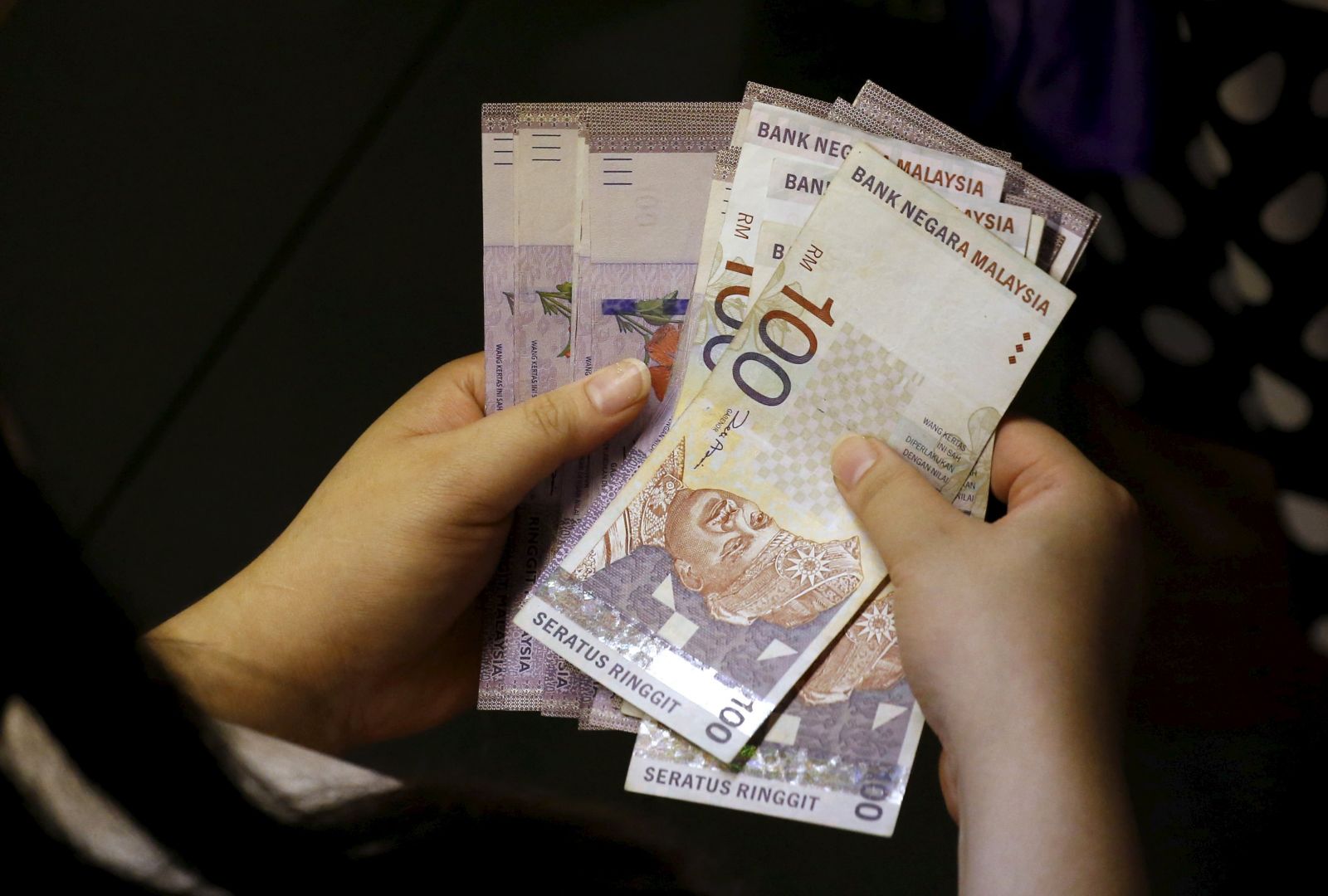
    Standard Chartered Bank (StanChart) has lowered its 2018 gross domestic product (GDP) growth forecast for Malaysia to 4.8% from 5.3% projected earlier due to slower-than-expected expansion in the first half of the year and on trade concerns, but is optimistic on the ringgit’s performance going forward.

    Its foreign exchange strategist for Asean and South Asia, Divya Devesh, said the ringgit is expected to continue to be an outperformer, supported by the fact that the currency is undervalued, and higher oil prices that will drive it.

    “Looking at the year-to-date performance across Asia, the ringgit is the second best performing currency after the Thai baht. The ringgit has clearly outperformed its peers in Asia, and more broadly in emerging markets. We think that’s going to continue,” he said at the “Global Research Briefing H2 Update” here today.

    Based on its in-house valuation of currencies, the ringgit is the second most undervalued currency across emerging markets after the Turkish lira.

    “Ringgit is still quite attractive from a valuation standpoint for foreign investors. We’re now seeing more investors invest in Malaysian bonds. In July, for example, there were net inflows into Malaysian bonds after three months of outflow.”

    It projected the ringgit to trade at RM4.0 against the US dollar by end of 2018 and RM4.1 by end of 2019.

    “Domestically, there are lots of supportive factors for the ringgit. The external environment is still unfavourable for emerging markets, hence we’re not projecting a sharp appreciation of the ringgit. We’re still looking at relatively range-bound performance for dollar-ringgit over the next 12-15 months,” Divya explained.

    He also said the impact of global quantitative tightening on the ringgit will be limited and Malaysia will be insulated even in a tightened liquidity environment, given that foreign investors have been underweight on Malaysia and have reduced their positioning in Malaysia significantly from bonds or equities; while the spotlight is going to be on economies and currencies that have twin deficits (fiscal and current account deficits) like India, Indonesia and the Philippines.

    Meanwhile, StanChart’s chief economist for Asean and South Asia, Edward Lee, said Malaysia is among the top three countries in Asia most affected by the US-China trade war on an indirect exposure basis, adding that Malaysia’s trade surplus could be narrower as a result.

    “If US goes ahead with a 25% tariff on the next US$200 billion (worth of Chinese goods) and you add in the previous 25% tariff on US$50 billion (worth of Chinese goods), the potential impact on China’s growth is 0.6 percentage point, which is massive. The 0.6 ppt translates to an impact of 0.3% of Malaysia’s GDP,” Lee estimated.

    The bank’s thematic research head, Madhur Jha, said there is a possibilty of a positive outcome from the US-China trade war that will see China quickening the pace of liberalisation of its economy, which will benefit Malaysia.

    She said commodity prices tend to move in tandem with oil prices, so when oil prices rise, the prices of commodity products also rise. Malaysia as a net commodity exporter will see better revenue and a better growth profile. The oil price is expected to stabilise at around US$70 a barrel this year.
  • Standard Chartered Bank says Vietnam economy to grow faster than expected

    Standard Chartered Bank’s Global Focus report on the economy for the third quarter said manufacturing and construction will be the fastest growing sectors this year.

    FDI inflows will remain strong, with 50 percent coming into manufacturing, the report entitled “Fattening tail risks” said.

    Vietnam received an estimated $16.2 billion in FDI in the first half of this year, down 4.4 percent from the same period last year, according to the General Statistics Office (GSO).

    “We are positive on Vietnam’s growth medium-term on strong manufacturing activity as FDI inflows to manufacturing remain strong. We believe that Vietnam will remain one of the fastest growing economies in Asia in 2018,” Asia Economist for Standard Chartered Bank Chidu Narayanan said.

    The report said Vietnam would have a trade surplus this year due to high export growth and slowing imports.

    The country reaped export earnings of $113.9 billion between January and June, a year-on-year increase of 16 percent. Meanwhile, it spent $111.2 billion importing goods, up 10 percent.

    A World Bank report last month had said Vietnam’s economy might expand by 6.8 percent this year, revising upwards the bank’s previous forecast of 6.5 percent. It estimated growth of 6.6 percent in 2019 and 6.5 percent in 2020.

    Prime Minister Nguyen Xuan Phuc has said the target this year is to keep inflation below four percent and achieve economic growth of 6.7 percent. The consumer price index increased by 0.55 percent and 0.61 in May and June, pushing the inflation rate for the year-to-date to 3.29 percent.

  • Standard Chartered launches bold new brand campaign

    Standard Chartered launches bold new brand campaign

    Launched in 2010, StanChart’s ‘Here for good’ campaign showed how a bank could be a force for good by promoting economic activity that has a positive social impact. The new campaign retains the original brand promise but sharpens the bank’s focus on how banks can help tackle some of the problems that stand in the way of global prosperity and commerce.

    Behind the ‘Good enough will never change the world’ campaign is an 18 month deep-dive into the values underpinning Standard Chartered and ‘Here for good’. The project included hundreds of client interviews and collected inputs and values of our 85,000 staff.

    The campaign showcases a series of inspirational short films featuring people who accomplished extraordinary things because they wouldn’t settle for ‘good enough’. Directed by award-winning film-maker Asif Kapadia, the launch video stars Jamaican sprinter and Olympic champion Usain Bolt.

    “I always say ‘never think limits’ and ‘anything is possible’.  It is not enough to dream big – you need to push through barriers to realise your dreams,” said Usain Bolt. “When you have an end goal in mind and you’re passionate about it, you can find the will and the strength to break through boundaries and achieve that goal.”

    Follow-up videos will tell stories of how companies and clients overcame obstacles to deliver stronger performance or make a difference in emerging markets across Africa, Asia and the Middle East.

    “What is really exciting about the next chapter in ‘Here for good’ is that it’s deeply rooted in the Bank’s clients, employees and history” said Emma Sheller, Global Head, Brand and Marketing. “It’s also about being in tune with what’s happening in the world. We set the bar high with ‘Here for good’. Now we are setting it higher with ‘Good enough will never change the world’.”

    The campaign kicked off on 30 April in Hong Kong, Korea, Singapore, Taiwan and the United Kingdom. It will roll out in 2018 in phases across the rest of the Bank’s footprint.

  • Standard Chartered sets up digital innovation, fintech investment unit

    Standard Chartered sets up digital innovation, fintech investment unit

    Standard Chartered PLC has established a new business arm named SC Ventures, to drive digital innovation, invest in fintech and start-up companies and promote rapid testing and implementation of new business models.

    The new unit will focus on problem solving and spreading innovation best practices and client centric design, managing minority investments in FinTech companies and further investments in promising technologies and sponsor and oversee new disruptive technology ventures that are wholly or partially owned by Standard Chartered.

    SC Ventures will be headed by by Alex Manson, who is the Global Head of Transaction Banking.

    “Technology is at the heart of Standard Chartered’s strategy – driving efficiencies, increasing automation, introducing global platforms, reducing manual errors and strengthening how it combats financial crime,” the group said in a statement.

    In 2015, it announced it was investing about US$3 billion (RM11.9 billion) over three years in technology and systems.

  • Alipay HK Strikes Deal with Standard Chartered to Expand into Hong Kong

    Alipay HK Strikes Deal with Standard Chartered to Expand into Hong Kong

    Alipay, China’s biggest payments service, has struck a partnership with Standard Chartered as the company looks to expand its footprint and deepen its mobile-payment push into Hong Kong.

    The company controlled by billionaire and Alibaba co-founder Jack Ma gained a license for e-payments from the Hong Kong Monetary Authority last year, and already began to roll out accounts denominated in the local currency back in October.

    Alipay HK is partnering with Standard Chartered in order to make it easier for Hong Kong residents to top up their account in HK dollars through online and mobile banking. Specifically, the unit of Chinese e-commerce giant Alibaba will work with Standard Chartered to facilitate Alipay payments via the bank’s merchant network in Hong Kong, while the bank will provide its users with digital ways to fund their accounts.

    The size of its newest partner in Hong Kong could bring Alipay to a considerable number of stores. The deal with Alipay will also allow Standard Chartered to target Chinese tourists particularly with Alipay users cannot link the HKD account to their existing yuan- denominated one, nor can they transfer money into the new account.

    Alipay, which is operated by Alibaba’s financial services arm Ant Financial, is a separate app on devices that allows customers to pay for their purchases in-store through opening the Alipay app, then scan a QR code provided by the retailer.

    Alipay holds nearly 70 percent of China’s third-party mobile payment market share and processed more than 380 million daily transactions as of June 2016.

    Vicky Kong, head of retail banking at Standard Chartered Hong Kong, said: “We believe the partnership with Alipay, the world’s largest online and offline payment platform with over 450 million active users, will enhance customer engagement with our existing clients on one hand, and help reaching out to new clients, especially the active online users on the other.”

  • Alipay gains Hong Kong foothold with Standard Chartered tie up

    Alipay gains Hong Kong foothold with Standard Chartered tie up

    Ant Financial Holdings, which operates the Alipay online payments service for the world’s largest e-commerce platforms, has extended its service to Hong Kong through a partnership with Standard Chartered Bank, the two companies said in a statement on Tuesday.

    The bank’s customers will be able to top up their Alipay HK accounts through their online and mobile banking portals, shop and pay online without incurring any transaction fee.

    Alipay has been working with Hong Kong businesses to promote digital payment since 2014, primarily aimed at tourists and visitors from the Chinese mainland, who are already familiar with cashless payments.

    “We are hoping to extend digital payment services to Hong Kong residents soon and the partnership with Standard Chartered is our first step,” said Venetia Lee, general manager of Alipay Hong Kong, Macau and Taiwan.

    Vicky Kong, head of Hong Kong retail banking for Standard Chartered Bank said that the partnership would enhance customer engagement with existing clients, and help reach out to new ones.

    Many foreign banks already have a partnership with Alipay in mainland China, but Standard Chartered is the first bank to offer this particular service to Hong Kong.

    Ant Financial is an affiliate of Alibaba Group Holdings, which operates the Taobao and Tmall online shopping sites. Alibaba is also owner of the South China Morning Post.

  • Standard Chartered Looks at Strategic Options for its Indonesia Business

    Standard Chartered Looks at Strategic Options for its Indonesia Business

    Standard Chartered said its troubled principal finance unit toted up a $650 million loss last year, weighing on the bank’s efforts to improve returns. Standard Chartered’s net loss for 2016 narrowed to $478 million from $2.36 billion in 2015, but revenue and profit figures fell short of analysts’ expectations and the stock fell 5%.

    The emerging-markets focused bank said it sharply marked down its private equity stakes in companies in Africa, Asia and India, as it prepares to exit from the principal finance business in the next couple of years. It said its risk committee reviewed processes and controls in the unit last year, amid the losses and probes by U.S. and other authorities into alleged bribery at a portfolio company, power plant builder Maxpower Group Pte. Ltd.

    Standard Chartered said the unit will be stripped out of its underlying results going forward, with any gains or losses treated as restructuring costs. The principal finance unit manages around $5 billion for Standard Chartered and external investors. The bank’s exposure is around $2 billion.

    Standard Chartered’s smaller full-year loss was the result of a near-halving in bad loans across its businesses. But revenue dropped by 11% to $13.8 billion from $15.4 billion. Standard Chartered blamed the fall on a range of factors including negative revenue in principal finance, dollar strength against emerging market currencies and lower client activity.

    Fourth-quarter revenue was $3.53 billion, up from $3.26 billion in the fourth quarter of 2015. The bank said significant further improvement is needed.

    Chief Executive Bill Winters said the bank is on a stronger foundation after cutting costs and selling around a dozen businesses since he started as CEO in June 2015. He said the bank will look at strategic options this year for its Indonesia business, currently run through two banks.

    Standard Chartered operates under its own name in the country and holds a 44.6% stake in PT Bank Permata. Mr. Winters said the bank is fully committed to Indonesia but wants to operate through a single entity there.

    He said shifts in global trade and potential U.S. protectionist policies posed a threat to the bank, but also opportunity as trade flows realign. “If the U.S. for whatever reasons or through whatever political process makes itself a less desirable trading partner, there are other countries that will want to fill that gap,” Mr. Winters told reporters.

  • Standard Chartered makes CEO appointment for Hong Kong

    Standard Chartered makes CEO appointment for Hong Kong

    Standard Chartered Bank (Hong Kong) Limited (SCBHK) announces the appointment of May Tan as the Bank’s Chief Executive Officer for Hong Kong, with effect from 1 July 2014.

    May joined SCBHK in January 2009 as Global Head, Equity Corporate Finance and also as a board member of SCBHK Ltd, and has since become the Bank’s Vice Chair, Asia. With over 30 years of experience in the financial industry, May has been instrumental in deepening the Bank’s client relationships and in enhancing its equities capability, providing a comprehensive suite of services for clients.

    Before joining Standard Chartered, May was the CEO of Cazenove Asia Limited since 1993, and was a partner of Cazenove and Co. Cazenove Asia Limited became part of SCBHK in January 2009.

    With international banking experience covering Europe, Asia and Hong Kong, May has made significant contributions to Hong Kong through numerous public roles she has held. May is a member of the Listing Committee of the Hong Kong Stock Exchange and was also a member in the Takeovers and Mergers Panel and the Takeovers Appeal Committee of the Securities and Futures Commission from 2001-2013. She is also an Independent Non-Executive Director of The Link Management Limited since February 2013.

    As an advocate of gender diversity and a champion in supporting charitable causes, May is the Executive Sponsor of the Women’s Internal Network of Standard Chartered Bank (Hong Kong), and Vice Chairman of Oxfam (HK) as well as a member of the charity’s Finance and Audit Committee.

    In her new role, May will report to Benjamin Hung, Chief Executive Officer for Greater China. Commenting on the appointment, Ben says, “I am excited to see May taking the helm of Standard Chartered Hong Kong. A well-respected veteran in the banking and finance industry, May has immensely strengthened our franchise through her extensive client relationships. I very much look forward to working with May closely in her new role.”