Tag: Standard Chartered

  • Standard Chartered to Exit Thai Retail Banking Next Year

    Standard Chartered to Exit Thai Retail Banking Next Year

    Standard Chartered Plc plans to transfer its Thai retail-banking business to Thailand’s Tisco Financial Group Pcl next year, exiting an operation that the U.K. lender said lacked the scale to generate adequate returns.

    The net asset value is about 5.5 billion baht ($153 million), according to a stock exchange filing by Tisco on Thursday, which didn’t disclose a price for the deal. Tisco shares climbed to a record.

    Standard Chartered will continue to operate corporate, institutional and commercial banking businesses in Thailand, but the small size of the retail operation made it “increasingly difficult to achieve the returns that we aspire to,” the lender’s Thai head, Plakorn Wanglee, said in a press release.

    “It’s very tough to survive in Thailand’s retail-banking business for small players with very fierce competition,” Isara Ordeedolchest, an analyst at SCB Securities in Bangkok, said by phone. “The outlook for banks should improve significantly in 2017 as a consumption recovery and higher government spending will spur economic growth.”

    The Asia-focused Standard Chartered is targeting a turnaround after last year posting its first annual pretax loss since 1989. In a sign that the Thai operations were not a bright spot, the bank in February recorded a $126 million goodwill impairment on its business in the country.

    One unit of Tisco Financial, Tisco Bank Pcl, will take over operations including personal lending, mortgages and deposits, while another, All-Ways Co., will take over the credit-card business, the exchange filing said. The deal is subject to approvals.

  • StanChart, Uber launch multi-market partnership

    StanChart, Uber launch multi-market partnership

    Standard Chartered Bank and Uber announced a partnership that offers all Standard Chartered credit cardholders in six markets (Singapore, Indonesia, Malaysia, Vietnam, India and the United Arab Emirates) across two continents up to 25% cashback for all global Uber rides. This is the first ever multimarket partnership for both Standard Chartered Bank and Uber, the world’s most popular transport app.

    Collaborating with Uber is part of Standard Chartered’s digital agenda to deliver simple and convenient banking through digital channels for increasingly tech-savvy clients. To meet clients’ needs in the new digital ecosystem, the Bank believes that collaboration between the financial and technology sectors will lead the way forward. Ride hailing service providers such as Uber are fast becoming a mainstream feature of transportation globally, and continue to gain popularity exponentially. This collaboration between Standard Chartered and Uber capitalises on key areas of synergies, which are mainly an extensive geographical network, highly-mobile client base and the desire to provide innovative offerings to clients.

    Sebastian Arcuri, Regional Head, Retail Banking, ASEAN and South Asia, Standard Chartered Bank said:

    “There has been a dramatic shift towards digital and cashless payments across the region and we are seeing success in the seamless integration of the Bank’s services in our clients’ everyday life. As a global bank with a focus on Asia, Africa and Middle East, we are pleased to partner Uber, a transport network operating in more than 425 cities, to engage our clients for both their local and overseas transport needs.”

    Commenting on the partnership, Chan Park, Uber’s Regional General Manager for Southeast Asia, said:
    “We are thrilled to partner with Standard Chartered Bank, one of the region’s longstanding and illustrious banks. Together, we will bring to life our shared passion for delighting customers and bring even more value to riders. We also look forward to welcoming cardholders as first-time Uber riders to join over 50 million riders globally to experience the ridesharing revolution.”

    VisaNet data reveals that in Singapore, in-app payments account for around one third of total card spend under the transportation category. The overall consumer spend in transportation witnessed a healthy growth of 35% year-on-year, driven primarily by a growth in spend for in-app merchants. On the average, third party transportation booking apps account for more than 1.5 million transactions every month.

    Andrew Chia, Head of Retail Banking, Standard Chartered Bank Singapore, said:

    “We constantly seek new ways to delight our clients and are excited to partner Uber in delivering greater value and a more seamless travel experience for our cardholders. Given the shift towards a cashless society in Singapore, there is strong demand for more accessible digital payment options. With this partnership, our cardholders are rewarded with convenience and cashback when they go cashless with Uber.”

  • Standard Chartered probed by US over Indonesia ‘bribes’

    Standard Chartered probed by US over Indonesia ‘bribes’

    Standard Chartered acknowledged on Tuesday (Sep 27) it was being investigated by the US Department of Justice over claims that an Indonesian subsidiary had paid bribes to secure contracts.

    The London-based, Asia-focused bank said in a statement that it had referred the matter to the “appropriate authorities” and launched its own review.

    The Wall Street Journal newspaper said that an internal audit at Indonesian energy company Maxpower Group found evidence of possible bribery and US prosecutors were examining whether Standard Chartered was culpable for not stopping it.

    “Standard Chartered takes very seriously allegations of impropriety in any of our private equity investments,” the bank told AFP in a statement when asked about the report.

    “We proactively referred this matter to the appropriate authorities and have conducted our own review.

    “When we receive allegations of improper behaviour in an investee company, we pursue those allegations vigorously and act appropriately, including sharing information and cooperating fully with government authorities and addressing any issues of internal conduct and accountability.”

    The Department of Justice did not comment when contacted by AFP.

    The Wall Street Journal said the Maxpower internal audit found that more than US$750,000 in cash advances needed to be examined as possible bribes, while lawyers who reviewed the audit found indications that employees made inappropriate payments to Indonesian government officials between 2012 and 2015.

    Standard Chartered began investing in Maxpower in 2012 and is the majority shareholder. There was no immediate comment from Maxpower.

    But a source close to the case told AFP the US authorities were indeed examining whether Standard Chartered, via its representatives on the Maxpower board, was aware of alleged bribes to win government contracts.

    The investigation would also look at why the bank’s alert procedures for spotting such matters had not been triggered.

    But the probe will focus on whether Standard Chartered has violated the terms of its 2012 deferred prosecution agreements with the Department of Justice.

    Standard Chartered paid US$667 million in 2012 to settle charges it violated US sanctions by handling thousands of money transactions involving Iran, Myanmar, Libya and Sudan.

    In August 2014, the bank was hit by US regulators with a US$300 million fine and restrictions on its dollar-clearing business for failing to detect possible money-laundering.

  • Standard Chartered Bank Indonesia appoints new CEO

    Standard Chartered Bank Indonesia appoints new CEO

    UK-based financial giant Standard Chartered has appointed Rino “Donny” Donosepoetro as the new CEO of its Indonesian branch, replacing Shee Tse Koon, who is leaving to pursue another career.

    Donny’s new appointment will be effective as of Sept. 1 as it is subject to regulatory approval. He will report to Ajay Kanwal, Standard Chartered’s regional CEO for ASEAN and South Asia.

    Lea Kusumawijaya, chief financial officer at Standard Chartered Bank Indonesia, has been appointed as acting CEO with immediate effect.

    “Donny brings with him an extensive and diverse international experience in the operations of the bank’s different business sectors,” Kanwal said in a statement on Tuesday afternoon.

    He said Donny, who has a degree in international relations, had knowledge in the areas of audit and governance that would further strengthen the group’s businesses and franchises in Indonesia.

    In his 20-year career in the group, Donny has held a number of diverse roles across businesses in several markets including the United Arab Emirates, Indonesia, UK, Singapore and the Falkland Islands.

    As a CEO of Standard Chartered’s Indonesian branch, Donny will be responsible for developing and executing the company’s business strategy. He is also expected to build relationships with local clients as well as regulators and stakeholders, as well as improving bottom-line profitability and capital.

    Kanwal said the bank was fully committed to investing in Indonesia, with a focus on corporate and retail banking, which is “strategically important as it has been in the country for over 150 years.” The bank is also sharpening its focus on enhancing wealth management platforms and investing in commercial banking to cater the growing local medium businesses.

  • Five major banks lined up to support Apple Pay launch in Singapore

    Five major banks lined up to support Apple Pay launch in Singapore

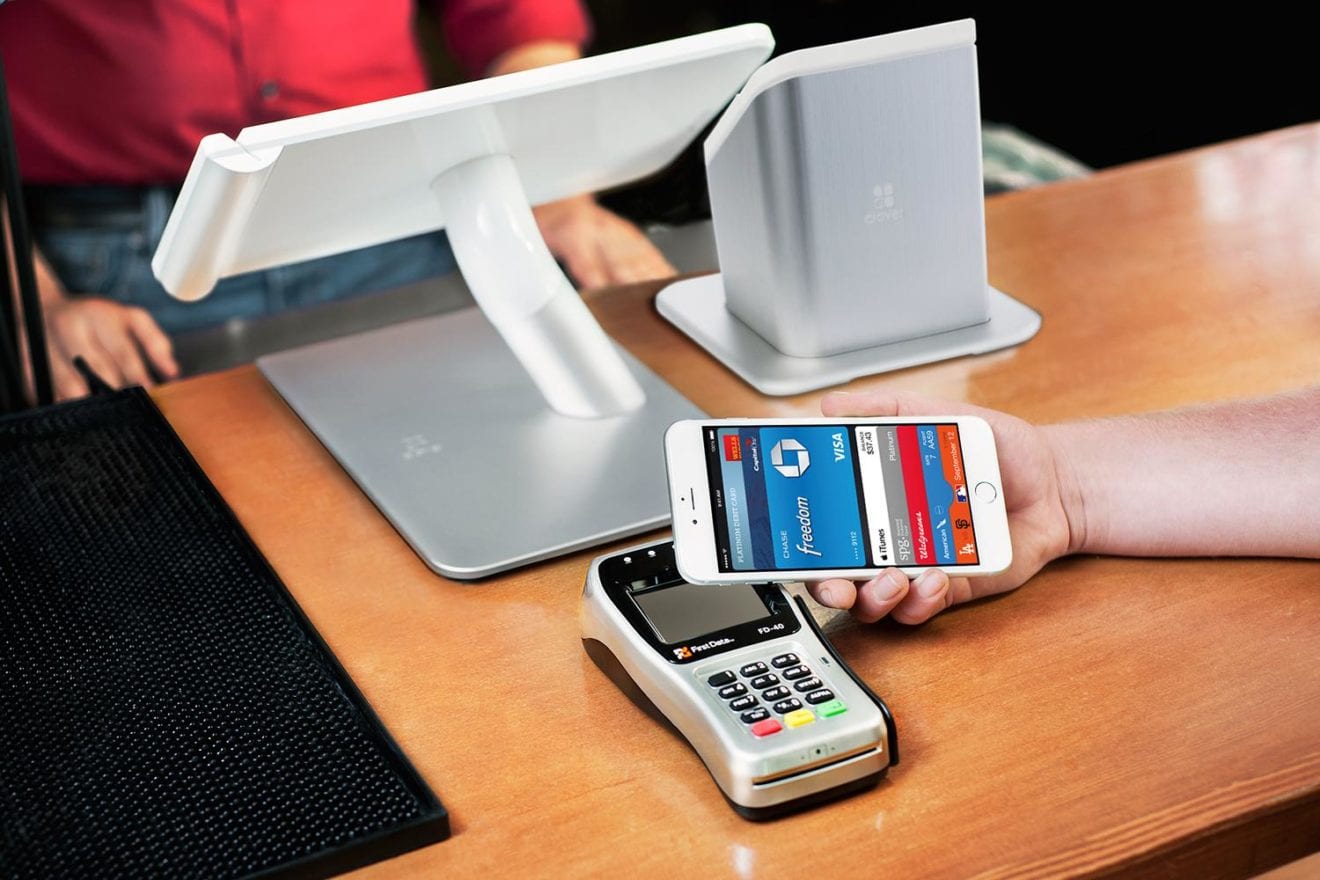
    Five major banks, representing 80% of Visa and MasterCard credit and debit cards issued in Singapore, have signed up to Apple Pay, extending the use of the mobile wallet beyond a limited earlier release for AmEx cardholders.

    MasterCard says it is working with DBS, OCBC, POSB, Standard Chartered and UOB, to enable iPhone and Apple watch users to make purchases in stores equipped with contactless readers.Recent figures from MasterCard indicate that consumers in Singapore are supportive of the idea of adopting contactless payments. Singaporeans are among Asia’s top three adopters of digital wallets and interest has been climbing steadily with one in four likely to use a digital wallet compared to just one in 20 three years ago.

    Apple Pay’s launch comes just a month after Samsung announced plans to roll out its rival mobile wallet with the support of DBS/POSB, OCBC Bank and Standard Chartered. Previously, Apple Pay had only been available for American Express cardholders in Singapore.

  • Standard Chartered opens Singapore innovation lab

    Standard Chartered opens Singapore innovation lab

    Standard Chartered Bank has opened a new innovation lab in Singapore to explore the use of emerging technologies and data sciences in support of the bank’s digital transformation strategy.

    The ‘eXellerator’ builds upon Standard Chartered’s established technology outpost in Silicon Valley, SC Studios, and is the bank’s first dedicated space for innovation in Asia, located at the heart of its main office building at Marina Bay Financial Centre.Anju Patwardhan, Standard Chartered’s global chief innovation officer, says: “This is where we can tap the depth of knowledge and talent, as well as work with local universities and research organisations, to help drive the bank’s innovation agenda.”

    The bank has secured the support of the Monetary Authority of Singapore (MAS) in establishing the facility. MAS has been actively encouraging the development of a ‘Smart Financial Centre’, in line with country’s ‘Smart Nation’ plan, and recently appointed a ‘chief fintech officer’, Sopnendu Mohanty, to co-ordinate its efforts.

    Says Mohanty: “The financial sector is an integral part of Singapore’s ambition to be a Smart Nation. A Smart Financial Centre with an open architecture and collaborative fintech community will promote innovation, application of technology advancements and talent development in financial services.”

    Standard Chartered has already laid the groundwork for the new lab through a multi-year collaboration agreement with A*Star’s Institute for Infocomm Research (I2R) – Singapore’s national information and communications technology research institute – to jointly work on data science research and experimentation by tapping the Institute’s network of data scientists and software engineers.

    It has also partnered with DBS Bank and Singapore’s Infocomm Development Authority (IDA) to successfully complete a proof of concept (PoC) on the application of distributed ledger technology in trade finance invoicing with the objective of reducing risk around duplicate invoice financing for banks while preserving client confidentiality.

  • StanChart targets China

    StanChart targets China

    The regional head of retail banking for Greater China and North Asia at Standard Chartered (2888), Mary Huen Wai-yi, said Hong Kong will be used as a hub to attract high net worth customers from the mainland to bring growth in retail banking income in the next three to five years.

    Huen told Sing Tao Daily, sister paper to The Standard, the size of the local retail banking income pool stood at about US$10 billion (HK$78 billion), while that of the mainland is 10 times that in Hong Kong. In the face of the large market, she said, high net worth individuals in the mainland are the bank’s target in its wealth management services.

    Since Standard Chartered’s announcement of restructuring last year, retail banking has become the group’s leading business.

    After opening the a wealth management center at the Forum in Central, Huen said another one will be set up at Sheng Shui this year.

    Expanding toward the north is a common strategy shared by many of the bank’s counterparts. “Retail banking is a huge income pool in the mainland,” said Huen, “and it is still at an early development stage, which gives us plenty of opportunities.”

    Digitalization, Huen said, is another means by the bank to draw customers.

    While digital tellers is a big trend in Hong Kong, Standard Chartered said it will take a step further to introduce Retail Workbench, where the bank’s staff will use iPads as a sales-and-service tool to issue credit cards and approve loans. But Huen said that digitization will not replace any of its 80 bank branches in Hong Kong.

    The bank partnered with Asia Miles to put out a credit card last week, and Huen said the bank will have similar plans with Samsung in Korea.

    Retail banking in the Greater China region accounts for one third of the group’s global business in the sector last year, seeing also a single-digit growth in income against the backdrop of an overall loss posted by the group.

    STAFF REPORTER

  • Malaysia among first in world with Retail Workbench iPad app, said Standard Chartered

    Malaysia among first in world with Retail Workbench iPad app, said Standard Chartered

    Malaysia is one of the first six markets to go live with Retail Workbench, a digital tablet-based sales-and-service tool, according to Standard Chartered Bank, which globally launch of its Retail Workbench,

    The iPad tool is also live in India, the UAE, Bangladesh, Nigeria and Kenya, said Aaron Loo, country head, Retail Banking, Standard Chartered Bank Malaysia.

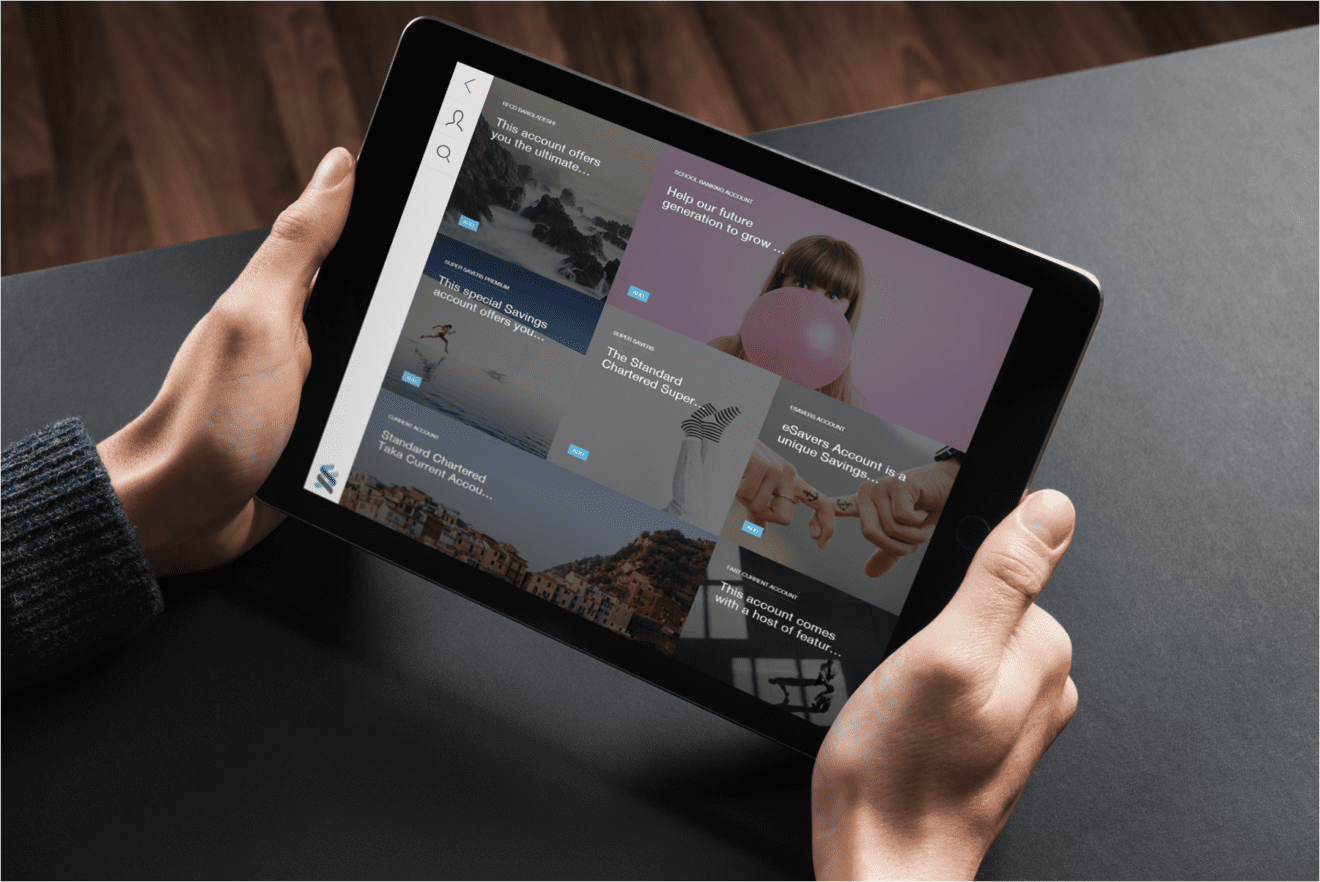
    “Banking should be easy and convenient – that’s what the Retail Workbench is all about,” said Loo, adding that the application is integrated with the Bank’s back-end infrastructure, which will allow sales staff to open an account for a client in any location. Banking services such as loan approvals and credit card issuance will be fast, simple and completely paperless.

    “We are harnessing technology to make banking a seamless experience for both clients and staff. Going paperless fits into the increasingly mobile lifestyle of our clients while improving cost efficiency and productivity by freeing up staff’s time to focus on what really matters, which is serving the client,” he said.

    In addition, Loo said the ‘the bank on an iPad: Retail Workbench’ also puts a set of current and savings account, credit card and personal loan products on one mobile platform – along with product information and marketing brochures – so sales staff can answer questions and respond to client needs in person, at any location.

    He said that with this fully digital device, we can process client requests from anywhere, with the data moving straight through to the Bank’s back-end operations in near real-time. Previously, sales staff could visit clients in person but the paperwork had to be manually entered into the Bank’s systems back at the branch or Bank’s premises.
     

    Aaron Loo - Standard Chartered Malaysia 

    Photo – Aaron Loo, Country Head, Retail Banking, Standard Chartered Bank Malaysia

    This means that clients only need to give their personal data to the bank once to create a profile that can be used for future purchases. Sales staff use the iPad’s built-in camera to securely snap a picture of identity documents so there is no need to fill out multiple forms and no missing data.

    Loo said Retail Workbench has already revolutionised the banking industry in Korea when it was launched in 2014, cutting account opening time in the digitally advanced country to five minutes and credit card issuance to less than half an hour. It has since won numerous industry awards for innovation and outstanding client service.

    Due to differences in local infrastructure, turnaround times and other features of Retail Workbench will vary across the seven markets following the global launch, he added.

    A statement added that Standard Chartered will successively add capabilities and enhance performance in each market over the coming months and equip more sales teams with the device. By the end of 2017, Retail Workbench will be in the hands of staff in 18 markets across Asia, Africa and the Middle East.

     Digitising banking

    The statement added that this global launch marked “a milestone in Standard Chartered’s strategy of using digital technology to deliver a better banking experience to clients. The Bank last year announced it will invest US$1.5bn in technology over three years. Standard Chartered was named the World’s Best Consumer Digital Bank in 2015 by Global Finance magazine and also won Best Consumer Digital Bank in Malaysia in 2010, 2014 and 2015.”

    Standard Chartered Bank, a member of the Standard Chartered Group was established in Malaysia in 1875 and incorporated as Standard Chartered Bank Malaysia Berhad in 1984. Standard Chartered employs close to 7,000 employees in all its Malaysian operations.

     

  • HSBC, Standard Chartered Caught Between ‘Brexit’ and China

    HSBC, Standard Chartered Caught Between ‘Brexit’ and China

    Two big U.K. banks’ shares tanked over the past couple of days, and unlike the British pound, they’re not weakening because of the so-called “Brexit” referendum — although that certainly doesn’t help.

    Instead, their fall may have a lot to do with the market and economic turmoil that has been taking place in China.

    The London-listed shares of emerging markets-focused bank Standard Chartered (SCBFF) fell by 10% at one point on Tuesday morning after it reported its first annual loss in more than 25 years.

    The bank reported a loss before tax of $1.5 billion last year, in sharp contrast to 2014’s profit of $4.2 billion.

    On Monday, HSBC’s (HSBC) shares fell in an otherwise rising market after the bank, which is the biggest in Europe and one of the biggest in the world by assets, reported a loss of $858 million before tax in the fourth quarter of last year, vs. a profit of $1.7 billion in the fourth quarter of 2014.

    HSBC, which is doing a lot of business in Asia and was even thinking of moving its headquarters there before deciding earlier this year to remain in London, eked out a 1% increase in pretax profit for full 2015 to $18.87 billion, but its adjusted loan impairment charges were up 17% at $3.7 billion over the period.

    The weak results of the two banks chime with rising investor worries about the exposure of U.K. banks to Asia, and particularly China, at a time when European banks have been making investors nervous again.

    Richard Barnes, senior director at Standard and Poor’s credit rating agency, received many questions about the risk of European banks’ exposure to Asia last week during an analyst call, and said the region was important particularly for HSBC and Standard Chartered.

    However, “we’ve seen European banks generally retrenching from a number of regions in the world including Asia … banks are trying to reduce exposure,” Barnes said, adding that, in China, “banks look again at their exposure to state-owned enterprises and are focusing on the ones that are likely to be supported by the government in a downturn.”

    HSBC has been deeply involved in the liberalization and deepening of China’s capital markets, having successfully negotiated a majority stake in a new, nationally licensed securities joint-venture in the mainland. HSBC Group Chairman Douglas Flint acknowledged in a statement on Monday that “China’s slower economic growth will undoubtedly contribute to a bumpier financial environment,” but he added that the country “is still expected to be the largest contributor to global growth as its economy transitions to higher added value manufacturing and services and becomes more consumer-driven.”

    He said this transition is driving the bank’s focus on the Pearl River Delta as a priority growth opportunity, as the area is a concentration of high-tech, research-focused and digital businesses.

    HSBC’s exposure to mainland China is around $143 billion, according to its annual report; of these, $135 billion are loans to other banks or non-bank financial institutions, sovereign and corporate loans, while $8 billion are loans to retail clients.

    China is perhaps even more important for Standard Chartered and has helped reduce the bank’s loss over the past year. Its Greater China business showed a pre-tax profit of $1.37 billion last year, compared to a loss of $1.33 billion in its European operations. In terms of exposure to China, Standard Chartered listed $77.67 billion in loans to customers in the country.

    The two banks would normally be sheltered from fears over their exposure to China by their presence in one of the strongest financial centers in the world, London. But with uncertainty in the U.K. rising because of the referendum on EU membership, expect a few particularly volatile months ahead for HSBC and Standard Chartered.

  • Standard Chartered hires Capital One’s James Dolphin as retail CIO

    Standard Chartered hires Capital One’s James Dolphin as retail CIO

    Standard Chartered has hired James Dolphin from Capital One as chief information officer, retail banking, to help kickstart the bank’s digital transformation initiative.

    Dolphin’s appointment comes after the bank announced plans to cut 15,000 jobs and accelerate its retail transformation strategy after reporting an unexpected $139 million loss for the third quarter, 2015. The updated strategy entails an investment of more than $3 billion in strengthening its technology and compliance and risk functions and a stated objective to reach 30% of sales and 40% of payments online by 2018.Dolphin joins Standard Chartered from Capital One where he has been CIO for retail and direct banking since 2012. In this role, he was instrumental in instilling a software development culture as the platform for change in the company’s retail business.

    Based in Singapore, Dolphin will report directly to Group CIO, Dr Michael Gorriz, a former aerospace engineer who joined the bank from Daimler last year.

    Gorriz says: “James brings with him a strong reputation as a technology leader and innovator. He is highly experienced in leading large teams and driving an agile culture that is innovative and customer-centric.”

  • Standard Chartered names James Dolphin as its CIO for retail banking

    Standard Chartered names James Dolphin as its CIO for retail banking

    Standard Chartered Bank has appointed James Dolphin as its Chief Information Officer (CIO) for retail banking. From March 2016, Dolphin will report directly to the bank’s Group CIO, Dr Michael Gorriz, and be based in Singapore.

    Prior to this role, Dolphin was Capital One’s CIO for retail and direct banking for since 2012. In that role, he led Capital One’s digital transformation strategy for the retail business by building strong engineering teams, and instilling a software development culture. He also redesigned and rewired Capital One’s retail channels to deliver market-leading digital experiences during his time there.

    Besides Capital One, Dolphin has held senior technology leadership roles at Bank of America too.

    “James brings with him a strong reputation as a technology leader and innovator. He is highly experienced in leading large teams and driving an agile culture that is innovative and customer-centric. I am confident that he will be a valuable addition to Standard Chartered,” said Dr Gorriz.

    1

  • HSBC to locally incorporate its Singapore retail operations in May

    HSBC to locally incorporate its Singapore retail operations in May

    In order to follow new MAS regulations.

    HSBC will transfer its local retail banking and wealth management business, which is currently under the HSBC Singapore Branch, to a locally incorporated subsidiary, HSBC Bank (Singapore) Limited.

    The transfer of HSBC’s retail banking and wealth management business is expected to take effect on 9 May 2016, subject to the receipt of regulatory and court approvals.

    The move comes after Monetary Authority of Singapore tagged HSBC as one of seven domestic systemically important banks (D-SIBS). Under a new regulatory framework announced in April 2015, all D-SIBS should locally incorporate their retail operations to allow the MAS to set targeted and appropriate policy measures specifically for the systemically important banks.

    The other D-SIBS are DBS, OCBC, UOB, Citibank, Malayan Banking and Standard Chartered.

  • Standard Chartered Korea puts wealth at center of vision

    Standard Chartered Korea puts wealth at center of vision

    Standard Chartered Bank Korea plans to invest 10 billion won ($8.24 million) in its wealth management, aiming to double the size of operations over the next five years, a top company executive said Thursday.

    “We have set a target of 100 percent growth in the number of clients, revenue and assets under management at our wealth business by 2020,” Chang Ho-june, head of wealth management at SC Bank Korea, said at a press conference in Seoul.

    The London-based bank has about 5 trillion won of assets under management.

    To realize the goal, the bank will invest 10 billion won to hire more specialized managers and financial experts as well as strengthen information technology infrastructure and platforms over the next two years. He said the key to this year’s wealth management business strategy lies in making strides toward greater accessibility for customers.

    The announcement comes as banks around the world are increasingly relying on wealth management as a stable revenue generator that could offset potentially volatile businesses such as trading.

    Listing the details, Chang said the bank would expand the number of mini-branches, which offer seven-day banking services at retail stores, to 62 by the end of January from the current 52.

    Last year, the bank signed a deal with Shinsegae to implant sales and marketing channels at the retail giant’s outlets including department store and discount store E-Mart.

    The bank will adopt a video consulting service in the second half of 2016 to enable Korean customers to get advice from SC Group’s global investment experts in Singapore and Hong Kong.

  • Retailers remain pessimistic about industry prospects

    Retailers remain pessimistic about industry prospects

    Hong Kong’s retailers remain pessimistic about their industry prospects, with a survey from the Hong Kong Productivity Council suggesting that the sector’s business confidence is at three-year low.

    The Standard Chartered Hong Kong SME Leading Business Index showed the retail industry sub-index sliding to 43.1 for the third quarter from 49.9 in the preceding three months, marking the weakest level in three years.

    Meanwhile, the overall gauge of the SME Business Index stood at 49.6, up 0.6 point from the previous months but remaining below the 50 mark that separates positive and negative outlooks, the Hong Kong Economic Journal reported.

    The sub-index that reflects interest in hiring dropped below 50 to reach 48.5 for the first time, according to the survey which was conducted by the Hong Kong Productivity Council in association with Standard Chartered Bank Hong Kong.

    Kelvin Lau, senior economist for Asia at Standard Chartered, said slower growth in the number of mainland tourists and structural change in their consumption behavior have brought prolonged adverse impact on the city’s retail environment.

    He noted a 1.3 percent fall in mainland visitors as of the end of May this year, the largest decline since August 2009.

    However, DBS Bank Hong Kong economist Lily Lo said the actual impact is not so bad because 70 percent of retail sales in the city come from local consumers.

    Lo expects Hong Kong’s economy to expand at 2.5 percent rate this year, with retail sales likely to recover.