Tag: streaming

  • Netflix escapes Apple Tax at last as app links to streamer’s own subscription site

    Netflix escapes Apple Tax at last as app links to streamer’s own subscription site

    As Bob Dylan once sang, “The Times They Are A-Changin.” iPhone and iPad users looking to subscribe to Netflix from the video streamer’s App Store app are now being directed by Netflix to an external website. From the site, iOS and iPadOS users can sign up for service from Netflix. This is in line with Apple’s recent decision to allow what are known as “reader apps” (apps that deliver digital content) to link to their own external websites to help subscribers sign-up and manage their accounts.
    Apple announced last September that it would allow reader apps to include a single in-app link to their own websites. Tapping on the “subscribe” button in the Netflix app brings up a message that says “you’re about to leave the app and go to an external website.” The app also points out that any transaction will not be Apple’s responsibility and that all subscription management should be handled through Netflix’s platform.
    More specifically, reader apps are those that provide content that was previously purchased or content available from an app that users pay for on a recurring basis such as music, video, digital magazines, newspapers, books, and audio.
    The message also states that “Any accounts or purchases made outside of this app will be managed by the developer ‘Netflix.’ Your App Store account, stored payment methods, and related features, such as subscription management and refund requests, will not be available. Apple is not responsible for the privacy or security of transactions made with this developer.”

    If you continue the process you are sent to a Netflix website from where you can subscribe to the service bypassing Apple’s in-app payment platform. As a result, Netflix doesn’t have to give Apple the 30% cut of the transaction price on initial subscriptions and as much as 15% for recurring subscriptions made after one year.

    The so-called Apple Tax has been a controversial lightning rod for politicians, developers, and others. Companies like Spotify and Netflix prevented subscribers from signing up for certain subscriptions directly from the App Store so that they wouldn’t have to pay Apple. And nearly two years ago, Apple kicked Epic and its popular Fortnite game out of the App Store after Epic offered game players a link to its own in-app payment platform.
    Without having to pay Apple its cut, Epic offered currency to Fortnite players at a lower price. This led to an epic lawsuit (sorry) which resulted in a ruling from Judge Yvonne Gonzalez Rogers who wrote, “The Court concludes that Apple’s anti-steering provisions hide critical information from consumers and illegally stifle consumer choice. When coupled with Apple’s incipient antitrust violations, these anti-steering provisions are anticompetitive and a nationwide remedy to eliminate those provisions is warranted.”

    Rogers did say that Apple was not a monopolist and that there was nothing illegal about the success of the App Store. She did rule that Apple would have to allow developers to redirect users to developers’ own websites to manage their subscriptions. Other countries have gone after the Apple Tax and developers in South Korea can promote alternative payment methods in the App Store, although Apple will still hit up the developers for 26% of the transaction value.

    In the Netherlands, some dating apps will be allowed to embed alternative payment methods inside these apps after Apple was fined $52.58 million by the Netherlands’ antitrust watchdog, the Authority for Consumers and Markets (ACM). With the recent approval of the European Union’s (EU) Digital Markets Act (DMA), Apple might be required to offer third-party payment platforms for the App Store in Europe, allow iPhone users to sideload apps (in other words, install apps from third-party app stores) on the continent, and add support for iMessages in competing operating systems in Europe.

    All together, pressure from lawsuits, developers, lawmakers, and the media combined to produce the first cracks in Apple’s in-app payment platform which includes the Apple Tax. Apple still has a set of rules that developers of reader apps must follow. The link published on the app cannot contain pricing information, and each developer must submit an “entitlement” to obtain permission from Apple to include a link on their app.

  • Discovered code reveals that YouTube Music could soon add a much wanted feature

    Discovered code reveals that YouTube Music could soon add a much wanted feature

    The original goal for YouTube Music was for the app to offer the same exact features as Google Play Music before migrating users from the latter to the former. But before that could happen, Google shut down Google Play Music. But one particularly well-received feature from the now defunct Play Music app is apparently going to make its way to YouTube Music.

    After looking through the latest version of the YouTube Music app, which supports the media player that will be found in the upcoming Android 13 update, 9to5Google came across the following code: “res/layout/timer_status_bottom_sheet.xml” which hints that a sleep timer is coming to the YouTube Music app.

    In Google Play Music, setting the sleep timer meant going into the main settings list to set the feature. Hopefully, the sleep timer will be quicker to enable/disable in YouTube Music. The strings of code found do reveal that a countdown timer will be visible to the user who will also have an option to add five additional minutes to the timer or cancel. The report says that the timer could be similar to the sleep timer found on the Android version of the Apple Music app (seen in the screenshot embedded in this article).
    A sleep timer is useful if you don’t want your phone or tablet to run all night after you fall asleep. At the most, if you’re running your device using its battery, you can prevent the battery from draining while you are sleeping. You also might not awaken in the middle of the night because a particular song interrupted your dreams.
    When YouTube Music might add a sleep timer is anyone’s guess and there is always the possibility that Google doesn’t add one at all despite the discovery of the code.
  • Netflix plans to build brands that span far beyond streaming

    Netflix plans to build brands that span far beyond streaming

    Netflix broke Hollywood’s rules to create a US$82 billion global streaming colossus that the rest of the entertainment industry rushed to copy. But as growth slows, it is looking backwards for a way forward, borrowing a page from Walt Disney’s playbook.

    The company that changed the way we watch television and movies aims to emulate the success of Mickey Mouse and “Star Wars,” by trying to build brands that traverse film, television, games and consumer products, executives told Reuters in recent interviews.

    Netflix teams are plotting ways to milk more from Netflix’s bigger shows and movies with universes and characters they can return to again and again. The franchise strategy, details of which are reported here for the first time, is meant to complement Netflix’s efforts to build a vast library of original programming with something for every taste.

    “We want to have our version of ‘Star Wars’ or our version of ‘Harry Potter,’ and we’re working very hard to build that,” said Matthew Thunell, the Netflix vice president credited with finding “Stranger Things.” “But those are not built overnight.”

    Netflix’s franchise initiative comes at a critical moment, following two rounds of layoffs amid subscriber losses. It is racing to build a lower-cost, advertising-supported version of the service, which it once vowed never to do. On Tuesday, the company is expected to report losing 2 million more subscribers when it announces quarterly earnings. Its shares have sunk 70 per cent this year.

    Some of Netflix’s current partners, who requested anonymity to protect their ongoing business relationships, said they have been frustrated by what they see as a lack of collaboration between the film and television groups. This has stymied efforts to capitalize on success through sequels, spin-offs or film adaptations of a hit series, they said.

    “It feels as if you have to fight your way into building a franchise there,” said one studio executive.

    Thunell offered a different view. He and a corporate spokesperson described an environment of close collaboration among creative executives, who may independently greenlight projects but work toward the same goals.

    “At a traditional studio, there are these big walls between the feature team and animation team and series team,” he said. “Because Netflix is a very young organization, those walls just never had time to be built.”

    ‘STRANGER THINGS’ TREATMENT

    Netflix executives point to “Stranger Things” as a model. The science-fiction series, now in its fourth season, has inspired merchandise from a Surfer Boy frozen pizza at Walmart to Magic 8 Ball toys from Hasbro, plus live experiences. A “Stranger Things” spin-off series and stage play are in the works.

    On its heels, Netflix executives said they plan to or are in the process of giving at least a dozen series and films the “Stranger Things” treatment.

    The Spanish series “La Casa de Papel” has been remade in Korean and has a spin-off in the works. A prequel to the Regency-era period drama “Bridgerton” has been ordered, as was a reality competition in which nobody dies inspired by South Korean drama “Squid Game.” “The Witcher” fantasy series spawned an animated film and is getting a prequel.

    The company also identified three coming shows as potential franchises because the stories are well known, bringing built-in audiences.

    “The Three-Body Problem,” an adaptation of the first book in a Chinese science-fiction trilogy, is in production with “Game of Thrones co-creators David Benioff and D.B. Weiss as executive producers. “One Piece,” based on a Japanese Manga series, is shooting, and a live-action adaptation of animated series “Avatar: The Last Airbender” just completed filming.

    To be sure, not every story works as a franchise.

    Executives aim to produce franchises from Millarworld, the comic book publisher Netflix acquired in 2017. The first Millarworld series, “Jupiter’s Legacy,” was canceled after the first season. There are currently six new projects in development, and another in production, said a spokesperson, who added that Netflix has plans to explore the villains of “Jupiter’s Legacy” in a new series.

    “It has to start with the story itself. Does it sustain that kind of expansion?” Thunell said. “There are some series like ‘Stranger Things’ that are wildly successful, that do have the depth of mythology, and additional stories that allow you to move into animation or features or anime.”

    EMERGING FILM FRANCHISES

    The film studio, started from scratch five years ago, sees a handful of budding franchises: “Enola Holmes,” about Sherlock’s teenage sister, “Knives Out,” an Agatha Christie-style mystery, “Old Guard,” about a team of immortal mercenaries, action-thriller “Extraction” and zombie tale “Army of the Dead.”

    Spy thriller “The Gray Man” debuts Friday. Directors Anthony and Joe Russo, whom film chief Scott Stuber hailed as “franchise builders” at the movie’s Los Angeles premiere, said they created a rich world with expansion in mind.

    “We’ve definitely specifically designed and thought of this narrative in a way to carry it forward in other forms,” co-director Anthony Russo said in an interview.

    Netflix bolstered its franchise-building efforts through an October 2020 restructuring under new global TV chief Bela Bajaria, a former Universal Television executive who developed such Netflix comedies as “Unbreakable Kimmy Schmidt” and “Master of None.”

    As subscriber growth slowed in fall 2020, Bajaria sought to extract more from pricey deals with such producers as “Bridgerton’s” Shonda Rhimes. She also formed a team to develop prestige series and spectacles (often big, effects-driven fantasy series) that could grow into franchises.

    SCOUTING MATERIAL

    Netflix added consumer products staff and hired in-house book scouts to find works to adapt, rather than waiting for outside agents or publishers to bring material to its executives. Thunell called this step a “game changer.” It also created a video games unit.

    The company has begun involving marketing and consumer products staff early in the franchise-building process. These teams, for example, recently traveled to London to meet with Benioff and Weiss on the “Three-Body Problem” set.

    “Army of the Dead” producers Zack and Deborah Snyder provided input on a virtual reality experience while they were filming, according to Josh Simon, head of Netflix’s consumer products and live experiences division. His team is now working with the Snyders on ideas tied to their next movie, “Rebel Moon.”

    “We’re really deeply immersed in production meetings,” Simon said. “We can work years ahead because we have that level of trust and collaboration with the creators.”

    Steven Ekstract, CEO of Global Licensing Advisors, said “Stranger Things” alone has the potential to generate $1 billion in annual retail sales starting in 2025 from products, events and possibly a theme park ride or digital avatars.

    Netflix would reap royalties of about $50 million to $75 million from those sales, plus free advertising from merchandise. To reach that level, Netflix needs to keep people engaged with the “Stranger Things” world, he said.

    The streaming service has considerably less experience in erecting franchises than its century-old Hollywood rivals, noted Julia Alexander, director of strategy at entertainment research firm Parrot Analytics.

    “Do we have the same confidence in the Netflix machine as we do the Disney machine? No, but in part that comes from Disney spending years determining what that machine looks like,” Alexander said. “For all of Netflix’s dominance in the streaming space, they’re still relatively new to building out these types of worlds.”
  • Netflix partners with Microsoft for upcoming ad-supported plan

    Netflix partners with Microsoft for upcoming ad-supported plan

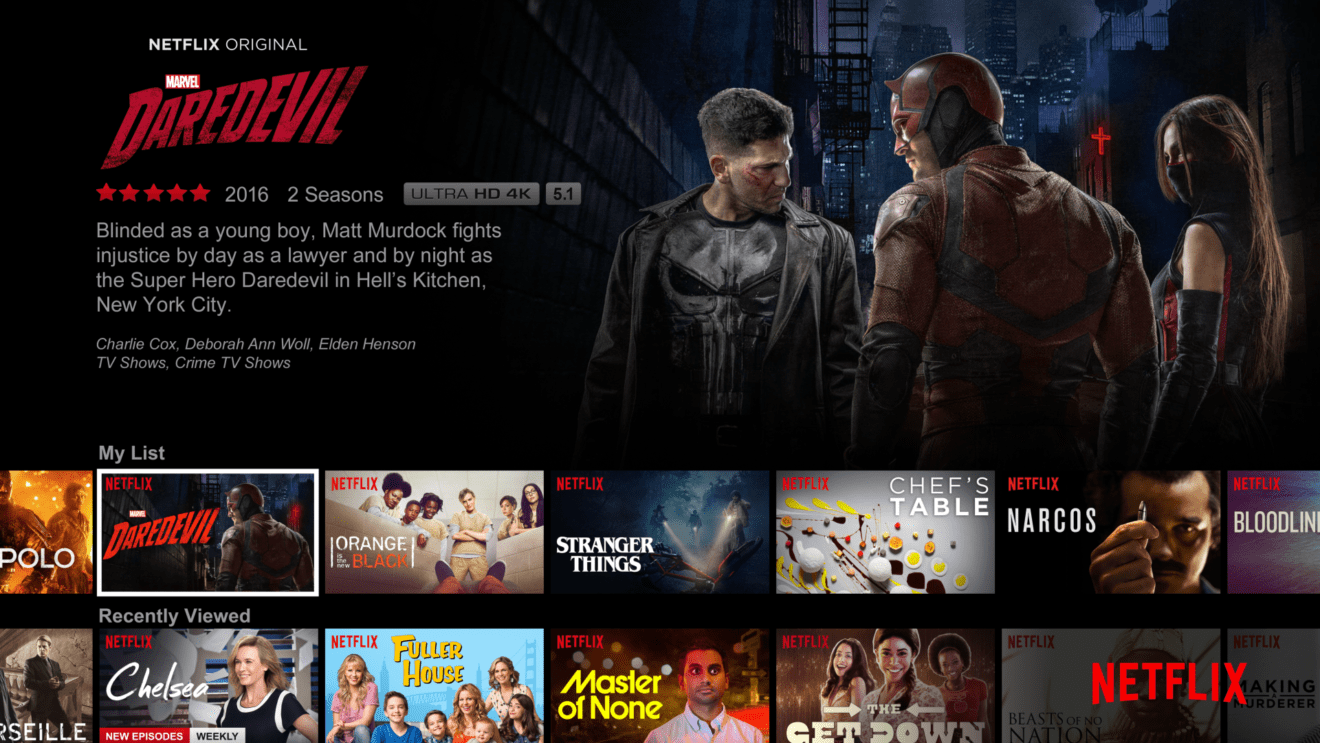
    After it teased the upcoming launch of an ad-supported subscription plan, Netflix has now revealed that it picked Microsoft to help make that happen. Under the agreement, all ads served on Netflix will be exclusively available through the Microsoft platform.

    “It’s very early days and we have much to work through. But our long-term goal is clear. More choice for consumers and a premium, better-than-linear TV brand experience for advertisers. We’re excited to work with Microsoft as we bring this new service to life,” said Netflix COO Greg Peters.

    Netflix has been making headlines lately with announcement involving layoffs, after the streaming giant reported losses in the previous quarter. Early this year, Netflix reported a loss of 200,000 subscribers, but that feels extremely negligible compared to the service’s subscriber base of over 221 million.

    The recent subscriber base decline doesn’t really justify so many layoffs, but perhaps Netflix is afraid that will become a trend. That said, the launch of a new ad-supported plan will certainly increase its customer base.

    However, it remains to be seen if the company will manage to turn those casual consumers into paying customers following the launch of the ad-supported plan later this year.

  • Spotify rolls out new feed to its mobile app to help users find live shows

    Spotify rolls out new feed to its mobile app to help users find live shows

    Spotify has just announced a new feature aimed at users who typically search for their favorite creators’ live events within the app. Previously known as Concert Hub, the feature has been renamed to Live Events Feed and received a handful of improvements.

    First off, you’ll be able to find the new feed by search Live Events in the Spotify app. This is the service’s new place where users can find live events in their local area, personalized for them. Spotify revealed that it’s been supported by various ticketing partners who helped make the new feature more useful.

    Ticketmaster, AXS, DICE, Eventbrite, and See Tickets are just some of Spotify’s ticketing partners that are sourcing the listings in the Live Events Feed. It’s an interesting feature if you’re interested in live events, but it’s more helpful for artists as live shows were terribly impacted by the COVID-19 pandemic.

    In addition to being able to find live events of their favorite artists, Live Events Feed also includes a new messaging tool to offer fans personalized recommendations for upcoming live events based on their listening habits. On top of that, users can choose to be notified about potential live events in their local area.

    Finally, Spotify says that it has also embedded show discovery into their app. So, if an artist that you’re listening to has an upcoming tour date, Spotify will show that live event to you in the app, while you’re listening.

  • Netflix could buy the streaming service Roku

    Netflix could buy the streaming service Roku

    It’s tough times to be in the video streaming business. Netflix, the company that, as we may say, pioneered the whole thing, is now rapidly losing subscribers and is trying to find as many ways as possible to keep its users.

    The streaming giant is under such pressure from its competitors that it revealed its intentions to launch an ad-supported plan soon, despite refusing to do so for years. And now, a new report hints that Netflix might use the streaming service and TV box manufacturer Roku for its new ad-supported tier. But how? Well, by just buying Roku.

    In recent weeks, employees at Roku have been discussing the possibility of Netflix buying the smaller streaming service. This “possibility” comes after Roku’s stock dropped by 80% since July last year.

    Interestingly, according to people inside Roku, the company has prohibited its employees from selling their company stock. Of course, the reasons for doing that could be many, but usually companies do that before releasing important information to prevent inside trading. Could that be because of a potential buyout? It’s a possibility, yes.

    However, it should be noted that there is no official word about Netflix acquiring Roku to back up the claim of a possible acquisition. But according to experts, this is precisely the perfect time for a buyout.

    First of all, Roku’s valuation is now below $13 billion, which makes it very attractive for a buyout. Also, Roku’s video-advertising platform generated $647 million in first-quarter revenue. To understand how big of a deal that is, Roku’s video advertising generated seven times more profit than its video-streaming boxes and other devices that the company sells. In a potential acquisition, Netflix could use Roku’s know-how and video-advertising platform to improve its ad-supported plan, thus generating more profit.

    Of course, with buying Roku, Netflix will also get Roku’s hardware business. In previous years, Reed Hastings, a Netflix co-founder and co-CEO, has said that selling hardware is not something Netflix wants to do. However, as Business Insider pointed out, Roku has access to more than 61 million active accounts through its TV boxes. This will give Netflix the ability to know what users prefer to watch, which could then be used to create better strategies against the competition.

    Although it sounds like a great deal, some experts don’t think that Netflix will actually buy Roku. According to some of them, since investors are currently pressuring Netflix to find a way to increase revenue growth and keep its subscribers, buying such a company at this time won’t be a wise move. Furthermore, according to one industry analyst, Netflix could have problems with antitrust regulators if it tries to buy Roku.

    Also, according to one expert, Netflix hasn’t decided yet what it intends to accomplish in terms of advertising and may not know at this moment if it needs to acquire Roku or not. Furthermore, it looks like Netflix prefers to keep its distance from large buyouts. It acquired a few video game developers, but that was it.

    It will be interesting to see if Netflix will indeed buy Roku or if these were simply empty words from people who wish for a potential Netflix-Roku merger.

  • Apple Music about to live stream concerts starting May 20th with Harry Styles

    Apple Music about to live stream concerts starting May 20th with Harry Styles

    Apple Music is about to start live streaming certain concerts starting this Friday with Harry Styles’ show at UBS Arena in New York City. The concert starring the former One Direction star will start at 9 pm EDT. If you miss the live performance, you’ll be able to listen to it when Apple Music replays the shows on Sunday, May 22nd, at noon EDT and again at 5 am EDT on Thursday, May 26th.
    At this point, it isn’t known whether Apple will make Styles’ concert available for on-demand streaming later. Apple has promoted the live streaming events as a way to “give the biggest stars in music the biggest possible platform to flaunt how they connect with audiences and how their songs translate to live performance.” Styles’ One Night Only in New York concert will be available around the world to anyone subscribed to Apple Music.
    Apple Music’s live streaming events will feature extra content to promote the artist and the concert being streamed live. In Styles’ case, an extra track will play from the singer’s third solo album Harry’s House, which will be released on the day of the concert. In addition, the 28-year-old will answer questions during an interview session which will touch on several subjects including his new album and his therapy sessions.
    If you’re not an Apple Music subscriber, you can get one month free (if you’ve never had a free trial before) followed by a $9.99 per month individual subscription rate. For $14.99 monthly, up to six members of a family can share an Apple Music Family Plan. And if you’re a student, you can join Apple Music for only $4.99 per month. A free six-month subscription is available with the purchase of eligible AirPods, Beats, or the purchase of a HomePod mini.
    There is also a new Voice Plan for Apple Music that is priced at a discount of $4.99 per month. With the Voice Plan, subscribers navigate the app using Siri instead of tapping buttons on the touch screen. Tell Siri what to play and she will cue it up for you. And you’ll have access to the same 90 million tunes that are available to all Apple Music subscribers.
    If you’re a Verizon subscriber, you can get six free months of Apple Music on the carrier’s Play More, Do More, and Start plans. From the Verizon app (iOS, Android), go to Account > Manage Plan and tap on your account. From, there, you should be able to take advantage of the six free months of Apple Music. With the Get More plan, you can get Apple Music for free as part of your Verizon subscription.
    Apple Music launched on June 30, 2015. A little more than a year earlier, Apple had purchased Beats Audio for $3 billion, a transaction that remains the largest in Apple history. Just a couple of months before the purchase, Beats Audio had only 111,000 paying customers. Today, it is estimated that Apple Music has more than 78 million subscribers.
    For those of you who are not familiar with Harry Styles, he was a solo contestant on the U.K. version of The X Factor musical talent show. After being eliminated from the show, he joined group act One Direction on the show at the direction of Judge and musical impresario Simon Cowell. One Direction went on to become one of the largest selling boy bands of all time.
    Styles eventually went solo and has also made a name for himself in motion pictures. With his popularity, Styles seems like a good choice to kick off Apple Music’s live streaming service.
  • Netflix is working on launching a live streaming feature

    Netflix is working on launching a live streaming feature

    Netflix could be working on a new way to keep you as a subscriber. After rapidly losing subscriptions, the streaming giant added a mobile gaming platform, is reportedly planning to introduce an ad-supported tier, and — now — it is looking to broaden its content with live streaming shows.

    Netflix has confirmed to Deadline that it’s in the early stages of launching live streaming for its unscripted shows and stand-up specials. This might allow Netflix to broadcast reunions of some of its series and provide live voting for competitive productions such as Dance 100.

    The new feature could also be used to broadcast live comedy specials. For example, Netflix recently held an in-person comedy festival called Netflix Is a Joke Fest, which featured over 300 stand-up performances. The company will make recordings of around 12 of them available to watch soon. But if it decides to organize the festival again, instead of releasing only a fraction of the event, it could broadcast the whole thing while it is happening, thus letting its subscribers get the full experience.

    Having live shows will allow Netflix to stay in the race with major competitor Disney+, who is already acquiring and broadcasting multiple live shows — like Dancing with the Stars and the Academy Awards. It is highly likely that Netflix is also planning to develop other formats, specifically designed for the live setting.

    At the current moment, we don’t have any information on when exactly the platform plans to launch this new feature.

  • YouTube Go is going away this August

    YouTube Go is going away this August

    The world is now a better place – broadband internet is everywhere, data prices are falling, and practically every smartphone out there can surf the web well enough. There’s no sarcasm in these words, guys – and the latest news from Google proves it!

    Earlier this year, the search giant announced that it will retire the Lite mode in Chrome, saying that “In recent years we’ve seen a decrease in cost for mobile data in many countries, and we’ve shipped many improvements to Chrome to further minimize data usage and improve web page loading.”

    Now Google is preparing to pull the plug on another “lightweight” app – YouTube Go. “Today, we are announcing that YouTube Go will be sunsetted beginning in August,” reads part of the official announcement on Google’s support pages.

    Again, the reasoning behind the retirement of this app lies in the fact that entry-level devices have become so powerful that they can run the main YouTube app well enough, and connectivity and data prices are not a critical issue anymore.

    Google says that it’s working on additional user controls that help to decrease mobile data usage for viewers with limited data, so any fringe cases can be addressed. YouTube Go lacks several features compared to the main app, including the ability to comment, post, create content, and use dark themes.

    There are, however, some question marks around the transition to the main YouTube app. Some users have raised concerns about functionalities that are not present on the current free version of YouTube, the ability to download videos and watch them later, and also the option to disable YouTube shorts in your feed.

  • Spotify announces gains in both paid subscribers and free users in 2022

    Spotify announces gains in both paid subscribers and free users in 2022

    Despite the difficult circumstances, Spotify has managed to expand its user base in 2022. Paid subscribers rose by 2 million, while monthly active users – by 18 million.

    On Wednesday, Spotify released its financial results for the first quarter of 2022. While many streaming services are facing financial hardship, Spotify has defied the gloomy predictions and announced a nearly 24% increase in gross revenue on a yearly basis.

    The company reported growth across all key metrics, with increases in both monthly active users and paid subscribers. Based on the statistics, Spotify Premium subscribers now add up to 182 million, 2 million more than the figure for the same period in 2021. It should be noted that this increase was sustained despite the withdrawal of the streaming platform from the Russian market, which directly lead to the estimated loss of 1.5 million subscribers.

    The growth exceeded the company’s initial expectations and is largely attributed to outperformance in other key markets (notably Europe and Latin America). All in all, premium revenue rose by 23%, on a year-to-year basis.

    For the number of active monthly listeners, a little bit of guesswork was undertaken. Because of a system outrage a couple of months ago, many non-premium users were forcibly logged out from the platform. As a result, some simply ended up creating new accounts instead of logging back to their old ones. Nevertheless, even when accounting for this accident, Spotify is confident that the number of active monthly listeners has still risen, albeit not to the levels previously anticipated.

    Spotify also announced its forecasts for the next financial quarter and the end of the year. By 2023, the streaming platform is projected to have up to 187 million paid subscribers and a grand total of 428 million active monthly users.

    These figures are impressive and showcase Spotify’s continuous dominance of the music streaming market. Spotify’s biggest direct competitor, Apple Music, does not routinely report the size of its user base. The last time it did, it had an estimated 60 million subscribers – a sizeable number no doubt, but quite a bit off of what Spotify has.


  • HBO Max joins Verizon’s +play platform

    HBO Max joins Verizon’s +play platform

    Announced last month during Verizon’s Investor Day, the carrier’s +play platform offers over 20 streaming services ahead of its commercial launch and allows Verizon customers to manage their subscriptions in one place, as well as learn about exclusive deals and offering for content services.

    Starting today, HBO Max will be joining Verizon’s +play platform as partner. The streaming service from Warner Bros. Discovery offers content from HBO, Warner Bros., and DC, as well as Max Originals, blockbuster films, as well as kids and family content.

    Initially designed to provide Verizon customers with access to content the carrier already offers through providers like Disney+, Hulu, ESPN+, discovery+ and AMC+, the new +play platform introduces new partners, including Netflix, Peloton, WW, The Athletic, Calm, Duolingo, and TelevisaUnivision’s Vix+, among many others with more to come.

  • YouTube Shorts are finally coming to iPads and Android tablets

    YouTube Shorts are finally coming to iPads and Android tablets

    Social media apps borrow features from each other all the time to keep up with the trends. Snapchat, Instagram, TikTok and YouTube have been adding new features that have similar functionalities for a long time, something that has become very common in the last couple of years for many other industries.

    Introduced back in 2020, Shorts, YouTube’s take on TikTok’s short-form videos, have amassed five trillion total views as of January 2022. The number includes all platforms where YouTube Shorts are available such as Android phones and laptops but does not include tablets, which don’t support the feature.

    However, YouTube fans will be happy to know that Shorts will soon be coming to Android and iOS tablets. Although they won’t be available on both platforms at the same time, at least we know YouTube plans to make them available on tablets too sooner rather than later.

    According to YouTube, the Shorts option should be rolled out on YouTube’s apps for Android and iOS tablets “in the coming weeks.” Once the new feature will go live, tablet users should see a Shorts tab within the YouTube app. More details about how to create a Short using a song from YouTube’s library are available on the support page.

  • Spotify’s standalone Greenroom app gets a new home and a new name

    Spotify’s standalone Greenroom app gets a new home and a new name

    Spotify is constantly changing its app to provide users with a wide range of features. Last year, Spotify bought a company called Betty Labs, the creators of Locker Room, a live audio app where fans and insiders can take part in conversations focusing on various topics.

    A few months later, the Locker Room app has been renamed to Greenroom and offered separately as part of the Spotify ecosystem. Starting this week, Greenroom will be available from the Spotify main app to make it easier for everyone to enjoy its features.

    Additionally, Spotify announced that it decided to change Greenroom’s name to Spotify Live. It’s important to mention that Spotify Live is now available both as a standalone app and as a livestream function in the Spotify app.

    Spotify users can now tune in to live programming on the service via the creator’s podcast or artist page, and if whey wish be part of the conversation or join the host onstage, they can head to the Spotify Live app to make it happen.

  • Apple TV+, Netflix drop out of bidding for rights to Will Smith’s biopic following “the slap”

    Apple TV+, Netflix drop out of bidding for rights to Will Smith’s biopic following “the slap”

    One of the most bankable and likable stars in Hollywood has seen his reputation shattered in the time it took Will Smith to rise out of his seat at the Academy Awards and slap Chris Rock in the face. Everyone knows the story now and since film and television aren’t part of our beat, there is no sense in taking a deep dive and analyzing the whole affair. However, Apple is on our beat and there is part of this story that has an impact on the tech titan.

    Apple TV+ and six other companies including Netflix have been bidding for the rights to a film version of Smith’s biography; the best-seller was published in 2021. A source said “Apple TV+ and Netflix have pulled out of the bidding for the project and are now planning to use the funds to develop original ideas pitched by new black actors. The source added that “Working with Will has become a risky business. They (including Apple) now plan on developing ideas with more family-friendly stars like Mike Epps and Michael B. Jordan.”

    Think about how strange this all sounds. We should point out that Smith was scheduled to star in a new original film for Apple TV+ called “Emancipation.” Production had been halted on the set because of Covid and it isn’t clear what the film’s status is at this time.

    After the slap, the awards show continued and Smith won the Best Actor Oscar for his part in “King Richard,” a film about Richard Williams, the father of tennis stars Venus and Serena Williams. In winning that award, he beat out Denzel Washington who was nominated for starring as Macbeth in the Apple TV+ movie “The Tragedy of Macbeth.”

    The slap heard around the world is going to hurt Will Smith as companies like Apple drop him like a bad habit. Apple has enough bad press thanks to its App Store policies without having to carry Smith’s baggage too.

    Eventually, the American people will forget, and Smith’s name will grace the “A” list once again. But right now, you can’t blame Apple for taking a hard pass on streaming a Will Smith Biopic. Speaking of streaming, Apple did become part of motion picture history on Oscar night as Apple TV+ became the first streaming service to take home a Best Picture Oscar as CODA took the victory in that category.

    Winning “Best Picture” has helped Apple TV+ subscriptions soar 25% in the aftermath of the televised awards show. At the same time, the number of Apple TV+ subscribers viewing CODA soared 300% week-over-week. The film was also the first with a mostly all-deaf cast to pick up the hardware for “Best Picture” at the event. Apple has never released subscription numbers for Apple TV+, but by one estimate it is believed to have 40 million accounts with 20 million paying customers.

    Apple secured the rights to the movie by paying a Sundance Film Festival record of $25 million. While it would seem that Apple made a smart investment in purchasing the movie rights, it isn’t clear whether many new subscribers were taking advantage of the seven-day free trial of the service that Apple offers just so they could view CODA and see what all of the excitement was about.

    Apple also gives away three free months of Apple TV+ to consumers who purchase an iPhone or other Apple products. Apple will have to see whether these subscribers stick around before it can make a final statement about its investment in CODA. With the huge jump in subscriptions thanks to CODA’s Best Picture victory, it does seem that the world famous “slap” didn’t completely grab all of the attention away from the actual winners during the 94th Academy Awards.”

  • Spotify to move Greenroom to its main app, rename it to Spotify Live

    Spotify to move Greenroom to its main app, rename it to Spotify Live

    It seems that the Clubhouse craze is slowly dying out – Spotify is the latest company to make changes to its live conversation app, Greenroom. According to inside sources, Spotify plans to integrate Greenroom into the main app, and rename it to Spotify Live.

    The change is apparently happening in the second quarter of the year, with all the features migrating to Spotify. Creators will be able to organize and start conversations in Spotify Live, and subscribers will be able to listen to them in the main app.

    There’s another piece of evidence, tied to the change – it was found in the beta app by developer Steve Moser who allegedly shared the matter with Bloomberg. Spotify reacted to the popularity of Clubhouse, which exploded last year, by acquiring Betty Labs, the maker of social audio app Locker Room, and then rebranded the product to Greenroom.

    The short-lived success of Clubhouse resulted in many companies trying to replicate the functionality – Twitter introduced Spaces, and Facebook launched Live Audio Rooms. According to data from SensorTower, Clubhouse scored less than 1 million active monthly users in October 2021, compared to the top result of 9.6 million active users back in February of the same year.

    Integrating Greenroom into Spotify is probably a wise choice, as the standalone app failed to take off and managed to haul only 140,000 installs on iOS as of July 2021. Spotify, on the other hand, ended 2021 with 406m active users and 180m subscribers, and giving them the opportunity to listen to these Clubhouse-like streams may breathe a new life to the feature.