Tag: streaming

  • Netflix answers whether it will offer an ad-supported subscription plan

    Netflix answers whether it will offer an ad-supported subscription plan

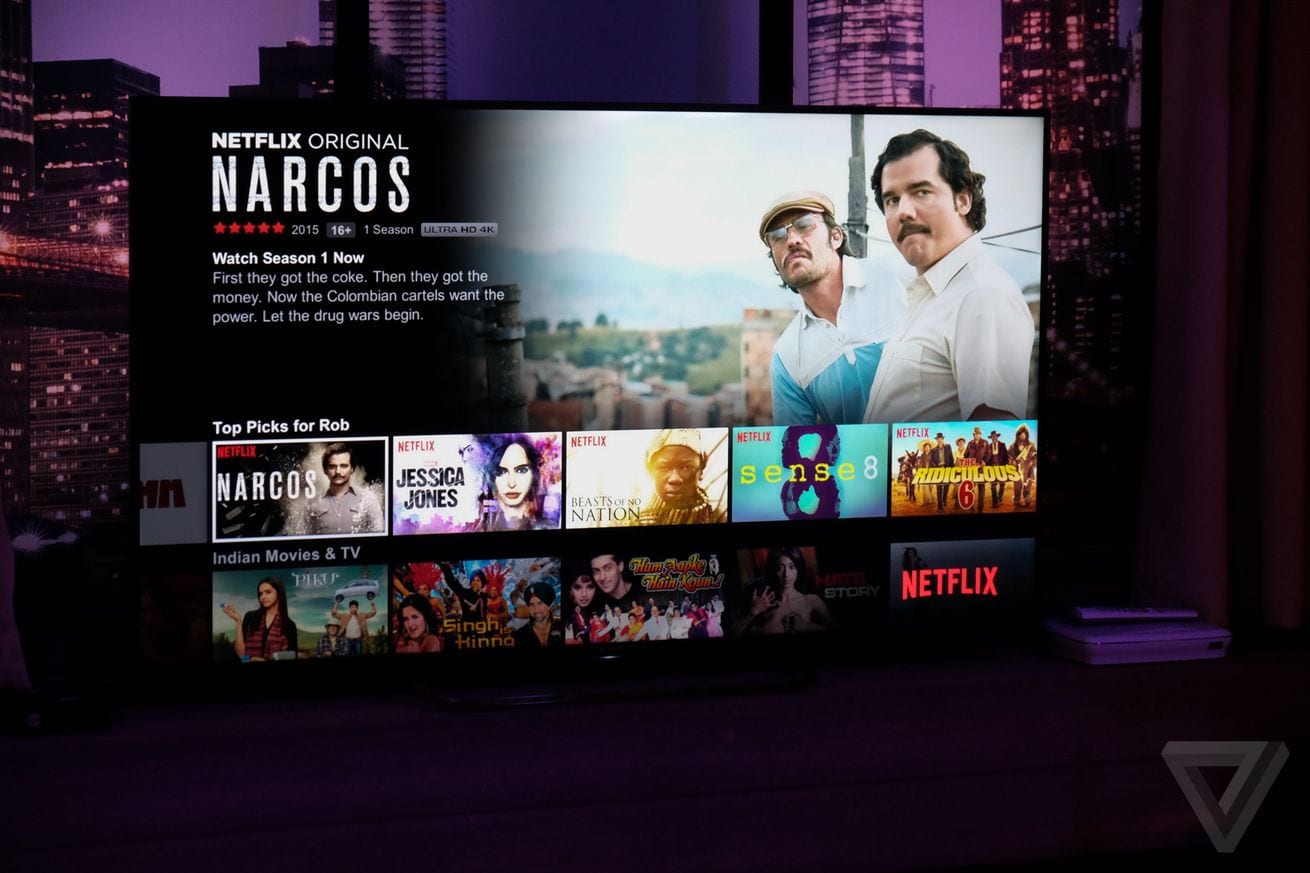
    There is a very small probability that one day, in some possible future, you may be able to watch Netflix through an ad-supported tier. If this ever happens, you might be able to pay less for Netflix and watch your favorite episodes with some ads between them.

    Spencer Neumann, Netflix’s CFO, stated at an investor conference that although Netflix is not currently planning to introduce an ad-supported video on demand (VOD) subscription plan, the option is not fully ruled out either.

    Spencer Neumann said, “It’s not like we have religion against advertising, to be clear. But that’s not something that’s in our plans right now… We have a really nice scalable subscription model, and again, never say never, but it’s not in our plan.”

    Some of Netflix’s competitors are offering ad-supported subscription plans. Hulu, HBO Max, and Paramount Plus already have such a subscription plan. Even Disney Plus will roll out later this year an ad-supported tier.

    In response to a question about whether Netflix is also thinking of introducing an ad-supported tier, Neumann said, “It’s hard for us to kind of ignore that others are doing it, but it now doesn’t make sense for us.” He also stated, “Some other services are going low-price, but I think they’re also losing a lot of money. Netflix is focused on building a profitable business that, in terms of free cash flow, was breakeven last year and is projected to be free cash flow positive this year.”

    So, in other words, don’t expect Netflix to roll out a cheaper ad-supported subscription plan any time soon. Currently, the price of Netflix’s cheapest Basic plan is $9.99 a month, and the top tier Premium plan is $19.99 a month.

  • Apple quietly and sharply reduces the free-trial period for Apple Music

    Apple quietly and sharply reduces the free-trial period for Apple Music

    For years, Apple has given first-time subscribers to Apple Music a free three-month trial. The free trial period has been reduced to just one month in countries including the U.S., Canada, Australia, Japan, the U.K., and other markets as well. It should be noted that this has no impact on the six free months of Apple Music that are awarded for a limited time to buyers of certain Apple devices like the AirPods, HomePod mini, and Beats products.

    There is no change in the pricing of the service which kicks in following the end of the free trial. Each month will cost you $9.99. For $14.99 a month, you and five other family members can subscribe to the Family Plan. Students pay $4.99 monthly, but this price is available to college students only and this must be verified.

    Apple has added a new tier of service called the Apple Music Voice Plan. For $4.99 per month, you can access and navigate Apple Music using your voice and Siri. This plan doesn’t offer spatial audio, nor is the full catalog available with lossless audio as offered with the other plans.

    Apple’s biggest competitor in the music streaming industry, Spotify, also offers a one-month free trial for its premium tier. However, in the U.S. and other select countries, Spotify is offering two free months for a limited time. And those subscribing to Spotify’s premium service via PayPal are entitled to three free months.

    The tech giant hasn’t promoted the reduction in the trial period as you might imagine. The change takes effect starting this week and for the first time since the service debuted in 2015, those who have never subscribed to Apple Music will get just one month to decide if they want to pay for it.

    Will this lead to stronger growth for Apple Music; trial subscribers will have to whip out their wallets two months earlier if they want to continue streaming the service. Or will more trial subscribers give up after one month and look for some other platforms to stream music over. Knowing Apple, we would imagine that the company did some research before making this move.

    You may not know that Apple Music is behind Apple’s most expensive acquisition. In May 2014, the company purchased Beats Audio for $3 billion. Apple usually makes smaller purchases of companies with products or innovations that can be used with the iPhone or other products in the following year or two. That is the blueprint Apple used to buy SRI International in 2010 which led to the launch of digital assistant Siri on 2011’s iPhone 4s.

    In October 2012, Apple bought biometric security firm Authentec for $356 million. The next year, Apple debuted the Touch ID fingerprint scanner on the iPhone 5s. As the first quarter of 2013 was ending, there were leaks indicating that what some were calling “iRadio” was coming.

    Apple itself had to be a bit nervous as the Beats Audio streamer had just 111,000 paying customers before the acquisition by Apple was announced. The headphones division was taking in $1 billion on an annual basis at the time Apple bought the company.

    All things considered, Apple Music should be considered a success. Last month, MIDia Research released a report estimating that Apple’s streaming music platform had 78 million paid subscribers. This makes the service the second largest music streamer in the world but puts Apple well behind the industry’s top streamer Spotify.

    Spotify’s market share has declined from 34% in 2019 to 33% in 2020 and 31% last year. Apple Music has a 15% slice of the streaming market pie worldwide followed by Amazon’s 13%. Despite the current trends, for Apple to catch up and overtake Spotify it will have to take a long term, patient approach to the business of streaming music.

  • New feature begins rolling out for YouTube Music called “Recommended radios”

    New feature begins rolling out for YouTube Music called “Recommended radios”

    YouTube Music is rolling out a feature called “Recommended radios.” Instead of radio stations created from a single song, the new feature creates a station from multiple songs and artists and recommends it to users. You can press the home tab button and scroll about halfway down the page to find the new “Recommend radios” carousel if it has already hit your phone. There are 10 stations shown with the carousel and they update every time you refresh the feed.

    Each station mentions up to three songs that provided the inspiration for that particular station. Each station is named after the title of a band or the genre that the station covers. And the name of the decade associated with the music is often included.

    With the mobile version of YouTube Music, tapping on one of the stations will bring up the playlist page (as opposed to auto-playing the station when you click on it with the desktop version). A Reddit user who goes by the handle of “Fuyou_lilienthal_yu” said, “This tab was just there when I scrolled down on the app. It seems to be like the Mixes except it gives you a specific theme like “Sangatsu no Phantasia, Deep cuts” and then having a playlist with probably SnP’s entire discography.”

    He adds, “Other playlists seem to be stuff like XXX Discovery radio where it’s full of presumably similar songs as the source artist. There doesn’t seem to be a limit to how many songs are allowed on a single radio, the first one in the list was something like “Gen Hoshino Radio” or whatever and it had a seemingly endless scroll of music…All in all it seems cool, more ways for them to help you to listen to music the better.”

    The YouTube Music app is available for both iOS and Android, and the new feature started rolling out this past weekend although not everyone has it yet. For example, we have yet to see it on our Pixel 6 Pro running Android 12.

  • Netflix indirectly confirms Exynos 2200 launch with Galaxy S22

    Netflix indirectly confirms Exynos 2200 launch with Galaxy S22

    The release of Samsung’s latest flagship series, the Galaxy S22 family, is just around the corner. This fact alone guarantees an increasing influx of leaks as the day approaches, and the latest one comes in the form of Netflix indirectly confirming the Exynos 2200 chipset in the Galaxy S22.

    Netflix has always kept a detailed list of specific chipsets, as well as mobile devices, that are supported by the streaming platform—and an Exynos 2200 has just been added to the mix, as XDA Developers reports.

    As far as we already knew, the Korean tech giant has been long in developing the Exynos 2200 processing chipset especially for use in the Galaxy S22 series, and Netflix has already more or less confirmed this fact. We can be sure that we’ll see the new chipset debut with the new series now, without fear of chip shortage-induced delays postponing the chip to a further generation.

    If Samsung keeps to tradition, the versions of the S22 series equipped with the Exynos 2200 processor will be available all throughout Europe, while the models sold in United States, China, and India will be “stuck” with the powerful Snapdragon 8 Gen 1 chipset.

    While the United States certainly aren’t getting the short end of the straw in this case, Verizon has been pressuring Samsung for the Exynos 2200 version for a while now. And if Samsung concedes, this means U.S. citizens will also have access to the revolutionary ray-tracing technology in the in-house chipset, which is a first in the industry.

    The release date of the Samsung Galaxy S22 has been officially set for February 9, and the company has even opened a “reserve” option for users who want to get their hands on Samsung’s latest and greatest. Reserving a model before the big day also guarantees you a $50 credit towards accessories.

    As for a quick refresher on the specs, the new series will pack displays ever so slightly smaller than the S21 series. The base model will have 6.1 inches of screen real estate, the middle model will have a 6.6-inch panel, and the Ultra will be a 6.8-inch giant—same as the S21 Ultra, in fact.

    The Galaxy S22 Ultra is rumored to be more akin to the Galaxy Note series than any S-series predecessor, packing an S Pen slot as well as a curved display. Remember, the S Pen is a defining characteristic of the productivity-oriented Galaxy Note family, and it will be more than interesting to see it with this top-of-the-line flagship.

    The Galaxy S22+, on the other hand, promises the perfect middle ground for the average user, who wants Ultra-level power and features, along with a much lighter and more compact form factor. Because let’s face it: the S Pen slot will add a very noticeable difference in girth and weight to the top model.

    As for the S22 batteries, they are known to be getting significant downgrades in terms of capacity—a fact which has left us questioning whether it will be truly compensated by the boost in more efficient and less power-hungry new chipset. According to reliable sources, the three models are expected to feature 3,700 mAh, 4,500 mAh, and 5,000 mAh batteries, respectively.

    We already know about the Exynos 2200 and Snapdragon 8 Gen 1 chipset situation, so that leaves the S22 cameras. The S22 Ultra will feature a quad-camera setup with a 108MP main shooter, two 10MP telephoto cameras, and a 12MP ultra-wide lens.

    The Galaxy S22 and S22 Plus, on the other hand, will feature identical triple-camera setups with a 50MP main camera, a 12MP telephoto with OIS stabilization, and a 12MP ultra-wide.

    As per most leaks, it appears all the S22 models will keep more or less the same design as their S21 counterparts—save, of course for the deviant S22 Ultra.
  • YouTube Music, Premium launches annual subscription

    YouTube Music, Premium launches annual subscription

    Google has long been offering YouTube Premium and YouTube Music monthly account memberships, where users can subscribe and pay every month for access to millions of songs and videos for ad-free viewing and downloading.

    As of today, YouTube is officially rolling out a new subscription option to users across the board of both these paid YouTube services. In addition to monthly subscriptions, YouTube Premium and YouTube Music will now also offer subscriptions on a yearly basis, which will end up saving long-term users a good bit of money in the long run.

    So, how much money will the new annual subscription actually save you, compared to a monthly plan? Turns out, as part of the initial launch hype, Google is offering a limited-time discounted price, which will last for 6 days before it expires.

    Only until January 13, new users can benefit from an annual YouTube Premium plan priced at $107.99. Compared to the $11.99-per-month regular price, it offers a savings total of $3 per month, adding up to $36 of savings over 12 months.

    The YouTube Music yearly plan is slightly cheaper, coming in at $89.99 each year, or $2.50 less per month than the monthly subscription (for annual savings of $30).

    After the offer expires on January 13, we expect users can still enjoy decent rates for the yearly plan, but they will more than likely be less cost-effective than the current prices.

    Keep in mind that if you’re already subscribed to a monthly YouTube Premium/Music plan, though, you can’t just switch to the yearly subscription. You’d have to completely cancel your current plan, and then re-sign up to the new one. It’s definitely a slightly more time-consuming process, but still definitely worth considering.

    It should be noted that the yearly subscription plan is currently only available in the United States, Canada, Mexico, Brazil, Russia, Turkey, Germany, Thailand, India, and Japan.

  • Netflix’s price increase won’t affect T-Mobile customers

    Netflix’s price increase won’t affect T-Mobile customers

    As many of you probably know already, Netflix has raised prices of all plans in the United States and Canada. Starting this month, old and new Netflix subscribers will have to pay up to $2 more each month to benefit from the company’s streaming service.

    There are a few exceptions though, and if you’re a T-Mobile customer, we’re happy to report that the price hike won’t affect you. Assuming you already have Netflix included in your T-Mobile plan, the new pricing structure shouldn’t worry you at all. T-Mobile has just confirmed that “your Netflix is still on us,” which means that the Netflix benefit included in your plan remains on the carrier.

    If you’ve upgraded your Netflix on Us (to Standard or Premium), you will see Netflix’s price change reflected on your T-Mobile bill starting as their changes go into effect. However, if you wish to change your T-Mobile plan to start getting Netflix on Us, you can certainly do that in My T-Mobile.

    We previously reported that prices for all Netflix plans in the United States will increase from $1 to $2 per month. The new monthly price for the standard plan is now $15.50, exactly $1.5 more than last month. Also, the 4K Premium plan is now priced at $20 from $18. Finally, the basic plan will be $1 more expensive, so subscribers will now have to pay $10 per month.

  • Spotify is going to shut down its own original podcast studio

    Spotify is going to shut down its own original podcast studio

    As many of you may probably know, Spotify has been investing in the ever-growing podcast industry in recent years. Despite that, the music streaming service has decided to shut down its in-house podcast Studio 4.

    It seems that Spotify has now told employees that work at Studio 4 that it will be closed after January 21. Original shows, such as Dissect and Chapo: Kingpin on Trial, were produced in Studio 4. Well, luckily this isn’t the only podcast studio that the company owns; however, it was the first in-house studio that it created before its major studio acquisitions.

    Some of the employees working at Studio 4 have been reassigned to other positions, while some unfortunate ones were laid off with the option to apply for another job at the company. So far, Spotify hasn’t given a reason as to why it is closing Studio 4, but a reported internal note stated this was done to help the company progress faster. Additionally, another reason for the closure given by Spotify in the internal note was to “facilitate more effective collaboration” across the organization.

    Reportedly, the affected employees were quite surprised and some of them found the news quite upsetting.

    For the moment, it is unclear what will happen to the Spotify shows that were produced at Studio 4, but not all of them may be abandoned. For example, Dissect Podcast will not be canceled and will continue as usual on Spotify, according to the show’s official Twitter account.

    Spotify’s presence in the podcast market has been steadily growing, and last year, the company introduced paid podcast subscriptions. Recently, it also acquired a firm that possessed the technology to easily transform broadcast audio to podcasts, in an attempt to enrich the podcast experience to its users.

  • New report hints at the potential power of Apple’s upcoming AR/VR headset

    New report hints at the potential power of Apple’s upcoming AR/VR headset

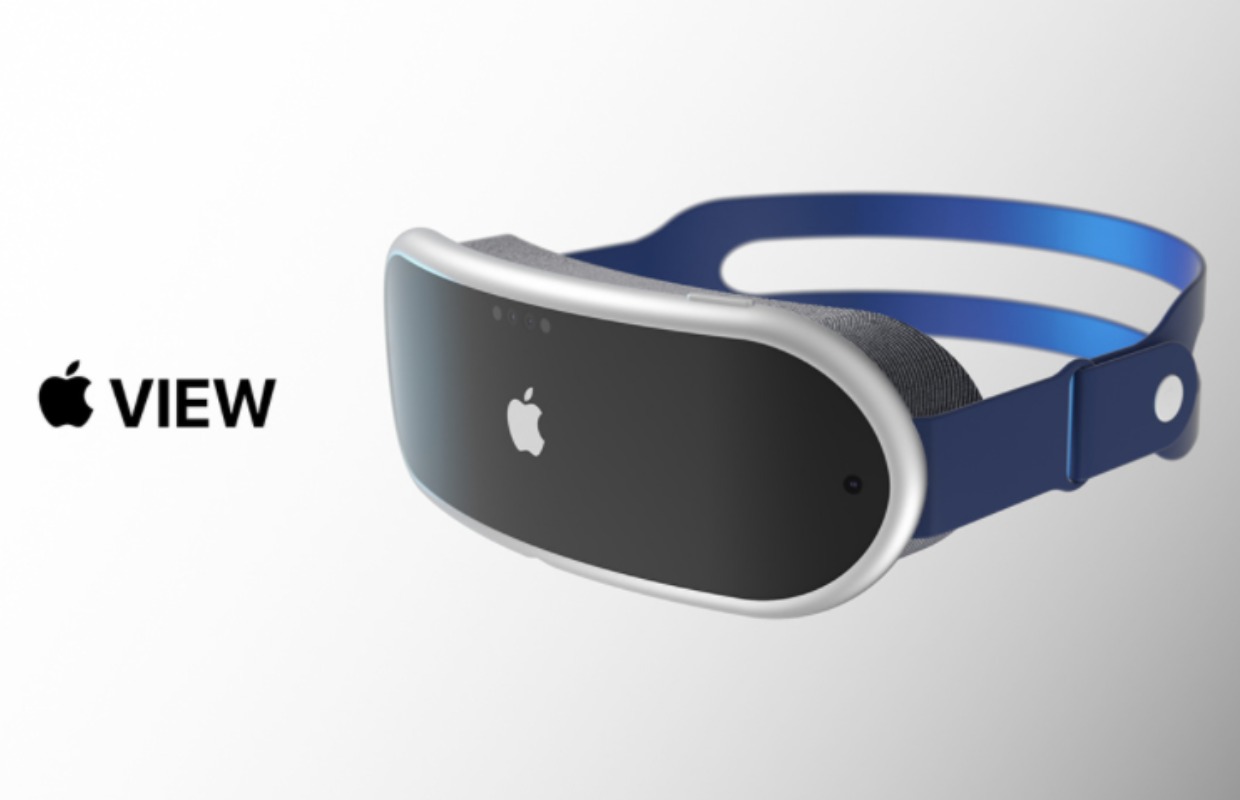
    Apple’s first genuinely new product in a while is expected to see the light of day in the second half of 2022, and it is the alleged AR/VR headset. The rumor mill has been spilling out all kinds of reports and rumors about the device, one of which reveals Apple’s intent for its implementation.

    More recently, a new report from the well-known and respected tech analyst Ming-Chi Kuo pulls the curtains yet even more. He claims that the headset will be powered by the same 96W USB-C power adapter that comes with the MacBook Pro.

    At first glance, this piece of information might seem boring or even unworthy of being mentioned. However, it could be a showing sign of the power that stands behind Apple’s mixed reality wearable product. Previous rumors say that it will be rocking a Mac-level computing power, which would explain the big power adapter.

    To be more precise, Kuo has stated that there will be two processors that will contribute to the headset’s capabilities: a 5nm chip and a 4nm one, supposedly manufactured by TSMC. He also says that one of the chips will be similar in performance to that of the M1 SoC, while the other will be responsible for all the sensors.

    Needless to say, this first iteration will likely be a very niche product, going for insane amounts of money and reserved for the early adopters and developers. That is why Apple is said to make only a small number of them for 2022.

    That being said, Kuo predicts that the next generation will enter the market with a more competitive price point and slowly become more affordable and available. Tim Cook, Apple’s current CEO, has expressed a tremendous interest in the technology. Significant amounts of investments are being made in both VR and AR, so both are probably here to stay and have some part to play in the future

  • Apple has just killed off the last Beats-branded speaker

    Apple has just killed off the last Beats-branded speaker

    After discontinuing the Beats Powerbeats wireless earbuds, Beats EP wired on-ear headphones, and high-end Beats Solo Pro wireless on-ear headphones just a couple of months ago, Apple appears to have also pulled the Beats Pill+ plug more recently.

    This was of course a long time coming, as the portable Bluetooth speaker made its commercial debut all the way back in 2015, but seeing the $229 product officially and permanently going away is still notable for a number of different reasons.

    First and foremost, as you can easily notice, the disappearance of the Pill Plus leaves both the official Beats website and Apple’s own US e-store without a single Beats-branded speaker option. This bad boy was also the first of its kind to see daylight after the Dre-founded company was acquired by the Cupertino-based tech giant in 2014 in exchange for a whopping $3 billion.

    That highlights the minimal attention Apple gave its audio-focused subsidiary all these years, at least on the surface. Of course, the Beats name was at one point rumored to go extinct altogether for marketing purposes, which hasn’t yet happened and is unlikely to happen anytime soon given that the true wireless Studio Buds and Fit Pro earbuds are still under a year old.

    The only speaker Apple is selling at the time of this writing is the in-house $99 HomePod Mini, which features significantly more advanced technology than the Beats Pill+ in a few key departments while forcing its users to hug a wall at all times.

    If that sounds too inconvenient, you might be happy to know the fully portable battery-powered Pill Plus is still available (in presumably limited numbers) from major US retailers like Walmart or Target at or around its original list price.

    Then again, our complete roundup of the best portable Bluetooth speakers money can buy includes several great alternatives at comparable or lower prices, all of which are alive, kicking, and younger than Apple’s Beats Pill+.

  • Spotify starts serving interactive ads to podcast listeners

    Spotify starts serving interactive ads to podcast listeners

    After investing big in podcasts, Spotify is trying to recoup some of that investment through ads. Starting this week, Spotify users listening to podcasts will be getting interactive ads that the streaming service refers to as CTA cards.

    These CTA cards are “the latest step in Spotify’s vision for the future of audio as an interactive, multi-way experience.” They will appear in the Spotify app when a podcast ad begins playing and will reappear later on while the user explores the Spotify app.

    According to Spotify, its CTA cards are supposed to make it easier for users to directly discover the products and services they’re interested in “without having a hard-to-remember promo code or vanity URL.”

    After running some tests, Spotify claims that advertisers with clickable ads have shown twice as many site visits compared to non-clickable podcast ads. CTA cards will be available across select Spotify Original & Exclusive podcasts in the United States.

  • TikTok videos coming to screens in gyms, bars, and restaurants

    TikTok videos coming to screens in gyms, bars, and restaurants

    Atmosphere, a streaming TV service for businesses like restaurants and gyms, announced its partnership with TikTok. The new collaboration will bring carefully selected TikTok videos to businesses around the world in the form of a new channel on Atmosphere’s platform.

    Dan Page, TikTok’s Head of Global Business Development and New Screens, said about the new partnership, “By partnering with Atmosphere, we’re excited to make it easy for people to experience TikTok together by bringing the joy and creativity of our platform to new screens, venues, and audiences.”

    Atmosphere’s ad-supported streaming platform provides entertainment content to over 19,000 businesses worldwide. Some of these businesses are restaurants, bars, gyms, and doctors’ offices. Atmosphere also works with Westin, Taco Bell, and Texas Roadhouse, so if you are a customer of these restaurants, you will also be able to watch Atmosphere’s carefully curated TikTok videos during your meal.

    Leo Resig, CEO and co-founder of Atmosphere, said in a statement, “Everyone is constantly on the go and on their phones, so we developed a hyper-entertaining streaming TV platform with Atmosphere, which elevates the vibe of any business. This is a win-win for the business and their customers as well as advertisers, who are having a harder time connecting with an unreachable TV audience. ”

    Atmosphere offers a streaming TV platform for businesses worldwide that has more than 64 TV channels. Atmosphere’s platform gives access to various entertainment content like video compilations, sports, lifestyle, and art. More than 20 million unique visitors every month, according to Atmosphere, watch its TV platform.

  • Netflix games to avoid breaking App Store rules by getting launched individually

    Netflix games to avoid breaking App Store rules by getting launched individually

    After months of testing and controlled releases, Netflix finally released its mobile games library to Android users worldwide on November 2. Unfortunately, the iOS version of the app is yet to receive this new addition of entertainment choice. At the very least, Netflix did let us know that the feature is also coming to iOS.

    In truth, there might be a good reason Netflix games arrived on Android sooner than iOS, and that could very well be the App Store strict rules. With Android, there is a new tab dedicated to the game library. When you choose a game you want to play and tap on it, you are taken to the Play Store to download the app. After a quick sign-in with your Netflix account, you are set to go.

    In the iOS version of the Netflix app, however, likely, we will not see a dedicated game library tab since the App Store rules do not allow it.

    A developer named Steve Moser told Bloomberg that Netflix is planning to release each of its games individually in the App Store. He got to this conclusion after digging inside the Netflix app code. Each title will have to be downloaded separately from the Netflix app. Then, just like with the Android version, you sign in with your account and start playing.

    While this solves the App Store guidelines problem for Netflix, it is not a best-case scenario either. Even though not having a dedicated games tab might seem like a tiny nuisance, it breaks the seamless experience within the ecosystem, which Netflix is trying to build right now. On the other hand, this might not have to continue for too long, as Apple is still getting a lot of pressure regarding the App Store’s guidelines.

  • Netflix brings its thin mobile games library to all Android users

    Netflix brings its thin mobile games library to all Android users

    Netflix is pretty serious about games and while the company doesn’t have a pedigree when it comes to this part of the entertainment industry, it needs to start somewhere if it wants a seat at the big revenue earners’ table.

    After testing its games service in selected regions, Netflix announced today that its entire catalog of games is now available for all Android users who pay for a Netflix subscription. Although the library is quite thin, we’re promised more titles in the future.

    Starting today, Netflix subscribers can play five mobile games: Stranger Things: 1984, Stranger Things 3: The Game, Shooting Hoops, Card Blast, and Teeter Up. It’s important to mention that these games don’t feature any ads, additional fees and in-app purchases, so all you need is a Netflix subscription.

    Netflix subscribers will see a dedicated games row and games tab on their Android devices where they can select any game to download. These games can be played on multiple devices on the same account. Keep in mind that some games may require an internet connection, but there are some that you can play offline.

  • Spotify to launch new Wear OS app, brings offline listening to smartwatches

    Spotify to launch new Wear OS app, brings offline listening to smartwatches

    Many months after launching its Watch OS app, Spotify announced it will launch a revamped Wear OS app that will include a couple of new features. The most important is offline listening, a brand-new feature that will be rolled out to Wear OS smartwatches in the coming weeks.

    Although the wording in the official statement implies that offline listening has been specifically designed for Samsung’s new Galaxy Watch 4 and Galaxy Watch 4 Classic, the feature will work on older Wear OS smartwatches too.

    The new feature will not be limited to music, as Spotify users will also be able to download podcasts for offline listening. Premium subscribers will be able to download their favorite albums, playlists, and podcasts to listen offline. On the other hand, free Spotify users will be able to stream their tunes in Shuffle Mode using Wi-Fi or mobile data, as well as download any of their favorite podcasts directly to the watch.

    When the new Wear OS app will be available for download, smartwatch users will be able to download content for offline listening simply by tapping “Download to watch.” The new app will be coming to Wear OS smartwatches from Fossil, Mobvoi, Suunto and more in the coming weeks.

  • Amazon launches IMDb TV standalone mobile app for its free streaming service

    Amazon launches IMDb TV standalone mobile app for its free streaming service

    Amazon’s IMDb TV free streaming service has been running on various platforms for a few years now. Unfortunately, Android and iOS users could only access the service through the general IMDb app, at least on mobile.

    Earlier this week, Amazon announced that an IMDb TV standalone app is now available for Android and iOS devices in the United States. The new ecosystems add to an already large list of devices that support IMDb TV: Android TV, Chromecast with Google TV, LG Smart TVs, Roku, PlayStation 4, PlayStation 5, Xbox One, and Xbox Series X/S.

    Fire TV users are still getting Amazon’s IMDb TV streaming service via the free channel within the Prime Video app included on all Fire TV devices. Those who wish to try it out can download the IMDb TV app for Android and iOS through Google Play Store or App Store.

    Amazon IMDb TV offers a generous library of movies and TV shows, including iconic titles like All in the Family, Mad Men, Malcom in the Middle, Chicago Fire, and How to Train Your Dragon. It also streams originals from Amazon Studios like Leverage: Redemption, Alex Rider, and the upcoming Luke Bryan: My Dirt Road.

    Not to mention that after the deal between IMDb TV and Universal Filmed Entertainment Group, the free streaming service will get TV-window rights to Universal movies. Although it’s completely free IMDb TV runs ads during shows, but Amazon claims that its service has half the ads of traditional TV.