Retail News CRM

Tag: subsea

  • Google Teams Up with Australia to Boost Papua New Guinea’s Digital Infrastructure with $120M Subsea Cables Project

    Google Teams Up with Australia to Boost Papua New Guinea’s Digital Infrastructure with $120M Subsea Cables Project

    Google is set to construct three subsea cables in Papua New Guinea, in a project funded by Australia as part of a mutual defense treaty. The initiative aims to boost the digital infrastructure of Papua New Guinea, which is the largest Pacific Island nation, and holds strategic significance for Australian and US military strategists due to its location north of Australia. This becomes particularly important in the context of China’s increasing influence in the region.

    Enhancing Connectivity

    The project, valued at USD 120 million, is set to link the northern and southern parts of Papua New Guinea, as well as the Bougainville autonomous region, with high-capacity cables. The plans were unveiled by Peter Tsiamalili, the country’s Acting Minister for Information and Communications Technology.

    According to Tsiamalili, the entire investment is being funded through Australia’s commitments under the Pukpuk Treaty, a mutual defense pact signed just last October. Australia and Papua New Guinea are demonstrating their joint commitment to enhancing digital security, regional stability, and national development through this project.

    Google is assigned to build the subsea cables, and discussions about the project have taken place between Tsiamalili, Australian diplomats, and US diplomats at Google’s Australian office.

    Boosting Economic and Educational Opportunities

    Australia’s foreign affairs department has indicated that the new cables will help to reduce internet costs for consumers, while also supporting economic growth and improving educational opportunities. Tsiamalili, who also serves as the Police Minister, highlighted the fact that these cables will place Papua New Guinea in an appealing position for investment from hyperscalers and global digital enterprises.

    The Pukpuk Treaty permits Australian defense personnel to access Papua New Guinea’s communication systems, including satellite stations and cables. Meanwhile, the United States is also strengthening its military ties with Papua New Guinea, having signed a defense cooperation pact in 2023.

    Australia and the United States have been funding various subsea cables across the Pacific Islands in recent years, in order to counteract China’s efforts to construct crucial communication links, which they perceive as a security risk.

    Australia’s Commitment

    Australia has pledged over AUD 450 million (USD 300 million) to support undersea cable connectivity throughout the Pacific and Timor-Leste. This includes the Coral Sea Cable, which connects Papua New Guinea, Solomon Islands and Australia.

    In a separate development, Google announced plans last November to build a data hub on Australia’s Indian Ocean outpost of Christmas Island, which is another strategic defense location. New cables are set to link the island with Australian cities that host key defense bases also used by the U.S. military. Two more cable systems are planned to extend westwards to Africa and Asia, thus reinforcing the resilience of Indian Ocean internet infrastructure.

    Questions & Answers

    What is the purpose of the new subsea cables in Papua New Guinea?
    These cables aim to enhance the country’s digital infrastructure, support economic growth, and improve educational opportunities.

    Who is funding the construction of the new subsea cables?
    The project is being funded by Australia as part of their commitments under the Pukpuk Treaty, a mutual defense pact.

    Why is Papua New Guinea’s digital infrastructure important to the US and Australia?
    Papua New Guinea is strategically significant due to its location north of Australia. Enhancing its digital infrastructure can also help to counteract China’s increasing influence in the region.
  • Revolutionizing Connectivity in Southern Philippines: Globe’s Groundbreaking Mindanao Submarine Cable Project Begins 2026

    Revolutionizing Connectivity in Southern Philippines: Globe’s Groundbreaking Mindanao Submarine Cable Project Begins 2026

    Globe Telecom has announced plans to implement a new submarine cable system in Mindanao, set to begin in early 2026. This advancement highlights the ongoing commitment to strengthen network resilience and extend capacity in Southeast Asia’s archipelagic markets.

    Project Details

    The forthcoming project involves the installation of a 48-core, 175-kilometer submarine cable that will link Zamboanga to Isabela City in Basilan, with an extension to Sulu. According to Globe, the infrastructure will bolster both broadband and mobile services by incorporating submarine and inland cable systems, landing stations, fronthaul facilities, and core and access network nodes.

    Survey activities for the submarine cable are slated to commence in early 2026, with full construction anticipated by mid-2027. The operational hub in Isabela City is set to function as a regional aggregation point for high-capacity internet traffic. This will enhance redundancy and service stability in parts of Mindanao and the broader southern Philippines region.

    This innovative initiative aligns with the Philippine government’s National Broadband Plan. It reflects the concerted regional effort to extend digital infrastructure to remote and underserved communities, a persistent challenge for many ASEAN countries with dispersed island geographies.

    More than Infrastructure

    Carl Cruz, President and Chief Executive Officer of Globe Telecom, emphasized the significance of the project beyond its physical infrastructure. He stated, “This is more than infrastructure; it is a bridge to opportunity.” Cruz added that the average monthly data consumption has skyrocketed beyond 30 gigabytes per user, necessitating sustained investment in fiber and broadband networks to support digital services, small businesses, and economic participation.

    The Mindanao submarine cable is part of Globe’s broader network modernization program, which has already transitioned more than 600 towns across 70 provinces to full-fiber infrastructure. This shift from legacy copper networks has enhanced service reliability and reduced energy usage, aligning with regional operators’ sustainability goals.

    Impact on Communities

    Jowin Marquez, Senior Director and Territory Lead for Globe’s Network Technical Group, highlighted the transformative potential of reliable connectivity. He noted that it empowers communities with access to education, bolsters local businesses, and fosters greater participation in the digital economy.

    In the past three years, Globe has invested PHP 228 billion in capital expenditures and PHP 236 billion in operating expenses to fortify and future-proof its network. Its GFiber Prepaid service – a reloadable, no-contract broadband offering – experienced a 53% growth in early 2025. It currently serves approximately 400,000 households nationwide, contributing to Globe’s total broadband subscriber base of 1.83 million.

    Questions & Answers

    What is the purpose of Globe Telecom’s new submarine cable system?
    The new submarine cable system aims to strengthen network resilience and expand capacity in archipelagic markets, particularly in Mindanao, Philippines.

    What does the project entail?
    The project involves the deployment of a 48-core, 175-kilometer submarine cable connecting Zamboanga to Isabela City in Basilan, with an extension to Sulu. It will enhance both broadband and mobile services.

    How does this initiative align with broader efforts in the region?
    The project is consistent with the Philippine government’s National Broadband Plan and mirrors a wider regional effort to extend digital infrastructure to geographically isolated and underserved communities.

  • Google Cloud Boosts Asia Pacific Connectivity with TalayLink Subsea Cable and New Hubs in Australia and Thailand

    Google Cloud Boosts Asia Pacific Connectivity with TalayLink Subsea Cable and New Hubs in Australia and Thailand

    Google Cloud has unveiled TalayLink, an innovative subsea cable system that connects Australia and Thailand. This system represents a significant move towards bolstering digital infrastructure and network resilience throughout the Asia Pacific region.

    Strengthening Regional Network Resilience

    TalayLink is as an extension of the interlink cable previously introduced under the Australia Connect initiative last year. The cable system is designed to follow a diverse route through the Indian Ocean, positioned west of the heavily trafficked Sunda Strait. This strategic routing will not only provide Thailand with a new, resilient international gateway but will also enhance the integration of Google’s global network.

    Bikash Koley, Vice President of Google Global Infrastructure at Google Cloud, explains that TalayLink is named after the Thai word for sea or ocean, ‘talay’. The new subsea cable path will establish a more diverse linkage to Thailand through the Indian Ocean, west of the Sunda Strait. This route will contribute to further integrating future data centers and cloud regions in Thailand into Google’s global network.

    Future-Proof Connectivity Hubs

    Google has also declared plans to establish new connectivity hubs in Mandurah, Western Australia, and South Thailand, in its recent announcement. These hubs aim to secure future regional connectivity and support advanced digital and AI services by facilitating cable switching, content caching, and colocation capabilities. The Mandurah hub will diversify Western Australia’s landing points beyond Perth, while the South Thailand hub will take advantage of existing infrastructure in an essential subsea crossroads.

    Pratthana Leelapanang, Chief Executive Officer of AIS, commends the strategic partnership with Google in supporting the connectivity hub in Southern Thailand. The collaboration of Google’s diverse submarine cable path and AIS’s high-reliability colocation capabilities will enhance the region’s digital infrastructure and support the country’s AI strategy.

    Preeyaporn Tangpaosak, President of ALT Telecom, also expressed enthusiasm about the International Gateway Company (IGC), a subsidiary of ALT Telecom PLC, being a crucial Google partner in landing a new submarine cable in Thailand. This new piece of digital infrastructure is pivotal in accelerating Thailand’s ambitious digital economy development strategy.

    National Importance of Deployments

    The significance of these implementations for the nation’s long-term competitiveness is underscored by Thailand’s Board of Investment (BOI). Narit Therdsteerasukdi, Secretary General of the Thailand Board of Investment (BOI), highlights the role of the TalayLink cable as a key piece of digital infrastructure. It enhances Thailand’s connectivity and resilience and, in conjunction with Google’s upcoming Google Cloud region and data center in Thailand, will significantly expand regional network and computing capacity. These forward-looking investments position Thailand as a critical digital gateway for next-generation cloud and AI innovation in Southeast Asia.

    Upon completion, the TalayLink and new connectivity hubs will boost network resilience across Australia, Africa, and Southeast Asia. Coupled with previously announced hubs in the Maldives and Christmas Island, the new system will enhance onward connectivity across the Indian Ocean and the Middle East.

    Questions & Answers

    What is the TalayLink subsea cable system?
    TalayLink is an innovative subsea cable system developed by Google Cloud that connects Australia and Thailand, strengthening digital infrastructure and network resilience in the Asia Pacific region.

    How will the new connectivity hubs in Mandurah and South Thailand function?
    These hubs aim to enhance regional connectivity and support advanced digital and AI services. They will facilitate functions such as cable switching, content caching, and colocation capabilities.

    What is the significance of the TalayLink cable to Thailand?
    The TalayLink cable serves as a pivotal piece of digital infrastructure, enhancing Thailand’s connectivity and resilience. It will significantly expand regional network and computing capacity while positioning Thailand as a critical digital gateway for next-generation cloud and AI innovation in Southeast Asia.

  • Undersea Superhighways: The Future of Digital Connectivity in Asia

    Undersea Superhighways: The Future of Digital Connectivity in Asia

    The majority of today’s internet traffic is transmitted via undersea fiber-optic cables, rather than through satellites or overland networks. The National Bureau of Asian Research reports that over 97% of transoceanic telecommunications—including financial, voice, and internet data—are facilitated by these underwater cable systems. This is especially true in Asia, where many countries are separated by bodies of water, making these cables crucial for digital connectivity.

    The Evolution of Submarine Cables

    Undersea cables have come a long way from their origins as colonial-era telegraph lines. They have developed into high-capacity systems capable of transmitting terabits of data per second. Modern technologies, such as optical amplification and dense wavelength division multiplexing (DWDM), allow these cables to stretch thousands of kilometers across oceans.

    Asia’s Digital “Bridges”

    These undersea cables, often referred to as digital “bridges,” are now jointly funded and operated by consortia of telecom firms, governments, and major tech companies. In managing these cables, these entities must balance commercial interests, abide by various regulations, and mitigate geopolitical risks.

    Asia’s most significant subsea cables include the Asia-Africa-Europe 1 (AAE-1), Asia-America Gateway (AAG), Asia Pacific Gateway (APG), Asia Submarine-Cable Express (ASE), South-East Asia-Japan Cable 2 (SJC2), SEA-ME-WE 6, and the PEACE Cable. These cables link various Asian countries with each other and the rest of the world, providing high-capacity connectivity across continents.

    The Importance of Undersea Cables in Asia

    Undersea cables are particularly crucial in Asia. Island nations, such as the Philippines and Indonesia, depend on these cables to connect to continental networks. Conversely, landlocked or peninsular states like Laos and Myanmar rely on terrestrial links that connect to undersea systems.

    The expansion of undersea cable capacity and routes promotes digital inclusion, reduces latency, and improves connectivity for remote and rural communities. Research indicates that doubling the capacity of these cables can decrease internet prices in a country by 30-50%, enabling wider online access.

    Fostering Connectivity and Cultural Exchange

    Submarine cables serve as the backbone of Asia’s digital regionalism. They facilitate the exchange of culture and knowledge across borders, enabling various professionals and creators to connect, learn, and collaborate with ease.

    Moreover, these undersea cables highlight Asia’s growing digital interdependence. No country can thrive alone; data, trade, and communication freely cross borders, uniting societies. Much like physical bridges, submarine cables connect Asia beneath the ocean, enabling the free flow of ideas and opportunities.

    Challenges and Considerations

    While undersea cables significantly enhance connectivity, they also come with their own set of challenges. If landing stations are monopolized or interconnection is gated, it may lead to the exclusion of certain actors such as small businesses or rural communities. Additionally, like physical bridges, submarine cables are vulnerable to sabotage, which could lead to significant disruptions in connectivity. Therefore, it is crucial to establish protective measures and governance to manage these risks.

    Questions & Answers

    What is the role of submarine cables in digital connectivity?
    Submarine cables facilitate the majority of transoceanic telecommunications, including financial transactions, voice calls, and internet data. They play a crucial role in connecting different countries and enabling the exchange of information across continents.

    How do submarine cables impact internet accessibility and costs?
    Expanding undersea cable capacity can significantly reduce internet prices in a country, thereby enabling wider online access. However, monopolization can undermine these benefits.

    What are the potential risks associated with submarine cables?
    Potential risks include monopolization of landing stations, sabotage of cables, and the possibility of cables being used as political tools in disputed sea regions. Therefore, protective measures and governance are vital to manage these risks.

  • Why Subsea Cables Are Essential to the Future of the Digital Economy

    Why Subsea Cables Are Essential to the Future of the Digital Economy

    “In this digital age, data has become the world’s most valuable resource, and subsea cables are the arteries through which it flows,” said Najib Khan, Chief Business Services Officer at Ooredoo Group. This vivid characterization underscores the escalating significance of subsea connectivity in today’s fast-paced, data-dependent world.

    In a revealing interview with Telecom Review, Khan articulated the shift of subsea cables from obscure utilities to critical assets for national security and economic growth. He elaborated on how Ooredoo’s substantial investments are reconfiguring the Gulf’s digital landscape and its ambitions to establish the Middle East as a prominent global digital hub.

    Why Are Subsea Cables More Essential Than Ever?

    Subsea cables, which already carry over 95% of the world’s internet traffic, are no longer the unsung heroes of the digital economy; their importance is soaring alongside an unprecedented surge in data generation. Whether it’s artificial intelligence, cloud computing, fintech, or the Internet of Things, the deluge of traffic is pushing subsea systems to the forefront.

    Simultaneously, governments and businesses are racing towards digital transformation, necessitating low-latency, resilient, and secure connections linking data centers, hyperscalers, and end-users. Hyperscalers alone now represent over 60% of global investments in subsea infrastructure, highlighting the strategic shift towards these underwater lines not just as conduits of connectivity, but as vital components of innovation and sovereignty.

    Tackling Geopolitical Challenges with Ooredoo’s Fibre in the Gulf

    The world’s digital fabric currently leans heavily on the Red Sea-Suez route, with about 95% of Europe-Asia data traffic routed through Egypt. This dependency exposes vulnerabilities, as disruptions can ripple through global operations.

    Enter Ooredoo’s Fibre in the Gulf (FIG) system, designed to revolutionize this landscape. Working with Alcatel Submarine Networks, Ooredoo is building a comprehensive, high-capacity subsea network that will interconnect all seven Gulf Cooperation Council (GCC) countries—including Qatar, Oman, the UAE, Bahrain, Saudi Arabia, Kuwait, and Iraq. When realized, FIG will boast an astonishing capacity of 720 terabits per second across 24 fiber pairs—far surpassing the capabilities of existing and planned Gulf cables.

    Positioned to deliver low-latency and secure service, FIG promises to unlock new digital avenues for hyperscalers, businesses, and governments, while enhancing the region’s access to European markets.

    The Symbiotic Relationship Between Subsea Cables and Data Centers

    It’s difficult to envision one without the other; subsea cables act as the highways for digital traffic, while data centers serve as its repository and processing unit. For businesses and hyperscalers, proximity to landing stations is crucial, as it impacts efficiency and competitiveness.

    With this understanding, Ooredoo is strategically investing not only in the FIG subsea system but also in expanding its AI-ready data center capabilities. Together, these elements create a cohesive ecosystem where connectivity, cloud solutions, and edge computing converge, ultimately providing clients with seamless, low-latency services essential for driving innovations—and perhaps even the next viral video.

    Ooredoo’s Strategy to Become the Partner of Choice

    Ooredoo’s strategy centers on two pillars: trust and scale. The company’s extensive regional presence aligns perfectly with the needs of global players, allowing Ooredoo to leverage key partnerships that infuse the latest technology into local operations.

    This dual focus empowers Ooredoo to ensure that advanced technological capabilities not only meet international standards but also conform to local regulations, solidifying its position as a trusted partner in the industry.

    The Middle East’s Digital Renaissance

    Strategically located at the confluence of Asia, Europe, and Africa, the Middle East now stands before a unique opportunity—to transform from a technology consumer to a regional hub of innovation.

    The FIG project lies at the center of this vision. Paired with emerging data center infrastructures and cloud ecosystems, it lays the groundwork for economic diversification. The region’s increasing reliance on artificial intelligence and the processing of large data sets necessitates such robust infrastructural enhancements.

    While these cables may be hidden beneath the ocean waves, their impact is unmistakable—fostering job creation, economic diversification, and digital empowerment.

    Looking Ahead: The Future of Subsea Connectivity

    The trajectory for subsea connectivity is clear: the demand for data and digital infrastructure will only intensify. Future subsea systems are expected to accommodate unimaginable data loads while incorporating intelligence and sustainability at their core.

    However, the true essence lies not merely in the technology but in what it enables—whether it’s a start-up in Doha reaching a global audience, a hospital sharing medical expertise across borders, or an energy firm harnessing AI to anticipate operational failures. At Ooredoo, the goal is not only to ensure the Middle East is connected to this exciting future but actively shapes it. With innovative digital infrastructure, the region has the potential to turn connectivity into empowerment.

    Questions & Answers

    Why are subsea cables becoming critical now?
    With a growing demand for data from AI, cloud technology, and more, these cables are now seen as essential to national security and economic growth.

    What advantage does Ooredoo’s Fibre in the Gulf offer?
    It creates a robust interconnection among GCC countries with a high-capacity system, enhancing digital access and reducing vulnerabilities associated with existing routes.

    How does Ooredoo ensure it meets both global standards and local needs?
    By forging partnerships that integrate advanced technology while maintaining compliance with regional regulations, Ooredoo establishes itself as a dependable local partner for global players.

  • Chunghwa Telecom Expands Submarine Cable Investments

    Chunghwa Telecom Expands Submarine Cable Investments

    The company is increasing its investment in undersea cable infrastructure, allocating up to TWD 2 billion (USD 60.9 million) in 2025. The SJC2 system, spanning 10,500 kilometers, links 11 cable landing stations across Singapore, Thailand, Cambodia, Vietnam, Hong Kong, Taiwan, China, South Korea, and Japan.

    Meanwhile, the Apricot system, stretching 12,000 kilometers, will connect Taiwan to Japan, Guam, the Philippines, Indonesia, and Singapore. Chunghwa Telecom is part of the consortium overseeing the development of both cable projects.

    In addition to these deployments, the company is in discussing the possibility of other submarine cable projects with potential partners. Chunghwa Telecom Chairman, Alex Chien, indicated that the company is inclined to invest in undersea cables that connect Taiwan to Southeast Asia or Pacific nations. He also revealed that the company is considering launching more medium Earth orbit (MEO) and high Earth orbit (HEO) satellite internet services this year to bolster data security for the government and enterprises in case of undersea cable disruptions.

    Chunghwa Telecom is also addressing local connectivity issues. It has allocated funds to repair two damaged domestic submarine cables linking Taiwan and Lienchiang County (Matsu). These cables failed in late January due to natural wear and tear.

    Chunghwa Telecom’s increased investment in submarine cable systems comes amid heightened concerns over Taiwan’s digital infrastructure security due to ongoing geopolitical tensions with China.

    A quarter (25.2%) of the company’s 2025 capital expenditures (CapEx) will be directed toward non-mobile sectors, including submarine cable expansion,

  • Keppel, Sovico Plan Vietnam-Singapore Subsea Cable Project

    Keppel, Sovico Plan Vietnam-Singapore Subsea Cable Project

    Currently, there are four operational submarine cable systems linking Vietnam to the rest of the world: AAE-1, AAG, TGN-IA, and APG. The SEA-ME-WE 3 cable system previously connected with Vietnam, however, it was retired in early December.

    Three new cables are under construction to connect Vietnam: ADC, ALC, and SJC2. Moreover, Viettel and Singtel have signed a Memorandum of Understanding (MOU) to construct the Vietnam-Singapore Cable System (VTS).

    Vietnam has experienced frequent internet disruptions due to faults in its underwater cables. For instance, both the APG and AAE-1 cables are currently not functioning and awaiting repairs. In June, three out of five undersea cables connecting Vietnam to the world (APG, AAE-1, and TGN-IA) encountered issues, causing internet speed reductions across the country. The repair of the AAE-1 cable is still pending. In January 2023, four out of five undersea cables (AAG, IA, APG, and AAE-1) were not operational, leading to slow internet speeds across Vietnam.

    In January 2024, the Prime Minister of Vietnam issued Decision 36/QD-TTg (Decision 36), approving Vietnam’s Digital Infrastructure Master Plan 2030. According to this plan, Vietnam aims to add two-to-four international internet cables by 2025 and another four-to-six international undersea fiber optic cables by 2030.

    Furthermore, by 2030, Vietnam plans to increase the total number of submarine cables to 15, each with a total capacity of at least 334 Tbps. Sovico Group will focus on providing high-quality products and services in various sectors to meet customer needs and integrate with the global economy. In September, Sovico Group signed an MoU with U.S.-based tech company, Supermicro, to develop a hyperscale data center in Vietnam.

    According to SCMP, Keppel and Sovico Group are considering laying a cable that will directly connect Vietnam with Singapore, predicted to cost an estimated USD 150 million.

    The new projects led by Keppel and Sovico Group will be separate from previous investments announced by Vietnamese companies in four new undersea cables. These include the ADC and SJC2 cables, built by Japan’s NEC; ALC, built by China’s HMN Tech; and the Vietnam-Singapore submarine cable system announced by Vietnam’s Viettel and Singapore’s Singtel.

    Given its proximity to China, Vietnam faces challenges in aligning with the U.S. on strategies and policies related to digital infrastructure and undersea cables.

  • Huawei to sell subsea cable business

    Huawei to sell subsea cable business

    Huawei is reportedly planning to sell its subsea cable business according to a buyer’s filing.

    Made on 31 May 2019 to the Shanghai Stock Exchange, the filing showed that Hengtong Optic-Electric Co, an optical telecoms network vendor, had signed a letter of intent with Huawei Technologies to buy its 51% stake in Huawei Marine Systems.

    Through no price was given, the deal is set to be financed through a combination of cash and shares.

    The news comes weeks after President Trump issued an executive order on “information and communications technology and services supply chain” which gives him and the rest of the US government unprecedented power to ban any business dealing. The order bans Huawei from buying technology from any US company without a license from the US government.

    A few days after the order was issued, the US government then relaxed its embargo on Huawei until 18 August. The Department of Commerce (DoC) issued a temporary general license which sets out limited exclusions to the order giving operators time to get their plans in order.

    “The temporary general license grants operators time to make other arrangements and the Department space to determine the appropriate long term measures for Americans and foreign telecommunications providers that currently rely on Huawei equipment for critical services,” said Secretary of Commerce Wilbur Ross. “In short, this license will allow operations to continue for existing Huawei mobile phone users and rural broadband networks.”

    It has been rumored that the sale of Huawei Marine is happening because the company is now facing stronger scrutiny, which may affect its ability to win new business.

    Speaking to the FT, Fergus Hanson, head of the International Cyber Policy Centre at the Australian Strategic Policy Institute, said, “It’s becoming a more difficult environment when trying to negotiate deals to build cables because [Huawei] is so much in the spotlight.”

  • XL Axiata upgrading fiber network for 5G era

    XL Axiata upgrading fiber network for 5G era

    Indonesia’s XL Axiata has engaged Infinera to modernize both its South Sumatra terrestrial network and its Singapore-to-Jakarta subsea network for the 5G era.

    Under the agreement, Infinera will provide its XTC platform for the South Sumatra terrestrial network and the  Jakarta-Bangka-Batam-Singapore (B2JS) cable.

    The XTC platform is powered by Infinera’s Infinite Capacity Engine solution, which is designed to provide scalable multi-terabit optical super-channel capacity for distances from metro to subsea.

    XL Axiata CTO Yessie Dianty Yosetya said this additional capacity will allow XL Axiata to prepare its network for the arrival of 5G in Indonesia.

    “As one of Southeast Asia’s largest economies, modernizing the network in Indonesia to ensure 5G-readiness is a priority,” she said.

    “Our partnership with Infinera and Lintas Teknologi has been critical to help us achieve this milestone. Further, the performance of Infinera’s ICE4 solution for this subsea and terrestrial network upgrade enables the delivery of cloud-scale capacity that is simple and operationally efficient, with the benefit of intelligent OTN switching that accelerates our ability to deliver services faster.”

    XL Axiata’s transport infrastructure spans over 45,000km of fiber, while its mobile services cover 94% of Indonesia’s population. The company is a subsidiary of Malaysia-based Axiata Group.

  • SISCC taps XSite Modular for subsea cable landing stations

    SISCC taps XSite Modular for subsea cable landing stations

    Solomon Islands Submarine Cable Company Limited (SISCC) has contracted prefabrication consultant and critical infrastructure building design builder XSite Modular to build four modular cable landing stations in the Pacific nation.

    The new cable landing stations will be deployed in Honiara, Auki, Noro, and Taro, and will form part of the Solomon Islands’ planned new subsea cable network infrastructure.

    This network will include the Coral Sea Cable System, a 4,000km cable system linking the Solomon Islands with Papua New Guinea and Australia. The network is being funded by the Australian government and will be operated by Australia’s Vocus Group. It will be the first subsea cable to directly reach the Solomon Islands.

    In addition, the 730km Solomon Islands Domestic Network (SIDN) will connect Taro, Noro and Auki with SISCC’s international hub in Honiara. This cable is also being funded by the Australian government as part of its development assistance program.

    SISCC has agreed to provide the landing party infrastructure for the two cable projects as part of the agreements between the Australian, Solomon Islands and Papua New Guinea governments.

    “XSite’s modular approach made design and construction of the structures easily customizable and able to meet both the strict delivery and budget demands of this ambitious project,” SISCC CEO Keir Preedy said.

    “Most crucially, XSite provides best-in-class and proven building techniques that offer the safety and reliability guarantees that are simply without compromise. We’re pleased to have them as our partner in developing and implementing this critical infrastructure for the Solomon Islands.”

  • Huawei Marine to deploy subsea cable for NGCP

    Huawei Marine to deploy subsea cable for NGCP

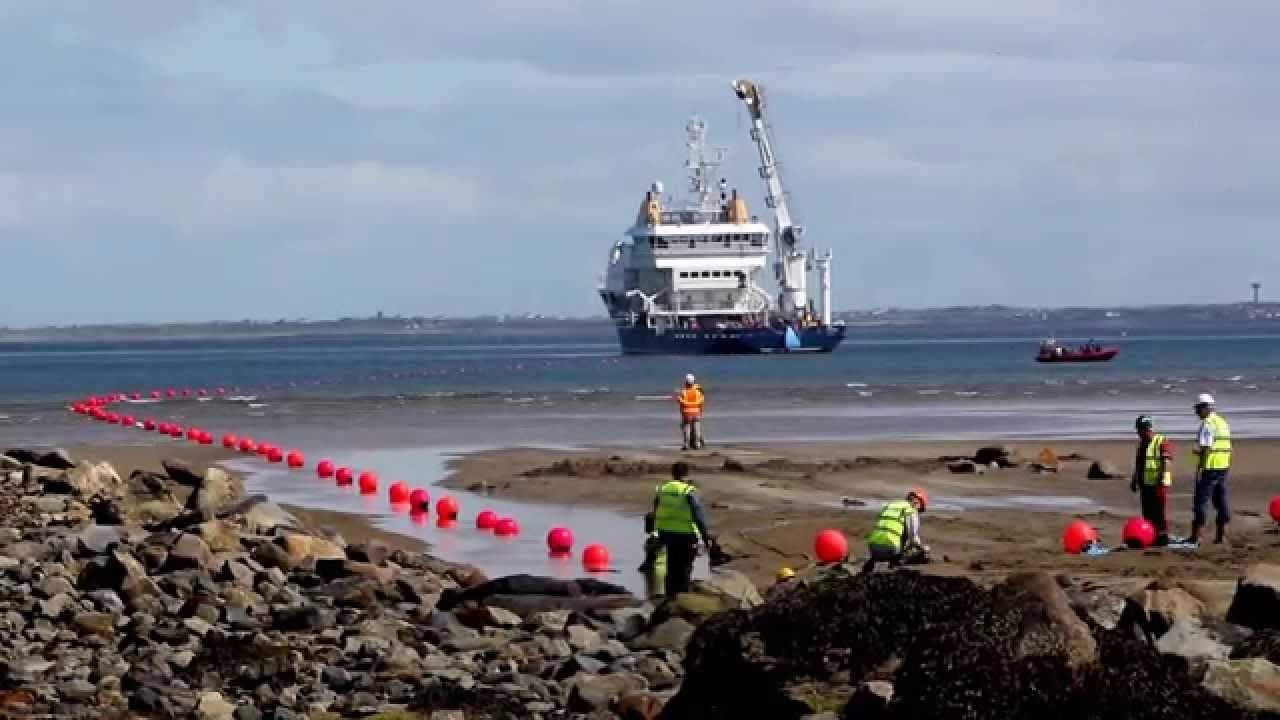
    Huawei Marine has commenced the second phase of its Sorsogon-Samar Submarine Fiber Optical Interconnection Project (SSSFOIP) for the National Grid Corporation of the Philippines (NGCP).

    The phase two rollout, which involves the deployment of a 12.8Tbps subsea cable connecting Sorsogon and Samar, is expected to be complete in the third quarter.

    The dedicated cable will replace the existing microwave technology for the power transmission network.

    NGCP selected Huawei for the upgrade project through a public tender in 2016, aimed at enhancing branch network data exchange capabilities for the national grid. The first phase of the project, involving a marine route survey, was completed in 2016.

    “The transmission line between Sorsogon-Samar is an important branch of the network for the country,” NGCP network director for telecoms Ferdinand Dicon said.

    “During the first phase of exploration, Huawei Marine demonstrated their project delivery capabilities and experience as a world-class turnkey submarine cable supplier. We believe that in the second phase of construction, Huawei Marine will successfully deploy their leading-edge product technology with their customer focus support services.”

    Huawei Marine chief executive Mike Constable added that this project is the company’s first power grid project.

    “Based on the results of the first phase of exploration, we will deploy the latest technology to build a fit-for-purpose communication network which will transform the NGCP’s network capabilities,” he said.

  • Undersea internet cable out of action for another three weeks in Vietnam

    Undersea internet cable out of action for another three weeks in Vietnam

    Repair work on the broken international cable won’t start until July 3 and will take at least 10 days to complete. International internet connections in Vietnam are likely to remain slow for another three weeks with repair work to a major internet cable which broke off central Vietnam last week expected to take until July 14, a service provider said.

    The source told us that repair work on the Asia Pacific Gateway won’t start until July 3 and is expected to take 10 days. The cable should be fully reconnected by July 14, depending on the extent of the problem, said the representative.

    The cable snapped on Tuesday afternoon about 125 kilometers off the coast of Da Nang.

    Service providers such as Viettel and VNPT said they have prepared contingency routes to minimize downtime.

    No announcement on the cause of the problem has been made.

    The cable was officially launched on January 3, but was quickly hit by a technical problem that took two weeks to fix.

    The cable cost $450 million and has a capacity of more than 54 Tbps, promising to double internet speeds in Vietnam and ease reliance on the notorious Asia America Gateway, which has ruptured or been shut down for maintenance on numerous occasions since 2011.

    The new system took four years to build, and links Japan with Hong Kong, mainland China, Malaysia, Singapore, South Korea, Taiwan, Thailand and Vietnam.

    Nearly 49 million people in Vietnam, or more than half of the country’s population, are online.

  • IOX Cable to build new Indian Ocean cable

    IOX Cable to build new Indian Ocean cable

    IOX Cable Ltd and Nokia’s Alcatel Submarine Networks last week announced plans to build the IOX Cable System in the Indian Ocean.

    The new submarine cable will connect the eastern coast of South Africa with the eastern coast of India, hooking up the islands of Mauritius and Rodrigues along the way.

    It will span 8,850km and offer a planned total design capacity of 13Tbps per fiber pair via ASN’s 1620 SOFTNODE and ROADM gear.

    IOX is based in Mauritius, and clearly local access for the island and its neighbor to the east is a key driver for the plans. Rodrigues is new to me, and is apparently a part of the Republic of Mauritius as well. Its 42 square miles are home to just 42,000 or so people.

    But they also clearly hope to cut latency between South Africa and India, and thus bring in some traffic that otherwise would have to hug the coastline past the Middle East and East Africa.

  • NEC sets long-haul subsea cable record

    NEC sets long-haul subsea cable record

    Japan’s NEC has announced it has become the first vendor to achieve a transmission capacity of over 50Tbps over a distance greater than 10,000km using a single optical fiber.

    The new development could pave the way for significantly faster subsea cables spanning trans-Pacific distances, helping the industry meet surging traffic demands in the APAC region.

    NEC has demonstrated a speed of 50.9Tbps over a more than 11,000km span of cable using new C+L band erbium-doped fiber amplifier (EDFA) technology. The company said the performance translated to a record-breaking capacity of 570 petabits per second per kilometer.

    To push the capacity of the cable to close to the Shannon Limit – the spectral efficiency limit of optical communications, NEC researchers developed a new multilevel, linear and nonlinear constellation optimization algorithm.

    With this algorithm, NEC has achieved an optimized 32 quadrature amplitude modulation (32QAM) constellation with a higher nonlinear capacity limit and an unprecedented spectral efficiency over a trans-Pacific distance.

    In addition, NEC researchers developed a new bi-directional amplifier design to help maximize the capacity per fiber pair by reducing effective noise and device complexity.

  • Malaysia-Cambodia-Thailand subsea cable launches

    Malaysia-Cambodia-Thailand subsea cable launches

    A new subsea cable connecting Malaysia, Cambodia and Thailand has been launched in Cambodia, adding at least 30Tbps of regional capacity.

    The Malaysia-Cambodia-Thailand (MCT) cable system was designed and deployed by Huawei Marine for Cambodia’s EZECOM, Telekom Malaysia and Symphony Communication of Thailand.

    The 1,300km cable system uses 100Gbps technology, and will connect to other submarie cable systems, including the Asia-America Gateway (AAG).

    Speaking at the launch of the system, EZECOM CEO Paul Blanche-Horgan said the launch is the culmination of six years of work. He said the launch of the cable will improve the security of Cambodia’s connection to the internet.

    “With this cable, we are now directly connected POP to POP, which means a much more secure connection for Cambodia. This is of great importance, as [Cambodian deputy prime minister and minister of interior] Samdech Krolahom does understand, for the context of national security as well as certain key sectors like banking.”

    Samdech Krolahom himself said that with the new cable, “Cambodia now has faster, more reliable, more affordable and, most importantly, a more secure internet connection for all.”