Retail News CRM

Tag: subsea

  • Prysmian group claims record for densest subsea cable

    Prysmian group claims record for densest subsea cable

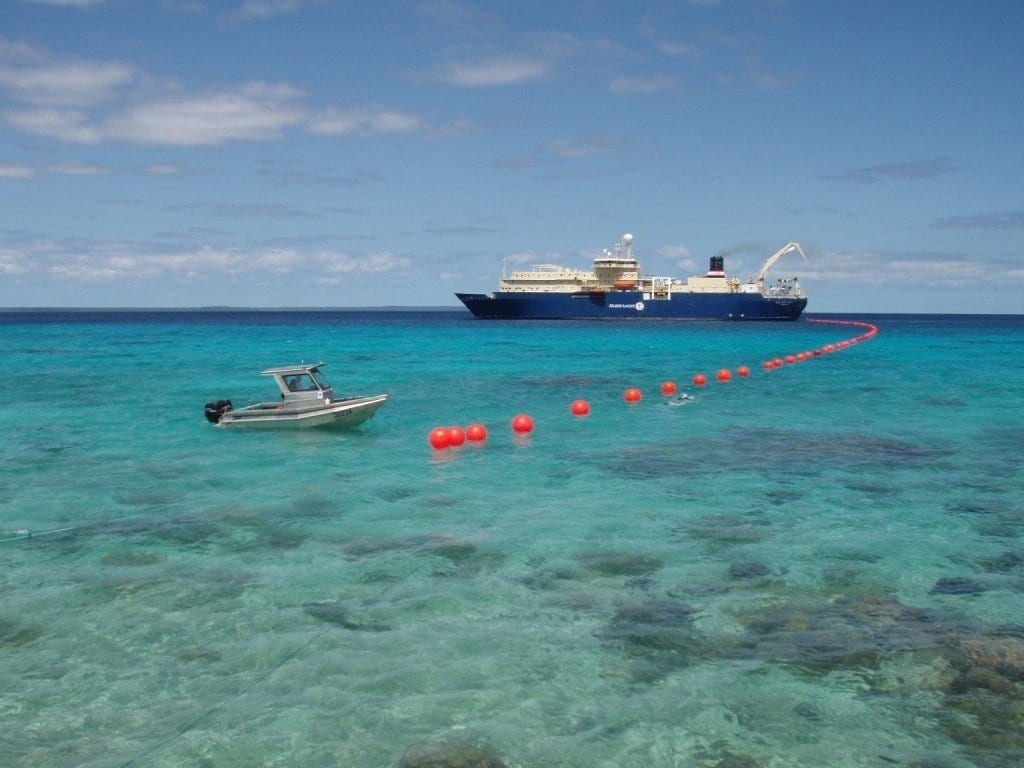
    Cable manufacturer Prysmian Group has supplied what it says is the densest and highest fiber count subsea cable ever made.

    The company has delivered a FlexTube cable containing 1,728 optical fibers for Australia’s Superloop for the TKO Express project.

    TKO Express is a project to provide broadband connectivity between the aras of SiuSai Wan on Hong Kong Island and the Tseung Kwan O Industrial Estate data center hub on the mainland.

    The company’s and industry’s previous record was a subsea FlexTube cable with just 720 fibers from 2014.

    Prysmian Australia CEO Frererick Persson said the construction was a major logistics and engineering challenge.

    The base cable was manufactured in France, then airlifted in Australia to apply moisture barriers and aluminum tape as well as double armoring layers of wrapped steel wires to ensure the cable could withstand being buried up to five meters into Hong Kong’s sea bed.

    “It was a logistics challenge indeed. Airfreighting a drum weighing 15 tons was something that we have never done before. But we mastered it and the drum was successfully delivered to the TKO Port three days before the promised date. It has been definitely great success for both companies,” he said.
  • Hawaiki completes route survey for subsea cable

    Hawaiki completes route survey for subsea cable

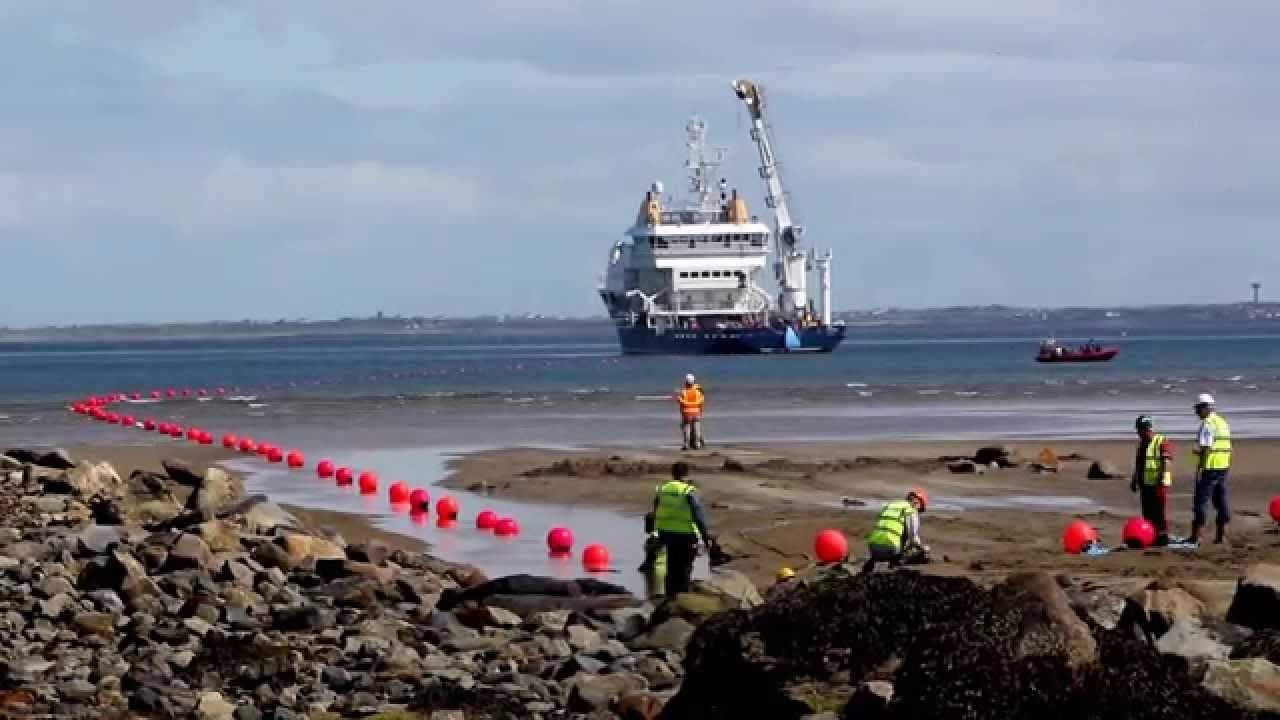
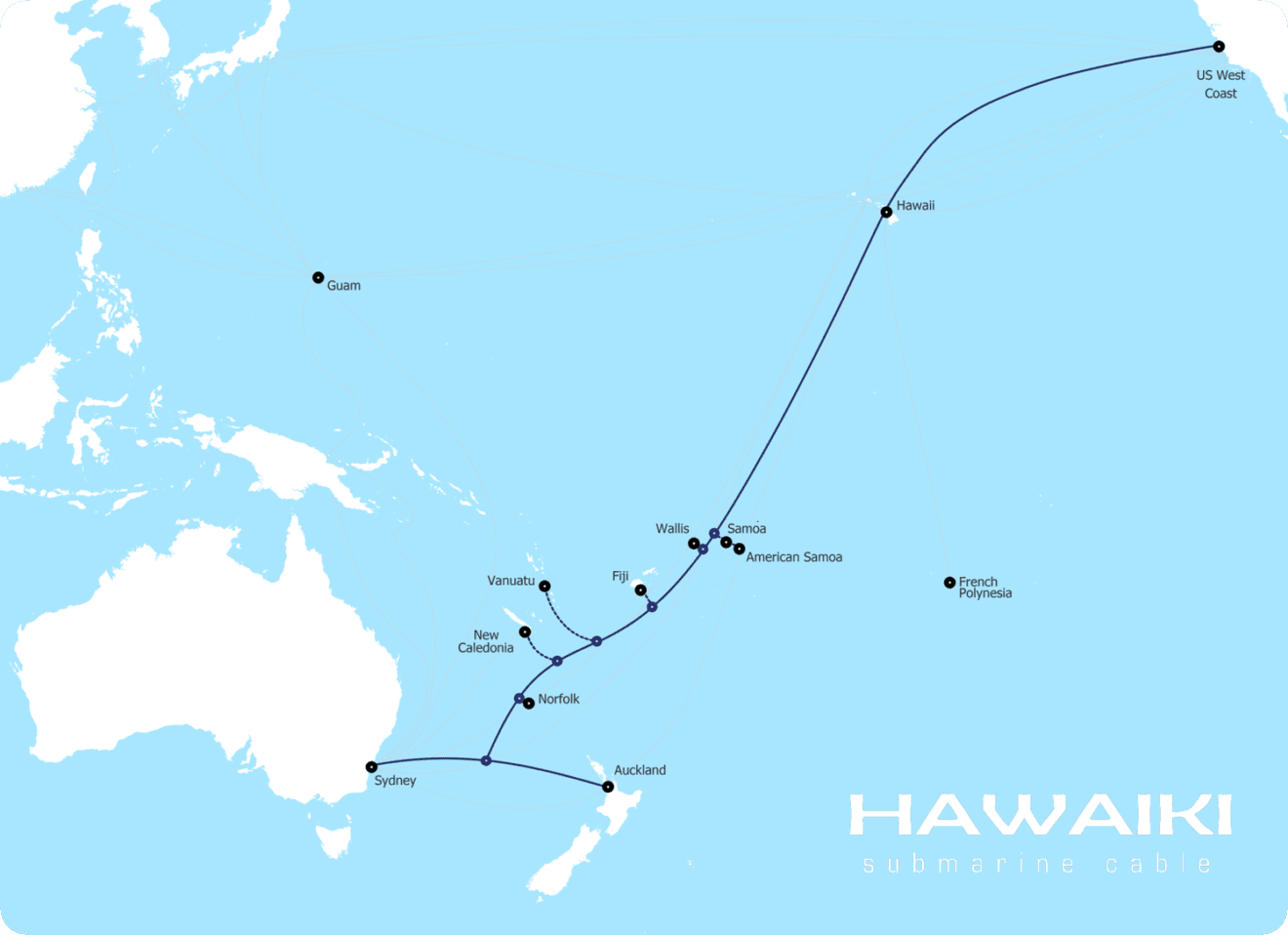
    Hawaki Submarine Cable and TE SubCom have completed the route survey for the 14,000km Hawaiki transpacific cable system linking Australia and New Zealand with mainland US.

    With the successful completion of the survey, the companies remain on track to complete the deployment of the cable in mid-2018.

    Once complete, the carrier-neutral cable system will be the highest cross-sectional capacity link between the US and Australia/New Zealand. It will also link to Hawaii and American Samoa, with options to expand to several other South Pacific islands including New Caledonia, Fiji and Tonga.

    TE SubCom meanwhile continues to manufacture the cable, with more than 4,500km of cable and over 25 repeaters completed.

    “The start of 2017 finds the Hawaiki cable system closer and closer to ready for service,” Hakaiki CEO and co-founder Remi Galasso said.

    “The information garnered from the recently completed deep water route survey will be instrumental in ensuring the long-term viability of the cable system, and we are thrilled with the progress on the cable and repeater manufacturing efforts. Installation will begin later in 2017 and a fully lit system that should positively impact the entire region is soon to follow.”

  • ASN, Bell Labs set 65Tbps subsea cable speed record

    ASN, Bell Labs set 65Tbps subsea cable speed record

    Alcatel-Lucent Submarine Networks and Nokia Bell Labs have set a new transmission record over a 6,600km single mode fiber for transoceanic cable systems.

    The lab trial achieved a total transmission speed of 65Tbps using submarine grade dual band erbium doped fiber amplifiers.

    The trial used Bell Labs’ new probabilistic constellation shaping (PCS) modulation technology. PCS is designed to maximize the distance and capacity of high-speed transmission in optical networks, by using non-uniform transmission of constellation symbols to increase resilience to noise and other impairments.

    “The future digital existence where everyone, everything and every system and process is connected will require a massive increase in network capacity and the ability to dynamically optimize this capacity,” Nokia CTO and Bell Labs president Marcus Weldon said.

    “Probabilistic constellation shaping extends the limits of current optical transmission by utilizing novel modulation techniques to dramatically improve the performance and capacity needed for the new digital era that will be enabled by the Future X Network.”

    The same technology was used in September to achieve speeds of 1Tbps per channel https://www.telecomasia.net/content/bell-labs-achieves-1tbps-over-fiberover Deutsche Telekom’s terrestrial optical network during trials with the operator’s T-Labs and the Technical University of Munich.

    A capacity of 65Tbps is 13,000 times the capacity of the first subsea amplified transatlantic system in 1995.

  • Hawaiki picks US landing partner for subsea cable

    Hawaiki picks US landing partner for subsea cable

    Hawaiki Submarine Cable, the New Zealand based company building a cable between Australia, New Zealand, Hawaii and the continental US, has selected its landing and operating partner in the US state of Oregon.

    Hawaiki has signed a landing party agreement with Alaska Communications after completing the maritime survey of the 4,000km segment between Oregon’s Pacific City and Honolulu.

    The completed cable will span 14,000km and deliver more than 30Tbps of total capacity, making it the largest link between the US and Australia/New Zealand.

    “Oregon is probably the best state on the US West Coast to land a submarine cable. The

    coast is relatively safe, the state permitting process is efficient and most importantly, our

    customers like Oregon’s diversity and easy access to US networks and data centers,” Hawaiki SVP for Noth America Gina Bohreer said.

    “As part of the US permitting process for international submarine cable, Hawaiki has

    subsequently submitted its application to the Federal Communication Commission.”

    The company has already signed on anchor customers including AWS  and major Australian fixed-line ISP group TPG Telecom.

    Construction of the Hawaiki cable is expected to be complete in mid-2018.

  • Malaysia-Singapore-Indonesia cable commissioned

    Malaysia-Singapore-Indonesia cable commissioned

    A new subsea cable company has contracted Huawei Marine Networks to deploy a 250km cable system connecting Malaysia, Singapore and Indonesia.

    Super Sea Cable Networks (SEAX) has commissioned construction of its SEAX-1 cable, which will connect Mersing on the eastern seaboard of Peninsular Malaysia with Singapore’s Changi and Indonesia’s Batam.

    Construction of the 24-fiber-pair system is expected to be complete by the end of next year. SEAX’s market focus will be wholesale operators in emerging markets, including Tier 1, Tier 2 and Tier 3 carriers who want to own but not operate cable systems.

    SEAX’s five-year plan is to target, Thailand, the Philippines, Cambodia, Vietnam and Myanmar in addition to Malaysia and Indonesia.

    The company has a facilities-based operator license in Singapore, an affiliate company in Indonesia and is partnered with telecoms infrastructure provider SACOFA in Malaysia.

    “SEAX-1 passes through one of the busiest region in the Asia Pacific region, where bandwidth demands are increasing exponentially,” SEAX CEO Joseph Lim said.

    “We believe this new submarine cable system will relieve bandwidth pressures on existing infrastructure and continue to provide this region with high-speed, reliable connectivity that will fast-track its growth.”

    Indonesia’s PT Telkom last week contracted NEC to build a subsea cable system connecting six large Indonesian islands with Singapore.

  • Telkom contracts NEC for new subsea cable

    Telkom contracts NEC for new subsea cable

    Indonesia’s PT Telkom has contracted NEC to build a cable system connecting six of the nation’s large islands with Singapore.

    The Indonesia Global Gateway Cable System will link the islands of Sumatra, Batam, Java, Bali, Kalimantan and Sulawesi.

    As well as providing enhanced connectivity between nine major Indonesian cities, the cable will link to Singapore and provide direct connectivity with two international subsea cables that land in Europe and the US respectively.

    The 100Gbps, eight wavelength, four fiber pair cable system will span around 5,300km in total. It is scheduled for completion in early 2018.

    “NEC is honored to be selected once again by Telkom as the supplier of an optical fiber submarine cable system, the advanced 100Gb/s IGG system,” NEC general manager for submarine networks Toru Kawauchi said.

    “Since first building an optical fiber submarine cable system for Telkom in 1991, NEC has continuously helped to expand Indonesia’s domestic connectivity, the Papua Cable System (SMPCS) being the latest such contribution.”

    The Sulawesi Maluku Papua Cable System connects eight provinces in eastern Indonesia – East Nusa Tenggara, Maluku, North Maluku, North Sulawesi, Papua, Southeast Sulawesi, South Sulawesi and West Papua.

    The nine cities that will be connected via the IGG system are Dumai, Batam, Jakarta, Madura, Bali, Makassar, Bilikpapan, Takaran and Manado.