Retail News CRM

Tag: sugar

  • There is no sugar monopoly in Malaysia, say refiners

    There is no sugar monopoly in Malaysia, say refiners

    MSM Malaysia Holdings Bhd and Central Sugars Refinery Sdn Bhd (CSR) have clarified that there is no sugar monopoly in Malaysia and that the price of the commodity is controlled by the government and is among the lowest in the world.

    The two refiners said the local players operate within a challenging business environment to ensure a steady supply of sugar to Malaysian consumers while maintaining a decent sugar stockpile for the nation.

    “The facts to date, while the costs of doing business have increased, such as minimum wage, gas and electricity tariffs, the ceiling price of refined sugar has remained at RM2.95/kg,” they said in a joint statement.

    As sugar is gazetted under the Price Control and Anti-Profiteering Act 2011, sugar in Malaysia is among the cheapest in the world. Currently, the ceiling price for coarse grain sugar is set at RM2.95/kg and fine granulated sugar at RM3.05/kg.

    Despite that, the industry is adversely affected with illegal activities such as sugar smuggling and infiltration of illicit sugar, which are threats to matters concerning halal, quality control and other mandatory certification requirements.

    “Nevertheless, the local refiners are committed to provide a stable environment for the consumer whilst maintaining highest standards of sugar quality even at the current controlled price.”

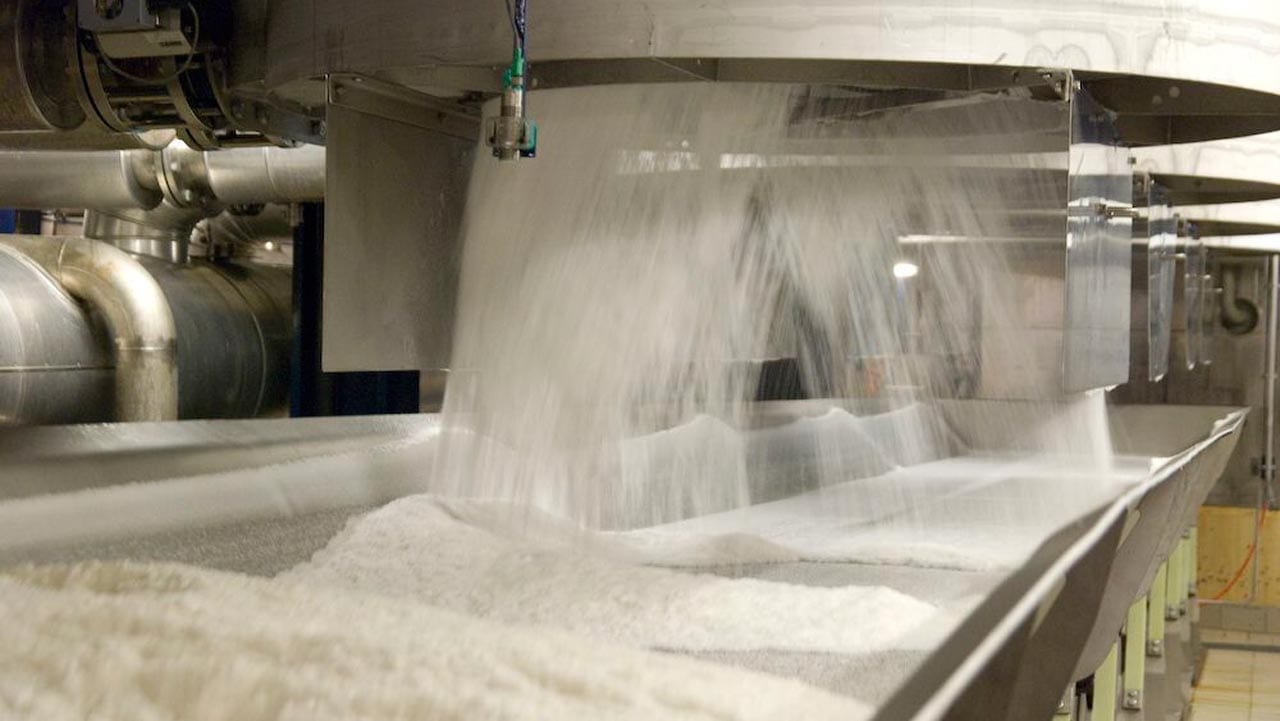
    In Malaysia, there are two sugar refiners – MSM under FGV Holdings Bhd and CSR under Tradewinds (M) Bhd – operating five sugar refineries, including a new one in Tanjung Langsat, Pasir Gudang, Johor, which is scheduled for commissioning this month.

    The current total capacity of the existing four refineries is 2.0 million tonnes a year. Domestic demand in Malaysia is 1.5 million tonnes a year, leaving Malaysia with an excess capacity of 500,000 tonnes annually. With the new refinery in Johor, total capacity will be 3.0 million tonnes a year.

    Apart from local brands, they said, there are importers that bring in and market a variety of sugar brands in Malaysia including SIS, Taikoo, Waitrose, Billington, Tate & Lyle, which provides for a competitive landscape.

    Food and beverage manufacturers buy sugar through the NY#11, the global commodity trading platform for raw sugar. Local refiners will then execute the buying on behalf of these companies, import the sugar that has been procured and refine it for them for a fee.

    As part of the local refiners’ duties, a certain amount of sugar is stockpiled to ensure adequate supply in the country during times of high global prices, the refiners said.

    “Due to the relatively lower world raw sugar prices today, many opportunistic parties that operate without the overheads and responsibilities that local refiners have, are trying to import sugar and profit from the low prices. These companies may not have the necessary certifications such as the halal certification and will cease operations once world raw sugar prices go higher than the ceiling price. It will then be left to local sugar refiners to address the instability by the void left behind by these opportunistic players.”
  • Vietnam chews over special consumption tax on sugary drinks

    Vietnam chews over special consumption tax on sugary drinks

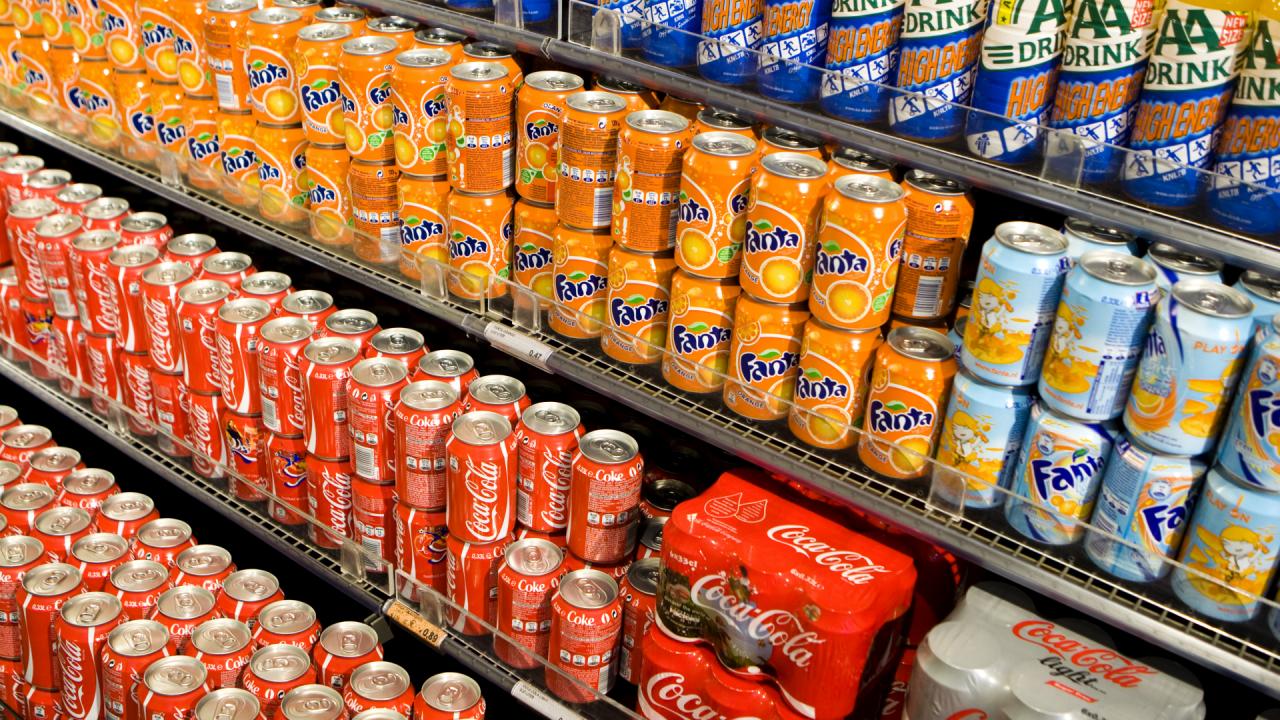
    The tax could help combat the country’s rapidly increasing obesity rate. The Ministry of Finance on Tuesday proposed levying a special consumption tax on a range of sweetened beverages. If approved, the proposal would see the tax imposed on carbonated and non-carbonated soft drinks, energy drinks, sports drinks and bottled instant coffee and tea.

    The ministry has suggested either a 10 percent or a 20 percent rate for the new sugary drink tax to be applied from 2019, with 10 percent being the preferred option.

    “The tax will help regulate the consumption of sweetened beverages, and it’s also an international norm,” the proposal said.

    A can of carbonated soft drink, for example, currently costs around VND10,000 ($0.44).

    At Tuesday’s press conference, the ministry cited a report by the World Health Organization (WHO) that shows excessive consumption of sugary drinks can lead to obesity. Obesity, in turn, has been linked to many health risks such as cardiovascular disease, hypertension and strokes.

    Meanwhile, a study unveiled in June found that about 25 percent of Vietnamese adults are overweight or obese. The obesity rate for children under 5 years old is also rising fast.

    Many Southeast Asian countries have already imposed sugary drinks taxes, according to the ministry. The current rate is 20-25 percent in Thailand, 5-10 percent in Laos and 10 percent in Cambodia.

    Myanmar, the Philippines and Indonesia are also considering imposing the tax.

    In Vietnam, special consumption taxes are levied on items and services considered unhealthy or luxurious such as tobacco, alcoholic drinks and cars.

  • Jakarta prepares for Indonesia’s most influential sugar show

    Jakarta prepares for Indonesia’s most influential sugar show

    The low production of sugar which cannot meet the large demand of sugar consumption in Indonesia caused by inefficient processes initiates the INAGRITECH 2017 to present its premier sub-event named SugarMach Indonesia 2017. SugarMach Indonesia 2017 is the premier show focusing on sugar machinery, innovation, and technology. This show gains a strong support from the Indonesian Sugar Association (AGI) and Indonesian Sugar Professional Association (IKAGI) as SugarMach Indonesia 2017 is held in an attempt to push Indonesia’s infrastructure development in sugar industry as well as supporting the country’s effort to achieve sugar self-sufficiency. For the success of the event, AGI-IKAGI will also hold the National Sugar Summit 2017 along with SugarMach Indonesia 2017.

    National Sugar Summit 2017 will be attended by thousand of professionals from all Indonesia Sugar Industries and government to discuss technology, policy, challenge and strategies how to make Indonesia Sugar Industry to become more competitive in global. Most of the attendee should be decision makers, the board of director, owner, government and professional in the ugar business.

    The resounding big success of INAGRITECH 2016 Jakarta held along with INAGRICHEM 2016 and INAPALM ASIA 2016 attracted 216 companies from 14 countries and 8,920 trade attendees from over 12 countries, has further proved the event as the ASEAN’s most leading trade show for agricultural machinery & equipment, agrochemical, palm oil processing machinery and the other agricultural supporting industries. The expo has expressed a proven opportunity to boost sales and gain exposure as well as meeting with key decision makers and potential buyers. Around 95 per cent of exhibitors also expressed a proven opportunity to boost sales and gain exposure as well as meeting with key decision makers and potential buyers from both domestic and international.

    SugarMach Indonesia 2017 is an ideal platform for sugar industry players to explore their business, to network with both local and global communities, and to unveil their latest products of technology. Indonesia’s sugar self-sufficiency effort provides an opportune time for investors to participate in the sector as well as take advantage of various incentives on offer. The bright prospects for investment in the national sugar industry are evident from the growing interests of the private sector to invest in the sector.

    SugarMach Indonesia 2017 taking place on 23 – 25 August 2017 at JIExpo Kemayoran, Jakarta – Indonesia will co-locate with INAGRITECH 2017, INAGRICHEM 2017 and INAPALM ASIA 2017. It will definitely be one of the Indonesia’s most prospective one-stop exhibitions for sugar industry players. The scale of exhibition area will be expanded up to twice as large as last year’s and will attract more than 500 exhibiting companies.

    According to the Indonesia Ministry of Trade, Indonesian sugar consumption within the consumer retail segment is 3 mn tonnes per year, while national sugar production is only about 2.5 to 2.7 million tonnes per year resulting in a shortfall of 300-500,000 tonnes of sugar. Therefore, the new government is committed to building 10 new sugar mills between 2015 and 2020 with Rp42.5 trillion of investment. Each mill is hoped to be able to process 30,000 tons of sugarcane per day. To achieve the goal, Indonesia’s sugar mill must upgrade and use the modern technology and machinery for its sugar production.

  • Sugar inventory hits record high

    Sugar inventory hits record high

    Sugar plants have reported their highest ever inventory level, nearing 750,000 tons, accounting for 50 percent of their processing output. Explaining reasons for the high inventory yesterday, chairman of Vietnam Sugar and Sugarcane Association (VSSA) Pham Quoc Doanh said that unusual weather has caused material shortage at the beginning of this year processing crop. Sugarcane harvest has concentrated at the end of the crop.

    Sugar import quotas, as per WTO commitments, left  from last year has contributed to the inventory this year.  Illicit sugar import has reached 400,000 tons now accounting for one third of the total processing output.

    Mr. Nguyen Hoang Ngoan, deputy director general of Can Tho Sugar Company, said that Thai sugar has illegally imported into the Mekong Delta, the central region and the Central Highlands and been sold at lower than domestic prices.

    A kilogram of domestic sugar is priced as low as VND16,000-16,500 a kilogram but it is still unsalable. The company alone has over 20,000 tons in stock.

    Stating at a conference seeking  sugar consumption solutions recently, deputy Minister of Agriculture and Rural Development Tran Thanh Nam said that the ministry had proposed the Ministry of Industry and Trade to lengthen sugar import under quotas to the third and fourth quarter.

    The Ministry of Industry and Trade and the Ministry of Finance should rectify long lasting sugar auction to prevent loopholes for invoice fraudulence.

    In long term, the ministry proposed to increase sugarcane productivity and commercial cane sugar (CCS), representing the sugar content of cane, and regulate sugar volume in production and consumption.

  • Major Vietnamese sugar firms in merger talks

    Major Vietnamese sugar firms in merger talks

    Once established, the new company, will be the biggest sugar firm on Vietnam’s stock market. Thanh Thanh Cong Tay Ninh Joint Stock Company, a subsidiary of Thanh Thanh Cong Group, and Bien Hoa Sugar Joint Stock Company are planning to merge.

    Thanh Thanh Cong Tay Ninh’s board of directors will submit the plan for approval at a snap company general meeting set for late May or early June.

    The board plans to ask shareholders to agree to issue new shares to replace all of Bien Hoa Sugar’s shares on the stock market.

    Following the merger, the new company’s market capitalization will be an estimated VND10 trillion ($440 million).

    Thanh Thanh Cong Tay Ninh and Bien Hoa are currently among the largest listed sugar companies in Vietnam.

    At the end of 2016, Thanh Thanh Cong Tay Ninh had total assets of more than VND7.3 trillion ($321.2 million) and equity of nearly VND3 trillion ($132 million), while Bien Hoa had over VND6 trillion and roughly VND2.28 trillion.

    The current market capitalization of Thanh Thanh Cong Tay Ninh is VND6.2 trillion, while Bien Hoa’s is estimated at VND3.7 trillion.

    Bien Hoa Sugar shares were up 4.58 percent to VND13,700 at the end of Thursday’s trading session, while Thanh Thanh Cong Tay Ninh’s were down 0.2 percent at VND24,450.

  • Vietnam sees full state exit from sugar mills by end 2017

    Vietnam sees full state exit from sugar mills by end 2017

    Sugar output in 2015-2016 drops to 1.2 million tons as a drought damaged sugarcane areas last year. The Vietnamese government has set a target to fully divest from sugar mills by the end of this year, which is aimed at raising the competitiveness of the sugar industry, a local newspaper reported Monday.

    The government has started reducing state stakes in domestic sugar refineries since 2014 and at present only has investment in one company, quoting chairman Pham Quoc Doanh of the Vietnam Sugar and Sugarcane Association as saying.

    He said the government has planned to sell all its 70-percent stake in the Vietnam Sugarcane and Sugar Corporation II by the end of this year to complete its divestment from the sugar industry.

    “Thanks to (the divestment), production and business of the sugar industry will be the fairest compared with other industries,” Doanh was quoted by the newspaper as saying.

    Vietnam’s sugar industry, primarily based on sugarcane, is considered less competitive than Thailand, which ranks as the world’s second-largest exporter of the sweetener.

    Doanh said prices and the quality of sugarcane, rather than the processing technology, are placing Vietnam’s sugar industry behind Thailand.

    Thai plants are buying a ton of sugarcane at $26 while Vietnamese refiners have to pay $40-$53 a ton, and Thai sugarcane also has a higher sugar content, he said.

    Vietnam refined 1.24 million tons of sugar in the cane crushing season that ended September 2016, down 12.7 percent from the previous 2014-2015 season, due to a drought and salination in the southern region. The sugar production year lasts from October to September.

    The country’s 2016-2017 sugar output has been projected to rise 13 percent to 1.4 million tons, the sugar association has said.

  • Indonesia to import 1.5 million tons of sugar in first half

    Indonesia to import 1.5 million tons of sugar in first half

    The government has decided to allow imports of 1.5 million tons of raw sugar to meet domestic demand in the first half of the year.

    Trade Minister Enggartiasto Lukita said 11 companies had been appointed to import the commodity, adding that it was not yet known when the sugar would arrive in Indonesia.

    He said his ministry would change the distribution of sugar to prevent oversupplies in the market.

    Enggar said one of the requirements for firms to import raw sugar was to demonstrate a commitment to develop sugarcane plantations.

    The regulation to develop sugarcane had existed for a long time, and the government would monitor the commitment of each company, he added.

    “The government will always remind the companies to show their commitment. If they fail to meet their commitment, we will not allow them to import raw sugar,” said the minister.

  • Vietnam sugar production down 13%

    Vietnam sugar production down 13%

    Sugar output in the 2015-16 crop was 1.23 million tonnes, a year-on-year drop of 12.7 percent, said Phạm Quốc Doanh, Chairman of the Việt Nam Sugarcane and Sugar Association, at a seminar in HCM City last week of sugar producers, distributors and consumers.

    Together with 185,000 tonnes of imports, this fully met the domestic demand forecast by the Ministry of Industry and Trade, he said.

    Prices would not fluctuate much from now through the Lunar New Year on January 28, he said.

    Many sugar mills had signed long-term contracts with beverage production companies and fulfilled them.

    Sugar prices depend much on sugarcane prices and global sugar prices, but with production of six months supplying demand for the whole year, output and prices are often volatile, he said. Sugar traders and food and beverage producers dislike this volatility, he added.

    Representatives of Coca-Cola Vietnam and Tân Hiệp Phát said steady prices should be ensured. They also said the sugar producers should invest more in packaging that is bigger than the current 50kg-bags to reduce loading and unloading costs.

    A representative of Tây Ninh-based Thành Thành Công Trading JSC said sugar quality has improved significantly.

    “Our RE (refined extra) already met quality standards, the newly produced RS (refined standards) sugar is very good, but by the end of the season, the latter’s colour and moisture change much. Sugar producers must work to improve this,” she said.

    Many suggested that the Government should keep a close eye on sugar imported ostensibly for re-export since it is sold surreptitiously in the domestic market, and prevent smuggling to protect the domestic industry.

    Chairman Doanh said the association has suggested to the Government that it should organise auctions for sugar import quotas in the first quarter instead of the third quarter, and only allow import of raw sugar to safeguard local jobs.

    The association said enterprises that fail to utilise their import permits should not be allowed to use them later.

    Doanh quoted the International Sugar Organisation as saying that in 2016-17 the global sugar market would face a shortage of 6.2 million tonnes, and inventories would shrink to their lowest levels since 2010-11. Therefore, global sugar prices would remain high, he said.

  • Sugarcane production feared to shrink on unfavorable climate

    Sugarcane production feared to shrink on unfavorable climate

    The Association of Indonesian Sugarcane Farmers (APTRI) said that the countrys production of sugarcane might decline on unfavorable climate.

    The year 2016 would be a difficult period for sugarcane growers in the country, the General Chairman of APTRI Arum Sabil said.

    Lengthy drought in 2015 affected vegetation and fertilization was not maximum that sugarcane production could decline in 2016, Arum said here on Monday.

    “It is beyond human power. We could only hope that the dry season and rainy season would not too lengthy,” he said.

    The natural condition is one of the factors causing sugar fields to shrink in 2015, he said.

    “The sugarcane plantations decreased 20 percent in size to 475,000 hectares and the productivity shrank 10-15 percent in 2015,” he said.

    One of the causes was lack of attention of the government to the condition faced by sugarcane farmers, he said.

    “At that time fertilizers were not easily available for farmers that the crop could not grow well,” he added.

    Therefore, if the government wanted success in achieving the target of self sufficiency in sugar supply in 2018, it must improve distribution of fertilizers and revitalize sugar factories, he said.

    He suggested that fund should be set aside for the revitalization of sugar factories in the state budget instead of relying only on state companies.

    However, state-owned plantation company, PT Perkebunan Nusantara (PTPN) X predicted a better year in 2016 setting a higher production target for sugar.

    The largest sugar producer among state companies has set its sugar production target at 475,000 tons in 2016 or a 10 percent growth from production of 431,020 tons in 2015.

    “Sugar content is also expected to increase to 8.5 percent from 8.3 percent in 2015,” Subiyono , the president director of the company, was quoted as saying earlier this week.

    With the production target, PTPN X would continue to be the largest sugar producer among state plantation companies in Indonesia, Subiyono said.

    He said he was optimistic the production target could be achieved despite fear of the impact of weather anomaly.

    The company would carry out revitalization both on farm and off farm (factory).

    Revitalization on farm would be carried out by using high yield seed variety and off farm revitalization would improve efficiency, he said.

    Efficiency of factory would be made through electrification reducing the use of coal for fuel , efficiency of grinding machines to reduce losses in the process of production and improving efficiency in supply of sugarcane.

    “The entire processes are important to be more competitive, which is determined by success in cutting production cost,” he said.