Retail News CRM

Tag: Supply

  • Vietnam eyes green power, not to sacrifice environment for growth

    Vietnam eyes green power, not to sacrifice environment for growth

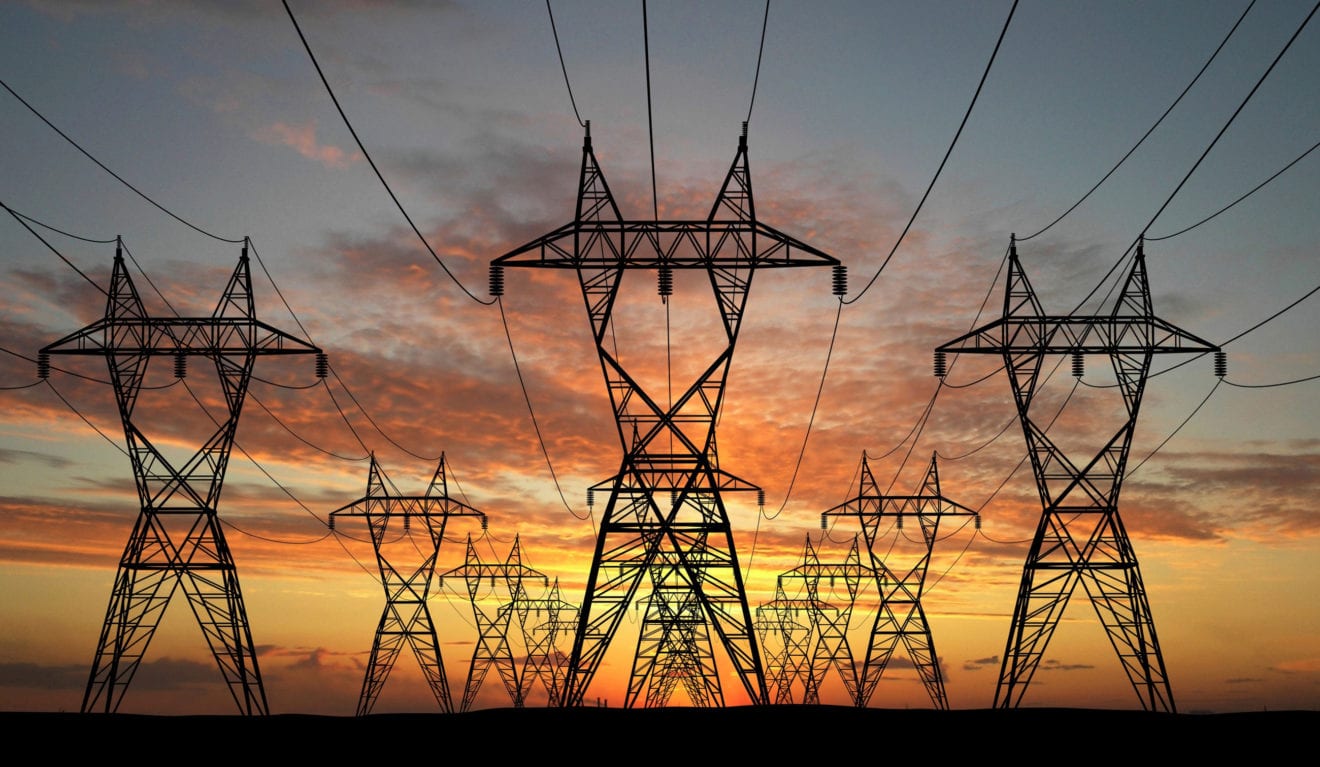
    The government Thursday reaffirmed Vietnam’s desire for a greener energy mix amid the risk of a power deficiency. Environment-friendly coal- and gas-fueled and renewable power plants would make up the mix. While Vietnam faces “obvious risks of an energy shortage in the coming years … it will not sacrifice the environment for economic growth,” Deputy Prime Minister Trinh Dinh Dung said in a meeting with the state-run Vietnam Electricity (EVN), the country’s largest power producer and monopoly distributor.

    Coal-fired power is vital to energy security, but “it must be clean,” he noted. Dung asked EVN to pioneer the use of modern technologies to reduce the environmental footprint of new coal-fired plants and handle the cinder and ash at existing plants.

    The country faces difficulty in increasing power generation since it has decided to put nuclear power on hold, many coal-fired plants are behind schedule and renewables could not be developed on a large scale due to “high costs” and transmission limitations.

    “Hydro power currently meets 40 percent of the country’s demand, but additional supply is almost impossible.

    “Our hydro power plant reservoirs, especially in the central region, are facing a serious water shortage, supply of coal for power development is erratic and gas supply is waning while power station projects for new supplies are being implemented slowly,” the deputy prime minister said.

    Dung said “EVN must also focus on investing in transmission systems to bolster the development of renewables.”

    The inadequate transmission system is now a bottleneck slowing down wind and power projects though a dramatically rising number of investors have shown interest in such projects following the recent increase in feed-in-tariffs (FITs).

    Dung also instructed the Ministry of Industry and Trade to hasten studies for the country’s investment in coal transshipment ports and regasification terminals to support development of gas-fuelled power, and quickly complete negotiations to buy power from overseas.

    He also asked EVN and other investors to speed up the delayed construction of major projects like Nhon Trach 3-4, O Mon 3-4, Tan Phuoc, Long Phuc 2-3, Quang Trach, and Quynh Lap.

    Vietnamese firms lack the resources for major projects while foreign loans are difficult to get due to government guarantee-related issues.

    The regional imbalance in power supply and demand is also a challenge. While the southern region accounts for more than half the demand (the north nearly 40 percent and the central region nearly 10 percent), power is being generated mainly in the north and central region (about 60 percent).

    To make it worse, the installation of transmission lines, both the main grid and branches, has been slow and failed to keep up with the pace of power generation, while negotiations to buy electricity from other countries have been going at a snail’s pace.

    The installed power capacity is around 48,000 MW. Under the revised Power Development Plan VII, a total of 60,000 MW is expected to be generated by 2020, with coal-fired plants accounting for 42.7 percent followed by hydropower (30.1 percent), gas-fired plants (14.9 percent), and renewables (9.9 percent).

    By 2030, the capacity will jump to 129,500 MW, with the ratios of coal and gas-fired power remaining almost unchanged, but renewables doubling to 21 percent.

  • Supply problems hit production at BMW

    Supply problems hit production at BMW

    Problems at one of its suppliers has forced German carmaker BMW to halt production in Leipzig and could hit its plants in China and South Africa, German magazine Focus reported in its online edition.

    The magazine said problems at one of BMW’s Italian suppliers of parts for its steering technology was the reason for the disruption.

    Citing a BMW spokesman, Focus reported that the carmaker has halted output at its plant in Leipzig, Germany since Friday and may have to reduce production in China and South Africa.

    Production in Munich was also reduced for two days last week, the magazine reported.

    Focus said the disruptions would cost BMW double-digit millions of euros a day, without saying where it got its information from.

    BMW could not immediately be reached for comment outside regular business hours.

  • Using artificial intelligence in the supply chain

    Using artificial intelligence in the supply chain

    Leveraging artificial intelligence (AI) for supply chains is an important next step to lower costs, improve productivity and drive growth by helping businesses reduces time-to-market.

    There are many opportunities to utilize AI along the chain from buying raw materials/components, converting them into finished products, selling to customers and delivering to end customers. Supply chains, generally, still comprise large amount of repetitive manual tasks and this is where AI can offer the most value.

    AI can be used in selling to customers using an AI-driven software platform, warehouses, transport, analysis of data and many other areas. AI allows companies to reallocate time and resources to their core business, and other high value, judgment-based jobs by using AI for low value, high frequency activities.

    In an AI-driven selling platform, the chat bots handle many of the sales, customer services and operations tasks traditionally done by humans, for example, interacting with buyers, taking down their orders and passing them on along the supply chain. This way, there is significant reductions in staff costs and also can help to overcome manpower shortage. Moreover, this solution is very applicable to green-field markets where there is explosive growth and multiple languages are required.

    In warehouses, distribution and fulfillment centers, AI can be seen in the use of robotics and sensors for conveying, stacking and retrieval systems, order picking, checking on stock level and re-ordering when stock is low. Furthermore, powerful algorithms also allow AI to automatically adapt in real-time to events in the supply chains, for example the arrival of new orders over the Internet for delivery in a few hours, changes in manufacturing schedules, or even a hiccup in the transportation schedule.

    Amazon is using robotic shelves in warehouses where robots the size and shape of a footstool carry shelves on top. These robots can glide quickly across the floor to rearrange the shelves in neatly arranged rows or bring them over to human workers, who stack them with new products or retrieve goods for packaging.

    Amazon’s robotic shelves also allow more products to be packed into a tighter space. They also make stacking and picking more efficient by automatically bringing empty shelves over to packers or the right products over to pickers. The process is more efficient than having humans walk around, so it also a good example of how automation can be combined with human labor to increase productivity.

    Autonomous vehicles and drones, for example, deploy a combination of sensors and algorithms to perform the complex work of driverless navigating. DHL is using autonomous forklifts and other self-driven equipment in warehouse operations. The next step for autonomous vehicles in logistics is to overcome regulatory and security challenges to deploy them on public roads for goods delivery operations. In the US, the use of drones is governed by the Federal Aviation Administration’s regulation known as Part 107 that went into effect on 29 August 2016.

    Supply chains are generating a huge amount of data and rather than let them go to waste, AI can help businesses make sense of them so that better decisions can be made. AI is able to quickly analyze and organize this data to enable users to see trends, and gain a better understanding of the many variables in the supply chains. Users are thus able to anticipate future scenarios and plan accordingly for uncertainties.

    Driving force of AI

    Powerful algorithms are fueling the rise of using AI in supply chains. Algorithms are instructions to the robots, drones, and autonomous vehicles etc. for calculations, data processing and automated reasoning. In a nutshell, algorithms give instructions on what and how to do in order to reach a specified end goal. More advanced algorithms, rather than follow only explicitly programmed instructions, can even go a step further in allowing AI to learn on its own in what is known as machine learning.

    Using algorithms that continuously and repeatedly learn from new data, machine learning allows AI to find hidden insights without being explicitly programmed where to look. Machine learning is a method of data analysis that automates analytical model building.

    The pioneering technology within machine learning is the neural network, which mimics the pattern recognition abilities of the human brain by processing thousands or even millions of data points. This technology is not just about optimization

    Take the example of supply chains. The algorithms are able to engage in forward thinking to predict all the volatility in the industry, come up with solutions for different scenarios and then base on the available data, choose and execute the most efficient solution. Whenever the AI is faced with a new situation, the algorithms are also adept at making real-time adjustment to pre-programmed instructions. Moreover, compare to humans, the speed and decisiveness of making decisions for AI is so much faster, because for one thing, AI is void of emotion and biasness.

    As a final testament to the power of AI, consider the following example. In January, two researchers from Carnegie Mellon University developed an AI poker player that beat four world champions and won US$1.77 million in poker chips. This is groundbreaking as it signals the ability to deal with incomplete information and to deal with situations that require bluffing and an opponent that generates misinformation.

    AI can process huge amount of possibilities and can outthink humans in terms of unpredictability if the algorithms are programmed correctly.

    AI is the future of supply chains. AI strengthens a company’s core business and opens up new opportunities that can even lead to a new business model.

  • Changi Airport Group strengthens pharmaceutical supply chain in Singapore

    Changi Airport Group strengthens pharmaceutical supply chain in Singapore

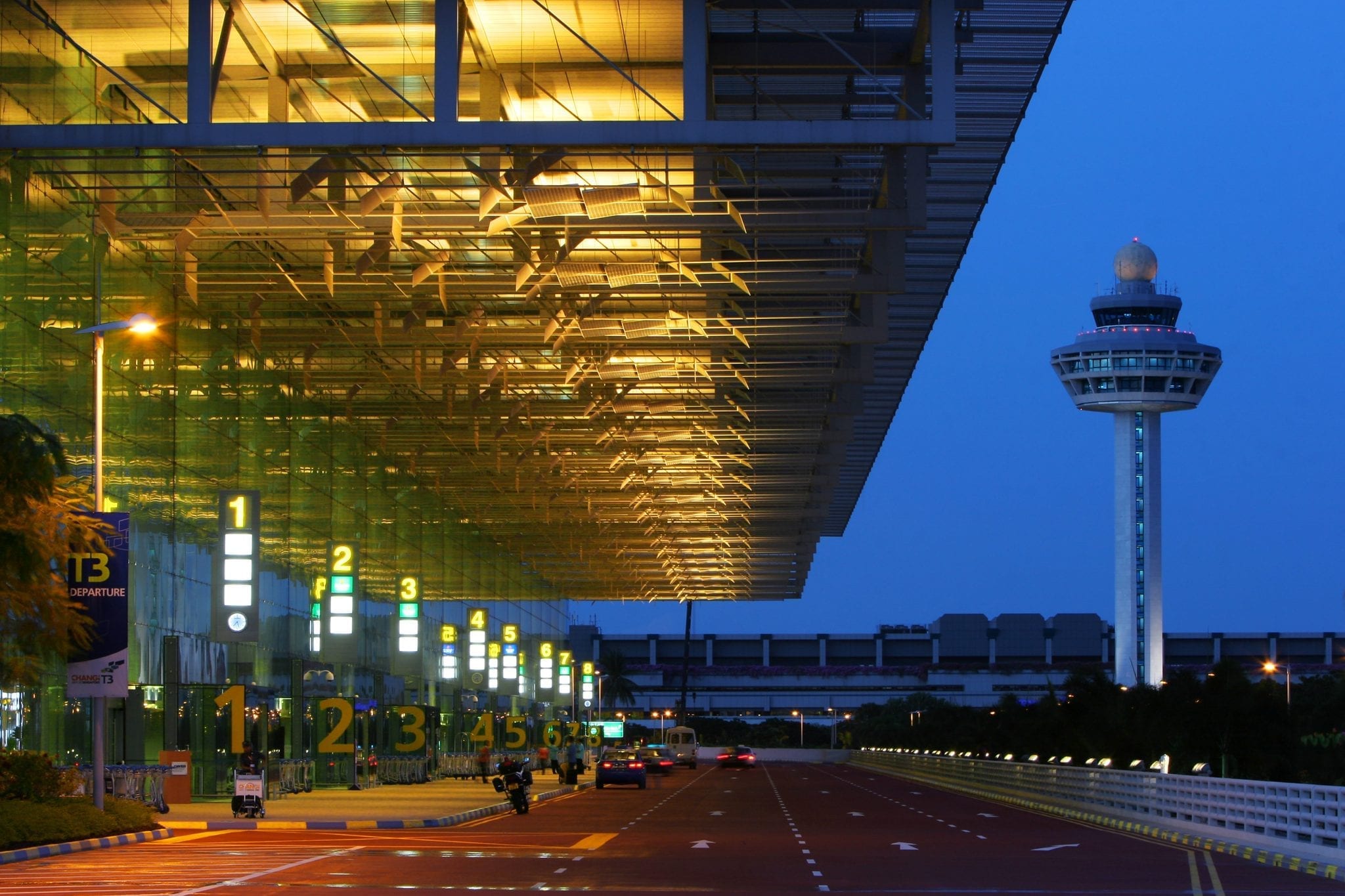
    Changi Airport is the first airport in Asia to join Pharma.Aero as a strategic member, together with partner Singapore Airlines Cargo who comes on board as a full member. Both parties envisage that this effort will raise pharmaceutical handling capabilities at Changi Airport.   An organization comprising stakeholders of air cargo supply chain from around the world, Pharma.Aero is dedicated to achieving excellence in end-to-end air transportation for pharma cargo.

    Pharmaceutical cargo is among the fastest growing segments at Changi Airport, growing 19 percent year-on-year for the first nine months of 2016, and registering a five-year compounded annual growth rate (CAGR) of 13 percent from 2010 to 2015.

    The South West Pacific and North East Asia regions account for 45 percent of total share of pharmaceutical cargo at Changi Airport. In terms of volume, Australia, China and India are Changi’s top three pharmaceutical markets on a year-to-date (January to September 2016) basis. The top markets showing strongest growth for the period are China (+51 percent), Vietnam (+35 percent) and Hong Kong (+32 percent).

    Pharmaceutical products that pass through Changi Airport include vaccines, tablets and pills. These products are highly sensitive to fluctuations in temperature. Pharmaceutical cargo is the sixth most valued segment in terms of total air cargo handled, and account for under 10 percent of total value of cargo handled.

    Changi Airport is well-equipped with specialized facilities to be the preferred gateway of pharma cargo in Asia, with the two ground handlers (Coolport by SATS and Coolchain by Dnata) having the ability to handle more than 300,000 tonnes of temperature sensitive cargo annually. Our excellent connectivity (6,800 flights to 330 cities served by over 100 airlines) and strong mix of freighter and bellyhold capacity provides ample options for pharma shippers to access the global economy.

    Changi Airport is the first airport in Asia to embark on a community approach for the IATA CEIV Pharma certification, thereby raising the local community’s handling standards and capability for temperature-sensitive pharma cargo. The pioneer group of companies in the Changi CEIV Community consists of Singapore Airlines Cargo, dnata Singapore, Global Airfreight International Expeditors Singapore, CEVA Logistics Singapore, and Schenker Singapore.

    SATS Coolport, a major cargo player at Changi Airport, was the first facility in the world to attain the IATA CEIV Pharma certification in 2014.

    Global spending on pharma cold chain logistics is projected to grow at eight-nine percent per year, totaling US$16.7 billion by 2020 according to Pharmaceutical Commerce. Asia is expected to account for the largest regional share growth with more than $1.2 billion of cold-chain growth through 2019.

  • How 3D printing will shake up the supply chain

    How 3D printing will shake up the supply chain

    Consumers today are already familiar with personalizing their favorite treats by molding them into unique shapes or printing edible messages on cakes, chocolate and flowers, among others. What if you could customize any product in the future to suit your preference – from shoes to even houses? While some may perceive this to be a pipe dream, the fact is that this is actually a reality. New Balance just introduced 3D printed shoes last April, and in China, Huashang Tengda successfully built a two-storey house in just under two days!

    3D printing is also known as additive manufacturing, a process that allows us to seemingly create objects such as bicycle frames and toys out of thin air. Manufacturing and supply chains have typically been all about assembly lines, warehousing and shifting products outwards from the point of manufacture. 3D printing is now revolutionizing the way products are manufactured and distributed.

    With the advent of 3D printing, individualized products can be designed, produced, delivered, and serviced in new ways. To start, organizations can leverage a product innovation platform that supports direct communication with customers and network partners from conceptualization to production. Consumers today love to customize everything and anything, and 3D printing makes this both possible and affordable. Organizations can now evolve beyond demand-driven supply chains to enable demand-driven manufacturing, furthering customer centricity and personalization.

    3D printing is also transforming the manufacturing industry, making it more digitized and in the process throwing out all the traditional rules of the game. Essentially, 3D printing changes who is in control. Analog manufacturing used to be the realm of huge companies that have the resources to invest and produce large quantities of the same good. These companies need to have the capital to support research, prototyping and focus groups to identify products that will please the critical mass, and marketing to promote that same product to large volumes of consumers. On top of that, delivering the products to consumers requires complex supply chain and retail channels.

    In contrast, 3D printing allows complex items to be produced on demand, eliminating the need for assembly lines. With 3D printing, the supply chain has the potential to become more efficient, more local and globally connected. Manufacturers are using 3D to respond to dynamic, real-time customer demands, reduce inventory and slice into transportation costs while dramatically compressing the time needed to ship products.

    Imagine this: Without the need for huge capital outlay, manufacturers do not need to set up factories at permanent locations. All manufacturers need is a 3D printer in local markets or regional production hubs, solving a number of large problems. The ability to bring manufacturing local will provide a way to significantly reduce carbon footprint. If you add the benefits of timeliness, cost reduction, and the freedom to print multiple materials and properties, you start to understand the impact 3D printing can have on society.

    Supply chains have a reputation for being boring, complicated, and uninteresting. But with the advent of the digital economy and 3D printing technologies, all of this is about to change. As the digital supply chains become both disruptive and important within the next few years, supporting the supply chain and the manufacturing floor to boost productivity will have ripple effects throughout any industry. The future of supply chain will be more collaborative and integrated with suppliers, retailers and even product planning and design.

    Where supply chain used to be the most inelastic piece in the journey from manufacturing to customer delivery, 3D printing will be the catalyst and enabler to reimagine a supply chain that can dynamically respond to customer requirements and expectations. In addition, we are going to see more of these advanced efficiencies permeating production activities as 3D printing continues to rise past the hype and into everyday manufacturing.

    In 2013, Wohlers Associates, a consulting firm that specializes in 3D printing, predicted that the sector would grow to $10.8 billion by 2021. The firm now forecasts even greater and faster growth, with the industry reaching $21.2 billion in 2020. That’s because while the firm is skeptical about the value of low-end, consumer-oriented printers, they are positive that more and more industrial clients – especially manufacturers – will be buying and implementing high-end, expensive 3D printers.

  • Surplus predicted in Indonesia`s rice supply

    Surplus predicted in Indonesia`s rice supply

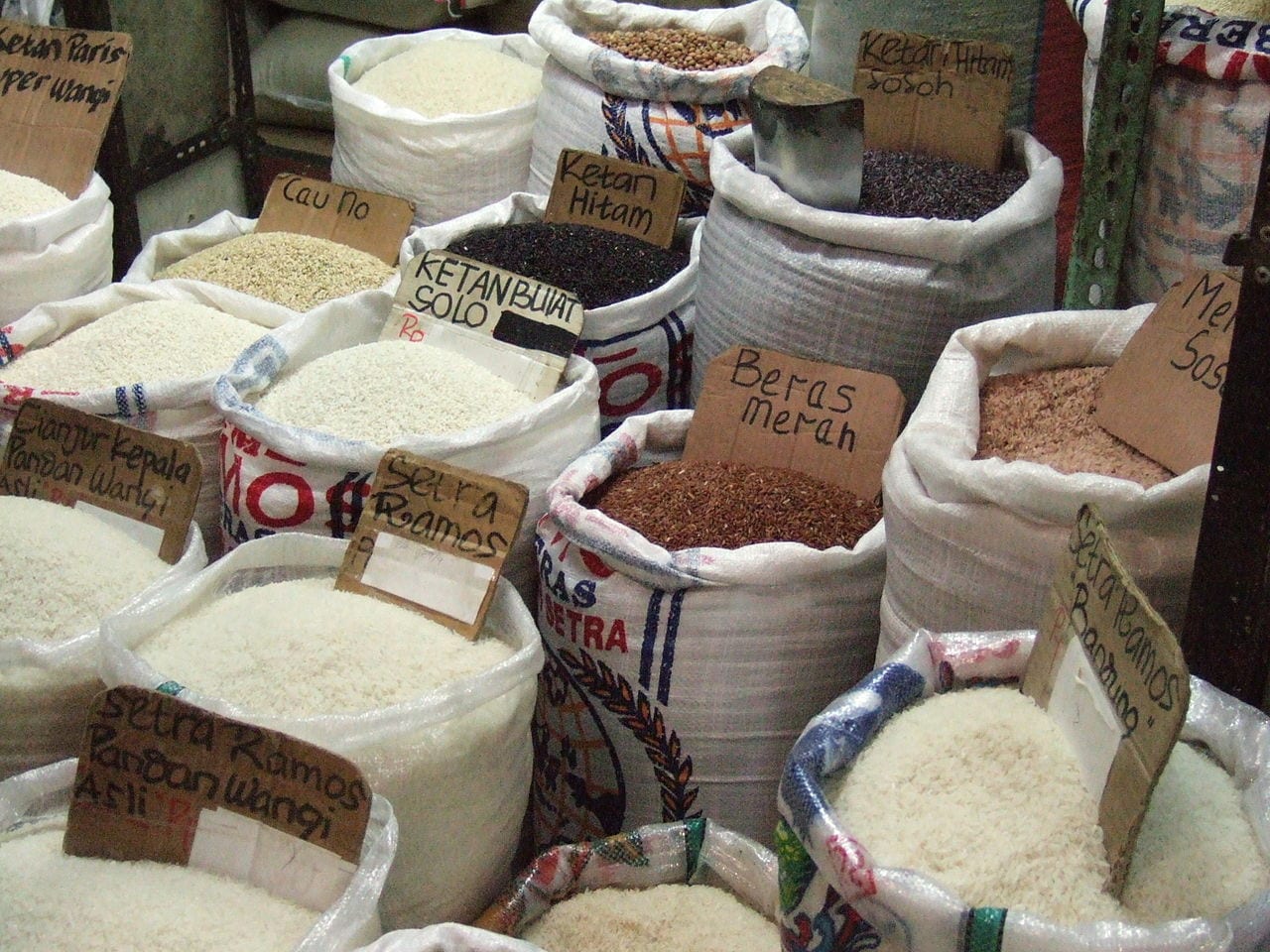
    The agriculture ministry said the country is expected to have a surplus of 11.38 million tons in supply of milled rice by the end of this year.

    Chief spokesman of the ministry Agung Hendriadi said rice supply is estimated to reach 43.69 million tons as against requirement of 32.3 million tons this year.

    “A surplus , therefore, is expected to reach 11.38 million tons, even there would be an excess of 20 million tons in supply on stocks including early year stock and Bulog stocks and harvest 8.8 million tons,” Agung said.

    Similarly excesses are also estimated in the supply of other foodstuff including 2.1 million tons of corn grains, 339,400 tons of sugar, 18.5 million tons of cooking oil, 131,800 tons of red onion, 414,400 tons of chili, 1.59 million tons of chicken meat and 1.44 million tons of eggs.

    Meanwhile, deficit is expected in the supply of beef and soybeans.

    Deficit in beef supply is estimated to reach 220,000 tons with supply totaling 441,8000 tons as against consumption of 662,300 tons, and deficit in soybean is around 1.09 million tons with supply totaling only 1.5 million tons as against consumption of 2.59 million tons.

    Agung, however, said in general supply of the 11 strategic commodities is relatively safe until the end of the year.

    “Deficit would be recorded only in the supply of two commodities until the end of the year,” he said.

  • Story-i to supply Indonesia schools

    Story-i to supply Indonesia schools

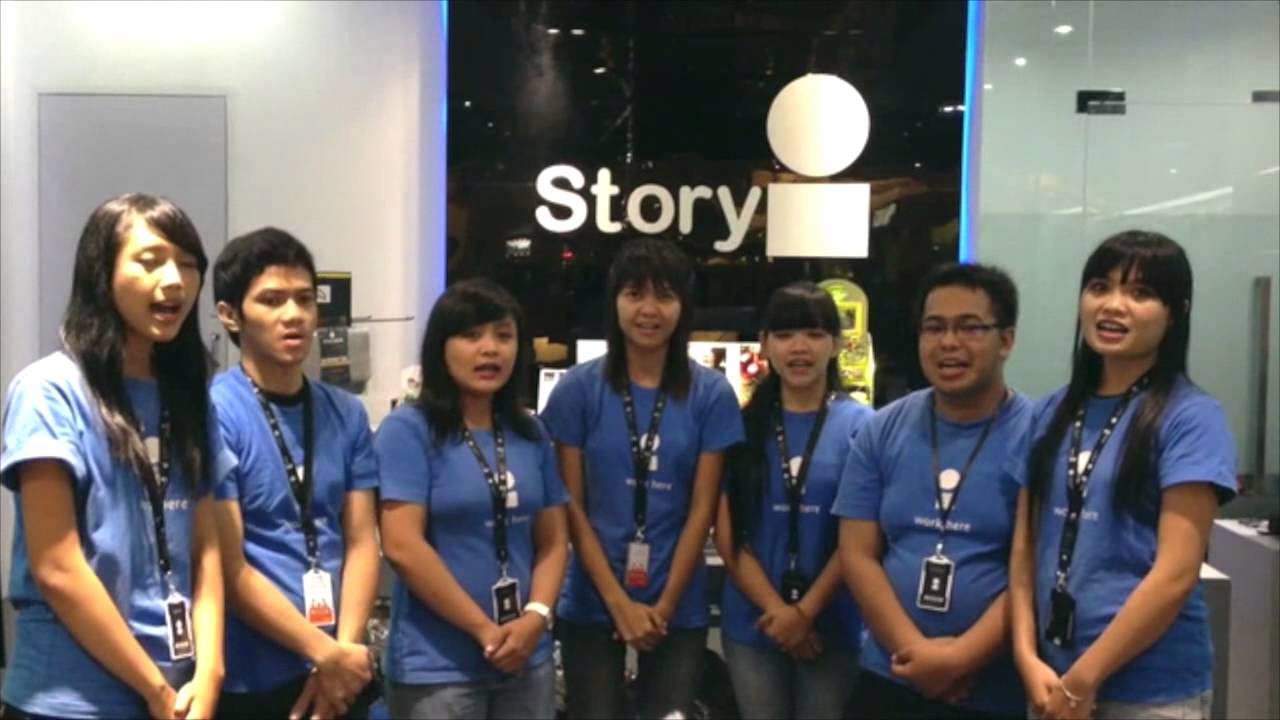
    Story-i will supply new Apple devices bundled with customised applications across Perkumpulan Sekolah Kristen Djakarta’s (PSKD) 16 schools in Indonesia.

    The contract extends to annual hosting and software maintenance fees, and service and maintenance of PSKD’s network infrastructure, potentially delivering $500,000 in sales.

    The rollout of devices, bundled education software and hosting services under the contract with BPK Penabur continues to progress on schedule.

  • Billabong kickstarts supply chain transformation

    Billabong kickstarts supply chain transformation

    Global surf brand Billabong and its family of brands is positioning its supply chain to support transformation of its wholesale and retail businesses.

    Billabong said it will connect suppliers and trading partners in a cloud based network using the GT Nexus platform to facilitate and automate processes for supply chain financing, order collaboration, invoice management, in-transit visibility and payment management.

    Billabong International Limited is a global marketer, distributor, wholesaler and retailer of apparel, accessories, eyewear, wetsuits and hardwoods in the boardsports sector under the Billabong, RVCA, Element, Von Zipper, Honolua Surf Company, Kustom, Palmers Surf, Xcel, Sector 9 and Tigerlilly brands.

    Jeff Streader, Chief Operating Officer at Billabong,said making data and capital more accessible to suppliers will remove friction and enable agile delivery of goods. The deployment of GT Nexus is part of a larger global initiative at Billabong to obtain real-time supply chain visibility to drive retail and wholesale business growth.

    “Risk and uncertainty remain prevalent as social, political and economic volatility pose constant threats to supply chains,” said Sean Feeney, CEO of GT Nexus. “The only way to assure undisrupted supply and delivery of goods while preserving margins is end-to-end visibility across all trading partners, brands and business channels. That’s the power of a cloud supply chain operating as a network.”