Retail News CRM

Tag: support

  • Ease Your Cost-of-Living: Singaporean Households Grab $390 Support Vouchers!

    Ease Your Cost-of-Living: Singaporean Households Grab $390 Support Vouchers!

    From June 11, all Singaporean households will be eligible to receive S$500 (US$380) in Community Development Council (CDC) vouchers. This initiative is set to ease the financial burden of living costs for approximately 1.38 million households across the country.

    Voucher Validity and Usage

    The CDC vouchers can be claimed online via the official website and remain valid until the end of 2027. They can be used across a broad range of establishments, half of which are participating local merchants and hawkers. The remaining vouchers are applicable at around 400 outlets run by eight major supermarket chains throughout Singapore. These include Ang Mo Supermarket, Cold Storage, Giant Singapore, HAO Mart, NTUC FairPrice, Prime Supermarket, Sheng Siong, and U Stars Supermarket.

    This allotment of vouchers was originally set to be distributed in January 2027, as per Singapore’s 2026 national budget. However, it was advanced by six months to help households manage the cost-of-living pressures exacerbated by the ongoing Middle East conflict.

    About the Voucher Scheme

    The CDC voucher program was established in 2020 and expanded the following year. It was devised to aid households in managing living expenses while simultaneously supporting businesses hit by the COVID-19 pandemic. These vouchers have been distributed annually, with this latest disbursement marking the ninth cycle.

    As of June 3, more than $4.64 billion has been utilized through the previous eight CDC voucher rounds and two rounds of SG60 vouchers. The SG60 vouchers were similarly designed and distributed last year in celebration of Singapore’s 60th anniversary. About $2.43 billion, or 52% of the total sum, was spent at local merchants and hawkers, while the remaining was used in supermarkets.

    Over 94% of the 1.36 million eligible households claimed the most recent S$300 voucher tranche disbursed in January. More than 80% of these claimed vouchers have already been spent, indicating a high utilization rate. The CDC voucher scheme has proven to be both practical and accessible to the Singaporean populace.

    Alongside the CDC vouchers, a S$200 increase to a cash handout scheme known as the Cost-of-Living Special Payment was announced in April. Consequently, qualifying Singaporean adults will receive a payout of S$400-600 in September, an increase from the previous S$200-400.

    Questions & Answers

    What is the purpose of the CDC voucher scheme?
    The CDC voucher scheme was designed to assist households in coping with living costs while also supporting local businesses affected by the COVID-19 pandemic.

    Where can the CDC vouchers be used?
    Half of the vouchers can be used at participating local merchants and hawkers, while the remainder can be spent at around 400 outlets run by eight major supermarket chains throughout Singapore.

    When will eligible Singaporean adults receive the Cost-of-Living Special Payment?
    Eligible Singaporean adults will receive the Cost-of-Living Special Payment, which has been increased to S$400-600, in September.

  • Citi Unveils New Chicago Desk to Bolster Support for Korean Corporates in the US Market

    Citi Unveils New Chicago Desk to Bolster Support for Korean Corporates in the US Market

    Citi, the American multinational investment bank, is set to enhance its service to Korean corporate clientele with the inauguration of a new desk in Chicago.

    Expanding Coverage of Korean Corporates

    The newly launched Korea desk in Chicago is part of Citi’s strategic plan to augment its local financial support for Korean corporate clients who are penetrating the North American market. This addition builds upon Citi’s existing US coverage of Korean corporations, which was initiated in New York in 1993.

    Currently, Citi operates Korea desks around the world, including in London, Prague, Dubai, Singapore, Warsaw, Chennai, Hong Kong, Atlanta, and Monterrey.

    Growth of Korean Corporates in North America

    Citi reports that Korean corporates are quickly spreading their influence across North America, spanning a broad range of industries such as manufacturing, power, semiconductors, and services. The expansion into the United States extends beyond specific regions as businesses set up production and sales bases throughout the country, making their operations progressively widespread.

    Kyoungho Kim, the head of the corporate banking group at Citi Korea, noted the bank’s history of aiding Korean corporates. He highlighted how Citi Korea has been instrumental in bridging the financial operations of these clients’ headquarters in Korea with their overseas subsidiaries through its Korea Desks in key global markets.

    Enhanced Support for Korean Corporates in the Midwest

    The Chicago Korea Desk’s introduction marks a step forward in extending this crucial service in North America. It aims to provide ample support for Korean corporates operating in the US Midwest, guiding them through their funding and financial transactions in alignment with the local financial environment.

    Questions & Answers

    What is the purpose of the new Korea desk in Chicago launched by Citi?

    The Korea desk in Chicago is intended to expand Citi’s local financial support for Korean corporate clients penetrating the North American market.

    What industries are Korean corporate clients involved in?

    Korean corporate clients are involved in a wide range of industries, including manufacturing, power, semiconductors, and services.

    What are Citi Korea’s efforts in supporting Korean corporate clients?

    Citi Korea has been pivotal in connecting the financial operations of Korean corporates’ headquarters with their overseas subsidiaries, providing consistent financial support in key global markets.

  • Singapore Retailers Seek Increased Budget Support for Enhanced Competition and Sustainability in 2026

    Singapore Retailers Seek Increased Budget Support for Enhanced Competition and Sustainability in 2026

    In Singapore, the lifestyle industry, particularly retailers, has expressed the need for continuous support from the Budget allocation due to mounting challenges such as elevated costs, labour shortages, and fierce competition.

    According to the Singapore Retailers Association (SRA), the retail sector in the country continually faces obstacles that include labour shortages, high rents and operating costs, competition from the e-commerce sector, and evolving consumer preferences.

    The SRA cautioned that without ongoing support, local businesses could find themselves trailing behind their well-funded international competitors.

    Retail Sales Figures Reflect Struggles

    The tough conditions being faced by the industry are evident in the 2025 retail sales figures. Segments such as clothing and footwear have seen a continuous decrease, while other sectors such as supermarkets have managed to maintain their resilience, stated Ernie Koh, the president of the SRA.

    The retail market has also experienced a split-speed with well-funded global brands controlling high-traffic locations. This has put smaller local operators under pressure, added Koh.

    Joint Call for Support

    In an alliance with other lifestyle trade bodies including the Restaurant Association of Singapore and the Singapore Fashion Council, the SRA has marked several recommendations for the 2026 Budget to address the ongoing and future challenges facing the retail industry.

    The recommendations focus on three major areas: enhancing the competitiveness of SMEs, addressing labour issues, and promoting sustainability efforts.

    To boost the competitiveness of local SMEs, the groups suggest introducing a scale-up programme that provides them with capital for growth acceleration, as well as access to strategic guidance, mentorship, partnerships, and commercial opportunities.

    Proposed Measures

    The groups have also suggested a franchise and licensing accreditation system to gain more transparent insights into the entry of foreign brands. This would allow stakeholders to better forecast market shifts and protect local businesses.

    Refining the Community Development Council (CDC) voucher system was another suggestion, aiming to channel government support directly to essential items, thereby balancing the cost-of-living relief with support for local retailers.

    To address the labour shortage issue, the groups recommend extending the Progressive Wage Credit Scheme for the retail and food service industries until 2028, and increasing the co-funding for the retail industry from 20 per cent to 75 per cent this year.

    Further suggestions to tackle manpower shortages include reducing the cost of hiring foreign staff for frontline retail roles, encouraging the hiring of PMETs (professionals, managers, executives, and technicians) over 50, improving the career conversion programme, and implementing trade testing for new foreign workers.

    To accelerate sustainable retail, the group recommends expanding the Climate Vouchers scheme to include companies with trusted green certifications, such as B-Corp, Singapore Furniture Industries Council’s Sustainability Furniture Mark or Green Mark.

    The Future of Retail

    The SRA emphasised that the future of retail hinges on the seamless integration of omnichannel strategies, leveraging AI and personalisation, enhancing experiential retail, prioritising sustainability, and upskilling the workforce to overcome the challenges faced by the industry. These challenges include high costs and labour shortages, with growth being supported by tourism and technological adoption, despite short-term economic uncertainties.

    Questions & Answers

    What are the major challenges faced by the retail industry in Singapore?
    The key challenges faced by the industry mainly include high rents and operating costs, labour shortages, competition from e-commerce platforms, and shifting consumer demands.

    What are the recommendations made by the SRA for the 2026 Budget?
    The SRA has recommended actions in three key areas – enhancing SME competitiveness, addressing labour issues, and supporting sustainability efforts. These include a scale-up programme for SMEs, extension of the Progressive Wage Credit Scheme, and expanding the Climate Vouchers scheme.

    How does the SRA suggest dealing with labour shortages and high costs?
    The SRA suggests that extending the Progressive Wage Credit Scheme until 2028 and increasing co-funding for the retail industry could help with manpower shortages. To deal with high costs, the association recommends refining the CDC voucher system to balance cost-of-living relief with support for local retailers.

  • Skillsfuture Jobseeker Support Scheme Approves Nearly 2,900 Applications Amid Economic Challenges

    Skillsfuture Jobseeker Support Scheme Approves Nearly 2,900 Applications Amid Economic Challenges

    In a recent update, nearly 2,900 applications submitted between the launch of the SkillsFuture Jobseeker Support scheme in April and August have been approved. Minister for Manpower Tan See Leng revealed this information while responding to parliamentary inquiries on Tuesday.

    A deep dive into the demographics shows that most applicants fall within the age bracket of 26 to 40, highlighting a significant segment of the workforce seeking assistance during these challenging economic times. However, for those who didn’t make the cut, the reasons for rejection were notably clear. The top three reasons included being not involuntarily unemployed, exceeding a monthly income of S$5,000, or failing to have worked for at least six months within the past year.

    Tan has made it clear that unsuccessful applicants still have the option to appeal on a case-by-case basis. “We have held the line in these cases, as the JS scheme is meant to support those made unemployed involuntarily… rather than those who have chosen to leave,” he noted in comments reported by The Business Times. In instances of ambiguity regarding an applicant’s unemployment status, Workforce Singapore (WSG) takes the initiative to verify claims with employers, ensuring a thorough assessment.

    Eligibility Criteria for Support

    The SkillsFuture Jobseeker Support scheme is available for Singaporeans aged 21 and above, provided they have worked at least six months in the past year with an average monthly income of S$5,000 or less. To qualify, applicants must have faced unemployment due to uncontrollable circumstances, including retrenchment, company closures, or terminations linked to illness, injury, or accident. Additionally, their residential property value must not exceed S$31,000, a detail not lost on those navigating the tricky waters of financial support.

    Supporting the Workforce

    At the scheme’s launch, the government anticipated that it would benefit around 60,000 residents each year. WSG, which oversees the program, carefully verifies unemployment claims, collaborating with previous employers when needed. It’s not just about financial support; successful participants are expected to actively engage in their job searches by attending activities like career coaching or networking events, earning points to maintain their eligibility. Think of it as a game — the more you engage, the better your chances of leveling up in your job search.

    In his address, Tan also underscored the government’s commitment to collaborating with employers and the labor movement to enhance awareness of the program. Companies facing necessary retrenchments are encouraged to facilitate worker applications, emphasizing community support. Regular reviews of the scheme are planned to ensure it continues to meet the evolving needs of those it aims to assist.

    Questions & Answers

    What is the main purpose of the SkillsFuture Jobseeker Support scheme?
    The scheme is designed to support Singaporeans who have become unemployed involuntarily, helping them find new job opportunities during challenging times.

    Who qualifies for the Jobseeker Support scheme?
    Eligibility is restricted to Singaporeans aged 21 and above, who have worked in Singapore for at least six months within the past year, with a monthly income of S$5,000 or less. They must also demonstrate that their unemployment was due to factors beyond their control.

    What are the consequences of being rejected from the scheme?
    Rejected applicants have the option to appeal their cases on an individual basis, allowing them a chance to challenge the decision made regarding their eligibility.

  • Revolution In Audio Broadcasting: Expanding Auracast’s Compatibility And Real-world Applications

    Revolution In Audio Broadcasting: Expanding Auracast’s Compatibility And Real-world Applications

    In March, we introduced our readers to a Bluetooth technology known as Auracast. This innovative feature, designed for Bluetooth Low Energy (LE), empowers a singular audio source, such as a phone, to transmit a high-quality audio stream to a limitless number of Bluetooth receivers in proximity. Instead of the traditional one-to-one Bluetooth connection (e.g., your smartphone to a pair of Bluetooth earbuds), Auracast transforms your device into a broadcasting station capable of delivering a one-to-many signal.

    Auracast Support for Hearing Aids

    Six months ago, Google initiated support for hearing aids using Auracast with the release of the Pixel 9 series. This support featured several preset settings tailored to assist those who have hearing problems. Recently, Google expanded this list to include Sony headphones among the hearing aids and earbuds compatible with Auracast. Other notable inclusions in this list are the JBL Tour One M3, the Samsung Galaxy Buds 3 Pro, and the Sennheiser Accentum True Wireless.

    Phones with Auracast Capability

    Among the smartphones equipped with the ability to utilise Auracast for audio broadcasting are the Google Pixel 8 and later models, the Samsung Galaxy S23, S24, and S25 series, and the Galaxy Z Fold 5, Z Fold 6, and Z Fold 7. Certain Xiaomi and Poco phones unavailable via U.S. carriers are also outfitted with Auracast support.

    Practical Applications of Auracast

    Auracast proves to be particularly useful in public places, such as airports and train stations, where public announcements are common. It also offers a solution for shared listening experiences, like when you want a nearby friend to hear a song you’re enjoying. Instead of sharing an earbud, a practice some might find unsanitary, Auracast lets you transmit the song directly to your friend’s headphones, earbuds, or even a compatible hearing aid.

    Users can also share their audio with members of a nearby group equipped with compatible Bluetooth devices. Simply scanning a QR code or tapping their phone using Google’s Fast Pair allows these group members to tune into the broadcast.

    At present, this feature is available only on certain phone models and Bluetooth-enabled audio devices.

    Questions & Answers

    What is Auracast?
    Auracast is a feature for Bluetooth Low Energy (LE) that allows a single audio source to broadcast a high-quality audio stream to an unlimited number of Bluetooth receivers nearby.

    Which phones are compatible with Auracast?
    Phones that are compatible with Auracast include the Google Pixel 8 and later models, the Samsung Galaxy S23, S24, and S25 series, and the Galaxy Z Fold 5, Z Fold 6, and Z Fold 7. Certain Xiaomi and Poco phones also support Auracast.

    Where could Auracast be useful?
    Auracast could be particularly useful in public places like airports and train stations, where public announcements are common. It’s also handy for shared listening experiences, allowing you to broadcast a song you’re listening to a friend’s headphones, earbuds, or even a compatible hearing aid.

  • Huawei Defies U.S. Sanctions: Unveils Harmonyos And New 5g Chipset For Flagship Phones

    Huawei Defies U.S. Sanctions: Unveils Harmonyos And New 5g Chipset For Flagship Phones

    Back in 2012, concerns about national security led the U.S. House of Representatives’ Intelligence Committee to label tech giants Huawei and ZTE as potential threats. These fears stemmed from allegations that Huawei was spying on U.S. consumers and corporations, though Huawei consistently denied these claims. By 2019, Huawei was added to the U.S. Entity List.

    Huawei’s Position on the Entity List

    The Entity List is maintained by the U.S. Department of Commerce’s Bureau of Industry and Security (BIS). It stipulates that U.S. firms must obtain a government license before exporting any “U.S.-origin” technology to a listed company. This move effectively cut Huawei off from its U.S.-based supply chain, including tech giant Google. Consequently, Huawei could no longer use Google’s proprietary version of Android, though it managed to pre-install the open-source version of Android on its handsets.

    However, this version of Android does not offer the Play Store, nor does it include the default Android apps developed by Google.

    U.S. Restrictions and Huawei’s Response

    A year after being added to the Entity List, the U.S. Commerce Department revised the Foreign-Produced Direct Product Rule. This amendment enabled it to stop Huawei from obtaining any advanced chips produced by a foundry using American-made equipment. Many speculated that this could spell the end for Huawei. Although the company led global smartphone shipments during the second quarter of 2020, surpassing Apple and Samsung, it began to witness a decline by the fourth quarter of the same year.

    In response to these challenges, Huawei needed to adapt. As Tao Jingwen, the company’s president of quality, business process, and information technology, stated at an event in Guiyang, Huawei “built an ecosystem entirely independent of the United States.” Its first significant step was the creation of the HarmonyOS operating system, which includes the company’s App Gallery app store.

    The Emergence of HarmonyOS and Huawei Mobile Services

    By 2021, Huawei had launched its own ecosystem, Huawei Mobile Services. Despite the loss of Google’s support, Huawei appeared to be managing well internally. However, outside of China, particularly in Europe, the absence of Google was keenly felt. The company also needed to find a way to access 5G chips. After depleting its inventory of 5G Kirin application processors, U.S. chip designer Qualcomm obtained a license from the U.S. Commerce Department to supply application processors to Huawei. However, these chips were modified to work with 4G signals, not 5G.

    Overcoming Sanctions: Huawei Mate 60 Pro

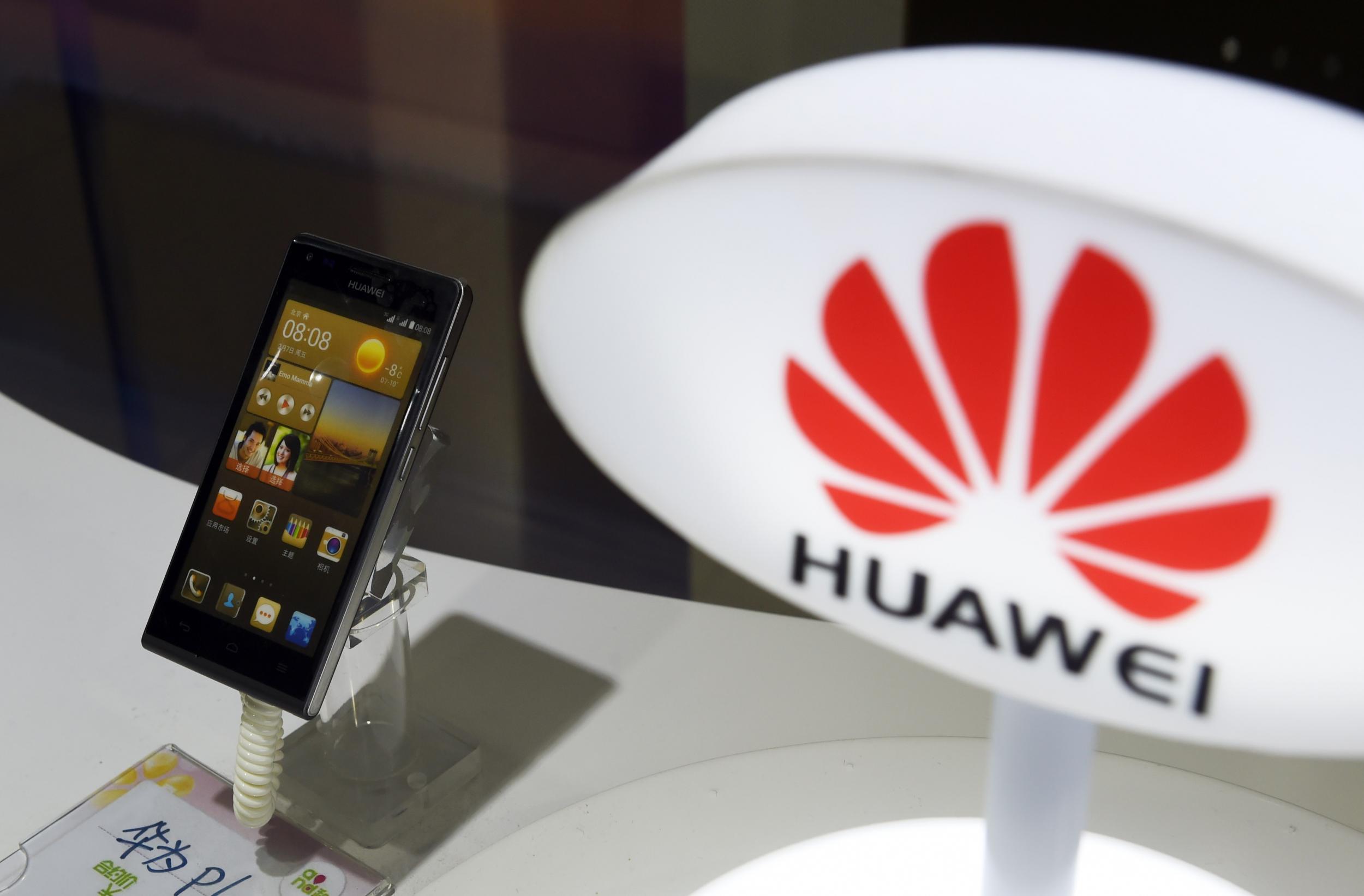
    Despite the challenges, Huawei continued to innovate. The tech world was taken by surprise in August 2023 when Huawei introduced the Huawei Mate 60 Pro. For the first time since 2020, a Huawei flagship phone was powered by an application processor designed by Huawei itself, the Kirin 9000S. Built by China’s largest foundry SMIC using its 7nm process node, the chipset reintroduced 5G support to a Huawei flagship phone for the first time since the Mate 40 series in 2020.

    Questions & Answers

    Why was Huawei added to the U.S. Entity List?
    Huawei was added to the Entity List due to concerns about national security. It was alleged that the company was spying on U.S. consumers and corporations.

    What impact did being on the Entity List have on Huawei?
    Being on the Entity List cut Huawei off from its U.S.-based supply chain, including Google. This meant that Huawei could no longer use Google’s proprietary version of Android.

    How did Huawei respond to the U.S. sanctions?
    Huawei developed its own operating system, HarmonyOS, and created an ecosystem independent of the United States. It also managed to design its own application processor for its flagship phone, reintroducing 5G support.

  • 300,000 Seniors in Singapore to Benefit from Nearly US$1,000 Health Support Initiative

    300,000 Seniors in Singapore to Benefit from Nearly US$1,000 Health Support Initiative

    Around 300,000 seniors from Singapore’s “Pioneer Generation” will soon receive government top-ups ranging from SGD 300 to SGD 1,200 (approximately US$234 to US$937) this July, in recognition of their significant contributions during the nation’s early years.

    Generous Increase in Health Support

    This year’s top-up amounts surpass last year’s figures of SGD 250 to SGD 900, as reported by the Ministry of Finance in a statement Monday. The total commitment for this initiative exceeds SGD 160 million, reflecting the government’s dedication to supporting its older citizens.

    These financial top-ups are designed to cover various medical expenses, including premiums for insurance plans, eldercare programs, as well as hospitalization costs and day surgeries. Notably, this financial boost is in addition to the annual vouchers provided to Singaporeans aged 65 and older.

    Supporting Seniors at Every Stage

    To qualify for the top-ups, seniors must be at least 76 years old, with the oldest citizens, aged 91 and above, receiving the highest amount of SGD 1,200. The Pioneer Generation Package, introduced in 2014, serves as a heartfelt tribute to the contributions of these individuals during the country’s formative years.

    The benefits don’t stop there; those aged 91 and above will continue to have their MediShield Life premiums fully covered, while younger pioneers can expect around two-thirds of their premiums to be taken care of.

    In a nation where every dollar counts, the initiative exemplifies how Singapore values its past while investing in the health and well-being of its elders. After all, nothing says “thank you” quite like a little extra cash for your hospital visits!

    Questions & Answers

    Who is eligible for these health support top-ups?
    Eligible seniors for the top-ups are those aged 76 and above, with those 91 years and older receiving the highest benefits.

    How much total funding is allocated for this initiative?
    The total funding for the top-ups is over SGD 160 million, reflecting the government’s commitment to its senior population.

    What does the top-up cover?
    The financial top-up aids in covering insurance premiums, eldercare programs, and various medical expenses, ensuring that seniors maintain access to essential health services.

  • Apple reportedly considering a monthly subscription program for iPhone and other hardware

    Apple reportedly considering a monthly subscription program for iPhone and other hardware

    Apple is working on a hardware subscription service that would let you use its products in exchange for a monthly fee. It would be different than the iPhone Upgrade program that lets you pay for the iPhone in 24 monthly installments. Under that program, the device is yours once you have paid for it in full.

    The new rumored Apple subscription service will not work like that. It will be similar to paying a monthly subscription fee for paid apps. So, while this would let you use products like the iPhone during the subscription period, the monthly fees wouldn’t be the same as splitting the cost of an iPhone over a 12 months period, for instance, and thus, the phone will technically never be yours. It would be more like a leasing service.

    At the risk of reading too much into this, it could be that the monthly fees will be a lot lower when compared to the installments charged by carriers and Apple at the moment for ownership programs. The report adds that users would be able to swap out phones when a new one comes out.

    This would generate recurring sales for the company and will help further reduce the influence of carriers since Apple will apparently operate this program itself, via the App Store or iCloud.

    At the same time, it would also make Apple products more accessible to consumers who cannot afford to pay for the devices upfront.

    Apple could bundle it with the Apple One services subscription program and AppleCare extended warranty and technical support plans and promote it as a one-stop subscription service.

    Apple’s hardware subscription program has been subject to delays, and we can expect the company to formally announce it by the end of this year or in 2023.

  • WhatsApp to get iPad, multi-phone support

    WhatsApp to get iPad, multi-phone support

    WhatsApp has been the number one messaging in the world for a while—which is no small thing—but it isn’t without its own set of drawbacks.

    For one, it can only be activated on one phone at a time, despite the beta version allowing a limited pool of testers to download it to 3 other devices (not including phones or tablets). Another nuisance is that it has never been supported on iPads or other tablets—making this one less way you can communicate on your brand new iPad mini 6, unfortunately.

    However, both of these things may be about to change, if a new rumor by WaBetaInfo is to be believed. The media outlet reports, based on exclusive screenshots provided by WhatsApp, that the company is actively working on integrating iPad support for the messaging app, as well as a second phone.

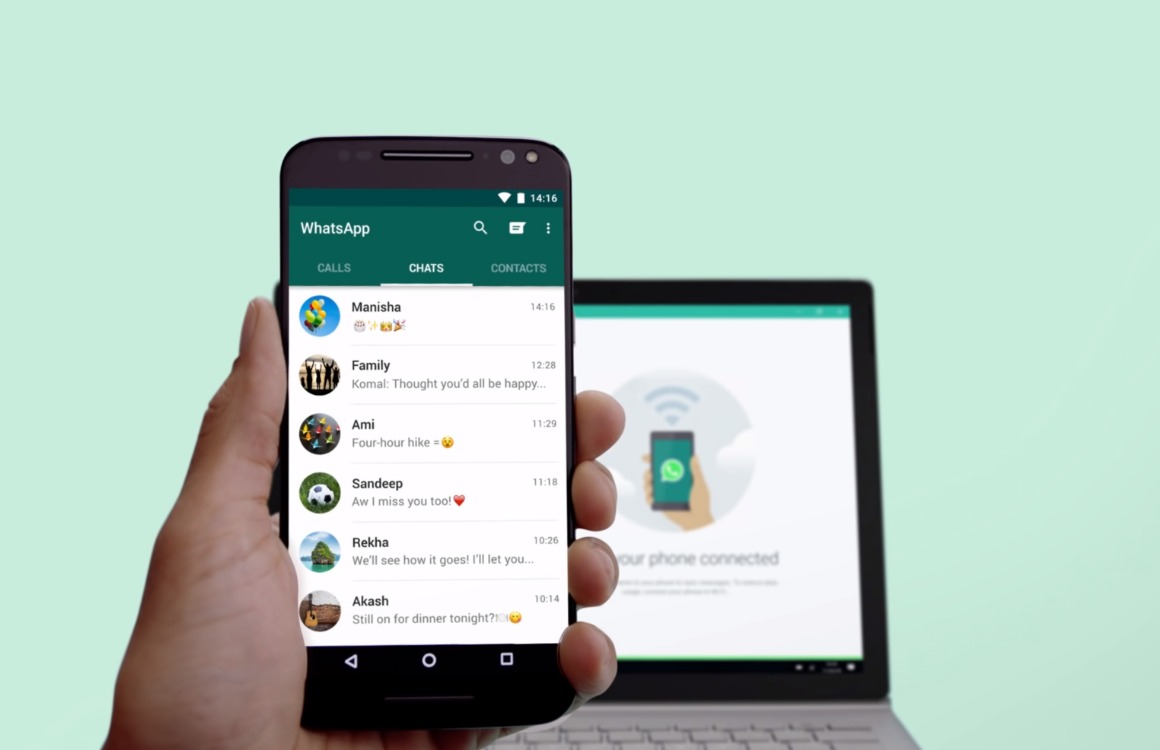
    So far, users have only had the ability to link up to 4 devices to their WhatsApp account, but only a single phone. The new screenshot provided by WaBetaInfo shows the syncing screen of WhatsApp messages being downloaded to a second device, which is clearly a phone by its rectangular shape.

    Anyone who is already a lucky beta user of the multi-device support feature that’s being developed right now may have seen this screen before on WhatsApp for desktop or WhatsApp Web, but never before on a second phone.

    As is visible in the screenshot, just like any other WhatsApp chat history backup or transfer, the whole syncing process of the messages is protected with end-to-end encryption.

    If you are one of the millions of people who both own a tablet and regularly use WhatsApp, the lack of this important feature has probably annoyed you at some point as well.

    But another screenshot by WaBetaInfo doubtlessly points to the fact that WhatsApp is hard at work creating a compatible version of the app for iPadOS and, by the looks of it, making progress.

    Although it’s an iPad in the screenshot, WaBetaInfo has tweeted that the Android tablet version is also definitely in the works.

    Competing messaging app Telegram already supports the addition of as many phones, and tablets, as you own—which has been one of the reasons some WhatsApp users have turned towards that platform instead, despite it ranking lower on the popularity tier.

    It’s definitely about time that WhatsApp got to work on including multi-phone and tablet support and, as it does currently sit at the top of the hill when it comes to messaging apps, it can hardly afford to lag behind in such important features for its users.

  • Huawei launches SME Support Program to support economic recovery in APAC

    Huawei launches SME Support Program to support economic recovery in APAC

    Global leading ICT provider Huawei launched its SME Support Program with trusted ecosystem partners in Asia Pacific, aiming to deliver further technical support for economic recovery amid the fight against the pandemic in the region.

    Small and medium enterprises (SMEs) are the engines of growth and innovation in the APEC region. They account for over 97 percent of all businesses and employ over half of the workforce across APEC economies. They contribute significantly to economic growth, with their share of GDP ranging from 40 percent to 60 percent in most APEC economies, according to the Asia-Pacific Economic Cooperation.

    The pandemic has forced businesses to accelerate their digital transformation and move to the cloud one to three years ahead of schedule. HUAWEI CLOUD is currently working with over 19,000 partners and 1.6 million developers and is committed to strengthening the digital economy to support a sustainable economic recovery.

    For the SME Support Program, which will be available until December 31, 2021, each eligible SME applicant could receive coupons worth up to $3,000 USD and free professional consulting service including cutting-edge cloud solutions for a variety of industry scenarios including Financial Service, Education, E-commerce, Gaming, IoT, Application Development, and Enterprise Applications.

    SMEs that have an account on the HUAWEI CLOUD official website but have never used any paid service could apply on the SME Support Program page and receive consultation from cloud experts. Applications will be reviewed based on the company’s cloud needs and the readiness of workloads for cloud deployment.

    “We are still very small, but we have the ambition to grow into a big business. Therefore, choosing a reliable partner is our priority, this translates into reliable technology and reliable service and support. HUAWEI did a great job. I believe we get the same prompt responses any big client of yours,” Yongyan Liu, Co-Founder and VP of Strategy and Development at SYMBIONAT HEALTH, expressed confidence in the cooperation with HUAWEI CLOUD.

    Currently, HUAWEI CLOUD offers over 220 services in categories such as compute, storage, network, security, big data, AI, and IoT, plus over 210 solutions for full coverage of industries. Enterprises can rely on Huawei’s robust ecosystem to accelerate innovation by joining efforts with other eco-partners.

  • Chatbots are backfiring, ‘pushing away customers’

    Chatbots are backfiring, ‘pushing away customers’

    Chatbots in customer support can backfire and result in the loss of business, according to a new Brunel Business School study.

    The research, published in Services Industry Journal, investigates factors that make chatbot interaction a negative experience for customers, which can cause them to abandon a purchase or even a brand altogether, blaming the company rather than themselves for any communication failure.

    “For firms, chatbots promise improvements in customer service while enabling big cost savings,” said Brunel Business School professor Dr. Ana Canhoto. “The negative experiences identified in our study mean firms end up with unhappy customers, may lose customers or face a PR crisis which makes it hard to attract new ones.”

    Unpleasant chatbot interactions are caused by inauthenticity, explains the study, when customers feel tricked into conversing with a non-human; excessive questions or repeated answers on the part of the bot; failure to exhibit appropriate empathetic responses causing upset; and failure to deal with complex queries due to a limited operational scope.

    If customers conclude the chatbot cannot resolve their inquiry, they will grow frustrated and ask to speak with a human – and if this cannot be arranged, they are likely to cut off the chat and abandon the firm, as well as potentially taking to social media to express their dissatisfaction, the study concludes.

    “When customer interactions with AI chatbots are negative, it can have serious negative ramifications on service providers, as customers can opt for more costly customer support channels, such as a phone channel,” said Canhoto.

    “In such cases, investment in AI technology intended to result in cost savings might backfire and result in a heavier load on other support channels. Or customers may terminate the service, switch to a competitor, or complain on social media.”

    Dr. Canhoto advises businesses to use these insights to fine-tune both their bots and customer expectations of them to avoid negative experiences.
    According to the Services Industry Journal, chatbots are involved in two out of three customer interactions.

  • Chat-to-checkout app lets shoppers interact real time

    Chat-to-checkout app lets shoppers interact real time

    Tech startup OneDash has unveiled a chat-to-checkout service which eliminates the need to quit a chat session to complete a purchase.

    The OneDash app also enables interactive video so shoppers can connect with retailers in real-time and interact personally.

    Oleksandr Matviishyn, CTO of OneDash, says one of the motivations behind creating the chat-to-checkout app was to address cart abandonment, a major problem for online retailers.

    “With the global growth of video content and the promotion of short videos by platforms such as Instagram and TikTok, we realized that the hidden costs are enormous. We were driven by the idea of making video more affordable and providing the ability for every business to create, distribute, and monetize their video content, while at the same time, improving the production speed of interactive video content,” he said.

    “During the implementation phase, we came up with a few additional ideas like advertising, Messenger commerce, and live streaming to make the platform even more robust.”

    Initially only available for Apple devices, OneDash will be released on the Android Play store in July.

    An early adopter of the app is Vanessa Martinelli Fine Jewellery, whose CEO Vanessa Martinelli, said she was looking for a new way to talk about her creative world and showcase her jewelry.

    “I tell my story through a video and the spectators can interact at the same moment,” she said. “In just one click they receive all the information on a specific featured product and they can purchase it right at that moment, without breaking the momentum.”

  • Cebu Pacific introduces online chatbot for customer support

    Cebu Pacific introduces online chatbot for customer support

    Philippines-based low-cost carrier Cebu Pacific has launched its online travel assistant, Charlie the Chatbot, to provide 24/7 support for customers.

    Charlie, now available on the airline’s website and official Facebook page, can help answer customers’ frequently asked questions, which include flight bookings, inflight meals, baggage allowance and so on.

    Customers who need help can type in their queries in English one at a time, or choose from a variety of suggested topic options when they open the chatbox.

    Charlie’s capabilities also include assisting passengers with their flight check-in, providing flight itineraries and boarding passes, and sharing details of the airline’s ongoing seat sales and promotions.

    “We’ve always talked about being an enabler of fun and accessible travels, and as part of our thrust to enhance customer experience with the airline, we created Charlie,” said Candice Iyog, vice president for marketing and customer experience at Cebu Pacific.

    “As we officially launch our chatbot, we hope to offer convenience and helpful information within our travelers’ fingertips.

    “Charlie still has a long way to go in terms of learning – just like any chatbot. Rest assured, we are continuously working on expanding Charlie’s knowledge in order to provide our passengers with the best customer experience possible.”

    The airline says Charlie has engaged with more than 393,000 passengers since its inception in January this year.

  • Boomtime ahead for chatbots in E-commerce

    Boomtime ahead for chatbots in E-commerce

    New data from Juniper Research predicts consumer interaction with chatbots in retail will reach 22 billion by 2023.

    The figure represents a sharp increase over an estimated 2.6 billion interactions this year.

    According to the new research report “AI in Retail: Segment Analysis, Vendor Positioning & Market Forecasts 2019-2023”, chatbots in retail will enable effectively automated customer interactions for both online and offline vendors.

    A crucial enabler of this development will be improvements in NLP (Natural Language Processing), which will dramatically reduce the failure rate of chatbot interactions, by making them more natural and valuable for customers.

    Juniper anticipates that retailers who do not adopt chatbots will face strong challenges from more technologically-adept disruptors, who will use chatbots as an extension to the crucial omnichannel retail experience.

    The research also found that chatbots used for customer service have a strong potential to reduce costs; with deployments realizing annual savings for retailers of US$439 million globally by 2023, up from just $7 million this year.

    These potential savings will act as a key “pull” factor, given the margin pressure that many retailers are presently feeling.

    “By embracing automated customer service with chatbots, retailers can act in a more flexible and efficient way,” explained research author Nick Maynard. “The wider retail market means that chatbots are no longer a luxury, they are essential.”

    Meanwhile, sales resulting from interaction with chatbots in retail will reach $112 billion by 2023, up from $7.3 billion this year; representing an annual growth rate of 98 percent.

    The research found these sales will largely be a result of migration from other channels, rather than a new revenue stream. Accordingly, the research emphasized that while retailers must adopt chatbots for ease of use (and to reduce consumer churn), their return on investment will come from efficiencies, rather than new income.

  • Shoppers prefer human interaction over bots, says study

    Shoppers prefer human interaction over bots, says study

    New research reveals 75 per cent of shoppers prefer live-agent support for customer service verses 25 per cent support for self service and chatbots. The research, from cloud contact-centre operator NewVoiceMedia, identified consumer concerns about sharing sensitive information, a lack of understanding of bots and their inability to resolve issues.

    “Chatbots can provide customers with quick answers to frequently asked questions or issues, and the survey notes the benefit of chatbots for certain interactions, such as 24-seven service,” the survey’s authors concluded.

    But when it comes to handling sensitive financial and personal information, most customers are more comfortable with a live agent, and just 13 per cent say they would be happy if all service interactions are replaced by bots in the future.

    Foremost among consumer concerns about using chatbots include:

    • A lack of understanding of the issue (65 per cent).
    • The inability to solve complex issues (63 per cent).
    • The inability of chatbots to provide answers to simple questions (49 per cent).
    • The lack of a personal service experience (45 per cent).

    While less than half of the people surveyed (48 per cent) said they would be willing to use chat bots for service – versus the 38 per cent who wouldn’t – 46 per cent also felt that bots kept them from reaching a live person.

    Banks (82 per cent) and medical services (75 per cent) were the businesses that people were least likely to want to deal with bots.

    Customers prefer live agents for technical support (91 per cent); getting a quick response in an emergency (89 per cent); making a complaint (86 per cent); buying an expensive item (82 per cent); purchase inquiries (79 per cent); returns and cancellations (73 per cent); booking appointments and reservations (59 per cent); and paying a bill (54 per cent). However, when asked about buying”a basic item”, 56 per cent would choose a chatbot over a live interaction.

    The top benefit cited for dealing with chat bots was 24-hour service.

    “When a situation becomes emotional or complex, people want to engage with people”, says Dennis Fois, president of NewVoiceMedia. “As businesses add more customer service channels, conversations are becoming more complex and higher value, and personal, emotive customer interactions play a critical role in bridging the gap for what digital innovation alone cannot solve,” he said.

    “For this reason, companies must find the right balance between automation and human support to deliver the service that customers demand. Frontline contact centre teams will continue to be the difference makers on the battlefield to win the hearts and minds of customers, and organisations deploying self-service solutions should ensure that there is always an option to reach a live agent”.

    There is a sense consumers may warm to chatbots in the future, however, given that younger respondents (aged 18-44) were more open to using chatbots overall and across the individual scenarios compared to older consumers (45-60+).