Retail News CRM

Tag: support

  • As Vietnamese banks digitise, customer service key

    As Vietnamese banks digitise, customer service key

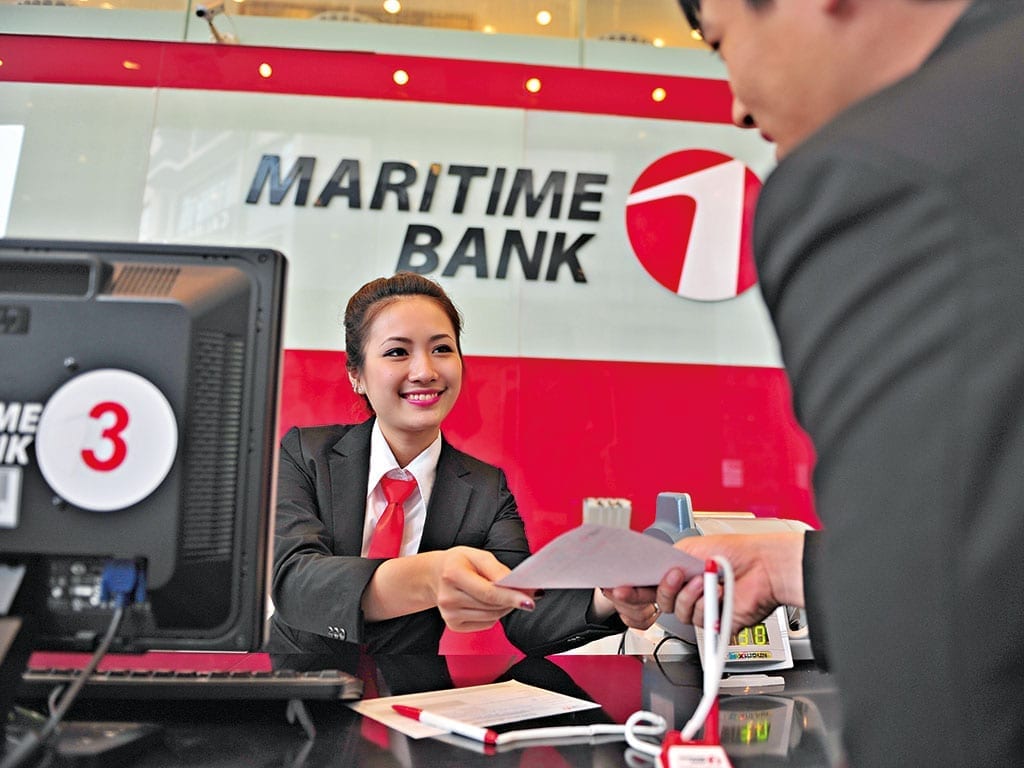
    Customers must be at the centre of banks’ attention as they make a move towards digital transformation in an effort to adapt to a changing landscape of financial innovation and disruptive technologies.

    This was said by head of Retail Banking at VP Bank, Sandeep Deobhakta, at a conference held in Hà Nội on Thursday, titled, ‘The Future of Finance in Việt Nam 2017.’

    Deobhakta, who has been holding this position since May 2015, said customers in Việt Nam are very open to new technologies and the nascent retail banking industry in Việt Nam can also adopt these technologies faster than other markets if they put customers first.

    In the future, traditional banks might lose business to companies that employ disruptive innovations if they failed to deliver better, simpler and faster solutions to customers, Deobhakta cautioned.

    VP Bank has been working with Timo, Việt Nam’s first mobile-only bank, giving customers better solutions to manage their money, bills and the ability to top up their mobile cards through the Timo app. At Timo Hangouts, one can forget about a typical bank branch and instead enjoy a coffee as one opens an account and uses bank services.

    Timo has about 4,000 customers in the HCM City and opened a Timo Hangout in Hà Nội last October, looking to attract more than 100,000 users by next year.

    Việt Nam has a huge untapped market for financial innovation, with only 20 per cent of the population having bank accounts and 3 per cent owning credit cards, Foo Boon Ping, managing editor of The Asian Banker, said at the conference.

    “The stable GDP growth of around 6 to 7 per cent, low wages, a large population with a high savings and strong innovative approach are crucial factors that will accelerate the financial and industrial development in the Vietnamese market,” he said.

    “Digital transformation is driven by real business needs to transform to become more cost efficient and to serve your customers as their behavior and preferences change,” he added.

    There are only about 36 fin-tech companies in Việt Nam, with most focusing on providing consumers and merchants with online and digital payment solutions.

  • Philippines interested in Indonesian medical support ship

    Philippines interested in Indonesian medical support ship

    After purchasing two Strategic Sealift Vessel (SSV) warships from PT PAL Indonesia, the Philippine government is considering putting in another order for a medical support vessel from Indonesia’s state-owned shipbuilder.

    During the 2016 Asian Defense & Security (ADAS) exhibition in Manila, Philippine Secretary of National Defense Delfin Lorenzana held a discussion with Brig. Gen. Jan Pieter Ate from the Indonesian ADAS delegation on Indonesian defense products.

    “The Secretary of National Defense and the Philippines Navy chief of staff are impressed with the medical support vessel that will be fit for humanitarian assistance and disaster relief (HADR) operations,” Jan Pieter, the Defense Ministry’s director of the defense industry and technology.

    According to Jan Pieter, the Philippine secretary of defense had shown a deep interest in the 123-meter vessel and spent a lot of time looking at the vessel’s mock-up.

    It was reported that the Philippines had also put in an order for the CN235-200 and N212i aircraft from state-owned airplane maker PT Dirgantara Indonesia in 2015.

    The three-day ADAS 2016 exhibition ends on Friday.

    According to its official website, ADAS 2016 attracts exhibitors from around the world and works closely with the Armed Forces of the Philippines (AFP), the Office of Civil Defense (OCD) and the Philippine Coast Guard (PCG).

  • Telstra taps drones to improve network repair times

    Telstra taps drones to improve network repair times

    Australia’s Telstra has revealed plans to use drone technology to improve network resilience and disaster readiness during the tropical state of Queensland’s upcoming storm season.

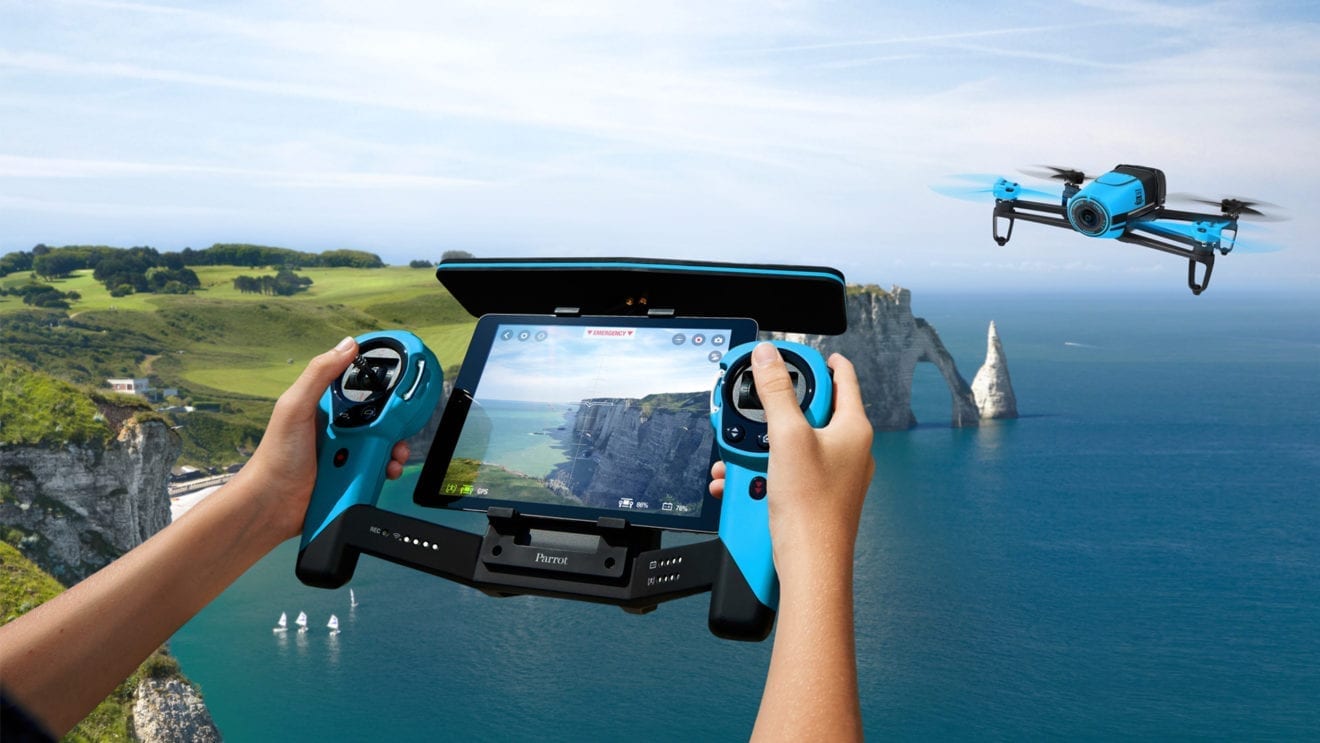
    The operator will use drones as an “eye in the sky” to help technicians inspect local base stations following a storm or cyclone, checking for damage before technicians are deployed on-site for repairs.

    According to Telstra, this will decrease the time needed to conduct repairs following a natural disaster related outage.

    Drones from 3D Robotics fitted with sophisticated cameras and capable of flying up to 120 meters high will be used to look for damage to network assets.

    Telstra previously used a drone to check for damage to mobile infrastructure following bushfires in another state in late 2015.

    “With more than 8,500 mobile network sites around Australia, delivering coverage spanning 2.4 million square kilometers, our mobile network is the largest in the country,” Telstra group managing director for networks Mike Wright said.

    “The maintenance of our network is key to ensuring customers get the best possible service available and using drones is revolutionizing the way we inspect base stations.”

  • AIS introduces self-service at contact centers

    AIS introduces self-service at contact centers

    Thailand’s AIS has upgraded its customer contact center system in a bid to provide a consistent, enhanced and personalized customer experience for its growing subscriber base.

    The new system now routes up to 70% of all customer calls to a self-service system.

    The self-service capacity allows subscribers to gain access to services such as activating their SIM card, subscribing to roaming services or selecting rewards, without dealing with long queues.

    Leveraging Avaya’s Self-Service solution, AIS’ Advanced Contact Centers (ACC) have streamlined customer care and enhanced personalized live agent support at its contact centers located in Bangkok and Korat.

    The centers currently employ 3,300 customer service employees, serving 40 million subscribers nationwide.

    Smartphone users in Thailand are expected to reach 20 million in 2016 and this is expected to soar further with the introduction of 4G commercial services this year. Demand for more sophisticated, seamless and highly reliable broadband connectivity from business is also expected to escalate as Thailand’s digital economy accelerates.

    ACC saw the digital transformation of its contact center as a critical enabler in the new economy. The new self service system will ensure a consistent customer experience for AIS’s 11 million calls it receives through its contact centers every month.

    In the past, each customer call routed to a live agent can cost between 50 to 100 baht ($1.42 to $2.84), depending on the competency level of the agent. In contrast, the new system means that each call costs only 1 baht for ACC.

    The new system also provides capabilities for ACC to identify and categorize AIS’s customer calls and the services they require before matching them with the right agents trained to help specific service requests or customer types.

  • Singtel adopts web chat to improve customer service

    Singtel adopts web chat to improve customer service

    Singtel has improved its real-time customer engagement capabilities with the implementation of a web chat system from online and mobile messaging platform provider LivePerson.

    The cloud-based chat solution allows Singtel to take advantage of  predictive intelligent targeting and behavioural intent tools to enhance web assistance services and customers’ overall communication experience with Singtel.

    “As Singtel continually grows its suite of next-generation communications and digital services, we are also investing in new IT capabilities to support these services,” Singtel vice presiden of consumer operations Candy Chua said.

    “We want to give customers a seamless and effortless experience when they look for information or transact with us. For example, with the LivePerson web chat, we can proactively reach out to customers to render timely support when they are surfing our website.”

    Steven Fitzjohn, LivePerson’s APAC Regional Vice President added that “there is a gap between the way we choose to communicate with our friends and family – mostly through digital and social channels – and the way brands communicate with us, which is predominantly through outmoded voice channels. Singtel is differentiating itself by taking action to bridge this gap. It is presenting customers with a channel that is familiar and simple to use, and offers customers a better experience overall.”