Retail News CRM

Tag: Suzuki

  • Sales Of Maruti Suzuki Ciaz Crosses The Three Lakh Milestone

    Sales Of Maruti Suzuki Ciaz Crosses The Three Lakh Milestone

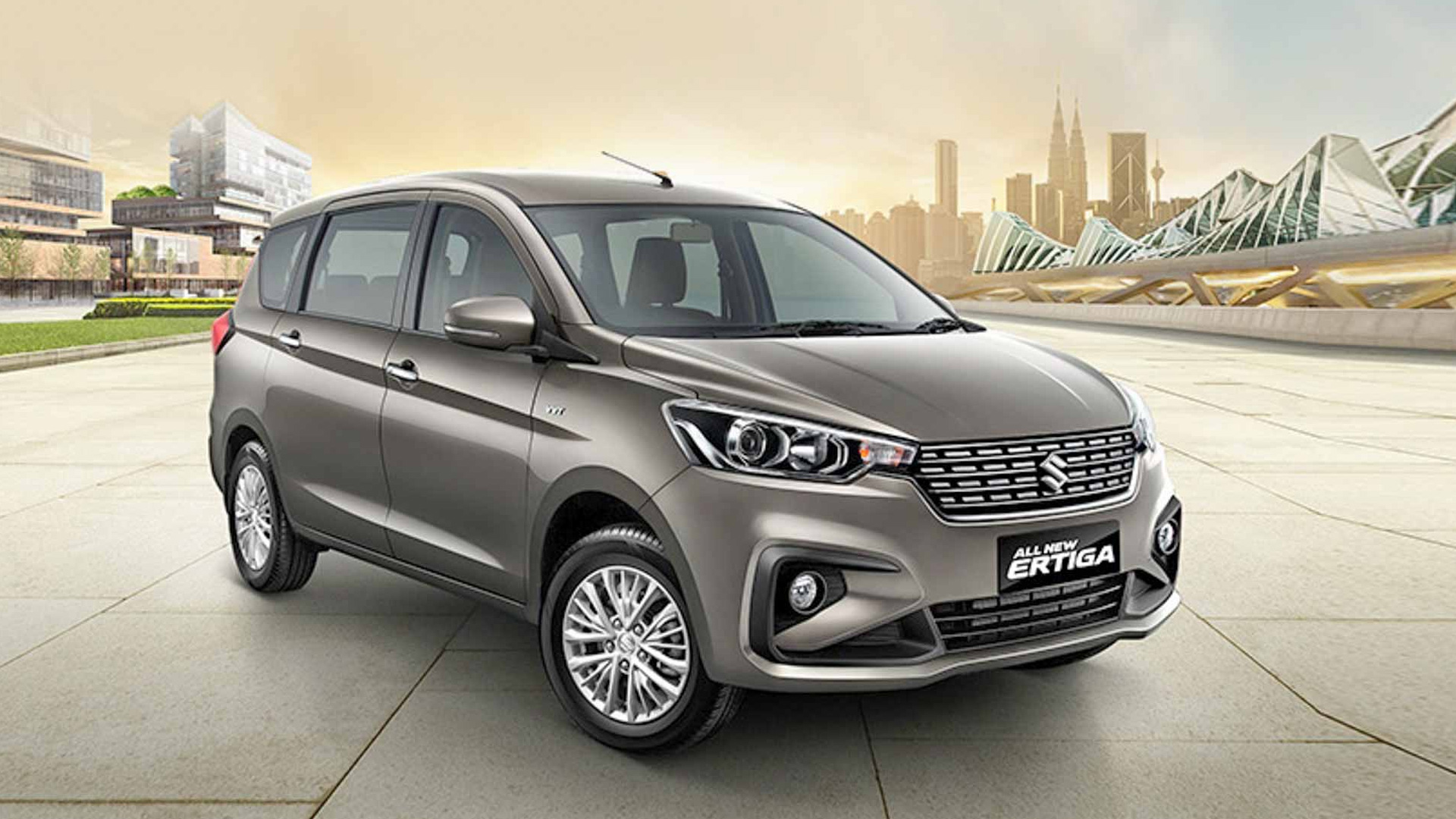
    Maruti Suzuki reports that the total sales of the Ciaz sedan have crossed the three lakh milestone. The Maruti Suzuki Ciaz was launched in 2014 and it becomes the fastest model in its segment to achieve the landmark. The Ciaz is offered only with a 1.5-litre petrol engine which makes 102 bhp at 6,000 rpm against 138 Nm at 4,400 rpm. Customers can choose between a 5-speed manual gearbox and a 4-speed torque converter automatic unit. Prices for the Maruti Suzuki Ciaz start at ₹ 8.72 lakh and go up to ₹ 11.71 lakh (ex-showroom, Delhi).

    Speaking on the milestone, Shashank Srivastava, Senior Executive Director, Maruti Suzuki India Limited, said, “Since its launch in 2014, Ciaz has redefined the segment with its class-leading space, design and sophistication & has witnessed a resounding success in the highly competitive premium sedan segment. The milestone of 3 Lakh sales demonstrates customer’s faith and confidence in the brand”.

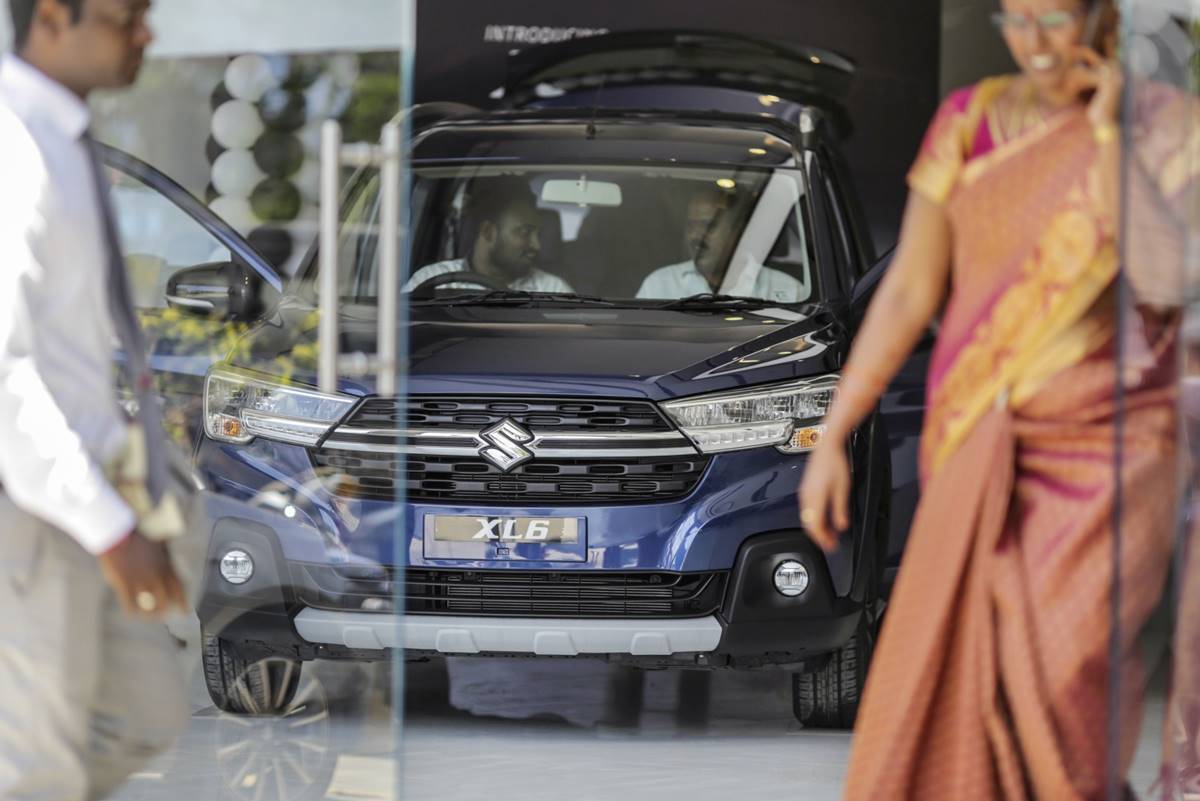
    Recently, Maruti Suzuki issued a massive recall for petrol models of the Ciaz, Ertiga, Vitara Brezza and XL6 vehicles. According to the company’s regulatory filing on the Bombay Stock Exchange, a total of 181,754 units, manufactured between May 4, 2018 and October 27, 2020, are said to be affected. The carmaker has said that the recall is for the inspection and replacement of the vehicle’s motor generator unit, which may have a potential safety defect. The company further stated that the inspection and replacement will be done free of cost.
  • Suzuki Expects 60% Drop In September Production Due To Chip Shortage

    Suzuki Expects 60% Drop In September Production Due To Chip Shortage

    India’s top carmaker Maruti Suzuki said on Tuesday that the global chip shortage will hurt production at its plants in the states of Haryana and Gujarat in September. Total production volume across both locations could be around 40% of normal output, it said in a regulatory filing.

    Top Indian carmakers, like their global peers, have been hit by semiconductor supply chain disruptions during the pandemic, which drove up demand for chips used in electronics like computers as people worked from home, and hit output at many automakers.

    Tata Motors and Mahindra and Mahindra Ltd have already warned of the impact from rising commodity prices and a global shortage of semiconductors, combined with pandemic uncertainty.

    In July, Tata Motors said it expected the chip supply crunch in the second quarter to be greater than in the first, likely resulting in wholesale volumes for its Jaguar Land Rover to be about 50% lower than planned.

    Analysts earlier said Maruti was better positioned than rivals as it was not dependent on a single vendor for chips.

    However, Maruti Chairman RC Bhargava has indicated the semiconductor crisis was not over and that it is difficult to predict what happens next.

  • Suzuki Hayabusa Bookings Begin Again

    Suzuki Hayabusa Bookings Begin Again

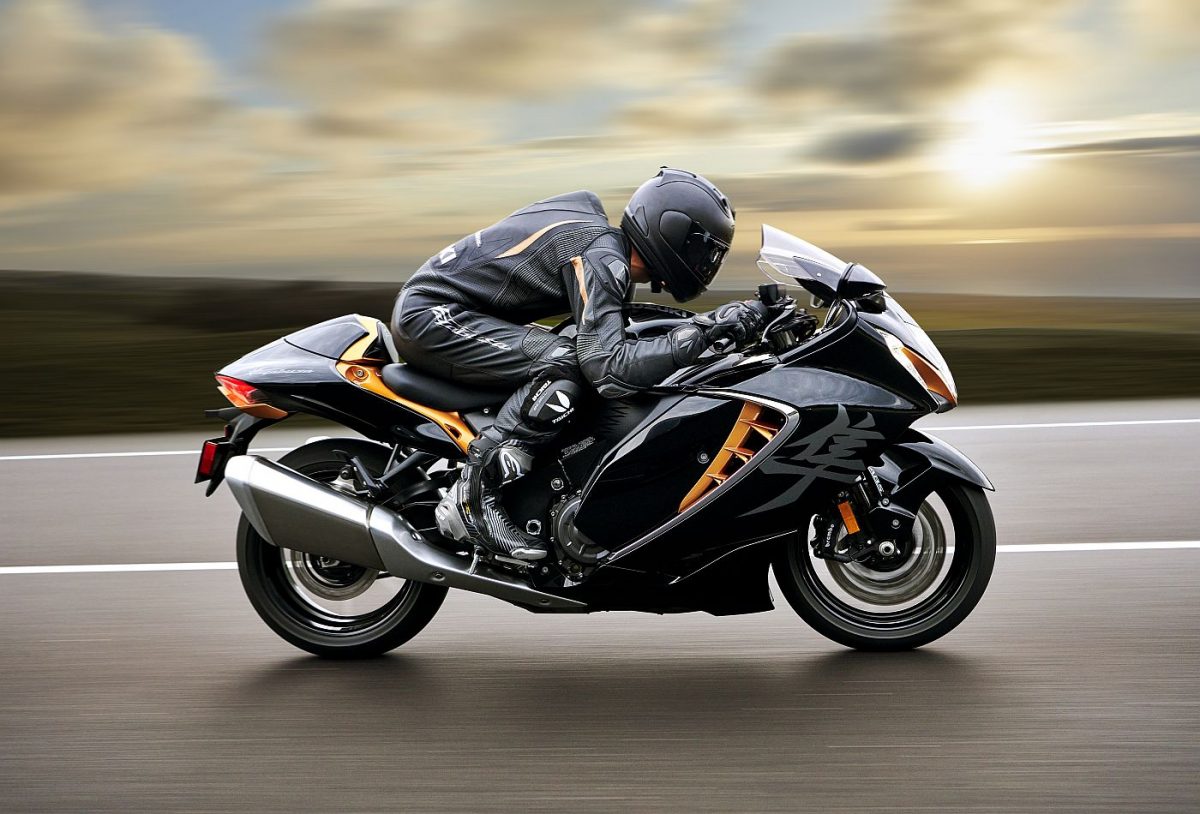
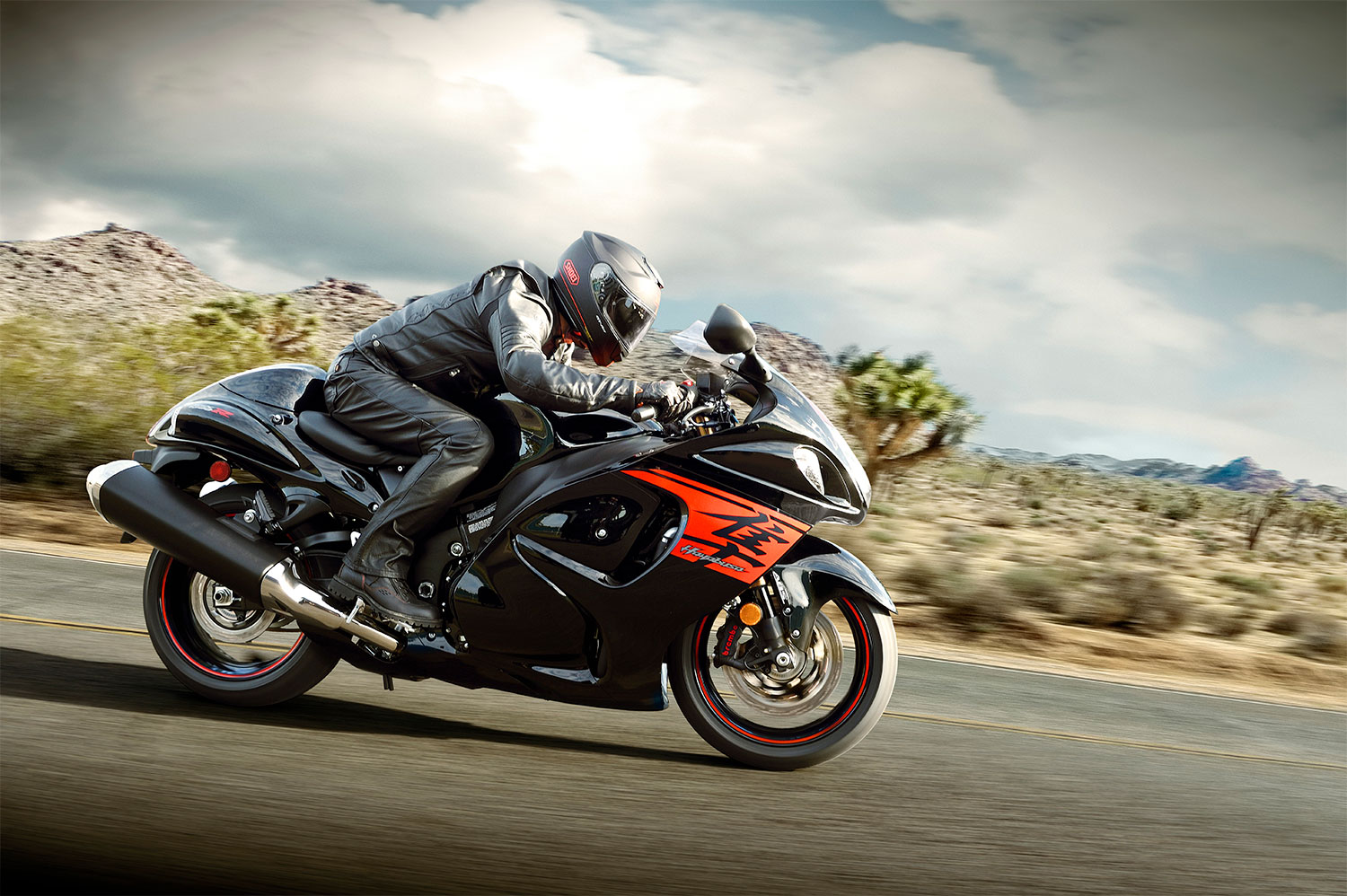
    Suzuki Motorcycle India has reopened the bookings for the 2021 Hayabusa. The company sold out the first batch of 101 motorcycles in April 2021 in just a couple of days after opening bookings. While deliveries of the first batch have already begun, the company says that the second batch of the Hayabusa is likely to come to India in August 2021. The motorcycle was showcased in a new-generation avatar last year and made its way to India earlier this year. The new-gen Suzuki Hayabusa is priced at ₹ 16.40 lakh.

    The new Hayabusa gets comprehensive updates for the first time in 13 years. The bike now features improved aerodynamics, as well as an updated electronics suite too. It gets a 1,340 cc, four-stroke, fuel-injected, liquid-cooled, DOHC, inline-four engine which makes 187 bhp at 9,700 rpm and 150 Nm of peak torque at 7,000 rpm. Top speed is still rated at 299 kmph and kerb weight sees a marginal drop of 2 kg to 264 kg.

    Along with the updated engine, the motorcycle also gets a wide variety of electronic rider aids and a six-axis inertial measurement unit (IMU). The USP is the Suzuki Intelligent Ride System (S.I.R.S) under which you get three riding modes and three user-defined modes, with different settings for traction control, anti-lift control, engine brake control and so on.

  • Maruti Suzuki To Increase Car Prices From April

    Maruti Suzuki To Increase Car Prices From April

    Maruti Suzuki has announced that it will be increasing car prices across its model line-up from April 2021. In a regulatory filing, the country’s largest car manufacture said “Over the past year the cost of company’s vehicles has been impacted adversely due to increase in various input costs. Hence, it has become imperative for the company to pass on some impact of the above additional cost to customers through a price increase in April 2021.” Maruti Suzuki India has not announced the quantum or percentage of the price hike, but it has said that the price hike will vary for different models.

    It is quite common for Original Equipment Manufacturer or OEMs to increase vehicle prices in India at the start of the new financial year. In fact, Maruti Suzuki India had also increased its prices in January 2021, making this the second price revision in just three months. Among other OEMs, Isuzu Motor India has also announced its plan to the prices of its D-Max Regular Cab and the D-Max S-Cab in India, by ₹ 1 lakh, from April 1, 2021. And we expect a few other manufacturers to join the bandwagon soon.

    Currently, Maruti Suzuki India has 15 models in its combined line-up from Arena and Nexa brands. While its most affordable model, the Alto its priced between ₹ 3 lakh to ₹ 4.48 lakh, its flagship model, the S-Cross is priced from ₹ 8.39 lakh, going up to ₹ 12.39 lakh.

  • Maruti Suzuki Records 19.3% Production Growth In February 2021

    Maruti Suzuki Records 19.3% Production Growth In February 2021

    Maruti Suzuki India has announced production figures for the month of February 2021. India’s leading carmaker said its total production increased by 19.3 percent to 1,68,180 units in February against 1,40,933 units produced in the same month last year. The numbers recorded last month are slightly better than what the automaker posted in February 2020. The total number of passenger vehicles manufactured last month were 1,65,783 units in comparison to 1,40,370 units in the corresponding month last year, witnessing a growth of 18 percent.

    The Indo-Japanese carmaker manufactured 1,60,975 units in January 2021 as against 1,68,180 units, witnessing a marginal month-on-month (MoM) growth of 4 percent. The production of mini hatchbacks – Alto and S-Presso in February 2021 decreased marginally by 4 percent to 28,213 units as compared to 29,676 units produced in the same month last year. However, compact vehicles such as WagonR, Celerio, Swift, Dzire, Ignis, Baleno, and the Glanza saw production growth of 21.22 percent with 91,091 units against 75,142 units manufactured a year ago. The Maruti Suzuki Ciaz compact sedan saw a decline in production by 34.13 percent to 1,943 units as compared to 2,950 units manufactured in February 2020.

  • All-New Suzuki Hayabusa Teased For India, Launch Soon

    All-New Suzuki Hayabusa Teased For India, Launch Soon

    The all-new Suzuki Hayabusa finally broke cover last month and it turns out the new offering will come to India sooner than we were expecting. Suzuki Motorcycle India has released a teaser video on its social media handles for the new Hayabusa with the caption, “The ultimate superbike, coming soon.” It is likely that the all-new superbike will arrive in India in the next quarter of the year, and will be one of the first markets outside Japan to get the offering. It needs to be noted that India was one of the last markets globally where the second generation Hayabusa was sold before the model had to be pulled off the shelves with the transition to BS6 emission norms.

    The third-generation Suzuki Hayabusa has seen a comprehensive overhaul over its predecessor. The model gets a revised twin-spar aluminum frame and swingarm. The design language is an evolution over the older model and makes it instantly recognizable. There are plenty of changes including the new LED position lights on either side of the headlamp, new DRLs and air intakes on the side. The fairing has been completely revised and gets larger air scoops, while the LED taillight is all-new as well.

    Power on the 2021 Suzuki Hayabusa comes from the 1340 cc, liquid-cooled, DOHC, 16-valve, in-line four-cylinder engine. The motor has been thoroughly updated for Euro5 compliance. There are new internal components including an exhaust header pipe, optimized cam profiles, 1 mm education in throttle body inner diameter and a 12 mm extension in the overall intake pipe. While Suzuki says that the engine’s performance has been improved, power figures have seen a reduction with the model now producing 187 bhp at 9700 rpm and 150 Nm of peak torque at 7000 rpm. The motor is paired with a 6-speed gearbox. Compared to the second-gen model, the new Hayabusa is lighter by 4 kg but still tips the scales at 264 kg (kerb).

  • Motorbike sales slump, blamed on pandemic

    Motorbike sales slump, blamed on pandemic

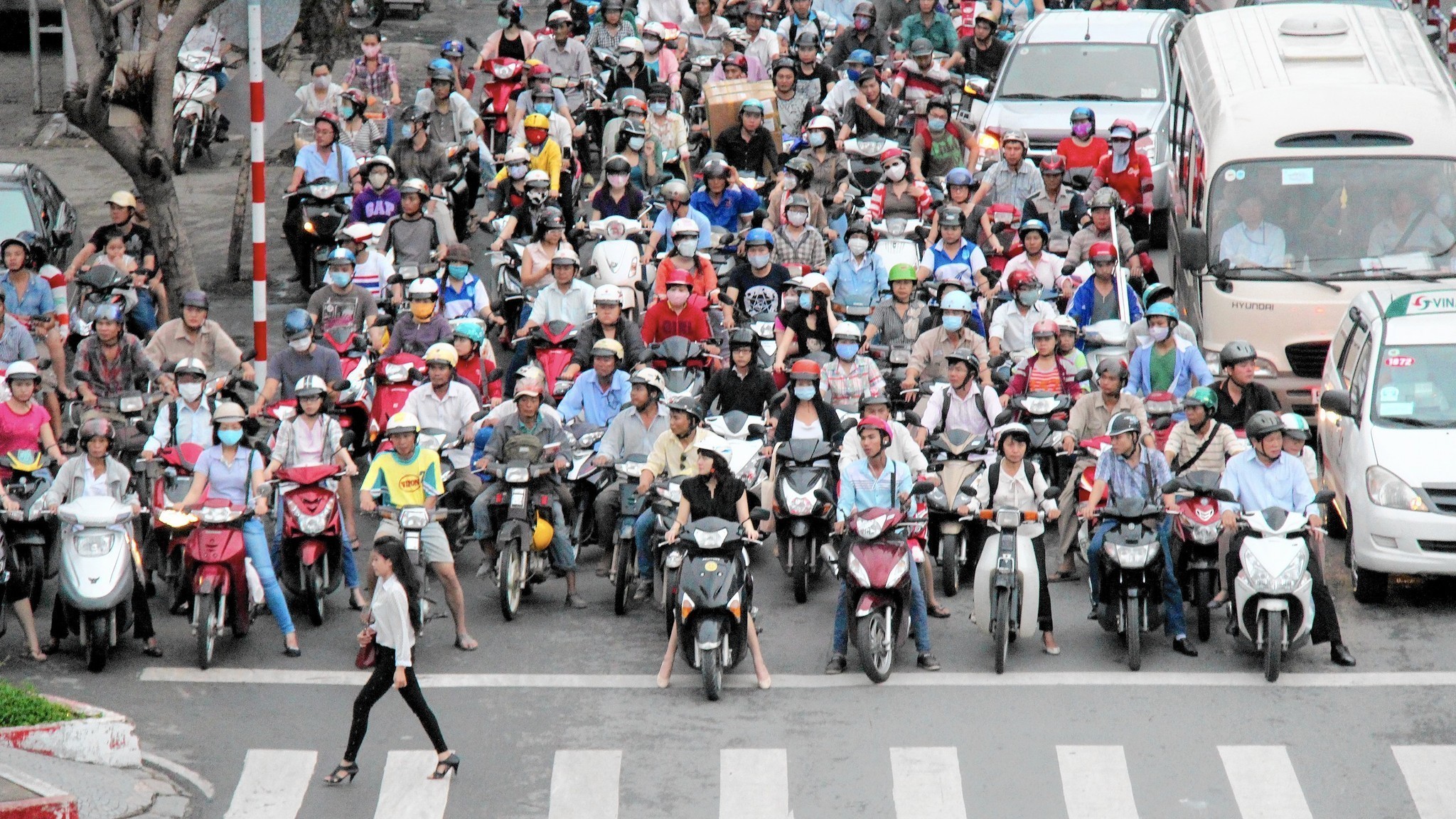
    Motorbike sales fell 16.6 percent to 2.71 million units last year, according to the Vietnam Association of Motorcycle Manufacturers.

    The industry group comprises five major companies, Honda, Piaggio, Suzuki, SYM, and Yamaha, who account for most of the market.

    Industry insiders said sales fell in double digits because of the Covid-19 pandemic, which hit people’s incomes.

    Although VAMM’s report did not list each company’s sales, Honda said it accounted for nearly 80 percent.

    Other brands not included in report were VinFast, Kymco, BMW Motorrad, Ducati, Harley-Davidson, Kawasaki, and others.

    In the second half last year several companies introduced.

  • Suzuki Expects Annual Profit To Shrink By A Quarter As India Sales Slump

    Suzuki Expects Annual Profit To Shrink By A Quarter As India Sales Slump

    Suzuki Motor Corp on Thursday forecast operating profit to fall by a quarter to 160 billion yen ($1.5 billion) in the year to March as sales, including in its key Indian market, shrink amid the coronavirus pandemic. That prediction was more than an average estimate for a 124.3 billion yen compiled from 14 analysts polled by Refinitiv.

    Suzuki’s Indian car sales in the first half of the year fell 36% to 432,000 vehicles, and dipped in other markets, including Japan, Indonesia and Europe as people stay away from dealerships.

    “We don’t know what will happen with the coronavirus in India or what measures the government will implement, so that makes the market difficult to predict,” Suzuki’s president, Toshihiro Suzuki said in a conference call.

    India accounts for just over half of Suzuki’s global car sales. Through its majority stake in Maruti Suzuki India Ltd, the company accounts for roughly one in every two cars sold in the country.

    Last business year, Maruti Suzuki paid Suzuki 38.2 billion rupees in royalties, or about 5% of its revenue, according to its annual report

    For the full business year, the Japanese automaker expects to sell 2.38 million cars worldwide, 16.6% fewer than the previous twelve months.

    The forecast came as Suzuki posted a 73.6 billion yen operating profit in the three months ended Sept. 30 compared with a profit of 55.9 billion yen a year earlier, according to Reuters’ calculations.

    Japan’s fourth-largest automaker had declined to give a full-year forecast when it reported it first-quarter results.

  • Suzuki mulls assembling passenger cars in Vietnam

    Suzuki mulls assembling passenger cars in Vietnam

    Japanese automaker Suzuki is possible to assemble passenger cars in Vietnam in the coming time, a leader of the company says.

    Toshiyuki Takahara, general director of Suzuki Vietnam, told local media that the country is a key market for the company and it is considering assembling certain models there.

    When selecting a country for establishing a car assembly plant, Suzuki needs to take into consideration the possible sales volume, he said, but did not mention a specific target, saying it was a trade secret.

    With its current market share, it is more reason for it to import completely built unit (CBU) cars for local distribution, he added.

    Suzuki now assembles light trucks and vans in Vietnam. But all passenger cars, including four- and seven-seater, are imported from Indonesia and Thailand.

    Takahara said assembling passenger cars in the country requires huge capital investments in the production line. If the assembling depends on imported components, it would be ineffective because of increasing costs, resulting in higher car prices.

    Suzuki’s market share in Vietnam has been increasing over the past three years. It sold more than 6,800 vehicles in 2018, accounting for 2.5 percent of the market share. Last year, these numbers increased to 11,780 and 3.9 percent, correspondingly.

    The market share of Suzuki brand cars increased to 5.1 percent in the first 9 months of this year.

  • Maruti Suzuki Launches Its Car Subscription Programme In Delhi, NCR And Bengaluru

    Maruti Suzuki Launches Its Car Subscription Programme In Delhi, NCR And Bengaluru

    Expanding its vehicle subscription program – Marti Suzuki Subscribe, to newer cities, the carmaker today launched it in Delhi, NCR (Noida, Ghaziabad, Faridabad, Gurugram) and Bengaluru. Earlier in August, the company had launched a pilot program for its vehicle subscription model, in partnership with Myles Automotive Technologies, in Pune and Hyderabad. However, this time around, the company has partnered with Orix Auto Infrastructure Services India to offer its car subscription program to individual buyers in Delhi, NCR and Bengaluru. The carmaker says that with this subscription model, it aims to offer easy, and flexible car ownership options to its customers.

    The subscription plan will include a duration ranging from 12 to 48 months, depending on customer preference, and will involve an all-inclusive monthly subscription fee. There will be no down payment, and the monthly charge will cover expenses like maintenance, zero dep insurance, and 24×7 roadside assistance. And all this will be handled by Orix India, through Maruti Suzuki’s dealer channel. To give you an example, the subscription fee for a Swift Lxi in Delhi, for a tenure of 48 months, starts at ₹ 14,463 (including taxes). In July too the company had launched a subscription program with Orix in Bengaluru and Gurugram, but now the prices have come down.

    After the completion of the subscription tenure, the customer can either opt to upgrade to a new vehicle, extend the tenure, or buy the car at market price. Under the new program, customers can select their desired Maruti Suzuki car – Swift, Dzire, Vitara Brezza or Ertiga from Maruti Suzuki Arena, and the Baleno, Ciaz or XL6 from the Nexa line up.

    Commenting on the new ownership program, Shashank Srivastava, Executive Director (Marketing and Sales) Maruti Suzuki India said, “The vehicle subscription market is new to India and as such offers huge untapped potential. Globally, the penetration of such a leasing program varies between 5% and 30%. The comprehensive Maruti Suzuki Subscribe initiative offers customers multiple advantages and peace of mind from the botheration of maintenance costs and insurance renewal. The program is especially focussed to bring convenience to the individual customers.” He further added, “Progressively we aim to offer Maruti Suzuki Subscribe in 40-60 cities in the next 2-3 years.”

    At the time of getting the new car, customers will have the option to register the vehicle in either white plate, that is under the name of the customer itself, or black plate with all India permit, in which case it will be registered in the name of Orix.

  • Audi Dealership Destroyed In The Beirut Explosion

    Audi Dealership Destroyed In The Beirut Explosion

    It’s been over a week since the explosion at the Beirut port in Lebanon, and the damage to the people, economy and the city at large is insurmountable. The extent of the destruction is devastatingly visible in the form of this Audi dealership that’s been reduced to rubble in the aftermath. The image shared by Hildegard Wortmann – Member of the Board of Management of Audi AG for Marketing and Sales, shows the completely destroyed dealership surrounded by towers on either side with shattered glass. She further revealed that while the employees at the dealership are safe, many of them have lost their homes. Not just Audi but most auto dealerships and other businesses in areas close to the port have been destroyed due to the blast.

    In a post on social media, Hildegard Wortmann wrote, “It is with great sorrow that I wish to express my deepest sympathy to our Audi team in Beirut and to everybody there who is suffering from this unbelievable tragedy. I have been in contact with Nabil Kettaneh, who is our Audi importer and partner in Beirut, immediately the morning after and so grateful to hear that everybody is safe while our dealership has been completely destroyed. Many of our team have lost their homes and their families have been impacted. Your grief is the grief of the whole Audi family worldwide. Our thoughts and compassion are with you and the victims’ families. May strength and confidence be with you!”

    In fact, images and videos which emerged on the internet further show massive destruction to homes and cars. A video of what appears to be a dealership parking lot in the city shows damaged Audi vehicles that were ready to be delivered to customers, adding millions to the overall damage. Not just Audi, but other automakers have suffered equal levels of destruction. Carmakers including Mercedes-Benz, Jaguar, Suzuki, Ford, Seat among others took to social media to show support for the city.

    The extent of damages as a result of the explosion has been estimated at about $10 billion so far and the number is only expected to go higher, according to a report by Bloomberg. As of August 11, the blast resulted in over 200 fatalities and 110 people are missing, with over 6000 injured. The explosion has also rendered over 200,000 people homeless or living with homes with shattered windows and doors. Beirut was also home to several refugees in the Middle-East that have once again been rendered homeless amidst the massive crisis.

  • Maruti Suzuki To Resume Operations At Its Manesar Plant From May 12

    Maruti Suzuki To Resume Operations At Its Manesar Plant From May 12

    In a notification to the Bombay Stock Exchange (BSE), Maruti Suzuki, India’s largest car manufacturer by volumes has said that it will resume operations at its Manesar plant from May 12, 2020. The same will be carried out with the necessary standards of hygiene and social distancing. There is no clarity on when operations at the company’s plants in Gurugram, Haryana and Hansalpur, Gujarat will be resumed. Maruti has already begun working on getting things back to normal as it issued a set of comprehensive safety guidelines for its dealerships to restart operations.

    The SOP says that social distancing will be maintained in the best possible manner and employees are instructed to avoid physical contact as much as possible. Customers will be entertained one at a time and they will be given prior appointments. All people entering the showroom will be screened at entry gates for temperature. As far as test drives are concerned, that shall be provided only if customers ask for it and the vehicle will be sanitized after every round of a test drive.

    The dealerships will especially sanitize the surfaces that are frequently touched like the steering wheel, gear knob, hand brake lever, switches, touchscreen and stereo system among others. The seats will also be covered with disposable covers which will have to be replaced after every test drive. All dealerships employees and their health will be monitored via an app, which works in conjunction with the Aarogya Setu app.

  • Suzuki To Set-up Automobile Plant In Myanmar

    Suzuki To Set-up Automobile Plant In Myanmar

    Japanese automaker Suzuki Motor Corporation has announced that it will be setting up a new manufacturing facility in Myanmar, under its subsidiary Suzuki Thilawa Motor. This will be the company’s third facility in Myanmar and will be located in the Thilawa Special Economic Zone, southeast of Yangon. At present, Suzuki produces the Carry LCV, Ciaz, Ertiga and Swift cars at the existing plants. The new production facility will have provisions for welding, painting and assembling vehicles, and will have a manufacturing capacity of 40,000 vehicles annually.

    Suzuki will be investing about $109 million in the upcoming Myanmar plant and will be ready by September 2021 for operations. The manufacturer first set shop in Myanmar in 1998 as part of a joint venture and has been retailing its range of four-wheelers and two-wheelers from 1999. With a growing economy in the region, the automaker has seen a steady hike in its sales volumes.

    Suzuki produced about 13,300 units in 2019 in Myanmar, a 125 percent year-on-year growth over 2018. Sales, on the other hand, stood at 13,206 units, growing at 128 percent year-on-year. Much like India, the Japanese auto giant is a market leader in the neighboring country and accounts for about 60 percent of the market share in four-wheeler sales.

  • Maruti Suzuki Announces Price Hike On Select Models

    Maruti Suzuki Announces Price Hike On Select Models

    Maruti Suzuki cars have become costlier from today owing to an increase in prices of select models. The company has increased ex-showroom prices by up to 4.7 percent and new prices come into effect from today. The company had earlier announced that it will increase prices in December 2019 which was supposed to come into effect from January 1, 2020. However, the company had postponed the price hike to a later date. The increase is a part of cyclical price revision due to an increase in input costs which has now become a norm in the industry.

    Earlier in December, the company had said in a BSE filing, “The cost of the company’s vehicles has been impacted adversely due to an increase in various input costs. Hence, it has become imperative for the company to pass on some impact of the above additional cost to customers through a price increase across various models in January 2020. This price increase shall vary for different models”

    The company has not disclosed the models that have undergone price revision, but we expect the majority of its models have witnessed a price hike.

    Maruti Suzuki cars have become costlier from today owing to an increase in prices of select models. The company has increased ex-showroom prices by up to 4.7 percent and new prices come into effect from today. The company had earlier announced that it will increase prices in December 2019 which was supposed to come into effect from January 1, 2020. However, the company had postponed the price hike to a later date. The increase is a part of cyclical price revision due to an increase in input costs which has now become a norm in the industry.

    Earlier in December, the company had said in a BSE filing, “The cost of the company’s vehicles has been impacted adversely due to an increase in various input costs. Hence, it has become imperative for the company to pass on some impact of the above additional cost to customers through a price increase across various models in January 2020. This price increase shall vary for different models”

    The company has not disclosed the models that have undergone price revision, but we expect the majority of its models have witnessed a price hike.

  • Suzuki Motor Will Respond To Dutch Emissions Probe By Mid-February

    Suzuki Motor Will Respond To Dutch Emissions Probe By Mid-February

    Japan’s Suzuki Moto is co-operating with the Dutch authorities over their findings its diesel vehicles had broken the country’s emissions rules, and it is required to respond to the investigation by mid-February, it said on Friday.

    The Dutch road authority ruled on Thursday that Suzuki’s Vitara and Fiat Chrysler’s Jeep Grand Cherokee diesel models broke emissions rules and must be fixed or face a ban on sales across Europe.

    In a statement, Suzuki said diesel versions of its Vitara and S-Cross vehicles used engines and emissions software supplied by Fiat Chrysler.

    The Dutch authorities said the vehicles in question, which are no longer in production, showed emissions levels higher than allowed following a software update in 2017, Suzuki said.

    Earlier this week, the German authorities said they were investigating Mitsubishi Motors Corp for suspected use of illegal, emissions defeat devices installed in its diesel engines.

    Regulators across the world have been clamping down on emissions devices used in diesel models since Volkswagen admitted in 2015 that it used illegal software to cheat U.S. emissions tests.