Retail News CRM

Tag: Suzuki

  • Maruti Suzuki Sells Over 29,000 Units Of The Ciaz In 2019

    Maruti Suzuki Sells Over 29,000 Units Of The Ciaz In 2019

    Maruti Suzuki India today announced selling over 29,000 units of the Ciaz sedan in India, between January and December 2019. Despite the company seeing repeated de-growth in the car’s monthly sales last year, the Maruti Suzuki Ciaz managed to maintain its no.1 position in the segment, with its total sales accounting for 29,706 units. In comparison, rivals Honda City and Hyundai Verna were right behind at 28,696 units and 28,190 units, respectively, for the same Jan to Dec 2019 period. The Ciaz currently holds 28 percent market share in its segment, however, last April it was 30 percent.

    As for some of the other models in this segment, the Skoda Rapid had a decent year at 9,751 units, while its sister brand Volkswagen Vento’s total sales for the year accounted for 5,696 units. On the other hand, Toyota Yaris, the sole petrol-only car in this space, registered a total sale of 2,943 units between the January and December 2019 period.

    The Maruti Suzuki Ciaz currently holds a market share of 28 percent in its segment

    The Maruti Suzuki Ciaz was first launched in late 2014, and since then the carmaker has sold over 2.76 lakh units of the car. The company says that the top-end variant of the compact sedan Ciaz contributes to more than 50 percent to its total sales, whereas the automatic variants make up 17 percent of the car’s total sales.

    Currently, the Maruti Suzuki Ciaz is sold via the company’s Nexa chain of dealerships and is offered in three engine options – BS6 compliant 1.5-liter K15 petrol, 1.5-litre DDIS 225 diesel engine and the 1.3-liter DDIS 200 with SHVS (Smart Hybrid from Suzuki) technology. While the company is phasing out the 1.3-liter units, however, we are yet to get a confirmation on whether the 1.5-liter diesel engine will continue to be offered or not.
  • Maruti Suzuki Records Production Growth In November 2019 After Eight Months

    Maruti Suzuki Records Production Growth In November 2019 After Eight Months

    Gaining volumes from a strong festive season sales, Maruti Suzuki has managed to record a growth in production numbers in the month of November, after cutting down volumes for eight months straight in a row. India’s largest carmaker manufactured 141,834 units in November 2019 as compared to 135,946 units it manufactured in the same month last year, posting a year on year (YoY) growth of 4.33 percent. The company had cut its production by 20.70 percent at 119,337 units in October 2019 as compared to 150,497 in the same month last year.

    To cash in the festive season demand, the carmaker had rolled out some attractive discounts and benefits of up to ₹ 1.5 lakh on its highly popular models like the Vitara Brezza and Swift which helped the company to pull off decent sales amidst the slowdown in the auto industry. Both the compact and utility vehicle (UV) segments have recorded double-digit production growth, after the revival in sales.

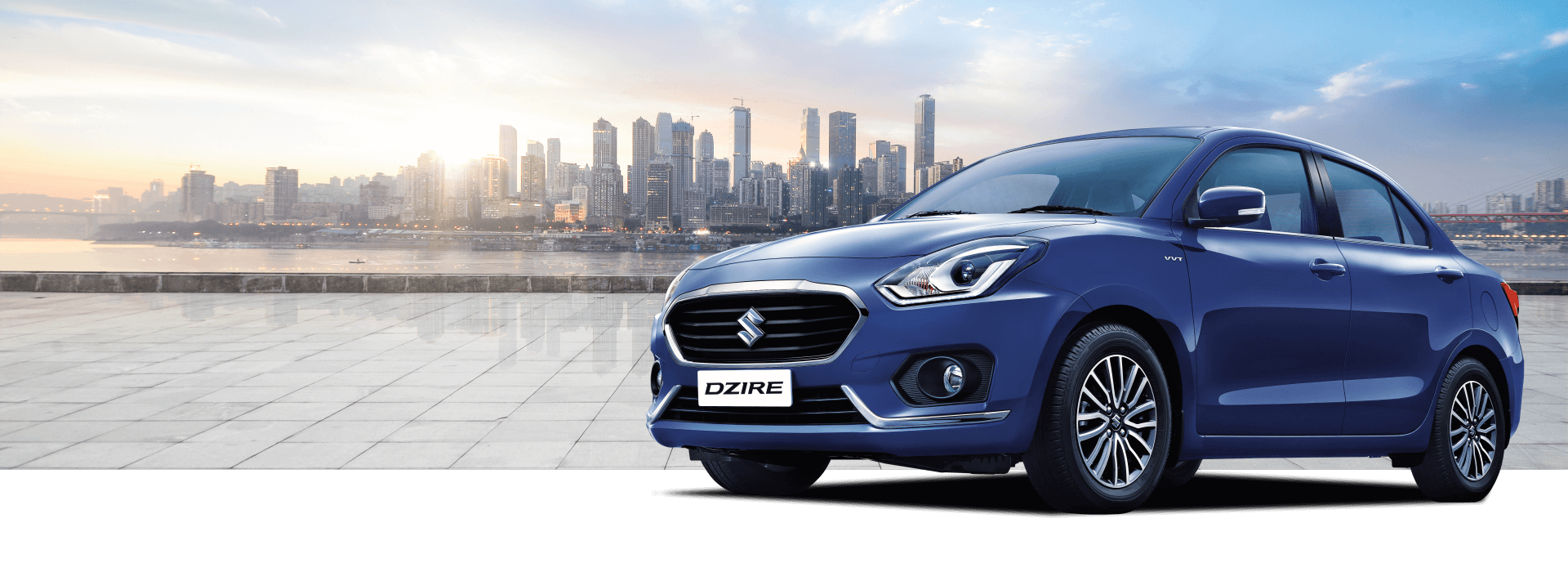
    The compact segment which includes models like the Swift, Dzire, new Wagon R, Baleno, Celerio, Ignis, and the Baleno dubbed Glanza that is supplied to Toyota grew at 18.83 percent at 78,133 units as compared to 65,754 units which were manufactured a year ago. The UV segment which has models like the Vitara Brezza, S-Cross, Ertiga and XL6 was up by 18 percent at 27,187 units as against 23,038 units which rolled off the assembly line in the same month a year ago.

    The mid-size sedan, Ciaz also recorded an uptick of 25 percent in production at 1830 units as compared to 1460 units which were manufactured in the same month a year. That said, the Mini segment and Vans segment witnessed a slump of 20 percent at 24,052 units (30,129 in November 2018) and 42.76 percent at 7882 units (13,768 units in November 2018), respectively. The total production of passenger vehicles grew by 3.67 percent at 139,084 units as compared to 134,149 units in the same month last year. The production of its only commercial vehicle, the Super Carry went up by 53.03 percent at 2750 units as compared to 1797 units in the same month a year ago.

    Maruti Suzuki had witnessed a YoY sales growth of 4.5 percent in October 2019 at 153,435 units as compared to the 146,766 units sold during the same month last year and that has reflected in its November production numbers as the company tends to maintain its inventory level. That said, in November, the domestic sales again dropped by 3.2 percent at 141,400 units last as compared to 146,018 units in the same month last year. This leaves us wondering about how the decline in November sales will reflect on its December production numbers.

  • Maruti Suzuki’s Production Improves Amid Festive Season

    Maruti Suzuki’s Production Improves Amid Festive Season

    The prolonged slowdown has been denting production of some of the leading carmakers in India, but the month of September has shown some signs of improvement. Maruti Suzuki in September 2019 has witnessed a lesser de-growth in sales compared to what it recorded in the previous month and that has reflected in production figures as well. Despite a two-day plant shutdown (September 7 and September 9), Maruti Suzuki has recorded a 17.37 percent decline in production last month which is better than 33.67 percent slump it witnessed in August 2019.

    In September 2019, Maruti Suzuki rolled out 130,264 units of passenger vehicles compared to 157,659 units in the same month a year ago, which is a year-on-year decline of 17.37 percent. However, the company had manufactured 110,214 units in August 2019 compared to 166,161 units in the same month last year, witnessing a YoY production decline of 33.67 percent. The improvement is also possible on the anticipation of better festive season sales. The company has recorded 24.8 percent YoY sales decline selling 1,22,640 units in September 2019 including 112,500 units in the domestic market and 2,952 units of domestic OEM sales whereas 7,188 units were exported. However, in August 2019 it witnessed a year-on-year sales decline of 34 percent.

    Maruti Suzuki is already providing attractive discounts across its product range. The company has also slashed prices by ₹ 5000 on select models like the Alto 800, Alto K10, Swift Diesel, Celerio, Baleno Diesel, Ignis, Dzire Diesel, Tour S Diesel, Vitara Brezza and S-Cross. Interestingly, the compact vehicle segment where almost all products underwent a price cut has seen the least production cut at 4.2 percent with a total of 75,264 units being rolled out as compared to 78,589 units. It includes products like the Swift, Dzire, Ignis, Baleno Celerio and the new WagonR. The company is offering discounts of up to ₹ 1.01 lakh on the Vitara Brezza subcompact SUV and production has also improved in the UV segment. The UV segment witnessed a de-growth of 17.05 percent at 18,435 units while the mini segment (including the recently launched S-Presso) recorded a de-growth of 37.61 percent manufacturing 23,073 units. The company rolled out 2350 units of the Ciaz mid-size sedan, down by 50.41 percent and the Vans segment recorded a de-growth of 26.24 percent at 11,142 units.

  • Maruti Suzuki Expands Its Arena Retail Channel To 450 Showrooms Across India

    Maruti Suzuki Expands Its Arena Retail Channel To 450 Showrooms Across India

    Maruti Suzuki started transforming its dealerships to a more modern and digitally integrated Arena Experience Centres back in 2017. Within two years the company has expanded to a total of 450 Arena showrooms across 323 cities in India. Maruti decided to go premium with separate Nexa dealerships for models like the Baleno, S-Cross, Ignis and the Ciaz, which helped it position the brand as an upmarket carmaker, but there was a concern that required to be addressed. Following the digitalization trend and upgrading its showrooms to suit the liking of new-age customers, the rationale behind Arena was also to make sure that its existing and small car customers don’t feel left out.

    Speaking on the new milestone, Shashank Srivastava, Executive Director (Marketing & Sales), Maruti Suzuki India said, “We launched Maruti Suzuki Arena with a strategy to transform our network and meet the expectations of offering an evolved car buying experience to the young, dynamic and contemporary Indian customers. The two-year milestone is a marquee statement to showcase our commitment towards customer satisfaction. We are delighted to celebrate over 450 Arena showrooms and we look forward to offering experiences with revolutionary design and innovative technology that are at par with global benchmarks.”

    Arena showrooms are equipped with touchscreens to give every detail to the customers before they approach towards the car to get hands on experience. Specifications, features, color options, EMI options, Accessories, etc information are available on the touchscreen panel and customers even get the option of online and offline purchase. Maruti Suzuki is also integrating iCreate configurator in Arena dealerships to offer a 360-degree view of the car. Maruti Suzuki claims that users are also active on the Arena website and it has around 4.74 million visitors every month.

  • Suzuki Two-Wheeler Sales Grow Amidst Auto Industry Slowdown In India

    Suzuki Two-Wheeler Sales Grow Amidst Auto Industry Slowdown In India

    Suzuki Motorcycle India Private Limited (SMIPL) registered monthly sales of 71,631 units in August 2019, with a year-on-year growth of 2.2 percent. The positive growth, even though marginal, is despite the current sales slowdown in India’s automobile industry. For the period of April to August 2019, Suzuki reported cumulative sales of 3,46,018 units, as against 2,98,989 units in the same, period a year ago, registering a growth of 15.72 percent in the mentioned period. Suzuki’s overall sales volumes in the Indian two-wheeler market are modest, but the brand has been able to rake in consistent growth, despite the overall negative sentiment in the market.

    “SMIPL continues the growth momentum, despite the significant short-term impact of floods in the strong Suzuki markets such as Kerala and Maharashtra, and the ongoing industry decline for the 10th month in succession. Weak consumer sentiments have been one of the key reasons for the downward trend in the auto industry. Even under these challenging times, SMIPL has been able to prove its mettle,” said Devashish Handa, Vice President, Suzuki Motorcycle India Private Limited.

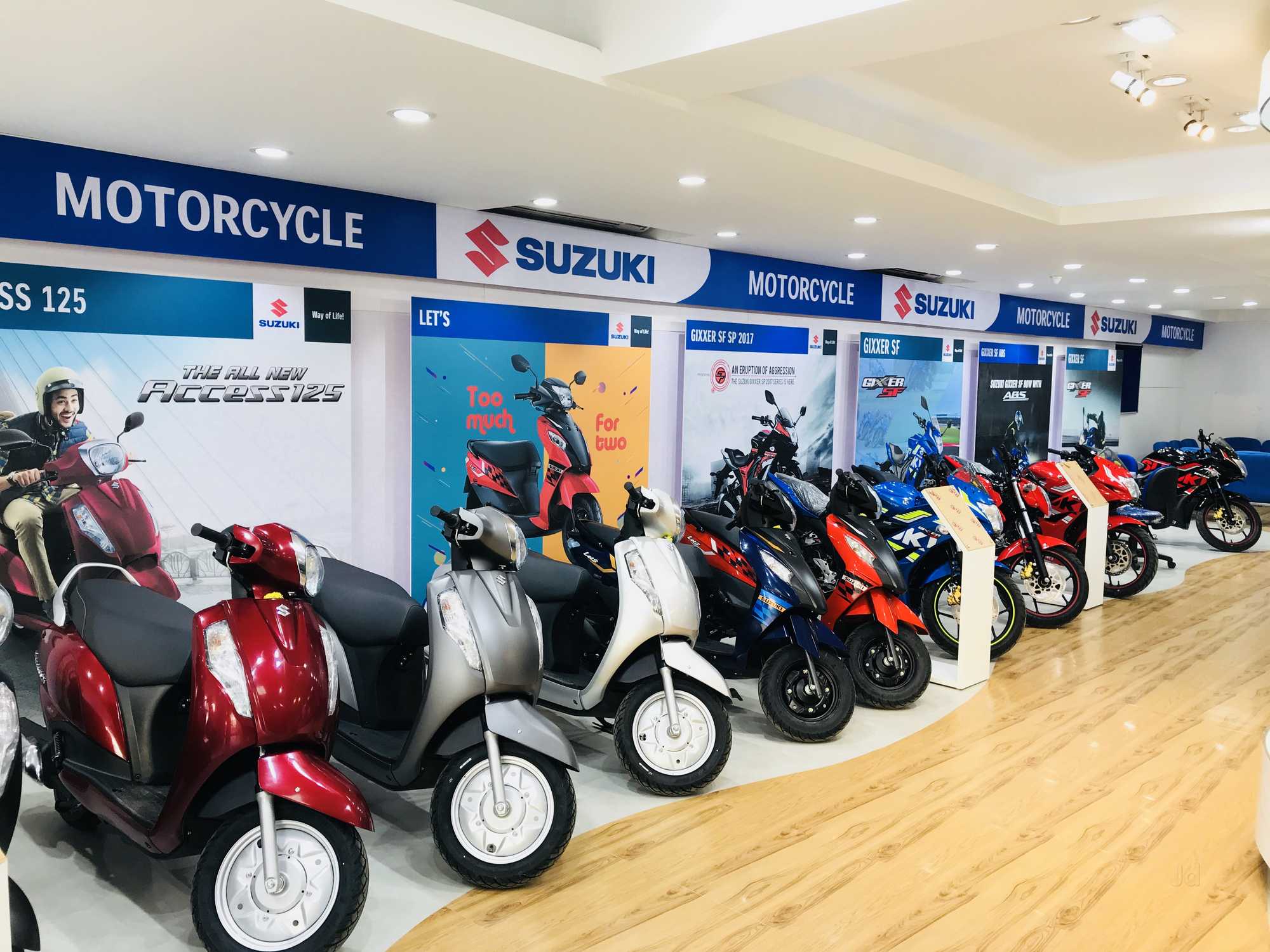
    According to Suzuki, the key reason for the growth of the brand is due to a well-rounded product portfolio and continuous effort to reach out to prospective customers. Suzuki’s most popular two-wheeler is the Suzuki Access 125, which is also the leader in the 125 cc scooter segment. In August 2019, Suzuki introduced a new variant of the Access 125 with drum brakes and alloy wheels. Suzuki also launched a MotoGP edition of the Suzuki Gixxer SF 250 in August 2019.

    The Indian auto industry is in the midst of a crisis after a prolonged slowdown in sales for several months in a row now. Sales growth of Suzuki two-wheelers were flat in August 2019 and monthly volumes sales volumes are far less than the market leaders in the two-wheeler segment. Despite the adverse market sentiment, Suzuki has managed to post positive growth, and that’s a silver lining in the middle of a gloomy market sentiment.

  • Suzuki Access 125 Alloy Wheel Drum Brake Variant Launched

    Suzuki Access 125 Alloy Wheel Drum Brake Variant Launched

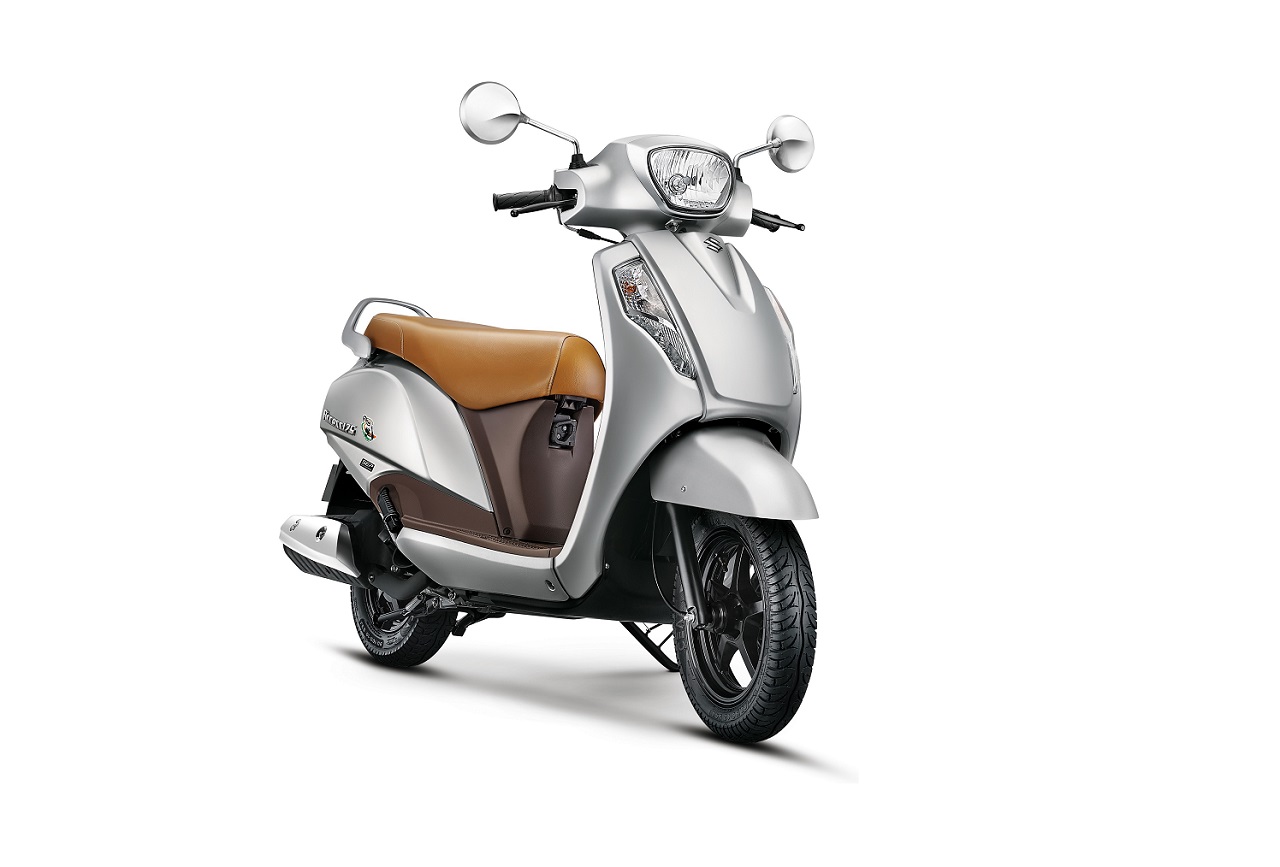
    Suzuki Motorcycle India Private Limited (SMIPL) has introduced a new variant of its bestselling 125 cc scooter, with drum brakes and alloy wheels. According to Suzuki Motorcycle India, there has been a rising demand for the alloy wheel option in scooters, and so the new variant has been introduced. The Suzuki Access 125 with alloy wheels and drum brakes has been priced at ₹ 59,891 (ex-showroom, Delhi). The Suzuki Access 125 Special Edition, with alloy wheels and a front disc brake, is priced at ₹ 61,788 (ex-showroom, Delhi).

    “We are delighted to introduce the new alloy wheel with drum brake variant of Suzuki Access 125. Lately, we have witnessed increased demand for alloy wheel option, and the new variant is launched keeping customer preference in mind. Suzuki Access 125 has proven its mettle and emerged as a preferred family scooter in India. We are hopeful that the new variant will add more customers to the Suzuki family,” said Devashish Handa, Vice President – Sales, Marketing & After Sales, Suzuki Motorcycle India Private Limited.

    There are no other mechanical changes on the drum brake, alloy wheel variant of the Suzuki Access 125. The engine is the same, all-aluminium, four-stroke, single-cylinder 124 cc engine, which produces 8.5 bhp at 7,000 rpm and 10.2 Nm of peak torque at 5,000 rpm. The new variant gets Suzuki’s easy start system, long seat and enlarged floor board for a relaxed riding position. It also comes with combined braking system (CBS). The Suzuki Access 125 also gets central locking and a unique safety shutter for security. The Access 125 drum brake variant is available in four colour options – Pearl Suzuki Deep Blue, Glass Sparkle Black, Metallic Matt Fibroin Gray and Pearl Mirage White.

    The Suzuki Access 125 is Suzuki Motorcycle India’s largest-selling model, accounting for more than 90 per cent of the company’s monthly sales. The Suzuki Access 125 is also the highest-selling scooter in the 125 cc segment. Suzuki also offers the Suzuki Burgman Street 125 in the 125 cc scooter segment.

  • Suzuki, Mazda, Subaru Join Toyota-Softbank Self-Drive Venture

    Suzuki, Mazda, Subaru Join Toyota-Softbank Self-Drive Venture

    Five Japanese automakers including Suzuki Motor Corp and Mazda Motor Corp said they would each invest 2 percent in the on-demand, self-driving car service venture set up by SoftBank Corp and Toyota Motor Corp. Suzuki, Mazda, Subaru Corp, Isuzu Motors Ltd and Toyota’s compact car unit Daihatsu will each invest 57.1 million yen ($530,620) in the venture – dubbed Monet – in return for a 2 percent stake, the companies said in a statement.

    SoftBank and Toyota will each retain their 35% stakes in the company, which is now capitalized at $26.6 million. The latest investors join Honda Motor Co Ltd and Hino Motors Ltd, Toyota’s truck-making operations, which each own 10 percent stakes. Launched in October, the venture plans to roll out on-demand bus and car services in Japan in the next year, and a services platform for electric vehicles in the country as early as 2023 based on Toyota’s boxy “e-palette” multi-purpose vehicle.

    Monet is building up members as it joins the ride-sharing sphere which is dominated by startups such as Uber Technologies Inc, Didi Chuxing and Lyft Inc, as traditional automakers band together to compete in an industry which is placing a growing emphasis on offering vehicle services rather than selling cars to individual drivers.

    Automakers are increasingly joining forces with technology companies as well as each other as they grapple with the massive investment and software expertise required to develop these new services for which demand has yet to be tested. The new investment will see Suzuki, Mazda and Subaru deepen their partnership with Toyota, as they have already agreed to tap the R&D firepower of Japan’s biggest automaker for electric cars and other future vehicle technologies.

  • Maruti Suzuki Cut Production By 18% In May

    Maruti Suzuki Cut Production By 18% In May

    Maruti Suzuki India had cut cut its production by 9.6 per cent to 147,669 units in April this year from 163,368 in April 2018.The company has now announced a further cut in vehicle production by over 18 percent in May, according to a regulatory filing. It is the company’s fourth consecutive month of taking a production cut

    Barring Super Carry, the company reduced production of all other segments, including that of its big selling compact and mini cars last month. MSI slashed production of passenger vehicles, including Alto, Swift and Dzire, by 18.88 percent to 1,48,095 as compared to 1,82,571 units in May 2018.

    The company cut production of mini segment vehicles by 42.29 percent to 23,874 units last month as against 41,373 units in the year-ago period. MSI also slashed production of compact segment cars by 9.54 percent to 84,705 units in May from 93,641 units in corresponding month of last year. Production of utility vehicles also witnessed a decline of 3.21 percent to 24,748 units, as against 25,571 units in May last year.

    Overall passenger vehicle sales in India dropped over 17 percent in April, the worst monthly fall in nearly eight years, as subdued sentiment and the ongoing liquidity crunch hit car sales.

  • Maruti Suzuki Announces Service Camp For Fleet And Taxi Owners

    Maruti Suzuki Announces Service Camp For Fleet And Taxi Owners

    Maruti Suzuki has announced a service camp for Fleet and Taxi owners. The camp has been kick-started across all dealer workshops. The company says that Taxi and Fleet operators have higher running and hence their vehicles demand more frequent attention. The campaign then is targeted towards their categorical requirements. The company has advised fleet and taxi owners to visit their nearest authorized service center to avail complimentary car health check and other exciting benefits.

    A complimentary detailed vehicle health check including AC, Brakes, Clutch, Suspension, Battery will be offered. Additionally, seeing the summer vacations coming up in the month of June and July, this campaign ensures that taxi owners are ready to serve the customers during this vacation period. The company had opened the camp last year too and it saw the participation of over 48,000 participants.

  • Maruti Suzuki Opens 300th Commercial Vehicle Outlet

    Maruti Suzuki Opens 300th Commercial Vehicle Outlet

    Maruti Suzuki India has inaugurated its 300th commercial vehicle showroom in India. The 300th outlet comes in less than three years, and with it Maruti Suzuki’s Commercial retail outlet network is now present in over 230 cities across the country. With the recent addition, the Company’s total sales network has crossed over 2,940 showrooms covering more than 1,860 towns and cities. Currently, the company sells only the Super Carry LCV in the country and it commands a 12 percent market share in India and it’s sold 23,000 units already ever since it was launched. It is offered in two colors Superior White and Superior Silver.

    The Super Carry LCV comes with a loading bay of 3.25 sq.mt and offers a payload capacity of 740 kg. The ground clearance stands at 175mm, while suspension duties are performed by MacPherson struts at the front and a rigid axle with leaf springs at the rear. The wheelbase measures 2110mm and at 4.3 meters, the turning radius similar to that of a hatchback. The LCV gets all the basic features including a light steering wheel, mobile charging socket, dual assist grip, multi-purpose storage spaces, lockable glovebox and bottle holders. An air-conditioner, however, is missing from the ensemble.

    The Super Carry is available with a diesel engine in the country and this 793cc twin-cylinder diesel engine that made its debut on the Celerio last year and comes paired to a 5-speed manual transmission. However, the diesel variant will be discontinued as it would not comply with the upcoming BS6 norms. The company will therefore only offer it with petrol and the CNG variant, which according to the company will be great for its consumers.

    Shashank Srivastava, Executive Director, Maruti Suzuki India said, “The Light Commercial Vehicle segment has been the largest volume contributor in the commercial vehicle industry in the country. Globally, Suzuki Motor Corporation has expertise in this segment and the Super Carry is part of that lineage. Super Carry for India has been developed specifically keeping in mind the unique requirements of the Indian mini truck customer. Starting the commercial segment with Super Carry, we have rapidly rolled out our network to keep pace with the growing demand and business opportunity for light commercial vehicles. With the growth in entrepreneurship and businesses, we see a continuous requirement of Light commercial vehicles for various business applications.”

  • Maruti Suzuki Ertiga Launched With The New 1.5-Litre Diesel

    Maruti Suzuki Ertiga Launched With The New 1.5-Litre Diesel

    Just days after announcing phasing out of diesel engines within a year, Maruti Suzuki has launched the 2019 Ertiga with its in-house developed 1.5-litre, DDiS 225 diesel engine. Maruti is offering the Ertiga 1.5 in three variants- VDI, ZDI and ZDI+ with prices starting at ₹ 9.86 lakh for the base trim and going up to ₹ 11.20 lakh for the top-end variant, all prices ex-showroom, Delhi. The DDiS 225 which will eventually replace the Fiat-sourced 1.3-litre DDiS 200 made its debut in the Maruti Suzuki Ciaz. At present, the 1.3-litre DDiS 200 engine will be offered alongside the new engine.

    It’s a 1498 cc, four-cylinder, turbocharged engine which churns out 94 bhp at 4000 rpm and 225 Nm of peak torque at 1500 – 2500 rpm. In fact, the DDiS 225 nomenclature alludes to the maximum torque the new engine puts out. Maruti has used Dual-Mass flywheel as a linkage between the engine and the transmission which helps to channelize the torque evenly, in-turn adding to the refinement. This engine in the Ertiga is mated only to a six-speed manual gearbox as standard and an automatic transmission is not on option as of now.

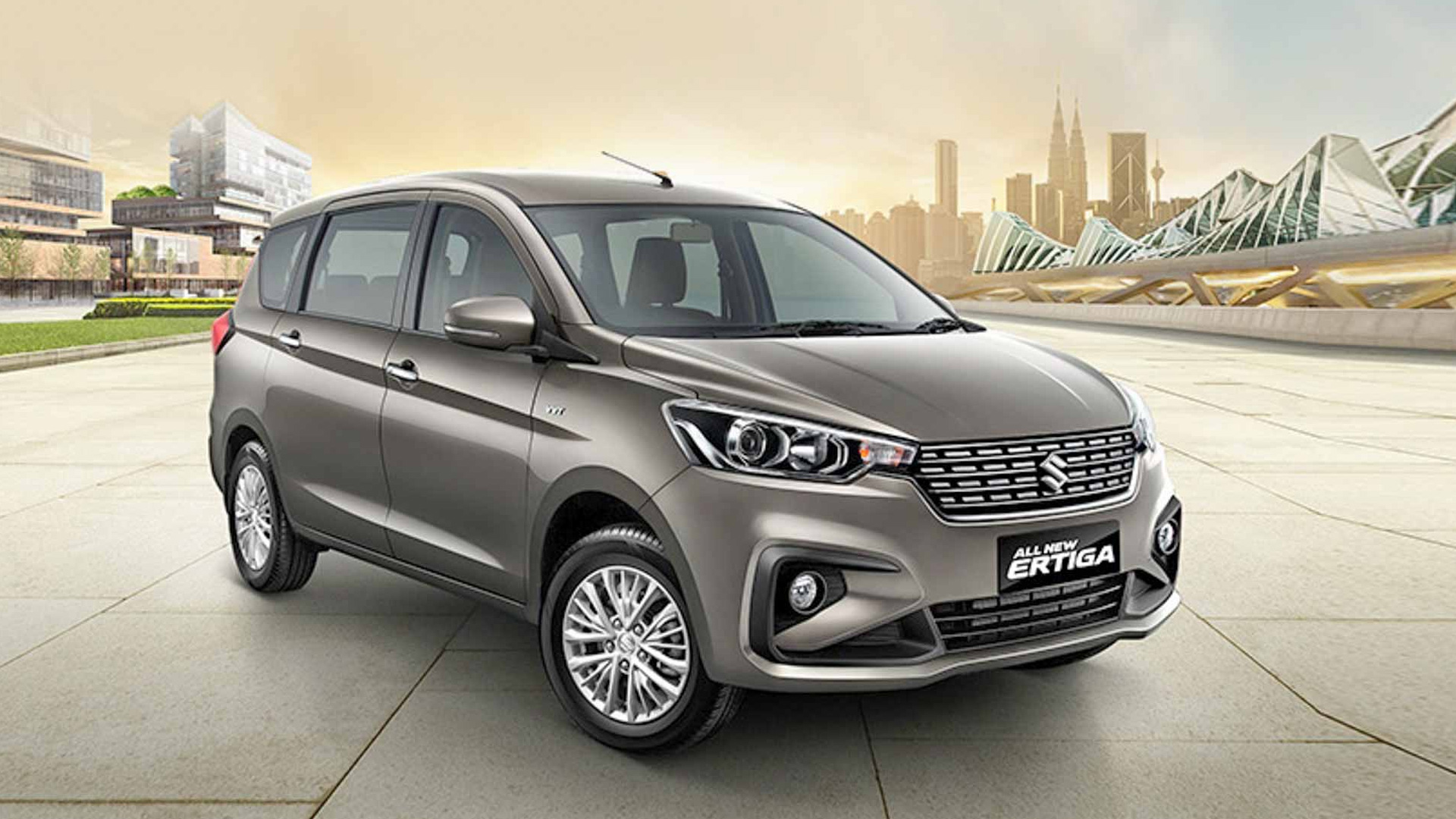
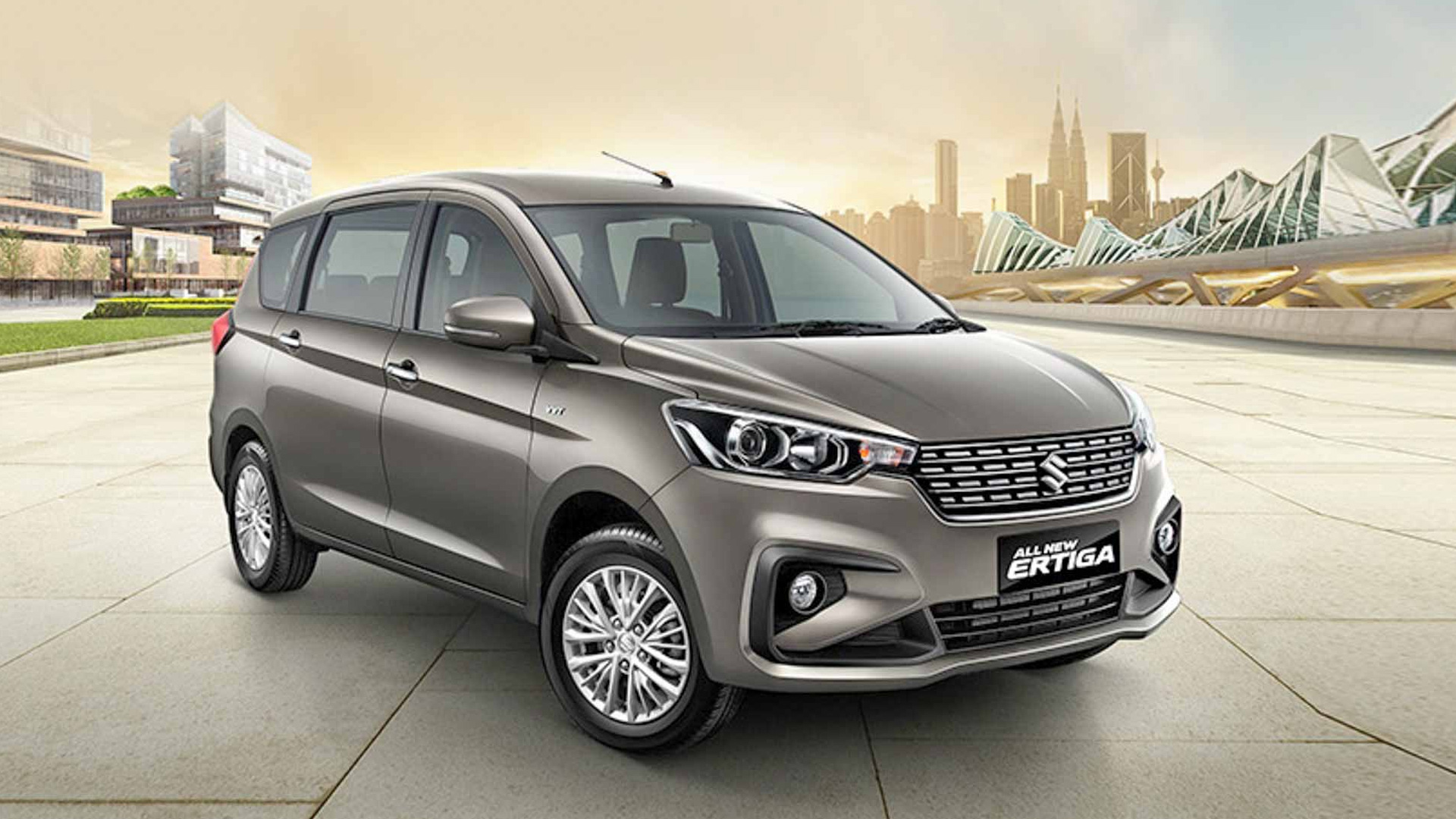
    The Maruti Suzuki Ertiga is India’s best-selling MPV and commands a market share of 39 per cent in its segment.

    The second-generation Maruti Suzuki Ertiga was launched last year in November and has been India’s best-selling MPV since then. It commands a market share of 39 per cent in the segment and Maruti Suzuki has sold over 40,000 units since its launch which is a year-on-year growth of a whopping 150 per cent in the November-April period.

    Maruti Suzuki in its last quarter financial result announcement had said that it will phase-out all its diesel models by April 2020 when the BS6 norms will kick-in, pertaining to the high transition cost. However, the company’s Chairman R C Bhargava did mention that the 1.5-litre engine may have future in bigger models if the market demand is there. After the Ertiga, we also expect the DDiS 225 engine to make its way in the S-Cross which is Maruti’s only model above four metres, yet to get the new 1.5-litre DDiS 225 diesel engine.

  • Maruti Suzuki Celerio And Celerio X Updated With New Safety Features

    Maruti Suzuki Celerio And Celerio X Updated With New Safety Features

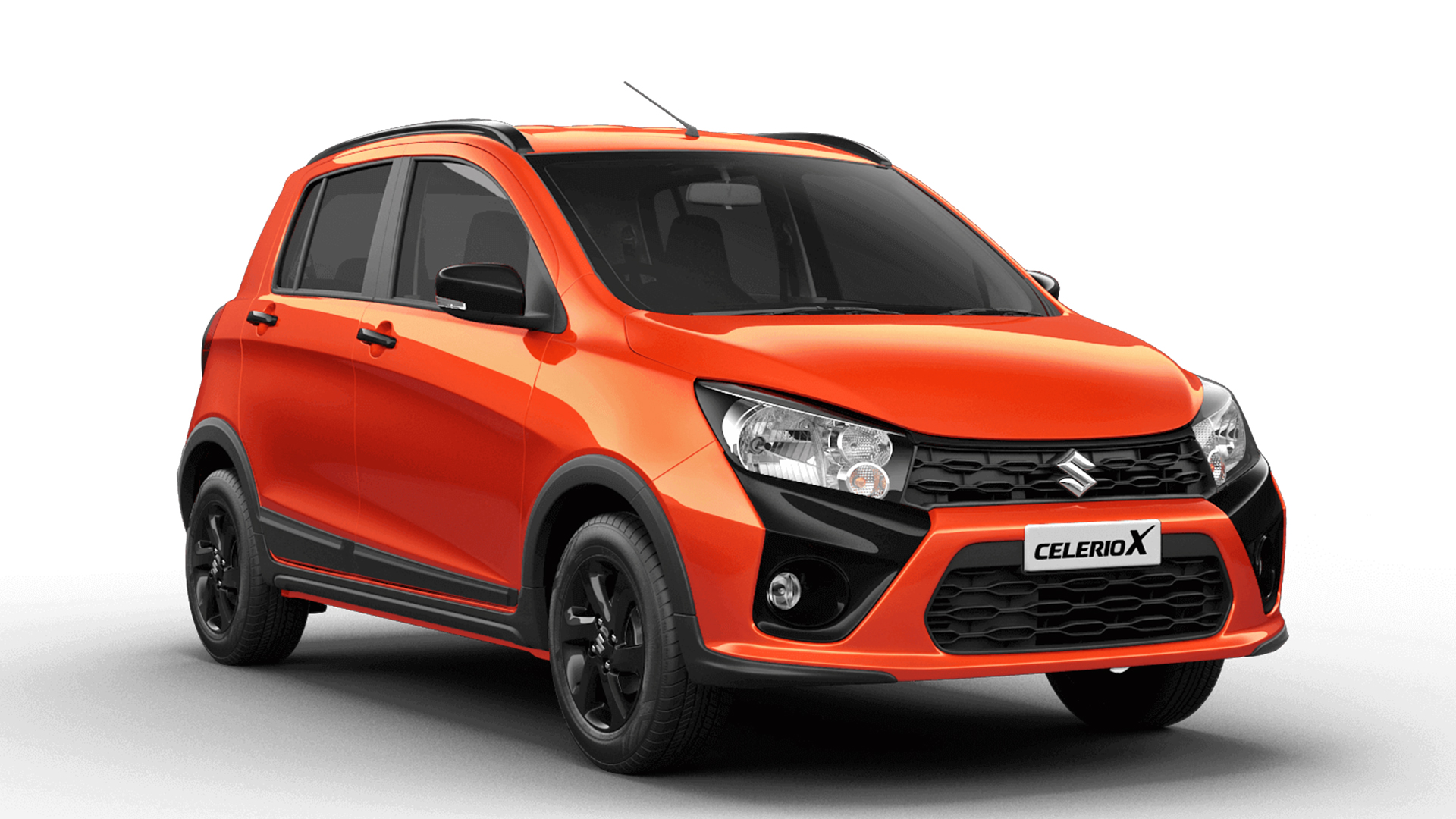
    The Maruti Suzuki Celerio and the Celerio X hatchbacks are the latest offerings from the manufacturer to get additional safety kit to meet the upcoming safety norms. As part of the upgrade, the Celerio and its cross-hatch sibling now get ABS with EBD, speed alert system, driver and passenger seatbelt reminder, rear parking sensors as standard across all variants. The driver side airbag was already a standard feature on the offering. With the additional kit, the Celerio range has a slight bump in prices as well and now starts at ₹ 4.31 lakh for the base LXi trim. The Celerio X, meanwhile, starts at ₹ 4.80 lakheeco.

    Apart from the new safety features, the Maruti Suzuki Celerio and the Celerio X get no other changes, both visually and on the feature front. Power too, comes from the same 1.0-litre K-Series, three-cylinder, petrol motor tuned for 67 bhp and 90 Nm of peak torque. The motor is paired with a 5-speed manual gearbox with the AMT unit available as optional. The Celerio also comes with a factory-fitted CNG kit that is offered on the mid-trim manual version.

    The updated Celerio joins the Eeco in the latest set of Maruti Suzuki cars to get the mandatory safety features. More recently, the automaker announced the availability of the new Ciaz sedan powered by the 1.5-litre diesel engine. The new motor replaces the tried and tested 1.3-litre Fiat-sourced Multijet engine that powered nearly all of Maruti’s diesel range for over a decade. The new 1.5-litre oil burner has been developed in-house by Suzuki and is tuned to churn out 94 bhp and 225 Nm of peak torque. The motor is paired with a 6-speed gearbox and returns an ARAI claimed fuel efficiency figure of 26.82 kmpl, one of the best in the segment.

  • Maruti Suzuki Sales Grow in 2019,  But March Sales Hit Weak

    Maruti Suzuki Sales Grow in 2019, But March Sales Hit Weak

    Maruti Suzuki has registered the highest ever total sales in FY 2018-19 at 1,862,449 units, a growth of 4.7 per cent, compared to the 1,779,574 units sold in 2017-18. The company’s domestic sales for FY 2018-19 reached 1,753,700 units, also the highest ever, compared to the 1,653,500 units sold in 2017-18. In fact, this is the 7th straight year of growth in domestic sales for Maruti Suzuki India. But, in the month of March 2019, the company’s total sales went down by 1.6 per cent in the last month of the Financial Year 2019.

    Last month the company sold 158,076 vehicles, including domestic sales and export, compared to the 160,598 units that were sold in March 2018. The company’s total sales in India alone reached 147,613 units in March 2019, registering a marginal de-growth of 0.7 per cent, against the 148,582 vehicles sold during the same month last year. Exports, on the other hand, took a massive hit with a decline of almost 13 per cent with 10,463 units, compared to the 12,016 units exported in March 2018.

    In March, the domestic market, it was the company’s Mini cars segment, which includes the Alto range and the pre-facelift WagonR that took the biggest hit, a drop of 55.1 per cent by selling 16,826 units, against the 37,511 units sold in March 2018. Same was the case for the company’s mid-size sedan, Ciaz, which saw a decline of 15 per cent by selling just 3,672 units in March 2019, compared to the 4,321 units sold during the same month last year.

    In contrast, the compact segment, which includes the new WagonR, Swift, Dzire, Baleno, and Ignis, saw a considerable growth of almost 20 per cent with cumulative sales of 82,532 units. The utility vehicles and Vans segment also saw substantial growth of 12.3 per cent (25,563 units) and 20.1 per cent (22,764) respectively. Similarly, in the commercial vehicle space, the sale of the Super Carry LCV also went up by 82.9 per cent selling 2,582 units last month, compared to the 1,412 units sold in March 2018.

  • Suzuki Access 125 Drum Brake With CBS Launched

    Suzuki Access 125 Drum Brake With CBS Launched

    Suzuki Motorcycle India has introduced the Combined Braking System (CBS) on the drum brake version of Access 125 scooter. The Suzuki Access 125 CBS on the drum brake version is priced at ₹ 56,667, about ₹ 500 more than the non-CBS model and is now a standard feature on the scooter in compliance with the upcoming safety norms. The new regulations mandate CBS on all two-wheelers below 125 cc and ABS for everything with a larger displacement. The deadline for the norms is March 31, 2019. The Access 125 already gets CBS on the disc brake variant, which was introduced last year and has received positive feedback from the customers, according to the company.

    Commenting on the development, Suzuki Motorcycle India – Vice President, Sales, Marketing & After-Sales, Devashish Handa said, “It gives us immense pleasure to introduce the CBS equipped Access125 drum brake variant. Suzuki Motorcycle is committed to improving and innovating its products for better riding experience and introduction of CBS to Access125 drum variant is a step further to fulfilling this promise. Suzuki now has standardized its complete range of scooters with this safety feature. We are confident that with the new enhancements, we will be able further add to the riding experience provided by our products.”

    The Suzuki Access 125 drum brake CBS variant will enable riders to operate the front and rear brakes by only pressing left brake lever. CBS helps reduce the braking distance with a good balance between front and rear brake forces. Apart from CBS, the Access 125 gets no changes to the styling or powertrain. Power comes from the 124 cc single-cylinder air-cooled engine tuned for 8.5 bhp and 10.2 Nm of peak torque. The motor is paired with an automatic transmission.

    The retro styling on the Access remains unchanged, and the scooter continues to use telescopic forks up front and hydraulic shock absorbers at the rear. The Access can be had with a front disc brake as an option, with 130 mm drum brakes available at either end as standard. The Suzuki Access continues to be one of the best-selling 125 cc scooters despite competition from the Honda Activa 125, Aprilia SR 125, Vespa LX, and the TVS NTorq among others.

  • Suzuki Patents Reveal Radar-Based Anti-Collision System

    Suzuki Patents Reveal Radar-Based Anti-Collision System

    Suzuki may be the next two-wheeler manufacturer which is likely working on advanced rider assist systems (ARAS) which could be based on radar technology. Images filed in a recent patent in Japan indicates that Suzuki is looking to install radar reflectors at strategic points on their motorcycles to make them more visible to other vehicles – vehicles which already have collision sensors installed on them. Collision sensors and advanced driver assist systems (ADAS) are the latest technologies to have been introduced in building safer cars, warning drivers of potential collisions and even triggering evasive measures like braking and deceleration.

    Motorcycles, and indeed, any two-wheeler on the road isn’t always visible to other motorists, and being in the blind spot of a car driver is not always a good sensation, when you realise that the car may suddenly change lanes or brake without noticing a motorcycle in the vicinity. And if sensors can warn other motorists about the presence of a motorcycle, then it’s only good news, because it increases a motorcycle’s visibility on the road to other motorists. That is precisely what the new Suzuki patents seem to be doing. The radar reflectors in the patent images will work in tandem with advanced automobiles, like self-driven cars, who can sense the presence of a motorcycle. Now, these don’t seem to be designed to make the motorcycle brake or take any evasive action sensing a potential collision, but even if it’s just warning other cars of the motorcycle’s presence, it may seem like a good idea to have such technology installed.

    Radar-based safety technology isn’t all-new. Bosch has been known to be working on such ARAS for some time now, and motorcycle brands like KTM and BMW Motorrad have been testing such technology, and possibly radar-based motorcycle technology will debut sometime later this year, possibly at the EICMA show in Milan. While the Suzuki patents may not be hi-tech radar-based systems which trigger the motorcycle’s electronic safety systems, like braking, cruise control and deceleration, these do go a long way in making motorcycles more visible on the road. And that’s a better thing to have than relying entirely on the rider’s reflexes when a car does not sense the presence of a motorcycle in its vicinity.

    The radar reflectors seem to be still in concept stage, but the images seem to imply that these reflectors may be available as a bolt on system; so as more and more cars come equipped with advanced driver assist systems, it may be an easy retrofit, even on older or current motorcycles. And yes, these reflectors can be a good pre-emptive safety measure even for human error on the part of car drivers – who may be distracted by a passenger, or even a cellphone.