Retail News CRM

Tag: Teleco

  • CTG, Tata Communications form IoT alliance

    CTG, Tata Communications form IoT alliance

    China Telecom Global has entered a collaboration with India-based Tata Communications to launch a global internet of things service for the Chinese market.

    Under the collaboration, the two companies will develop IoT-based services targeting multiple industries, including consumer and industrial electronics, manufacturing, automotive, transport, and logistics.

    China Telecom Global will gain access to the Tata Communications MOVE service, which seeks to leverage the company’s relationships with more than 600 mobile operators worldwide to enable global connectivity for new IoT-enabled devices.

    Meanwhile China Telecom Global will provide Tata with connectivity for Hong Kong, mainland China, and Macau as well as access to the Chinese operator’s 4G network resources.

    For specific vertical industries including automotive, China Telecom Global will also provide Tata with IoT solutions that are compliant with Chinese market requirements and regulatory requirements.

    “We want to grab our share of the rapidly growing Chinese IoT market. China Telecom Global is working closely with Tata Communications to pave the way for innovative and advanced IoT solutions across industries,” China Telecom Global CEO Deng Xiaofeng commented.

    “We’re able to offer our customers the borderless, reliable and affordable network connectivity they need for their different IoT devices. As the volume of connected ‘things’ continues to grow, we are able to give our customers complete visibility and control to make the management of hundreds of thousands of IoT devices easier on a global scale.”
  • Executives blind to disruptive nature of 5G

    Executives blind to disruptive nature of 5G

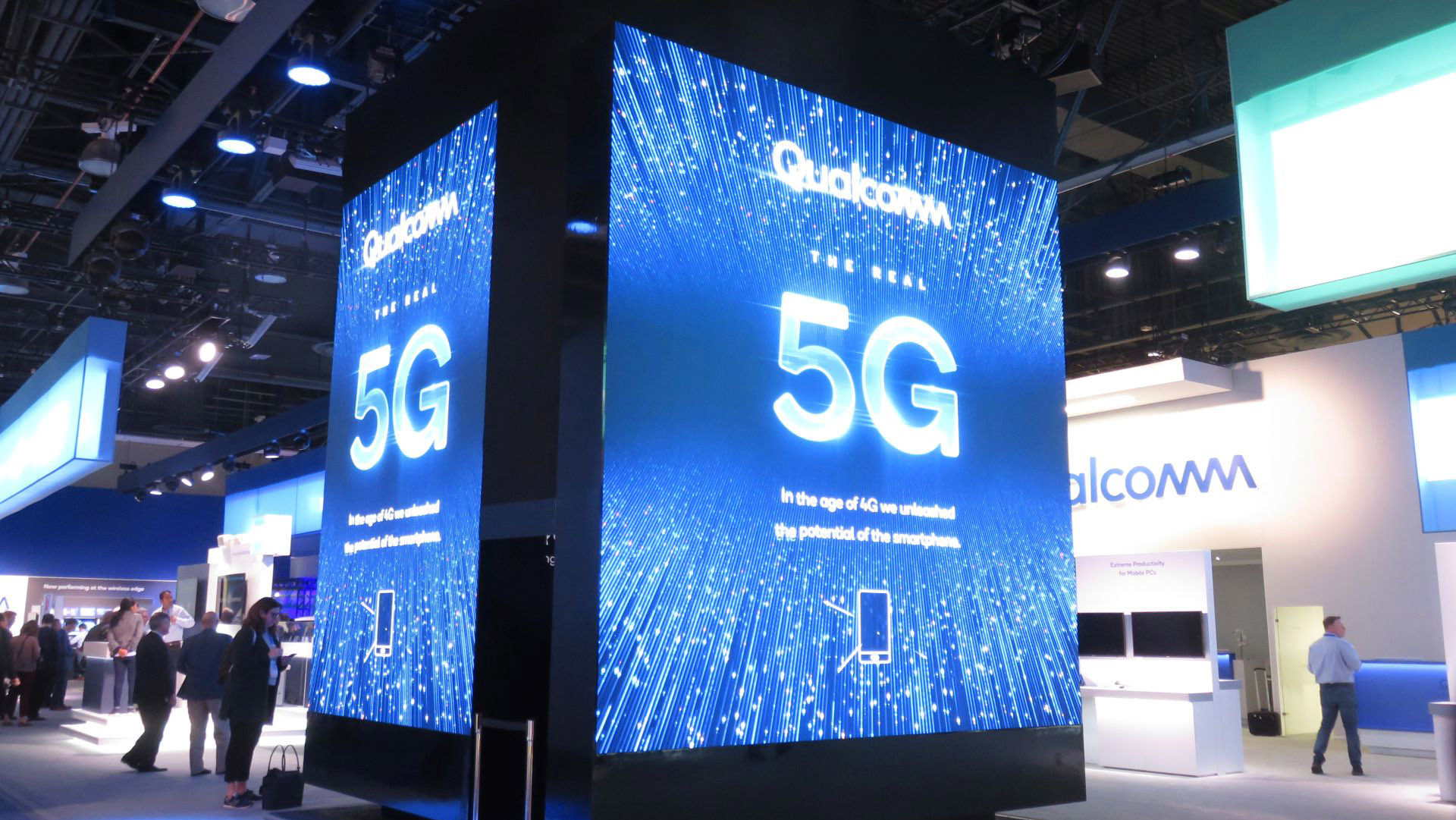
    Accenture says business and technology executives underestimate the disruptive potential of 5G technology. Fifty-three percent of respondents in a global survey of 1,800 executives in 10 countries believe there are “very few” things that 5G will enable them to do that they cannot already do with 4G networks. Only 37% expect 5G to bring a “revolutionary” shift in speed and capacity.

    Competitive advantage

    5G is believed to have important competitive implications. Up to 60% of surveyed executives believe 5G will cover nearly all the population by the year 2022, and 70% believe that 5G applications will give them a competitive edge with customers. Speed will be a key advantage according to 46% of respondents while 42% cite its capacity.

    “The reality is that 5G will bring a major wave of connectivity that opens new dimensions for innovation and commercial and economic development,” said George Nazi, Accenture’s Network practice global lead. “Breakthroughs in three-dimensional video, immersive television, autonomous cars, and smart-city infrastructure will unleash opportunities that are difficult to imagine today but will soon be transformative. Telecommunications companies will play a pivotal role in bringing these prospects to light.”

    Role of carriers

    Up to 72% of executives said they need help to imagine future possibilities and use cases of 5G. These see telcos as just the right partner on their 5G journeys, cited by 40% of respondents. Hampering this partnership is the recognition by 60% of respondents who cite telcos’ lack of industry knowledge as a key challenge.

    Other barriers include the need for upfront investment (36%), security (32%) and employee buy-in (29%). While 78% of executives believe that using 5G in the workplace will make their business more secure, 32% have concerns about the security of the new connectivity standard.

    Anders Lindblad, Accenture’s Communications & Media industry lead for Europe, said, “Despite the knowledge gap, there is excitement among business leaders about the value that 5G can bring to enterprises. This value is currently trapped within the perceived risks and uncertainty around 5G, which can be unlocked by organizations that understand customer needs, can overcome barriers to adoption and can drive collaboration among service providers.”

  • Bangladesh’s CityCell has spectrum reinstated

    Bangladesh’s CityCell has spectrum reinstated

    Cash-strapped Bangladeshi operator CityCell has resumed operations after having its spectrum temporarily reinstated by a Supreme Court ruling.

    The Bangladesh Telecommunication Regulatory Commission (BTRC) revoked CityCell’s spectrum last month for failing to pay its spectrum renewal, license and associated fees.

    But the court has asked the government to restore CityCell’s spectrum and allow it to continue operations for the time being.

    If CityCell fails to pay 1 billion taka ($12.7 million) to BTRC by November 19, the regulator will have the authority to revoke the spectrum again, the court order states.

    CityCell has been operating since 1993 but has a low market share and revenue base. The company earned just 1.39 billion taka in revenue during the 2014-15 financial year. The BTRC has calculated that CityCell owes 4.77 billion taka in unpaid fees.

    The operator is 44.5% owned by Singtel, 37.9% owned by Pacific Motors and 17.5% owned by Far East Telecom.

  • China Mobile joins OpenDaylight Project

    China Mobile joins OpenDaylight Project

    The OpenDaylight Project, an open source platform for programmable, software-defined networks, has announced that China Mobile has joined the project at the Silver Level.

    China Mobile joins Tencent and Alibaba, also members of OpenDaylight, as part of a growing number of Chinese internet players and telecoms operators that actively participate in open networking projects and leverage open source SDN to support their extreme scalability demands.

    The operator wants to standardize and also customize their environments to improve automation. OpenDaylight provides a means for China Mobile to build on well-tested, foundational capabilities, which would otherwise take far too long for them to develop entirely in-house, said Wang Jinzhu, project manager of China Mobile Research Institute.

    Recently, China Mobile released its commercial OpenDaylight-based data center SDN controller named “AERO,” currently in trial.

    Additionally, China Mobile has also initiated the “SPTN” project within OpenDaylight, which evolves the packet transport network (PTN) toward SDN.

    As early adopters of OpenDaylight, China Mobile is leveraging the platform with OpenStack to deploy enterprise service offerings under its NovoDC program, which offers both a telecom infrastructure as well as virtual public or private cloud services.

    NovoDC has helped China Mobile to gain significant data center opex savings and can now deliver new services in minutes rather than weeks.

    The OpenDaylight Project meanwhile also announced the launch of its “Powered by ODL” program, which signals high technical standards and quality expectations for commercial products or services based on the platform.

    With increasing numbers of solution providers incorporating OpenDaylight code into downstream commercial offerings, the program is created to help end users identify quality OpenDaylight-based solutions while supporting vendors with their go-to-market strategies.

    Any individual or organization offering an OpenDaylight-based product or service may apply for the trademark. Products that are “Powered by OpenDaylight” must include specific core components from a recent release of the OpenDaylight code base, as approved by the OpenDaylight’s board of directors.

  • Global telcos eye stake in Vietnam’s Mobifone

    Global telcos eye stake in Vietnam’s Mobifone

    A number of international telecoms operators have reportedly expressed an interest in participating in the privatization of Vietnamese state-owned operator Mobifone.

    Companies including Norway’s Telenor, Sweden’s Comviq and Australia’s Telstra have shown interest in acquiring stakes in the company.

    Mobifone has an estimated brand value of $539 million. Plans for the privatization of the company have been in consideration since 2005 but the process has been repeatedly delayed.

    Now the government is pushing to complete the process in 2016-2017 as part of a push to hasten the privatization of state-owned enterprises.

    Australia’s Telstra could be a key partner for the operator. Telstra had previously been involved in the Vietnamese market as part of a partnership with Viet Nam Post and Communications, but exited the market in 2003. Now the operator is looking to return to the market by participating in the privatization of Vietnam’s telecom enterprises.

    Comviq is meanwhile a former partner to Mobifone and so it also has history in the market, while Telenor has been aggressively pursuing Asian expansion.

  • 9 in 10 telcos go Hadoop to fight revenue fraud

    9 in 10 telcos go Hadoop to fight revenue fraud

    Telecoms revenue fraud is a primary driver for increased Apache Hadoop adoption, according to a recent poll of telco and enterprise users by Cloudera and Argyle Data.

    Communication service providers lose around $38 billion to fraud every year.

    Conducted during a recent webinar to introduce Cloudera and Argyle Data’s joint fraud prevention platform, the survey indicated that over 90% of attending organizations already use or intend to use Hadoop for fraud prevention.

    About one-third (34%) of attendees said they already have Hadoop in place and may use the platform in their fraud prevention efforts.

    “Fraud prevention is a textbook use case for Hadoop-based analytics because the ROI is immediately visible,” said Vijay Raja, solutions marketing manager at Cloudera. “Real-time machine learning relies on large amounts of data to detect sophisticated revenue threats, making Cloudera the ideal platform on which to run Argyle Data’s threat analytics.”

    The platform enables mobile operators to reduce loss by detecting previously undiscoverable revenue threats, promising to deliver up to 350% improvement over rules-based offerings. The platform uses a native Hadoop architecture, combined with real-time data ingestion, analytics, and machine learning.

    “Unsupervised machine learning delivers everything telco fraud analysts need to be efficient at and deliver immediate ROI,” said Arshak Navruzyan, vice president of product management at Argyle Data.  “The Cloudera-Argyle Data solution interoperates seamlessly with all participants in the Hadoop cluster.