Retail News CRM

Tag: telkomsel

  • Telkomsel’s LTE footprint reaches 100 cities

    Telkomsel’s LTE footprint reaches 100 cities

    The company has to date deployed more than 4,500 base stations in Sumatra, Java, Kalimantan, Sulawesi, Bali, Nusa Tenggara, and Papua.

    According to the operator, 4G subscriber take up is strong. The company has around 5 million 4G subscribers, and is aiming for 12 million by the end of the year.

    The latest city to be covered by Telkomsel’s LTE rollout is Ambon in the Maluku province. The company has established 29 base stations in the seaport city, and aims to roll out 373 in the Maluku region.

    Telkomsel’s current focus is on expanding its LTE network in the ‘buffer zones’ of Jakarta and Bandung, the company revealed.

    Telkomsel was Indonesia’s first mobile operator to launch LTE services in late 2014, using the 900-MHz band. The company – along with its four major rivals – also launched LTE over the 1800-MHz band in July last year.

  • Indonesia’s Telkomsel collaborates with Trikomsel for handset bundling deals

    Indonesia’s Telkomsel collaborates with Trikomsel for handset bundling deals

    The largest mobile operator in Indonesia, PT Telekomunikasi Selular (Telkomsel), unit of state-run telecom operator PT Telkom Indonesia Tbk (TLKM), has joined hands with gadget store operator PT Trikomsel Oke Tbk (TRIO) to launch a device bundling program to drive the growth in smartphone users, the company said in a statement.

    The device bundling program includes, Lenovo Vibe X2, Xiaomi Redmi 2 and Xiaomi Mi 4i with cash back and data package promotion. In addition. Telkomsel also launched device bundling program for BlackBerry Classic, Samsung Galaxy S6 edge and LG G4 to attract high value customers.

    Since December 2014, Telkomsel has successfully rolled-out 4G LTE services to support the data services in Jakarta, Bali, Bandung, Surabaya and Medan using the 900Mhz spectrum. The operators are in the midst of rearranging their 1800Mhz spectrum and expected to be completed by the end of the year.

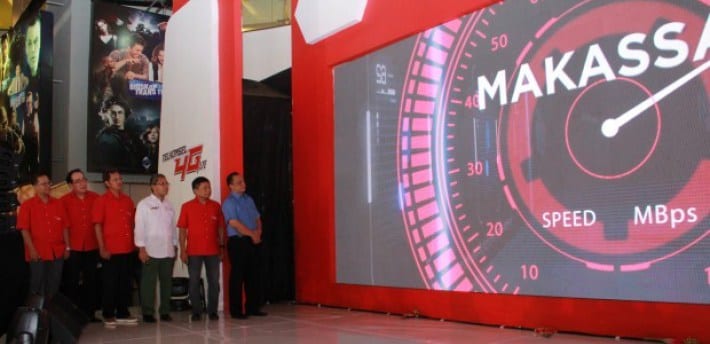
    To signify the completion of spectrum rearrangement in areas outside Java, Telkomsel launched 4G LTE services using 1800Mhz spectrum in Makassar and Lombok in July 2015. To date, the operator has more than 1,000 4G LTE BTS serving the seven key cities.

    In the first half of 2015, Telkom as a group has spent Rp11.9 trillion ($888.06 million) in capital expenditure (capex), of which Rp5.8 trillion was for Telkomsel and the remaining Rp6.1 trillion was for Telkom and other subsidiaries.

    Telkom’s capex was mainly utilised for deploying access and backbone infrastructure to support the broadband services, while Telkomsel’s capex was mainly utilized for radio access network. Other subsidiaries’ capex was utilised for towera, property, data center, and project international cable systems.

    In first half of the year, Telkomsel reported that net profit rose 14.7 per cent from previous year (Rp8.81 trillion to Rp10.11 trillion). While the company revenues rose 13 per cent from Rp31.33 trillion to Rp35.40 trillion in first semester of 2015.

    Revenue from prepaid customers accounted for 84.9 per cent with Rp30.04 trillion of Telkomsel’s total revenue mainly driven by prepaid subscriber base, high increase in data usage and data revenue as well as continued growth in voice and SMS revenues.

    Postpaid revenue increased by 13.5 per cent to Rp2.78 trillion mainly driven by the increase in the postpaid customer base which grew by 16.6 per cent to 3 million subscribers. Revenue from postpaid customers contributed 7.9 per cent to the total revenue.

    Telkomsel continued aggressive network deployment with 11,495 new BTS installed in an effort to maintain leading network supply to strengthen mobile broadband experience. Around 90 per cent of new BTSs were 3G/4G BTS.
  • Indonesians pressure the country’s largest telco to lower data costs

    Indonesians pressure the country’s largest telco to lower data costs

    Indonesians are pissed off about Telkomsel’s data package pricing policy. While they’re considered expensive for Jakartans, Telkomsel – Indonesia’s state-owned and largest mobile carrier – charges up to twice as much for the same amount of data if you happen to live in a bad “zone.”

    To protest this, activist Djali Gafur started a petition called “Internet for the people“. It has already accumulated over 10,000 signatures.

    Telkomsel divides the archipelago into 12 districts. Jakarta, as well as most parts of Java and the surrounding islands are in Zone 1, and tariffs actually go up as the areas get more remote. West Papua’s Raja Ampat district, for example, is in Zone 12.

    “We in Zone 12 don’t have a choice,” says Gafur in the petition on Change.org. It’s true because Telkomsel is often the sole carrier in remote areas. The others don’t even bother because the infrastructure costs outweigh the opportunities.

    Gafur demands that people in his area get access to the internet for an equal price, so that they too can participate in things like education, tourism, government, and creative industries online. “If [the connection] is a little slow, that doesn’t even matter so much,” he adds.

    Indonesia’s ICT Minister Rudiantara has since responded to the petition, and met with Telkomsel’s president director to discuss the matter, according to local media.

    Rudiantara said that the government is looking into subsidizing Telkomsel in areas where it is the only operator on the ground, supported by the Universal Service Obligation (USO) fund.

    The USO in its current form has been in place since 2005. Mobile phone carriers operating in Indonesia have to contribute 1.25 percent of their gross revenue into a shared pool, which non-profit government agencyBP3TI deploys toward connectivity programs in remote areas.

    Apparently, BP3TI is not quick enough to keep up with the demand for affordable mobile internet connectivity in the remote parts of Indonesia.

    Indonesia currently has no regulation on data tariffs, but according to Rudiantara, discussions on this will take place in 2016. In order to allocate funds from the USO to support Telkomsel in said remote zones, USO’s structure has to be changed. That will take time. For now, it’s up to Telkomsel to respond to the increasing frustration from people in zone 12.

  • Huawei, Telkomsel trial Wi-Fi calling and VoLTE based on NFV

    Huawei, Telkomsel trial Wi-Fi calling and VoLTE based on NFV

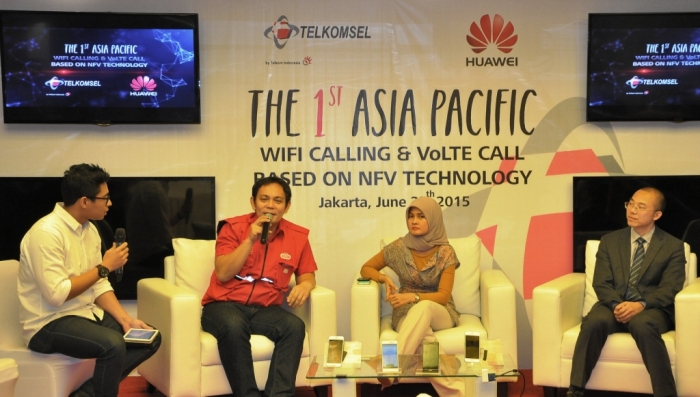
    Huawei Technologies said Telkomsel, a telecom operator in Indonesia, has demonstrated its 4G convergent communication service trial for Wi-Fi calling and VoLTE (Voice over LTE) based on NFV technology (Network Function Virtualization) in Jakarta.

    Wi-Fi calling and VoLTE will enable Indonesia’s 280 million mobile users to experiences HD voice and HD video within the shortest connecting time. When a subscriber switches between 4G and Wi-Fi environment, the call will not be interrupted.

    “This Wi-Fi Calling and VoLTE trial is part of our efforts to provide better service quality, and will also create an exciting new experience for customers in using our services,” said Ivan Permana, vice president, Technology & System, Telkomsel.
    Telkomsel in pact with Huawei
    Telkomsel, the #1 telecom operator, has more than 141 million subscribers Indonesia. Telkomsel has built more than 95,000 BTSs. Telkomsel’s broadband now reaches 300 cities. Telkomsel operates a 24-hour call center and more than 400 service centers GraPARI across Indonesia.

    Image: Tommy G Tanjung, engineer of Technology Strategy, Telkomsel, Ivan Cahya Permana, VP of Technology and System, Adita Irawati, VP of Corporate Communications, and Zhang Qin, head of Core Network Marketing, Huawei

  • Djarum Group Takes Control of iForte Shares

    Djarum Group Takes Control of iForte Shares

    Sarana Menara Nusantara, a listed telecommunications tower operator controlled by Djarum, has acquired 100 percent of iForte Solusi Infotek, a telecommunication infrastructure company affiliated to Saratoga Group.

    Sarana Menara took over iForte through its subsidiary Profesional Telekomunikasi Indonesia.

    With the acquisition, Sarana Menara will also take over all of iForte’s bond debts and warrants.

    Sarana Menara hopes the transaction will help the company achieve its target to become the biggest telecommunications tower operator in Indonesia.

    “We hope the transaction can create a synergy that would speed up the company’s business growth,” Sarana Menara Nusantara corporate secretary Arif Pradana said in a filing to the Jakarta Stock Exchange last week.

    The transaction will make up less than 20 percent of Sarana’s total equity, recorded at Rp 4.67 trillion ($354 million) at the end of 2014.

    IForte, established in 2002, started its business as an information technology company.

    IForte was taken over by Saratoga in 2010 and has since transformed into a telecommunication infrastructure company with a fiber optic network presence and a Micro-BTS license for the Greater Jakarta area.

    Meanwhile, 33 percent of Sarana Menara is controlled by Djarum through subsidiaries Tricipta Mandhala Gumilang and Caturguwiratna Sumapala.

    Sarana Menara’s biggest clients include Telkomsel, the biggest mobile-phone operator in the country and a subsidiary of the country’s largest telecommunications firm Telekomunikasi Indonesia, and XL Axiata — the country’s second-biggest mobile network operator.