Retail News CRM

Tag: temasek

  • Temasek Boosts Stake In Zegna Group: A Strategic Move In Global Ultra-luxury Market Amid Volatility

    Temasek Boosts Stake In Zegna Group: A Strategic Move In Global Ultra-luxury Market Amid Volatility

    Singapore’s state investment firm, Temasek, is set to raise its stake in the Ermenegildo Zegna Group to 10 percent. This move, announced by both companies on Tuesday, is part of Zegna’s strategy to expand globally in the robust ultra-luxury market.

    Investing in Volatile European Markets

    Temasek is currently identifying investment opportunities in Europe, a region experiencing market volatility due to the international trade war initiated by the former US President, Donald Trump. This volatility has resulted in more appealing valuations for certain businesses.

    Insiders familiar with the deal indicated that Temasek views Zegna, a company increasingly receptive to foreign investors, as a promising investment prospect.

    Details of the Deal

    The deal, expected to be completed by July 30, involves Temasek acquiring 14.1 million Zegna treasury shares at $8.95 each, amounting to a total of $126.4 million. This purchase, combined with the 12.7 million shares Temasek previously procured on the open market, results in a total stake of 10 percent for the investment firm.

    Zegna’s Chairman and CEO, Ermenegildo “Gildo” Zegna, believes that this partnership with Temasek will strengthen their global organic expansion.

    Influence of Luxury Consumers

    Despite worldwide economic uncertainty, top-tier luxury consumers, those who spend more than 50,000 euros ($57,660) annually, continue to consume. Though this group represents less than 1 percent of the market, they contribute to 23 percent of the industry’s value. Their expenditure remains constant even as less affluent consumers reduce their spending.

    Future Developments

    Nagi Hamiyeh, Temasek’s head of Europe, the Middle East, and Africa, is expected to join Zegna’s board as a non-executive director at Zegna’s annual general meeting in June 2026. He expressed that this investment illustrates Temasek’s faith in Zegna’s positioning and potential for long-term value creation.

    Funds from this transaction will bolster Zegna’s balance sheet and facilitate their expansion into new markets, particularly Asia. Temasek’s regional expertise is anticipated to play a crucial role in this expansion.

    Questions & Answers

    What is the percentage of Temasek’s stake in the Ermenegildo Zegna Group?
    After the completion of the deal, Temasek’s stake in the Ermenegildo Zegna Group will increase to 10 percent.

    What is the primary purpose of Temasek’s investment?
    The proceeds from the transaction will be used to improve Zegna’s balance sheet and aid their expansion into new markets, particularly in Asia.

    Who are the top-tier luxury consumers?
    Top-tier luxury consumers are individuals who spend over 50,000 euros ($57,660) annually. These consumers continue to spend consistently, despite global economic uncertainty.

  • Temasek’s Europe Partnership VP to Strengthen Chain IQ Board with New Appointment

    Temasek’s Europe Partnership VP to Strengthen Chain IQ Board with New Appointment

    A seasoned executive is stepping into a pivotal role at Chain IQ, the global leader in indirect procurement. Uwe Krueger, with over 20 years of leadership experience in sectors ranging from industrial services to energy, has joined the board of directors, promising to steer the company toward exciting new horizons.

    Bringing a Wealth of Experience

    Krueger’s impressive resume includes senior positions at renowned firms like Cleantech Switzerland, TPG Capital, OC Oerlikon, and Turner Corp. Currently, he serves as vice chairman of European partnerships at Temasek International, where he spearheads transformative initiatives focused on strategic development, operational efficiency, and ESG leadership.

    Transformative Expertise

    With his profound knowledge of global procurement strategy, corporate governance, and the integration of advanced technologies, Krueger is an ideal fit for Chain IQ as the company embarks on a transformative journey aimed at global expansion. His knack for implementing progressive business models and driving growth will be invaluable. “I am excited to join the Chain IQ board at an inflection point of the business, pursuing accelerated global growth and the adoption of cutting-edge AI methodologies,” he remarked.

    A Thoughtful Transition

    Krueger’s appointment signifies a significant milestone for Chain IQ as it continues to evolve. Founder and executive chairman Claudio Cisullo emphasized the importance of this change, stating, “Uwe Krueger’s arrival marks a crucial step as we position Chain IQ Group for the future.” Krueger takes over the role from Kurt Tenger, who is transitioning into retirement but will still offer guidance on the risk and audit committee. “We are fortunate to continue benefiting from Kurt Tenger’s expertise,” added Cisullo.

    The Board’s Vision

    The Chain IQ Group board of directors now includes notable figures such as Claudio Cisullo (founder & executive chairman), Walter Stürzinger (vice chairman), Michèle F. Sutter-Rüdisser, Stefano Aversa, Feiyu Xu, Nadine Graf, and the newly appointed Uwe Krueger.

    As for the delightful side of corporate shifts—who knew boardrooms could be this exciting? Stay tuned as Chain IQ gears up for a future that’s anything but ordinary!

    Questions & Answers

    What will Uwe Krueger bring to Chain IQ?
    Krueger brings extensive leadership experience and expertise in global procurement strategy, making him well-suited to drive Chain IQ’s transformation and growth.

    Who has Uwe Krueger replaced on the board?
    Krueger replaces Kurt Tenger, who is transitioning into retirement but will remain involved with the company through the risk and audit committee.

    What are Chain IQ’s plans for the future?
    The company aims to accelerate global growth and adopt advanced AI methodologies as part of its transformative journey.

  • Neso Brands appoints CEO after $100 million funding round

    Neso Brands appoints CEO after $100 million funding round

    Neso Brands, a subsidiary of eyewear manufacturer Lenskart, has raised $100 million in a seed funding round, which will enable the firm to create a house of brands catering to the global market.

    The company did not divulge the details of the investors involved. However, Lenskart, which owns Singapore-headquarted Neso, has earlier raised large sums in funding from prominent investors such as KKR, SoftBank, Alpha Wave Global and Temasek.

    Founded in 2022, Neso Brands is an eyewear manufacturer and retailer that leverages analytics, tech, and its own supply chain and distribution, to create a large network of co-owned direct-to-consumer (D2C) brands.

    Based out of Singapore, Neso Brands plans to sell its eyewear products to a global market by partnering up with the top entrepreneurs in the industry. It plans to invest in consumer eyewear brands around the world and grow these brands by leveraging synergies across the Lenskart group to accelerate international expansion.

    Neso Brands will utilise e-commerce and technologies such as AR and AI for eyewear brands as a strategy to capture global market share. Neso Brands will house these brands and enable a quicker global rollout by giving the brands access to shared resources – particularly technology, supply chain, distribution, capital and best practices.

    Neso Brands also said Bjorn Bergstrom has joined the founding team as the CEO.

    Bergstrom is an experienced investor and D2C operator, having most recently served as chief growth officer and interim chief product & technology officer for the global fashion brand NA-KD. Bergstrom’s experience prior to that includes working as a venture capital investor focusing on early-stage growth startups, management consulting as well as operational roles at consumer startups.

    “Today, there is a perfect storm in the eyewear industry that makes it ripe for disruption. Consumers have increasingly high demands when it comes to customer experience, branding, and choice, but incumbent players have been unable to keep up. By investing in the most promising new brands in the industry and leveraging centralised resources across technology, manufacturing and distribution, Neso Brands will be uniquely positioned to scale the eyewear brands of the future,” Bergstrom, CEO of Neso Brands, said in a statement.

    “With this investment in Neso Brands, we want to accelerate our mission of transforming the way people see and experience the world. Consumers want better and better every day and while people’s quality of life has been uplifted through all other lifestyle products such as shoes, apparel and wearables, eyewear products are the same old with no innovation, just more expensive. And Neso is our initiative to partner with founders globally to help create eyewear brands of the future,” Peyush Bansal, CEO of Lenskart, said.

  • Maersk agrees US$3.6 billion deal to buy LF Logistics

    Maersk agrees US$3.6 billion deal to buy LF Logistics

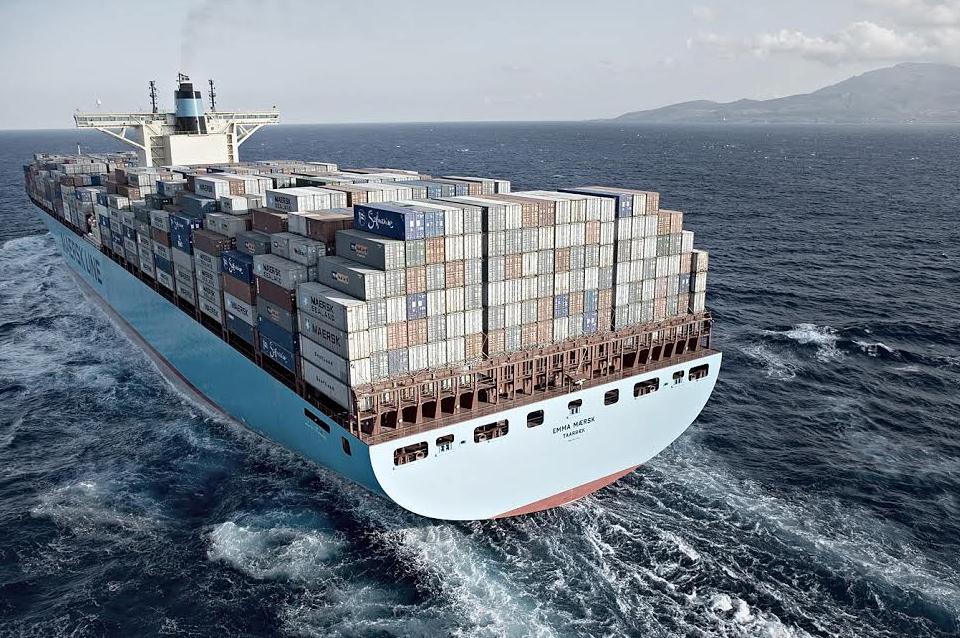
    Container shipping giant Maersk on Wednesday agreed to buy Hong Kong-based LF Logistics for $3.6 billion in an all-cash deal, as it seeks to expand beyond its core ocean freight business.

    The deal is one of the group’s largest takeovers to date and follows a series of acquisitions including e-commerce firms, a freight forwarder specialising in air freight and its smaller rival Hamburg Sud.

    “The acquisition will further strengthen Maersk’s capabilities as an integrated container logistics company, offering global end-to-end supply chain solutions to its customers,” the company said in a statement.

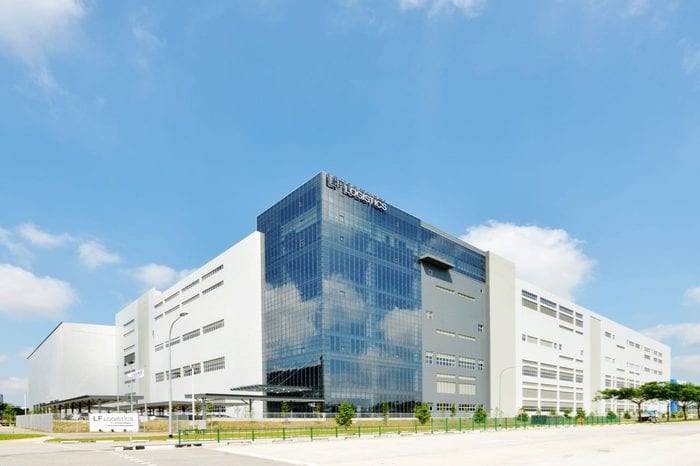
    Maersk will buy LF Logistics from controlling shareholder Li & Fung, a Hong Kong-based supply chain manager, and from Singapore state investor Temasek which bought 22 percent of the company in 2019. The deal is expected to close in 2022.

    With a network of 223 warehouses and around 10,000 employees in 14 Asian countries, LF Logistics provides land-based logistic services such as warehousing and trucking to over 250 global customers.

    The company had revenue of $1.3 billion last year. Maersk said it expects to more than double the revenue and operating profit at the company by 2026.

    Record high container freight rates stemming from the impact of the pandemic have boosted big shipping companies and prompted deal-making by Maersk and its rivals, including CMA CGM and Mediterranean Shipping Company (MSC).

    With chaotic conditions in the global supply chain, big companies have been willing to pay a premium for more reliable and integrated freight solutions.

    The price implies that the valuation of LF Logistics has more than doubled since the Temasek deal valued the company at nearly $1.4 billion two years ago.

    French billionaire Vincent Bollore received a 5.7 billion-euro ($6.43 billion) offer from MSC for his African logistics assets, his company Bollore SE said on Monday.

    This month, French rival CMA CGM accelerated its push into warehouses and end-to-end logistics by agreeing a $3 billion deal to buy assets from US technology group Ingram Micro. In November, it bought a container terminal in Los Angeles for around $2 billion.

    Since breaking up its conglomerate in 2016, including selling its oil and gas business, Maersk has transformed into an integrated logistics company.

    Although container shipping accounted for 73 percent of its revenue last year, Maersk aims to offer customers such as Walmart and Nike shipment of goods from factory to store, even offering last-mile delivery to end-customers.

  • Temasek and HSBC Launch Platform for Sustainable Infrastructure

    Temasek and HSBC Launch Platform for Sustainable Infrastructure

    The platform will provide debt financing for projects in Asia, with an initial focus on Southeast Asia, as part of efforts to reduce climate change.

    Temasek will be working with HSBC to catalyze financing of marginally bankable sustainable infrastructure projects, so as to address the challenges and opportunities presented by climate change, according to an announcement on Thursday.

    The two sides will initially invest $150 million of equity to fund loans, with a goal to scale up the platform to $1 billion of loans within five years to support the commercial development of the region’s sustainable infrastructure sector.

    Based in Singapore, the platform aims to harness the market’s financial expertise and connectivity to scale up the development of sustainable infrastructure across Southeast Asia in time, the announcement said.

    Neither private nor public sector can close the financing gap alone,» Noel Quinn said. «Collaborations matter in the fight against climate change, and this partnership provides an impactful model for others to follow.

    The platform will target renewable energy and storage, water and waste treatment, and sustainable transport to help meet carbon reduction targets and build resilience to offset the impact of climate change.

    Strategic partners Asian Development Bank will provide technical assistance and project development expertise, while Clifford Capital Holdings will provide its project finance expertise as well as ongoing operational mid and back-office support to the platform.

  • DBS, Temasek and J.P. Morgan to Disrupt Payments Landscape

    DBS, Temasek and J.P. Morgan to Disrupt Payments Landscape

    The trio is developing an open industry platform that aims to reimagine and accelerate value movements for payments, trade, and foreign exchange settlement.

    Partior aims to disrupt the cross-border payments landscape by using blockchain and smart contracts to make digital clearing and settlement more efficient and address common pain points such as multiple validations on payment details by banks, according to a joint announcement on Wednesday.

    The open platform will enable banks around the world to provide real-time cross-border multi-currency payments, trade finance, foreign exchange, and delivery versus payment (DVP) securities settlements, with programmability, immutability, traceability built into its suite of services, the announcement said.

    Partior also plans to develop wholesale payments rails based on digitized commercial bank money to enable instantaneous settlement of payments for various types of financial transactions, which will help banks overcome challenges presented by the current standard sequential method of processing global payments.

    Partior is a pioneering step towards providing foundational global infrastructure for transacting with digital currencies in a trusted environment, spurring a wide range of use-cases in the blockchain ecosystem,» Sopnendu Mohanty, MAS chief fintech officer, said in the announcement.

    The platform will be designed to complement ongoing central bank digital currencies initiatives and use cases. It will focus initially on facilitating flows primarily between Singapore-based banks in both U.S. dollars and Singapore dollars, with the aim to expand service offerings to other markets and currencies later on.

    The three partners previously worked on blockchain payments as part of Project Ubin, a collaborative project between the Monetary Authority of Singapore (MAS) and the industry to explore the use of blockchain and distributed ledger technology (DLT) for clearing and settlement of payments and securities.

  • Chinese shopping app Xingsheng Youxuan raises US$2 billion in funding

    Chinese shopping app Xingsheng Youxuan raises US$2 billion in funding

    Chinese community grocery shopping app Xingsheng Youxuan has raised about US$2 billion in a new funding round that values the company at US$6 billion prior to the fresh capital injection, three people with knowledge of the matter said.

    Private equity firms FountainVest Partners, Primavera Capital Group and KKR & Co are among investors in this round, two sources said. Internet and gaming giant Tencent Holdings, which is an early backer of Xingsheng Youxuan, also invested in this round, one of them said.

    The fundraising signed just before the Lunar New Year, was led by Sequoia Capital China and has also attracted property developer China Evergrande Group and Singapore’s sovereign wealth fund Temasek, said a separate person with direct knowledge.

    Xingsheng Youxuan’s spokesman Li Hao declined to comment when contacted by Reuters. Representatives for Sequoia China, FountainVest, Tencent and Temasek declined to comment.

  • Temasek Bolsters Sustainability with Ikea Hire

    Temasek Bolsters Sustainability with Ikea Hire

    Temasek names a new former head of sustainability from Ikea to replace Robin Hu, who will we leaving the role by the end of 2020.

    Temasek’s current sustainability head Hu will have some of his key function’s taken over by ex-Ikea chief sustainability officer Steve Howard, according to an effective as of January 1 next year.

    Hu will remain with Temasek and the senior leadership while transitioning to another role.

    He first joined the state investor in December 2016 and is currently a senior managing director. During his time with Temasek, his role encompassed the oversight of public affairs, institutional relations, foundations and endowments, and its sustainability policy alongside directorship at some of the firm’s portfolio companies.

    Previously, he was the CEO of Hong Kong’s South China Morning Post under the former owner and Malaysian billionaire Robert Kuok.

    At Temasek, its sustainability goals include a strong focus on carbon emissions where it targets halving in its portfolio by 2030 and full reduction by 2050. This target covers only the firm’s own operations and purchased energy while excluding the broader effects of the related supply chain.

    At Ikea, Howard spearheaded its sustainability efforts until 2017 and is also the co-founder of We Mean Business, a unit of firms and advocacy groups aiming to cut corporate carbon emissions.

  • Singapore’s Temasek Takes Stake in LF Logistics

    Singapore’s Temasek Takes Stake in LF Logistics

    Temasek Holdings has invested US$300 million (S$406.1 million) for a a 21.7 per cent stake in Hong Kong-based global supply chain giant Li & Fung’s logistics business.

    The injection from Singapore’s state investment company wil value the business, LF Logistics, at approximately US$1.4 billion.

    Li & Fung said that as a result of Temasek’s investment, it will postpone a previous proposed spin-off initial public offering for LF Logistics. It will remain a controlling shareholder of LF Logistics with a 78.3 per cent stake.

    Proceeds from the investment will be used to fund LF Logistics’ future capital expenditures, business growth initiatives and to repay its existing bank loans.

    LF Logistics has achieved multiple-year double-digit organic growth, and is rapidly growing in Asean and expanding into new geographies including Japan, Korea and India, said Li & Fung.

    Temasek’s investment comes after an overall slower pace of global investments in the past year for the firm.

    “The investment from Temasek will allow us to unlock the value of LF Logistics and accelerate its business growth. It will also enhance Li & Fung’s capital structure and financial flexibility,” said Spencer Fung, Group CEO, Li & Fung.

    “Our strong operating cash flow and solid balance sheet provides us with ample liquidity to fund future growth and complete our transformation efforts, as we execute our three-year plan goal of creating the supply chain of the future.”

    Shares of Li & Fung, which suspended trade on Friday morning, jumped as much as 18.8 per cent to HK$1.45, the highest since April 23, on Friday afternoon in Hong Kong trading.

  • Zilingo received fresh investment funding

    Zilingo received fresh investment funding

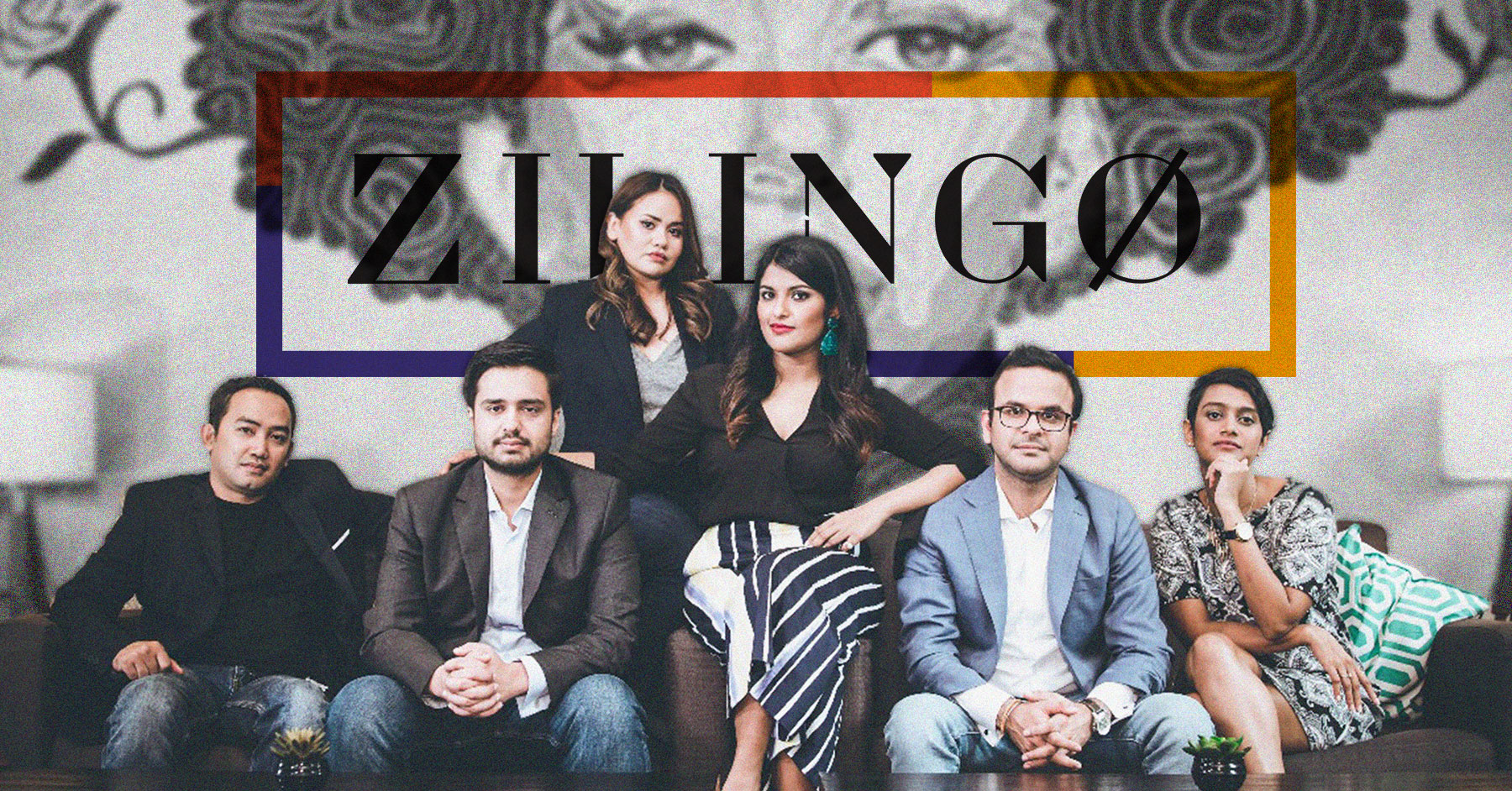
    Online marketplace Zilingo has raised US$226 million in its recent Series D funding.

    The fresh capital round brings the total amount raised by the company to $308 million. Having secured its latest investments, the company is now looking to China as well as other key Asian markets as part of its growth strategy to expand its B2B business.

    Key investors from this latest round included Sequoia Capital, Temasek Holdings, Burda Principal Investments, Sofina, Singapore investment fund EDBI as well as existing investors.

    “Sequoia’s investment in Zilingo dates back to when the company wasn’t even yet incorporated and the name wasn’t finalised,” said Sequoia Capital (India) Singapore’s MD Shailendra Singh.

    “Ankiti and team have rapidly transformed their original ideas about Zilingo into a platform company that serves fashion consumers, merchants, retailers, brands and manufacturers, collectively representing a multi-hundred-billion-dollar market size. We are amazed by the team’s ability to envision and execute against such an ambitious roadmap and are excited to continue to support them on their journey.”

    The company says it plans to invest the capital in long-term value building across the supply chain, building new and deeper relationships with manufacturing partners in Vietnam, Cambodia, Sri Lanka and China, and expanding into new markets such as the Philippines, Indonesia, Australia and the US this year.”

  • How to deal with centennials

    How to deal with centennials

    All eyes are on Southeast Asia as the world’s next consumer powerhouse, with its young population and increasing purchasing power. Almost 280 million centennials – those born since 1995, also known as Generation Z, currently call this region home. While the size of this new generation alone makes them attractive prospects for retailers, their distinct behaviours set them apart as the ones to watch to crack Asia’s hyper-competitive retail landscape during the next few decades.

    Born into the digital age and mobile natives, centennials will soon be one of the world’s most demanding consumer groups with high standards and expectations of the online-shopping experience.

    Here’s what we know about the centennials….

    Webrooming vs showrooming

    Almost all centennials in Southeast Asia use the internet as part of their buying journeys, but their route is much more converged than other generations. Latest research commissioned by Dentsu Aegis Network, Here Comes the Centennial reveals that centennials like to use both online and offline channels – 97 per cent browse for products online before purchasing online (‘webrooming’) and 90 per cent look for products in store before buying online (‘showrooming’). Detailed research is a key part of their buying decisions – whether online or offline – to ensure they get the best price, as well as the best quality by going into stores to experience the product. Some 70 per cent browse online to find the best price, while 67 per cent use the internet for checking out product details and specifications and 65 per cent are checking out reviews.

    Smartphones have also created an environment where centennials can browse products wherever they are, whatever they are doing – multi-tasking to the extreme. For example, 52 per cent look at products online while eating, watching TV or hanging out with friends or family, while 38 per cent do so while commuting, and 34 per cent browse products while at school or college.

    Centennials use social-media platforms differently to previous generations, as an important and intimate touchpoint in their purchase and decision-making journey.  Social media applications (47 per cent) such as Facebook and Instagram are the second most popular place for them to shop in, while 49 per cent turn to such platforms for research on their future purchases, rather than asking friends (45 per cent) or family (27 per cent). Even a good reputation with friends and family does not feature highly as a motivator to purchase – just 15 per cent choose this as an option.

    Digital natives

    As digital natives, centennials expect technology to be an integral part of the experience, and are highly optimistic about the use of technology.

    Eighty-two per cent of centennials are excited about futuristic shopping technology such as virtual reality. They demand fast-and-easy experiences that allow them to research and buy products with minimal frustration.

    To this audience, commerce has moved beyond “buying something on a website” to a series of interactions, from enticing them to view a product to providing a personalised purchase experience, to where and when the product should be delivered. In this context, online retailers need to focus on understanding the centennial customer journey, specific to the category being sold. This can be done by incorporating relevant technologies which seamlessly enhance engagement along the path to purchase. For example, the research showed that “Good customer service/reliability” ranks third among qualities of an online store with this audience, with delivering a superior and excellent customer service option using chatbots rather than call centres a more significant differentiator than low prices and free/fast delivery that every other marketplace claims to offer.

    Brand irrelevance

    Brand name and image are no longer a priority of centennials. Only 11 per cent of centennials cite having a prestigious or famous brand as one of their top three attributes when choosing where to shop online. Instead, personalisation and convenience are key, as 76 per cent of respondents are happy to share data with websites, if it makes more relevant recommendations.

    E-commerce payments provide a unique example of this; despite being digital natives, the concept of a cashless society has yet to fully take off for centennials in the six countries surveyed, with 56 per cent of respondents still preferring to pay cash on delivery for their purchases. Whilst preferring digital shopping experiences, the next generation of online shoppers enjoy having a variety of payment methods to choose from, and 43 per cent of centennials will readily abandon their purchases because their preferred payment option is not available.

    This is also accompanied by a shift towards values-based purchasing, with 82 per cent agreeing that they “prefer to buy products from ethical or sustainable brands,” while 70 per cent express a preference for local brands.

    With centennials less responsive to traditional campaign and brand-based purchasing, and increasingly influenced by disparate sources of dynamic information and opinions, retailers can no longer just rely on well-designed stores or brand campaigns to drive sales. Instead, driving a unified brand experience across multiple touchpoints will be key to unlocking the centennial consumer opportunity.

    This year

    So what does this all mean for retail this year and beyond?

    Southeast Asia’s internet economy is expected to exceed US$240 billion by 2025, according to research from Google and Temasek. One in two of centennials surveyed are already spending more than $30 per month online. Nine per cent indicated that they spend more than $100 a month – and as the centennial generation comes of age and joins the workforce, their disposable incomes will increase further.

    This combination of large populations, high connectivity and smartphone penetration rates, and increasing online spending power means the centennial opportunity in Asia is large and growing. We will increasingly see e-commerce technology accelerating this year to help create innovative and memorable brand experiences of the consumer.

    Centennials represent tomorrow’s consumer. They are looking for integrated solutions and a seamless experience that will allow them to purchase anywhere, anytime, and on their own terms. As this new group of consumers become increasingly elusive and multi-channel savvy, retailers need to harness creativity and technology in new ways. Combining new media and technology to deliver innovative and memorable brand experiences is the key to success – and brands are learning quickly in order to tap the huge centennial opportunity here in Asia.

    For example, in Thailand, Cotton USA worked with Vizeum and Isobar to launch the Cotton USA online store through an experiential shopping campaign “Shop the Runway”, partnering e-commerce marketplace 11Street.

    Targeted at the Centennial audience, Shop the Runway was the first real-time online shopping fashion show in Thailand which streamed the live programme on 11Street, while clothes from the catwalk were displayed in real time – within the same page – so viewers could purchase their favourite looks direct from the runway.

    At the heart of the campaign was a unique offline-to-online (O2O) feature within the 11Street mobile application which allowed fashion-show attendees to simultaneously view and shop the runway outfits.

    Shopping coupons were also given to all customers who downloaded and registered their details on the app to further encourage conversions. The campaign drew close to 500,000 campaign visitors, a 13 per cent increase in 11Street app downloads following the campaign, and ultimately boosted Cotton USA sales and brand awareness amongst the target centennial audience.

    Shop the Runway is one example demonstrating how brands can leverage technology and O2O features in innovative ways to reach consumers in today’s competitive e-commerce environment. Combined with a seamless shopping experience, and varied account and purchase options to suit different consumers, moments like these will attract tomorrow’s consumers on their terms, arrest their attention in a hyper-competitive commerce landscape, and allow brands to win in Asia’s digital-led retail landscape.
  • Temasek plans to sell AS Watson stake

    Temasek plans to sell AS Watson stake

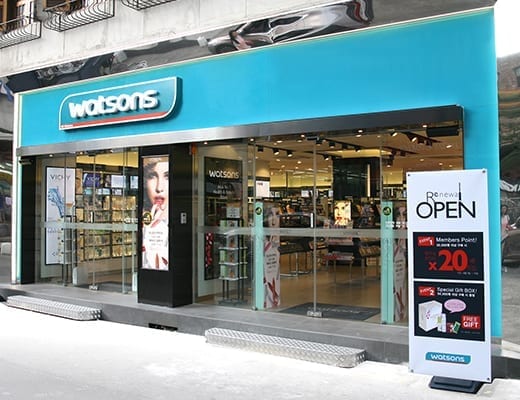
    Singapore’s Temasek Holdings is reportedly looking to quit its stake in Hong Kong-headquartered beauty products retailer AS Watson. Temasek spent US$5.6 billion to acquire a 25 per cent share of AS Watson in 2014 from Hong Kong’s CK Hutchison, which retains the majority stake. According to report, Temasek made the investment expecting the business to be listed within three years. But softening investor sentiment towards retail sector listings has weakened since that plan was first envisaged. Investors are spooked by the demise of a slew of brick-and-mortar-focused brands across developed markets.

    AS Watson has some 14,500 stores in 24 markets around the world, and has market leadership in 15 of those. That could make the business an attractive target for private equity funds, despite the company appearing to be focused more on opening new stores than migrating online, where consumers are buying more beauty and healthcare products.

    Bloomberg says in an analysis published online, that a private equity business would be among the more likely buyers for the Temasek stake, given the amount of industry money that’s sitting idle.

    “That said, any acquirer will still be in a minority position, even if the entire 25 per cent is sold. Along with the business’s poor growth prospects, the absence of control is likely to be reflected in the valuation. This is one retail sale that will need a discount to be attractive.”

  • Ride-Hailing Firm Go-Jek to Expand Abroad

    Ride-Hailing Firm Go-Jek to Expand Abroad

    Indonesian ride-hailing and online payment firm Go-Jek on Thursday said it would enter Vietnam, Thailand, Singapore and the Philippines in the next few months, investing $500 million in its international push.

    The move will start with ride-hailing services before expanding to other sectors, Go-Jek said in a statement.

    “People in Vietnam, Thailand, Singapore and the Philippines don’t feel that they’re getting enough [choice] when it comes to ride-hailing,” chief executive Nadiem Makarim said in the statement.

    The announcement comes after Uber Technologies Inc sold its Southeast Asian operations to local competitor Grab.

    Go-Jek said it was working with regulators and other stakeholders across the region to prepare for the new operations.

    The expansion follows Go-Jek’s latest round of fundraising, which brought investment from companies including Astra International, JD.COM, Tencent and Temasek.

  • More funding comes for Go-jek Indonesia

    More funding comes for Go-jek Indonesia

    Go-Jek has raised a higher than targeted $1.5 billion in a fundraising round from a dozen investors, including BlackRock and Google, as the Indonesian ride-hailing firm builds its war chest to fight deep-pocketed rivals.

    Go-Jek had planned last year to raise $1.2 billion, and, with the 25 percent extra funds it has received, it is now valued at about $5 billion.

    Reuters Breakingviews said last month that Go-Jek was valued at roughly $4 billion compared with over $6 billion for Grab, Southeast Asia’s largest ride-hailing firm.

    The additional funds and backing of well-known investors, including Singapore’s Temasek Holdings and Chinese technology giant Tencent Holdings, will help Go-Jek to better compete in Southeast Asia’s cut-throat market where incentives to drivers and passengers are used to build loyalty.

    Singapore-based Grab was expected to have raised $2.5 billion last year and Uber Technologies has pledged to invest aggressively in Southeast Asia – home to 640 million people – even though the US firm expects to lose money in the fast-growing market due to costly battles with rivals.

    Both companies are expanding in Indonesia, Southeast Asia’s most populous country, where Go-Jek, a play on the local word for motorbike taxis, is transforming the local economy, economists say.

    Go-Jek and Grab are also investing heavily in expanding their mobile payments platform.

    “Go-Jek is far beyond a ride-hailing app, it’s a digital platform that dominates consumers’ daily lives, including transportation, food delivery, logistics, and payment, etc.,” said Xiaofeng Wang, senior analyst at consultancy Forrester.

    “That’s also the key value that its key investors like Google and Tencent see. They know well about the power of the digital ecosystem, and Go-Jek has built it in Indonesia, like Google in the US and WeChat in China,” Wang said.

    Go-Jek told Reuters that some investments that came in this year were part of the funding round that kicked off last year but it declined to comment on the amount raised or the names of investors.

    It said the funding was aimed at developing technology for micro, small and medium enterprises in Indonesia.

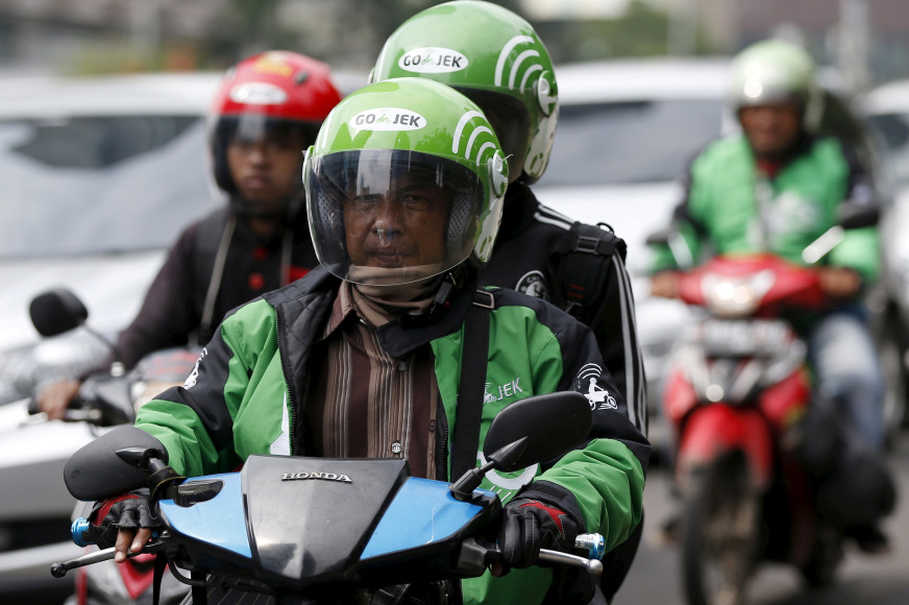
    Go-Jek delivers everything from meals and groceries to cleaners, masseuses and hairdressers across Indonesia’s capital city Jakarta, all at the touch of a smartphone app – helping it become a crucial workaround in a city with some of the worst traffic in the world.

    Rumours said BlackRock and Temasek are investing about $100 million each in Go-Jek’s latest fundraising.

    BlackRock declined to comment. A Temasek spokesman confirmed participation in the fundraising but declined to say how much it had invested.

    This month, Indonesian conglomerate Astra International said it would invest $150 million in Go-Jek, while  Djarum Group’s Global Digital Niaga is putting in $100 million.

    Go-Jek’s payment system, known as Go-Pay, has emerged as one of the most popular mobile payment platforms in Indonesia. Grab, which bought Indonesian payment service Kudo last year, also sees its future in mobile payments as much as in transport.

    Go-Jek is expanding in other Indonesian cities and has said it plans to start operations in the Philippines this year, followed by other Southeast Asian countries.sou

  • Why retailers need to consider setting up an online shop

    2 in 3 Singaporeans prefer retailers with e-commerce and mobile app.

    There are only a few days before Christmas and Singaporeans are surely busy shopping around, finding the perfect gift. But what do retailers need to do to keep up with the shopping hype this festive season?

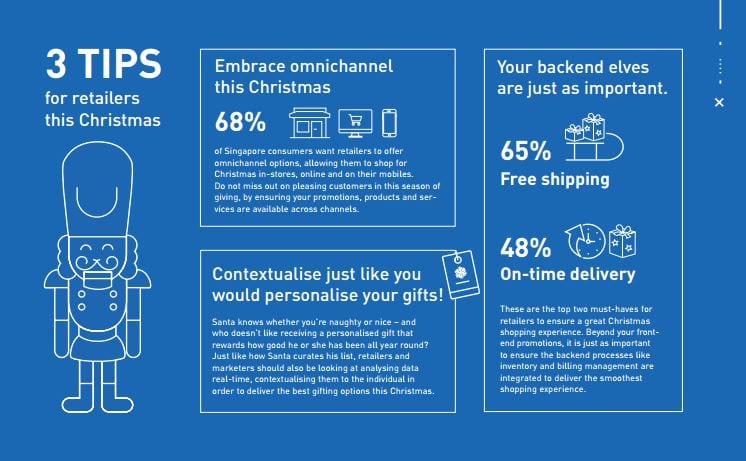
    According to the latest survey by SAP Hybris, Singapore shoppers want cross-channel options more than new-age services like digital wallets and augmented reality store experiences. Over 2 in 3 shoppers (68%) prefer retailers with a physical store coupled with both e-commerce and mobile app while more than half of consumers want retailers which offer self-pickup services as physical stores.

    “With high Internet and mobile penetration rates, it is of little wonder that Christmas online shopping is picking up among Singaporeans. The e-commerce market in Singapore is expected to be worth US$5.4 billion (S$7.46 billion) by 2025, according to a report by Temasek and Google released earlier in May this year, and is expected to make up 6.7% of all retail sales by 2025,” SAP Hybris global vice president of fast growth markets Nicholas Kontopoulos explained.

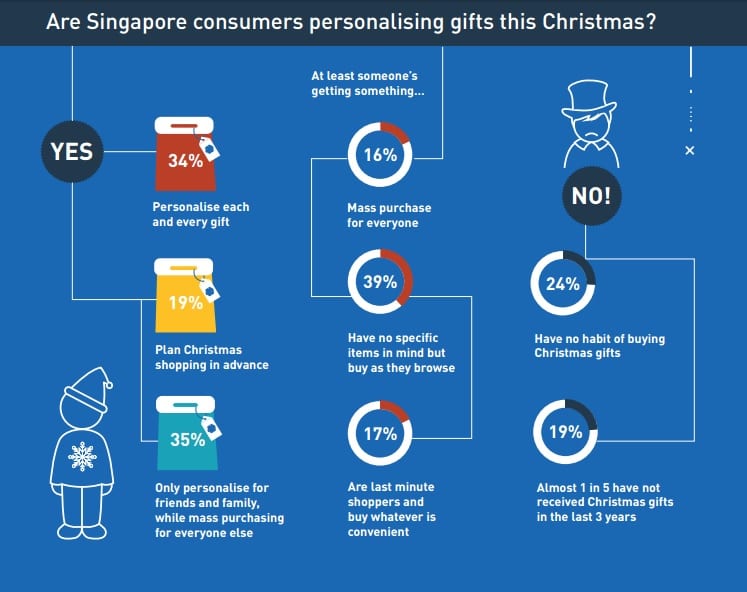
    More so, 65% of the shoppers stated that retailers can improve their Christmas shopping experience by offering free shipping. Around 48% see on-time delivery as a benefit while 41% noted that gift customization would signal yet another improvement.

    “Singaporeans are amongst the most tech-savvy spenders in Asia, and no strangers to e-commerce. Despite that and reports of Singapore’s continuously challenging retail landscape, the brick and mortar stores are definitely not dead,” Kontopoulos noted.

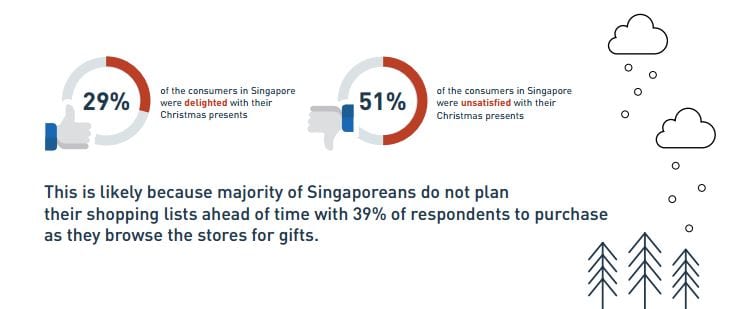
    He furthered, “In fact, the SAP Hybris survey found that 39 per cent of Singaporeans still enjoy browsing through stores. This reinforces what we have been telling retailers for some time: Singapore is a truly multi-channel market, where most consumers are using a combination of devices in their online and offline shopping. The findings also point us to a future where offline and online shopping are no longer two separate business models. Singaporeans are demanding a seamless omnichannel shopping experience.”