Retail News CRM

Tag: temasek

  • Awards to recognise eCommerce merchants

    As Southeast Asia eCommerce merchants set benchmarks in a booming industry, their efforts are about to be celebrated with the launch of annual awards.

    Based in Kuala Lumpur, online shopping aggregator iPrice Group has launched the iPrice eCommerce Merchant Awards (iEMA) 2016 in partnership with eTail Asia, a service for eCommerce professionals, and Trusted Company, a review platform for eCommerce businesses in emerging markets.

    The first awards ceremony will be held in conjunction with the annual eTail Asia conference at Marina Bay Sands, Singapore, on March 8 next. The inaugural iEMA 2016 will feature country and regional winners in two categories – Most Popular eCommerce Merchant of the Year and Highest-Quality eCommerce Merchant of the Year. Merchants do not have to submit entries as all qualifying merchants are automatically enlisted.

    “Based on studies by Google and Temasek, the Southeast Asian eCommerce market is expected to see exponential growth from US$6 billion to about US$90 billion in 2025,” says iPrice Group CEO David Chmelar.

    “With new players in the eCommerce industry coming up every left, right and centre, it is imperative we highlight excellence in the sector in hopes to further inspire and encourage both existing and upcoming merchants to excel further in Southeast Asia.”

    Consumer choice

    Finalists and winners for the awards will be chosen by consumers via the iEMA 2016 microsite. People can vote only once, with January 31 the deadline.

    Meanwhile, in an effort to also recognise special initiatives by eCommerce merchants that might have escaped attention, a third category has been set up to highlight efforts by businesses that have undertaken projects to support a social or non-profit organisation. This will be judged by a panel of experts from the eCommerce sector with only one overall regional winner being chosen. The judging panel comprises Chmelar, Asia Venture Group CEO/founder Tim Marbach, Worldwide Business Research GM Danny Levy, Trusted Company co-founder/MD Frederick Krass, Google Vietnam head of marketing Anh Nguyen and 500 Startups managing partner Khailee Ng.

    Submissions for this award are being accepted from for both consumers and eCommerce merchants through the iEMA 2016 website.

    Voting is being accepted at the iEMA 2016 microsites for Hong Kong, Indonesia, Malaysia, Philippines, Singapore, Thailand and Vietnam.

    iPrice Group is a Southeast Asian metasearch engine that enables shoppers to find products, compare prices and save. It seamlessly connects them to hundreds of eCommerce merchants in the region.
  • End of the Line for Singapore Investors

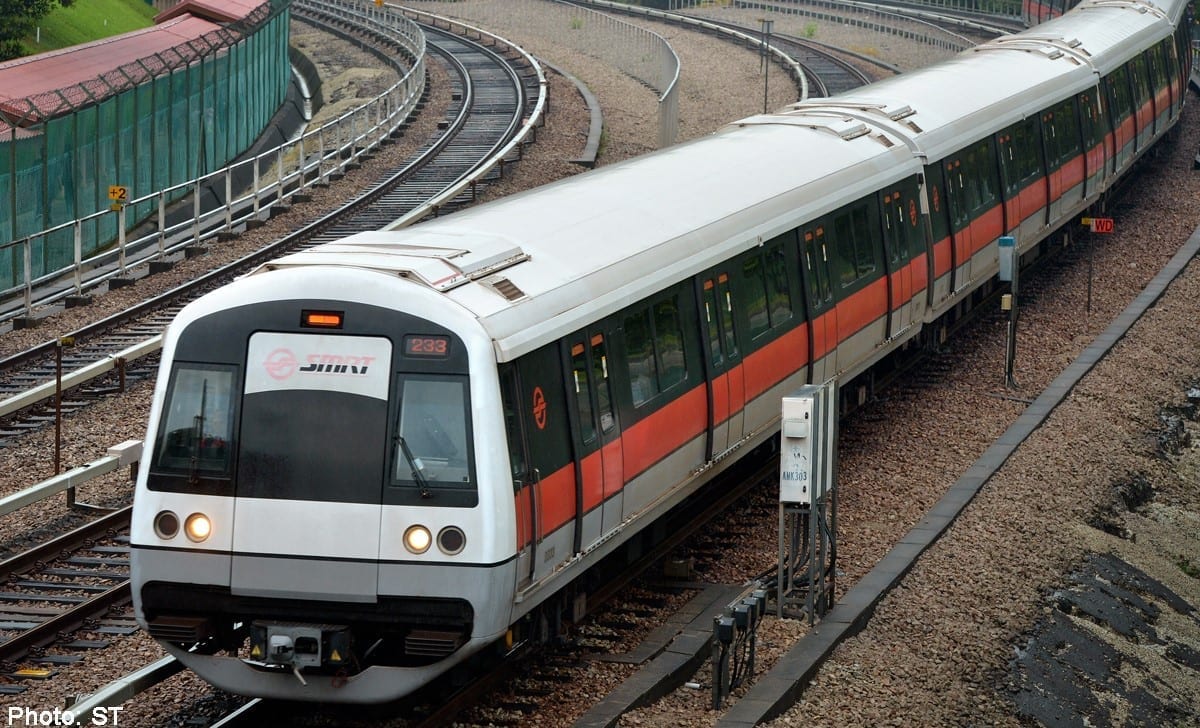
    End of the Line for Singapore Investors

    This is where shareholders in Singapore’s subway network get off. And it doesn’t matter if some of them can’t quite see the platform. Leaving people stranded has become a hallmark of their company’s operations in recent years. Like back in January 2008, and then twice over three days in December 2011 when two passengers fainted, and again in July last year.

    Decent Ride

    Singapore subway operator SMRT has returned almost 600% since the SARS epidemic of 2003. But the ride is over. State investment firm Temasek, which owns 54 percent of SMRT, has offered S$1.68 ($1.24) to buy out the remaining shares. Minority shareholders should be grateful for the 8.7 percent premium over the last closing price. Considering the island’s transport regulator is taking away SMRT’s trains and signaling system for S$991 million ($730 million), which — after paying taxes and retiring debt — won’t even leave enough for a special dividend, the rump isn’t worth much more.

    Besides, as Smartkarma strategist Crispin Francis notes, the Land Transport Authority’s nationalization plan will see SMRT having to share with the government the outsize profit margin of about 60 percent it earns from rental income and advertising. That would be in exchange for a boost to the profitability of its core rail operation business, from a measly 1.1 percent to a more respectable 5 percent. Hardly a sweetheart deal.

    Temasek, though, should still come out okay. It owns 41 percent of the nation’s largest property developer CapitaLand, 25 percent of retailer A.S. Watson, and all of MediaCorp., the Singapore broadcaster with a large outdoor advertising arm.

    As Singapore upgrades its rail network to close the gap with Hong Kong, the value of the city-state’s droopy residential property could get a lift; there would be more underground locations for retail; and plenty of new walls for LCD displays. Temasek will indirectly reclaim at least some of what SMRT’s other shareholders will lose from nationalization. Since a part of Temasek’s returns are used to finance the government’s budget, this will complete a virtuous cycle.

    Maintaining the status quo would have created a vicious cycle. Private capital is loath to finance massive investments from which gains are likely to be so diffuse they can only be captured by a government or large, diversified investor such as Temasek. So while it’s been a good ride for SMRT shareholders, it’s time they got off. They can use the S$1.68 they’re getting for their shares to hail a ride home.

    *Originally posted at Bloomberg.

    To contact the editor responsible for this story:
    Katrina Nicholas at [email protected]

  • Southeast Asian economies lure Alibaba

    Southeast Asian economies lure Alibaba

    Southeast Asian economies are reaching a stage similar to China’s at the end of the last decade, when eCommerce began to take off, according to Alibaba Group executive vice-chairman Joseph Tsai.

    “I don’t blame you guys for having some degree of excitement about Southeast Asia when you look at the economies here,” he has told a Singapore conference staged by Google and local sovereign wealth fund Temasek.

    For example, he said, the per-capita GDP of Indonesia, the world’s fourth most-populous country, was about $2900. “That’s roughly the same as China’s per-capita GDP in 2009 and into 2010, a period when Alibaba’s C2C marketplace Taobao began to soar, adding about $50 billion in gross merchandise volume.”

    This was one reason Alibaba had invested about $1 billion in Singapore-based Lazada Group last month. Launched in 2012, Lazada now has shopping websites in Indonesia, Malaysia, the Philippines, Singapore, Thailand and Vietnam. It began by selling inventory to customers from its own warehouses but now also runs marketplaces for third-party sellers, as well as using its own logistics networks for deliveries.

    “We’re very excited about our investment in Lazada,” Tsai said. “It is starting from a very small base, but the potential is very, very big.”

    By adding marketplaces in Southeast Asia, Alibaba can offer merchants already selling on its platforms a chance to sell into new markets. “It’s very, very helpful to be able to present something that is more of a geographically diverse platform,” Tsai said. Online healthcare and fintech companies such as Alibaba-affiliate Ant Financial, poised for rapid growth in China, could expand their services to Southeast Asia.

    Tsai said he sees promise in the wide use of the mobile internet in Southeast Asia, a trend that typically gives rise to greater engagement and more purchases by online shoppers.