Retail News CRM

Tag: Tiki

  • E-commerce platforms free from filing tax on vendor behalf

    E-commerce platforms free from filing tax on vendor behalf

    E-commerce platforms like Shopee, Tiki or Lazada will not have to file tax on vendors’ behalf and instead only provide authorities with their revenue and other details.

    Every quarter the platforms will need to submit vendor details including name, tax ID, personal ID, address, phone number and revenue, according to a new decree.

    This means a previous proposal by tax authorities to make these platforms pay tax on behalf of their vendors was not approved, with vendors instead responsible for their own tax payments.

    Insiders since last year have voiced concern over the proposal, saying that taxing vendors’ behalf will increase costs, and that they do not have enough resources to fulfill this task.

    Around 100 e-commerce platforms are operating in Vietnam with hundreds of thousands of vendors. In 2020, Shopee had 210,000 vendors and Tiki 8,800, according to tax authorities.

  • Shinhan acquires 10 pct stake in Tiki

    Shinhan acquires 10 pct stake in Tiki

    South Korea’s Shinhan Financial Group said it has reached an agreement to acquire a 10 percent stake in Vietnam-based e-commerce company Tiki.

    The South Korean group said its two units, Shinhan Bank and Shinhan Card, will pick up 7.44 and 2.56 percent stakes in Tiki, respectively. It has invested $90 million in the e-commerce player.

    “Based on Shinhan’s financial expertise and Tiki’s database in a broad range of areas, we are expecting to build a new converged digital ecosystem in Vietnam,” a Shinhan representative said in a statement.

    The deal was first reported by DealStreetAsia in January, with initial investment of around $40 million.

    Founded in 2010, Tiki is the fifth most popular e-commerce site in Vietnam with 17.9 million monthly visitors last year, according to data portal Statista.

    It closed the Series E round last November with $258 million, which was led by insurance group AIA. The company has raised about $450.5 million in total, according to Crunchbase.

    The round brought Tiki closer to unicorn status, with a valuation of around $832 million.

    Shinhan Bank, the largest foreign lender in Vietnam in terms of assets, has around 650,000 users of its online platform, which was launched in 2018.

  • E-commerce sites report jump in 11/11 sales

    E-commerce sites report jump in 11/11 sales

    E-commerce platforms reported a surge in sales on Singles’ Day on Nov. 11, an annual shopping event, with the most popular items being masks and healthcare products. Tiki said revenues were up nine times from last year, and the number of buyers was double that on normal days.

    Face masks, products for babies and mothers, and fast-moving consumer goods were the top sellers, it said.

    It also sold some 10,000 mobile phones, including 500 iPhones, 2,000 electric motorbikes and bicycles, and 6,000 cans and bottles of beer.

    Shopee sold 1.8 million decorative items, including some 100,000 decals and stickers, 1.6 million healthcare products, one million earphones, and 150,000 mobile phone covers.

    Lazada said revenues doubled and the number of customers was up by half. Healthcare and beauty products were its best-sellers, and electronics sales almost doubled, with laptop and desktop sales nearly tripling.

    Sendo said revenues were 40 percent higher than during other promotions such as Sept. 9 and Oct. 10, with fashion, household, and beauty items seeing sales double.

    According to a report called ‘e-Conomy SEA 2021’ released this week by Google, Temasek and Bain & Co., Vietnam’s e-commerce market will increase to $13 billion this year, up 53 percent from last year, and triple by 2025.

  • Tiki raises $258 mln from global investors

    Tiki raises $258 mln from global investors

    E-commerce company Tiki raised $258 million in its latest funding round as it eyes a U.S. IPO.

    The Series E funding round was led by AIA Insurance, and included UBS AG London Branch, Mirae Asset-Naver Asia Growth Fund, and Taiwan Mobile Co.

    Tiki had planned to list in the U.S. by 2025, but it now plans to do so in a year’s time, Tiki founder and Chief Executive Officer Tran Ngoc Thai Son said in an interview.

    The company expects revenue growth of 40-50 percent in the next few years, he added.

    Vietnam is expected to have 53 million online consumers, or 71 percent of its population aged 15 and older, by the end of this year, an 8 percent rise from 2020, according to a report in August by Facebook and Bain & Co.

    Tiki in June raised VND1 trillion dong ($44 million) from bonds issuance.

  • Singaporean logistics unicorn eyes Vietnam as key expansion market

    Singaporean logistics unicorn eyes Vietnam as key expansion market

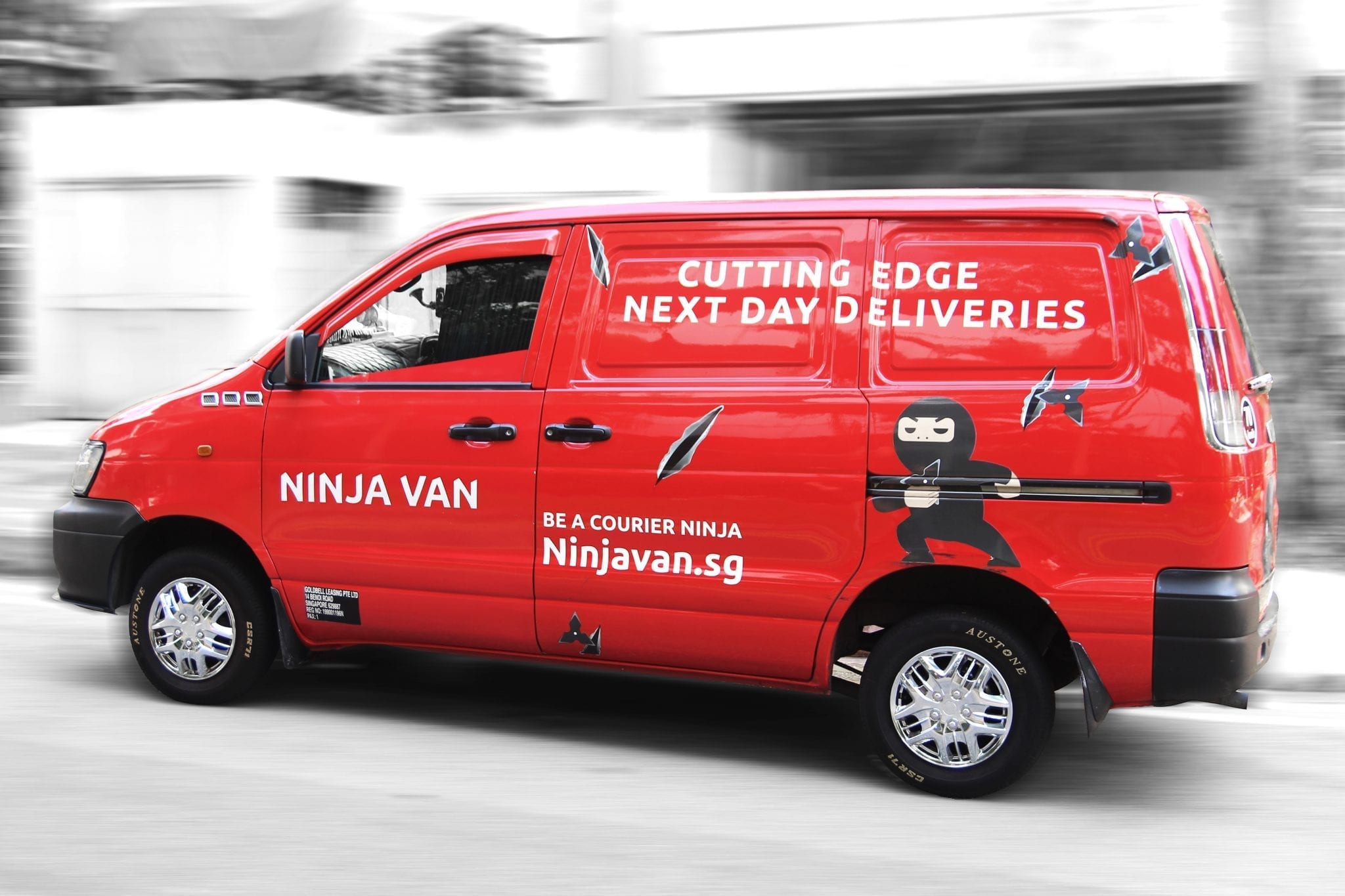
    Ninja Van, a Singaporean logistics startup and new ASEAN unicorn, is set to drive a broad strategy in Vietnam to benefit from the country’s strong e-logistics market growth.

    After successfully raising $578 million in Series E funding, Ninja Van has officially become an ASEAN “unicorn,”.Dzung Phan, president of Ninja Van, said while revealing the startup’s expansion plans for Vietnam and his assessment of its e-logistics market.

    Why did Ninja Van choose Vietnam as a key investment market?

    We believe Vietnam is ready for a new phase of growth in e-logistics. According to Agility, Vietnam ranks 8th among the top world’s fastest-growing logistics markets and 3rd among ASEAN in 2021. Vietnam E-commerce Association (VECOM) also stated the number of postal parcels sent through express delivery services shot up by 47 percent last year.

    Also, e-logistics is strongly driven by the rapid growth of e-commerce. Vietnam’s e-commerce market expanded an average of 30 percent per annum during the period 2016-2019, from $4 billion (2015) to $11.5 billion (2019). According to VECOM, the market will grow at 29 percent annually in 2020-2025, to reach $52 billion (2025).

    The strong potential of Vietnam’s e-logistics market is a good foundation for our ambitious plan. A market with 600,000 sellers and 49.3 million buyers across e-commerce platforms and social networks will generate significant demand for logistics.

    Leading a new unicorn in the e-logistics industry, how do you assess its competitive advantage in Vietnam?

    The domestic e-logistics market is competitive with several “deep pocket” players. The market comprises three main segments: local shipping companies, international shipping companies, and e-commerce platforms with their own in-house shipping ecosystems.

    Domestic enterprises only account for 20 percent of the logistics market share; the remaining 80 percent belongs to international firms with strengths in capital, technology, and experience. Local firms may be backed by international groups, including GHTK by Kerry and AhaMove by Temasek.

    Although the e-logistics market is vibrant, its growth potential is not fully invested in. A survey showed that 60 percent of sellers and 80 percent of buyers are not satisfied with the current quality of express delivery services. Buyers are frustrated by late delivery or the inability to track the flow, while sellers expect more parcels to be delivered.

    Is pricing a major competitive edge in the current e-logistics market?

    Except for the inhouse shipping units of e-commerce platforms, domestic and international players are using price competitiveness to acquire customers quickly. Whenever there is a “newcomer”, delivery costs will drop significantly to maintain the market share and retain customers. Notable discounts were given at the entry of J&T in 2018 and Best in 2020.

    The average shipping price in the Vietnam market fell continuously by 15-20 percent per year from 2017 to 2020. The trend has a negative impact on smaller domestic players, for example, GNN in 2017 suffered a sharp drop in revenue that led to its liquidation. Even international players without strong financial support cannot survive this market, with DHL e-commerce ceasing operations in Vietnam during 2021.

    How does Ninja Van improve the customer experience? Ninja Van focuses on providing a quality and authentic service experience to customers, rather than on pricing alone. Parcel tracking and recovery services for lost or damaged parcels need to be improved.

    Given a tech-enabled personalization of the customer experience, Ninja Van’s nationwide personal delivery service on the Grab app has stepped up during the Covid-19 pandemic. Additionally, we are strengthening our partnership with e-commerce giants including Shopee, Lazada, Tiki, and Sendo.

    With more than 300,000 orders per day, Ninja Van is among the top three partners on all major platforms in Vietnam. These collaborations brought Ninja Van into the top growth 15 companies in the Asia-Pacific region in 2021 as reported by Financial Times.

    To gain trust, we do all possible to help our customers succeed, such as ensuring timely pickup, prompt delivery without loss. In addition, we understand that our partners are working at a large scale, so we do our utmost to optimize our cost structure and provide an attractive rate.

    As a result, we became the most active provider by offering various value-added services, such as return pickup to Lazada, bulky and super bulky delivery for Tiki, or installation services for Shopee.

    With an additional $578 million in Series E, what is the level of ambition in terms of your expansion strategy?

    – Ninja Van is committed to driving a broad strategy in Vietnam in particular and in ASEAN in general. This strategy will cover all three sectors: operations, technical systems, ecosystems for small and retail customers.

    Specifically, Ninja Van will increase its coverage in 63 cities and provinces to reach 100 percent of the Vietnamese population. We will also prepare an automatic sorting system with a capacity of two million packages at five major cities to increase delivery speed.

    We will build and improve web and mobile application platforms to enhance customer experience. We seek to enable both sellers and buyers to track parcels and make inquiries in real-time.

    Notably, we will broaden our cross-border delivery with two new services: Ninja Direct, which helps Vietnamese sellers look for better sourcing with better rates in multiple countries; and Ninja Crossborder, which helps Vietnamese manufacturers reach out to buyers all over the world.

    Moreover, we will complete business activities for the fourth quarter of 2021. For example, based on our big data analytics, we have opened training courses to detect anomalies and outliers to provide timely resolutions for all customers. In 2020, we created 40 different training modules for our shippers and warehouse staff to avoid recalcitrant buyer behavior on COD free delivery services.

    Ninja Van will launch a promotional campaign in Vietnam “Giao thong suot, Nhan ven nguyen” (Smooth delivery, Parcel intact) to support sellers in the fourth quarter. With all staff vaccinated against Covid-19, Ninja Van will maintain its service delivery price during the pandemic to support hard-hit customers.

  • Tiki raises $20 mln from Taiwanese investors

    Tiki raises $20 mln from Taiwanese investors

    E-commerce platform Tiki has raised $20 million from telecom operator Taiwan Mobile in return for a 2.7 percent stake in Tiki Global.

    The Series E funding deal values the Vietnamese company at $740 million, with Tiki having secured $94 million in the series within this month alone.

    Before the Series E, foreign investors held a 49.4 percent stake in Tiki. The biggest shareholder among them is Chinese e-commerce giant JD.com with a 18.2 percent stake.

    Tiki had recently raised VND1 trillion ($43.9 million) in bonds with a coupon rate of 13 percent a year.

    The company posted a loss of VND4 billion last year.

    As one of the fastest-growing digital economies in Southeast Asia, Vietnam’s e-commerce sector is expected to be worth $23 billion by 2025, according to the e-Conomy Southeast Asia 2019 report by Google, Temasek Holdings, and Bain & Company.

  • Tiki raises $43.5 mln via corporate bonds

    Tiki raises $43.5 mln via corporate bonds

    E-commerce platform Tiki has raised VND1 trillion (nearly $43.5 million) over the last three months by issuing corporate bonds.

    Issued from 16 March to June 13, the bonds are non-convertible with a fixed interest rate of 13 percent per annum, one of the highest rates in the local market.

    Over 97 percent of Tiki bonds’ buyers are Vietnamese individual professional investors. Two domestic institutional investors and two foreign investors also bought the bonds.

    Tiki will use the VND1 trillion to increase its working capital, expand warehouses, invest in subsidiaries, and fund advertisement and marketing campaigns, among others.

    After suffering losses in recent years, Tiki still has to spend big to grab market shares from rivals like Shopee, Lazada, and Sendo.

    Tiki reported losses of over VND750 billion in 2018, and more than VND320 billion in 2019.

  • Miniso sees positive and steady development in Vietnam market

    Miniso sees positive and steady development in Vietnam market

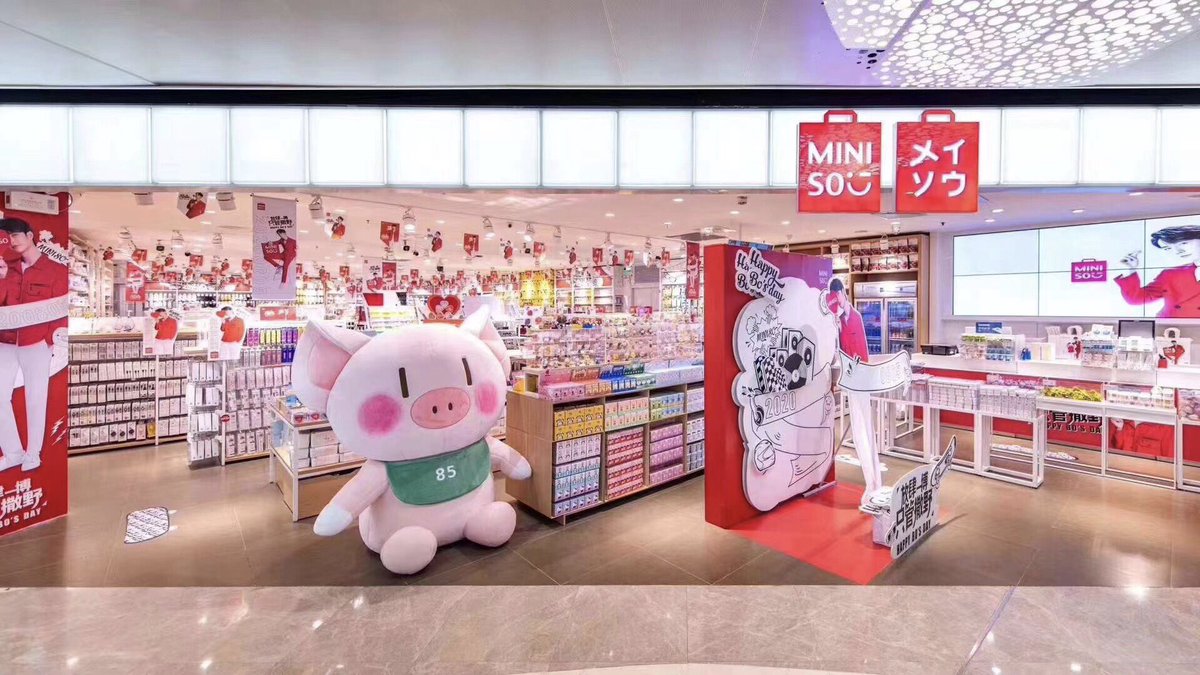
    Chinese discount retailer Miniso has opened more than 40 stores in Vietnam, four years since it launched in the market.

    Miniso entered Vietnam with its first store in Hanoi in 2016. Since then, the brand has been the local’s favorite destination for discount merchandise. Miniso now has more than 700,000 fans following its Facebook account.

    Miniso operates in key cities in the country and has a presence at major shopping malls including Aeon, Lotte, and Vincom.

    During the early stages of entering Vietnam, Miniso showed its understanding of the market by choosing local top star Son Tung M-TP as a brand ambassador. The brand also teamed with well-known Vietnamese host Sam to launch a beauty line called Sam Skin and Makeup.

    “The Vietnamese market has always shown great potential for development,” the company said in a statement. “Even under the epidemic, the market’s increasing demand for consumer experience and cost-effective products have made Miniso very confident in the future development of the Vietnamese market.”

    Miniso has not only joined several e-commerce channels, including Shopee, Lazada, and Tiki, but also created Shopify to provide “a barrier-free shopping environment”.

  • Online marketplace Tiki gets US$130 million funding

    Online marketplace Tiki gets US$130 million funding

    Vietnamese online marketplace Tiki has successfully raised US$130 million in its latest funding round led by Northstar Group.

    According to Deal Street Asia, the total value of the investment may increase by a further $20 million.

    Founded in 2003, Northstar Group is a Singapore-based private equity firm, currently investing US$3 billion in more than 30 companies across Southeast Asia.

    Recently, online marketplace Tiki and rival platform Sendo informed authorities of a proposed merger scheme amid intense competition in Vietnam’s e-commerce market, with two strong rivals Lazada and Shopee. However, neither company has commented further on the plan.

    Although Tiki has received large investment amounts, the company is locally referred to as a “money-burning machine”. It accumulated a loss of $60.9 million last year.

  • Sendo wins funding, overtakes Tiki in Vietnam

    Sendo wins funding, overtakes Tiki in Vietnam

    In this financing round, its largest to date, Sendo has been backed by its existing investors including SBI Group, Beenos, SoftBank Ventures Asia, Daiwa PI Partners, and Digital Garage together with new investors such as EV Growth from Indonesia, and Kasikornbank from Thailand.

    According to a statement, the funds will be used to expand the breadth of its existing integrated platform offering to both sellers and consumers, as well as to “further deepen its technology moat with AI and machine learning to enhance the overall consumer journey experience”.

    “While we have hit our annualized gross merchandise volume (GMV) target of US$1 billion earlier than expected, we care much more about meaningful and sustainable GMV growth, which we believe has to come from consumer stickiness owing to a great shopping experience,” said Hai Linh Tran, co-founder and CEO of Sendo, pictured above.

    “Sendo’s integrated ecosystem spanning marketplace, advertising, logistics and financial services is designed to ensure that, and that goes well with our monetisation strategy into multiple revenue streams and ultimately, our path to profitability.”

    Senior partner and MD of Softbank Ventures Asia, Daniel Kang, said Sendo’s strength in using the capabilities of its partners within the ecosystem has essentially created a win-win for merchants, advertising companies and financial institutions. “The company’s marketplace model is well-aligned to address the needs of typical Vietnamese sellers and consumers, and more importantly, to empower them,” he said.

    According to a recent report from iPrice, Sendo has become the second-most downloaded app and the second-most visited e-commerce website in Vietnam, overtaking its domestic rival Tiki which is 25.65 percent owned by Chinese e-commerce giant JD. Both Sendo and Tiki are concentrating solely on the Vietnam market,rather than expanding into other countries as its rivals are. Regional player Shopee remains number one.

    Sendo now boasts more than 500,000 sellers, with an estimated 17 million SKUs listed on its platform. The company serves more than 12 million customers across across the country.

  • Lazada, Tiki locked in delivery speed race

    Lazada, Tiki locked in delivery speed race

    Giants Lazada and Tiki are racing to reduce their delivery times as competition heats up in Vietnam’s e-commerce market.

    Singapore-based Lazada Friday launched a 4-hour delivery service for flowers in Vietnam, a move in response to Vietnamese startup Tiki’s 2-hour delivery for a large number of products.

    Nguyen Ngoc Thang, head of express solutions at Lazada, said that this was a new step in e-logistics for the company.

    Earlier this month, the company began to offer 2-hour and 4-hour delivery for products weighing under 15 kilograms in Hanoi and Ho Chi Minh City.

    Almost 200 Lazada sellers are eligible for the service, mostly in beverage, fashion and baby products.

    The move followed other e-commerce companies in Vietnam, like Shopee, Sendo and Lotte, also announcing delivery times of one to four hours after Tiki introduced its 2-hour delivery for over 100,000 products.

    Tiki is able to do this by investing in expanding its fulfillment center, which is now at 60,000 square meters and set to triple to 200,000 square meters by the end of next year.

    The company’s average delivery time is less than two days, against the market average of four-five days, said Tiki chairman Tran Ngoc Thai Son.

    Meanwhile, Lazada has introduced its new 24/7 receiving points in Hanoi and HCMC where customers can pick up their items at a time of their choice.

    In the third quarter of this year, Tiki ranked fourth in terms of of web traffic, followed by Lazada. Both of them fell two places from Q2, according to market research firm iPrice.

    Singapore-based Shopee remained the market leader, followed by Vietnamese players Sendo and Mobile World, it said.

    Vietnam’s e-commerce market is estimated at $5 billion this year and is set to reach $23 billion in 2025, according to a recent report by Google, Singapore-based investment firm Temasek, and U.S.-based consultancy Bain.

  • Express delivery market gathers speed

    Express delivery market gathers speed

    Ride-hailing giant Grab has followed Russian delivery firm Dostavista and local ride-hailing app Be to invest in express delivery services. The Singapore-based ride-hailing firm announced last week that it plans to invest $500 million in Vietnam over the next five years to expand its transport, food and payment networks. The money will also go towards developing fintech, mobility solutions and logistics, it said.

    In the beginning of August, Grab signed a strategic partnership agreement with budget carrier Vietjet Air, tech-based courier Swift247 to launch an integrated express digital platform that provides delivery solutions by ground and air in Southeast Asia.

    The new service would allow goods to be delivered between Hanoi and HCMC in as little as five hours, Vietjet had said in a statement.

    In mid-August, Dostavista, a “crowd-sourced” same-day delivery startup founded in Russia, raised $15 million in its series B round to invest in Southeast Asia. Dostavista owns express delivery app MrSpeedy Vietnam, which was launched in June 2018 and now has 6,000 partner drivers and 2,000 supplier clients in Vietnam.

    With competition from foreign firms heating up, domestic enterprises have also been boosting their operations in this industry. On August 6, ride-hailing service Be Group launched the beExpress delivery service in Vietnam, focusing on e-commerce deliveries and aiming for 30 percent of Vietnam’s express delivery market by next year.

    In July, logistics startup Giao Hang Nhanh JSC (GHN) also opened a fully automated warehouse in Hanoi to support its quick delivery services. It will open a second in Ho Chi Minh City before November, and is currently building a third with an area of 50,000 square meters in Hanoi, GHN said.

    With competition heating up, delivery firms are trying to differentiate themselves by racing to offer increasingly fast shipping services.

    E-commerce platform Tiki has a shipping policy that offers delivery of over 100,000 products within two hours. Shopee, the biggest e-commerce player in terms of users, offers delivery of certain products in four hours, Sendo in three hours, South Korea’s Lotte, one hour, and electronics retailer giant Mobile World has committed to ship some items in as little as 30 minutes.

    This is a particularly fierce period for the express delivery market, and the advantage falls to large enterprises or those who can raise large amounts of capital from investment funds, Do Hoa, CEO of business consultancy IME Vietnam, told local media.

    “Speed is the most important factor in delivery. In this competitive stage, large apps with many services will have an edge because they can cross-subsidize express delivery with profits from other segments, allowing them to hang on for longer.

    “This is a long-term game, requiring large investments, partners and warehouse networks. Smaller businesses with fewer financial resources will be easily eliminated,” Hoa said.

    Growth in Vietnam’s e-commerce industry will drive demand for express delivery services, especially in the business-to-consumer segment, Ken Research said. The e-commerce industry itself is also recording robust growth, with online sales rising by 30 percent last year to over $8 billion, according to the Ministry of Industry and Trade.

    Vietnam’s express logistics market is expected to reach over $1.4 billion by 2022, growing at an average CAGR of 22.8 percent per year, according to market research firm Ken Research.

  • Gaming firm VNG loses entire investment in Tiki

    Gaming firm VNG loses entire investment in Tiki

    E-commerce platform Tiki’s losses have wiped out a total of VND506 billion ($22 million) gaming firm VNG had invested in it. As of June 2019, VNG had suffered a cumulative loss of $22 million of its 24.6 percent shareholding in Tiki, according to the gaming firm’s recently released audited semi-annual financial statement.

    In accordance with current accounting practices, the value of VNG’s investment in Tiki is now effectively zero.

    Tiki JSC started off as an online bookstore in 2010 before venturing into e-commerce. Just six years later, the firm was valued at $45 million, following domestic tech firm VNG injecting some $17 million in a 38 percent stake acquisition deal, which was then the largest shareholding in Tiki.

    However, by June 30 this year, VNG’s stake in Tiki had fallen to 24.4 percent after JD.com, China’s second-biggest e-commerce firm behind Alibaba, made a series of investments for undisclosed sums to raise its ownership to 25.65 percent.

    Tiki, like other e-commerce giants in the Vietnamese market, has been struggling to make profit for years due to high operational costs in a competitive market.

    Tiki has reported losses totaling VND380 billion ($16.4 million) in 2016 and 2017. Tiki made a record loss of VND757 billion ($32.75 million) last year, of which VND254 billion ($11 million) was attributed to VNG.

    Founded in 2004, VNG provides online games, music streaming and messaging applications.

  • JD increases stake in Tiki Vietnam

    JD increases stake in Tiki Vietnam

    Chinese online giant JD has become the largest shareholder in e-commerce platform Tiki Vietnam.

    JD has bought a 25.65-per-cent stake in the business, taking its shareholding past that of previous leading investor VNG Corporation, which holds 24.4-per-cent ownership in the platform. VNG has invested US$22.4 million in Tiki over the past two years.

    Tiki Vietnam has grown from an online bookstore to Vietnam’s second-largest e-commerce provider in terms of traffic, after rival Shopee.

    The firm is reportedly seeking a $100 million investment in its next funding round in order to boost its competitive edge.

  • Vietnamese e-commerce platform Tiki set to raise US$100 million

    Vietnamese e-commerce platform Tiki set to raise US$100 million

    Vietnamese e-commerce platform Tiki is raising another US$100 million from a Northstar Group-led funding round.

    The deal, was initially aiming for $75 million, but has been scaled up with support from Tiki’s current Korean backers, and may pull in as much as $150 million if certain KPIs are met.

    Tiki, which acquired competing platform Lazada last year, is now Vietnam’s second-largest e-commerce player after Shopee. It attracted a $44 million investment from Chinese industry partner JD early last year, and recently extended its national logistics operations in partnership with Vietnamese firm Unidepot.

    “Supply chain is a billion-dollar industry in Vietnam with surprisingly rapid growth,” said Tiki CEO Tran Thai Son. “However, Vietnam’s supply chain has not achieved its peak efficiency. For example, for an order worth 100,000 dong, logistics costs can be up to [25,000] dong.”

    Tiki’s infrastructural investments have seen the firm accumulate losses of around VND1 trillion ($43.3 million) over recent years.