Retail News CRM

Tag: Tiki

  • Shopee, Tiki solidify positions as top e-commerce sites in traffic in Q1

    Shopee, Tiki solidify positions as top e-commerce sites in traffic in Q1

    Shopee and Tiki maintained their positions as the two leading sites in terms of traffic in Vietnam’s e-commerce sector in the first quarter of this year.

    According to the latest figures from the Map of E-Commerce released recently by iPrice Group – a meta-search website operating in seven countries across Southeast Asia, Shopee still held the dominant position in Q1 2019 with 40.7 million visits per month on average. Tiki followed with 35.6 million visits monthly.

    Lazada ranked third with 29 million visits, closely followed by thegioididong.com (28.8 million visits) and Sendo (25.3 million visits).

    Q1 2019 also saw several positive trends in the performance of local players, especially Tiki, Sendo, and Adayroi. iPrice’s latest data showed through the first quarter included the Tết (New New Year) holiday period, which is usually a tough time for e-commerce businesses in general, those three merchants still managed to maintain their good results from the previous quarters.

    Doing the best in this regard was Tiki. Similar to the previous quarter, the website continued to achieve over 35 million visits per month on average for Q1 2019, helping its web traffic grow at a rate of 23 percent per quarter on average since the second quarter of last year.

    Aside from Tiki, other notable local companies Sendo and Adayroi have been showing encouraging signs. According to iPrice’s Map of E-commerce, the two companies both have an average traffic growth rate of over 16 percent per quarter for the past four quarters.

    Sendo’s CEO Trần Hải Linh also confidently told IT website Tech in Asia recently that his company was on track to achieve US$1 billion in GMV (gross merchandise volume) much earlier than the previously projected target of 2020.

    This year would be an inflection point for the Vietnamese e-commerce market, Linh said, adding the market would grow much faster.

    “We will see sizable businesses becoming comparable to regional players [and] customers becoming more familiar with e-commerce,” Linh told.

  • JD.com e-commerce joint venture launches officially in Thailand

    JD.com e-commerce joint venture launches officially in Thailand

    The JD Thai JV with Central Group has been formally launched this week under the brand JD Central.

    “Our partnership with Central Group – a one-of-a-kind union between China’s biggest retailer and Thailand’s strongest retail player – will provide Thai customers with a truly world-class e-commerce experience and guarantee 100 per cent product authenticity,” said Vincent Yang, CEO at JD Central.

    The new online platform officially debuts today, September 28, and will further extend JD’s footprint in the Southeast Asia region, which already includes an established e-commerce platform in Indonesia and a strategic investment in Tiki, Vietnam’s leading B2C e-commerce business.

    Central Group, Thailand’s largest retail conglomerate, offers JD instant critical mass through customer loyalty program and brand recognition, as well as merchandise. The site has been in testing mode since June 18, offering both direct sales and marketplace models. Pre-launch sales were described as having “exceeded expectations”.

    The JD Thai JV site includes categories for electronics, digital products, fashion, home appliances, books and music through to groceries, cosmetics, toiletries, beverages and processed foods.

    During the pre-launch phase, about 80 per cent of shopper accessed the site via phones, with FMCG products, mobile phones and fashion the most popular items purchased. Products from Chinese companies have proved especially popular, with leading brands including Xiaomi, Huawei, OnePlus and Lenovo.

    Yang said the JD Thai JV will “transform the local market and unlock the boundless consumer potential of the nation’s large population, with the ultimate goal of becoming the most trusted brand in Thailand”.

  • E-commerce giants rake in losses as market share war continues

    E-commerce giants rake in losses as market share war continues

    In for the long haul, online retailers are willing to ignore losses, focusing on promotions to attract more customers.

    Hoang has recently been able to buy a few electronic items online at a mere VND500,000 ($20), a fraction of what they would have cost at regular stores.

    He has been doing most of his shopping online in recent years, usually by hunting around for items sold at discounts of 50-80 percent.

    He said: “A few months ago I bought a shirt on sale for only VND5,000 (21 cents). I paid VND25,000 for shipping.”

    Customers like Hoang are the targets of Vietnam’s major e-commerce players. To attract more customers in an ultra-competitive market, these online shops are willing to spend large sums on promotions.

    In the first quarter online retailer Shopee Vietnam had around 30,000 orders a day, most of which were shipped free, according to a report by its owner SEA Ltd.

    Lazada also regularly offers discounts of up to 50 percent.

    But in this process these stores are bleeding, with Lazada, Shopee and Tiki all reporting losses.

    Lazada had an accumulated loss in 2016 of VND2.7 trillion ($115 million), the largest among online retailers in Vietnam.

    Tiki had a loss of VND600 billion ($26 million) in the same year, while Shopee reported a similar loss last year.

    SEA Ltd. said that most of the losses are due to the expenses on advertising and promotions.

    But it is a war that would go on for a long time, Truong Van Quy, CEO of marketing academy EQVN, predicted.

    To attract customers, they are willing to ignore their losses, he said, pointing out that even Amazon had to spend a large amount of money for 15 years just to attract users.

    For an online retailer to break even it first needs to have dozens of millions of customers within five to 10 years, he said.

    This was why Chinese e-commerce giant Alibaba bought Lazada last year for $2 billion, and injected another $2 billion into the company last March, he said.

    Tiki received an investment of $50 million from China’s second biggest online e-commerce firm, JD.com, earlier this year, while Shopee injected another VND1.2 trillion ($51 million) into its business, he added.

    Industry insiders said the sector has huge potential with the expanding middle class and smartphone usage.

    The World Bank has forecast that Vietnam’s $200-billion economy is likely to grow to a trillion dollars by 2035.

    More than half of its population, compared to only 11 percent today, is expected to join the ranks of the global middle class with consumption of $15 a day or more.

    Across the country, the ratio of people using smartphones among mobile phone subscribers reached 84 percent in 2017, up from 78 percent the previous year, according to the 2017 Nielsen Vietnam Smartphone Insights Report.

    Online sales in Vietnam have expanded rapidly in recent years, currently accounting for 3.39 percent of the country’s retail market. The total retail market grew 10.9 percent last year to $173.27 billion, as reported.

  • E-commerce booms in Vietnam but top firms stay in the red

    E-commerce booms in Vietnam but top firms stay in the red

    Vietnam’s e-commerce sector grew by more than 25 percent last year and can maintain this growth rate in the next two or three years, according to the Vietnam E-Commerce Association (VECOM).

    It says online sales is set to hit $10 billion by 2020, accounting for five percent of the country’s total retail sales.

    Yet the four top firms that have built up the nation’s e-commerce so far, Lazada, Tiki, Shopee and Sendo, have repeatedly reported accumulated losses.

    Market observers explain that in a “primitive market with high growth rates,” top companies are not afraid to accumulate losses in order to entrench themselves in positions of strength by focusing on expanding their market share at “at all costs.”

    Singapore-based Lazada entered Vietnam in 2012 when it was still owned by Germany’s Rocket Internet.

    In April 2016, China’s Alibaba Group Holding Ltd bought a controlling stake in Lazada for about $1 billion to support its expansion plans in Southeast Asia.

    In June 2017, Alibaba Group increased its investment in Lazada by an additional $1 billion, raising its stake from 51 percent to 83 percent.

    Lazada Vietnam reported a loss of VND977 billion ($42.2 million) in 2015 and over VND1 trillion ($43.3 million) in 2016. It attributed losses to big spending on management and sales promotions.

    By late 2016, its charter capital stayed at just VND15 billion and loans accounted for most of the working capital it was using.

    However, Lazada is still an attractive investment option, with Alibaba announcing in March that it would double its investment in the e-commerce firm to $4 billion.

    A project of Garena, a consumer Internet platform provider based in Singapore, Shopee is second in the list of e-commerce firms suffering big losses in Vietnam.

    In 2016 when it first entered Vietnam, Shopee posted losses of VND160 billion, but this had risen to more than VND600 billion last year.

    By the end of 2017, the total asset value of Shopee had risen ten times to more than VND730 billion as its parent firm raised its total capital by VND30 billion to more than VND1.14 trillion.

    Compared to Lazada and Shopee, which have giant firms backing them, Tiki and Sendo are quite modest, meaning they had made smaller losses.

    Tiki started off as an online book store in 2010 before venturing into e-commerce. Just six years later, the firm was valued at $45 million, following domestic tech firm VNG injecting some $17 million in a 38 percent stake acquisition deal.

    Tiki had posted revenues of nearly VND62.4 billion ($2.71 million) in 2016, a six-fold increase over 2015. However, this was accompanied by a loss of around VND179 billion ($7.78 million) because of high operational costs.

    In its annual report for 2017, VNG showed Tiki making a loss of VND282 billion ($12.26 million) for the year.

    Despite its losses, Tiki has remained attractive to investors as a leading brand in the market. In mid-January this year, JD.com Inc., a giant retailer in China, injected an unspecified sum into Tiki. The Chinese firm had announced last November that it would pump $44 million into the Vietnamese e-commerce platform, making it Tiki’s largest shareholder.

    The last of the top four is Sendo owned by Vietnamese tech giant FPT.

    Sendo raised more than VND400 billion in the two years of 2015 and 2016 and the company reported losses of VND60 billion in 2015 and VND136 billion in 2016.

    However, there its equity stands at more than VND227 billion thanks to a stock issue in 2016.

    In a report last April cited Bain, a U.S.-based global management consulting firm as saying online businesses were booming in Southeast Asia.

    Bain estimated that the region had 200 million digital consumers, or people who bought goods or services online, out of an adult population of 405 million. Vietnam, with a population of 93.7 million, accounted for 35 million of these consumers.

    Vietnam’s youthful population is among the keenest users of mobile devices in the region, while the country’s consumers spend more time online than most of their neighbors, several studies have pointed out.

    Research firm Nikkei estimated that Vietnamese people spend nearly 25 hours online per week, on a par with or just behind Singapore and the Philippines.

  • Protest arise after JD.com launches house brand Jing Zao

    Protest arise after JD.com launches house brand Jing Zao

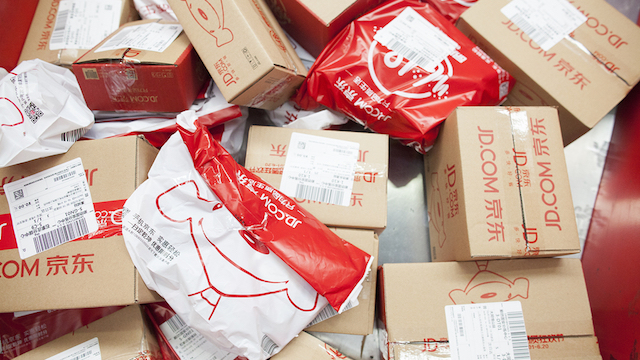
    Clashing head-on with manufacturers who sell through its platform, China’s JD.com has introduced its own brand, Jing Zao.

    Its initial 38 products range from towels to suitcases in similar style to Japan’s Muji or US luggage maker Samsonite, but at a lower price. Both companies sell their wares through JD.com.
    JD.com knows which products are popular with customers and can tailor its offerings accordingly, plus it has its own logistics service for deliveries.

    Its house brand follows its venture into physical retail stores. This month it introduced its first fresh-food supermarket in Beijing.

    Meanwhile, JD.com has confirmed it is a co-investor in Vietnam’s Tiki e-commerce platform, becoming one of its largest shareholders.

  • Bukalapak teams up with TIKI to ease delivery

    Bukalapak teams up with TIKI to ease delivery

    E-commerce platform Bukalapak kicked off on Wednesday the expansion of its partnership with courier service and logistics company TIKI to facilitate small and medium enterprises (SMEs) in selling their products.

    The new partnership will enable vendors to accelerate product delivery.

    For instance, TIKI provides a “booking code” feature in which vendors can fill in the data of senders and receivers online before sending the packages. When vendors arrive at a TIKI branch, they do not need to wait for TIKI employees to fill in the information anymore.

    “There will be [system] integration between Bukalapak and TIKI. The new features will be launched soon,” Bukalapak co-founder and chief financial officer Muhammad Fajrin Rasyid told at its headquarters in Kemang, South Jakarta.

    Another new feature offered to vendors is pick-up service that allows TIKI couriers to pick up goods from the vendors’ locations. Bukalapak has more than 1.7 million vendors with more than 38 million products offered on its online marketplace. About 500,000 vendors at Bukalapak use TIKI’s services.