Retail News CRM

Tag: train

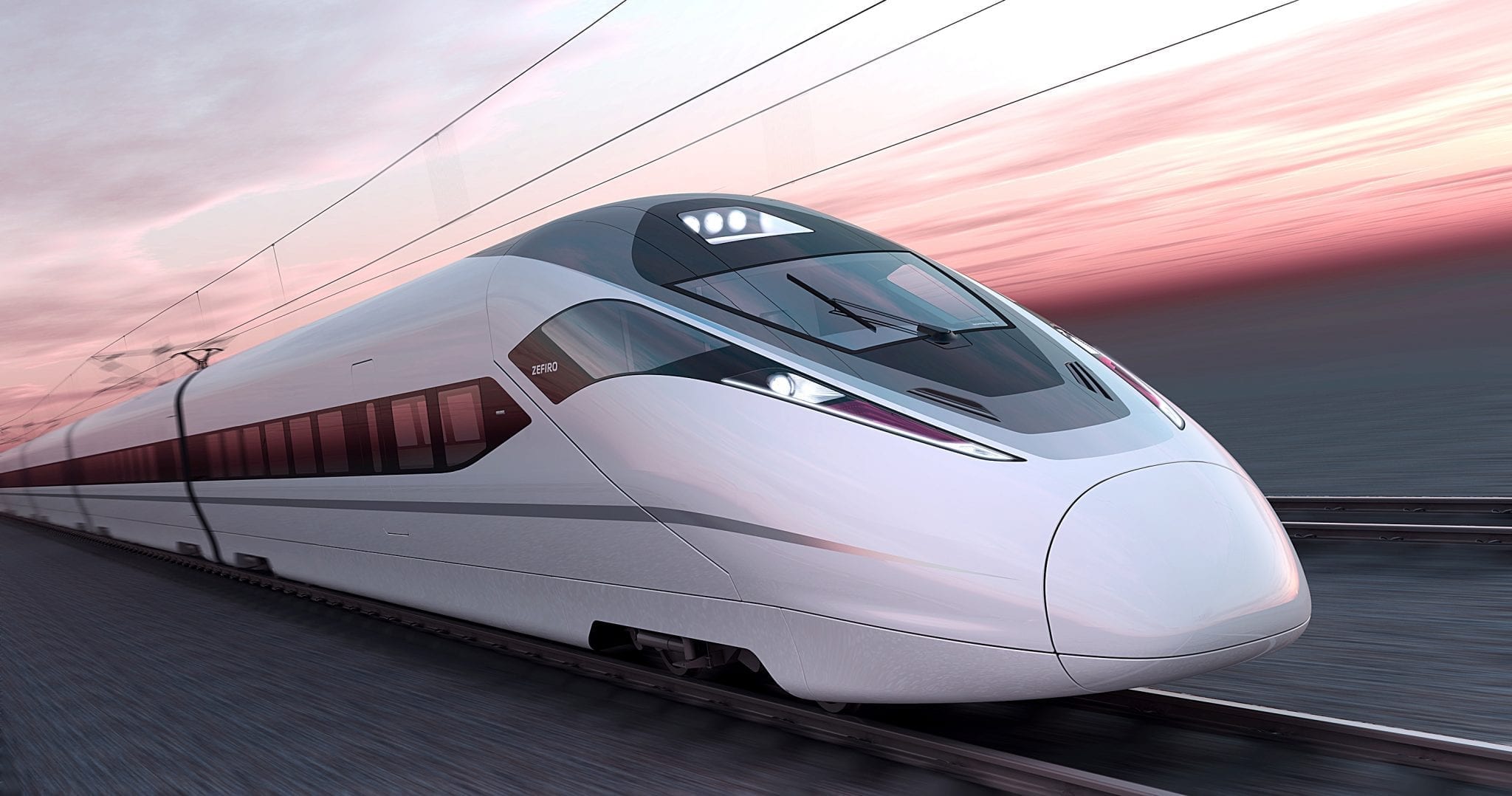
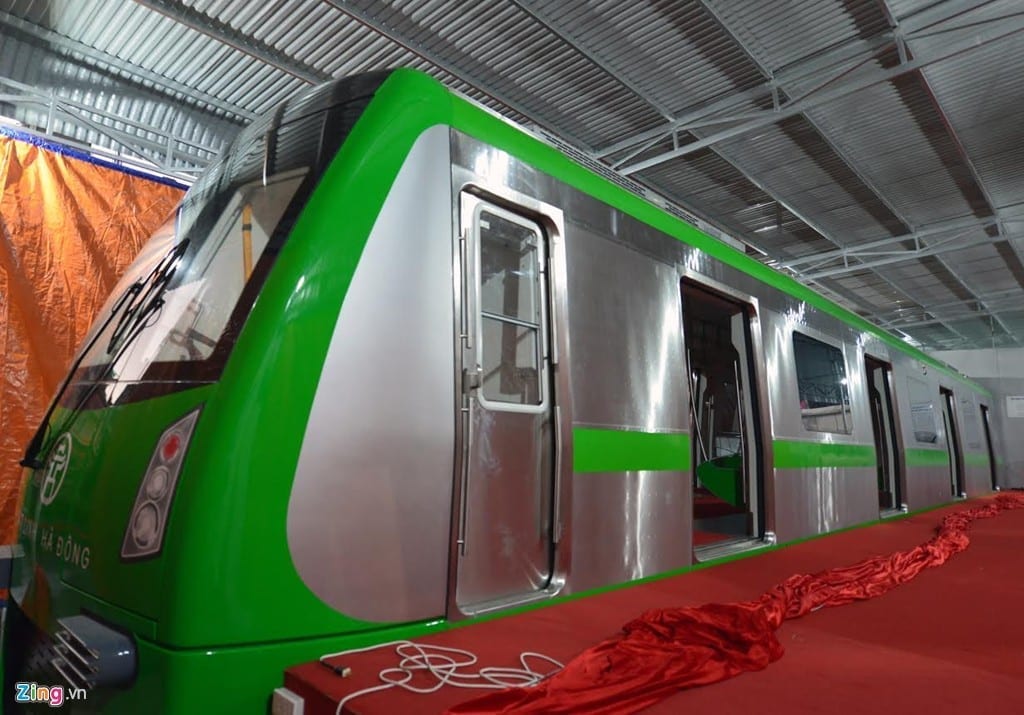
  • This is what Hanoi’s first subway train may look like

    This is what Hanoi’s first subway train may look like

    French company Alstom has signed a $340 million contract to provide 10 modern train sets and build 12 stations. Hanoi Metropolitan Railway Management Board has signed a $340 million contract with French company Alstom for a metro system.

    Under the contract, the French urban mobility supplier will supply and integrate 10 train sets, each with a capacity for 900 passengers, for the city’s Metro Line 3, linking Nhon and Hanoi Station.

    It will also build 12 stations and one depot for maintenance.

    The contract is sponsored by the French government and will be carried out in four years.

    The 12.5-kilometer line is designed to carry 8,600 people per hour for each direction. It is one of several planned for the capital’s metropolitan area. Together they will form a rail network that is hoped to help ease traffic congestion and reduce emissions.

    Work on the line began in 2010, with the cost estimate originally set at $1.2 billion and operation scheduled in 2017. But funding delays may stretch the deadline to 2021.

    Hanoi officials said the city will need billions of dollars to develop transport infrastructure over the next five years, but funding is tight and this could affect the city’s growth prospects.

    There are more than five million motorbikes on Hanoi’s roads and the city is adding as many as 19,000 newly registered vehicles each month.

    With the number of vehicles growing 10 percent and road space at only 2 percent a year, traffic in Hanoi is on course for crippling gridlocks, experts say.
  • Russian Railways eyes high-speed Europe-China cargo trains

    Russian Railways eyes high-speed Europe-China cargo trains

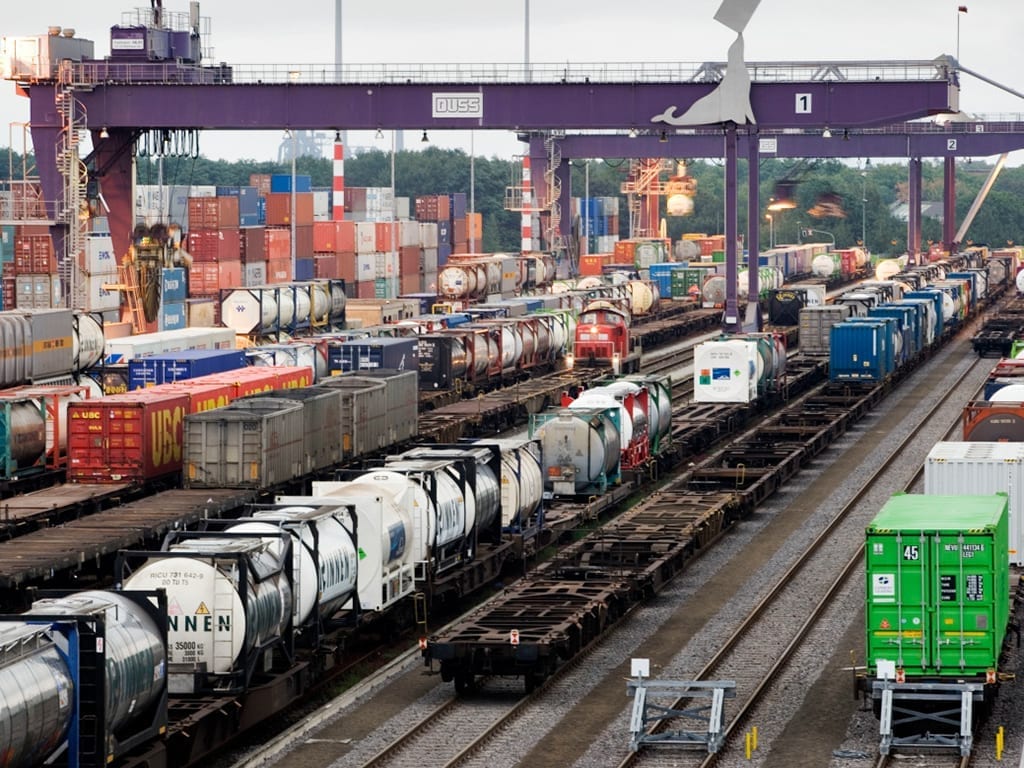
    The president of Russian Railways, Oleg Belozerov, proposed a high-speed cargo railway connection between Europe and China, allowing transport of goods to take as little as two days.

    “We plan to reach China via Kazakhstan and to carry special, high-profit cargoes to Europe via Russia, because a ship sails now 60 days, which is a long time. It sails round India and only then arrives to Europe. With a high speed rail transport we will be able to deliver goods in two days, and to earn extra money for our country,” Belozerov told a United Russia party meeting recently according to an Executive Intelligence Review News Service (EIRNS) report.

    Earlier Russian Railways said it was working on developing a cargo train capable of carrying from 300 to 600 tonnes of cargo at speeds up to 300kph.

    The China-Europe cargo line will be part of the Moscow-Kazan high-speed railway, whose construction should begin in 2017, Belozerov said. With a distance of some 770 kilometers, and a speed of of 350-400 kph, the rail route will cut the time between the two cities to as little as 3-3.5 hours; the current time is 14 hours. The line could be commissioned before 2022-2023.

    The US$16.8 billion railway project could later be extended to China, connecting the two countries across Kazakhstan. The Moscow-Beijing railroad will be 7,769 kilometers, with a travel time of 32.8 hours — four times faster than the current 130.4 hours. The average annual passenger traffic is estimated at 195 million people.

    China is committed to providing $6.5 billion as a credit for 20 years and $1.6 billion as a contribution to the charter capital of the special-project company. The German Initiative Consortium (includes Siemens, Deutsche Bank, Deutsche Bahn, and other companies) is ready to allocate €2.7 billion to finance the construction of the high-speed railway line and to attract up to €800 million for the project.

  • China has launched its first UK-bound freight train

    China has launched its first UK-bound freight train

    China has launched its first UK-bound freight train from the city of Yiwu in Zhejiang province to London. The train, which is jointly operated by the Yiwu government and China Railway Container Transport Corp., Ltd., a subsidiary of the state-owned China Railway Corporation, set off from Yiwu West Station and will leave China at Alanshankou, passing through Kazakhstan, Russia, Belarus, Poland, Germany, Belgium, France and the English Channel before arriving at Barking in East London.

    The journey, which is over 12,000km long, is expected to take approximately 18 days.

    According to China Railway, goods carried on the train include household commodities, apparel, textiles and suitcases.

    Yiwu is also the origin of various China-Europe and China-Central Asia trains.

    The new link to the UK is part of China’s Belt and Road initiative and will strengthen trade ties between China and West Europe, according to China Railway.

  • 70 percent train tickets for Christmas season already sold

    70 percent train tickets for Christmas season already sold

    Seventy percent of the regular train tickets for travel during Christmas and New Year 2017 holidays have been already sold, Bambang Eko Martono, the Director of state railway operator PT Kereta Api Indonesia, said here on Monday.

    “We are targeting 258 million passengers this year,” Bambang Eko Martono stated.

    “PT KAI will offer new additional train tickets that could be ordered on Tuesday (Nov 15) at 12 noon,” he added.

    PT KAI has will make available 13,892 additional train seats during the Christmas and New Year 2017 holiday period.

    “We have made available 212,564 seats per day with 328 regular train trips and 28 additional train trips during Christmas and New Year holidays, about 11 percent more than last year,” he noted.

    The number of passengers travelling by train during the holiday season increased by six percent, from 4.3 million in 2015 to 4.5 million this year.

    PT KAI estimates that revenue during the holiday season could increase up to 10 percent, compared to last years figure for the same period.

  • Indonesian government to give preference to Japan for semi-high speed train

    Indonesian government to give preference to Japan for semi-high speed train

    The Indonesian government will give preference to Japan to build a Jakarta-Surabaya semi-high speed train project, Transportation Minister Budi Karya Sumadi said.

    “Japan will receive preference,” he said after a coordination meeting at the Coordinating Ministry for Maritime Affairs here Friday.

    Despite receiving preference, Japan must continue to meet the qualifications set by the Indonesian government, Sumadi, one-time president director of state airport operator Angkasa Pura II, said.

    He made it clear that at the coordination meeting with Coordinating Minister for Maritime Affairs Luhut Binsar Panjaitan, National Development Planning Minister/National Development Planning Agency (Bappenas) Head Bambang Brodjonegoro and Finance Minister Sri Mulyani the government decided to expedite the construction of the semi-high speed train project.

    The government will soon complete a plan for the construction of semi-high speed train line and will discuss it with Japan in the next few months, he said.

    Meanwhile, Bambang said at the meeting the government still had to assess the semi-high speed train project.

    “We are still discussing and whether the project will use an ordinary loan scheme, government project, or private sector participation scheme,” he said.

  • Soekarno-Hatta Airport train expected to be operational by July 2017

    Soekarno-Hatta Airport train expected to be operational by July 2017

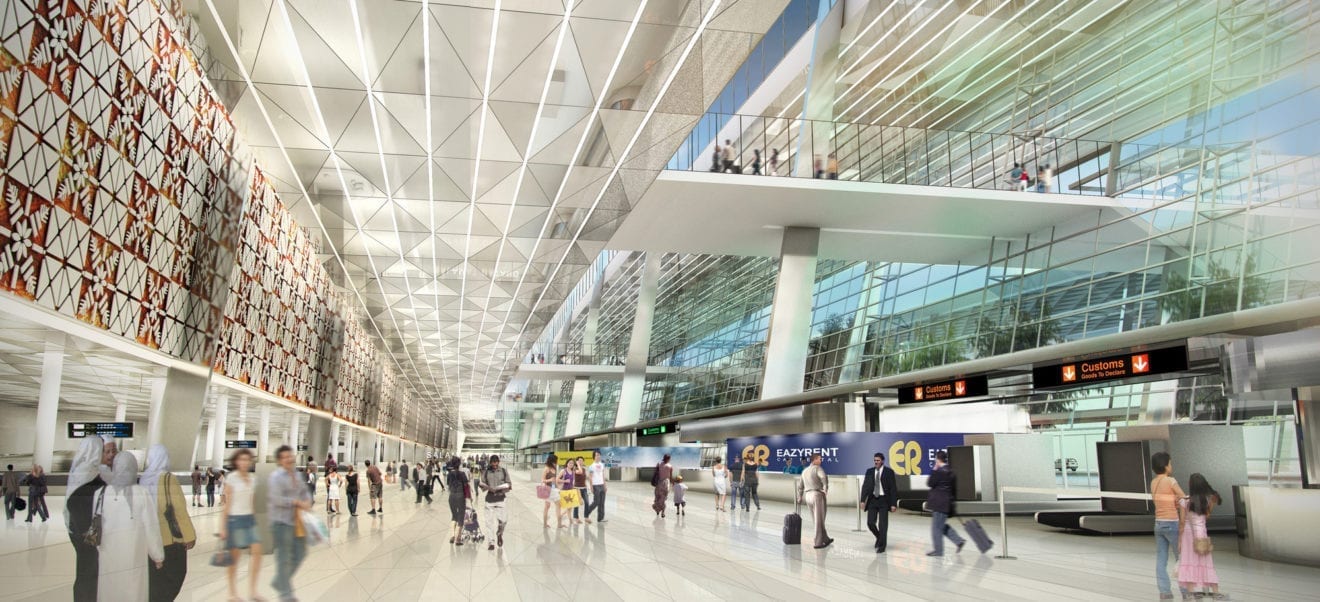
    The railway service connecting Jakarta to Soekarno-Hatta International Airport in Tangerang, Banten Province, should be complete and fully operational by July 2017, President Director of PT Railink Heru Kuswanto said here Monday.

    The service will provide 124 trips per day, with each train consisting of 10 coaches capable of transporting 274 passengers per trip.

    It is expected to run every 15 minutes to transport a total of 33,976 passengers per day, Kuswanto said.

    Canadian firm Bombardier was appointed to manufacture the trains.

    “The coaches will be delivered from Sweden in March 2017,” Kuswanto said.

    The government has invested US$70 billion to procure 10 trains from the rail equipment division of Bombardier.

    The trains will be customized to meet the national standard of railway gauge of 1,067 millimeters.

    The government has a budget of Rp2.7 trillion for the construction of the airport railway service which will be integrated into several Jakartas city train stations such as Manggarai, Sudirman Baru, Duri, and Batu Ceper.

    The train journey from Manggarai Station to Soekarno-Hatta International Airport is expected to take 54 minutes at Rp100,000 per trip.

    The railway network will be integrated with Terminal 1, 2 and 3 of the Soekarno-Hatta International Airport.

    PT Rilink is a joint venture enterprise between national railway company PT Kereta Api Indonesia and the state-owned airport service enterprise PT Angkasa Pura.

  • KAI Offers Train Cars to Myanmar

    KAI Offers Train Cars to Myanmar

    State-owned railway company PT Kereta Api Indonesia (KAI) has offered at least 600 old train cars to Myanmar.

    “We have about 600 20-year-old cars. They can run up to 60 kilometers per hour. But they need to be reconditioned,” KAI director of logistics and development Budi Noviantoro said in Yogyakarta.

    Budi explained that his company has sent a technical team to Myanmar to conduct a survey. As the company purchased new cars from General Electric, PT KAI had no longer used the old cars for its operations.

    The Myanmar Ambassador to Indonesia has offered PT KAI to operate the country’s railway, reflecting a cooperation commitment to realize the mass transportation project.

    “Myanmar has had trains. But the speed is limited only to 30 kilometers per hour,” Budi said.

    Budi pointed out Myanmar has a huge potential in the railway sector, but the government could not yet optimize the potential, as the situation in the country has just been stabilized.

    In addition, KAI has also discussed a cross-border railway project, connecting Kunming, Vietnam, Thailand, Malaysia and Indonesia. Delegations of six ASEAN countries, including Myanmar are currently meeting in Yogyakarta to discuss the cross-border railway project.

    KAI president director Edi Sukmoro said that the cross-border railway network can be realized since railway transportation is the most important part in the ASEAN Economic Community era.

    “In Europe, a car can be transported by a Ferry. In the future, Indonesia can have this,” he said.

  • Jakarta-Surabaya rapid train to use existing track

    Jakarta-Surabaya rapid train to use existing track

    Coordinating Minister for Maritime Affairs and Acting Minister of Energy and Mineral Resources Luhut Binsar Panjaitan has said the development of the Jakarta-Surabaya rapid train will use the existing track.

    “For the rapid train, we will use the existing network. We will strengthen the bearing pads and make the crossings run over or under, so there will not be any gates that can harm anyone,” stated the minister at the State Palace complex in Jakarta, Tuesday.

    He mentioned that there are a thousand crossing points on the Jakarta-Surabaya railway network.

    The minister hoped the project survey, due to be conducted in partnership with Japanese representatives, could be done in the first quarter of 2017.

    “The Jakarta-Surabaya rapid train, which runs up to 200 kilometers per hour, will have an immense impact on the nations economy,” he remarked.

    The projects investment value is considerably large, reaching US$2.5 to 3 million.

    Minister Panjaitan explained that the agenda of his meeting with President Joko Widodo today includes reporting the results of his trip to Japan, which was a follow-up to the presidents agreement with Japans Prime Minister Shinzo Abe.

    “I met the prime minister along with his ministers and other officials,” he reiterated.

    He pointed out that the notions agreed upon by both country leaders included the Maritime Economic Cooperation, which was initiated last year.

    “We are now pursuing cooperation in a number of locations, including oil explorations in Natuna, economic development in Sabang, Patimbang harbor development in West Java, and farming advances in Merauke, Papua,” he remarked.

    He also mentioned cooperation in the education sector, where Japan will help with vocational training, while sending their professors to a number of technology corporations in Indonesia.

    “Partnerships in strategic industries are also included, which covers the rapid train project to be discussed with the minister of state-owned enterprises,” he continued.

    He added that from the string of agreements, those that will potentially be carried out during the first quarter of 2017 include the development of Patimbang Harbor.

    “Then, we will proceed with a joint survey for the Jakarta-Surabaya rapid train,” he concluded.

  • Jakarta’s airport train to be operational in 2017

    Jakarta’s airport train to be operational in 2017

    Development of rail track between Jakarta’s Manggarai railway station and Soekarno Hatta airport is expected to be completed in 2017.

    “We already coordinated with PT Railink. It is to be completed in February 2017,” President director of the state owned airport operator PT Angkasa Pura II Budi Karya Sumadi said here on Wednesday.

    PT Railink is a joint venture between PT Angkasa Pura II and state owned railway company, PT Kereta Api Indonesia.

    PT Railink to revamp old track and build new track totaling 38.3 kilometers between the Manggarai railway station in Jakarta and the airport and operate the train.

    Budi said the train would take 54 minutes between Manggarai and Soekarno Hatta airport and there would be departure of train every 15 minutes.

    Everyday there would be 61 trips with a carrying capacity of 35,000 passangers.