Retail News CRM

Tag: transportation

  • Siemens Plans Ambitious High-Speed Rail Project to Transform Vietnam’s Transportation Landscape

    Siemens Plans Ambitious High-Speed Rail Project to Transform Vietnam’s Transportation Landscape

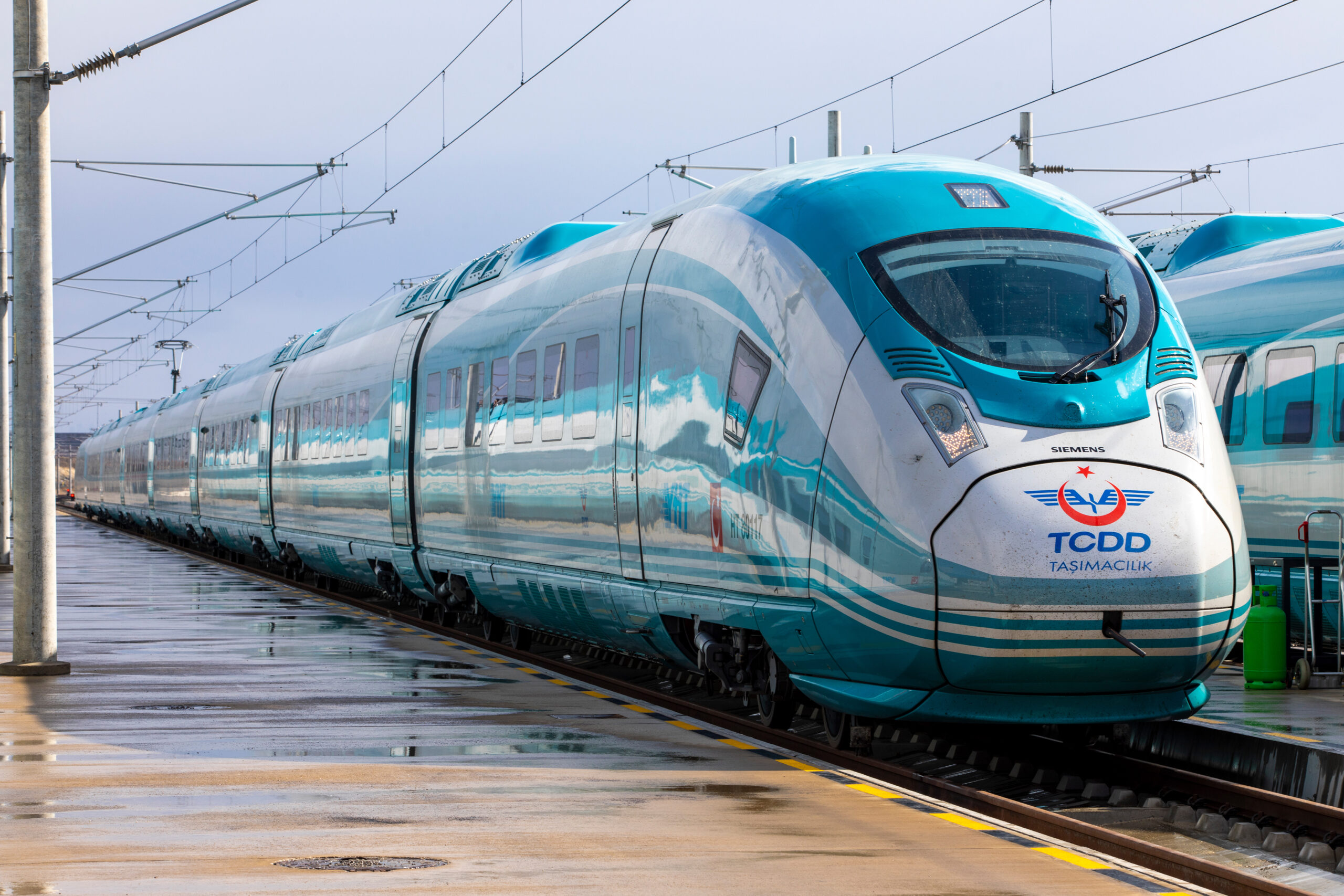
    In a compelling dialogue at the 16th Annual Meeting of the New Champions, held by the World Economic Forum in Tianjin, China, Siemens’ Chief Technology Officer and Chief Strategy Officer, Peter Keotre, presented an ambitious invitation to Vietnam’s Prime Minister Pham Minh Chinh. The offer reflects Siemens’ ongoing commitment to strengthening its presence in the region.

    Siemens, which operates across sectors including industry, infrastructure, transportation, and healthcare, has distinguished itself in the arena of industrial AI. Last year, the company reported impressive revenues of EUR 75.9 billion (US$ 89 billion). Since establishing a foothold in Vietnam in 1993, Siemens has operated offices in Hanoi, Da Nang, and Ho Chi Minh City, alongside a manufacturing facility located in Binh Duong Province.

    Prime Minister Chinh lauded Siemens for its substantial global operations and meaningful contributions to Vietnam, expressing enthusiasm for the company’s intentions to escalate investments, particularly in critical infrastructure projects like the North-South high-speed rail. This project, which received National Assembly approval in November 2024, carries a hefty price tag of VND 1.7 quadrillion (US$ 67 billion) and will stretch 1,541 kilometers, linking Hanoi to Ho Chi Minh City through 20 provinces and cities.

    The North-South rail initiative isn’t drawing interest solely from Siemens; various foreign firms have also shown eagerness to participate. On the domestic front, major players like VinFast, backed by Vietnam’s wealthiest individual Pham Nhat Vuong, and automaker Thaco are also vying to invest.

    In addition to the high-speed rail, Vietnam is eyeing enhanced rail connections with China to streamline routes extending to Central Asia and Europe. Chinh has encouraged Siemens to collaborate with relevant ministries, agencies, and the Vietnam Railways Corporation to explore potential involvement in these transformative projects.

    Infrastructure development is a focal point for the Vietnamese government, viewed as a vital catalyst for economic growth. Chinh shared that public-private partnership models are being considered to attract investments in essential national initiatives encompassing transportation, energy, and digital infrastructure.

    His remarks underscored recent institutional reforms aimed at creating more open mechanisms and policies, expanding investment opportunities for businesses eager to be part of Vietnam’s progressive development narrative. With plans covering roads, railways, air transport, and maritime infrastructure, the government is laying the groundwork for a robust economic future, where even trains can hit the high speeds of innovation.

    Questions & Answers

    How is Siemens planning to deepen its investments in Vietnam?
    Siemens aims to enhance its investments primarily in infrastructure projects, with a keen focus on the North-South high-speed rail initiative that promises to revolutionize the country’s transportation landscape.

    What are the key features of the North-South high-speed rail project?
    The rail project, approved by the National Assembly in November 2024, will span 1,541 kilometers, connecting Hanoi to Ho Chi Minh City and traversing 20 provinces and cities, with a projected cost of VND 1.7 quadrillion (US$ 67 billion).

    How does Vietnam view infrastructure development?
    Vietnam considers infrastructure development as a crucial driver for economic growth and is exploring public-private partnerships as a means to attract investments into vital national projects, particularly in transportation and digital infrastructure.

  • Feasibility report ready for Vietnam’s $58 billion high-speed railroad

    Feasibility report ready for Vietnam’s $58 billion high-speed railroad

    Vietnam’s north-south high-speed railway is expected to cost $58 billion, according to a feasibility report released at a meeting Tuesday.

    The 1,545-kilometer route from Hanoi to Ho Chi Minh City will have double standard-gauge tracks of 1.435-m width and 23 stations, according to a consultancy consortium comprising Vietnamese firms TEDI, TRICC and TEDIS.

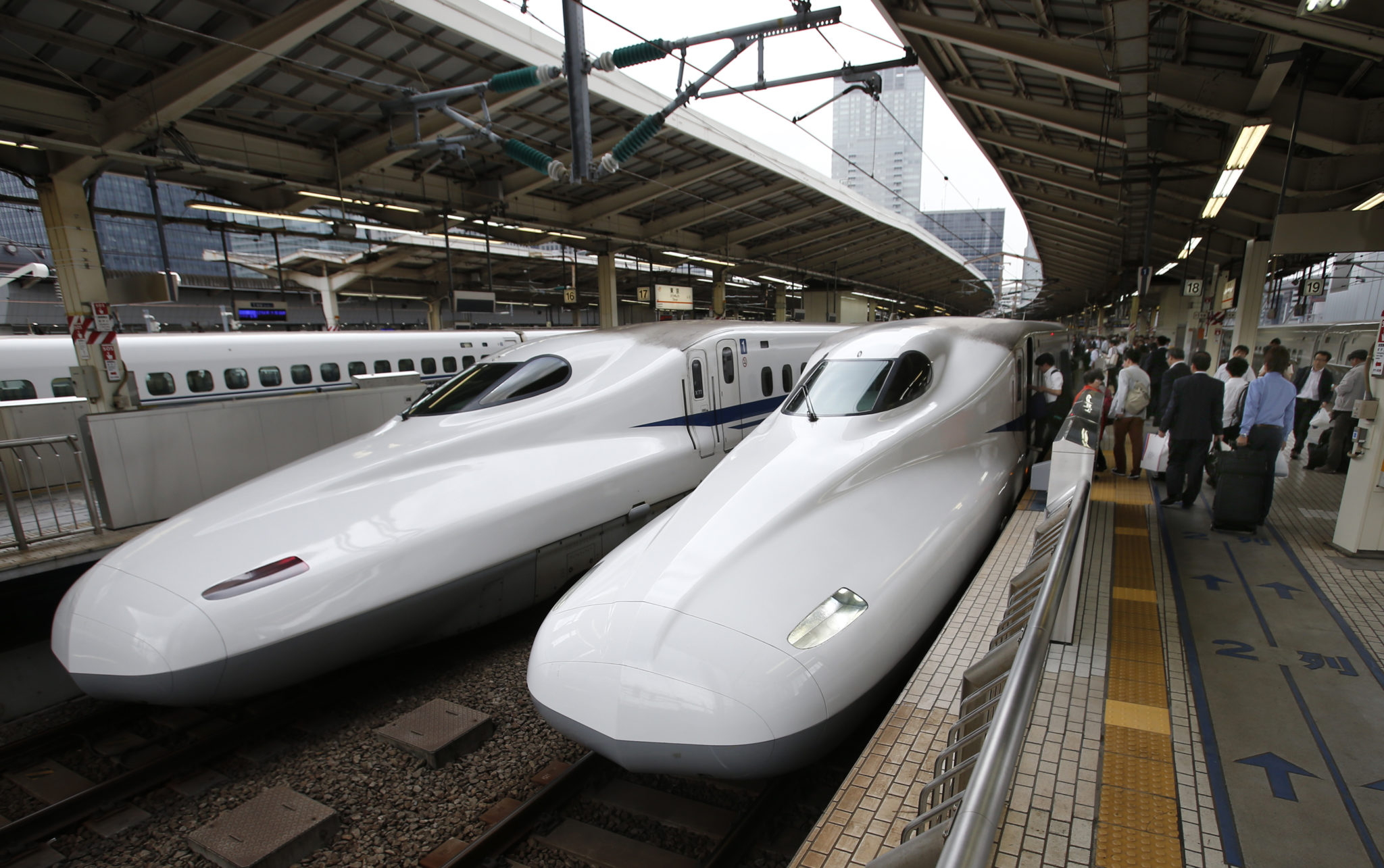
    It will adopt the distributed traction technology used by Japanese high-speed trains.

    Sixty percent of the tracks will be on viaducts, 10 percent underground and 30 percent on the surface, completely protected by fencing and without a single crossing.

    Two sections – from Hanoi to the central city of Vinh and from the central city of Nha Trang to HCMC – will be built first in 2020-2030 at a cost of $24 billion, and commercial operations are likely to begin in 2032.

    All sections are expected to be completed and operational by 2040-2045. Transport time from Hanoi to HCMC will be eight hours, while the current train takes 24 hours.

    The speed of the trains on the route would determine the attractiveness of the project, the report said, explaining that if it runs at 200 kilometers an hour, it would only account for 2.7 percent of the transportation share on the Hanoi – Nha Trang section.

    But if it increases to 350 kilometers, the share could reach 14 percent and the railroad could compete with airlines, it said.

    The proposal is for trains to run at 160-200 km speed after the first section is complete, and 350 km when the entire project is finished.

    At the meeting, Deputy Minister of Transport Nguyen Ngoc Dong said this feasibility report would be considered by authorities before being scrutinized by a European consultancy.

    “The transport ministry will invite bids to select that consultancy.”

    Efficiency unclear

    Experts at the meeting said the consultants need to make the projects’ financials clear.

    It should be divided into smaller sections to improve efficiency instead of the three large sections proposed now, Dr Nguyen Ngoc Long, deputy chairman of the Vietnam Bridge and Road Association, said.

    “Whatever option is selected, the infrastructure must allow a speed of 350 kilometers an hour.”

    Vu Hoai Nam, head of the urban railway faculty at the National University of Civil Engineering, said the feasibility report does not have a risk analysis.

    “If there is no detailed analysis of the ability to recover the investment, clearance and exchange rate fluctuations, the risk will be high.”

    The railroad would impact the passenger shares of airlines, putting pressure on the economy, and that should be taken into account, he added.

    Revived

    The north-south high-speed railroad was recently revived after being rejected by the National Assembly in 2010 due to its $56-billion price tag, which was half of Vietnam’s GDP then.

    If approved by the government now, it will be submitted to the house again next year.

    Experts said it might be more favorably viewed by the NA as well as the public due to Vietnam’s better financial position and greater demand for advanced infrastructure.

    The existing 3,000-kilometer railroad network has not received any major investment since it was built 140 years ago, and does not have the capacity for high speeds.

    Investment in railways currently accounts for only one percent of the transportation sector’s total budget.

    The NA approved a plan earlier this month to upgrade it at a cost of $300 million.

  • NY/NJ Foreign Freight Forwarders & Brokers Association Announces 2025 “Captain of Industry” Award Recipient

    NY/NJ Foreign Freight Forwarders & Brokers Association Announces 2025 “Captain of Industry” Award Recipient

    The NY/NJ Foreign Freight Forwarders & Brokers Association,  announces that Charlene Riley has been selected as the recipient of the 2025 Captain of Industry Award. This prestigious honor is awarded to individuals who have demonstrated exceptional leadership, commitment, and long-standing service to the association and the international trade and logistics community. Ms. Riley will be honored on Wednesday, June 25, 2025, during the association’s annual Dinner Cruise, an event co-hosted with the Traffic Club of New York (TCNY).

    An industry veteran and licensed Customs Broker since 1989, Ms. Riley currently serves as East Coast Import Operations Manager at J.W. Allen. With a distinguished career spanning several decades in freight forwarding and customs brokerage, Ms. Riley has served in a variety of managerial roles. Ms. Riley began her career with Barthco, where she managed numerous offices across the country. She then spent over two decades with John A. Steer Co., rising to the position of Vice President of their NY/NJ office.

    “Charlene Riley exemplifies the integrity, expertise, and dedication that define our industry,” said Jeanette Gioia, President of NYNJFFF&BA. “Her leadership has guided not only our Association but the entire trade community through complex challenges and periods of great change. It is a privilege to recognize her with the 2025 Captain of Industry Award.”

    Ms. Riley has held several leadership positions with the NYNJFFF&BA, including Board of Governors, Treasurer, Vice President of Imports, and President, and most recently as Senior Advisor and former Chair. Her strategic guidance and deep operational knowledge have been instrumental in advancing the mission of the association. She is also a key contributor on the national stage through her active involvement with the National Customs Brokers and Forwarders Association of America (NCBFAA) especially the Future Role of the Broker Committee. She had represented the Port of New York/New Jersey on the Customs Committee, chaired the Legislative Committee, and headed the FIATA Committee, having represented the U.S. at two FIATA World Congress events.

    The celebration will take place aboard the Cornucopia Destiny, departing from Liberty Harbor Marina, 11 Marin Blvd, Jersey City, NJ, with boarding beginning promptly at 6:00 PM and disembarking between 9:30-10:00 PM. For details see Dinner Cruise 2025 – NYNJ.  Guests will enjoy an evening of networking and celebration featuring an open bar, appetizers, full dinner and dessert, DJ music, and dancing. Contact (732) 741-1936 for more information.

  • Gojek Vietnam GM reveals ambitions after launch of car service

    Gojek Vietnam GM reveals ambitions after launch of car service

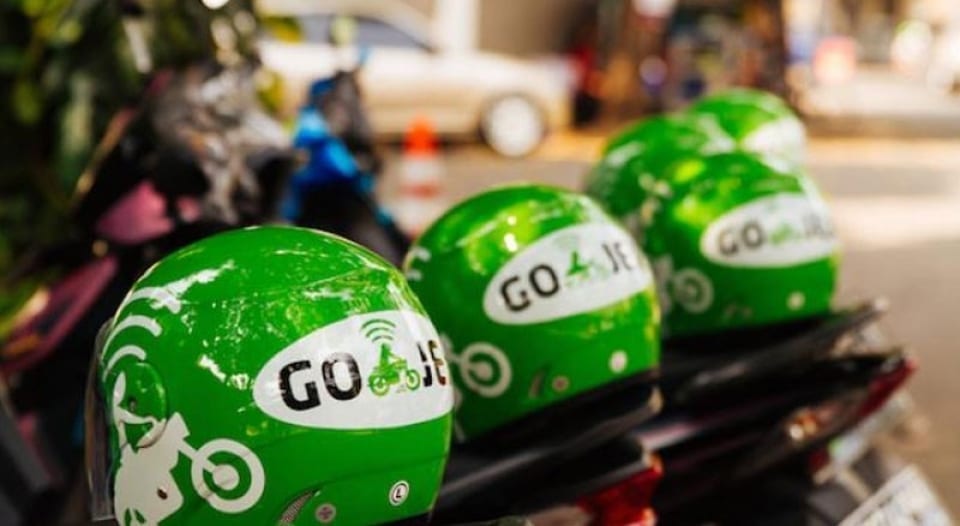
    Launched amid the Covid-19 pandemic, GoCar is one of two big products Gojek planned to introduce this year to complete its golden triangle in Vietnam, including transportation, food delivery and payment.

    Phung Tuan Duc, Gojek Vietnam GM shared stories behind the launch of car service during the Nguy – Co talk show hosted by Thai Van Linh.

  • Emirates to fill pilot gap with exodus from Etihad, Norwegian airlines

    Emirates to fill pilot gap with exodus from Etihad, Norwegian airlines

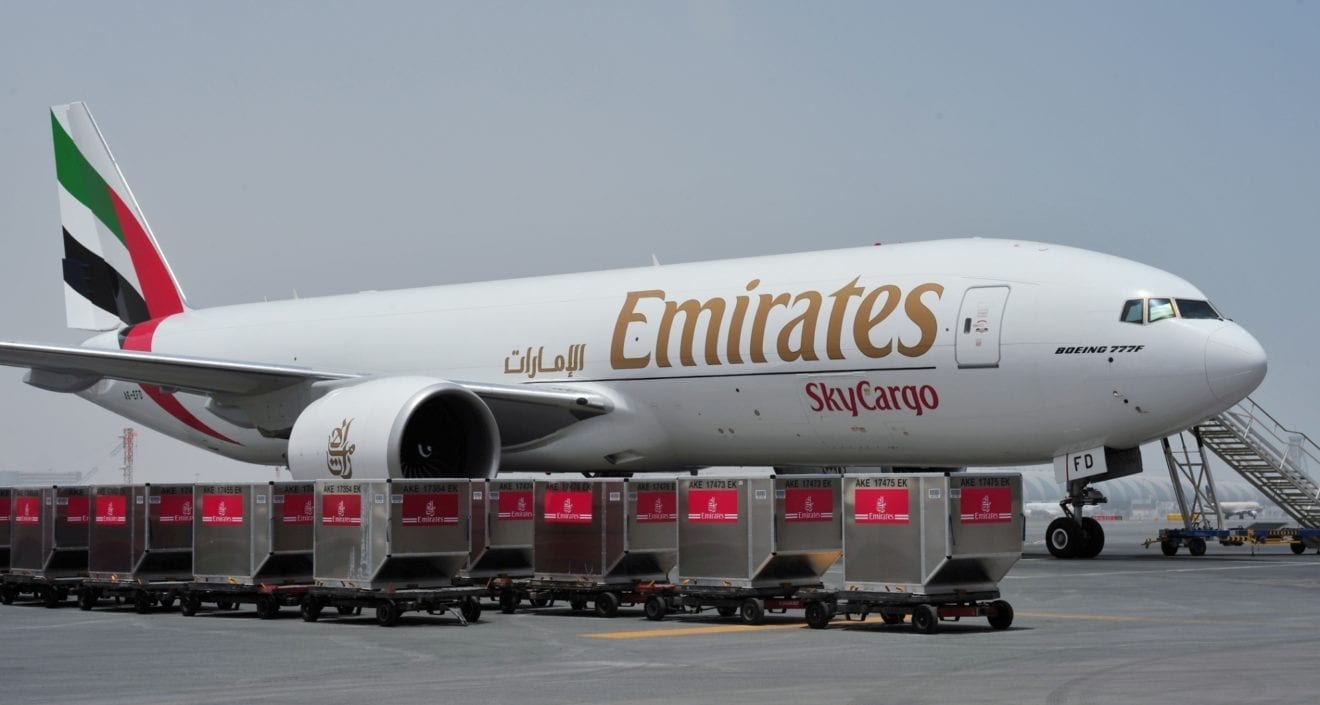
    Emirates, the world’s biggest long-haul airline, may feed its appetite for new pilots with recruits from ailing neighbor Etihad Airways and cash-strapped discounter Norwegian Air Shuttle ASA, according to an internal memo from the Gulf carrier. Hong Kong Airlines has also contacted Dubai-based Emirates about opportunities to temporarily transfer some cockpit crew, according to the document. Pilots at the unit of beleaguered HNA Group are Airbus SE-rated, meaning they could be trained to fly the Mideast company’s A380 superjumbos.

    “The current situation with several airlines in financial difficulty globally leaves Emirates in a good position to be sourcing and selecting good-quality pilots,” the memo says.

    It said the airline recruited 52 pilots last month, the highest number since August 2016, and that the number of viable applications it’s receiving “is higher than the number of candidates that can be invited.”

    Emirates declined to comment on the communication, which was dated Jan. 29 and appeared to be a meeting report. A spokeswoman said there are sufficient pilots for current operations, though the airline will “continue to welcome qualified candidates.”

    Norwegian Air said it’s not uncommon for members of any company’s workforce to seek opportunities elsewhere. Hong Kong Airlines couldn’t be reached during the Chinese New Year holiday, while Abu Dhabi-based Etihad didn’t respond to requests for comment.

    Hiring Challenge

    Emirates faces an annual hiring challenge to meet the needs of its expanding global network. President Tim Clark said last April that there would be a shortfall of 100 to 150 flight crew over 2018’s busy summer travel season.

    According to the memo, 499 crew have been deemed eligible to join from this coming April through the end of 2019.

    Applications from Norwegian Air and Etihad have been spurred by redundancies at the airlines, according to the Emirates memo.

    Norwegian, heavily indebted after one of the fastest growth spurts in aviation history, resorted to a 3 billion kroner ($354 million) rights issue last week after British Airways parent IAG SA walked away from a takeover bid.

    The Scandinavian carrier is also closing six bases and cutting routes to stem losses, proposing that pilots transfer to other locations.

    Etihad last June offered captains and first officers a two-year secondment, or temporary transfer, to Emirates. In January, it revealed plans to cut 50 pilot posts as it cancels jet orders and shrinks operations to stem losses.

    The Emirates memo said Hong Kong Air has identified a 10 percent surplus in pilot numbers. The carrier, whose debt-laden owner HNA is offloading $20 billion in assets, is being sued by a Macau-based lender for failing to pay $20 million in principal and interest, according to a court filing last month.


  • Vietnam’s largest airport set for $496 million expansion

    Vietnam’s largest airport set for $496 million expansion

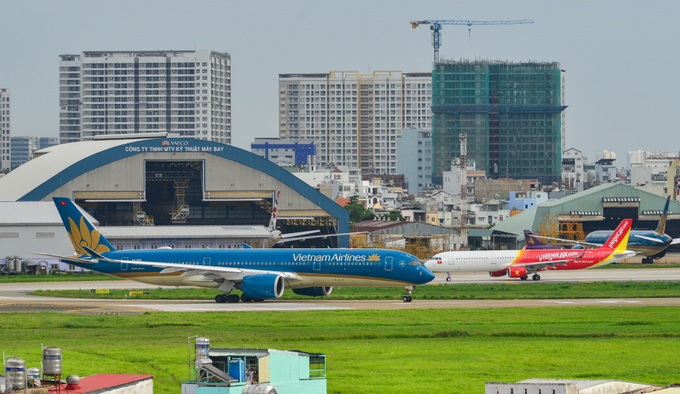
    The Tan Son Nhat Airport could get a third terminal and other facilities at the cost of over $496 million. The Airports Corporation of Vietnam (ACV), which manages and operates civil airports in the country, has submitted to the Ministry of Transport a pre-feasibility report on the construction of a third terminal (T3) at HCMC-based Tan Son Nhat International Airport to reduce overload.

    T3 will be designed to have a capacity of 20 million passengers per year, with total floor area of about 100,000 square meters. ACV proposes to construct in tandem an additional airport apron, a two-lane overhead path, a 5-lane viaduct in front of the terminal and a multi-storey car park. The total cost is estimated at over VND11.43 trillion ($496.18 million).

    The completion of feasibility reports and selection of construction blueprints is set to be finished in February 2020.

    Once T3’s design has been approved, contractors will be chosen via a tendering process so that construction starts in the third quarter of 2020 and can be completed in the second quarter of 2022.

    Because the construction area is located on the Defense Ministry’s land, ACV has suggested allowing a temporary handover of the site in Q1 next year for construction along with completion of necessary legal procedures.

    There are also plans to expand existing terminals T1 and T2 of the Tan Son Nhat airport, raising their combined capacity to 30 million passengers per year.

    The airport currently handles 36 million passengers per year, which is way above its designed capacity of 25 million.

    The Transport Ministry has hired French consulting firm ADPi to work on the plan alongside local firms. The plan proposed by ADPi was approved by the Prime Minister last March and it formed the basis for the new, detailed version.

    ACV has also proposed to the Ministry of Transport that it be assigned as investor for the construction of essential components for the proposed Long Thanh International Airport, including passenger terminal, flying zone (runway, taxiway, apron), and refueling systems.

    ACV chairman Lai Xuan Thanh said that the company is willing to spend between $1-1.5 billion for constructing the first phase of the proposed airport, which is estimated to cost $5.4 billion.

    The Long Thanh Airport, to be built in three phases over three decades, was recently listed by CNN Travel as one of the world’s 16 most exciting airport projects.

    The first phase is scheduled for completion in 2025 when it will be able to handle 25 million passengers annually. The next two phases will be built in 2030-2035 and from 2040-2050.

    The new airport would have an annual capacity of 100 million passengers and five million tons of cargo when completed.

    ACV has announced that in its 2019 plan, the company will spend more than VND10 trillion ($432.71 million) on upgrading and expanding several airports, including Cat Bi in northern Hai Phong City, Vinh in central Nghe An Province, Phu Cat in central Binh Dinh Province, and Noi Bai in Hanoi.

    Most of these upgrades are expected to be completed by the third quarter of 2019.

  • Vietnamese platform FastGo expands to Myanmar

    Vietnamese platform FastGo expands to Myanmar

    FastGo, Vietnam’s first ride-hailing service, has kicked off operations in Myanmar as part of its Southeast Asia expansion plans. Its joint venture with Myanmarese conglomerate Asia Sun Group began offering services on December 28. CEO Nguyen Huu Tuat said at the launch that Myanmar is a promising market with the e-commerce, travel and retail sectors all growing rapidly. With a population of 50 million, transport demand in the country is expected to rise, he said.

    FastGo targets major cities and provinces and expects to sign up two million users and 100,000 drivers.

    It pursues the same business model as in Vietnam, only taking a fixed service cost from drivers and not commissions on each ride and guaranteeing them higher fares during rush hour and bad weather.

    It allows users to tip drivers, and offers a priority service for certain customers.

    Tuat said FastGo has tied up with Asia Sun because the group has experience in various sectors, deep pockets and an understanding of the local market and culture.

    He expected the venture to benefit Myanmar’s digital economy.

    FastGo was launched in Vietnam last June and now has over 40,000 partner drivers in 10 provinces and cities.

    It aims to be more than just a ride hailing app, offering other services such as food delivery.

    FastGo Vietnam Joint Stock Company was established in April 2018 with its headquarters in Hanoi. The company belongs to a wide network of services provided by Nextech, a leading tech firm in Vietnam.

    The Nikkei Asian Review reported that the company hopes to make its service available in 20 cities in Vietnam and five other Southeast Asian markets, including the Philippines, Cambodia and Thailand, by the end of 2019.

  • Bullet train to connect Hanoi with HCMC in five hours

    Bullet train to connect Hanoi with HCMC in five hours

    Vietnam’s bullet train will cut travel time between Hanoi and Saigon to five hours from the current 24. The railway project management board has submitted a pre-feasibility study to the Ministry of Transport, which quotes transport consultants’ estimate that if the train travels at 320 km/h, its running time would be from 5 hours 17 minutes to 6 hours 50 minutes depending on the number of stops.

    The route from Hanoi Railway Station to Thu Thiem Station in HCMC’s District 2 will be 1,545 kilometers (960 miles) long and run through 20 provinces.

    Sixty percent of the tracks will be on viaducts, 10 percent underground and 30 percent on the surface, completely protected by fencing and without a single crossing.

    It will have double standard-gauge tracks of 1.435 meters width and 24 stations, according to a consultancy consortium comprising Vietnamese firms TEDI, TRICC and TEDIS.

    It will use the distributed traction technology used by Japanese high-speed trains.

    The project is estimated to cost a total of $58.7 billion, comprising $2.23 billion for land, $43.3 billion for construction and equipment and $4.3 billion for management, consulting and other costs.

    It will be undertaken as a public-private partnership (PPP), with the government accounting for 80 percent of the cost and private investors for the remaining 20 percent.

    Construction will be in two phases, with the 282-km Hanoi-Vinh section and 362-km Nha Trang-HCMC section built first in 2020-2030 at a cost of $24 billion. Commercial operations on these stretches are likely to begin in 2032. The second phase connecting Vinh and Nha Trang is expected to be built in 2030-2045.

    The consultants have estimated the project to cost 0.4 – 0.55 percent of the country’s GDP in 2020-2030 and 0.35 – 0.4 percent in 2030-2040.

    After being reviewed by the Ministry of Transport, the study will be submitted to the State Appraisal Council and the government for review and to the National Assembly for approval next October.

    Vietnam currently has over 3,000 kilometers of railway tracks, none of them high-speed. The railway accounts for just 1.9 percent of the transportation sector in the country, according to the Vietnam Railway Authority.

  • Korean passengers break record in November

    Korean passengers break record in November

    Korea’s air passenger traffic reached a new record for November on the back of the rise in the number of Chinese tourists and increased overseas travel demand, government data showed Tuesday. The number of air passengers came to 9.57 million last month, up 5.6 percent from a year earlier, making it a new record for November, according to a tally from the Ministry of Land, Infrastructure and Transport.

    The ministry attributed the surge to the return of Chinese visitors and the steady increase in overseas travel demand.

    Passenger traffic on Chinese routes spiked 24 percent to 1.32 million, slightly lower than the same month in 2016, when a row between the two countries over the U.S. Terminal High Altitude Area Defense (Thaad) missile system had yet to emerge.

    China banned the sale of group travel packages to South Korea in March 2017 due to a diplomatic row with Seoul over the deployment of a Thaad battery in Korea. China has since partially lifted the ban.

    International air passenger traffic rose 8.8 percent on year to a record 7.01 million last month, while domestic passenger traffic dropped 2.5 percent to 2.56 million, according to the ministry.

  • Grab eyes stake in Vinasun, taxi company refuses to play ball

    Grab eyes stake in Vinasun, taxi company refuses to play ball

    Grab’s surprise offer to buy a $2.78-million stake in top taxi company Vinasun has failed, with the latter asking to end negotiations. The negotiations between the two firms began earlier this month for compensation claimed by Vinasun from the Malaysian ride-hailing firm after the People’s Court of Ho Chi Minh City yet again adjourned hearing of a suit Vinasun had filed last year.

    A Vinasun spokesperson told the court following the latest resumption of the trial Wednesday that his firm had declined the offer since Grab had not made an appropriate offer. “We don’t want to continue the negotiations.”

    But Grab does not want the lawsuit to continue.

    Its spokesperson said: “We have become very tired during the 17 months of this trial for damages we did not cause. We do not want Vinasun to waste its time on this meaningless lawsuit. We consider the proposal to buy Vinasun’s stake an investment activity, and we expect to cooperate with Vinasun to end the case in a good way.”

    Vinasun filed the suit against Grab in June last year, accusing it of abusing the Ministry of Transport’s pilot scheme and committing violations.

    It said Grab’s illegal activities were responsible for nearly VND42 billion (nearly $1.8 million) of the VND76 billion ($3.25 million) worth of losses it had suffered in 2016 and the first half of 2017.

    The trial began last February, but was adjourned a month later to allow for more evidence to be gathered. Grab had protested against the value of Vinasun’s losses.

    Last October prosecutors asked the court to accept Vinasun’s petition for compensation of nearly VND42 billion, rejecting Grab’s claim it was a tech firm and not a taxi company.

    Grab responded by writing to Prime Minister Nguyen Xuan Phuc to say that identifying it as a taxi firm would be “a step backward from Industry 4.0.”

    The latest draft of a transport ministry decree requires firms offering taxi services to register as taxi firms before they can apply ride-hailing technologies.

    This means that Grab and other ride-hailing firms have to register afresh as taxi businesses and comply with legal requirements related to operating licenses, drivers’ profiles and taxes.

  • Vietnam’s four major transport projects on track for completion next year

    Vietnam’s four major transport projects on track for completion next year

    Vietnam is set to complete four infrastructure projects next year, some of them after long delays lasting several years.

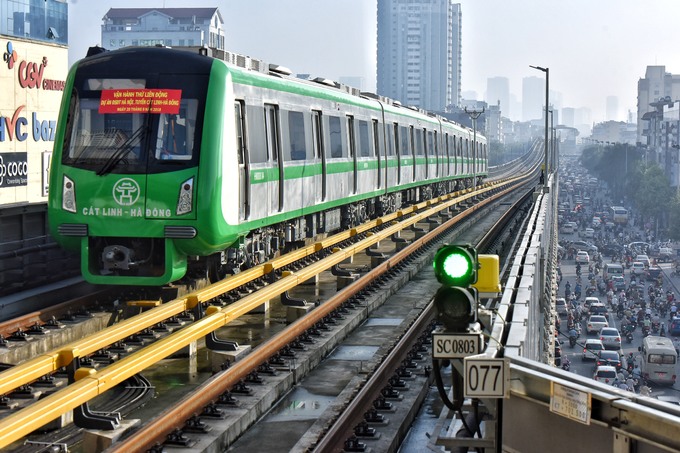
    Hanoi’s first metro line 

    The 13-kilometer Cat Linh – Ha Dong metro line is expected to open commercial operations before the Tet Lunar New Year holiday starting February 2, 2019.

    All 13 trains on the route are being trial run every day now, running from Cat Linh Station in downtown Dong Da District to the Yen Nghia Station in the south-west Ha Dong District.The 13-kilometer Cat Linh – Ha Dong metro line is expected to open commercial operations before the Tet Lunar New Year holiday starting February 2, 2019.

    Each train has four coaches, with a total capacity of 1,000 passengers. The stainless steel coaches are approximately 19 meters long. The trains now run at 30-35 kilometers an hour, even though they are designed to reach speeds of 65 kilometers an hour. A complete trip takes about 30 minutes.

    Work on the project is 96 percent complete, officials say, adding that the terminals and depots are “83 percent equipped.”

    Construction of the Cat Linh-Ha Dong elevated railway started in October 2011 and was originally scheduled for completion in 2013. But several hurdles, including loan disbursement issues with China that were only resolved last December, have been stalling the project for years.

    The original cost estimate of $552.86 million has also ballooned to more than $868 million, including $670 million in loans from China.

    Bac Giang – Lang Son expressway

    The expressway connecting Bac Giang Province north-east of Hanoi to the northern Lang Son Province bordering China is expected to be completed next December.

    The four-lane expressway runs 64 kilometers. A 110-kilometer stretch of the existing National Route 1A connecting the two provinces will also be upgraded to be part of the expressway.

    The total project cost has been estimated at VND12.19 trillion ($523.67 million).

    Most of the expressway has been completed. Next year, operators will finish laying asphalt and installing road signs and lights.

    Work on the expressway started in October 2015 and was scheduled for completion last year. However, the  Ministry of Transport had to select a new investor for the project after the original one was found wanting.

    The Bac Giang – Lang Son expressway is part of the Hanoi – Lang Son expressway, connecting the capital with the Huu Nghi International Border Gate in Lang Son Province.

    Cu Mong Tunnels 

    The Cu Mong Pass, lies mostly in Binh Dinh and partly in Phu Yen, is one of the most dangerous passes in Vietnam. The new tunnels are expected to reduce the number of dangerous traffic accidents that the pass has become infamous for. They would also reduce travel time between the two provinces.The Cu Mong tunnels, connecting the southern provinces of Binh Dinh and Phu Yen, are expected to open on January 21, allowing all vehicles to go through free of charge during the February 2-10 Tet holiday.

    The two tunnels are 2.6 kilometers long and 30 meters apart and have a 4-kilometer lead-in road. The tunnels allow a maximum speed of 80 kilometers an hour. For an unspecified first period, only one tunnel will be operated. For now, the second one will be reserved for use in emergencies.

    The tunnels have a total capital of almost VND4 trillion ($171.82 million). Construction started in September 2015.

    Vam Cong Bridge in the Mekong Delta Region

    This is the second bridge over the Hau River after the Can Tho Bridge, which is 48 kilometers away. It is part of the route connecting Can Tho with An Giang Province, built to boost the socio-economic development of the Mekong Delta region.The bridge, which connects the southern province of Dong Thap with Can Tho City, is expected to be operational by next July.

    The bridge was supposed to be completed by November 2017, but authorities found out that a horizonal beam had a crack four centimeters wide and two meters long.

    The Ministry of Transport ordered repairs, and so far 26 out of 38 steps for this process has been completed.

    The bridge’s budget of $270 million was sourced through official development assistance from South Korea and Vietnam’s counterpart funds.

  • AirAsia Malaysia sells Merah Aviation Asset for RM3.22b

    AirAsia Malaysia sells Merah Aviation Asset for RM3.22b

    AirAsia Group Bhd is disposing of its entire stake in Merah Aviation Asset Holding Ltd to AS Air Lease Holdings 5T DAC for US$768 million (RM3.22 billion). AS Air Lease is indirectly owned by Castlelake LP, a US-based global private investment firm and leader in aircraft ownership and servicing.

    AirAsia told Bura Malaysia that its indirect wholly-owned subsidiary Asia Aviation Capital Ltd (AACL) had entered into agreements to sell Merah Aviation, which will comprise 25 existing aircraft to be leased to AirAsia.

    Castlelake will also purchase from AACL a total of four new aircraft to be delivered in 2019 for a purchase consideration to be determined at a later date. The aircraft will be leased back to AirAsia and/or its affiliates.

    Merah Aviation is principally engaged in the owning, leasing and/or financing of aircraft.

    AirAsia said the transaction is subject to its shareholders’ approval and other relevant customary closing conditions, and is expected to be completed in the second quarter of 2019.

    Bulk of the proceeds will be used for the repayment of existing debt.

    AirAsia noted the proposed disposal is in line with the group’s strategy to focus on its core airline operations with an estimated net gain of about RM174.9 million.

    It will also allow the group to reduce its financial leverage as the gross gearing ratio is expected to fall from 0.53 times to 0.24 times.

    Castlelake specialises in providing creative, flexible capital solutions for its airline partners. Since its inception in 2005, Castlelake has invested in and managed more than 500 aircraft on behalf of its funds

    With the closing of this transaction, Castlelake’s current fleet will comprise more than 250 aircraft.

  • Vietjet boosts the business by opening new route

    Vietjet boosts the business by opening new route

    Vietjet continues to solidify its presence in Vietnam this holiday season with the announcement of its newest route connecting Ho Chi Minh City with Van Don (Quang Ninh Province). Bridging the gap between Vietnam’s largest city and the attractive island district in Quang Ninh Province, the new route will serve to meet the growing travel and trade demands of locals and tourists alike.

    Starting 20 January 2019, passengers will be able to travel from Ho Chi Minh City to Van Don (and vice versa) with flights operating every Monday, Wednesday, Friday and Sunday. With a flight time of 2 hours and 15 minutes per leg, the flight will depart from Ho Chi Minh City at 07:00 am and arrive in Van Don at 09:15 am. The return flight takes off from Van Don at 09:50am and lands in Ho Chi Minh City at 12:05 pm.

    In celebration of the new route, Vietjet is currently running a three golden day promotion starting 20 to 22 December 2018. 2.2million tickets priced only from MYR0 (*) will be available for booking during the promotional time between 1.00pm to 3.00pm (Malaysian time) via the website. The promotion is applicable on all domestic flights within Vietnam and the travel period is from 20 January 2019 to 31 December 2019 (excluding public holidays).

    Located in close proximity to Ha Long Bay – a UNESCO World Heritage Site, the Van Don Islands District is an attractive tourist destination comprising of over 600 large and small islands. Van Don has a unique beauty that boasts serenity and wilderness. It is home to many famous destinations such as Bai Tu Long National Park, Dua Islet, Thien Nga Islet, Quan Lan Island, Minh Chau Island, and Ngoc Vung Island.

    Aiming to be a Consumer Airline, Vietjet has continually opened many new routes, added more aircraft, invested in modern technology, while offering more add-on products and services to serve all demands of customers.

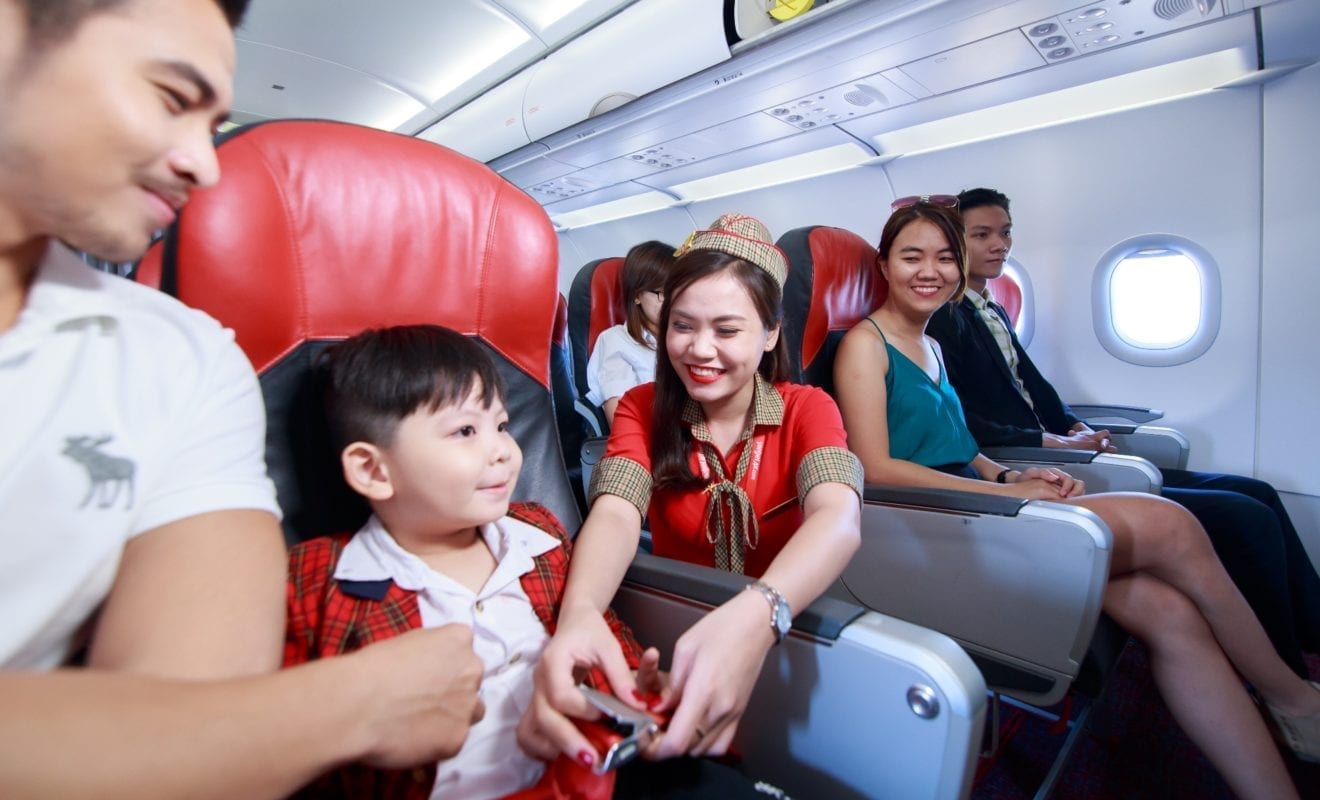
    Vietjet has been a pioneering airline, winning the hearts of millions of passengers thanks to its exciting promotions, entertainments, especially during the festive seasons. With high-quality services, diverse ticket classes and reasonable airfares, Vietjet offers its passengers flying experiences on new aircraft with comfy seats and delicious hot meals served by beautiful, dedicated and friendly cabin crews, and many more enticing add-on services.

  • MAHB’s record profits come at a cost to the Malaysian economy and tourism

    MAHB’s record profits come at a cost to the Malaysian economy and tourism

    Against a backdrop of a challenging economy and falling profitability in corporate Malaysia, Malaysia Airports Holdings Berhad (MAHB) won a major Malaysian award last week, topping billion ringgit companies for giving its shareholders the best three-year returns in its class.

    MAHB’s net profit more than tripled in 2017 to RM237 million from RM73 million in 2016 – itself nearly double from RM40 million in 2015 – and it is set to break yet another record this year.

    In the write-up that accompanied the award, the sharp increase in profits was attributed to two reasons: an increase in Passenger Service Charge (PSC) and growth in passenger numbers coming through its airports.

    The write-up unabashedly stated that MAHB owed its vastly improved performance to its structural dominance and described MAHB as a structural monopoly.

    Kudos to MAHB. But then, it is not difficult to keep showing such numbers when you are a monopoly.

    Nevertheless, unjustified price increases, such as the PSC hike imposed by MAHB, will lead to unintended consequences when its clients, who have no choice but to use its services, are eventually squeezed out of business. Then, everything will collapse – Malaysia’s tourism arrivals, billions in tourism receipts and revenues to MAHB’s own coffers (a fact it has failed to acknowledge).

    MAHB rewards itself with excessive monopoly profits, yet it provides the Malaysian public with embarrassingly low service levels.

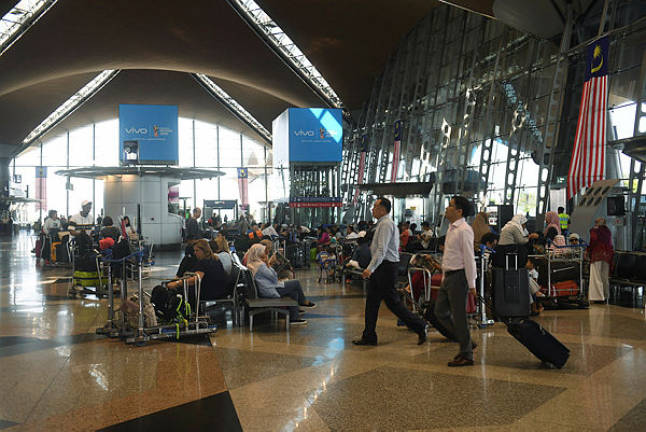
    AirAsia X Malaysia CEO Benyamin Ismail said, “In addition to the RM50 PSC it already imposes, MAHB is now demanding an additional RM23 from each passenger travelling through klia2. The millions of passengers departing from klia2, more than 90 percent of whom fly with AirAsia, will attest to the long walks they have had to endure to reach their gates in what is a passenger-unfriendly airport with inferior facilities yet unjustified high charges.

    “Furthermore, since klia2 opened, there have been constant flight disruptions and cancellations due to major apron and runway defects, unscheduled closure of runways, ponding of water on the best of days and fuel pipeline ruptures.

    “We were sued after we refused to collect the extra RM23 that MAHB has imposed for the sole benefit of its shareholders. We will vigorously fight this suit. We will not be part of this scheme to burden the travelling public by making them pay more for below par services.”

    Benyamin added that while the operating results of klia2 itself were not immediately apparent, AirAsia estimates that MAHB’s returns on capital are well in excess of the level of the cost of capital set by regulators.

    AirAsia Malaysia CEO Riad Asmat said, “The overall tourism sector, one of Malaysia’s biggest revenue earners, and the interests of millions of Malaysians who have been able to fly because of the low fares pioneered by AirAsia, are being threatened by MAHB’s price hikes. We urge the regulators and policy makers to rebuff this unfair and unreasonable attempt by MAHB to use its monopoly to enrich itself further by revisiting and rescinding the decision to raise the PSC.

    “MAHB has argued it needs more profits to operate smaller loss-making airports on behalf of the government, but it is obvious from its exponential growth in profits over the last three years – even after taking into account losses in its Turkish operations – that this is not the case.

    “The additional RM23 to be collected will amount to more than RM100 million a year that will go straight to MAHB’s bottom line rather than to the government. MAHB will continue to be among the most profitable Malaysian companies for many years to come. But this will come at a cost to the wider Malaysian economy and at the expense of engines of growth such as AirAsia and AirAsia X.”

    Riad also referred to MAHB’s defence of its decision to charge the extra RM23 in PSC from each travelling passenger, saying it is “bound by Article 15 of the Chicago Convention of 1944.”

    “This would almost be laughable if it were not so serious. MAHB is falling back on a convention ratified in 1944, when Japan still ruled Malaya and when Frank Whittle was testing the jet engine and when only the well-heeled could fly.

    “For all these reasons, we shall not accede to MAHB’s demands and we will take our battle both to the people and to the court of law.”

  • Kakao postpones carpooling service

    Kakao postpones carpooling service

    Kakao Mobility announced las week that it would postpone the official launch of its carpooling service after a week of fierce protests from the local taxi industry. The Kakao affiliate started offering a beta version of the service last Friday that was made available to a randomly selected pool of users nationwide. On the same day, it declared that the official launch date of its carpooling service would be on Dec. 17.

    “After much consideration, we decided to postpone the official launch in order to listen and apply a wider range of opinions from taxi drivers, users and many others,” Kakao said in an official statement Thursday afternoon.

    But it did not specify when the official launch will be delayed until. The statement sparked rumors that this may be the start of Kakao indefinitely postponing the service’s official release, which the company denied.

    “What we know for now is that it’s not going to happen this year,” said a Kakao spokesperson. “But this doesn’t mean the delay is going to be an indefinite one. The exact date is still a matter of discussion.”

    The beta service will continue to be offered to random users selected regardless of age and region. Kakao explained that the beta service was being offered to a very limited pool of users, just enough to examine the technology and check the effect it may have on taxi drivers.

    The announcement comes six days after the beta service and the official launch date were released.

    The backlash from taxi drivers has been fierce, with widespread protests that culminated in a 57-year-old taxi driver setting himself on fire in front of the National Assembly in western Seoul on Monday.

    Two days later, a committee that consists of two taxi company associations and two taxi driver labor unions announced plans to stage a protest in Seoul on Dec. 20, with more than 100,000 people expected to attend. This would be the third protest targeted at putting a stop to carpooling services.

    Regardless of Kakao’s decision to postpone the launch, a source from the committee said there is no change to the plans for the protest.

    Taxi drivers also launched a sleep-in protest in front of the National Assembly starting from Wednesday, with members of the four organizations continuing their vigil in shifts through the night.

    Kakao, the local taxi industry and government officials have been in talks for more than half a year, but are still failing to agree on a solution to the carpooling service issue.

    Kakao wants to introduce a carpooling service during busy commuting hours, but drivers say that even if rides are limited to twice a day, they will still eat up around 59 percent of all taxi demand.