Tag: transportation

  • AirAsia Malaysia sells Merah Aviation Asset for RM3.22b

    AirAsia Malaysia sells Merah Aviation Asset for RM3.22b

    AirAsia Group Bhd is disposing of its entire stake in Merah Aviation Asset Holding Ltd to AS Air Lease Holdings 5T DAC for US$768 million (RM3.22 billion). AS Air Lease is indirectly owned by Castlelake LP, a US-based global private investment firm and leader in aircraft ownership and servicing.

    AirAsia told Bura Malaysia that its indirect wholly-owned subsidiary Asia Aviation Capital Ltd (AACL) had entered into agreements to sell Merah Aviation, which will comprise 25 existing aircraft to be leased to AirAsia.

    Castlelake will also purchase from AACL a total of four new aircraft to be delivered in 2019 for a purchase consideration to be determined at a later date. The aircraft will be leased back to AirAsia and/or its affiliates.

    Merah Aviation is principally engaged in the owning, leasing and/or financing of aircraft.

    AirAsia said the transaction is subject to its shareholders’ approval and other relevant customary closing conditions, and is expected to be completed in the second quarter of 2019.

    Bulk of the proceeds will be used for the repayment of existing debt.

    AirAsia noted the proposed disposal is in line with the group’s strategy to focus on its core airline operations with an estimated net gain of about RM174.9 million.

    It will also allow the group to reduce its financial leverage as the gross gearing ratio is expected to fall from 0.53 times to 0.24 times.

    Castlelake specialises in providing creative, flexible capital solutions for its airline partners. Since its inception in 2005, Castlelake has invested in and managed more than 500 aircraft on behalf of its funds

    With the closing of this transaction, Castlelake’s current fleet will comprise more than 250 aircraft.

  • Vietjet boosts the business by opening new route

    Vietjet boosts the business by opening new route

    Vietjet continues to solidify its presence in Vietnam this holiday season with the announcement of its newest route connecting Ho Chi Minh City with Van Don (Quang Ninh Province). Bridging the gap between Vietnam’s largest city and the attractive island district in Quang Ninh Province, the new route will serve to meet the growing travel and trade demands of locals and tourists alike.

    Starting 20 January 2019, passengers will be able to travel from Ho Chi Minh City to Van Don (and vice versa) with flights operating every Monday, Wednesday, Friday and Sunday. With a flight time of 2 hours and 15 minutes per leg, the flight will depart from Ho Chi Minh City at 07:00 am and arrive in Van Don at 09:15 am. The return flight takes off from Van Don at 09:50am and lands in Ho Chi Minh City at 12:05 pm.

    In celebration of the new route, Vietjet is currently running a three golden day promotion starting 20 to 22 December 2018. 2.2million tickets priced only from MYR0 (*) will be available for booking during the promotional time between 1.00pm to 3.00pm (Malaysian time) via the website. The promotion is applicable on all domestic flights within Vietnam and the travel period is from 20 January 2019 to 31 December 2019 (excluding public holidays).

    Located in close proximity to Ha Long Bay – a UNESCO World Heritage Site, the Van Don Islands District is an attractive tourist destination comprising of over 600 large and small islands. Van Don has a unique beauty that boasts serenity and wilderness. It is home to many famous destinations such as Bai Tu Long National Park, Dua Islet, Thien Nga Islet, Quan Lan Island, Minh Chau Island, and Ngoc Vung Island.

    Aiming to be a Consumer Airline, Vietjet has continually opened many new routes, added more aircraft, invested in modern technology, while offering more add-on products and services to serve all demands of customers.

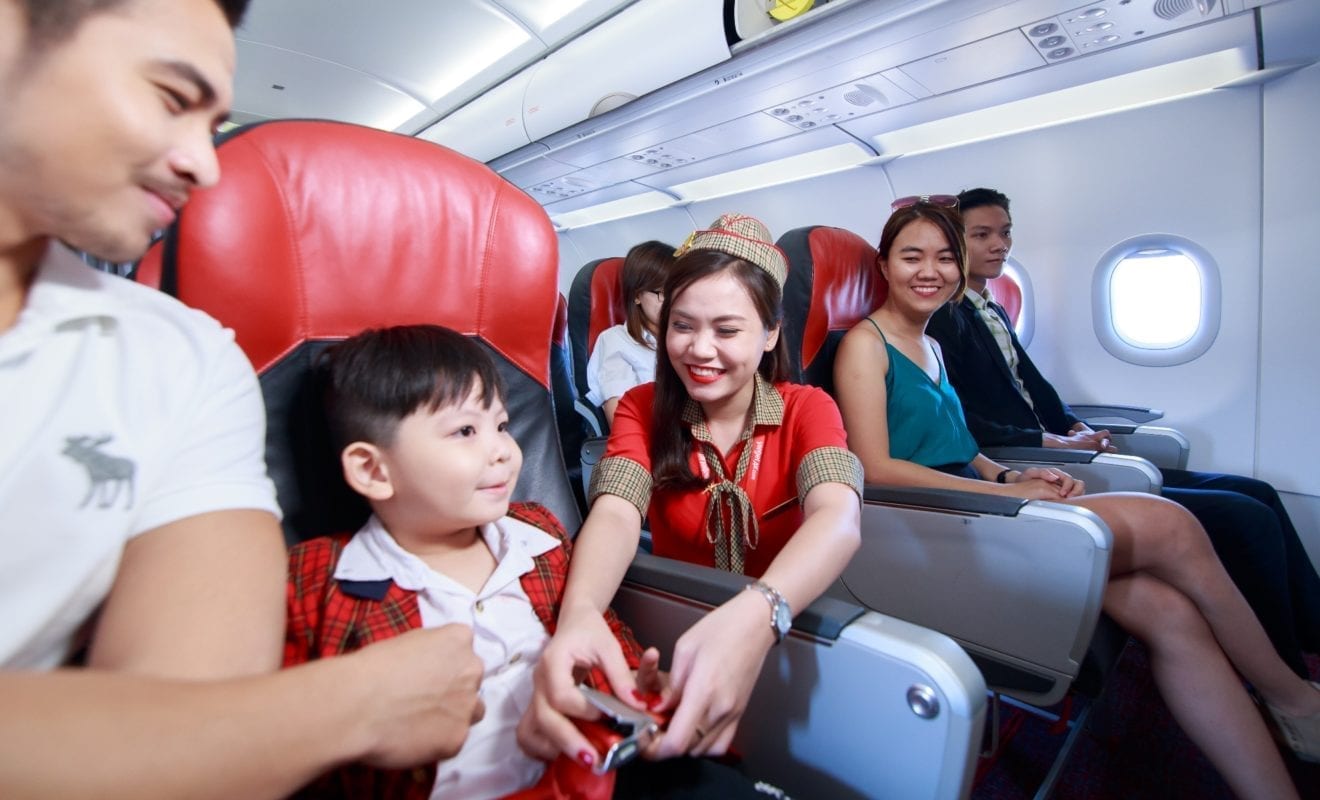
    Vietjet has been a pioneering airline, winning the hearts of millions of passengers thanks to its exciting promotions, entertainments, especially during the festive seasons. With high-quality services, diverse ticket classes and reasonable airfares, Vietjet offers its passengers flying experiences on new aircraft with comfy seats and delicious hot meals served by beautiful, dedicated and friendly cabin crews, and many more enticing add-on services.

  • MAHB’s record profits come at a cost to the Malaysian economy and tourism

    MAHB’s record profits come at a cost to the Malaysian economy and tourism

    Against a backdrop of a challenging economy and falling profitability in corporate Malaysia, Malaysia Airports Holdings Berhad (MAHB) won a major Malaysian award last week, topping billion ringgit companies for giving its shareholders the best three-year returns in its class.

    MAHB’s net profit more than tripled in 2017 to RM237 million from RM73 million in 2016 – itself nearly double from RM40 million in 2015 – and it is set to break yet another record this year.

    In the write-up that accompanied the award, the sharp increase in profits was attributed to two reasons: an increase in Passenger Service Charge (PSC) and growth in passenger numbers coming through its airports.

    The write-up unabashedly stated that MAHB owed its vastly improved performance to its structural dominance and described MAHB as a structural monopoly.

    Kudos to MAHB. But then, it is not difficult to keep showing such numbers when you are a monopoly.

    Nevertheless, unjustified price increases, such as the PSC hike imposed by MAHB, will lead to unintended consequences when its clients, who have no choice but to use its services, are eventually squeezed out of business. Then, everything will collapse – Malaysia’s tourism arrivals, billions in tourism receipts and revenues to MAHB’s own coffers (a fact it has failed to acknowledge).

    MAHB rewards itself with excessive monopoly profits, yet it provides the Malaysian public with embarrassingly low service levels.

    AirAsia X Malaysia CEO Benyamin Ismail said, “In addition to the RM50 PSC it already imposes, MAHB is now demanding an additional RM23 from each passenger travelling through klia2. The millions of passengers departing from klia2, more than 90 percent of whom fly with AirAsia, will attest to the long walks they have had to endure to reach their gates in what is a passenger-unfriendly airport with inferior facilities yet unjustified high charges.

    “Furthermore, since klia2 opened, there have been constant flight disruptions and cancellations due to major apron and runway defects, unscheduled closure of runways, ponding of water on the best of days and fuel pipeline ruptures.

    “We were sued after we refused to collect the extra RM23 that MAHB has imposed for the sole benefit of its shareholders. We will vigorously fight this suit. We will not be part of this scheme to burden the travelling public by making them pay more for below par services.”

    Benyamin added that while the operating results of klia2 itself were not immediately apparent, AirAsia estimates that MAHB’s returns on capital are well in excess of the level of the cost of capital set by regulators.

    AirAsia Malaysia CEO Riad Asmat said, “The overall tourism sector, one of Malaysia’s biggest revenue earners, and the interests of millions of Malaysians who have been able to fly because of the low fares pioneered by AirAsia, are being threatened by MAHB’s price hikes. We urge the regulators and policy makers to rebuff this unfair and unreasonable attempt by MAHB to use its monopoly to enrich itself further by revisiting and rescinding the decision to raise the PSC.

    “MAHB has argued it needs more profits to operate smaller loss-making airports on behalf of the government, but it is obvious from its exponential growth in profits over the last three years – even after taking into account losses in its Turkish operations – that this is not the case.

    “The additional RM23 to be collected will amount to more than RM100 million a year that will go straight to MAHB’s bottom line rather than to the government. MAHB will continue to be among the most profitable Malaysian companies for many years to come. But this will come at a cost to the wider Malaysian economy and at the expense of engines of growth such as AirAsia and AirAsia X.”

    Riad also referred to MAHB’s defence of its decision to charge the extra RM23 in PSC from each travelling passenger, saying it is “bound by Article 15 of the Chicago Convention of 1944.”

    “This would almost be laughable if it were not so serious. MAHB is falling back on a convention ratified in 1944, when Japan still ruled Malaya and when Frank Whittle was testing the jet engine and when only the well-heeled could fly.

    “For all these reasons, we shall not accede to MAHB’s demands and we will take our battle both to the people and to the court of law.”
  • Kakao postpones carpooling service

    Kakao postpones carpooling service

    Kakao Mobility announced las week that it would postpone the official launch of its carpooling service after a week of fierce protests from the local taxi industry. The Kakao affiliate started offering a beta version of the service last Friday that was made available to a randomly selected pool of users nationwide. On the same day, it declared that the official launch date of its carpooling service would be on Dec. 17.

    “After much consideration, we decided to postpone the official launch in order to listen and apply a wider range of opinions from taxi drivers, users and many others,” Kakao said in an official statement Thursday afternoon.

    But it did not specify when the official launch will be delayed until. The statement sparked rumors that this may be the start of Kakao indefinitely postponing the service’s official release, which the company denied.

    “What we know for now is that it’s not going to happen this year,” said a Kakao spokesperson. “But this doesn’t mean the delay is going to be an indefinite one. The exact date is still a matter of discussion.”

    The beta service will continue to be offered to random users selected regardless of age and region. Kakao explained that the beta service was being offered to a very limited pool of users, just enough to examine the technology and check the effect it may have on taxi drivers.

    The announcement comes six days after the beta service and the official launch date were released.

    The backlash from taxi drivers has been fierce, with widespread protests that culminated in a 57-year-old taxi driver setting himself on fire in front of the National Assembly in western Seoul on Monday.

    Two days later, a committee that consists of two taxi company associations and two taxi driver labor unions announced plans to stage a protest in Seoul on Dec. 20, with more than 100,000 people expected to attend. This would be the third protest targeted at putting a stop to carpooling services.

    Regardless of Kakao’s decision to postpone the launch, a source from the committee said there is no change to the plans for the protest.

    Taxi drivers also launched a sleep-in protest in front of the National Assembly starting from Wednesday, with members of the four organizations continuing their vigil in shifts through the night.

    Kakao, the local taxi industry and government officials have been in talks for more than half a year, but are still failing to agree on a solution to the carpooling service issue.

    Kakao wants to introduce a carpooling service during busy commuting hours, but drivers say that even if rides are limited to twice a day, they will still eat up around 59 percent of all taxi demand.

  • Hyundai Motor bets 6.7 billion dollars on hydrogen cells

    Hyundai Motor bets 6.7 billion dollars on hydrogen cells

    Hyundai Motor Group said it will invest 7.6 trillion won ($6.7 billion) in fuel-cell electric vehicles (FCEV) by 2030, betting big on hydrogen as the energy source for the future. The group announced what it called its “FCEV Vision 2030” on Tuesday, promising to build production capacity of 500,000 FCEVs yearly by 2030 to take the lead in the fledgling industry. It added that the investment will generate some 51,000 new jobs by 2030.

    As a first step, Hyundai Mobis, the auto parts and software affiliate of Hyundai Motor, held a groundbreaking ceremony for its second fuel cell stack factory in Chungju, North Chungcheong, on Tuesday.

    If the factory is completed in 2022, Hyundai Motor Group’s production capacity for fuel cell stack will expand from its current 3,000 units per year to 40,000 units.

    “Hyundai Motor Group will become the first mover in the new hydrogen society that will arrive soon,” said Chung Eui-sun, Hyundai Motor Group’s executive vice chairman, in a speech at the ceremony in Chungju on Tuesday.

    “The group plans to expand the fuel cell stack production capacity to 700,000 units by 2030, including for the 500,000 FCEVs we plan to make by that year.”

    The ceremony was attended by Minister of Trade, Industry and Energy Sung Yung-mo, Hyundai Motor President Chung Jin-haeng and Hyundai Mobis President Lim Young-deuk.

    Hyundai Mobis’ Chungju plant is focused on producing parts for eco-friendly vehicles like hybrid and electric cars.

    Last year, it constructed a new section dedicated to making fuel cell stacks with a capacity of 3,000 units per year.

    The carmaker forecasts that hydrogen will be used as an energy source in shipbuilding, railways and forklifts in the future and said it would start a business supplying fuel cell modules to other companies. The additional 200,000 units of FCEV modules that are not used in Hyundai Motor’s own FCEVs by 2030 will be sold elsewhere, the carmaker said.

    Executive Vice Chairman Chung said the FCEV industry will become a new growth engine for Korea.

    “Ninety-nine percent of auto parts in FCEVs are made domestically,” Chung said, “which is why its growth will have big ripple effects on other companies related to the industry. Through co-investment with partner companies, [Hyundai Motor] will try to build new growth engine for Korea’s future car industry.”

    Currently, some 130 partner companies are providing parts for fuel cell stacks made by Hyundai Mobis.

    Hyundai Motor has been making hefty investments in FCEVs along with rival Toyota. It was the first carmaker in the world to make a mass-produced FCEV model in 2013 called the Tucson ix35. It launched a hydrogen-powered Nexo SUV early this year.

    Since last year, the carmaker has been chairing the Hydrogen Council, a global lobbying group. Other companies represented on the council include Daimler, BMW and Air Liquide.

    The Korean government plans to supply 16,000 FCEVs and build 310 FCEV charging stations by 2022. There are currently only around 10 stations available to the public in Korea.

    China plans to supply 1 million FCEVs by 2030 and construct 1,000 charging stations. Japan plans to supply 40,000 FCEVs by 2020 and build 160 charging stations.

  • New Hanoi taxi merger to fight Grab on the streets

    New Hanoi taxi merger to fight Grab on the streets

    Three Hanoi operators have banded together to create the largest taxi business in the capital and compete with Grab. The union, named G7 Taxi, has been able to undercut the fares of Grab, at least over short distances, and it may be looking to bring still more players into its group.

    G7 was formed in October by Thanh Cong, Ba Sao, and Sao Hanoi. Together, they have about 3,000 cars, accounting for around 20 percent of taxis in the Hanoi area.

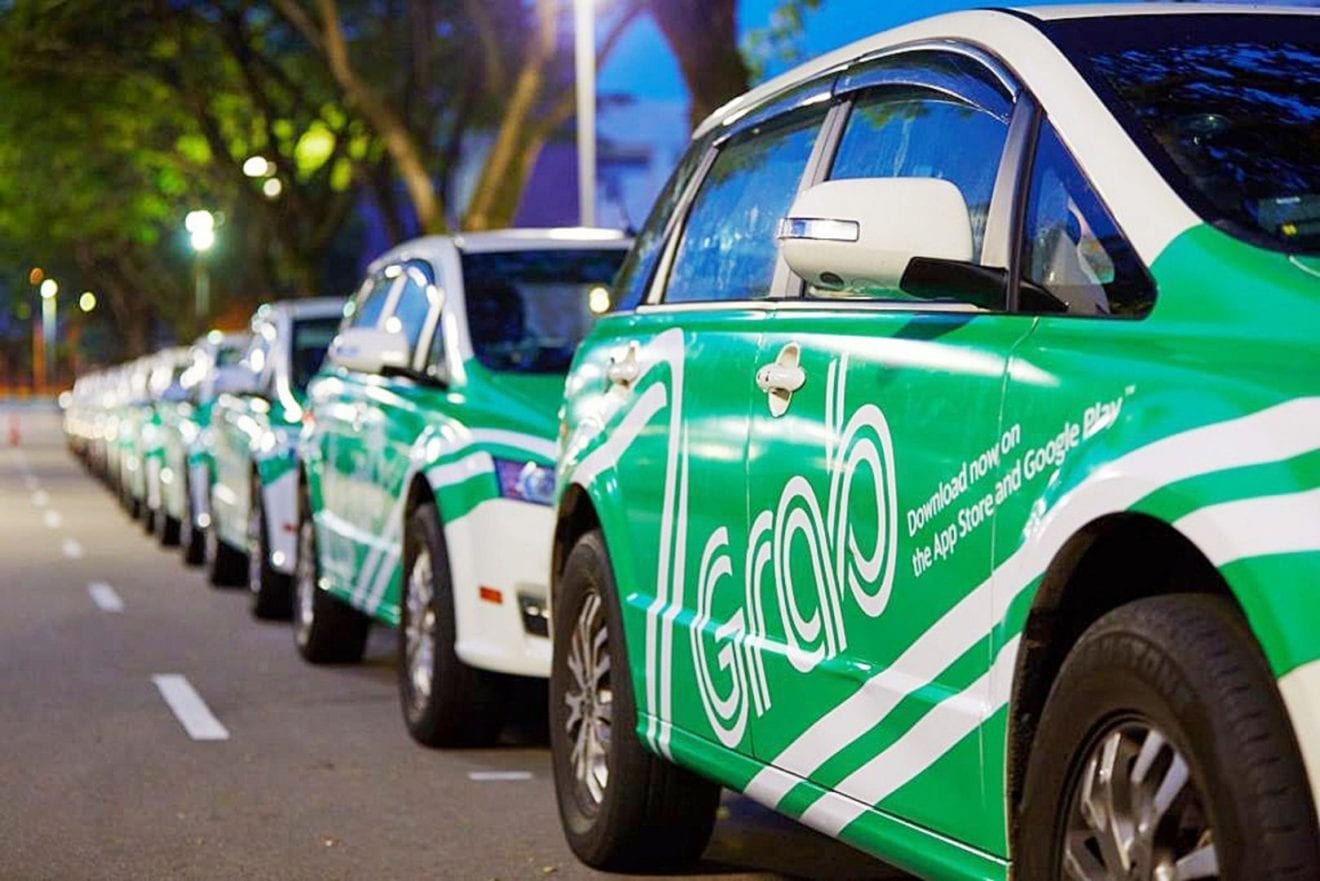
    The G7 base fare is VND9,900 (43 U.S. cents) for the first one km, while Grab charges VND20,000 (86 U.S. cents) for the first two km.

    The entrance of the new brand is expected to increase competition between traditional taxis and raid hailing firms like Grab.

    Earlier, Nguyen Cong Hung, chairman of the Hanoi Taxi Association, had said: “Traditional taxis, each with their own app, are now trying to compete with Grab. But we are divided, therefore we need to unite.”

    Before Thanh Cong, Ba Sao, and Sao Hanoi teamed up, annual sales at the three companies had declined by 10-15 percent on average over the past few years.

    The number of taxi companies in Hanoi has also fallen down to 70 taxi now, from 115 in 2010.

    Joining the fight

    The taxi trio is not alone in pushing back against the ride-hailing industry.

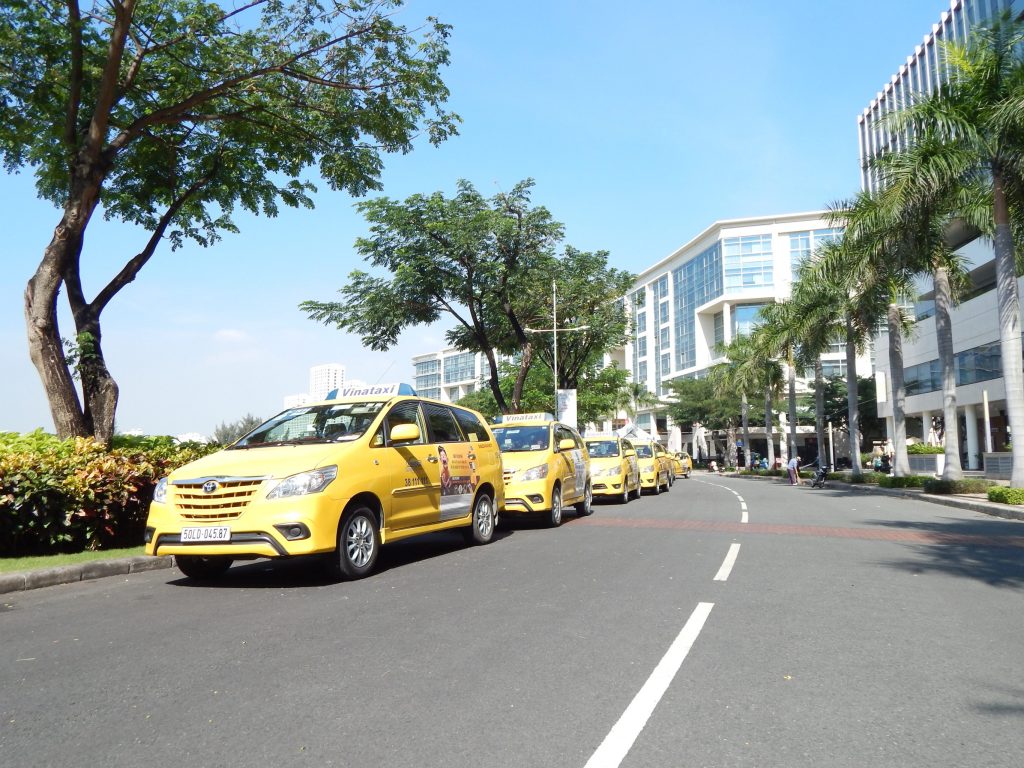
    In March, southern taxi firms ComfortDelgro Savico and Vinataxi had merged with the same purpose.

    Vinataxi, the third largest taxi firm in HCMC, was confident the merger would increase its growth six-fold this year.

    Mai Linh, Vietnam’s No. 1 taxi operator, has developed a smartphone app similar to that of Grab. Meanwhile, second-ranked Vinasun has launched a ride-hailing service using Facebook’s Messenger app, enabling customers to hail cars and make complaints and requests directly, much like Grab.

    But Grab, the dominant player in the ride-hailing business in Vietnam, is also working on strategies to compete better with local taxi firms.

    Several months ago, it introduced Grab for Business in Vietnam, a service that helps a company track the trips its employees make to limit unnecessary trips and control expenses.

    Grab is also deploying various policies to attract drivers by offering bonuses and opening stops with free wifi and coffee.

  • Indonesia’s Go-Jek Starts Trial Launch in Singapore, Challenges Grab

    Indonesia’s Go-Jek Starts Trial Launch in Singapore, Challenges Grab

    Indonesian ride-hailing firm Go-Jek kicked off a trial launch in parts of Singapore on Thursday and plans to roll out an array of services through its app in early 2019, challenging dominant player Grab in the small city-state. Both Go-Jek and Grab are raising billions of dollars and investing aggressively in the race to corner a bigger share of Southeast Asia, as more of the region’s 640 million consumers go online and use smartphones to shop, commute and make payments.

    Go-Jek, backed by the likes of Tencent Holdings, Alphabet Inc’s Google and Singapore state investor Temasek Holdings, is initially launching ride-hailing service in parts of Singapore after forming a partnership with DBS Group Holdings, the region’s biggest bank.

    “As this is a new product, we will obviously give promotions, but at the end of the day, it shouldn’t only be pricing that differentiates our services,” Go-Jek’s president, Andre Soelistyo said on Thursday.

    Grab, backed by Japan’s SoftBank and Chinese ride-hailing firm Didi Chuxing, bought Uber Technologies’ loss-making Southeast Asian business this year, marking the first big consolidation in the region.

    Following this, Singapore’s anti-trust watchdog slapped Grab and Uber with fines and imposed measures to open up the local market to competitors after concluding that their merger had driven up prices.

    Go-Jek’s executives declined to give any details on how many drivers it had signed up or a target for market share in Singapore but said payment services would be launched later.

    Started in 2011 in Jakarta, Go-Jek has evolved from a ride-hailing service to a one-stop app through which its customers can make online payments and order everything from food, groceries to massages.

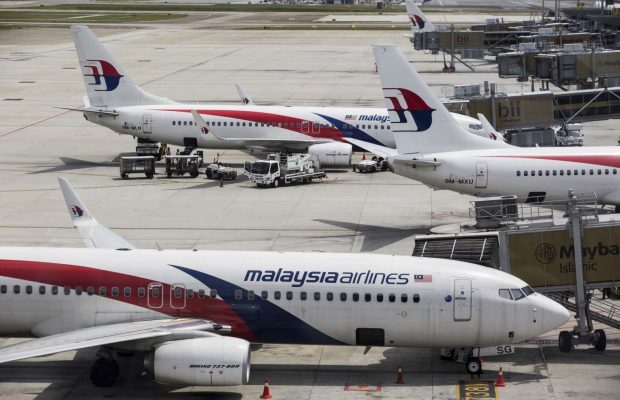
  • Malaysia Aviation appoints Philip See as Firefly CEO, as Ong out

    Malaysia Aviation appoints Philip See as Firefly CEO, as Ong out

    Malaysia Aviation Group (MAG) has appointed Philip See as the new CEO of Firefly, effective Jan 1, 2019. Philip will replace Ignatius Ong who joined Malaysia Airlines as group chief revenue officer in June 2018. Ignatius has been double-hatting as CEO of Firefly and group chief revenue officer.

    Philip, whose appointment was announced internally earlier, is currently the Head of Strategy and Network for Malaysia Airlines, reporting directly to the group CEO. He joined the airline in 2015 from consulting firm McKinsey & Company, where he was an associate.

    He is however, no stranger to the group having previously served in the Turnaround Management Office (TMO) in Malaysia Airlines, back in 2004. Under the TMO he was responsible for implementing the Business Turnaround Plan and consequently the Business Transformation Plan. Philip left the airline in 2010 and rejoined Malaysia Airlines in 2015 as a Network Planner.

    In his role as group chief revenue officer, Ignatius oversees Sales and Revenue Management for the entire group. Ignatius has almost 15 years of professional experience in the aviation industry and is no stranger to revenue management having previously covered route and revenue under the then Turnaround Management Office. He has also headed the whole portfolio of Sales, Distribution and Marketing under the Project Management Department of Malaysia Airlines.

    Other changes in the management also include Ibrahim Mohamed Salleh as CEO of MABKargo effective Sept 1, 2018 and Hazman Hilmi Sallahuddin as CEO of Project Amal effective Oct 1, 2018.

    Ibrahim has over 20 years of experience in various fields within Cargo Handling with the company. Prior to his appointment as CEO MABKargo, he was COO of PT Jasa Angkasa Semesta (a subsidiary of SATS Limited, Singapore).

    Hazman was with Khazanah Nasional Bhd where he served in various roles across the organisation. This included Senior Vice President of Khazanah Europe Investment Limited based in London.

    Malaysia Aviation Group CEO Izham Ismail said, ”I am confident that the new leadership will bring new energy and purpose to the business. The diversity of our new leaders, their backgrounds and experience will help us reach our goals as a group.”

  • Transport giant to withdraw capital from leading HCMC taxi firm

    Transport giant to withdraw capital from leading HCMC taxi firm

    In an apparent u-turn, transport giant Tracodi has approved divestment of its 30 percent stake in Vinataxi. Just months after saying it intends to increase its stake in Vinataxi, renew its fleet and install driver software, the Transport and Industry Development Investment Corporation (Tracodi) has decided to pull out.

    Tracodi has authorized Nguyen Thanh Hung, its general director and vice chairman, to seek investors and negotiate a transfer price not lower than the net present value of Vinataxi shares calculated according to book value.

    Vinataxi is a joint venture between Tracodi and electronic component distributor Tecobest Hong Kong, established in 1992. In 2003, Tecobest transferred capital management rights to ComfortDelGro, the leading public passenger transport operator in Singapore.

    According to the consolidated financial statement of the third quarter, Vinataxi occupied the third largest market share in Ho Chi Minh City with a chartered capital of VND113 billion ($4.84 million). Tracodi’s initial investment value was approximately VND34 billion ($1.46 million) in the joint venture.

    Tracodi’s capital withdrawal is in stark contrast to the plan announced by its board at its annual general meeting mid-June. Then, the corporation announced it wanted to negotiate raising its ownership ratio in Vinataxi to 49 percent, and coordinate with ComfortDelgro Savico Taxi, a joint venture between ComfortDelgro and Saigon General Service Corporation, to renew their fleets and install driver software.

    Tracodi’s management board estimates the firm will reap net profit of VND8 billion ($342,916) from its taxi business line this year with its combined fleet of over 300 cars.

    In 2017, revenues and after tax profit of Vinataxi reached over VND47 billion ($2.01 million) and VND1.2 billion ($51,431) respectively.

  • Hyundai, Kia invest big in Grab

    Hyundai, Kia invest big in Grab

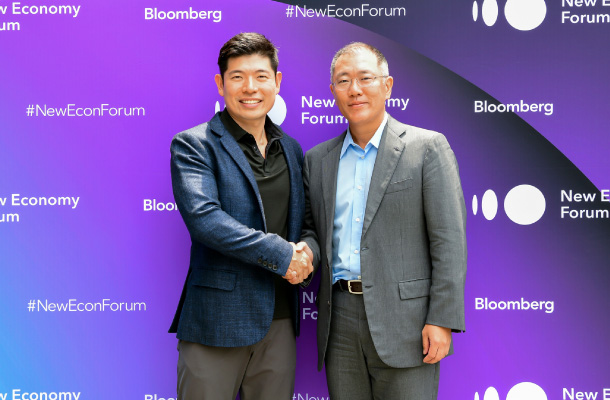
    Hyundai Motor and Kia Motors will jointly invest $250 million into the world’s third-largest ride-hailing operator Grab, eyeing shared mobility services as a way to overcome faltering car sales, the companies said Wednesday.  Hyundai has already injected $25 million into Grab in January, so total investment on the Singapore-based company adds up to $275 million. This is the largest investment made in a single company by the two sister automakers under Hyundai Motor Group, the group said.

    Grab, which has operations in 235 cities in eight countries in Southeast Asia, is the largest ride-hailing service provider in the region, though it is smaller than China’s Didi Chuxing and U.S. company Uber, which have larger operations elsewhere.

    The big bet in Grab comes as the largest auto group in Korea seeks fresh business models for growth. The group said it will make the two carmakers core players in an era where shared mobility is becoming ever more important.

    The three companies will start their collaboration by deploying Hyundai and Kia-made electric cars in Grab’s Singapore business. Hyundai will first supply 200 electric vehicles to the ride-hailing company by early next year. Kia is mulling whether to follow suit soon after.

    The vehicles will be rented out to Grab drivers. This way, Hyundai can introduce its electric cars to Singapore and other Southeast Asian markets once the pilot test in Singapore proves successful.

    “Targeting emerging markets based on strong partnerships with local companies like Grab could be a sustainable way of making profits,” Hyundai said in statement.

    If more people use ride-sharing services and other apps rather than driving their own cars, these large mobility service companies could become the major customers for carmakers in the future, and automakers are already aware of this.

    The three companies will also work on developing car maintenance and repair services as well as car financing services specialized for Grab drivers using the electric cars.

    Going further, they plan to launch electric car models customized for ride-hailing services.

    “Grab is the best partner there is to expand [our] electric car supplies in the Southeast Asian market,” said Chi Young-cho, chief innovation officer at Hyundai Motor Group.

    The latest investment is in line with Hyundai’s aggressive preparation to enter the shared mobility business. It is a relatively late mover into the future mobility business compared to competitors like Germany’s Daimler, which launched its own car-sharing brand Car2Go in 2008.

    The automaker landed a partnership with Sydney-based car sharing start-up Car Next Door with the aim of launching a new app-based mobility service in Australia by 2020. It also holds partnerships with India-based car-sharing company Revv, U.S. mobility service company Migo as well as local last-mile delivery service provider Mesh Korea. In Netherlands, it started its own car-sharing business with 100 Ioniq EVs last month.

  • $1 billion plan taxis onto runway to upgrade int’l airports in Vietnam

    $1 billion plan taxis onto runway to upgrade int’l airports in Vietnam

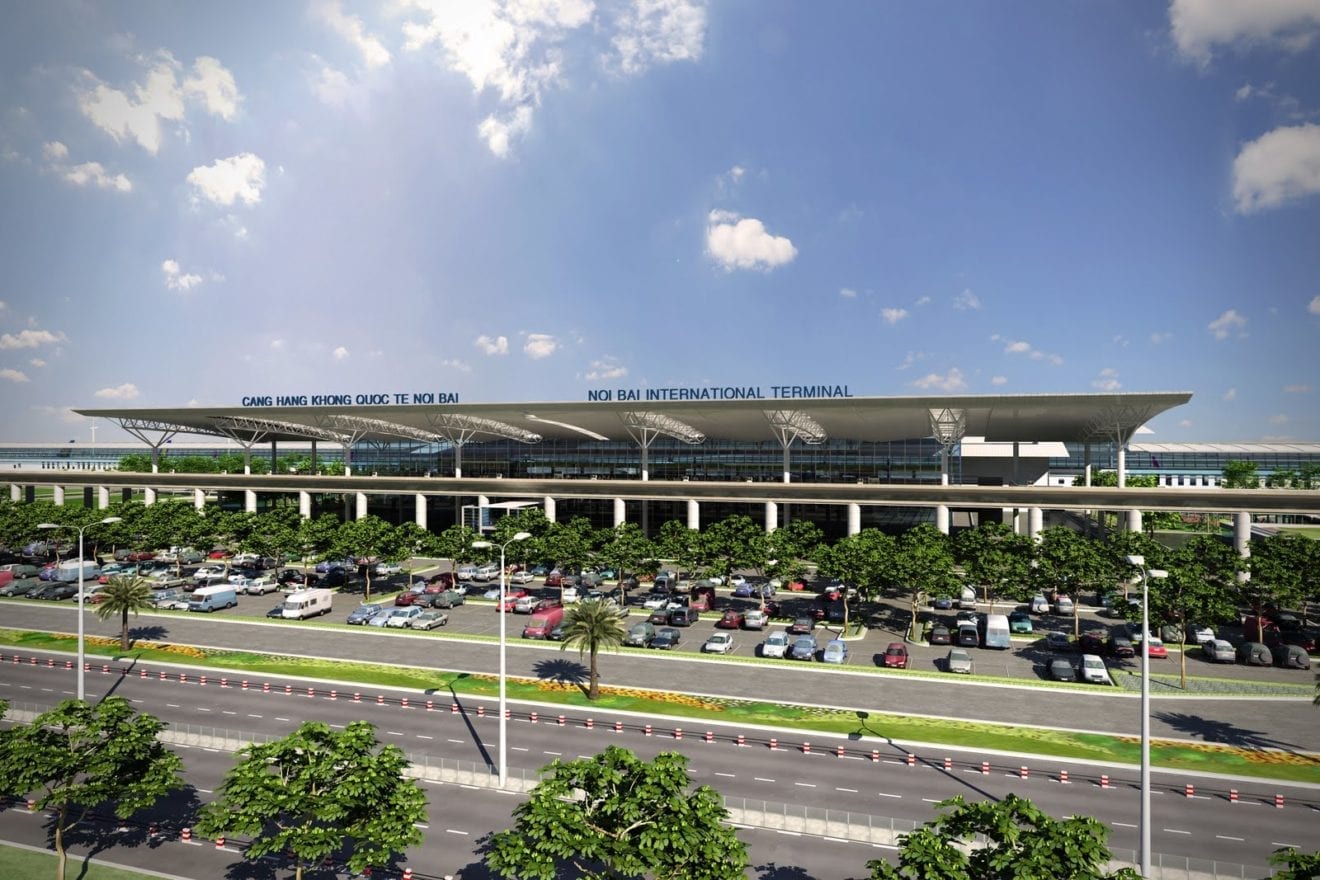
    Vietnam’s aviation agency has proposed a plan to upgrade three international airports near popular tourist destinations Ha Long, Hoi An and Hue over the next three years.

    The project is expected to cost VND23.3 trillion (more than $1 billion) and includes new passenger and cargo terminals, buildings and runway upgrades, the Civil Aviation Authority of Vietnam (CAAV) said in its proposal to the transport ministry.

    It said the money would be spent at Cat Bi Airport, which is 70 kilometers (43 miles) from Ha Long Bay, Phu Bai Airport just outside the former royal capital Hue, and Chu Lai Airport, 77 kilometers south of Hoi An.

    The CAAV said Phu Bai and Chu Lai were operating far above capacity last year, while Cat Bi, which offers the shortest route to Hai Phong, is likely to be overloaded next year.

    Vietnam’s aviation market is growing at the third fastest pace in Asia-Pacific and the country is grappling with an acute dearth of airport capacity.

    Aviation authorities estimated that the number of passengers on domestic flights soared 35 percent to 28 million in 2016, accounting for more than half of the total air travel in the country.

    Airports across the country served more than 55 million passengers during the first seven months of this year, according to the CAAV. The number in July alone reached 9.1 million, up 12.2 percent against the same month last year.

    In March, the Airports Corporation of Vietnam asked for VND32 trillion ($1.4 billion) from the state budget to upgrade large airports across the country.

  • Global smart transportation market expected to reach US$237,701 million by 2022

    Global smart transportation market expected to reach US$237,701 million by 2022

    According to a new report published by Allied Market Research, titled, “Smart Transportation Market by Solution and Service: Global Opportunity Analysis and Industry Forecast, 2014-2022,” the global smart transportation market was valued at US$63,667 million in 2015, and is expected to reach US$237,701 million by 2022, growing at a CAGR of 18.6 percent from 2016 to 2022. Cloud services segment is anticipated to dominate the market during the forecast period. Europe was the dominant region, accounting for approximately 33 percent share of the smart transportation market revenue in 2015.

    Rise in number of vehicles results in high traffic congestion, leading to the requirement of smart transportation network to ease traffic congestion, enhance the safety, sustainability, and efficiency of transportation network. In addition, most consumers are now demanding smart transportation options that can easily navigate the roads with the least possible scope of congestion. The increasing government support and investments towards development of smart cities provides a major boost to the market. For instance, the Government of India aims to develop 100 smart cities by using smart technology to improve the efficiency of services and meet the residents’ needs. However, the need for high capital investment, owing to the complete restoration of the existing transport system, restrains the market growth.

    “Smart transportation system is a necessity, owing to the rising demand for efficient transportation networks worldwide. These systems have witnessed the highest growth in cloud services segment, due to the advancement in technology and increased demand for storage, access, and management of data remotely. In addition, parking management systems are expected to increase their market share at a notable rate. Asia-Pacific and Brazil possess enormous opportunities for the players operating in the smart transportation systems market.” states Sheetanshu Upadhyay, research analyst at Allied Market Research.

    The solutions segment is divided into hybrid ticketing management system, parking management & guidance system, integrated supervision system, and traffic management system. In 2015, traffic management system accounted for the largest revenue, owing to rapid urbanization and the emerging concept of smart cities and smart traffic. However, the parking management system market is anticipated to witness the highest growth, with a CAGR of 18.8 percent from 2016 to 2022.

    The service segment is further divided into business, professional, and cloud services. In 2015, cloud services generated the largest revenue, owing to rapid increase in demand for cloud services smart transportation system. However, this segment is anticipated to witness the highest growth over the forecast period, with a CAGR of around of 18.8 percent  from 2016 – 2022.

    Europe held the largest market share in 2015, and is anticipated to maintain its dominance throughout the forecast period. This is due to increase in demand for smart transportation and concern of users towards the environment. Additionally, investments in emerging smart cities would create growth opportunities for the smart transportation market in the region.

  • Transit tasks to rework international cities

    Transit tasks to rework international cities

    A collection of things are converging to create international alternatives for Transit Oriented Developments (TODs) which might be metropolis altering in scale based on a brand new report from CBRE.

    Transit oriented improvement includes larger density, combined use tasks which might be adjoining to, or built-in with, public transport hubs. These tasks are sometimes master-planned to create interfaces with transport providers and have the power to revitalize underutilized precincts whereas bringing vital financial and social advantages to the broader group.

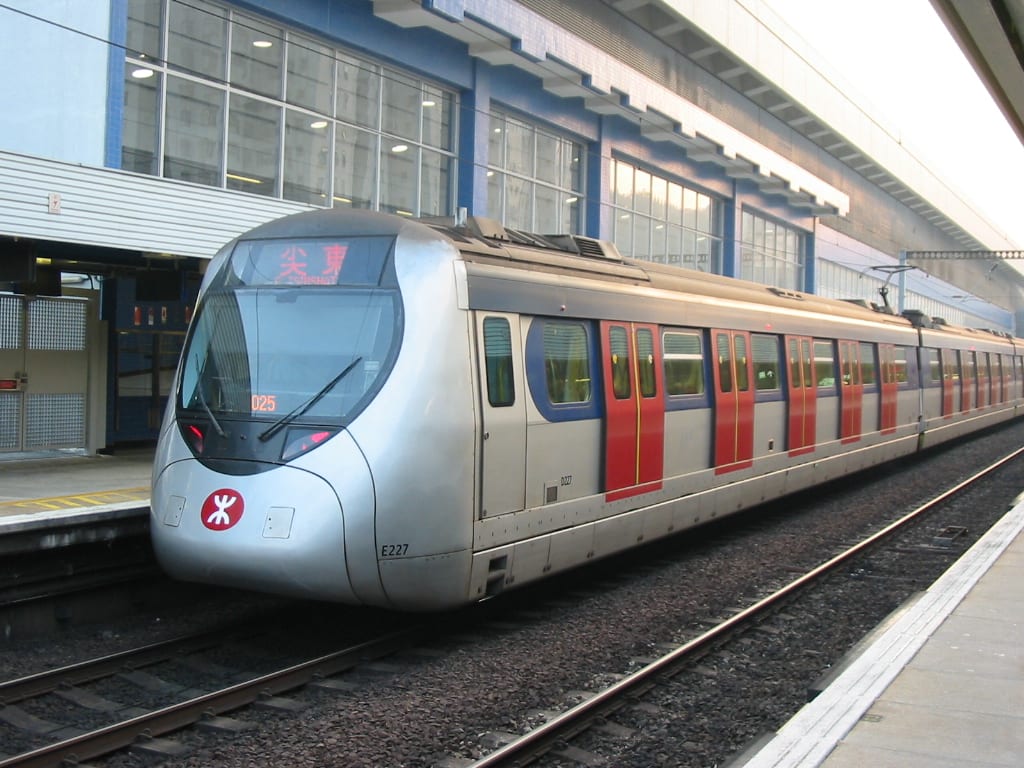
    CBRE’s report examines a variety of profitable TOD tasks across the globe, together with the Hong Kong Station redevelopment, Perth Metropolis Hyperlink in Western Australia, the King’s Cross regeneration challenge in London;,Transbay Transit Centre in San Francisco and One North Precinct in Singapore.

    The report highlights a variety of things which are creating alternatives for TOD tasks, together with growing charges of urbanisation, declining productiveness linked to elevated journey occasions, a rising authorities concentrate on public transport/decentralisation and higher sophistication in venture and infrastructure funding.

    Key findings embrace the essential position that authorities our bodies play in profitable TOD outcomes, the attraction these developments have for each residents and the enterprise group, and the alternatives inherent in a lot of these tasks.

    Henry Chin, Hong Kong-based head of analysis, Asia Pacific, with CBRE, stated TOD tasks have the capability to deal with most of the challenges dealing with main cities in developed economies because of a speedy improve in urbanisation.

    “A profitable TOD will obtain a considerable shift from personal automobiles to public transport, whereas enhancing livability and native employment alternatives.”

    CBRE’s report highlights that authorities imaginative and prescient and sponsorship is essential in facilitating TOD tasks given the position that public transport performs in addressing the long run sustainability of main cities – particularly points corresponding to visitors congestion, journey occasions, housing affordability and air pollution.

    Chin added: “Whereas TOD tasks are extra complicated than typical brownfield or greenfield mixed-use tasks, the advantages clearly warrant the trouble in addressing the challenges. Authorities facilitation is crucial and may take numerous types, together with the supply and rezoning of applicable websites, offering improvement certainty, immediately funding transport infrastructure and coordinating points with the related authorities. “

    The power to draw enterprise occupiers is one other key component of a profitable TOD venture, therefore the essential want for linkages to public transport.

    “Companies are requiring work environments which each appeal to and retain staff. The mixed-use nature of TODs creates activated precincts with retail and leisure providers for workers. TOD places additionally scale back enterprise demand for automotive parking, which in flip reduces challenge development prices and leasing prices for occupants,” Chin stated.

    Nevertheless, CBRE’s report spotlight that incentives can also be required to draw tenants, as illustrated by the long run tax incentive schemes and rental subsidies provided in Singapore to facilitate the One North Precinct.

    One other discovering is that TODs in established markets inside inside and center ring suburbs have a larger probability of success.

    Chin concluded: “Going ahead, TODs may have a dramatic influence on shaping cites, in Asia and at a worldwide degree, as governments give attention to crucial public transport infrastructure initiatives.”