Retail News CRM

Tag: truck

  • Iran Conflict Fuels Rapid Electrification of Chinas Heavy Truck Fleet Amidst Diesel Price Hike

    Iran Conflict Fuels Rapid Electrification of Chinas Heavy Truck Fleet Amidst Diesel Price Hike

    The surge in diesel prices, precipitated by conflict with Iran, could hasten the electrification of China’s heavy-duty truck fleet this year, according to market analysts and auto manufacturers. This shift could further expedite the decline in fuel consumption in the world’s top oil-importing nation.

    The past two years have seen electric heavy-duty truck sales rise from a niche market to nearly one-third of all new heavy-duty truck purchases by 2025. This increase is attributed to government subsidies, lower refueling costs, and an expanding charging infrastructure. Growth in 2025 was particularly significant in the last quarter as buyers anticipated the termination of the trade-in subsidy program.

    Sales of new-energy heavy-duty trucks, predominantly electric, commenced this year with similar growth, increasing by 45% from the previous year to 44,000 units. This figure represents over a quarter of the entire segment, a strong increase from less than 20% a year earlier, as stated by data provider CVWorld.cn.

    CVWorld.cn also expects sales of heavy electric trucks to rise by 30% in April. The increase is likely driven by robust seasonal demand and high oil prices. According to Min Ji, a senior analyst at S&P Global Mobility, the conflict has increased China’s domestic fuel prices, inevitably accelerating the transition from conventional trucks.

    Electric heavy-duty trucks, with a range of approximately 300km, are primarily used for short hauls between industrial locations and transportation hubs. However, long-distance routes are expanding, and manufacturers such as Sany are introducing trucks with a range of up to 600km.

    The extensive electrification of passenger cars and the swift deployment of electric and liquefied natural gas-powered trucks have reversed China’s longstanding growth in the use of diesel and gasoline. Industry analysts largely predict that the demand for oil will reach its peak by 2030.

    Projections for Diesel Consumption and Export Trends

    Current predictions from energy consultancies anticipate a more rapid decline in diesel use than previously expected. GL Consulting predicts diesel consumption will decrease by 4.3% this year, in comparison with a pre-conflict estimate of a 4.1% fall. Rystad Energy forecasts a 5% reduction in diesel demand, surpassing its previous estimate of a 4% decrease, equating to a further decline of about 40,000 barrels daily.

    A 27% rise in retail diesel prices in China following the onset of the Iran conflict has made the economic case for purchasing electric trucks more compelling. Despite the higher initial cost of electric heavy-duty trucks (500,000 yuan or US$73,500) compared to their diesel counterparts (more than 300,000 yuan), nearly half the price difference can be offset through a trade-in program recently extended to the end of the year.

    The lower operating costs of electric trucks are fueling a surge in exports to Europe, which is the world’s second-largest electric truck market, albeit considerably behind China. In 2024, China’s electric truck sales reached 160,000 units, while Europe lagged with fewer than 25,000 sales, as reported by the International Energy Agency.

    Questions & Answers

    What impact has the Iran conflict had on diesel prices in China?
    The conflict with Iran has led to a significant surge in diesel prices in China, rising by 27% since the conflict began on February 28.

    What are the benefits of electric heavy-duty trucks?
    Electric heavy-duty trucks offer a range of benefits including lower operating costs, far-reaching government subsidies, and reduced environmental impact compared to their diesel counterparts.

    How is the growth of electric truck sales expected to change in the near future?
    The growth of electric truck sales is projected to continue, with a predicted increase of 30% in sales of heavy electric trucks in April. This growth is primarily driven by strong seasonal demand and high oil prices.
  • Uber, Aurora To Expand Self-Driving Truck Ops In Texas To Meet Holiday Rush

    Uber, Aurora To Expand Self-Driving Truck Ops In Texas To Meet Holiday Rush

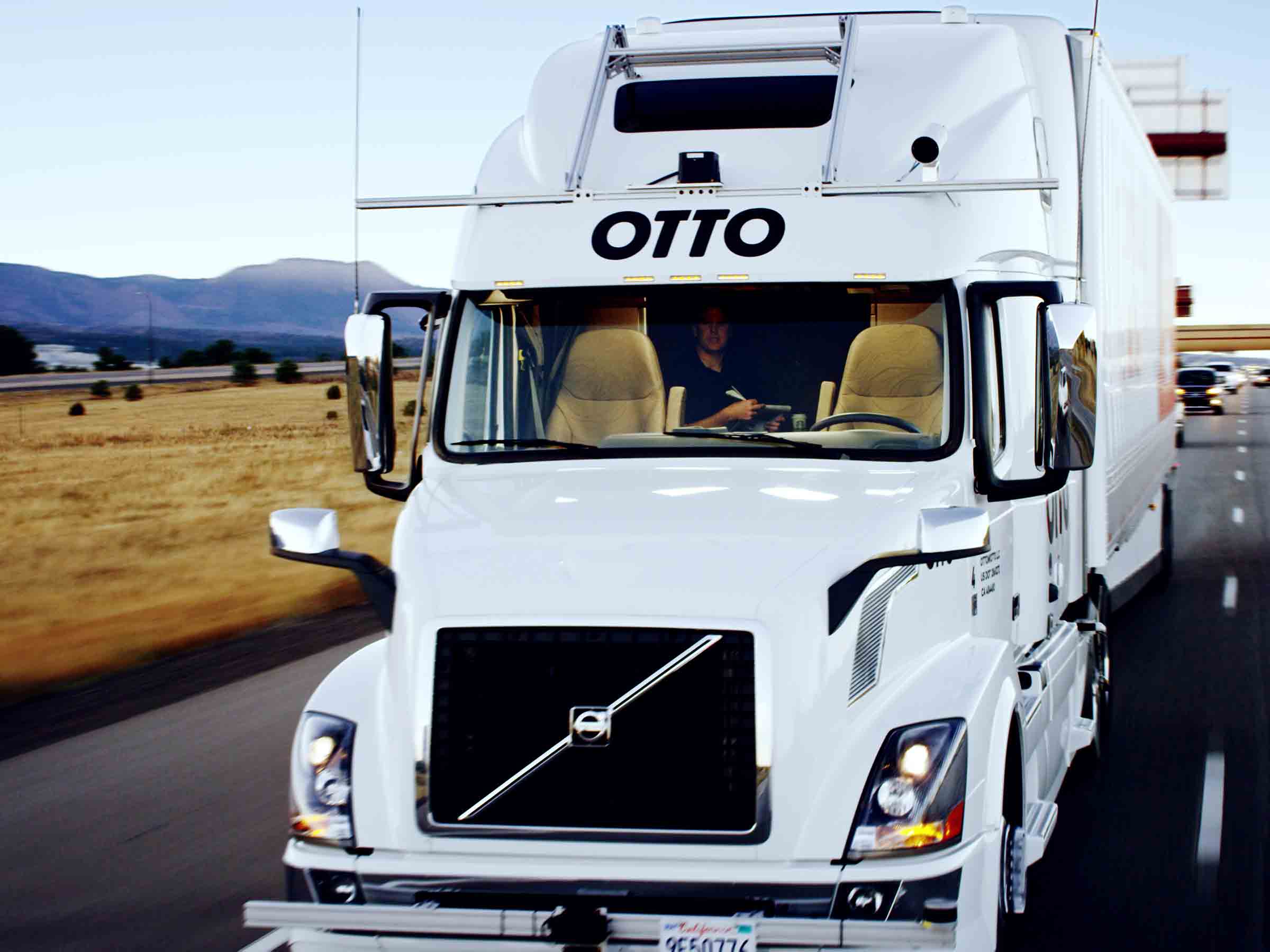
    Uber Technologies Inc and self-driving technology company Aurora Innovation Inc will expand their driverless pilot program in Texas to meet increased delivery demand during the holidays.

    The program will be expanded to the recently launched 600-mile commercial lane between Fort Worth and El Paso in Texas to support customers of the logistics business Uber Freight as it ships goods this holiday season, Aurora said on Friday.

    Uber Freight is a platform that connects shippers who need goods moved with available truck drivers.

    The companies launched their pilot program a year ago to transport goods autonomously between Dallas and Houston.

    “We’re crafting Aurora Horizon to help carriers of all sizes alleviate some of the supply-chain pressures that typically accompany (holiday season),” Aurora co-founder Sterling Anderson said. Aurora Horizon is a truck-specific self-driving product.

    Autonomous goods hauling has been seen as the future of logistics as it could increase truck utilization and boost transportation frequency between terminals.

    Human truck drivers cannot drive more than 11 hours daily in the United States.

    Aurora Innovation, which also counts FedEx Corp and Toyota Motor

  • Volta Trucks Unveils Two Smaller Truck Models For Urban Markets

    Volta Trucks Unveils Two Smaller Truck Models For Urban Markets

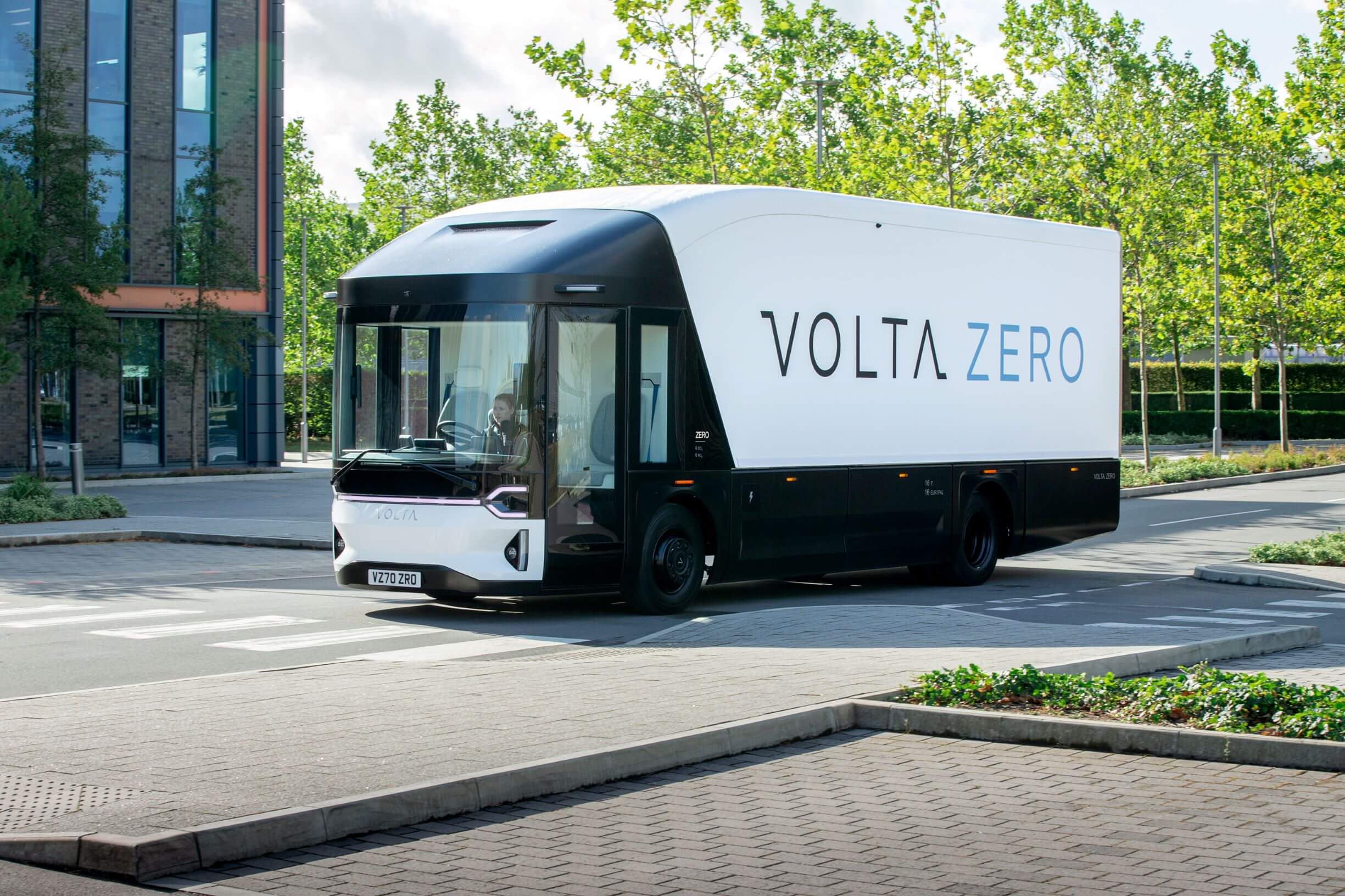
    Commercial electric vehicle (EV) startup Volta Trucks on Tuesday unveiled two smaller zero-emission truck models that will start production in 2025, opening more options for urban deliveries and in EU markets with restrictions for Sunday operations. Stockholm-based Volta Trucks, which also operates in the UK, said it would launch a fleet of test vehicles of its 7.5 tonne and 12 tonne trucks for customers in 2024. The new models will join the startup’s Volta Zero, a 16-tonne fully-electric truck, which is due to start series production later this year, and an 18 tonne model that should go into production in 2023.

    In February, Volta Trucks said it had raised 230 million euros ($247 million) to fund the launch of series production of the Volta Zero in late 2022.

    Some European Union countries have bans on trucks over 7.5 tonnes operating on Sundays or holidays, and cities such as Amsterdam do not allow trucks over that weight to protect old streets and bridges.

    Volta Trucks said it had raised 230 million euros ($247 million) to fund the launch of series production of the Volta Zero in late 2022.

    While some European cities also plan restrictions on diesel commercial vehicles – Paris will ban them in 2024 – and a number of manufacturers are testing prototypes, there are virtually no electric trucks in these weight segments available today. Volta Trucks’ 7.5 tonne and 12 tonne models will be among the first to market.

    “Our customers tell us that they really appreciate the safety and zero-emission attributes of the 16-tonne Volta Zero, but also need smaller 7.5- and 12-tonne vehicles in their operations,” Volta Trucks’ Chief Executive Essa Al-Saleh said in a statement.

    The startup currently has orders for around 6,000 electric trucks, including 1,500 ordered by Deutsche Bahn’s logistics unit Schenker.

    Volta Trucks plans to make 5,000 trucks in 2023 and its annual production should rise to 27,000 by 2025.

  • Germany’s DB Schenker To Order 1,500 Electric Trucks From Sweden’s Volta

    Germany’s DB Schenker To Order 1,500 Electric Trucks From Sweden’s Volta

    Deutsche Bahn’s logistics unit Schenker will order almost 1,500 electric trucks from startup Volta Trucks to transport goods from European terminals into city centres and urban areas, the companies said on Tuesday. DB Schenker will use prototype electric trucks in the spring and summer of 2022 in distribution operations, findings from which will be used in the production of 1,470 electric trucks. Those trucks will be made at a former MAN truck plant in Austria that was taken over by Steyr Automotive. The electric trucks will operate at 10 DB Schenker locations in five countries.

    The companies didn’t immediately provide details on the transaction’s value.

    Stockholm-based Volta Trucks, which also operates in the UK, plans to start production of the Volta Zero, a 16-tonne electric truck, in 2022. Bans on fossil-fuel commercial vehicles will take effect in some European cities over the next few years, putting pressure on logistics providers to find zero-emission alternatives.

    “The large-scale partnership with Volta Trucks allows us to significantly increase the pace of electrification of our fleet and invest in greener transport solutions,” Cyrille Bonjean, DB Schenker’s executive vice president for land transport in Europe, said in a statement. DB Schenker has around 74,200 employees in over 130 countries. The latest order brings Volta Trucks’ order book to around 4,500 electric trucks. It previous biggest public order was for 1,000 trucks, from French refrigerated truck firm Petit Forestier.

  • Waymo, UPS Expand Autonomous Freight Truck Tie-Up Ahead Of Holidays

    Waymo, UPS Expand Autonomous Freight Truck Tie-Up Ahead Of Holidays

    Alphabet Inc’s Waymo said on Wednesday it is expanding its partnership with United Parcel Service Inc to move freight using autonomous trucks between two of the parcel delivery company’s Texas facilities during the holiday season.

    Waymo Via, the company’s delivery operation, began its partnership with UPS in early 2020 when it shuttled packages for the company between the Metro Phoenix area and its Tempe hub in Arizona using an autonomous minivan.

    The company said trial runs would start in the coming weeks, where big rigs equipped with its fifth-generation Waymo Driver technology will deliver for UPS’ North American Air Freight unit between facilities in Dallas-Fort Worth and Houston, Texas.

    Driver shortages have hit U.S. trucking and delivery companies, most notably FedEx Corp, as they race to hire workers for the crucial holiday season when package volumes can easily double. Waymo and UPS said the trials would help assess the impact of autonomous driving technology on safety and efficiency.

  • Alibaba To Develop Self-Driving Trucks With Logistics Unit Cainiao

    Alibaba To Develop Self-Driving Trucks With Logistics Unit Cainiao

    Chinese e-commerce leader Alibaba Group Holding Ltd plans to develop self-driving trucks with logistics subsidiary Cainiao, Chief Technology Officer Cheng Li said on Thursday.

    Cheng also said Cainiao aims to introduce 1,000 autonomous delivery robots in China over the next year.

    The announcement comes as dozens of startups, automakers, and large technology firms, such as internet search leader Baidu Inc, accelerate work on self-driving vehicle systems, which are widely expected to bring a sea change to the transportation industry.

    Other self-driving truck makers include U.S. firm TuSimple Holdings Inc, which listed shares in April.

  • Waymo And Daimler Are Partnering For Self Driving Trucks

    Waymo And Daimler Are Partnering For Self Driving Trucks

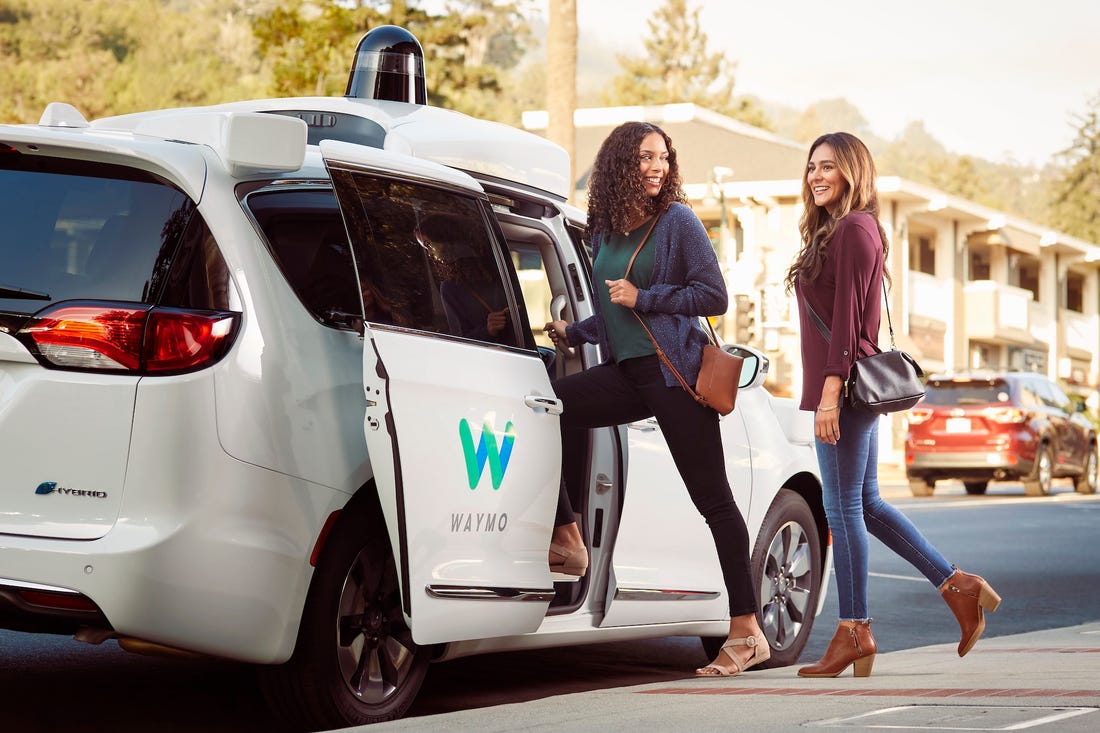
    Recently few reports emerged which said that Mercedes was scaling back from developing autonomous driving technology which was quickly buried by the company’s head of digital transformation. Now Alphabet-owned Waymo and Daimler have officially announced a partnership in which the German company will be teaming up with the pioneering self-driving company to sell autonomous trucks in the US. This partnership will see the Waymo One technology make its way to Daimler’s trucks – it is the same technology that Alphabet has deployed in Phoenix, Arizona which forms the world’s first self-driving ride-hailing service.

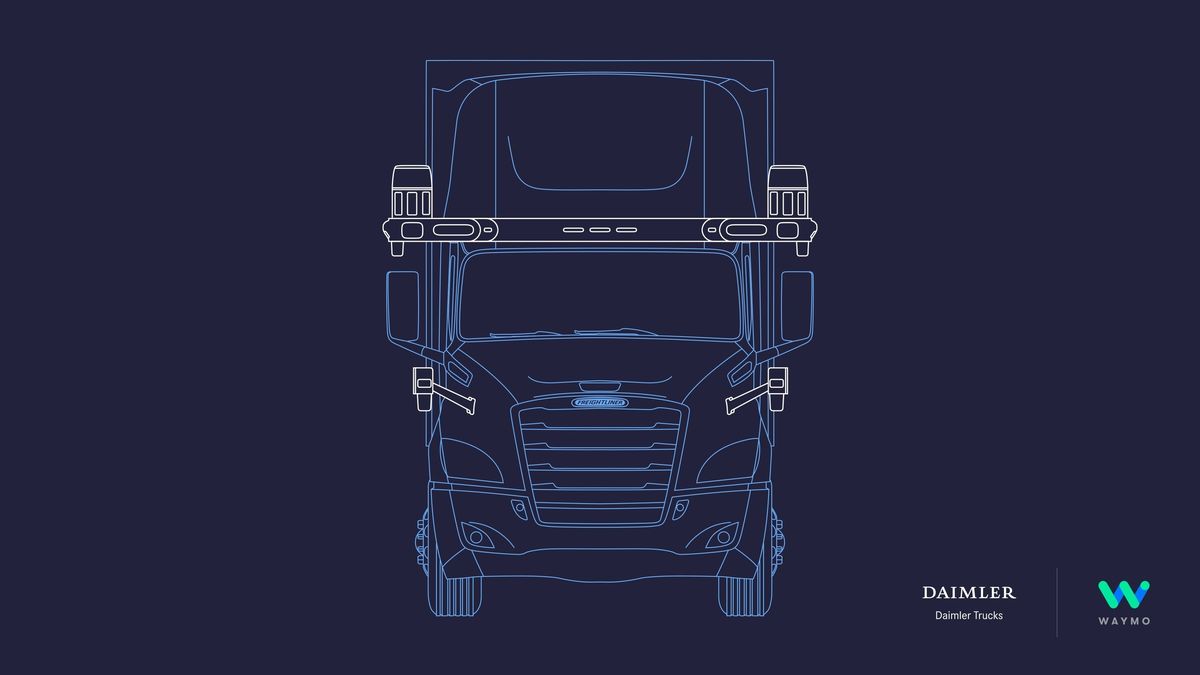
    “The autonomous Freightliner Cascadia truck, equipped with the Waymo Driver, will be available to customers in the U.S. in the coming years,” the two companies said in a statement. “Waymo and Daimler Trucks will investigate expansion to other markets and brands in the near future,” the statement added without outlining an actual timeline.

    The deal is particularly with Daimler North America ties in soundly with Waymo’s vision of graduating to larger vehicles like trucks. Daimler also has tested its own self-driving trucks in the past. Mercedes recently also introduced autonomous driving technology to the S-class and has also partnered with the airport in Stuttgart to provide a self droving car valet service in partnership with Bosch.

    “We have the highest regard for Daimler’s engineering skills and broad global truck product portfolio, and so we look forward to scaling the Waymo Driver, together with our new partner, to improve road safety and logistics efficiency on the worlds’ roadways,” said John Krafcik, Waymo’s CEO.

    Adding to this Martin Daum, chairman of the board of management of Daimler Truck AG and Member of the Board of Management of Daimler AG said, “As the leader of our industry, Daimler Trucks is the pioneer of automated trucking. In recent years, we have achieved significant progress on our global roadmap to bringing series-produced highly automated trucks to the road. With our strategic partnership with Waymo as the leader in autonomous driving, we are taking another important step towards that goal. This partnership complements Daimler Trucks’ dual strategy approach, of working with two strong partners to deliver autonomous L4 solutions that are seamlessly integrated with our best-in-class trucks, to our customers.”

    The Freightliner Cascadia truck will be the primary focus of this deal. It will be outfitted with the Waymo driver platform. It is a class 8 vehicle and comes with a hefty safety suite called the Detroit assurance 5.0 which includes active safety technology including active brake assistance, adaptive cruise control, lane departure warning and lane-keeping systems as options.

    The Waymo Driver platform will elevate the ADAS capability of this truck beyond level 4. They will be able to handle most driving conditions including heavy inclement weather. This comes with the credence of the Waymo driverless platform being able to handle alternative climates something Waymo has tested for more than half a decade as the pioneer of driverless technology ever since it graduated out of Google Skunkworks R&D unit called Google X and then was spun off into a separate company called Waymo.

  • DHL To Debut Zero-Emission Electric Delivery Vans In U.S. Cities

    DHL To Debut Zero-Emission Electric Delivery Vans In U.S. Cities

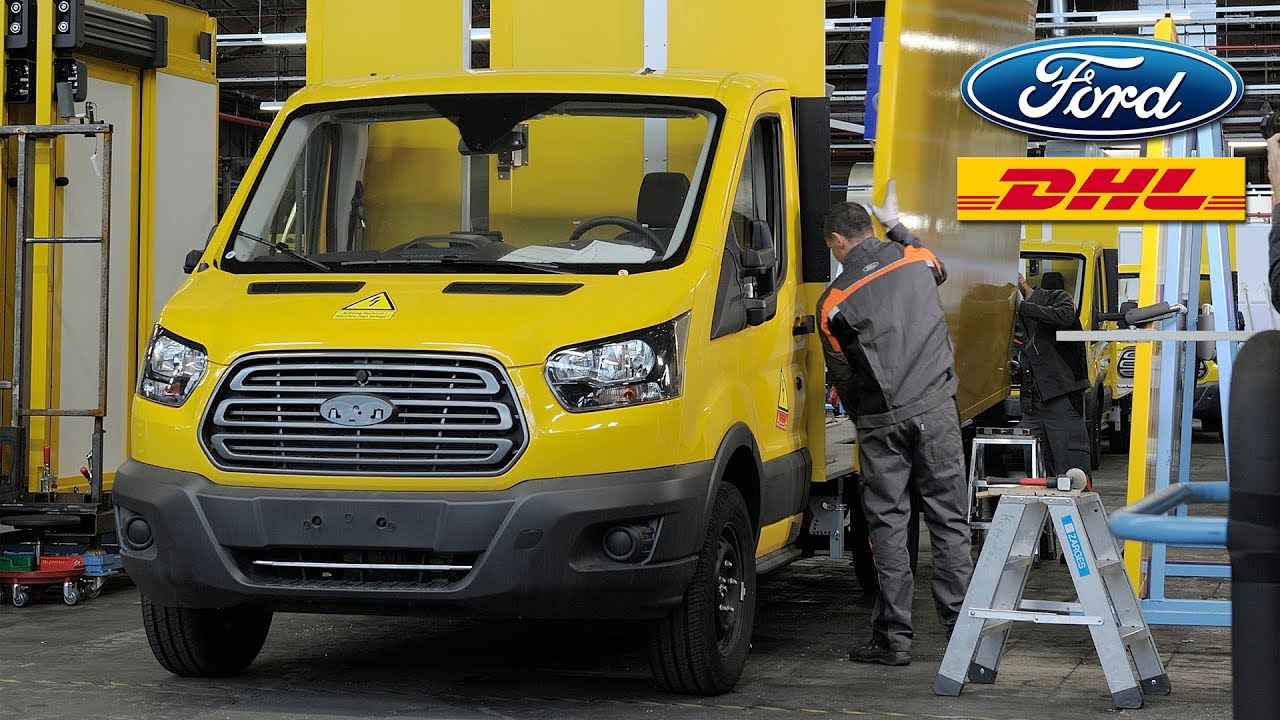
    Deutsche Post DHL Group’s StreetScooter electric vehicle unit will enter the U.S market next year as delivery firms and municipalities work to cut greenhouse gas emissions. DHL will debut StreetScooter’s zero-emission Work L delivery van in two urban U.S markets, one on each coast, starting in Spring 2020, the companies said

    They did not specify which markets would be the first.Full deployment could come in 2022 and 2023, said Ulrich Stuhec, StreetScooter’s chief technology officer, who joined the company from Ford Motor Co in October. Los Angeles, London, Berlin, Tokyo and 30 other cities around the globe have been working to establish zero-emission zones by 2030.

    Those cities hope to curb accumulating greenhouse gases that contribute to extreme weather, higher temperatures and rising sea levels, which have steep economic, environmental and human costs

    The transportation industry – which includes fossil-fuel-burning ships, trains, trucks and planes – accounted for 14% of global greenhouse gas emissions in 2010, according to the United Nations’ Intergovernmental Panel on Climate Change

    Over the last three years, DHL has kicked off “CO2-free last-mile delivery” efforts with German cities like Berlin, Hamburg and Munich. Roughly 10,000 of the 12,000 StreetScooter electric vehicles on the road make DHL deliveries. They operate in Amsterdam, Vienna and cities around Germany – saving roughly 36,000 metric tons of CO2 per truck each year, StreetScooter said.”We have the most experience on the road while others are still working on their first prototypes,” StreetScooter’s Stuhec said in a recent interview. Up-and-coming delivery competitor Amazon.com Inc in September gave the electric vehicle industry a jolt with its plan to order 100,000 electric delivery vans from Rivian Automotive LLC, a company it funds

    The first vans should hit streets in 2021. Meanwhile, Amazon said its delivery partners are using around 200 electric vehicles

    United Parcel Service Inc has 1,000 electric and hybrid electric vehicles in its fleet, and FedEx Corp last year announced plans to deploy 1,000 electric vehicles in California

    DHL fully acquired StreetScooter in 2014

    The unprofitable subsidiary is seeking new investors and customers to further ramp production

    Current partners include the United Kingdom’s Milk & More, which ordered 200 trucks, and Japanese delivery firm Yamato, which has started to deploy 500 planned vehicles

    In September, StreetScooter cracked the world’s biggest electric vehicle market – signing a memorandum of understanding with Chinese carmaker Chery Automobile Co to begin electric van production in 2021

  • Tata Intra Compact Truck Launched

    Tata Intra Compact Truck Launched

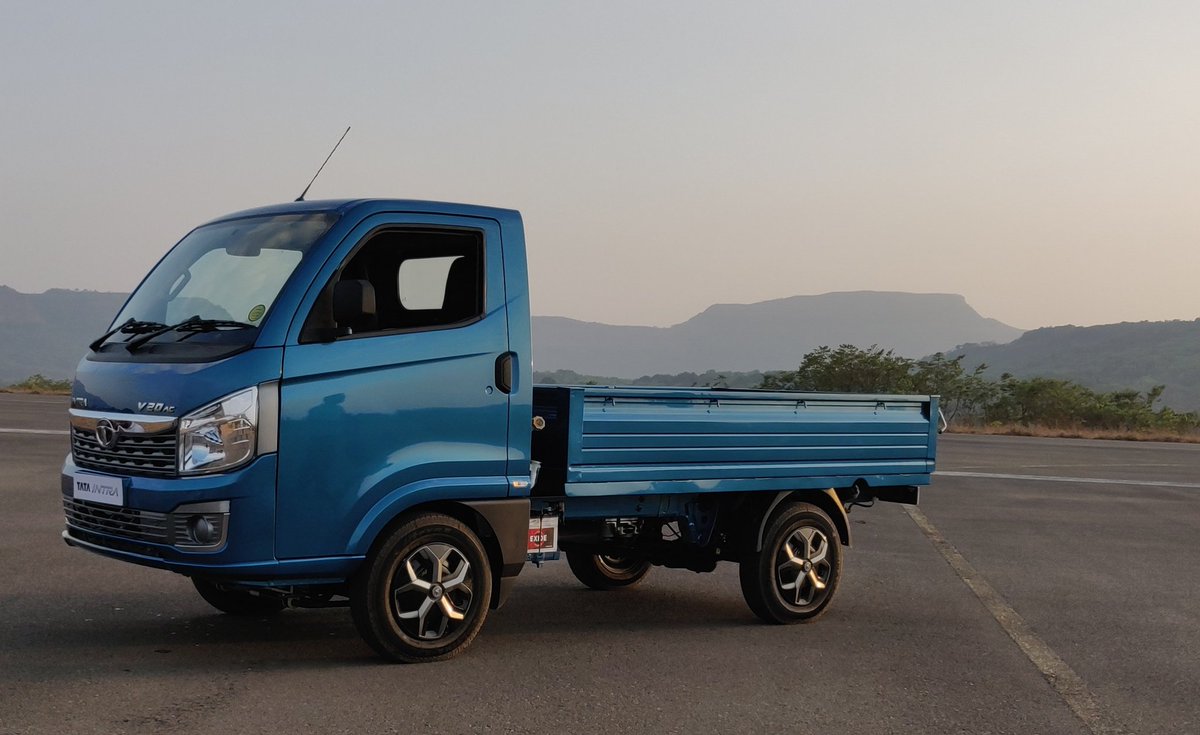
    Tata Intra, the all-new small commercial vehicle (SCV) from Tata Motors today officially went on sale in India. The new compact trucks will be available in two variants – V10 and V20, priced at ₹ 5.35 lakh and  ₹ 5.85 lakh (ex-showroom India) respectively. The new Tata Intra compact truck is a premium offering and will be positioned in India above the company’s existing range of Ace mini trucks, which will also continue to be on sale. Compared to the Tata Ace, the new Intra SCV comes with a host of first-in-segment features to justify the premium price tag.

    Tata says that the new Intra is targeted towards customers who are looking for a commercial vehicle that can be both, a workhorse as well as a stylish and comfortable personal vehicle. Someone who is looking to upgrade from the Tata Ace. Thus, you’ll see that the new Tata Intra comes with a bunch of passenger car-like elements both outside as well as inside. The exterior bit includes – a large front grille with a chrome slat flanked by a set of nice-looking clear glass headlamps with halogen lights and integrated turn indicators. The Intra also gets a bold and busy-looking bumper with a wide central air dam and provision to install fog lamps. The new compact truck runs on a set of 14-inch steel wheels with the option of smart-looking dual tone wheel covers, which are truly good-looking and well-designed. The vehicle also gets large manually operable ORVMs and dual wipers, which in addition to these subtle character lines, add to the style quotient of the Intra.

    The Tata Intra also comes with a well-laid-out cabin, featuring a neat dashboard that comes with contrast bezels around the center console and air-con vents. Furthermore, because the gear lever is positioned on the dashboard, resulting in a flat walk-through-floor. Other features include a charging socket, lockable glovebox, a standard music system with Radio, AUX-IN and USB connectivity, and a fully digital instrument cluster, offering read-outs for speedometer, odometer, time, fuel gauge, and a segment-first gear shift indicator, or as Tata calls it Gear Shift Advisor (GSA).

    In terms of dimensions, the new Tata Intra is at par with the larger Tata Ace on offer, the Ace Mega XL, with a total length of 4316 mm, a width of 1639 mm and a height of 1918 mm. Having said that, the Intra does come with one of the largest loading bay areas in the segment, with a 2512 mm long load deck that is 1602 mm wide and comes with a standard depth of 463 mm. In fact, the Intra also comes with a segment-best payload capacity of 1100 kg, 100 kg more than what the Ace Mega XL offers. In fact, the vehicle also offers best-in-class gradeability of 45 percent for easily negotiating steep hilly roads & flyovers, compared to the Ace’s 30 percent gradeability. Furthermore, the Intra also gets semi-elliptical leaf spring suspension setup with 6 leaves at front and 7 leaves at the rear, offering heavy duty performance.

    The new Tata Intra V20 is powered by a brand new 1.4-litre Direct Injection (DI) diesel engine. The new 1396 cc engine is tuned to churn out 69 bhp at 4000 rpm and develop a peak torque of 140 Nm at 1800-3000 rpm. The engine comes mated to a 5-speed manual gearbox with cable shift mechanism. The Tata Intra V10 is powered by an 800 cc, two-cylinder motor which develops 39 bhp at 3750 rpm and 90 Nm at 1750 – 2500 rpm and is mated to a four-speed gearbox. In terms of rivals, the new Tata Intra has been designed to compete with both, the LCVs like the Piaggio Porter 1000 and Mahindra Supro, and the pickup trucks like the Mahindra Bolero Pickup.

  • Fiat Chrysler recalls 1.25 million trucks over software error

    Fiat Chrysler recalls 1.25 million trucks over software error

    Fiat Chrysler Automobiles said on Friday it would recall more than 1.25 million pickup trucks worldwide to address a software error linked to reports of one crash death and two injuries.

    The erroneous code could temporarily disable the side air bag and deployment seat of belt pretensioners – which reduce seat belt slack during impacts – during a vehicle rollover spurred by a significant underbody impact, such as striking onroad debris or driving off-road, the Italian-American automaker said.

    The company will reprogram computer modules in the affected vehicles to address this error.

    An FCA spokesman said the likelihood of an incident was very low because a sequence of events was needed to cause an incident.

    There is no definitive proof the error was involved in two accidents, one of which resulted in a fatality, but the automaker was conducting the recall proactively, he said.

    The spokesman declined to say whether the code was produced inhouse or by an FCA supplier, saying “we do not discuss supplier relationships.”

    Fiat Chrysler Automobiles said on Friday it would recall more than 1.25 million pickup trucks worldwide to address a software error linked to reports of one crash death and two injuries.

    The erroneous code could temporarily disable the side air bag and deployment seat of belt pretensioners – which reduce seat belt slack during impacts – during a vehicle rollover spurred by a significant underbody impact, such as striking onroad debris or driving off-road, the Italian-American automaker said.

    The company will reprogram computer modules in the affected vehicles to address this error.

    An FCA spokesman said the likelihood of an incident was very low because a sequence of events was needed to cause an incident.

    There is no definitive proof the error was involved in two accidents, one of which resulted in a fatality, but the automaker was conducting the recall proactively, he said.

    The spokesman declined to say whether the code was produced inhouse or by an FCA supplier, saying “we do not discuss supplier relationships.”

    Fiat Chrysler has been working to move faster to address vehicle issues after being fined twice in 2015 by the NHTSA.

    In December 2015, the company was fined $70 million for failing to report vehicle crash deaths and injuries since 2003.

    In July 2015, Fiat Chrysler agreed to a $105 million settlement with NHTSA for mishandling nearly two dozen recall campaigns involving 11 million vehicles.

    It agreed to a three-year consent agreement and monitoring by former Transportation Secretary Rodney Slater.

  • Nissan Motor begins mass production of new Navara pickup truck in China

    Nissan Motor begins mass production of new Navara pickup truck in China

    Nissan Motor’s manufacturing joint venture Zhengzhou Nissan Automobile began production of its new Navara pickup truck Monday, in China.

    Nissan Motor’s manufacturing JV, Zhengzhou Nissan, plans to begin sales of the Navara in June, but has not released price or sales target.

  • VW trucks division targets strong profitability gain in 2017

    VW trucks division targets strong profitability gain in 2017

    Volkswagen’s truck division aims to significantly increase its profitability this year as deepening cooperation between the MAN and Scania brands and improving overseas markets spur business, it said on Monday.

    Volkswagen, which launched a new truck & bus division in 2015 to challenge global rivals Daimler and Volvo, is targeting a long-term operating margin target of 9 percent, up from 6.1 percent last year.

    “We are not striving to become a volume champion, we want to be the most profitable ones,” chief executive Andreas Renschler told journalists, referring to improving markets in Western Europe, Russia and China.

    But finance chief Matthias Gruendler made clear a significant improvement in financial results requires a rebound in the key Brazilian market where the VW division commands a 37-percent share of the country’s commercial-vehicles market.

    Overall truck and bus sales in Brazil have been falling for four years but demand is expected to rebound slightly in the second half of the year amid the improving economy with a chance for stronger growth in 2018, Gruendler said.

    “Brazil has always been an important market and is characterized by a high degree of cyclicality,” chief executive Andreas Renschler said.

    Under Renschler, who ran Daimler Trucks before joining VW in February 2015, Europe’s largest automotive group has also been seeking to expand its footprint in international truck markets.

    Last year, VW announced a stake purchase in U.S. truck maker Navistar International which may earn the German group access to the vast North American truck market, and is also in talks about finding a new partner in China.

    “We are currently in discussions about different opportunities,” Renschler said. “All options are open” including a possible increase in MAN’s stake in China’s Sinotruk and finding a new partner.

  • Maven Ventures backed Embark unveils its self-driving truck technology

    Maven Ventures backed Embark unveils its self-driving truck technology

    Self-driving technology for commercial trucking Embark has unveiled its self-driving truck technology to the public. The company—which gained approval by the State of Nevada earlier this year to begin testing its truck on public roads—has created a technology that allows trucks to drive from exit to exit on the freeway without any human input.

    Embark’s truck uses a combination of radars, cameras and depth sensors known as LiDARs to perceive the world around it.

    “Analyzing terabyte upon terabyte of real-world data, Embark’s DNNs have learned how to see through glare, fog and darkness on their own,” said Alex Rodrigues, CEO and Co-founder of Embark. “We’ve programmed them with a set of rules to help safely navigate most situations, how to safely learn from the unexpected, and how to apply that experience to new situations going forward.”

    “Spending weeks on the highway is tough on you,” said Owner-Operator Jeff Scorsur. “If I could still get the job done while driving in my own city and sleeping in my own bed, that would make my family very happy,” he said.

    According to Rodrigues, the idea for Embark came after blowing a tire on the interstate and waiting four hours for the tow truck to arrive.

    “Every single 18-wheeler that drove past had a sign on the back ‘Drivers Wanted’. It was so clear there was a shortage of drivers,” he said. “The numbers back that up. The American Transportation Research Institute estimates there is currently a shortage of 100,000 truck drivers in the industry, which is poised to only get worse as baby boomer drivers – the bulk of the industry’s workforce – retire over the next decade. Embark’s goal is to increase productivity per driver and prevent the shortage from becoming a crisis.”

    The team is backed by a multi-million dollar investment led by Maven Ventures. Maven’s previous investment in self-driving technology, Cruise Automation, sold to General Motors for $1 billion last year. Embark plans to quadruple its engineering team within the next year and aggressively expand its testing fleet to show their technology is ready for the nation’s highways.

    “We are committed to proving beyond a shadow of a doubt that this technology is safe and reliable,” said Rodrigues. “That means performing extensive tests and working with our partners in the government to get it—and the market—ready.”

  • Made-in-China truck sales lose ground in Vietnam

    Made-in-China truck sales lose ground in Vietnam

    Made-in-China trucks which had once dominated the Vietnamese market are facing the slow sales since early 2016. According to the General Department of Customs, import of made-in-China trucks into Vietnam reached a record high of 26,700 units in 2015 worth a total USD1 billion compared to 13,700 units worth USD530 million in 2014.

    However, since early 2016, the sales of Chinese trucks have considerably fallen in Vietnam. The General Department of Customs reported that only 10,900 Chinese trucks had been imported into Vietnam in 2016 and this figure reached just 94 units in January of 2017 compared to 1,700 units in January 2015.

    Explaining about the surge in Chinese trucks imported during the 2014-2015 period, owner of an auto-agent in Hung Yen Province, said that it was low prices which attracted customers. Meanwhile, Vietnamese auto agents could owe payments for buying Chinese trucks for between 6 months and one year.

    In early 2014, the Ministry of Transport issued a regulation to tighten control over overloaded vehicles also helped to fuelled the import of large-sized Chinese trucks.

    Earlier, trucks were allowed to transport larger quantities, 2-3 times over their load capacity. But they will be fined heavily if they carried that much now with the new policy. So as to carry the same amount of goods as before, local transport firms had to increase the number of trucks.

    The slow sales of Chinese trucks in Vietnam are also attributed to the stronger competition from rivals. More trucks produced by South Korea’s Hyundai, Japan’s Hino, Russia’s Kamaz and German’s Shacman are all being sold in Vietnam with more affordable prices.

    Many showrooms of made-in-China trucks have been set up along National Highway 5A, however, over the past year, they have sold only a few units.

    Representatives of a showroom in Hai Duong Province said despite low prices, the company sales of Chinese trucks have been on the sharp fall, which is partially due to quality which is not good as those made by South Korean, Japanese or European firms.

    After being imported into Vietnam, many Chinese trucks have their bodies extended for the higher loading capacity, which is aimed to meet the Ministry of Transport’s regulations and this also seriously affects the trucks’ life-span.

  • Scania Strengthens Position in Indonesia

    Scania Strengthens Position in Indonesia

    Scania continues to reinforce its position in the Indonesian bus market. Transjakarta has now placed an order for 150 low-entry city buses in addition to the previously ordered 110 3-axle Scania buses that will be delivered later this year. The public transport operator in the Indonesian capital already has 108 articulated Euro 6 Scania gas buses in its network.

    The Transjakarta Bus Rapid Transport system is considered to be the world’s longest busway, serving more than 10 million passengers monthly. The forthcoming delivery of low-entry buses will replace the existing, highly polluting, old buses that operate outside the busway corridors. The new Scania buses, delivered by United Tractors and bodybuilt by Laksana, will feature wheelchair ramps.

    On announcing the order, Jakarta Governor Basuki “Ahok” Tjahaja Purnama particularly highlighted the greater accessibility and said, “this is the world-class bus we expect to have. Jakarta has never before had low-entry buses.”

    Scania, through its Indonesian partner United Tractors, has established the bus depot workshop facilities and parts supply systems in Jakarta needed to uphold an uptime of over 90 percent.

    United Tractors is the leading and the largest distributor of heavy equipment in Indonesia, providing products from world-renowned brands, including Scania. The partnership between United Tractors and Scania was established in 2004, initially focusing on heavy-duty trucks for the Indonesian mining industry.

    Scania is major supplier of buses for BRT systems throughout the world. “We are convinced that bus systems offer the quickest and most cost-effective solution for cities to increase urban mobility and alleviate traffic congestion,” says Karin Rådström, Head of Buses and Coaches. “The Jakarta BRT system serves as a model for many growing cities.”

    Scania is a part of Volkswagen Truck & Bus GmbH and one of the world’s leading manufacturers of trucks and buses for heavy transport applications. Scania is also leading provider of industrial and marine engines. Service-related products account for a growing proportion of the company’s operations, assuring Scania customers of cost-effective transport solutions and maximum uptime. Scania also offers financial services. Employing some 44,000 people, the company operates in about 100 countries. Research and development activities are concentrated in Sweden, while production takes place in Europe and South America, with facilities for global interchange of both components and complete vehicles. In 2015, net sales totalled SEK 95 billion and net income amounted to SEK 6.8 billion.