Tag: UOB

  • UOB Launches Platform for Corporate Clients

    UOB Launches Platform for Corporate Clients

    The new platform aims to transform the digital banking experience for corporate clients and manage their banking needs in a simpler, smarter, and more personalized manner.

    Customers will be able to manage a range of domestic and cross-border banking activities on UOB Infinity, which aims to streamline business banking by integrating features such as cash management and trade finance, as well as real-time payment receipt confirmation at the beneficiary bank and information on charges for the cross-border transaction, including those from the intermediary bank.

    In addition, its app allows clients to make a wide range of payments – from local bill payments to making domestic and cross-border fund transfers – through services such as PayNow, FAST, and telegraphic transfers.

    The platform will be rolled out across the region, beginning with Singapore, the bank said in an announcement on Wednesday. Users of BIBPlus, the bank’s existing business internet banking platform, can use Inifinity with the same credentials.

    The design of Inifinity, such as its customizable desktop, comes amid rising demand for personalized digital experiences and increased use of electronic payments for business transactions.

    The result is «an experience that is intuitive for corporate clients and enables them to access the financial intelligence they need quickly and easily,» So Lay Hua, UOB head of group transaction banking, group wholesale banking, said.

  • UOB’s Private Equity Arm Achieves Impact Milestone

    UOB’s Private Equity Arm Achieves Impact Milestone

    The firm has also obtained verification from Ernst & Young for its Asia Impact Investment Fund’s alignment with the World Bank’s impact investing principles.

    UOB Venture Management (UOBVM) has issued its disclosure statement on the Operating Principles for Impact Management, becoming the first signatory of the Impact Principles in Southeast Asia to do so, the bank announced in a statement on Tuesday.

    UOBVM’s disclosure statement demonstrates how it upholds the Impact Principles through its impact investing strategy and approach, in particular for its Asia Impact Investment Fund (AIIF), ensuring that impact considerations are purposefully integrated into key stages of the investment process.

    Launched in 2015 together with Credit Suisse, the $55-million fund invests in high-growth companies from the education, healthcare, and agriculture sectors in Southeast Asia and China. It also focuses on investments that will help to improve financial inclusion, affordable housing, sanitation, clean energy, and water for the region’s low-income communities.

    The Impact Principles provide a clear market standard for investors looking to achieve social, economic or environmental impact alongside financial returns. With this disclosure statement and independent verification, UOBVM enters a new era of transparency for the benefit of impact investors, Nicolas Marquier, Singapore country manager of IFC, said.

    UOB has also opened its second impact fund for subscriptions. The fund has a target fund size range of $100 million and is expected to make equity investments of about $1 million to $15 million each, the announcement said.

    The need for impact investments is even more pressing now with the COVID-19 pandemic disproportionately impacting low-income communities in Asia and pushing more people below the poverty line, Seah Kian Wee, chief executive officer of UOBVM, said.

  • UOB Reports Lackluster Quarter

    UOB Reports Lackluster Quarter

    The bank’s performance was hit by declining margins and pre-emptive credit provisioning as the effects of the Covid-19 pandemic continues to devastate the global economy.

    United Overseas Bank reported second-quarter net earnings of S$703 million ($513.41 million) – 18 percent down from the previous quarter and 40 percent down from the same period the year before, mainly due to lower margins and higher credit costs, according to its second-quarter earnings report, published on Thursday.

    Earnings for the first half of the year stood at S$1.56 billion – 30 percent lower than a year ago. Net interest income decreased 6 percent year-on-year to S$3.05 billion as a result of declining margins alongside interest rate cuts, while net fee and commission income was 4 percent lower at S$960 million due to lower consumer spending and slower loan disbursement fees.

    The board has recommended a dividend of 39 cents per share, with the scrimp scheme, which provides shareholders with the option to elect to receive new shares in lieu of part or all of the cash amount, applied. This move is in line with calls by the Monetary Authority of Singapore for local banks to conserve capital and moderate dividends.

    Our strong balance sheet, robust capital and liquidity positions equip us well to navigate the uncertain macro environment ahead and in sharpening our service and digital capabilities,» Wee Ee Cheong, deputy chairman and chief executive officer, said in a statement.

    Singapore entered a technical recession in the second quarter of the year, with the economy shrinking 12.6 percent year-on-year, following -0.3 percent growth in the first quarter, as a result of a partial lockdown and widespread closures of businesses to stem the spread of Covid-19.

    DBS on Thursday reported a 22 percent year-on-year drop in Q2 net profit for the first quarter to S$1.25 billion. Oversea-Chinese Banking Corporation will release its earnings results tomorrow.

  • UOB Launches Finance Academy

    UOB Launches Finance Academy

    United Overseas Bank launched the UOB Finance Academy, a training and development program in Singapore focused on equipping all employees in the bank’s finance function with the soft and technical skills required to become future leaders in their field.

    The UOB Finance Academy, which was designed in-house, builds on Better U, the bank’s group-wide learning and development program accredited by the Institute of Banking and Finance Singapore (IBF), according to a media release sent on Monday.

    Better U helps UOB employees build five core competencies which the bank has identified as essential for its people to remain relevant in the digital future. These competencies are having a growth mindset and complex problem-solving skills, as well as skills in the areas of digital innovation, human-centered design and data storytelling.

    Once members of the bank’s finance team have completed Better U, they are then able to progress through the UOB Finance Academy’s structured three-month learning program which is designed to equip them with the skillsets and tools to help them advance in their careers.

    As with so many jobs, the role of a finance professional is changing as digital innovation impacts more areas of work. The UOB Finance Academy charts clear and achievable milestones for our people in UOB’s finance function to develop the necessary knowledge, mindset and skillsets to progress towards leadership roles in the finance industry, Lee Wai Fai, Group Chief Financial Officer, UOB, said.

    Participants will also sharpen their financial acumen through modules that encourage an analytical approach to evaluate strategies and risks, as well as accounting and bank financial analysis. Through the UOB Finance Academy, participants can also choose to develop specialized skills in areas such as asset and liability management and project management

  • UOB Asset Management Brings Robo-Adviser to Retail Clients

    UOB Asset Management Brings Robo-Adviser to Retail Clients

    Its UOBAM Invest service, previously available to corporate clients, is being launched in the form of a mobile app for individuals.

    UOB Asset Management, a wholly-owned subsidiary of UOB, has rolled out a retail version of its UOBAM Invest online portal, which was first launched in 2018 for corporate investors in Singapore.

    The platform offers retail investors in Singapore personalized, dynamic investment portfolios based on their risk profile, aggregate financial goals, and investment horizon. It also automates the shift in retail investors’ portfolio allocation from higher-risk assets to safer ones systematically and gradually, particularly towards the end of their investment period, balancing their need for long-term growth with their capacity for risk, the announcement said.

    The portfolio planer also incorporates risk-profiling and goal-setting tools so that the proposed investment portfolios offer the maximum possible returns to suit the needs of retail investors.

    UOBAM acknowledged the popularity of robo-advisors as a simpler and easier way to manage investments and hopes to leverage its brand name and track record to alleviate concerns about credibility, security and long-term viability users might have about such platforms.

    UOBAM is the first regional asset management firm to offer a robo-adviser with personalized portfolios for retail investors. We have an established track record in managing risks actively while optimizing returns, Thio Boon Kiat, CEO of UOBAM, said.

    Given the current market volatility from the impact of the COVID-19 pandemic, we want to bring the benefits of our risk-based approach – one that is trusted by institutional investors – to more retail investors through UOBAM Invest, Thio added.

    Robo-advisors promising retail investors low-cost, diversified, passive investing have proliferated in recent years. According to Statista, assets under management among robo-advisors in Singapore reached $4.5 billion in 2020 (49.2 percent growth year-on-year), with 265,000 users (39.6 percent growth year-on-year).

    However, competition in the digital investment advisory space is intense and has already resulted in Smartly, one of Singapore’s oldest and most well-established platforms shutting down earlier this year.

    Traditional banks have also joined the fray, with OCBC launching Roboinvest in 2018, and DBS rolling out its digiportfolio in 2019 for retail clients.

  • UOB Earnings Hit By Declining Interest Rates

    UOB Earnings Hit By Declining Interest Rates

    UOB’s Q1 2020 net earnings are down 15 percent on-quarter and down 19 percent on-year, hit by declining margins and higher credit costs.

    UOB reported a quarterly profit of S$855 million, down from $1.05 billion a year before, and total income of S$2.41 billion, down 1 percent on-quarter and flat on-year despite a lower interest rate environment and slowing business momentum towards the end of the quarter resulting from the Covid-19 pandemic, according to its earnings release on Wednesday.

    Compared to Q4 2019, net interest income fell 3 percent to S$1.59 billion, despite loan growth of 4 percent, due to lower interest rates. Non-interest income grew 2 percent to S$813 million, boosted by growth in loan-related and wealth management fees. Treasury and investment income was relatively flat, and total operating expenses decreased by 3 percent.

    However, the bank increased total impairment charges to S$286 million as a result of the challenging macro environment, up from $93 million a year before.

    UOB said it is maintaining a strong balance sheet amid challenging economic conditions, with an additional allowance of S$546 million to strengthen coverage this quarter. Its Common Equity Tier 1 (CET1) ratio remained strong at 14.1 percent, 0.2 percentage points lower on-quarter.

    In times such as these, we ensure our balance sheet remains strong and our capital and liquidity positions robust, so we can continue to support our customers through the roughest of cycles and crises…we are confident that we will ride through these extraordinarily difficult times and emerge stronger, Wee Eee Cheong, deputy chairman and CEO, said in the announcement.

    Last month, Wee said in a statement that the bank, which employs over 24,000 people, is not planning any layoffs this year.

  • UOB Offers Liquidity Boost to SMEs

    UOB Offers Liquidity Boost to SMEs

    Businesses that require urgent access to funding to stay afloat during the Covid-19 outbreak can take up pre-approved loans of up to S$200,000 ($140,000) and only service the interest until December 31.

    UOB has announced collateral-free loans to help small and medium enterprises, especially those from hard-hit sectors such as retail and food and beverage, gain access to much-needed funds quickly.

    According to a statement on Tuesday, this will be offered to customers with a good repayment track record and at least a 12-month borrowing relationship with the bank, and the funds will be available in two business days.

    UOB said that as a result of the Covid-19 outbreak, it has seen more customers who are seeking loans to provide their businesses with liquidity, citing a threefold increase in loan approvals from January to March this year.

    The reality is that small businesses already operate on tight cash flow and do not have the liquidity to withstand the prolonged economic shock that is expected from the Covid-19 pandemic. As such, they require urgent access to funding in order to stay afloat, said Lawrence Loh, head of group business banking, UOB.

  • UOB Chief Sees Pay Rise

    UOB Chief Sees Pay Rise

    The board has also recommended a final dividend of 55 cents and a special dividend of 20 cents per ordinary share. UOB deputy chairman and CEO Wee Ee Cheong received $10.75 million ($7.53 million) in 2019, an increase of 1.8 percent from last year, the bank said in its Annual Report, published on Wednesday.

    Apart from his base salary of S$1.2 million, Wee received S$9.52 million in bonuses, 60 percent of which will be deferred and vested over the next three years. Of the deferred variable pay, 40 percent will be issued in deferred cash, while the balance will be in the form of share-linked units. He also received S$32,000 in benefits-in-kind and transport-related benefits, the report said.

    The bank also said it decided to defer the adoption of a revised directors’ fee structure that would raise their fees, recommended by independent consultant Aon Hewitt and approved by the board in 2019, in view of the challenging environment exacerbated by the COVID-19 outbreak and in anticipation of difficult times ahead.

    The bank, earlier announced record net earnings of S$4.34 billion ($3.1 billion) in 2019, up 8 percent from 2018.

    In the report, Wee reaffirmed the bank’s confidence in Asean, saying that structural shifts in global supply chains present many opportunities in the region, which the bank is well-placed to capitalize on.

    In the past year, UOB opened its first branch in Vietnam’s capital Hanoi, marking the bank’s first foray out of Ho Chi Minh City, where it has operated a representative office since 1993. The bank also acquired a Vietnam asset manager, in line with regionalization plans.

    The bank also opened its seventh branch in Zhongshan, Guangdong, to support the Asean-Greater Bay Area trade flows arising from the manufacturing, information technology and logistics sectors, and is enhancing its support for sectors that support the region’s economic growth, such as through its regional U-Solar program. This year is also the first time the bank has included a standalone sustainability report.

    According to the bank, it issued $950 billion in sustainable financing, including green loans, sustainability linked loans and loans for green-certified buildings in 2019. It also has $1 billion in AUM of investments that incorporate ESG factors and/or social impact assessment in the investment process.

  • Covid-19 Hits UOB

    Covid-19 Hits UOB

    United Overseas Bank has confirmed a case of Covid-19 at Tower 2 of its UOB Plaza headquarters in Singapore.

    The employee who tested positive for the coronavirus works in a non-customer facing role and was last in the office on 16 March, the bank said in a statement on Thursday.

    He is currently under medical care, and colleagues with whom he had close contact are now on Leave of Absence until next week, and those who worked on the same floor are currently working from home, while monitoring their health for any flu-like symptoms, the statement said.

    Meanwhile, UOB is conducting a thorough deep cleaning and disinfection of the entire floor and the common areas of UOB Plaza 2.

    DBS was the first bank to evacuate its staff when a 62-year-old male employee at its Marina Bay Financial Center (MBFC) Tower 3 headquarters tested positive for Covid-19 in February.

    Later that month, another of its employees was hit – this time a 35-year-old male staff member at its Ngee Ann City office on Orchard Road. He was in close contact with the first DBS employee infected, a spokesperson said.

    The two have since recovered and have been discharged from the hospital.

  • UOB Malaysia Offers Moratorium For Loan Repayments Up To a Year

    UOB Malaysia Offers Moratorium For Loan Repayments Up To a Year

    UOB Malaysia on Friday announced immediate liquidity relief assistance for customers affected by COVID-19, as the government activated the army to enforce its restricted movement order.

    Two days after the Malaysian government enforced a Movement Control Order (MCO) to curb the spread of COVID-19, UOB Malaysia announced a slew of measures to help its corporate clients, especially small- and medium-sized enterprises (SMEs), and individual customers, to have more flexibility in their cash flow management and to ease their financial burden.

    We are committed to supporting and helping our customers who are impacted by COVID-19 and we will respond swiftly in helping them alleviate their financial burden, said Wong Kim Choong, Chief Executive Officer, UOB Malaysia said in a media statement.

    UOB Malaysia’s measures for its customers will be assessed and approved on a case-by-case basis. The bank will continue to evaluate its list of relief measures for both its conventional and Islamic banking customers to ensure it provides them with an adequate level of support to help them through this difficult time. Relief measures introduced by UOB Malaysia for both its conventional and Islamic banking customers include:

    • Moratorium on their loan repayments for up to one year;
    • Flexibility to request an extension of trade bills maturing between 18 and 31 March 2020 for clients with good track records. Clients can also choose to repay their trade repayments at the original maturity date;
    • Applications for the government-administered Special Relief Facility through UOB Malaysia; and
    • Review to grant additional facilities based on clients’ financing needs for those who need access to additional financing.
  • UOB Launches Financial Solution for Women in Singapore

    UOB Launches Financial Solution for Women in Singapore

    United Overseas Bank and Prudential Singapore launched a financial solution for women in Singapore that combines a savings account with complementary medical insurance for six female-related cancers.

    United Overseas Bank (UOB) designed a solution for women who may not be placing enough emphasis on their own financial and health needs such as the 37 percent who put the needs of their loved ones before themselves, according to a 2017 survey by UOB and Prudential Singapore. Among married women, this figure went up to 52 percent. The survey also found that close to one in two women (45 percent) say they want a savings account that comes with free critical illness protection.

    To help women protect their wealth and health, UOB and Prudential Singapore have worked in partnership to offer women a dedicated savings account that comes with free coverage for six female-related cancers. The coverage amount is based on their monthly average balance over the past three months.

    For example, if the account holder saves between $50,001 to $75,000 on average over the past three months, she will receive $75,000 in coverage. If the account holder saves more than $100,000 on average, the sum assured increases to $200,000.

    «Women in Singapore today juggle multiple responsibilities, including our careers, parenthood, aging parents, relationships and community involvement, and often this means our own wellbeing takes a backseat. Even as more women are placing a priority on growing their savings, such as our female customers who have increased their current and savings account balances by 20 percent in the past five years, more than one in four women are still not sufficiently protecting their savings with insurance in the event of a critical illness,» Jacquelyn Tan, Head of Personal Financial Services Singapore, UOB, said the UOB Lady’s Savings Account was created with the intent to help women take care of themselves so they would not have to exhaust their personal savings in the unforeseen event of a cancer being diagnosed.

    The UOB Lady’s Savings Account will help female consumers to fill the gap for medical insurance coverage in their financial portfolios. While each individual needs an estimated $316,000 in critical illness protection needs, the average Singaporean only has $60,000 in coverage, leaving a gap of $256,000.

  • Broad-Based Franchise Growth Brings UOB Record Earnings

    Broad-Based Franchise Growth Brings UOB Record Earnings

    The bank’s total income for 2019 grows 10 percent to cross $10 billion, led by healthy client franchise growth and stronger trading and investment income. It is recommending a full-year dividend of S$1.30 per ordinary share.

    UOB achieved record net earnings of $4.34 billion ($3.1 billion) in 2019, up 8 percent from 2018, the bank announced on Friday.

    In particular, it noted higher net interest income, fee growth from wealth management and credit cards, and stronger trading and investment income. At the same time, its expenses grew by 12 percent year-on-year due to talent and technology investments, with a cost-income ratio of 44.6 percent.

    Wholesale banking income grew 6 percent to S$4.1 billion in 2019, with 8 percent growth in non-Singapore income, 6 percent growth in non-real estate income, and 8 percent growth in non-loan income. Its retail business, which includes business banking, grew 9 percent from 2018 to S$4.3 billion. Income from high affluent customers increased 14% year on year, while assets under management in this segment grew by 14 percent to S$127 billion – 61 percent from overseas customers.

    The bank’s net profit rose 10 percent in the fourth quarter to S$1.01 billion, up from S$916 billion a year ago, driven by growth in net interest income and trading and investment income.

    Compared to its strong third-quarter, earnings fell 10 percent, but this was chalked up to seasonally lower fees and trading and investment income.

    UOB said it is focused on riding Southeast Asia’s long-term growth potential, and will «grow selectively and seize opportunities within [its] target segments.»

    It is positioning its wholesale banking business to capture growing cross-border trade and investment flows. Its retail business hopes to ride on the growing affluence and wealth potential of the region’s rising middle class, using an omnichannel and ecosystem partnerships strategy.

    In a presentation accompanying the results announcement, UOB said it would be rolling out its digital bank TMRW to Indonesia this year.

    It noted the S$10 billion market opportunity in ASEAN, and said the digital bank is on track to be marginal cost positive within five years.

    The bank said it expects downward pressure on customer margins in 2020, with a slight uptick in credit costs, given current conditions. However, it hopes to sustain momentum in fee income growth led by wealth management and to keep its cost/income ratio stable with a paced investment approach.

    Wee Ee Cheong, deputy chairman and chief executive officer, acknowledged the challenging environment, particularly due to the effects of the Covid-19 epidemic, but noted the bank’s relief assistance measures to cushion its impact on customers.

    We believe the region will weather this storm and are confident of ASEAN’s long-term potential. We will continue to invest in our capabilities, including digital, and seize the opportunities arising from the shifting economic environment, Wee said in the results statement.
  • UOB Launches Student-Designed Bank Branch

    UOB Launches Student-Designed Bank Branch

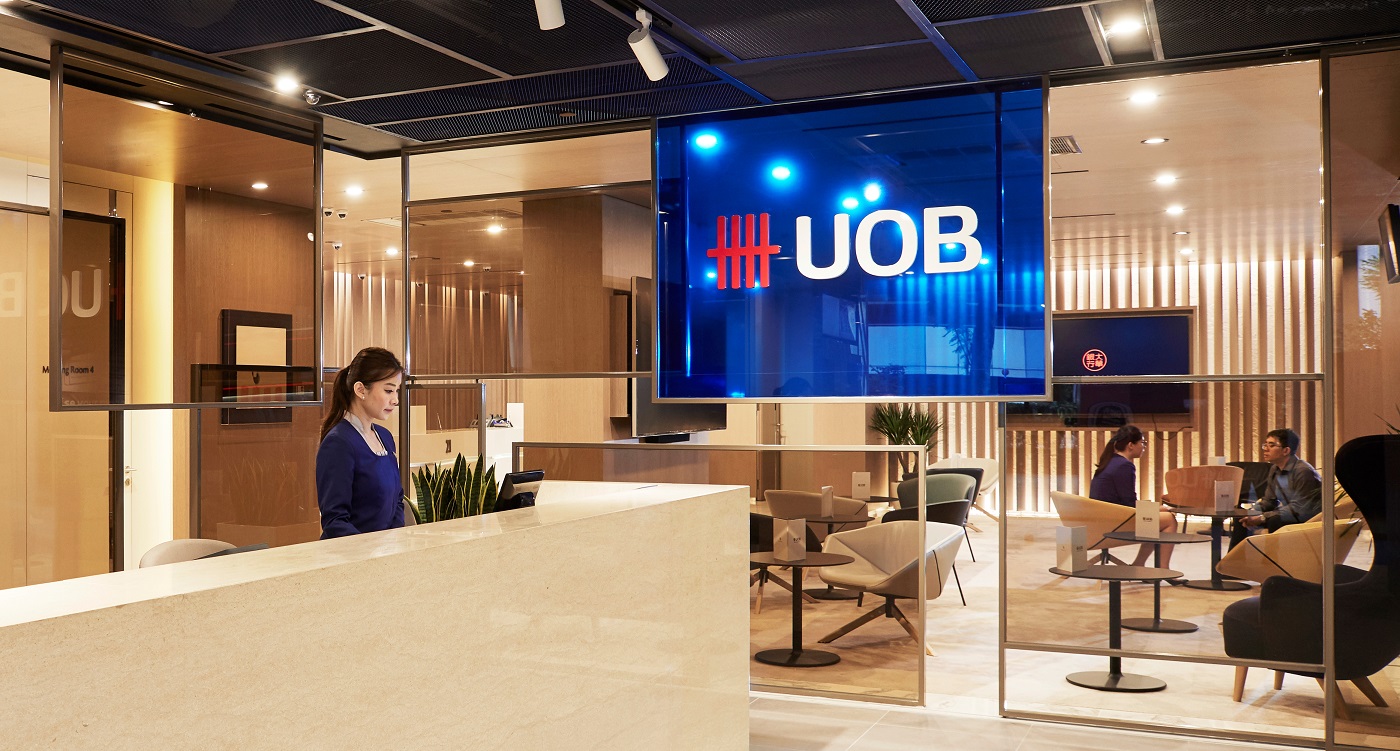
    United Overseas Bank (UOB) announced the launch of Hangout@UOB, a new branch concept designed and managed by Singapore Polytechnic students.

    A four-week design process of the branch enabled interior design and architecture students to put into practice the skills they have learned in school, the lender said. The final space is based on the final concept presented by the students.

    The process has provided students with the opportunity to gain vital work experience and to build a strong foundation for their careers, the bank added. We wanted Hangout@UOB to go beyond serving the students’ banking needs and to engage them more deeply by contributing to their curriculum and growth. By partnering Singapore Polytechnic, UOB has been able to deepen the students’ learning experience beyond the classroom to the real world,” said Jacquelyn Tan, Head of Personal Financial Services Singapore, UOB, in a media statement on Wednesday.

    The first step in the collaboration involved 40 lecturers and students from different schools such as Business and Media, Arts and Design coming together to create a space to call their own. They participated in a one-day Design Thinking workshop alongside teams from UOB to identify the features within the space that would suit the needs and interests of the polytechnic community.

    The workshop participants put together a list of preferred design elements, which students from the School of Architecture & The Built Environment and School of Business used to design Hangout@UOB. Students were given free rein to decide on the aesthetic and functional design elements of the branch such as the layout, colors, furniture styles and the use of gamification for engagement.

    We also know that while the students are digital natives, they wanted an inviting space where they could gather to find out more about specific banking solutions before applying for them online. As such, it was important that the final design integrated both the offline and online engagement preferences of the students, which is in keeping with the Bank’s omnichannel strategy, Tan added.

  • UOB Invests in Thai Fintech

    UOB Invests in Thai Fintech

    The funds will be invested into the Stellar Network, the blockchain technology underlying Lightnet’s platform, as well as to build a «next-generation financial mobility network.»

    Bangkok-based fintech Lightnet has raised $31.2 million in a Series A funding round led by UOB Venture Management, the private equity unit of UOB, the firm announced in a statement on Friday.

    Other backers include Seven Bank, Uni-President Asset Holdings, HashKey Capital, Hopeshine Ventures, Signum Capital, Du Capital and Hanwha Investment and Securities.

    According to its website, the company aims to disrupt the global remittance market by using smart contracts and distributed ledgers to replace the SWIFT system and underground banking. It is currently focusing on the millions of unbanked migrant workers in Southeast Asia, which rely on costly, slow, and fragmented services for cross-border remittances.

    Lightnet was co-founded by Chatchaval Jiaravanon – a family member of the Charoen Pokphand Group in Thailand – and tech entrepreneur and former investment banker Tridbodi Arunanondchai.

    «We project that within three years, Lightnet will facilitate over $50 billion worth of annual transactions through our industry-leading partner network,» Arunanondchai said.

  • UOB Investment Arms Sign Up To UN-Supported Principles

    UOB Investment Arms Sign Up To UN-Supported Principles

    United Overseas Bank Limited (UOB) announced that its investment management subsidiaries are now signatories of the United Nations (UN)-supported Principles for Responsible Investment (PRI), signaling its commitment to responsible investing.

    UOB Asset Management (UOBAM), UOB Venture Management (UOBVM) and UOB Global Capital LLC (UOBGC) are now signatories of the United Nations (UN)-supported Principles for Responsible Investment (PRI), making UOB the first Singapore bank to have its investment companies sign up for the PRI.

    The bank said that the move signals its commitment to responsible investing, integrating environmental, social and governance (ESG) considerations into its investment policies, processes and practices, and its objective to develop sustainable investment solutions for clients.

    We use a structured risk management approach to creating sustainable, long-term returns for them (the investors). We will continue to enhance our ESG evaluation process by tapping fundamental analysis and technology, such as the use of artificial intelligence, and engage our portfolio companies to help improve their ESG practices, said Thio Boon Kiat, Group CEO of UOBAM in a media statement on Monday.

    UOBAM, UOBVM, and UOBGC are principally third-party fund management companies. «By investing in training our people on relevant regulatory, industry and product trends and developments, we can also offer more ESG-focused funds that will align to the UN Sustainable Development Goals,» Thio added.

    The UN-supported PRI is an international network of investors working together to put the six Principles for Responsible Investment into practice. By upholding the Principles, UOB will incorporate ESG issues into its investment analysis and decision-making processes, amongst other practices.

    Sustaining growth responsibly is a key pillar of UOB’s sustainability strategy. As such, we consider and manage the ESG risks, challenges, impact, and opportunities in all that we do, including our investing activities, said Eric Lim, Head of UOB Group Finance and the Chairperson of the Bank’s ESG Committee, in the same media release.

    Besides incorporating ESG issues, the bank also act on the following:

    • Be active owners and incorporate ESG considerations into its ownership policies and practices
    • Seek appropriate disclosure on ESG issues by the entities in which it invests
    • Promote the acceptance and implementation of the Principles within the investment industry
    • Work to enhance its effectiveness in implementing the Principles; and
    • Report on the activities and progress of its investment firms towards implementing the Principles

    As at the end of September 2019, there were more than 2,600 PRI signatories globally, representing US$89 trillion of assets under management. In Asia, the number of signatories increased by 23 percent in the 12 months prior, with a total of 26 signatories in Singapore.

    UOB Asset Management UOB Asset Management (UOBAM) is a wholly-owned subsidiary of United Overseas Bank Limited that was established in 1986. It currently manages 54 unit trusts in Singapore and is one of the largest unit trust managers in terms of assets under management. As of 30 November 2019, UOBAM and our subsidiaries manage about S$36.2 billion (US$26.4 billion) in clients’ assets.