Tag: UOB

  • UOB Hires New Managing Director

    UOB Hires New Managing Director

    United Overseas Bank recently hired a regional head of engagement to expand its digital team in SingaporeIndustry veteran Kristina Curtis joined UOB two months . ago as managing director, regional head of engagement, group retail digital. Her LinkedIn profile shows extensive experience in digital banking, having worked for ANZ as customer analytics and digital for global wealth, and for BT financial group as chief digital officer.

    When contacted, the bank declined to comment on the personnel move.

    Experience in digital banking

    The demand for people who have leadership and project management experience in digital banking is high in Singapore as banks are pushing to launch new digital platforms in areas of payment and wealth management.

    The ability to leverage on mobile application and new technologies to build an effective communication pathway with the customers and allow for continuous engagement is increasingly valued, evident from the fact that Curtis is not the only recent senior digital.

    Last October, UOB officially appointed Aaron Chia, formerly from Western Union, as the new head of its digital plus unit for wealth and lifestyle products.

  • UOB: Malaysia’s GDP to grow at 4.8% for 2018, 2019

    UOB: Malaysia’s GDP to grow at 4.8% for 2018, 2019

    Malaysia’s gross domestic product (GDP) growth is expected to remain stable and expand at 4.8% for the full year of 2018 and 2019. UOB Malaysia’s senior economist, Julia Goh said the 2019 forecast has been revised from the 5% projection made earlier, to 4.8% after taking into account the potential impacts from the US-China trade tensions.

    Goh noted that while Malaysia’s economy is not immune to external headwinds such as the trade tensions between the two economic giants, rising US interest rates and commodity prices—Malaysia could certainly find support from its robust domestic private consumption and investment.

    The ringgit is expected to stand at RM4.22 against the Greenback next year on the back of external factors such as the strength of the dollar, crude oil prices and the direction of the renminbi.

    Inflation rate for 2018 is expected to be 1.2% and 2% in 2019.

    “I think it is actually slightly lower than the government’s official forecast. I think the main support for inflation is we are seeing resilient spending even with the reintroduction of the Sales and Service Tax, we did not see any significant effect on the consumer price index,” she said.

    Key risk for inflation I think (will be) in the second quarter of next year where the government announced that they want to float oil prices,” she added.

  • UOB Launches Southeast Asia eLab

    UOB Launches Southeast Asia eLab

    UOB launches its pan-regional Engagement Lab (eLab) on Thursday, making it the first dedicated unit set up by a Southeast Asian bank that focuses on using the latest technology and behavioural insights to deepen customer engagement.

    «We believe that designing a simple and easy-to-navigate app interface to create an intuitive user experience is just the beginning. We want to build on this and to ensure that every touchpoint – from the on-boarding process to day-to-day banking – at the Digital Bank is relevant to our customers and resonates deeply with their lifestyle needs and priorities,» said Dennis Khoo, head of digital bank at UOB in a press statement.

    eLabs Serves Southeast Asian clients 

    The Bank will set up eLabs across its network of ASEAN countries such as Indonesia, Malaysia, Singapore, Thailand and Vietnam. UOB’s Digital Bank, set to launch in the next few months, has been modelled such that digital interactions with the customers are designed to deepen client relationships.

    Through the eLab, the Bank will use the insights drawn to design, to test and to trial ways to encourage customers to save and spend more wisely. Given ASEAN’s cultural and linguistic diversity, these conversations will be in the customers’ own mother tongue.

    Digital Capabilities

    In August, the bank had announced plans to introduce a Digital Bank for Asean customers that will use a data-centric business model to understand individual customer banking needs and habits through their digital interactions with the bank.

    «We will use next-generation digital capabilities to anticipate our customers’ needs and to prompt them to make better financial decisions to achieve their goals. This will be done through meaningful real-time digital conversations that guide customers to better financial choices,» Khoo said.

    UOB Accelerates Hiring For Digital Bank

    The Bank aims to increase its Digital Bank team by 50 per cent in the next 12 months. Of these new hires, a quarter will join the eLab. Other roles include those in areas such as user experience and user interface design, behavioural science and research, data analytics and design thinking.

    This helps to accelerate the Digital Bank’s initiatives in the region, it said. The new hires will join the 120-people strong team already working on the roll-out of UOB’s digital bank across ASEAN.

    In addition, it is looking to hire software engineers and architects to develop solutions such as in-house application programming interfaces (APIs) which tap UOB’s secure IT architecture to drive real-time data analytics.

  • UOB Malaysia issues RM600m notes

    UOB Malaysia issues RM600m notes

    United Overseas Bank (Malaysia) Bhd (UOB Malaysia) has completed its first issuance of RM600 million Basel III-compliant Tier 2 subordinated medium-term notes at a fixed coupon rate of 4.8%.

    The bank said in a statement that the issuance of the sub-notes was under its RM8 billion senior and subordinated medium term notes programme and are rated AA1 by RAM Rating Services Bhd.

    Increased from an initial target of RM500 million, the issuance was 2.5 times subscribed with orders in excess of RM1.5 billion.

    Its CEO Wong Kim Choong said the strong credit rating, tight pricing and the oversubscription reflects the continued confidence of the investment community in UOB Malaysia’s robust capital position and business fundamentals.

    “Strong investor demand also saw the notes priced at the lower end of the initial price guidance range with a fixed coupon rate of 4.8%.

    He said UOB Malaysia plans to use the net proceeds from the issuance for general business purposes.

    The notes will be due in 2028 and callable after July 2023. UOB Malaysia and HSBC Bank Malaysia Bhd are the joint lead managers on this transaction.

  • Singapore’s UOB unveils digital advisory service

    Singapore’s UOB unveils digital advisory service

    UOBAM said in a statement that it has launched its own digital advisory service UOBAM Invest that bids to allow companies to manage their discretionary investments through the firm’s portfolio solutions and in some cases achieve results within a matter of minutes.

    According to UOBAM Singapore the new digital service is offered exclusively to UOB’s commercial banking clients, which are mainly medium-sized companies. The launch is the city state’s first digital advisory service for companies to manage their discretionary investments, UOB said.

    It will be offered to the bank’s other corporate clients, as well as to retail investors, and across UOBAM’s network in Asia, in subsequent phases.

    Through the service, clients will be able to submit their financial information, obtain their risk profile, and receive an investment portfolio proposal in minutes.

    The clients can choose to invest in the proposed portfolio or to adjust it.

    Thio Boon Kiat, group chief executive, UOBAM, said: “At UOBAM, we have observed our clients’ increasing preference to receive investment advisory and to manage their investments digitally. Using our proprietary screening methodology and asset allocation framework, we designed UOBAM Invest to meet the needs of these investors and to make our portfolio solutions easily accessible online.”

    Portfolio creation

    The portfolios will be created from a wide range of UOBAM-managed funds and global exchange-traded funds (ETFs) spanning various asset classes, such as equities, high-yield and investment-grade bonds, as well as money market and short-term fixed income.

    UOBAM Invest said that a conservative portfolio will typically comprise ETFs or unit trusts that are invested mainly in government bonds, money market and short-term fixed income. The most aggressive portfolio will largely consist of ETFs or unit trusts that are equities-based, and a small allocation to those that are focused on high-yield bonds.

    Eric Tham, head of UOB group commercial banking, said: “Our clients look to discretionary investments in various fund products to maximise their returns and to strengthen their balance sheets. However, as they focus on their day-to-day business operations, they may not be able to afford the time needed to choose and to track their investment portfolios closely. With UOBAM Invest, it is now more convenient for our clients to manage these investments with UOBAM.”

    Technology partner

    UOBAM’s technology partner on UOBAM Invest is FNZ Group, a global FinTech company specialising in providing multi-channel wealth management services to the financial services and wealth management sectors.

    UOB Asset Management Ltd (UOBAM) is a wholly-owned subsidiary of United Overseas Bank Limited. Established in 1986, UOBAM has been managing collective investment schemes and discretionary funds in Singapore for more than 30 years. As at 30 November 2017, UOBAM and its ubsidiaries manage about S$33.9bn (US$25.2bn) in clients’ assets. UOBAM has an extensive presence in Asia with regional business and investment offices in Malaysia, Thailand, Brunei, Taiwan and Japan.

  • Robot employees take on human tasks at UOB Singapore

    Robot employees take on human tasks at UOB Singapore

    UNITED Overseas Bank (UOB) has introduced two robots, or ‘virtual employees’, that will support its wholesale banking and retail businesses.

    In a press statement to Human Resources, the bank said its first robot employees, named Amy and Eve, started working at UOB three weeks ago, and have since cut the time taken to process a transaction by more than half.

    Amy and Eve have been taking on tasks that UOB’s human employees have found repetitive and time-consuming, allowing their human teammates to focus on more stimulating and challenging work.

    Feedback from the robots’ human colleagues have been positive, with most noting that they have been helpful and productive.

    Lim Ann Liat, managing director and head of markets and enterprise technology, group technology and operations, UOB, said: “By introducing robots into our workforce, we can improve our process using technology yet maintain a human touch. This also lifts the load off our people which in turn makes their jobs more fulfilling.”

    UOB plans to take onboard more robots in the coming months for other processes such as card operations, cash management and trade and remittance.

    Separately, in a whitepaper published today (Nov 23) by The Economist Corporate Network (ECN), it was reported that business leaders recognise the need for their leadership on automation and AI both inside and outside the company.

    The paper, based on a survey and focus group interviews with CEOs and other C-suite executives based in the Asia-Pacific region, revealed that 81% of CEOs would lead by example and automate parts of their job.

    According to the findings, CEOs find it difficult to clearly communicate their company’s automation and AI strategy to their employees.

    Dr Florian Kohlbacher, ECN Director for North Asia, commented: “We are talking too much about the potential negative impact of AI and automation on the workplace. What is needed instead is a proactive discussion on how companies can harness technology in order to strategically manage the transformation and systematically shape the workplace of the future.”

  • Singaporean bank gets go-ahead to open up in Vietnam

    Singaporean bank gets go-ahead to open up in Vietnam

    United Overseas Bank is the first Singaporean institute to be given a license to start up shop in Vietnam. The State Bank of Vietnam has granted a license for Singapore’s United Overseas Bank Ltd (UOB) to open a fully-fledged foreign-owned bank in Vietnam, according to a statement released on Thursday.

    UOB is one of Asia’s leading financial institutions with a network of 500 offices spanning 18 countries and territories, including one in Ho Chi Minh City.

    The bank is considering opening a branch in Hanoi to gain access to fast-developing areas in the north such as Hai Phong, Quang Ninh and Hai Duong.

    Since 2013, UOB has channeled more than $3 billion in foreign direct investment from Asia into Vietnam.

    UOB will be the ninth wholly foreign-owned bank operating in Vietnam, after ANZ, Hong Leong, HSBC, ShinHan, Standard Chartered, CIMB, Public Bank Berhad and Woori Bank.

    Singapore is a major business partner, but does not yet have a fully-owned bank in Vietnam, while other countries, even with smaller investments, have already established banks, according to the Ministry of Planning and Investment.

    By 2020, Vietnam will have to open up its banking sector under commitments made to the World Trade Organization.

  • UOB UnionPay Card Relaunched with 2% Cash Rebate

    UOB UnionPay Card Relaunched with 2% Cash Rebate

    UOB and UnionPay International (UPI) have revamped its UOB UnionPay Card as a simple, no-frills card. The UOB UnionPay Card offers a 2% cash rebate on local and overseas spend1, with no minimum spending restrictions, enabling customers to reap cash rebates of up to S$600 for the first year.

    Sporting a brand new design and UnionPay’s contactless payment feature QuickPass, the UOB UnionPay Card enables Cardholders to pay for their purchases via quick tap-and-go at participating point-of-sales (POS) counters. Cardholders can take advantage of this convenient feature at local merchants such as BHG, BreadTalk, M1 and Shaw Theatres, along with overseas merchants such as 7-Eleven in Macau, SaSa in Hong Kong and Watsons in South Korea.

    “The UOB UnionPay Card is perfect for those who want fuss-free rewards. It simplifies money management, and makes life easier for everyone with a simple cash rebate system. With the QuickPass contactless payment feature, Cardholders can also make payment quickly and easily by tapping their cards at participating contactless payment terminals, saving them time that can be spent on more important moments in life. This card also represents our commitment to bringing products that are tailored to the needs of local consumers, and underscores our desire to continually enhance our products and services to serve them better,” said Wenhui Yang, General Manager for Southeast Asia, UnionPay International.

    Ms Choo Wan Sim, Head of Cards and Payments Singapore, UOB said: “UOB was the first and remains the only Singapore bank to offer a UnionPay credit card. In 2008, we launched our first card in recognition of the increasing travel and trade between our two markets. Since then, our cardmembers have been using the card to make purchases in China through UnionPay’s extensive acceptance network. In the last two years, we have seen a 20 per cent increase in the number of customers making purchases in China, not just for big ticket items but also for daily essentials such as groceries. UOB UnionPay cardmembers will now be rewarded with cash rebates on the purchases they make overseas and in Singapore.”

    In addition to receiving 2% cash rebate, new sign-ups for the UOB UnionPay Card can enjoy: 

    3-year annual fee waiver

    New customers who sign up for the UOB UnionPay Card can enjoy a 3-year waiver of the annual card membership fee from the date of application.

    More cash rebates until 30 September 2017

    The first 2,000 customers who sign up for the card and whose card is approved between 26 May 2017 and 31 August 2017 can also enjoy two times the rebate i.e. 4% on all spend until 30 September 20171.

    UOB UnionPay Cardholders will also be able to enjoy global offers for shopping, dining, travel and entertainment, including duty free offers at over 100 international airports around the world. UnionPay Cardholders can download the UnionPay International application via Apple App Store or Google Play Store and enjoy discounts of up to 30% at Bath & Body Works, Kate Spade, Michael Kors, TUMI and Victoria’s Secret, along with other attractive U Plan offers at Matsumoto Kiyoshi in Japan, Macy’s in the USA and King Power in Thailand among others.

    In addition, the UOB UnionPay Card, a Platinum Card, entitles Cardholders to the privileges in U Collection, with global concierge services, airport VIP services and an exclusive range of dining privileges specially curated for premium Cardholders. The UOB UnionPay Card is available for sign up from 26 May 2017. To sign up online, visit uob.com.sg/unionpay

  • Singapore Airlines partners with UOB for frequent flyer program

    Singapore Airlines partners with UOB for frequent flyer program

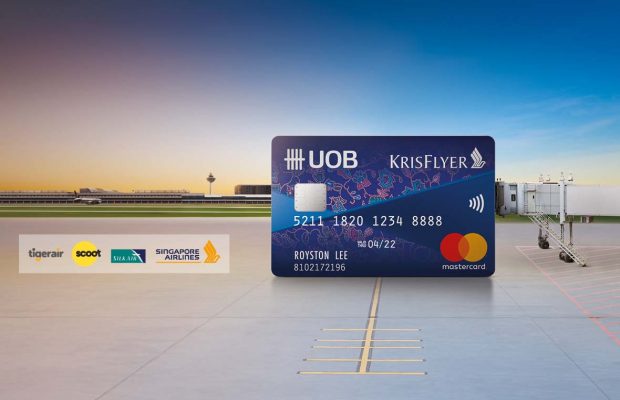
    United Overseas Bank Limited (UOB) has teamed up with Singapore Airlines’ (SIA) frequent flyer program to launch KrisFlyer UOB Account.

    Targeting those who prefer to use a debit card or millennials who may not yet be eligible for a credit card the account allows users to earn KrisFlyer miles whenever they save or spend. The miles can also be used for award flights and upgrades on SIA and SilkAir, or as travel vouchers on Scoot or Tigerair.

    The miles earned will depend on the customers’ account balance. Those who have an account balance of S$350,000 (US$249,377) and above, for instance, will earn 5.4 KrisFlyer miles for every dollar they spend using their KrisFlyer UOB account.

    “We have seen spending on UOB debit cards grow 40 percent over the past two years. Travel spend on debit cards also increased 15 percent in the corresponding period as our customers make more trips abroad,” said UOB head of personal financial services Singapore, Jacquelyn Tan, in a press release.

    The bank is targeting to open at least 200,000 KrisFlyer UOB accounts in the next five years.

    Meanwhile, SIA Marketing Planning senior VP Tan Kai Ping said, “The KrisFlyer UOB card leverages the wide reach of the KrisFlyer frequent flyer programme, giving card members access to all the airlines within the Singapore Airlines Group. This means seamless access to our four airlines – from full-service carriers Singapore Airlines and SilkAir to budget carriers Scoot and Tigerair – when they spend and save through this account.”

  • UOB AM Goes For Tech Growth

    UOB AM Goes For Tech Growth

    Singapore’s UOB Asset Management has partnered with a prominent U.S fund manager to tap into the current enthusiasm around all things tech.

    UOB Asset Management (UOBAM) has partnered US-based T. Rowe Price International Ltd. (T. Rowe Price) to offer retail investors in Singapore the opportunity to tap the long-term growth prospects arising from technology and innovation.

    Under the partnership, UOBAM will invest in T. Rowe Price’s Global Technology Equity Strategy (the Strategy) through the United Global Technology Fund. This is the first time retail investors in Singapore would be able to invest in T. Rowe Price’s highly-rated technology portfolio.

    Exponential Growth

    In the ten years between February 2007 and February 2017, the Strategy has seen annualised returns of 15.39 per cent versus the benchmark MSCI All Country World Index Information Technology’s 9.08 per cent over the same period.

    «The role of technology has grown exponentially over the past decades to become an essential part of global economies and industries. I am pleased to bring on board T. Rowe Price, an accomplished partner with extensive experience in investing in the technology sector,» said Thio Boon Kiat, CEO, UOBAM.

    T. Rowe Price has been managing dedicated technology portfolios since 2000. As at 31 December 2016, the Strategy has $5.6 billion of assets under management.

  • UOB Indonesia Projects 5.2% Growth in 2017

    UOB Indonesia Projects 5.2% Growth in 2017

    Bank UOB Indonesia projects Indonesia’s economy to grow next year despite the global slowdown. UOB Indonesia president director Kevin Lam said Indonesia’s economy will grow steadily at around 5.2 percent in 2017, up from this year’s 5.0 percent.

    Kevin is certain that the government will maintain the country’s growth momentum through various economic policy packages aimed at boosting investments. Several infrastructure projects that are currently underway are also expected to help achieve economic equality and income growth.

    “The projects also create jobs, thus contributing to household consumption,” he said in a press conference after the UOB Indonesia Economic Outlook 2017 event in Jakarta.

    Kevin said the government’s effort to attract investors by releasing policy packages—comprised of relaxations and deregulations—is working. According to the UOB Asian Enterprise Survey 2016, nearly a quarter of the respondents, which were Asian companies, chose Indonesia as a destination for their expansions in the next three to five years.

    Last week, Finance Minister Sri Mulyani Indrawati projected that Indonesia’s economy in the fourth quarter will reach 5.0-5.1 percent, “due to fiscal expansions.”

    The minister said state institutions will have plenty of expenditures ahead of the year-end, and the state’s spending figure will reach 96 percent of the target.

  • UOB Indonesia offers Rp 1.1 trillion in bonds to strengthen lending

    UOB Indonesia offers Rp 1.1 trillion in bonds to strengthen lending

    United Overseas Bank (UOB) Indonesia plans to issue Rp 1.1 trillion (US$84.5 million) in bonds in November. The issuance hopes to raise cash to support the bank’s lending capacity next year.

    UOB Indonesia president director Kevin Lam said Rp 1 trillion in proceeds would come from the senior bond while the remaining Rp 100 billion would come from the subordinated bond. Both will be offered from Nov. 17 until Nov. 22.

    “The bond will enable us to maintain solid funding as we help our customers seize business opportunities arising from increased infrastructure development and consumer demand,” he said during a public expose in Jakarta on Wednesday.

    The senior bond is divided into three series with a buy-back option, he further explained.

    Series A is offered with 370 days of maturity and a 7.4 percent coupon rate per annum. Series B will mature in 3 years with an 8.25 percent coupon rate. Series C will have a 5-year tenor with a coupon rate of 8.5 percent.

    Meanwhile, the subordinated bond has a 7-year tenor with a 10 percent coupon rate. All the coupons will be paid every three months.

    In the first half of 2016, UOB Indonesia saw its interest income increase by 22.32 percent year-on-year (yoy) to Rp 1.73 trillion.

    Net profits rose by 86.81 percent yoy to Rp 281.69 billion.

  • UOB Indonesia and ITB join up to train SME bankers

    UOB Indonesia and ITB join up to train SME bankers

    UOB Indonesia and Bandung Institute of Technology (ITB) have joined forces to educate bankers with small and medium-sized enterprises (SMEs), a banker from UOB Indonesia has said.

    “A lot of these SMEs don’t have the right networks for distributors and suppliers and bookkeeping is essential,” UOB Indonesia business banking head Lawrence Loh said in Jakarta on Friday.

    The program, called the SME Bankers’ Executive Certification Program, was launched in March and already has 23 graduates, Loh said.

    The collaboration between the two institutions will inaugurate five new SME business centers in several cities across Indonesia such as Jakarta, Semarang and Surabaya next year, ITB school of business and management consultancy director Leo Aldianto said.

    “We have to help small businesses upgrade their level to medium,” Leo said.

  • Five major banks lined up to support Apple Pay launch in Singapore

    Five major banks lined up to support Apple Pay launch in Singapore

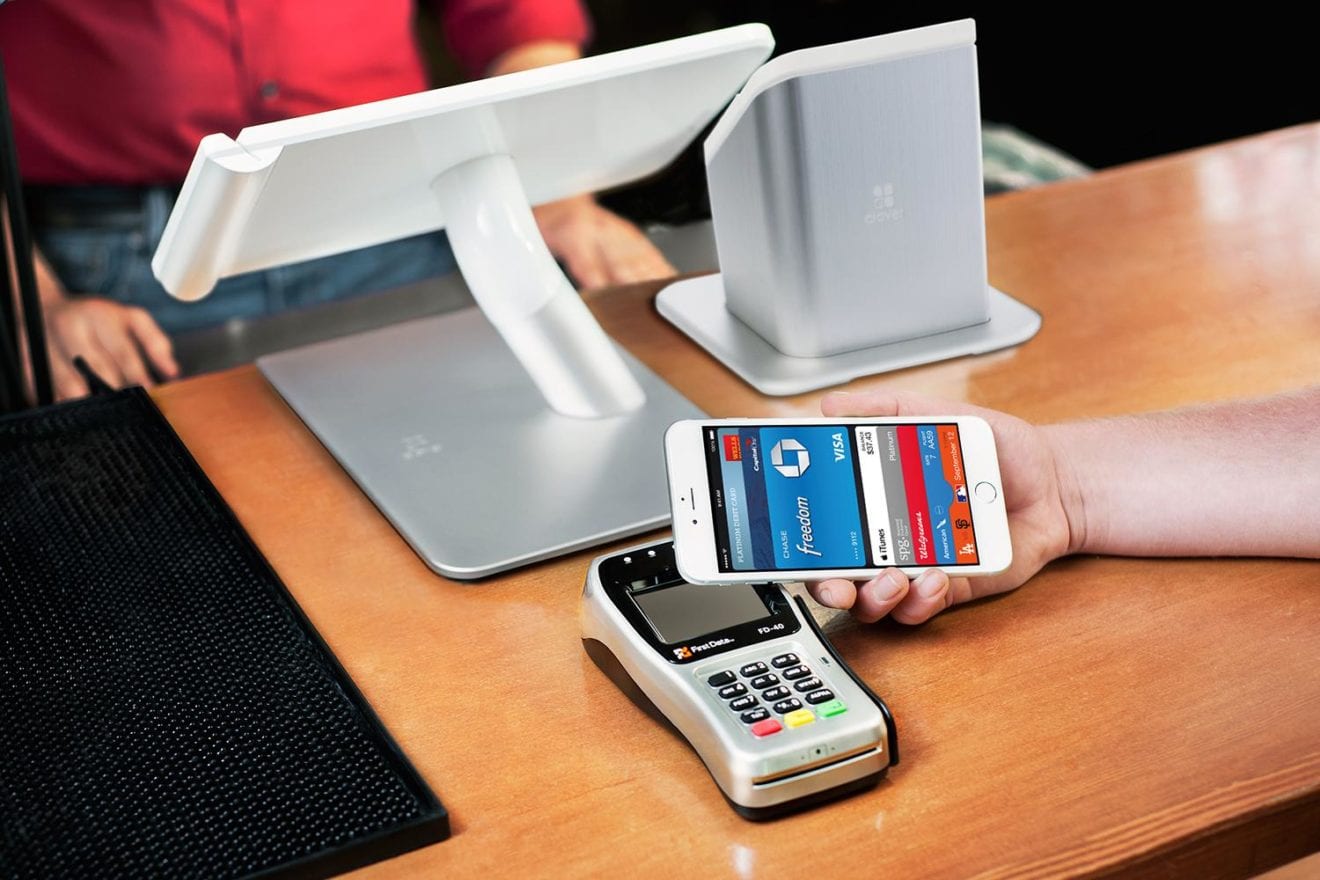
    Five major banks, representing 80% of Visa and MasterCard credit and debit cards issued in Singapore, have signed up to Apple Pay, extending the use of the mobile wallet beyond a limited earlier release for AmEx cardholders.

    MasterCard says it is working with DBS, OCBC, POSB, Standard Chartered and UOB, to enable iPhone and Apple watch users to make purchases in stores equipped with contactless readers.Recent figures from MasterCard indicate that consumers in Singapore are supportive of the idea of adopting contactless payments. Singaporeans are among Asia’s top three adopters of digital wallets and interest has been climbing steadily with one in four likely to use a digital wallet compared to just one in 20 three years ago.

    Apple Pay’s launch comes just a month after Samsung announced plans to roll out its rival mobile wallet with the support of DBS/POSB, OCBC Bank and Standard Chartered. Previously, Apple Pay had only been available for American Express cardholders in Singapore.

  • Hong Kong’s Stocks Tumble to Three-Year Low After Trading Break

    Hong Kong’s Stocks Tumble to Three-Year Low After Trading Break

    Hong Kong stocks tumbled after a three-day holiday as a global equity rout deepened amid concern over the strength of the world economy.

    The Hang Seng Index plunged 4.3 percent at 9:31 a.m. in Hong Kong, heading for its lowest close since June 2012. The MSCI All-Country World Index dropped 2.1 percent since the city’s markets closed last week. Energy producers led declines after crude slumped 11 percent during the holidays. The Hang Seng China Enterprises Index retreated 5 percent, poised for its biggest loss since August.

    Hong Kong’s benchmark equity gauge tumbled 12 percent this year through Friday amid concern that capital outflows, a slumping property market and China’s economic slowdown will hurt earnings. Some speculators have been betting on an end to the city’s currency peg to the dollar. Tuesday’s riots in the shopping district of Mong Kok threatens to deter mainland visitors and worsen a drop in retail sales, according to UOB Kay Hian (Hong Kong) Ltd.

    “You can’t avoid a drop because everywhere has come down so much during this time and the same concerns are still there – oil price, global recession,” said Steven Leung, an executive director for institutional sales at UOB Kay Hian. “The image of Hong Kong as a metropolitan city has been hurt quite seriously” by the rioting, he said.

    Plunges in crude and concerns over the perceived creditworthiness of European banks has fueled uncertainty over the strength of the world economy this week. Oil fell to $26.91 a barrel in New York, compared with $31.72 a barrel at the close on Feb. 4. Kyle Bass, the hedge fund manager who successfully bet against mortgages during the subprime crisis, said China’s banking system may see losses of more than four times those suffered by U.S. banks during the last crisis.

    “The general tone of other markets has been quite soft,” said Tony Hann, who helps oversee about $270 million as head of equities at Blackfriars Asset Management in London. “It’s difficult to be optimistic” about Hong Kong, he said.

    The Hang Seng Index’s price-to-book ratio fell below one last month, a level unseen since the Asian financial crisis roiled regional markets and popped a domestic property bubble in 1998. All but two stocks on the 50-member gauge are down this year. Mainland financial markets remain closed for holidays until Monday.

    Police fired warning shots in Kowloon’s Mong Kok district early Tuesday after an effort by officials to clear illegal food stalls morphed into a riot. Almost 90 officers were injured, according to the police commissioner, and more than 60 people have been arrested, after protesters hurled bricks and set fire to barricades in the densely populated area. The clashes were more violent than anything seen during the “Umbrella Movement” of 2014, where protesters paralyzed downtown Hong Kong for more than two months to demand the right to pick the city’s leader.

    “This time the situation was quite different from Occupy Central: there was no peace and a lot of people were injured,”  UOB Kay Hian’s Leung said. “Overall it shouldn’t have very big impact but, of course, it will weigh on related sectors like retail, tourism.”

    Still, weaker global growth may reduce the likelihood of future interest-rate increases in the U.S., which raise borrowing costs in Hong Kong due to a currency peg, Leung said.

    While investor attention may shift toward corporate profits as companies unveil quarterly and annual results, analysts see little scope for optimism. They’re predicting a 12 percent drop in the Hang Seng index’s earnings per share over the next 12 months, according to data compiled by Bloomberg.

    The People’s Bank of China pumped four times as much cash into the financial system in the run-up to the lunar new year holidays than it did in 2015 as capital outflows added to pressure on the money market. Outflows increased to $158.7 billion in December, the most since September and were $1 trillion last year, according to estimates from Bloomberg Intelligence. That’s more than seven times the amount of cash that left in 2014.

    Should the Chinese banking system lose 10 percent of its assets because of nonperforming loans, the nation’s banks will see about $3.5 trillion in equity vanish, Bass, the founder of Dallas-based Hayman Capital Management, wrote in a letter to investors obtained by Bloomberg. The world’s second-biggest economy may end up having to print more than $10 trillion of yuan to recapitalize banks, pressuring the currency to devalue in excess of 30 percent against the dollar, according to Bass.