Tag: vegetables

  • Vietnam’s Agricultural Exports Soar by 12.6%: Thriving Market for Coffee, Fruits, and Vegetables

    Vietnam’s Agricultural Exports Soar by 12.6%: Thriving Market for Coffee, Fruits, and Vegetables

    In the first eleven months of 2025, the exportation of agricultural, forestry, and fisheries products increased by 12.6% on a year-on-year basis, totaling a whopping US$64 billion.

    Breakdown of Agricultural Exports

    The agricultural sector contributed significantly to this figure, accounting for $34.24 billion, representing an increase of 15% over the period. In particular, the average price of coffee exports experienced a significant boost, escalating by 40% to reach $5,667 per ton. Germany, Italy, and Spain emerged as the primary destination markets for these coffee exports.

    Furthermore, exports of fruits and vegetables witnessed a near 20% rise, amounting to $7.91 billion. This surge was primarily driven by robust demand from the Chinese and U.S. markets.

    Challenges in the Export Market

    Despite the general upward trend, not all products enjoyed the same level of success. Cashew and pepper exports did increase; however, some key commodities encountered challenges.

    Rice exports, for instance, took a substantial hit, declining by 27.7% to $3.83 billion due to increased competition. Similarly, exports of tea and rubber suffered a downturn as demand for these products weakened.

    Government’s Future Plans

    Phung Duc Tien, the Deputy Minister of Agriculture and Environment, recently stated that by the close of the year, the export value of agricultural, forestry, and fisheries products could reach an approximate $70 billion.

    In an effort to boost this sector further, the government is focusing on promoting green, organic, and circular agricultural models. These initiatives aim to preserve natural resources and biodiversity. Additionally, the government intends to fortify regional linkages to create a more unified, strong sector.

    Questions & Answers

    What was the total value of agricultural, forestry, and fisheries exports in the first eleven months of 2025?
    The total value was US$64 billion, representing a 12.6% increase year-on-year.

    Which agricultural products saw an increase in export value?
    The price of coffee exports rose by 40%, and there was a nearly 20% increase in the exportation of fruits and vegetables.

    Which agricultural products faced challenges in the export market?
    Rice exports faced a significant decline due to rising competition, and the shipment of tea and rubber products also dropped because of weakened demand.
  • Celonis And Peech Unveil Innovative Solution To Curb Perishable Goods Loss In Retail Industry

    Celonis And Peech Unveil Innovative Solution To Curb Perishable Goods Loss In Retail Industry

    A new inventory management solution developed by Celonis and Peech has been launched to help retailers and consumer packaged goods companies reduce waste and revenue loss from perishable goods.

    The product, called the Celonis Inventory Lifecycle Optimisation app, is designed to enhance how businesses manage perishable items, including fresh produce and baked goods, by improving the effectiveness of price markdowns before products reach the end of their shelf life.

    Price adjustments for perishable goods are a key part of inventory management and have a direct impact on reducing unnecessary food waste. However, existing inventory management systems often lack mechanisms to track whether established markdown procedures are being correctly followed. This gap can lead to missed markdown opportunities, resulting in product disposal that diminishes stock and affects revenue.

    New inventory solution from Celonis and Peech enables retailers to reduce perishable goods losses

    Retailers and consumer packaged goods companies will be able to reduce product waste and lost revenue with the launch of a new solution co-developed by Process Mining leader Celonis and tech company Peech.

    The Celonis Inventory Lifestyle Optimisation app optimises the process of managing perishable inventory.

    Adjusting, or marking down, the price of products with a limited shelf life, such as fresh produce and baked goods, is a critical aspect of inventory management. It’s also critical for reducing food waste.

    Traditional inventory management systems can identify perishable products that are at risk of expiring, but they lack the ability to track adherence to standard markdown processes. Missed markdown opportunities can result in needless product disposal, which leads to inventory loss (or shrinkage) and negatively affects revenue.

    Dean Tarpley, Industry Principal for Retail & CPG at Celonis, said retail and CPG’s incredibly tight margins leave no room for operational inefficiencies.

    “The Inventory Lifecycle Optimisation app enables organisations to identify process improvement opportunities, take action to increase markdown adherence, and monitor the effectiveness of those efforts.”

    Anmol Gupta, Founder and CEO of Peech, said: “By bringing Celonis Process Intelligence to the inventory lifecycle process, we were able to create a solution that lets retailers and CPG companies answer the question, ‘Did we do everything possible to sell the inventory before it goes bad?’ whether it’s a loaf of bread on the grocery store shelf or cosmetics waiting for delivery in the warehouse.”

    A leading global retailer that is using the solution to minimise shrink in perishable inventory, has improved its sell-through rate by 2% leading to a projected $35 million in recaptured revenue.

    The company, which has more than $200 billion in annual revenue, found that its stores were not properly executing against defined processes for discounting limited shelf-life goods within bakery, meat, prepared foods, and other departments. Non-adherence was leading to lost sales opportunities, increased wastage, and compliance risks.

    Using the Inventory Lifecycle Optimisation app, regional managers are now able to identify products, stores, and departments falling behind regional benchmarks in program compliance. They can also get insights on a weekly basis to guide staff conversations for markdown process adherence improvement. The solution is being scaled across 4,000 stores and the company expects meaningful gains in process compliance.

    The app identifies and quantifies missed revenue opportunities by tracking markdown adherence and highlighting areas for improvement. It provides:

    • Increased visibility for data-driven improvements: Monitoring shrink prevention processes across all levels of the business, companies get in-depth insights to better identify and understand adherence improvement opportunities. Main View that tracks compliance and performance at the region, market, store, department, and even associate levels, enabling targeted process interventions.
    • Better tracking of intervention effectiveness: Companies can observe the impact of process changes over time, with a user-customised targeted view on the specific areas they care about most. Once interventions are made, a Monitoring View lets companies track the impact of their process improvements over time, in both relative rate and recaptured revenue contexts.
    • Customised reporting: Companies can use insights from the app to drive impactful process improvement conversations through built-in user-specific notifications. Customers can elect to have scheduled notifications that highlight the improvement of the stores, departments, etc. sent to managers and decision makers (via Celonis Action Flows).

    The app is the latest addition to the Celonis Platform Apps Program, enabling companies to quickly realise value with solutions built by ecosystem partners on the Celonis Process Intelligence Platform.


  • Fruit, vegetable exports decline as China raises quality bar

    Fruit, vegetable exports decline as China raises quality bar

    Vietnam exported US$417 million worth of fruits and vegetables in January, down 5.2% year-on-year and 11.3% from the previous month as China tightened safety requirements.

    It now requires testing for a potentially carcinogenic chemical called auramine O, or basic yellow 2, causing many shipments of durian, a key item, to be held up at customs, according to the Vietnam Fruit and Vegetable Association.

    This requirement was introduced after the chemical was found in several Thai durian shipments in late 2024.

    Some Vietnamese exporters have had to redirect their durian shipments to the domestic market and sell them at distress prices, with many temporarily halting exports to China.

    Businesses are now completing the required tests at the nine centers in Vietnam recognized by China.

    An executive at an export company in the Mekong Delta province of Tien Giang said: “Nine is a rather small number. Vietnam needs to push for more [centers] to avoid bottlenecks during peak times.”

    Dang Phuc Nguyen, the association’s general secretary, warned that fruit and vegetable exports may fail to reach this year’s target of $8 billion if these inspection hurdles are not promptly overcome.

    Several other markets have also raised their import standards, including the U.S., which now requires plantation and packaging codes issued by its Department of Agriculture, and the EU, which has doubled the rate of Vietnamese fruits screened for pesticides to 20%.

    Ongoing geopolitical instability, such as the Russia-Ukraine conflict and tensions in the Red Sea, continues to impact maritime transport, also potentially hampering exports this year.

    Vietnam’s fruit and vegetable exports hit a record $7.15 billion in 2024, up 27.6% from the previous year, with shipments to most key markets growing by 10-80%.

    The Ministry of Industry and Trade’s import-export department recommends that farmers, cooperatives and businesses should collaborate to improve product quality and enhance the presence of Vietnamese brands on the global market.

  • Imports of Chinese vegetables, fruits soar in 2024

    Imports of Chinese vegetables, fruits soar in 2024

    Vietnam imported US$697 million worth fruits and vegetables from China in the first nine months of 2024, up 24% year-on-year.

    Imported Chinese farm products used to be sold only in traditional markets, but now they can also be found at most major retail chains such as MM Mega and Co.opmart.

    The major imports include apple, grape, garlic, onion, and potato, and are often 10-30% cheaper than products from other countries.

    Vo Thanh Loc, co-founder of retailer Farmer’s Market, said the company used to source its products from Australia, Japan, South Korea, and the U.S., but has recently added Chinese products to the list since they look nice and come in many varieties.

    HCMC’s Thu Duc Agriculture Market has received 88,400 tons of vegetables and fruits imported from China so far this year.

    Dang Phuc Nguyen, general secretary of the Vietnam Fruits & Vegetables Association, said China has been able to improve its fruits quality through farming region control and packaging.

    Thanks to reduced transportation costs and zero import tax agreements between China and ASEAN countries, Chinese produce have an advantage in Vietnam, he added.

  • Fruit, vegetable exports rise by 89%

    Fruit, vegetable exports rise by 89%

    According to the Vietnam Fruit and Vegetable Association, fruit and vegetable exports have risen by 89.2% this year to US$459 million due to a surge in demand from China.

    China has imported large volumes of durian, bananas and dragon fruit.

    Cold snaps in many places in that country have limited domestic banana supply since the fruit turns black when the temperature drops.

    China harvested dragon fruit in abundance last year, but the season is over, and Vietnam is able to export the fruit from January to May.

    Chinese use dragon fruit as an item of worship during the Lunar New Year, and so demand for imports from Vietnamese has skyrocketed.

    During President Xi Jinping’s recent visit to Vietnam, the Chinese side said it would open its market to many Vietnamese agricultural products, including fresh coconuts, frozen fruit products, citrus fruits, avocados, custard apples, and water apples.

    The two sides also signed a protocol for watermelon export.

    In addition to China, the U.S., the EU and some Asian countries are also set to open their doors to more Vietnamese fruits.

    The U.S. and Australia plan to import passion fruit, Japan, South Korea, Australia, and India want to buy grapefruit with India also eyeing durian imports.

  • Japan destroys five tons of durian, chili from Vietnam

    Japan destroys five tons of durian, chili from Vietnam

    In October, over five tons of Vietnamese durian and chili were destroyed in Japan for containing a higher dose of pesticide than the country’s standard.

    The batch of 1.4 tons of durian was exported on Oct. 5 by a company in Vietnam to Japan, where it was found to contain 0.03 parts per million (ppm) of procymidone over the Japanese standard of 0.01 ppm, according to a recent report by the commercial counselor of Vietnam in Japan.

    The batch of 4 tons of chili contained 0.2 ppm of tricyclazole and 0.03 ppm of hexaconazole against the standards of 0.01 ppm for both.

    Japanese quarantine authorities destroyed all the produce.

    Procymidone is used to kill unwanted ferns. Tricyclazole kills fungus, and hexaconazole prevents powdery mildew and other diseases.

    Do Van Dung, head of the community health faculty at Ho Chi Minh City University of Medicine and Pharmacy, said that the three pesticides are approved in many countries, and their harmful effects have only been researched on animals.

    It is, therefore, normal for these pesticides to be present on produce exported to Japan, and the fact that they exceeded Japanese standards does not mean that they would harm Vietnamese consumers.

    Some countries, such as Australia, allow a procymidone level in garlic by up to 5 milligrams per kilogram against Japan’s 0.1 mg/kg.

    Ta Duc Minh, the commercial counselor of Vietnam in Japan, said that he has informed Vietnamese authorities to prevent a similar incident.

    Many other developed countries also fail to meet Japan’s standards from time to time as this is a difficult market that requires high quality.

    Japan was Vietnam’s third biggest export market of agriculture, forestry and seafood in the first 10 months, accounting for 7.4% of the total.

    Vegetables and fruits exports rose 6.6% year-on-year to $150 million.

    Durian exports to Japan fell 12.3% year-on-year to $1.3 million.

  • Fruit, vegetable exports historical high

    Fruit, vegetable exports historical high

    Fruit and vegetable exports in the first three quarters are worth an estimated US$4.1 billion, 24% more than in full-year 2022, Vinafruit said, citing customs data.

    Vinafruit, or the Vietnam Fruits and Vegetable Association, said durian, banana and dragon fruit were the main contributors to the increase, with durian in the lead after climbing into the billion-dollar export club.

    China has been by far the biggest importer, buying $2.3 billion worth of fruits and vegetables from Vietnam in the first eight months of the year, a 134% increase year-on-year and accounting for a 64% share.

    The next three biggest importers have been the U.S. ($168 million, 6% down in the same period), South Korea ($148 million, up 18%), and Japan ($123 million, up 6%).

    Durian exports increased 20-fold this year. Unlike the Thai and Philippine varieties, Vietnamese durian can be harvested even in the so-called off-season, and their exports fetch higher prices as a result.

    China also bought bananas and jackfruit from Vietnam at higher prices and is considering buying fresh coconuts through official quotas.

    The U.S. recently allowed imports husked coconut from Vietnam.

    According to the Ministry of Agriculture and Rural Development, Vietnam plans to both export more items and to more markets, including passion fruit to the U.S. and Australia; grapefruit to Japan, Korea, Australia, and India; durian to India; and citrus fruits, coconut and durian to China.

  • Export of fruits, vegetables spike in H1

    Export of fruits, vegetables spike in H1

    The export of rice, fruit and vegetables to China and other markets posted surges of 34.7% and 64.2%, respectively in the first half, according to the Ministry of Agriculture and Rural Development.

    Director of the ministry’s Agro-Forestry-Fisheries Quality Assurance Department Nguyen Nhu Tiep predicted export growth of fruit and vegetables to be maintained in the second half if exporters pay attention to quality, design, packaging and origin tracing to meet market demand.

    He said the ministry will sign a Memorandum of Understanding on cooperation in agriculture development and trade in agro-forestry-fisheries China’s Guangxi and Yunnan provinces in September, on the occasion of the 20th China-ASEAN Expo in Guangxi.

    It will also consider working with the Vietnam Trade Office in China’s Nanning to increase farm produce consumption at the expo.

    Efforts will be made to establish the Vietnam-Guangxi association of agro-forestry-fisheries enterprises and the Vietnam-Yunnan association of agro-forestry-fisheries businesses. The ministry will also expedite technical measures to conclude soon a Protocol with the General Administration of Customs of China on food safety requirements, quarantine and inspection for aquatic products imported and exported between Vietnam and China.

    Deputy Minister of Agriculture and Rural Development Tran Thanh Nam said the ministry will focus on trade promotion and market development to boost the export of key agro-forestry and aquatic products to three major markets of China, the US and Japan.

  • Indonesia sharply increases agricultural imports from Vietnam

    Indonesia sharply increases agricultural imports from Vietnam

    So far this year Indonesia has imported 15 times the rice it did from Vietnam last year and nearly triple the coffee due to unfavorable weather.

    According to Vietnam Customs, it has bought US$181 million worth of rice, accounting for 9.5% of Vietnam’s exports this year and jumping from eight to third place in the list of its biggest rice buyers, behind the Philippines and China.

    Indonesia’s coffee imports from Vietnam have been worth over $76 million, up 185%.

    Its vegetables imports rose by 20% at $2.44 million, and seafood imports by 70% to $7.83 million.

    Indonesia’s Ministry of Agriculture said agricultural imports have shot up due to El Nino, which is causing drought between May and July.

    The government has decided to import two million tons of rice this year.

    The U.S. Department of Agriculture said global coffee, rice and seafood outputs are going flat due to El Nino and there is a risk of further decline, which would cause countries to increase stockpiles.

    The El Nino-Southern Oscillation is a recurring climate pattern caused by changes in water temperature in the central and eastern tropical Pacific Ocean.

  • Health Guru launches cauliflower snack

    Health Guru launches cauliflower snack

    Health Guru Cauliflower Puffs are a plant-based, savoury, baked snack, not fried.

    Founders Sarah and Don wanted to incorporate more vegetables into the average diet. Their research suggested an increasing number of consumers replacing meals with healthy snacks.

    “In 2020, puff-based products increased by 17.06% in the natural segment and 8.33% in the conventional [Spins Data, 2020],” they said. “Moreover, cauliflower reported the highest market growth per SKU in the crackers category for the natural channel and the third highest growth in salty snacks.”

    Described as “functional, delicious, and nutritious”, Health Guru Cauliflower Puffs contain no “nasties”, a serving of veggies with an “uncompromising” taste. Pure, freeze-dried cauliflower is the “hero ingredient”, retaining the natural sweetness and nutrients.

    Health Guru Cauliflower Puffs are available in the five flavours of Sea Salt, Salt & Vinegar with Apple Cider, Just BBQ, Bangkok Sriracha, and Vegan Cheddar.

  • Vietnam grocery platform Mio secures US$8 million in Series A funds

    Vietnam grocery platform Mio secures US$8 million in Series A funds

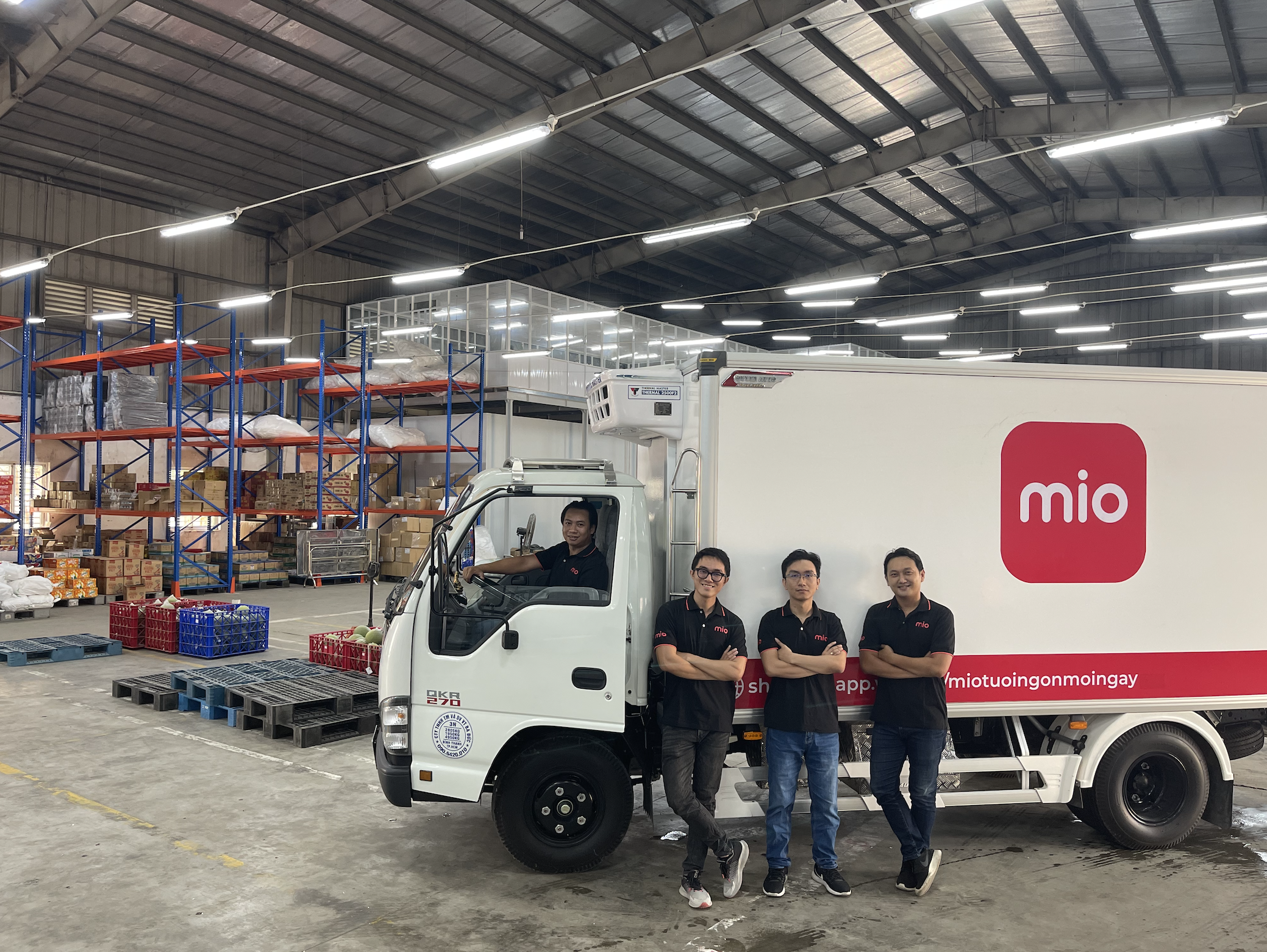
    Mio, a Vietnam-based social commerce startup, has raised US$8 million in a series A funding round led by Jungle Ventures. Patamar Capital, angel investor Oliver Jung, and existing investors such as Golden Gate Ventures, Venturra Discovery, Hustle Fund, iSeed SEA, and DoorDash executive Gokul Rajaram also participated in the round.

    The investment boosts Mio’s total funding raised to US$9.1 million.

    Founded in June 2020, Mio uses a network of resellers to sell fresh produce such as fruit, vegetables, and meat. The company was set up by former IDG Ventures associate Trung Huynh, Scommerce co-founder An Pham, ex-DigiPay executive Tu Le, and former Uber Vietnam operations lead Long Pham.

    Around a year after its inception, when the company raised a US$1 million seed round, it had 150 active resellers. Today, that number has grown by 10x to 1,500. Mio’s gross merchandise value (GMV) has also increased by more than 50x in the last 12 months.

    Huynh credits the company’s growth to its referral programs, which offer a fee to resellers who can onboard other people to the platform. Existing resellers also get additional bonuses if the individual they refer performs well. In a statement, Mio said that each reseller can earn up to US$400 from these referral bonuses as well as from the 10% commission they get for every order they facilitate.

    “We spend very little in marketing. We don’t use digital marketing or billboards – we focus on the referral,” Huynh told Tech in Asia.

    Mio has around 240 employees, an increase of 5x since May last year. Around 50% of its headcount consists of its operational taskforce who work in the company’s warehouses and fulfillment centers.

    Mio plans to use the fresh funding to put up more fulfillment centers and tap into new cities in Vietnam. It currently covers Ho Chi Minh and its satellite cities, such as Binh Duong, Dong Nai, and Long An, which are located in the southern region of the country. This year, it plans to enter the northern region, where the country’s capital city of Hanoi is located.

    “Hanoi has similarities with Ho Chi Minh, and it also has several satellite cities. We aim to be present in 10 cities by the end of 2022,” Huynh noted.

    The company also wants to improve its logistics and supply chain, which Huynh said is important for Mio in the long run. That’s why the company prefers to control fulfillment centers and the delivery process itself. Today, its delivery courier can handle almost 80% of the company’s total transactions.

    “During the time when the order is spiked, or there is a special event, we cooperate with third-party logistics,” Huynh said.

    The company currently sells more than 10,000 products every day, and it targets to fulfill 100,000 orders per day by the end of 2022.

    Huynh revealed that he sees interest from businesses in the hotel, restaurant, and cafe sector that want to source fresh produce from his company in bulk due to the attractive prices. With the pressure to increase GMVs after raising a significant amount of funding, Huynh finds the offers tempting.

    However, he consistently rejects such requests to keep the company focused on using its reseller network and reaching customers nationwide.

    Mio has expanded its offerings to FMCG products due to requests from its customers. However, these offerings only occupy around 10% of Mio’s total stock keeping units. Huynh explained that while FMCG products are easier for fulfillment – as they typically have a longer shelf life than other categories – they bring lower margins.

    “Majority of our GMV still comes from fresh produce, so it will still be our focus,” Huynh added.

  • Vietnam targets $10 bln worth of fruit, vegetable exports

    Vietnam targets $10 bln worth of fruit, vegetable exports

    A fruit and vegetable sector development plan approved by the government seeks to increase exports to $8-10 billion by 2030.

    Processed fruits and vegetables are expected to account for at least 30 percent of this, with two million tons expected to be shipped abroad, double the volume in 2020.
    The plan also seeks to attract investment to establish 50-60 medium and large-scale fruit and vegetable processing facilities with modern technologies that can compete in the international market.

    The government will offer incentives for such investment

    Existing fruit and vegetable warehouses and processing facilities will be upgraded, and farms, processing plants and distribution channels will be linked.

    Exports of fruits and vegetables fell by 13 porcent last year to $3.26 billion due to the impact of Covid-19, according to the Ministry of Agriculture and Rural Development.

    But exports to some countries with stringent quality standards, such as the U.S, South Korea and Japan, increased by 5-11 percent.

  • Shopee starts selling fresh foods online in Malaysia

    Shopee starts selling fresh foods online in Malaysia

    Shopee Malaysia has launched a fresh food grocery delivery service, including vegetables, seafood, and poultry.

    Ian Ho, regional MD of Shopee, says Malaysia’s e-commerce market is in a hyper-growth stage. “For us, that means it is not time to slow down. We are identifying more areas to tap into, such as the fresh segment, to create a more dynamic online shopping and selling environment. We aim to empower and drive inclusive economic growth by working directly with fishermen and farmers in rural Malaysia for this project,” he said.

    Fresh foods will initially be available in the Klang Valley area of Greater Kuala Lumpur in a pilot program before Shopee Malaysia rolls the service out nationwide.

    The e-commerce company is partnering with local brands including Fresh Tap and Fish Club, the latter of which will sell fish from Pontian fishing village, vacuum-packed and blast frozen immediately after scaling and filleting to maintain freshness.

    Orders from Fresh Tap and Fish Club bought via Shopee Malaysia will be delivered within one to three days.

  • Alibaba’s Freshippo sales soar during virus outbreak

    Alibaba’s Freshippo sales soar during virus outbreak

    Sales are soaring for Alibaba’s fresh-food chain Freshippo in the wake of the coronavirus outbreak.

    With many Chinese nationals being advised to stay at home during the course of the epidemic, demand for fresh food and household items has soared. Buyers are purchasing more items in bulk so as to reduce contact with home-delivery personnel.

    A spokesperson for Freshippo revealed that it has prepared 250 tons of packaged vegetables and 80 tons of bulk vegetables for around 50 Shanghai stores, six times above its normal volume.

    Freshippo’s head of vegetable procurement Huang Yifan said that the group is planning to ship an extra 100 tons of fresh vegetables from its supplier farm regions every day.

    Similar increases have been reported by Walmart’s delivery business in the region, JD Daojia, with reports of a five-fold increase in sales volume.

  • Noisy retailer Bonnie Vegetables fined again for noise violations

    Noisy retailer Bonnie Vegetables fined again for noise violations

    Local retailer Bonnie Vegetables and Fruit has been prosecuted once again for repeated violations of Hong Kong’s Noise Control Ordinance (NCO).

    The firm’s conviction that a booming, irritating promotional soundtrack was its best chance of luring customers to check out its produce has spectacularly backfired over the past year with snowballing fines now in excess of HK$110,000 (US$14,070).

    The business was hit yesterday with an $27,000 ($3450) fine from the Fanling Magistrates’ Courts for profoundly annoying local residents, as well as an additional $12,000 ($1535) fine against the company’s director, who was found criminally liable of contravening the NCO.

    The ruling follows a similar decision two months ago to slap an $8000 ($1025) fine on the firm – and another $5000 ($640) against the director – for exactly the same offense. That decision by the court was notable even then as the second prosecution of the business within a year for its exasperatingly persistent promotional racket.

    A spokesman for the Environmental Protection Department (EPD) said that during the inspections in December last year, the department discovered that three branches of Bonnie Vegetables and Fruit on Kwong Fuk Road and Heung Sze Wui Street in Tai Po, as well as Hop Choi Street in Yuen Long, were proudly broadcasting the promotional recordings through high-volume loudspeakers, causing considerable aggravation amongst nearby residents.

    After the series of law enforcement actions taken by the EPD, the number of noise complaints against the shops in Tai Po and Yuen Long has largely reduced. Considering Bonnie Vegetables and Fruit’s particular confidence in the effectiveness of its strategy despite previous reprimands, however, the chances of further appearances in court for the firm are not insignificant.

    More responsible retailers are reminded that promotional recordings should be contained within their shop area and should not cause a disturbance to people outside – otherwise, it constitutes an offence. Offenders are liable to a maximum fine of $10,000 for each offence. For repeat offenders, the relevant operators will also be criminally liable for the offences once convicted.