Tag: venture capital

  • Hermitage Capital Deploys over 200 Million Dollars in Physical AI Pivot

    Hermitage Capital Deploys over 200 Million Dollars in Physical AI Pivot

    Hong Kong private equity firm Hermitage Capital has deployed more than US$200 million into artificial intelligence and robotics. The capital shift directs money toward hardware and automation.

    This drawdown forms part of a three-year, US$500 million global tech allocation programme announced in 2025. The money comes from the firm’s wider US$1.5 billion asset base.

    Hermitage manages a portfolio split evenly between China and overseas markets, primarily the United States. About 80 per cent of its capital base is held in US dollars, with the remainder in renminbi. Backers include Asian family offices, regional institutions, and investors in Britain and Canada. Sean Xiang Yuqiu, a former JPMorgan Chase banker who founded the firm in 2017, runs the fund across offices in Hong Kong and New York.

    Shifting from foundation models to physical automation

    Capital is shifting away from early bets on large language models to secure positions in robotics, self-improving software and specialized silicon. Recent portfolio additions include US humanoid robot builder 1X, automated research platform Recursive Superintelligence, and Chinese robotics chip designer D-Robotics.

    The investment thesis targets growth beyond pure software layers. “Foundation models were the sector to bet heavily on in 2023 and 2024,” Xiang said. “Physical AI is the sector to bet heavily on now.”

    That repositioning follows sharp price corrections across public robotics equities in mainland China. Unitree Robotics dropped roughly 60 per cent from its peak after listing on Shanghai’s Star Market in August 2026. The drop forced private investors to price unproven manufacturing schedules more carefully.

    Balancing US deals with Chinese hardware supply chains

    Deal origination and research are split between two distinct ecosystems. The New York outpost, initially established to raise Western capital for Chinese deals, now screens and executes direct investments in American technology companies.

    Growth-stage positions range from series B through series D rounds. The fund participated in 13 funding rounds for cross-border payments company Airwallex since 2019, five rounds for autonomous driving developer Horizon Robotics, and three rounds for graphics processor maker MetaX Integrated Circuits.

    Public market liquidity has returned selectively for these bets. Horizon Robotics listed in Hong Kong in October 2024. MetaX completed its initial public offering on Shanghai’s Star Market in December 2025.

    Investor preference shifts toward single-deal vehicles

    Asian family offices backing the firm are demanding direct control over their exposure. Rather than committing blind capital to traditional 10-year fund vehicles, wealth managers increasingly funnel money through single-deal special purpose vehicles with explicit entry pricing and shorter exit schedules.

    Internal risk management rules tightened following setbacks in early 2021 solid-state battery bets, where mass production missed planned milestones. The fund now limits initial check sizes in frontier hardware. Larger follow-on tranches wait until companies deliver working production lines and commercial shipments.

    For technology operators and corporate suppliers across Asia, the deployment shows venture backing has moved past general-purpose chatbots. Private capital now concentrates on robotics components, industrial sensors, and dedicated semiconductor designs that tie directly into domestic manufacturing lines.

    Hong Kong capital markets build fundraising momentum

    Regional financing has grown increasingly active as technology companies tap public markets for capital-intensive artificial intelligence buildouts. Hong Kong equity sales reached a record US$47.5 billion in the third quarter of 2026. That lifted total proceeds in the city above US$92 billion for the year.

    Heavy follow-on share sales, debt instruments and secondary listings drove that volume as Chinese chipmakers and platform groups raced to fund processing capacity and server infrastructure.

    Hermitage plans to deploy the remaining US$300 million of its frontier tech allocation by 2028, tracking milestone completions and production yields across active hardware investments.


  • Asian Wealth Advisers Shift to Real Estate as Private Credit Demand Drops to 48%

    Asian Wealth Advisers Shift to Real Estate as Private Credit Demand Drops to 48%

    Asian wealth advisers lifted their allocations to real estate to 52 percent this year. At the same time, they cut private credit interest to 48 percent, according to data from fintech platform iCapital.

    That represents a 23 percentage point drop for private credit. The asset class led regional investment appetite among alternatives at 71 percent in 2025.

    Advisers across Hong Kong and Singapore are redirecting client capital toward tangible property and infrastructure. They want hedges against currency swings, energy price spikes and softer consumer demand across mainland China. Appetite for broader real assets nearly doubled to 31 percent. Meanwhile, intent to boost overall alternative allocations over the next 12 months rose to 28 percent from 5 percent last year.

    Flight to Physical Assets

    This rotation into brick-and-mortar assets signals a defensive posture among private banks and family offices managing regional wealth. Commercial real estate yields and residential assets offer predictable cash flows and physical collateral. Corporate lending margins, meanwhile, face pressure from rising bond yields and geopolitical friction.

    For property developers and retail landlords across Asia-Pacific gateway cities, the capital shift provides a fresh pool of institutional private wealth. Traditional bank lending remains selective. Yet concentration risk shifts directly to real estate valuations, where high borrowing costs challenge refinancing schedules across regional hubs.

    Venture Capital Gains on AI Activity

    Interest in venture capital climbed to 39 percent, posting a double-digit percentage point gain compared to 2025 levels. Wealth managers attributed the rebound to active Asian capital markets. Much of that activity focused on artificial intelligence infrastructure and software companies seeking late-stage growth rounds.

    Broader market dynamics explain that equity focus. Technology equities drove US and regional equity indices to record territory earlier in the week despite soft industrial indicators. While venture funds capture enthusiasm around automation, advisers treat early-stage bets as high-beta satellite positions rather than core income drivers.

    Distribution Bottlenecks and Compliance Hurdle

    Despite expanding interest at the advisory desk, alternative assets reach only a fraction of private individual portfolios across Hong Kong and Singapore. More than half of advisers placing client funds in alternatives reported that over 90 percent of their end clients hold zero exposure.

    Regulatory and compliance frictions have surfaced as the fastest-growing roadblock to wider distribution. Some 59 percent of surveyed intermediaries cited compliance hurdles, up from 44 percent in 2025. Evaluating liquidity constraints and cross-asset risk exposure remained the single biggest structural obstacle, flagged by 62 percent of respondents.

    Macro Headwinds Reshape Allocations

    Adviser economic confidence across Asia fell by roughly half over the past 12 months. Positive sentiment toward local, US and global economies hovered just above 40 percent. The survey gathered responses from 62 wealth managers across multiple channels serving client books where private individuals and families make up at least half of total assets.

    Regional equity markets tracked lower on Wednesday. Hong Kong’s Hang Seng fell 0.5 percent, while Brent crude crossed $101 per barrel as supply worries returned. Markets now look to the release of Federal Reserve policy minutes and upcoming US Treasury debt auctions to gauge borrowing costs heading into the final quarter.

  • DeepSeek Secures 80 Billion Yuan in Funding Ahead of 2027 IPO

    DeepSeek Secures 80 Billion Yuan in Funding Ahead of 2027 IPO

    Chinese artificial intelligence developer DeepSeek is close to securing at least 80 billion yuan in a new funding round backed by Tencent Holdings and battery maker CATL.

    Strong investor demand for the round pushed commitments past the initial 50-billion-yuan target, with signed term sheets indicating the final total could reach 100 billion yuan ahead of a planned public listing in early 2027.

    Proceeds will fund computing infrastructure and model training. The company had initially sought an equity valuation of roughly 500 billion yuan during negotiations.

    Capital Beyond Initial Targets

    Investor interest accelerated after DeepSeek introduced its V4 Flash large language model, which cut operating expenses relative to proprietary models from US developers OpenAI and Anthropic. Tencent, which previously contributed 10 billion yuan in an earlier funding round, joined Contemporary Amperex Technology Ltd. In providing the largest commitments for the current transaction.

    Founder Liang Wenfeng told investors during 2026 meetings that the company intends to develop open-source systems and pursue artificial general intelligence without prioritising immediate product monetisation. The lab traces its roots to Liang’s quantitative hedge fund High-Flyer, which provided the original seed capital before outside institutions entered.

    Hardware Push in Inner Mongolia

    DeepSeek is allocating a substantial share of the fresh capital to build an artificial intelligence computing facility in Inner Mongolia. The site will house at least 160,000 high-end accelerators supplied by Huawei Technologies, establishing one of the largest single clusters of domestic Chinese silicon.

    To support that infrastructure, DeepSeek released joint software tools developed with Huawei to optimise workload programming on non-Nvidia processors. The project reduces reliance on imported hardware while addressing bandwidth and efficiency constraints across large server arrays.

    Rivalries and Valuation Milestones

    Domestic competition across China’s foundation model sector is accelerating as capital concentrates around a handful of scaled developers. Moonshot AI is similarly working toward an early 2027 initial public offering after completing a private round that valued the startup at 50 billion dollars.

    For enterprise software operators and cloud providers, DeepSeek’s low-cost architecture creates direct pricing pressure on proprietary application programming interfaces. For hardware suppliers like CATL, the funding provides an opening to supply high-density power storage systems and electrical components to hyperscale data centres.

    Restructuring for 2027 Listing

    The transaction experienced brief delays earlier this year after remarks attributed to Liang regarding China’s technological distance from US chipmakers circulated on social media. Negotiations resumed once terms were clarified, following a prior 50-billion-yuan round that valued the business at approximately 350 billion yuan and lifted Liang’s estimated wealth to 36 billion dollars.

    DeepSeek plans to initiate corporate restructuring immediately after the current funding round closes. That formal process will establish the legal shareholding framework required for regulatory filings before the company proceeds to an early 2027 stock market debut.

  • Lightspeed Targets $250 Million for New India Fund Focused on Early-Stage AI

    Lightspeed Targets $250 Million for New India Fund Focused on Early-Stage AI

    Lightspeed is raising $250 million for a new early-stage venture fund in India. The firm is centering its regional deployment on artificial intelligence startups. Its new vehicle, Lightspeed India Partners V, has secured commitments for 80 per cent of that target capital.

    That $250 million target cuts the firm’s previous fund size in half. In 2022, Lightspeed raised $500 million for an India and Southeast Asia vehicle. The smaller pool reflects a market shift away from mega-funds toward tighter, faster deployment cycles.

    Capital calls will begin shortly. The firm plans to start investing from the new vehicle within two months, structuring it around an investment window of two and a half years. Final transactions from the existing fund will close before the new pool opens.

    Slashing fund size to tighten investment cycles

    Venture funds across Asia are recalibrating after years of chasing inflated valuations. By halving its corpus to $250 million from $500 million, Lightspeed is trading scale for speed. Smaller funds reduce pressure to write large cheques for late-stage consumer platforms that lack clear paths to profit.

    Instead, the capital goes to early technical teams where seed and Series A valuations remain manageable. For enterprise software developers and commercial software buyers across India, this directs venture cash toward localized machine learning applications instead of discount-driven consumer apps.

    Sovereign models and foundational backing

    Lightspeed has built an artificial intelligence portfolio globally, holding stakes in Anthropic, xAI and Databricks. In India, its flagship bet is Sarvam AI. The Indian large language model developer reached unicorn valuation following a $234 million funding round led by HCLTech.

    Sarvam AI also won government backing to develop sovereign artificial intelligence models. Backing domestic foundational infrastructure positions investors close to national digital architecture contracts. Still, model training costs and hardware shortages remain heavy operational risks for early-stage builders in the country.

    Aligning India with global deployment

    The firm is shifting its India fund onto the same fundraising cadence as its global funds for the first time. This change synchronizes an operation established nearly two decades ago with Silicon Valley headquarters. It streamlines how capital moves into Asia.

    Internal governance changes as a result. Indian founders pitching Lightspeed will now compete for allocation within the global sector framework, rather than pitching an isolated regional pool on a disconnected timetable.

    Capital deployment timeline and filings

    Regulatory records trace the preparation of the vehicle back several months. Lightspeed disclosed the fifth India fund in a United States Securities and Exchange Commission filing in late April without detailing the target amount. Market estimates had pointed to a corpus between $300 million and $350 million.

    The remaining 20 per cent of capital commitments will close as the firm wraps up investments from its 2022 fund. Initial term sheets from the $250 million vehicle are due before the end of the year.

  • Indian AI Firm Valued at $2 Billion in Fundraise

    Indian AI Firm Valued at $2 Billion in Fundraise

    An Indian artificial intelligence company has secured a $2 billion valuation this week in a capital raise backed by the visual effects studio behind Dune and Odyssey.

    Financial backing came directly from specialized entertainment and digital effects firms. That support lifts the developer well past standard unicorn thresholds.

    Capital for creative computing

    Institutional investors are targeting generative models and automated production tools. Direct backing from a premier visual effects house provides computing capital. It also opens immediate access to film production pipelines.

    High-end creative production requires model training on proprietary video and image datasets. Studio partnerships give enterprise developers a commercial testbed that consumer platforms lack.

    Production workflows shift to automated pipelines

    Studio executives in Asia and North America want faster turnaround times and lower rendering costs. Generative tools cut manual frame rendering. That shift protects both post-production budgets and artist schedules.

    Legacy software vendors now face direct competition from integrated artificial intelligence startups. Studios that take equity stakes build captive software pipelines and eliminate third-party rendering licenses.

    Commercial exposure across Asian tech

    Indian technical hubs have spent decades handling outsourced rotoscoping, 3D modeling, and animation for international studios. This round moves that workforce from service-fee labor to intellectual property ownership and software licensing.

    Venture investors in South Asia have redirected capital from consumer delivery apps toward enterprise engineering and visual automation. That shift hands pricing power to software platforms selling directly to global media conglomerates.

    Delivery targets for digital media

    The company will spend the new capital to scale compute infrastructure and expand engineering teams. Enterprise visual effects clients will test the models across upcoming theatrical release schedules.

  • Kopi Kenangan CEO and Investors Raise Stakes in Coffee Chain

    Kopi Kenangan CEO and Investors Raise Stakes in Coffee Chain

    Kopi Kenangan co-founder and group chief executive Edward Tirtanata increased his equity holding in the Indonesian coffee chain in September 2026 as part of an ongoing funding round backed by existing investors.

    Tirtanata acquired shares directly from early team members and shareholders to consolidate ownership during the regional expansion of the chain, which was founded in 2017.

    Cap Table Consolidation

    Existing institutional backers joined the transaction to increase their own positions in the beverage operator. Venture firm Alpha JWC Ventures, Tybourne Capital Management and Horizons Ventures participated in the share purchase alongside company leadership.

    The secondary buyout allows early employees and initial angel backers to cash out equity built up since the company started operations in 2017. Bringing those shares back to the core founder and late-stage institutional funds tightens voting control ahead of further capital deployment across Southeast Asian retail locations.

    Regional Retail Pressure

    Grab-and-go coffee formats across Southeast Asia face tighter store-level margins as local competitors and international chains fight for footfall in commercial hubs. Consolidating ownership gives management more latitude to make long-term real estate commitments and manage pricing without friction from early angel investors seeking quick exits.

    For retail landlords and retail competitors in markets like Malaysia and Singapore, better-capitalised flagship operators can sustain commercial rent terms and marketing outlays longer during expansion phases. The backing from long-term capital providers like Horizons and Tybourne keeps the balance sheet steady as outlet networks build density.

    Building Out the Footprint

    Tirtanata co-founded Kopi Kenangan in Jakarta seven years ago to sell espresso drinks tailored to local palates at affordable price points. The brand built an extensive domestic network before introducing grab-and-go outlets outside its home market.

    The latest funding round clears out legacy shareholder blocks while management focuses on store opening targets and regional unit economics across targeted overseas metropolitan markets.

  • SoftBank Raises $11 Billion in Junk Bonds to Fund AI Push

    SoftBank Raises $11 Billion in Junk Bonds to Fund AI Push

    SoftBank Group raised roughly $11 billion in multi-currency high-yield bonds across Tokyo and overseas markets this week to fund its accelerating artificial intelligence investments.

    The debt package makes the Japanese conglomerate the largest corporate junk-bond borrower in the world.

    Tranches in dollars and euros were priced at historic borrowing costs for the group. The dollar portion totaled $10 billion across three tenors. It included $1 billion in 3.5-year notes yielding 8.625 percent, $4.5 billion in 5.5-year paper yielding 9.25 percent, and $4.5 billion in 7.5-year securities yielding 9.75 percent. The firm also sold 1 billion euros ($1.14 billion) across four-year and six-year notes. The longer euro tranche landed at an 8 percent yield.

    Yields Climb to Decade Highs

    Borrowing costs topped anything founder Masayoshi Son has paid on dollar debt. Pricing landed on a day when benchmark US Treasury yields reached two-decade highs. That pushed coupon expectations up across global credit desks.

    Strong institutional appetite still allowed the company to trim pricing from its opening guidance. Aggregate orders for the dollar bonds reached more than $30 billion by late afternoon in Asian trading. That demand gave underwriters room to compress yields before final allocation.

    Credit markets nonetheless demanded a sharp premium for the company’s heavy balance sheet exposure. The five-year credit default swap spread on SoftBank debt widened this month to its highest level since early 2025.

    The Scale of the AI Push

    Proceeds will finance investment commitments nearing $65 billion to ChatGPT maker OpenAI alongside related computing and infrastructure acquisitions. Son is assembling software, data centre, and chip assets. His goal is an integrated artificial intelligence ecosystem across global markets.

    Goldman Sachs credit strategists calculate that global AI-linked corporate debt issuance has surpassed $575 billion in 2026. Rapid accumulation of balance sheet use across technology conglomerates raises exposure for bondholders if enterprise monetization lags behind infrastructure spending.

    Institutional debt investors in Asia and the West are now pricing direct equity-style operational risks into corporate paper. For suppliers and digital platform operators across Asia, SoftBank’s aggressive funding confirms that capital spending on computing capacity will remain concentrated. Only a small cluster of mega-cap players can pay such punitive interest rates.

    Earlier Bets and Balance Sheet Pressure

    This debt sale follows a string of escalating capital outlays by the Tokyo-based investment house. In April 2025, SoftBank revealed an initial $30 billion capital commitment to OpenAI. That deal triggered a sharp expansion in the cost of insuring its underlying credit.

    Son has rejected suggestions that the pace of debt-fueled capital expenditure creates systemic risk for the group. He stated earlier this year that artificial intelligence sectors will generate 20 percent of worldwide gross domestic product by 2040. That represents an estimated $46 trillion in economic output.

    Market scrutiny now shifts to the coupon schedule of the new debt package, which adds roughly $1 billion in annual interest charges to group cash flow. Investors are watching SoftBank’s next quarterly earnings filing for detail on portfolio asset sales required to service the debt load before the 3.5-year dollar tranche matures.

  • Philippine Online Store Builder Raises $555,000 in Seed Round

    Philippine Online Store Builder Raises $555,000 in Seed Round

    A Philippine e-commerce software developer has raised $555,000 in seed funding this week. The capital will expand its storefront-building platform for small merchants across the archipelago.

    Micro and small retailers across Southeast Asia are seeking direct alternatives to established digital marketplaces.

    Expanding Direct Merchant Tools

    The startup provides independent sellers with web storefronts, integrated payments and inventory management without requiring technical coding skills. Dedicated software lowers the barrier for traditional shopkeepers shifting operations online.

    Direct-to-consumer infrastructure platforms across the region compete directly with third-party marketplaces. Centralized platforms deliver immediate traffic. Standalone web storefronts, however, let retailers protect their margins and capture proprietary customer purchasing records.

    Regional E-Commerce Dynamics

    Software providers targeting micro-enterprises face high customer acquisition costs in regional markets where merchant churn is elevated. Long-term survival depends on transaction retention. Platforms must also attach auxiliary services like automated fulfillment and working capital financing.

    Philippine digital commerce expanded through 2020 and 2021 as lockdown restrictions accelerated cashless payments and social-commerce adoption. Early-stage funding for domestic merchant infrastructure followed that operational shift.

    Developers are now tracking conversion rates among new merchants and software retention metrics ahead of subsequent venture rounds.

  • Snapdeal Parent AceVector Sets IPO Price Band for $182 Million Valuation

    Snapdeal Parent AceVector Sets IPO Price Band for $182 Million Valuation

    Snapdeal parent AceVector has set a price band of Rs 30 to Rs 32 per share for its initial public offering on September 25. It is targeting a valuation of Rs 1,741 crore.

    That figure represents roughly $182 million at the upper end of the band. At its peak in 2016, Snapdeal commanded a $6.5 billion valuation.

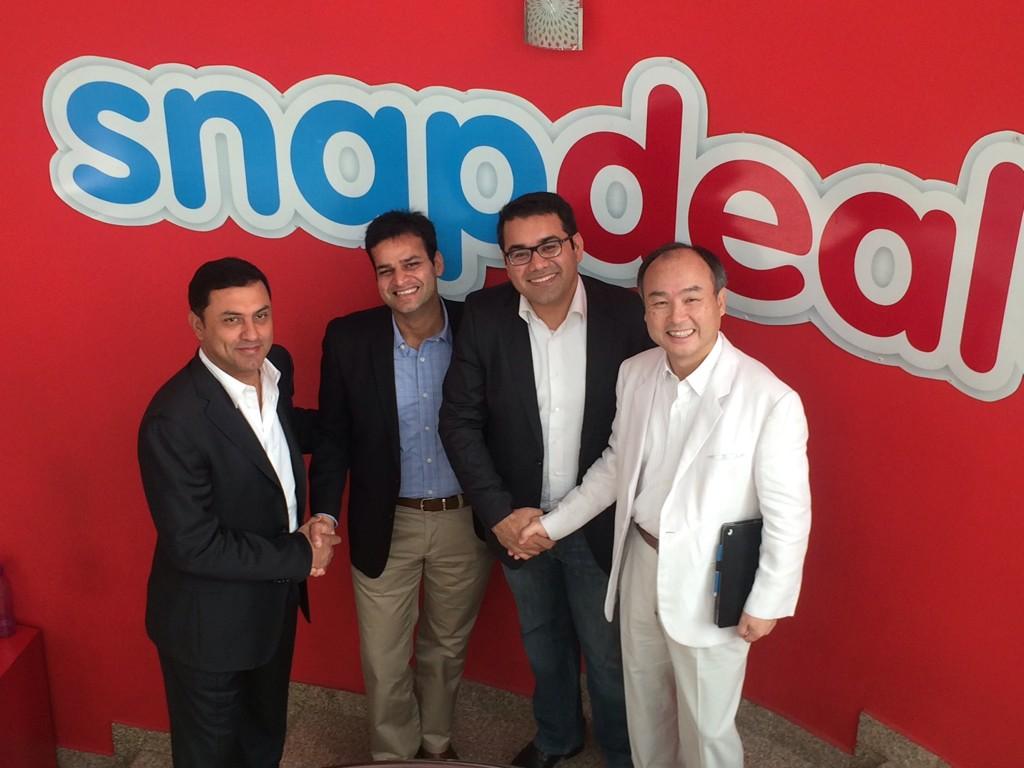
    AceVector is raising Rs 287 crore in fresh equity. Existing backers are selling shares worth Rs 133 crore through an offer-for-sale component. The selling shareholders include SoftBank, Nexus Venture Partners and Foxconn. SoftBank holds 30.1 percent as the largest outside shareholder. It is offloading Rs 88 crore of equity while keeping stock valued at Rs 362 crore. Co-founders Kunal Bahl and Rohit Bansal hold about 34 percent directly and through affiliate entities. Neither will sell stock.

    Where the capital goes

    Proceeds from the primary issue will fund operating costs and customer acquisition. The group plans to allocate almost half the fresh capital directly to marketing and promotions for Snapdeal. It is trying to win back online shoppers in smaller Indian towns. Market share in those regions was lost over years to Walmart-owned Flipkart and Amazon India.

    A corporate restructuring in 2022 placed the core e-commerce portal alongside two other units: software provider Unicommerce and direct-to-consumer incubator Stellaro Brands. Unicommerce listed separately in 2024 through a Rs 277-crore public issue. That carved out the software-as-a-service business from the wider marketplace losses.

    Financial turnaround before the listing

    Regulatory filings show narrower losses alongside higher revenue. In the fiscal year ended March 2026, AceVector reported operating revenue of Rs 510 crore, up 30 percent from the previous year. Net losses shrank to Rs 45 crore from Rs 126 crore over the same period. The change reflects heavy cuts to overhead and supply chain operations.

    SoftBank invested approximately $1 billion into Snapdeal between 2014 and 2015. It wrote down the entire holding in 2017 after a planned sale to Flipkart collapsed. The public listing gives the Japanese group and its venture peers a partial cash exit after holding the asset for a decade.

    The market reality for value e-commerce

    Selling low-ticket apparel and home goods to tier-2 and tier-3 shoppers in India is a crowded, low-margin business. Snapdeal once dominated value commerce online. Since then, buyers of low-cost apparel and general merchandise have migrated to Meesho, Flipkart’s Shopsy, and quick-commerce networks delivering staple goods in under fifteen minutes.

    Allocating Rs 140 crore to marketing will buy app installs. It will not alter Snapdeal’s structural delivery cost per order against competitors operating regional sortation networks. RetailNews Asia views the IPO as a balance-sheet reset rather than an expansion war chest, leaving AceVector to survive on niche non-metro demand while leaning on Stellaro Brands for margin support.

    Regulatory steps to the public market

    The listing process began with a confidential pre-filing submitted to the Securities and Exchange Board of India in July 2025. Regulators cleared the document in November. In December, the company filed an updated draft red herring prospectus to scale back the offer size to match subdued tech valuations.

    Public subscriptions open on September 25, 2026. Trading on Indian stock exchanges will follow final share allocations in early October.

  • OpenAI Projects $278 Billion Cash Burn Through 2030 on Infrastructure Push

    OpenAI Projects $278 Billion Cash Burn Through 2030 on Infrastructure Push

    OpenAI expects to burn $278 billion between 2026 and 2030 as infrastructure costs outpace revenue, according to an internal presentation. The company plans to spend $856 billion on computing power and hardware over those five years. Annual revenue is projected to climb from $36 billion this year to $350 billion in 2030.

    Cumulative revenue through the decade is forecast at $840 billion from enterprise and consumer adoption. Computing power represents the group’s largest single operational expense.

    Depleting Capital Reserves

    That spending trajectory puts direct pressure on the balance sheet. OpenAI raised $122 billion in March at an $852 billion valuation. Internal forecasts show those cash reserves will run out by 2028.

    Management has held talks with private investors for fresh funding at a valuation near $1.2 trillion to plug the gap. The deficit leaves little room for operational missteps or weaker enterprise software demand.

    Hardware Demand and Asian Supply Chains

    Asian technology suppliers, data centre builders, and hardware vendors will see sustained procurement from that $856 billion computing budget. High-bandwidth memory makers, advanced packaging specialists, and server assemblers in Taiwan, South Korea, and Japan sit directly in the flow of that capital.

    Monetization carries the real risk. Enterprise buyers across retail and consumer tech face higher prices as model builders try to recover infrastructure costs. Competing open-source architectures offer lower operational expenses.

    Delayed Public Listing

    A confidential filing for an initial public offering in June laid the groundwork for a public market debut. Chief executive Sam Altman ruled out a 2026 listing soon after, citing internal concerns over artificial intelligence safety protocols.

    Delaying the float leaves the company dependent on private equity consortia, sovereign wealth funds, and strategic tech partners. These backers must absorb hundreds of billions in negative cash flow before the 2028 cash cliff.

    The Next Funding Milestone

    Attention now turns to the final terms of OpenAI’s prospective $1.2 trillion financing round. Investors will watch whether enterprise subscription revenue meets the target run rate required to hit $36 billion before the current fiscal year concludes.

  • SoftBank Shares Fall 13% as OpenAI and Anthropic Urge Caution

    SoftBank Shares Fall 13% as OpenAI and Anthropic Urge Caution

    SoftBank Group shares tumbled 13 per cent in Tokyo after artificial intelligence developers OpenAI and Anthropic urged market caution.

    The sell-off hit the Japanese conglomerate’s portfolio valuation immediately. Its holdings remain heavily weighted toward generative technology and semiconductor assets.

    Reassessing tech exposure

    Traders dumped the stock after commentary from the two foundation-model leaders cooled expectations for rapid commercial monetization. SoftBank spent recent quarters shifting capital into frontier model creators and computing infrastructure. That strategy tied its balance sheet directly to the artificial intelligence buildout.

    Holding companies with concentrated tech bets take the brunt when model builders forecast slower timelines. SoftBank’s trading multiple relies heavily on private asset valuations. That leaves little cushion during sector pullbacks.

    Valuation risk across portfolio holdings

    Institutional investors across Asian markets now face the fallout from aggressive hardware and software bets. Regional peers have largely favored diversified balance sheets and disciplined corporate software rollouts over pure-play generative startups.

    A major risk lies in the gap between heavy capital expenditure commitments and verifiable enterprise revenue. When model developers lower operational targets, secondary market liquidity for portfolio firms dries up fast.

    Market pressure mounts in Tokyo

    Past quarters saw SoftBank aggressively shift cash out of mature holdings to fund new technology bets. That redeployment concentrated risk into a narrow band of private tech assets rather than stable cash-generating operations.

    Trading desks in Tokyo are watching SoftBank’s next portfolio disclosure to see whether the group recalibrates its deployment pace or maintains existing investment targets.

  • Vietnam’s Tevo Secures $10 Million from Singapore’s PvX

    Vietnam’s Tevo Secures $10 Million from Singapore’s PvX

    Vietnamese tech platform Tevo secured $10 million this week from Singapore investment firm PvX to fund customer acquisition and accelerate platform expansion.

    The capital injection gives the company fresh liquidity to expand its user base across Vietnam while upgrading its underlying product infrastructure.

    Capital Allocation and Expansion Targets

    Tevo directed the proceeds straight toward customer acquisition campaigns, technical hiring, and regional partner integrations. The company plans to scale its operations beyond initial metropolitan hubs, focusing on higher transaction volumes and deeper user engagement across consumer touchpoints.

    For Singapore-based PvX, the transaction broadens its portfolio footprint in Vietnam, where digital consumption continues to outpace broader regional averages. The investment structure reflects an ongoing appetite among Southeast Asian venture capital firms for digital operators that demonstrate direct paths to unit profitability rather than unchecked market share land-grabs.

    Shifting Dynamics in Vietnam Tech Financing

    Regional capital deployment into Vietnamese digital businesses has shifted over the past two years toward firms with proven customer retention. Early-stage consumer platforms across Southeast Asia previously relied on aggressive discount subsidies, but investors now demand tighter payback periods on acquisition spending.

    The primary operational risk for Tevo sits in user retention once direct marketing spend moderates. Digital consumer acquisition costs across Ho Chi Minh City and Hanoi rose over the last eighteen months as domestic operators competed for the same demographic of smartphone users.

    Cross-Border Deal Momentum

    Cross-border funding from Singapore into Vietnamese consumer and technology startups maintained momentum following several mezzanine and early-stage rounds closed earlier this year. Regional funds continue to route investments through Singapore holding entities to back Vietnamese operating assets in retail, logistics, and consumer services.

    Market observers will watch Tevo’s net subscriber growth figures and its next operational disclosures in early 2027 to see how effectively the $10 million round translates into retained user volume.

  • Astana Panel Explores Hong Kong Capital Routes for Central Asian Firms

    Astana Panel Explores Hong Kong Capital Routes for Central Asian Firms

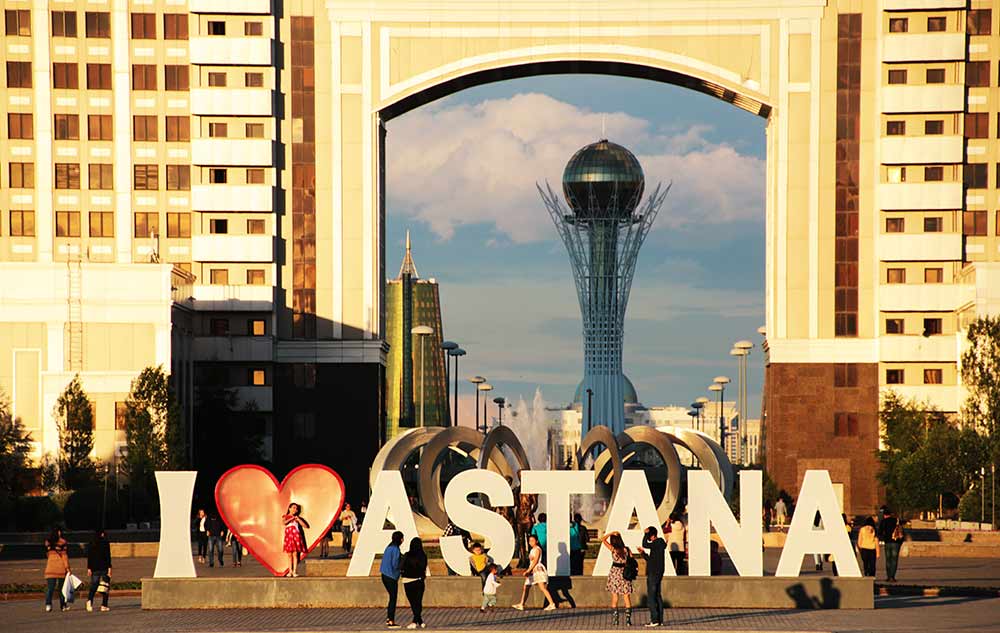
    In September 2026, financial leaders and exchange executives gathered in Astana to discuss how Central Asian companies can connect with international capital through Hong Kong.

    The panel, titled “Capital Pathways for Central Asia, Dual Listings, RMB Funding, Private Capital and the Astana-Hong Kong Route,” featured Assel Mukazhanova of AIX, Johnson Chui of HKEX, Askar Bilisbekov of Alem Capital Management, and Thomas G. Tsao of Gobi Partners, with SCMP’s Eugene Tang moderating.

    Mukazhanova noted that Kazakhstan’s domestic market cannot fully meet regional financing demand, while Bilisbekov highlighted that Alem Capital Management is operating two funds, including a venture capital fund investing regionally and globally, alongside plans for an infrastructure fund.

    Hong Kong Listing Halo

    Venture capital firms operating between East and Central Asia view Hong Kong regulatory scrutiny as a vetting mechanism for international fund managers hesitant about frontier markets. Thomas G. Tsao, founding partner of Gobi Partners, pointed out that Hong Kong listings provide emerging Central Asian companies with regulatory credibility similar to how early Chinese tech firms used Nasdaq listings to establish trust with global institutional backers.

    For institutional investors across Asia, the channel offers exposure to Central Asia’s tech and natural resources sectors without navigating fragmented local legal structures. The primary operational risk rests on liquidity: smaller Central Asian tech firms must demonstrate sufficient scale and recurring revenue to attract trading volume once listed in Hong Kong, rather than becoming dormant secondary listings.

    Talent and Regional Trade Routes

    Central Asian founders increasingly build software and services designed to interface across Chinese, Russian, and Western commercial systems. Tsao noted that the region’s multilingual, mobile-first workforce gives early-stage companies an advantage in operating across multiple trade jurisdictions simultaneously.

    The push to build financial corridors follows years of physical trade expansion between China and Central Asia along traditional overland freight routes. Financial institutions in Astana now aim to match those physical supply chains with institutional capital flows, moving Central Asian funding beyond bilateral state debt into equity markets.

    Broadening the Investor Base

    Market participants also view the Hong Kong link as a way to diversify capital sources, reducing concentration risk from single-nation strategic investors in resource extraction and mining. Channelling investments through public equity and institutional funds brings a wider mix of global asset managers into Central Asian enterprises.

    AIX and its regional partners are now screening candidate companies for initial dual-listing pipelines and private rounds, with the first wave of cross-border listings targeted as market benchmarks.

  • Tripo AI Raises 3 Billion Yuan in Series B and B+ Rounds

    Tripo AI Raises 3 Billion Yuan in Series B and B+ Rounds

    Tripo AI has raised 3 billion yuan across combined Series B and Series B+ funding rounds this financial year to scale its generative 3D foundation models and commercial toolsets.

    This capital injection gives the company one of the largest war chests among Chinese artificial intelligence startups focused on automated spatial asset creation.

    Scaling 3D Asset Generation

    Users can convert text descriptions and two-dimensional images into production-ready 3D meshes within seconds. That speed cuts digital modeling time from days to minutes. It also directly lowers production expenses for game developers, virtual retail designers, and industrial visualization teams.

    Capital from the combined rounds will fund compute infrastructure and dataset acquisition. The money will also back larger engineering teams focused on multi-view reconstruction algorithms.

    Commercial Pressure on Digital Studios

    For consumer brands and e-commerce merchants building virtual storefronts, rapid 3D generation removes a persistent cost bottleneck. Traditional digital catalog creation requires manual sculpting and texture mapping for every stock keeping unit. Automated mesh generation shifts that workflow toward batch processing, forcing regional digital agencies and outsourced modeling studios to adjust their pricing structures.

    Adoption speed and export limits present the main risks. Consumer software platforms adopt synthetic assets quickly. Enterprise retail and manufacturing clients, however, demand strict geometric precision and clean topology that generative models still struggle to deliver without manual touch-ups.

    Prior Traction and Next Milestones

    Earlier funding rounds allowed Tripo AI to roll out browser-based generation tools and integrate application programming interfaces with major graphics engines. The platform processed millions of user queries over previous product cycles, building an initial base among independent creators and digital design shops.

    Looking ahead, management will focus on rolling out enterprise tier subscriptions and expanding direct integrations with global rendering pipelines before the end of the financial year.

  • Foreign Tech Investors Pay up to US$15,000 for Access to Chinese Factory Floors

    Foreign Tech Investors Pay up to US$15,000 for Access to Chinese Factory Floors

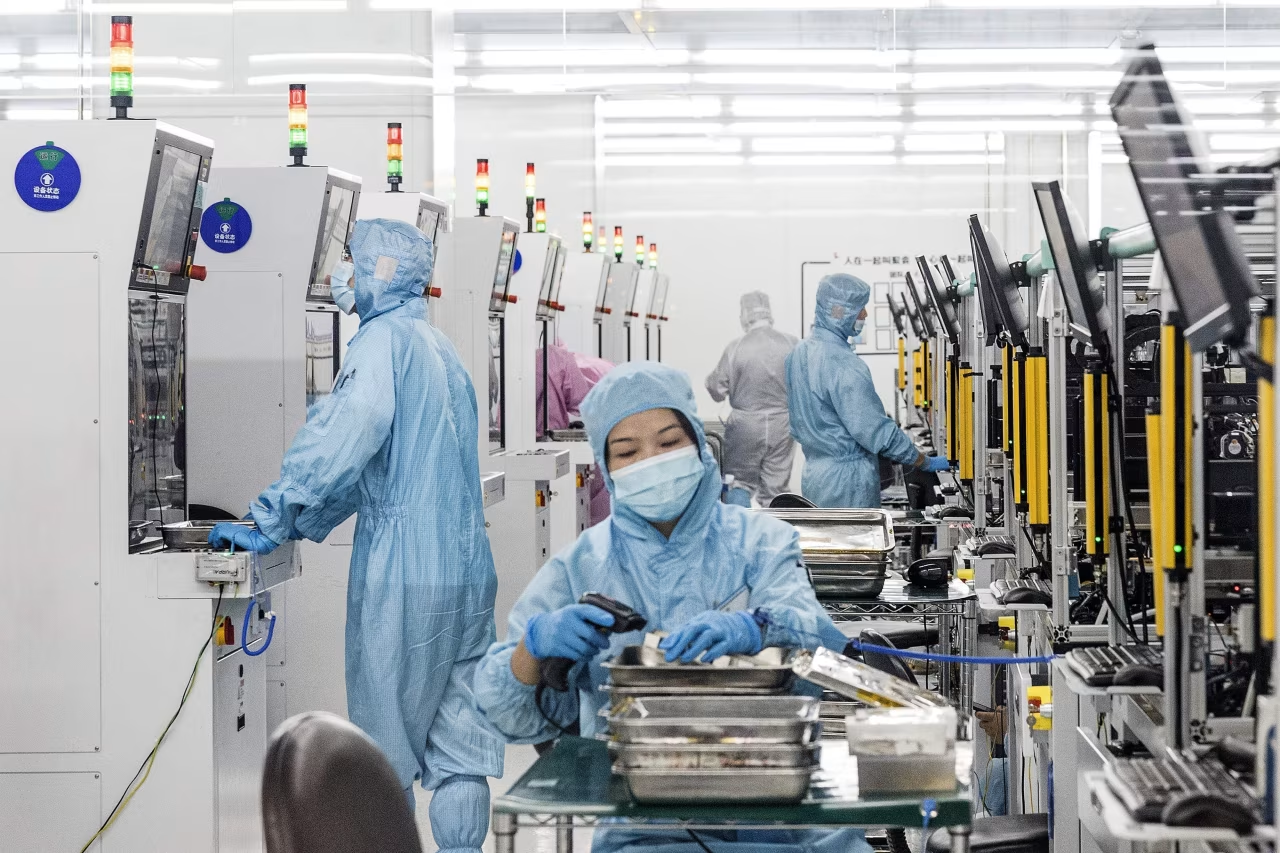
    Foreign investors and tech executives are paying up to US$15,000 each to tour Chinese manufacturing plants. The visits cover robotics, electric vehicle and artificial intelligence facilities across five industrial hubs.

    Western and regional boardrooms face pressure to see if Chinese automation has pulled ahead of global rivals. These paid delegations offer a direct look at mainland hardware supply chains.

    Programmes span Beijing, Shenzhen, Shanghai, Hangzhou and Hefei. Shanghai-based data research firm Baiguan charges up to US$15,000 for a five-day itinerary. Around half its participants come from Southeast Asia. Tech tour agency Glopen reported a 50 per cent jump in enquiries during 2026, mostly from European and Singaporean clients. It now operates more than 100 single-day corporate visits every month. Tech Buzz China founder Rui Ma has organised 11 delegations since 2019, including an April tour through three cities focusing on robotics.

    The Business Behind Factory Tourism

    State backing has turned industrial site visits into commercial business across the mainland. Beijing has designated more than 140 demonstration sites for industrial tourism. The sector generated US$17.8 billion last year and is projected to reach 300 billion yuan (US$44.6 billion) by 2029.

    Public rates for individual factory visits usually run around US$60, but premium access commands steep markups. Xiaomi’s electric vehicle assembly plant in Beijing has recorded more than 250,000 visitors since March 2024. Entry slots from Xiaomi’s official lottery system have been scalped on secondary platforms for up to 2,000 yuan (US$300), despite company rules barring transfers.

    Institutional investors have quietly joined the circuit. US firms Dimension, Capital Group and Thrive Capital have all sent representatives to inspect mainland production setups. European corporate delegations have also toured sites to study state-backed technology coordination.

    Hardware Dependence and Supply Realities

    Consumer hardware and robotics brands see that physical supply chains remain tethered to southern China. Geopolitical posturing has not changed that reality. Western developers still depend on mainland ecosystems for sensors, battery cells, structural frames and precision actuators. Replicating those supplier clusters outside the Pearl River Delta remains slow and capital intensive.

    Visitors risk mistaking demonstration speed for total commercial dominance. Non-Chinese technology firms still hold most global market share, high-margin software profits and core intellectual property. In sectors like autonomous robotaxis, Chinese domestic deployment continues to move cautiously. Regulators remain concerned about urban transport employment.

    Shenzhen Emerges as the Focal Point

    Years of infrastructure spending transformed Shenzhen from a contract assembly zone into an integrated hardware design centre. The current tour rush builds on that base. Foreign visitor arrivals in Shenzhen jumped 70 per cent last year and rose another 30 per cent in the first quarter. Total entries topped 5 million through August.

    Founders use 10-day visa-free entry policies to test prototypes directly with component suppliers. Local operators have opened communal hacker houses for visiting robotics and AI engineers. Informal network groups coordinate factory access across Shenzhen and Silicon Valley.

    Next up is the Asia-Pacific Economic Cooperation forum in November, which Shenzhen will host. Municipal officials plan to show automated assembly plants and urban drone networks to pitch the city’s hardware infrastructure to visiting regional trade delegations.