Tag: vinfast

  • Vietnamese carmaking startup VinFast gets $950 million credit line

    Vietnamese carmaking startup VinFast gets $950 million credit line

    VinFast, which aims to become Vietnam’s first domestic car manufacturer, said it has secured a 12-year credit facility for as much as $950 million to help buy machinery and equipment from German suppliers.

    The company, a unit of Vietnam’s largest conglomerate Vingroup JSC, plans to have its first production models built under its own badge hit the streets next August. Vingroup has earmarked about $3.5 billion for the project.

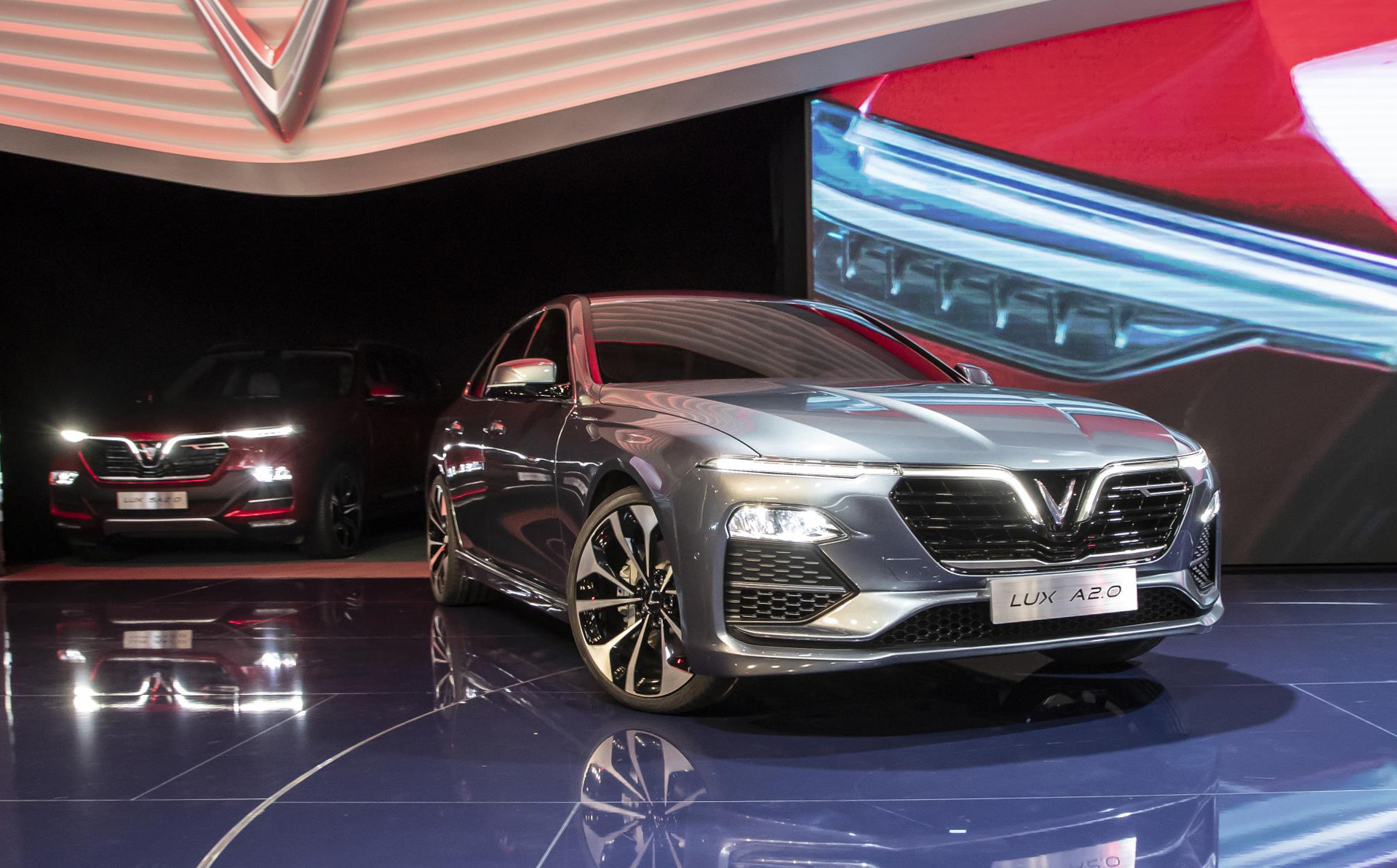
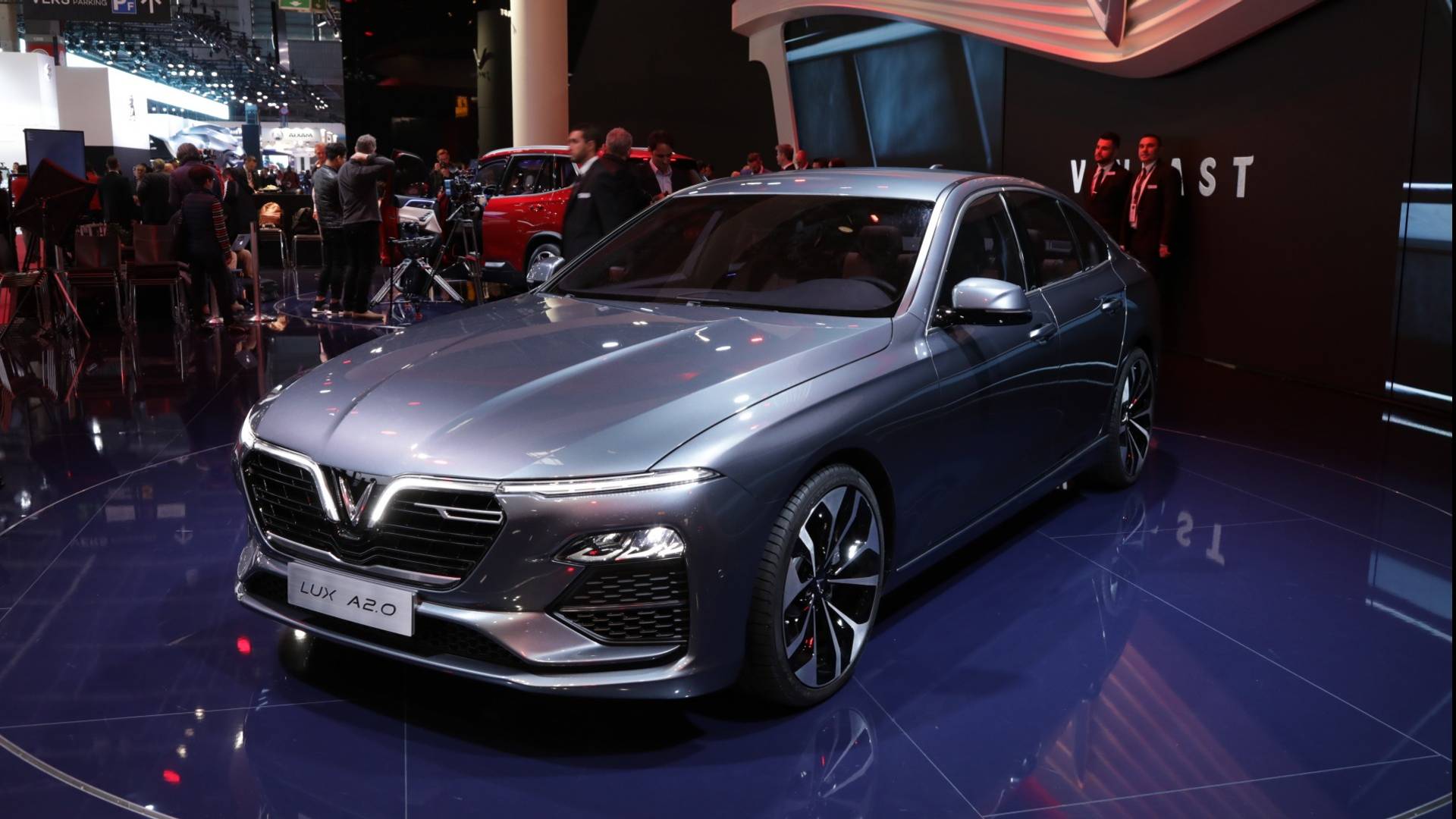
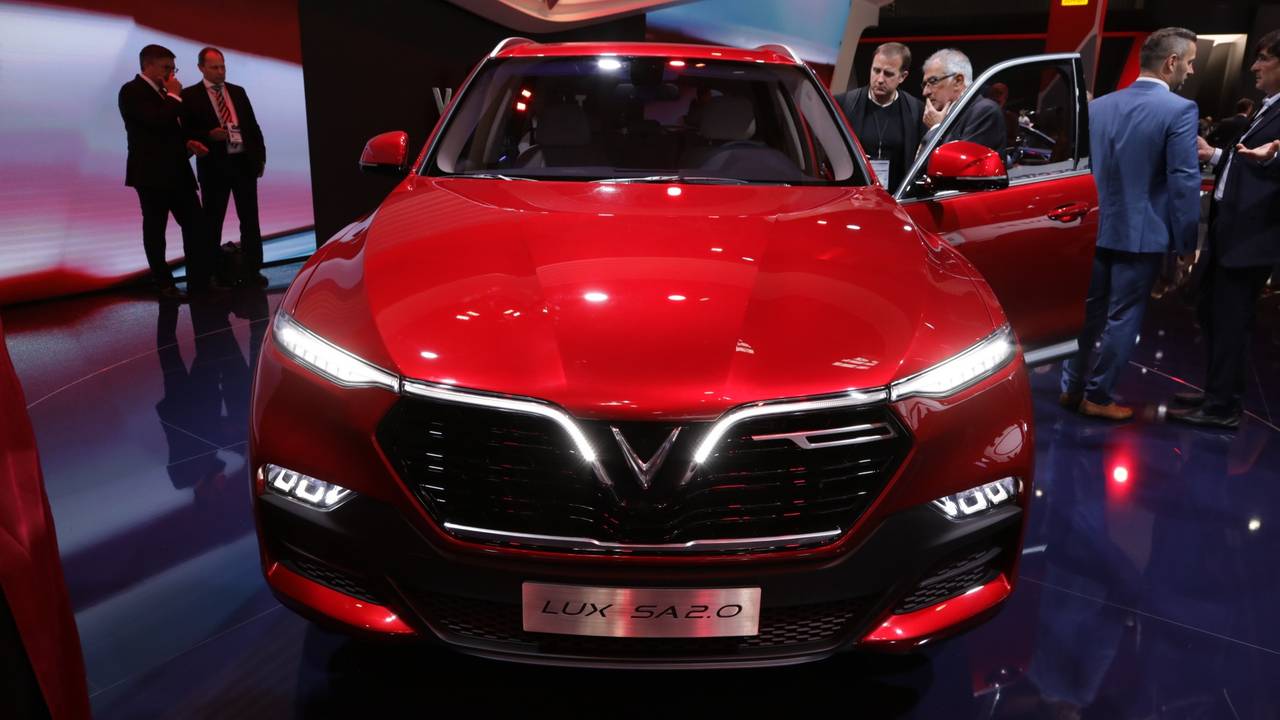
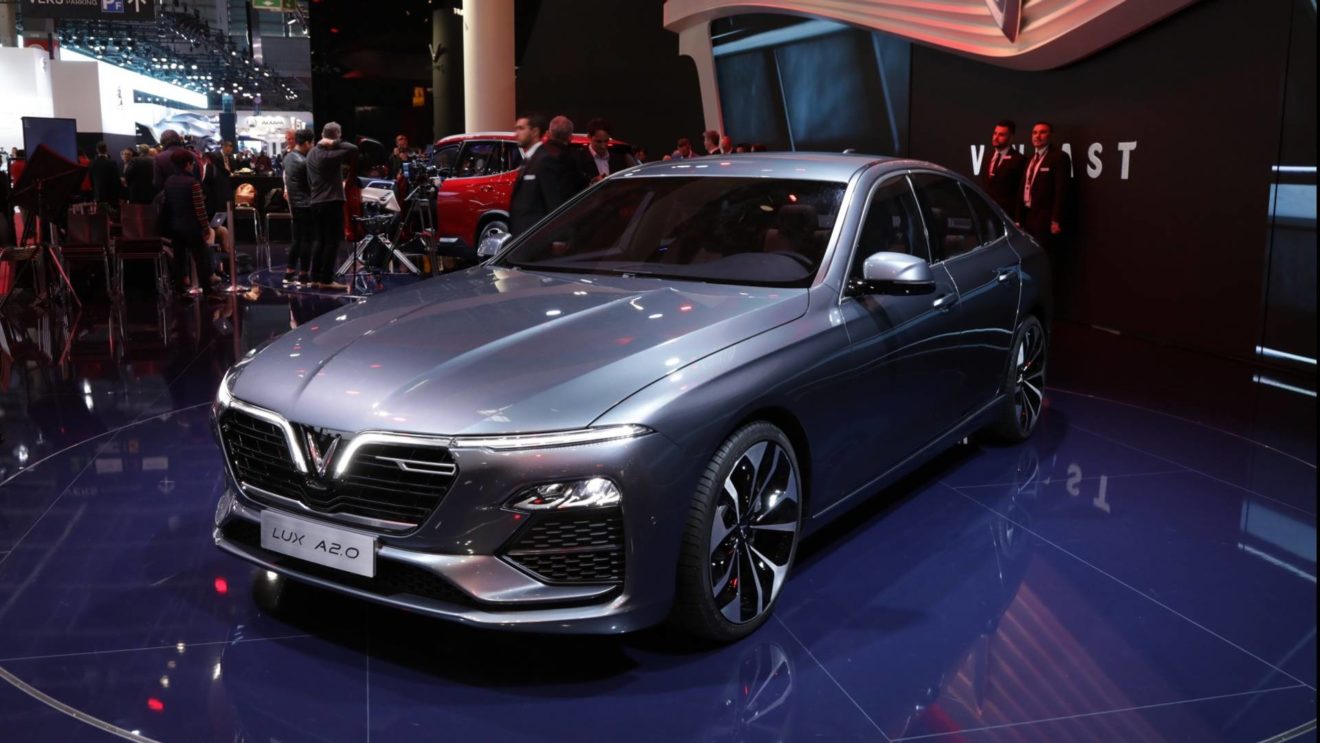
    VinFast, led by former General Motors executive Jim DeLuca, showed off its BMW-based LUX A2.0 sedan and LUX SA2.0 crossover at the Paris auto show last week. Assembly is scheduled to begin next week year.

    Credit Suisse AG and HSBC were the lead arrangers and the financing agreement was guaranteed by German export credit agency Euler Hermes, Vingroup and Vinfast said in a statement.

    The statement also said that in August Vinfast completed syndication of a $400 million term loan facility led by four international banks.

  • VinFast Starts Production Of Two Cars Designed By Pininfarina At Its New Plant

    VinFast Starts Production Of Two Cars Designed By Pininfarina At Its New Plant

    The first two cars designed by Pininfarina for the Vietnamese brand VinFast will be manufactured in the new plant which was inaugurated by VinFast Production and Trading LLC at Dinh Vu Industrial Zone, Cat Hai, Hai Phong. It is built on an area exceeding 500,000 square meters out of the 335 hectares of the entire complex, meeting the requirements of Industry 4.0 automation and data exchange system. The designed capacity of the first and second phases are to grow from 250,000 vehicles per year to 500,000 vehicles per year, respectively, with the production speed reaching 38 vehicles per hour.

    The Vietnamese brand will produce the new Pininfarina-designed LUX A2.0 sedan and LUX SA2.0 SUV, both of which made their debut at the 2018 Paris Motor Show. After unveiling 20 concept designs submitted by world-famous design houses including Pininfarina, Vinfast asked customers to vote which they thought were in line with world trends and fitting with Vietnamese tastes and demand. Nearly 62,000 participants voted in the contest. The Sedan and SUV designs that collected the most votes were the two that Pininfarina will develop.

    VinFast has in fact already received 10,000 preorders, a year prior to the launching of its final products and that’s quite a record it’s set. After the inauguration of the factory, VinFast will organize the delivery and release of the first cars. Specifically, delivery of VinFast Fadil cars to customers started on June 17, while Pininfarina-designed Lux A2.0 sedan and Lux SA2.0 SUV will be delivered at the end of July 2019.

  • VinFast, South Korean firm to make batteries for EVs

    VinFast, South Korean firm to make batteries for EVs

    The joint venture will be located in the automaker’s factory in the southern port city of Hai Phong, where it will manufacture lithium-ion battery packs for VinFast’s electric scooters that are being made now, and for electric cars to be produced in the future, VinFast said in a statement.

    The factory, which will be built on a 2,000 square meter area, will employ Vietnamese workers who will be trained in technology provided by LG Chem.

    The automaker, a unit of Vietnam’s largest conglomerate Vingroup, rolled out its first made-in-Vietnam cars last month, the first steps in a $3.5 billion automaking venture.

    VinFast has recently sent its SUV and sedan to European and Asian countries for quality testing and is set to deliver preordered vehicles in the second and third quarter.

  • VinFast Preparing for Russian Sales

    VinFast Preparing for Russian Sales

    VinFast’s sedan and SUV Lux images were found in the database of the Russian Federal Service for Intellectual Property (Rospatent).

    “Clearly, the Vietnamese automobile brand with BMW’s platform is approaching really close to the Russian market,” the news site said, suggesting that VinFast’s plans to sell its products in Russia might have been some time in the making.

    According to a VinFast source, the company is in the process of completing necessary procedures to start selling cars in Russia. The source did not reveal a time frame for when it would happen.

    Right from the beginning, VinFast had aimed at making cars that meet European standards, so they could be exported, apart from being sold in the domestic market. Russia was one of the first foreign markets targeted.

    The sedan and SUV Lux are both equipped with turbocharged 2-liter 4-cylinder engines. The sedan has a 174 horsepower engine and a maximum torque of 300 Nm, while the SUV has a 228 horsepower engine with a maximum torque of 350 Nm.

    Currently, the Lux model is scheduled to reach Vietnamese customers in the third quarter of this year, following the Fadil car, which would be introduced to the domestic market in the second quarter.

    VinFast is shipping 155 of its cars to 14 countries across Asia, Europe, Africa and Australia to test them for safety and endurance against standards in those countries.

    VdinFast, the car manufacturing unit of Vietnam’s largest private conglomerate Vingroup, showed off its first two car models, a sedan and an SUV, at the Paris Motor Show in France last October just a year after the company’s incorporation, grabbing the attention of the local and international media.

  • VinFast rolls out its first made-in-Vietnam car

    VinFast rolls out its first made-in-Vietnam car

    Vietnam’s first full-fledged carmaker has started trial runs in its Hai Phong factory, preparing to deliver preordered vehicles later this year. The Lux SA 2.0 SUV, which has a 228 horsepower engine and an 8-gear automatic transmission, started its first run Wednesday at VinFast’s factory in the northern port city of Hai Phong.

    Commercial versions of both the SUV and a sedan will be delivered in the second and third quarter this year to customers who have pre-ordered.

    VinFast, a unit of Vietnam’s largest private conglomerate Vingroup, claims to be the first auto manufacturer in Vietnam with a closed, synchronous and complete cycle of production.

    The first cars will be tested in several countries including Australia, Austria and South Korea to make them European standards. They will also be tested in Vietnam for endurance in various climates and conditions.

    VinFast showed off prototypes of its first two car models at the Paris Motor Show in France last October, just a year after the company’s incorporation.

    A limited edition of its Lux SA 2.0, called the Lux V8 with a 455 horsepower V8 engine, is being displayed at the Geneva Motor Show 2019 this week.

  • VinFast to test its first car for safety in Europe next month

    VinFast to test its first car for safety in Europe next month

    VinFast, Vietnam’s first indigenous car manufacturer, plans to test its first vehicle for safety parameters in Europe on March 6. According to company executives, the vehicle will be tested for international standards to ensure its highest safety. This announcement came after VinFast’s Hai Phong factory successfully manufactured the first body shell of the Lux A2.0, a sedan, Wednesday.

    Shaun William Calvert, deputy general director in charge of production, said the first body shell meets the highest quality requirements.

    VinFast, the car manufacturing unit of Vietnam’s largest private conglomerate Vingroup, showed off its first two car models, a sedan and an SUV, at the Paris Motor Show in France last October just a year after the company’s incorporation, grabbing the attention of the local and international media.

    VinFast’s first cars are expected to hit the road in August 2019.

  • From bikes to phones, ‘Made in Vietnam’ grows with foreign help

    From bikes to phones, ‘Made in Vietnam’ grows with foreign help

    Vietnamese companies are branching out into new areas, in line with the government’s goal of establishing the country as a manufacturing powerhouse by 2020. Real estate conglomerate Vingroup has started manufacturing electric motorbikes and smartphones and is set to enter the car industry in June. VinFast, a Vingroup unit, began selling its first electric motorbike in November. Designed in the mold of Italy’s Vespa, the Klara is a stylish, well-manufactured bike that can cover up to 80 km on one charge.

    Klara, like many other domestically made products, however, remains heavily dependent on foreign parts and technologies. While the collaboration with companies such as BMW, Robert Bosch and Siemens enabled Vingroup to bring the Klara to the market in just over a year after announcing plans to expand into motor vehicles, it reflects the long path the country has to travel before becoming a full-fledged industrial power.

    A group of 20 European businesses are helping Vingroup produce the bike, and around 200 German engineers are currently working at Vingroup’s plant in the northern city of Haiphong. Klara offers a glimpse into the type of outside assistance that will go into building the country’s first national car, which the company plans to launch in June.

    Some of the company’s cars will be based on a small vehicle produced by Germany’s Opel and use chassis provided by Western makers, according to local media. An Italian design studio that has worked for Ferrari and other European marques is in charge of designing VinFast cars.

    Most of the parts have to be imported, as the country lacks a developed car manufacturing supply chain.

    Vingroup’s foray into the smartphone market is also supported heavily by foreign manufacturers.

    The conglomerate has teamed up with Spanish maker BQ to launch its Vsmart model, and its smartphone plant has started operation, also in Haiphong.

    Vingroup has enlisted the help of Qualcomm and Google for its smartphone business.

    Vietnam’s first domestically made smartphone, the Bphone, was launched in 2015 by software developer Bkav and was also largely made up of components supplied by foreign makers. Its liquid crystal display, for instance, came from Sharp and its chips from Qualcomm.

    In October, Bkav put the third-generation model of the Bphone on the market.

    Truong Hai Automobile, also known as Thaco, a contract manufacturer for Mazda Motor and Kia Motors, started selling Vietnamese-made agricultural machinery in 2018. The company, which has entered a technological tie-up with South Korea’s LS Mtron, reportedly makes equipment mostly with imported parts.

    The government is seeking to develop a cycle of domestic manufacturing, hoping that sales of locally made products will help its industries climb up the technology ladder and create employment.

    It is understood that a variety of tax and other incentives are being extended to Vingroup and other companies that are cooperating with state efforts to promote domestic production.

    Some analysts, however, have questioned the sustainability of this approach.

    “What Vietnam needs to do is to accelerate technology transfers to small and midsized companies for long-term development, instead of providing special incentives to specific large companies,” said a Hanoi-based Japanese consultant.

    In addition, the “Made-in-Vietnam” label has yet to win over consumers, according to Cao Thi Khanh Nguyet at the Asia Pacific Institute of Research, and manufacturers need a well-designed brand strategy to establish a solid presence in the market.

    Samsung Electronics, which operates two massive manufacturing plants in the country, controls 40% of its smartphone market. Many consumers also opt for Japanese, Thai and South Korean products when it comes to food and daily goods.

    Manufacturers in emerging markets often look to foreign powerhouses for support in accelerating their growth and evolution.

    Generally, industries begin the shift toward domestic production after they have acquired sufficient expertise and built up a dependable network of domestic suppliers.

    Some analysts say that Vietnam’s push to establish full-fledged domestic production by 2020 is too ambitious. But the blueprint has been in place for years.

    The 2020 target was first proposed at the ruling Communist Party’s National Congress in 1996. Two decades later, in 2016, the party reiterated its pledge to make the country a modern industrialized nation, despite widespread expectations that the plan would be abandoned.

    Vingroup chose Sept. 2, 2017 to announce its entry into automotives. It was no coincidence, falling on National Day, when the Vietnamese commemorate Ho Chi Minh’s 1945 declaration of independence.

  • Vingroup reports $25 mln revenue from vehicle, smartphone sales

    Vingroup reports $25 mln revenue from vehicle, smartphone sales

    Vietnam’s largest listed private company Vingroup has reported revenues of VND600 billion ($25.77 million) from car, electric motorbike and phone sales last year. VinFast, a Vingroup subsidiary, became the country’s first indigenous car manufacturer last October and showed off its first two car models at the Paris Motor Show in France. It has begun to accept bookings and deposits for the cars, and will start selling them next August.

    Last November it launched its first two electric scooters, but has not disclosed sales figures.

    VinSmart, the Vingroup unit that produces smart electronic devices, launched four new phones in December in a market of 95 million people currently dominated by Samsung and Apple.

    Its factory in the northern city of Hai Phong is capable of making five million phones a year in the first phase.

    The company also hopes to expand to markets outside Vietnam, and will make smart TVs and other smart products soon.

    Vingroup is a conglomerate with the country’s largest real estate operations and interests in retail, healthcare and resorts.

    The conglomerate reported profit before tax of over VND13.8 trillion ($592.6 million) last year, up 52 percent from 2017, on net revenues of VND122.57 trillion ($5.24 billion).

  • VinFast announces seven new car models

    VinFast announces seven new car models

    VinFast, Vietnam’s first fully-fledged car manufacturer, plans to launch seven new ‘premium’ models. Following the first line of Lux (short for Luxury) automobiles aimed at the high-end segment, VinFast, a unit of Vietnam’s largest private conglomerate, Vingroup, has announced it will launch a Pre (short for Premium) car line with the aim of tapping a larger customer base.

    The company has opened a polling page for customers to vote on the seven most popular models out of a potential 35.

    The seven Pre models will include a hatchback and a CUV (crossover SUV) for the A and B segments; one Sedan and CUV for the C segment; and 1 Sedan, 1 SUV and 1 family car for the D segment.

    VinFast will continue to work closely with the famous Italian studios, Ital Design, Torino Design, and Pininfarina on designing the new models.

    VinFast showed off its first two car models, a sedan and an SUV, at the Paris Motor Show in France last October just a year after its incorporation, grabbing the attention of the local and international media.

    VinFast’s first production models built under its own badge hit the streets in August 2019.

    According to the Vietnam Automobile Manufacturers’ Association, total car sales in the country topped 288,000 units in 2018, up 5.9 percent from around 272,000 units in 2017.

  • Vietnam’s VinFast presents models, prices

    Vietnam’s VinFast presents models, prices

    VinFast, a subsidiary of Vietnam’s biggest private firm Vingroup, presented three models and their prices at its maiden show in Hanoi Tuesday afternoon. Its five-seat sedan Lux A2.0 and seven-seat SUV Lux SA 2.0, which had already been revealed to the public for the first time at the Paris Motor Show last month, cost VND800 million ($34,305) and VND1.136 billion ($48,709) respectively.

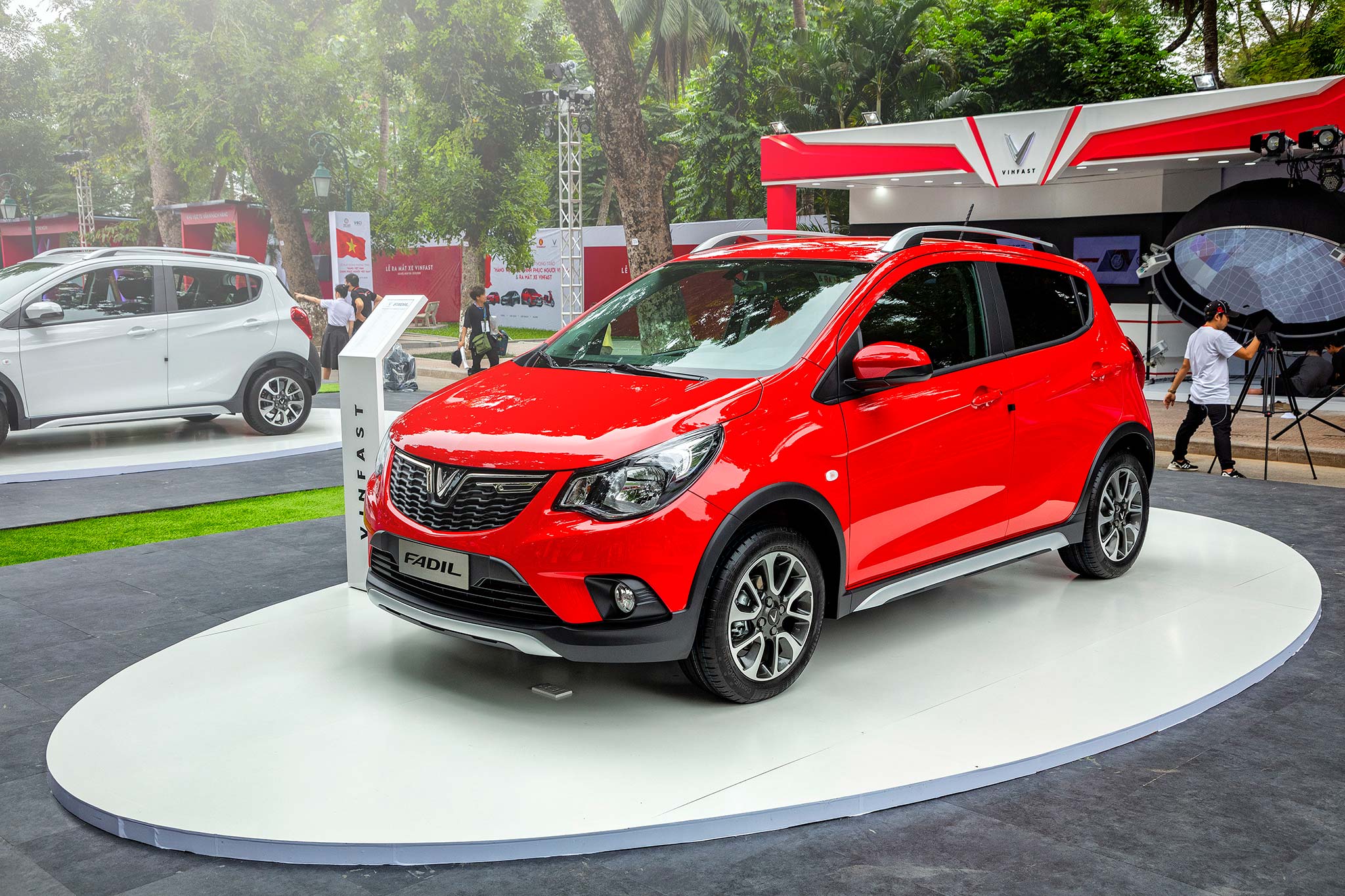
    The smaller hatchback Fadil, presented for the very first time, costs VND336 million ($14,410).

    These prices are exclusive of a 10 percent value added tax.

    The company said it was announcing favorable prices for the “initial phase.” The original prices of the hatchback, the sedan and the SUV are VND423 million ($18,140), VND1.336 billion ($57,300) and VND1.818 billion ($78,000) respectively, it said.

    VinFast surprised industry insiders by completing its first two units, the SUV and the Sedan, within one year.But VinFast did not say for how long the promotional prices will last or how many cars will be produced in the initial phase.

    Its first two models are built on frames from BMW. Their components have been engineered by Canadian firm Magna International’s Magna Steyr, while design work was done by Italian design house Pininfarina.

    The small hatchback, Fadil, meanwhile, was developed from the background of the Opel Karl Rocks model in the European market. Its structure is almost equivalent to the latest Chevrolet Spark generation.

    Attending the exhibition, Prime Minister Nguyen Xuan Phuc said building strong Vietnamese brands means promoting patriotism, self-reliance and self-esteem and building a consumer culture in Vietnam.

    “I hope more Vietnamese companies and entrepreneurs follow in the footsteps of VinFast to express an aspiration to dominate the domestic market and reach out to the international level.”

    Vietnam’s population is around 93 million, larger than South Korea, but car consumption is only around 300,000 units a year, he said. Previously, Mike Dunne, an independent industry analyst who has spent more than three decades in Asia, said that he doubted VinFast cars would generate much demand in a country with an average income of $2,385 last year.

    While there is little doubt the market would grow, it won’t happen fast enough to absorb VinFast’s production, planned at 250,000 vehicles annually, he added.

    There are only 358 businesses in the auto industry in Vietnam compared to 2,500 in Thailand, according to the Ministry of Industry and Trade. Over 90 percent of auto parts are imported, it added.

  • Vingroup pours over $583 mln into Vinfast

    Vingroup pours over $583 mln into Vinfast

    Vingroup has invested VND13.6 trillion ($583.3 million) in its auto subsidiary VinFast in the first nine months of the year. VinFast, Vietnam’s first indigenous car manufacturer, is expected to eventually receive investments of $4.2 billion from the parent firm’s internal resources and loans.

    VinFast has already unveiled its first two cars, a sedan and an SUV, causing both excitement and skepticism among Vietnamese.

    From a standing start, it will create an annual capacity of 250,000 cars within the next five years or so, equivalent to 92 percent of all cars sold in Vietnam last year, according to data from the Vietnam Automobile Manufacturers Association.

    VinFast will also produce 250,000 electric scooters a year in an ambitious production target that is set to eventually increase to 1 million.

    In the first three quarters of this year Vingroup recorded over VND23.456 trillion ($1.01 billion) in net revenues, a nearly 7 percent rise year-on-year. Profit before tax topped VND2.6 trillion ($111.52 million), up 41 percent.

    As of September 30 it had total assets of VND268.23 trillion ($11.5 billion), an increase of nearly VND55 trillion ($2.35 billion) from the beginning of this year.

    Vingroup, Vietnam’s biggest property conglomerate, dominates the housing and property markets with Vinhomes. It has entered the healthcare market with Vinmec, runs a chain of supermarkets called Vinmart, and entertains tourists at Vinpearl resorts.

  • Vietnam’s VinFast in deal with PV Oil for electric car charging stations

    Vietnam’s VinFast in deal with PV Oil for electric car charging stations

    VinFast on Thursday signed a memorandum of understanding with PetroVietnam Oil Corp. to build charging stations for its electric cars and scooters.

    The company, a unit of Vietnam’s largest conglomerate Vingroup JSC, is building a $3.5-billion scooter and automobile complex in northern Vietnam, with its first production electric scooters slated to hit the streets late this year.

    Thursday’s agreement will pave the way for VinFast to deploy charging stations at 20,000 of PV Oil’s existing service stations in Vietnam by 2020, VinGroup said in a statement.

    This is part of VinFast’s plan to launch between 30,000 and 50,000 charging stations nationwide by 2020, it said.

    VinFast customers will be able to charge their vehicles or change their batteries at these stations, it added.

    VinFast Chief Executive Officer Jim Deluca said in an interview earlier this month that the firm would produce 250,000 electric scooters a year alongside 250,000 cars, in an ambitious production target that is set to eventually increase to 1 million units each a year.

    The company has started on the development of a battery electric vehicle with Germany’s EDAG Engineering.

    Vingroup, which has a market value of about $13.2 billion, also has businesses in property, hospitality, entertainment, retail, healthcare, education, agriculture and smart phone production.

  • Why Vietnam’s auto industry never stepped on the gas

    Why Vietnam’s auto industry never stepped on the gas

    Vietnam’s auto industry has suffered from rewards not being connected to production and the neglect of domestic suppliers.

    It is evident that while joint ventures have continually received financial support and incentives without developing production, domestic suppliers have been ignored.

    In this context, the emergence of VinFast – the year-old auto-making subsidiary of Vietnamese realty and retail giant Vingroup – is being seen as a keystone element in the development of the Vietnamese auto industry.

    Standing alongside Vingroup are major incumbents, like Truong Hai Auto Corp and Hyundai Thanh Cong. Although it seems the right time has come for Vietnam’s car industry to move to a new level, the industry has failed to take shape for the last 20 years.

    Car making projects in Vietnam have been around since the 90s. Production was first undertaken by the Hoa Binh (Vietnam Motors Corporation-VMC) and Mekong Auto Corporation in the form of business cooperation contracts (BCC) with other automobile manufacturers.

    VMC assembled and manufactured different product lines for BMW, Mazda and Kia, while Mekong produced for Fiat and Ssangyong.

    Subsequently, foreign companies began to invest in Vietnam in the form of joint ventures, like Toyota, Honda, Daihatsu, Ford and Mercedes.

    The developmental strategy for the first stage of the industry was clear: attract FDI, create jobs, and create a favorable environment to nurture local producers of materials needed to produce cars.

    The social rationale for this strategy was also to use the projects to provide growth opportunities for low-income provinces such as Vinh Phuc and Hai Duong.

    At that time, even though consumption was primarily in the south of Vietnam, most manufacturers were located up north. To protect the fledgling joint ventures, which primarily manufactured CKDs (completely knocked down cars, to be assembled by the buyer), the government enforced a protectionist policy, closing the market for imported CBUs (completely built up cars).

    In the early 2000s, tariffs on imported CBUs were very high, at 120 percent. This rate was reduced to around 60-80 percent after Vietnam joined the WTO in 2007; and it was to be further lowered pursuant to the ATIGA trade agreement’s reduction schedule.

    2018 is the first year in the schedule where imported cars of ASEAN origin (C/O form D) are subject to zero percent tariffs.

    Since the Common Effective Preferential Tariff (CEPT) agreement was signed between ASEAN countries in 1992, car manufacturers have been forced to reconsider the strategy of producing and consuming cars within this region.

    With Vietnam’s accession to ASEAN, a country with a large population and unrealized market potential, car makers revised their long-term business strategy, reducing CKD production and moving towards 100 percent importing of CBUs from other countries in the region.

    The only manufacturing hope lay with Korean firms Kia and Hyundai, both of whom had just begun to establish production and consumption in the Vietnamese market.

    The emergence of Vietnam’s first home-made brand, VinFast, is a notable step forward, but it is still far too early for this to mean anything.

    A strategy that failed

    The strategy of using FDI to foster growth of the auto industry and increase localization has not been successful. Why?

    A new car must go through a rigorous testing process by the manufacturer and the relevant independent accreditation bodies. Therefore, manufacturers are very careful when choosing components for their car models. Original Equipment Manufacturing Suppliers (OEM), otherwise known as parts suppliers, are selected at the development stage of the model, long before the car is introduced to the market.

    Each vehicle has a Homologation Document that contains a complete set of vehicle assembly information. This kit must be approved by an independent body after testing, prior to the issuance of a Vehicle Type Approval. Compliance with technical documentation is compulsory to ensure quality and safety of the car.

    Because Vietnam’s auto market is small and production is predominantly in CKD form, models are usually introduced to the markets one to two years late. This makes it impossible to change component suppliers. There have been many cases of joint ventures in Vietnam suggesting replacement of components with those sourced from inside the country, but not getting the parent company’s approval.

    The Kia models sold in Vietnam are a good example. They run on Continental tires from Germany instead of Kumho, a Korean brand produced locally.

    In 2006, import taxes on CKD cars were restructured. Instead of being taxed per whole kit, the tax was levied on individual components to make it more favorable for manufacturers who source components locally. Despite this, the localization ratio has not increased as desired by policy makers.

    According to statistics compiled by McKinsey & Company, components sourced overseas make up 55 percent of the total cost of a car. Manufacturers cannot achieve the 40 percent localization rate required by the ATIGA trade agreement if the supply source is not available.

    Because of the failed developmental strategy for domestic manufacturers, Vietnam is instead becoming a market for major production centers based in Thailand and Indonesia.

    Over a long time, policies and resources have been poured into automotive joint ventures, but OEM Suppliers are key players in shaping the game. Most companies in the list of the 100 largest OEM suppliers are from Japan, Germany or the United States.

    While China is the largest market for automobile production and consumption, accounting for 30 percent of the world market, only two companies make the above list, mainly producing aluminium chassis components.

    So how can any real change happen?

    If local OEMs, not joint ventures, receive these huge resources and are facilitated to build factories in Vietnam, then the production and business strategies of automakers in the ASEAN region might not be what they are now. -Bui Sinh-
  • Vinfast, set to be Vietnam’s first domestic carmaker, gains credit line

    Vinfast, set to be Vietnam’s first domestic carmaker, gains credit line

    VinFast aims to become Vietnam’s first domestic car manufacturer.

    The company, a unit of Vietnam’s largest conglomerate Vingroup JSC, plans to have its first production models built under its own badge hit the streets next August. Vingroup has earmarked about $3.5 billion for the project.

    Credit Suisse AG and HSBC were the lead arrangers and the financing agreement was guaranteed by German export credit agency Euler Hermes, Vingroup and Vinfast said in a statement.

    The statement also said that in August Vinfast completed syndication of a $400 million term loan facility led by four international banks.

  • VinFast sedan, SUV should cost around $50,000

    VinFast sedan, SUV should cost around $50,000

    Experts say VinFast’s sedan and SUV should cost below and just above $50,000, respectively, to be competitive in Vietnam.

    VinFast’s debut at the Paris Motor Show this month has sparked much speculation among Vietnamese customers on the selling price of the two models expected to hit the domestic market next year.

    Apart from promising “high-end cars at reasonable prices”, the automaker has not revealed any concrete price range.

    Industry analysts say vehicle prices depend on multiple factors such as dimensions, comfort, vehicle safety technology, operation, design as well as production, assembly and localization.

    However, these factors will only amount to a base number, as the final price would depend heavily on the brand’s business strategy, they add.

    The marketing and sales director for a Japanese automaker believes that reasonable price tags for the sedan and SUV should fall approximately below VND1 billion ($42,800) and VND1.2 billion ($51,300) respectively.

    Product position is crucial to any car brand, he explained. The company cannot just simply open with high prices and lower them once it achieves a desired market share. The strategy may seem workable at first glance, but runs the potential risks of previous customers feeling that they have lost something, and therefore, turn their backs on the brand.

    He also believed that LUX A2.0 and LUX SA2.0 are not VinFast’s ‘trump cards’. Initially, the manufacturer may accept not to prioritize profits. Attention and acceptance of the brand, especially for new products, would in fact be the most important factors when entering a new market.

    The director of a distributor of imported German cars said he also believes reasonable prices should hover around the VND1 billion mark. If the price is set between VND1.4-1.6 billion ($59,900-68,500) as per, the company will be creating obstacles for itself, as VinFast is still very young.

    “Even if VinFast is 5 to 10 years ahead of other companies, it would still need just as much time or longer to establish a brand and build customer trust,” he said. “The initial ‘national pride’ and excitement for novel products will inevitably cool down over time.”

    Moreover, he said, it would take at several years after the models hit the road to verify their quality and durability, not the mention the fact that technology and equipment for the cars have not yet been finalised.

    Bui Sinh, who has held senior positions with several luxury car brands in Vietnam, praised VinFast’s ‘clever’ strategy to start with high-end models. “Once you make a good impression with a mid-range or above product, making small cars will be easy”.

    VinFast had not done the opposite, as in reality many automakers specialising in affordable cars faced much difficulties expanding upwards into luxury segments, he added.

    However, Bui Sinh reminds that caution must be taken with a low pricing strategy. If the market response does not meet the company’s expectations, the company would be locked into covering losses over the next few years.

    On specialist said: “If customers are enthusiastic over a VND1 billion car, selling smaller models at VND300-400 million ($12,800-17,100) will be much easier.”