Tag: vinfast

  • Experts on the fence over first made-in-Vietnam cars

    Experts on the fence over first made-in-Vietnam cars

    Several experts and industry insiders are advising caution over judging carmaker Vinfast too highly, too soon.

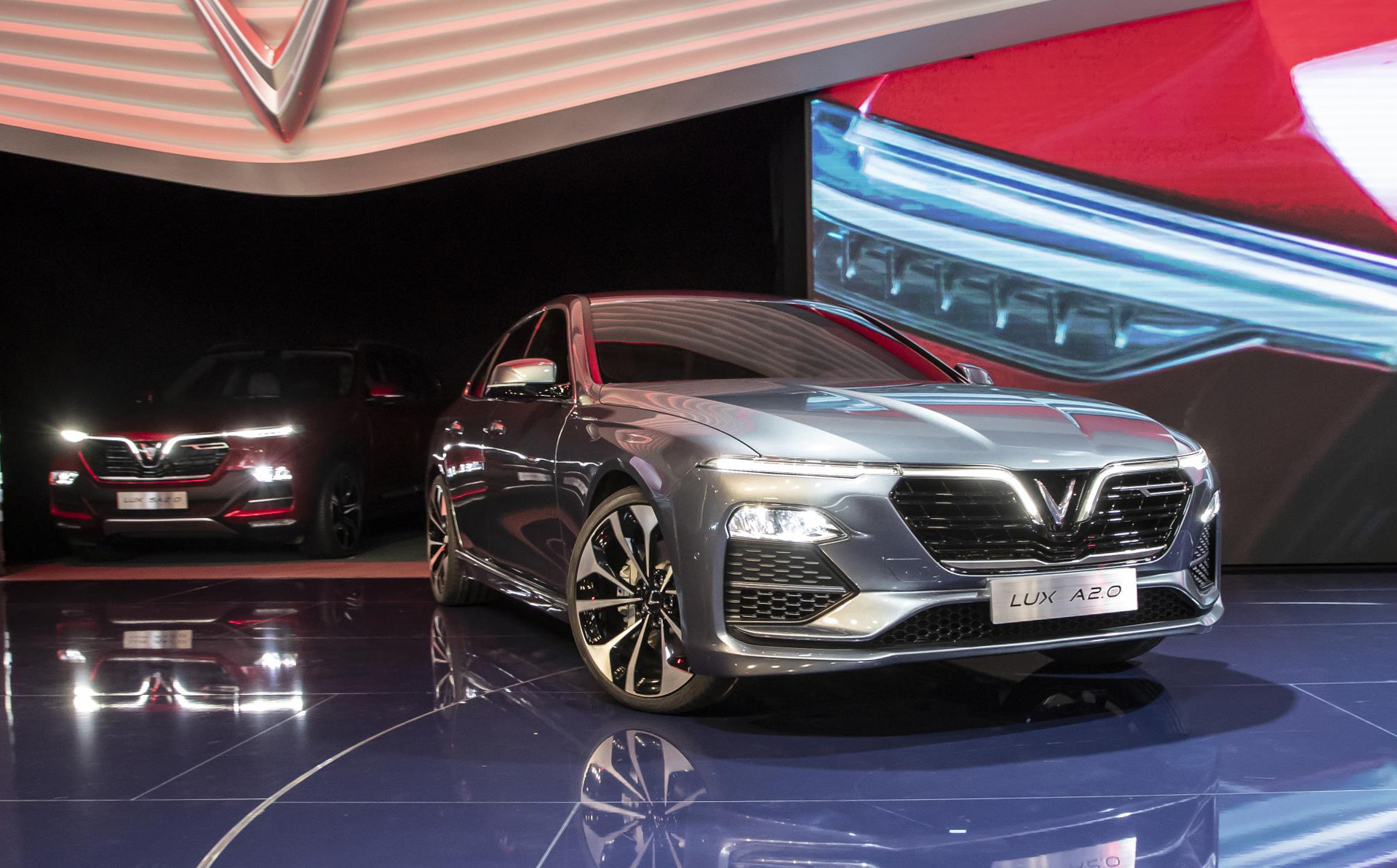
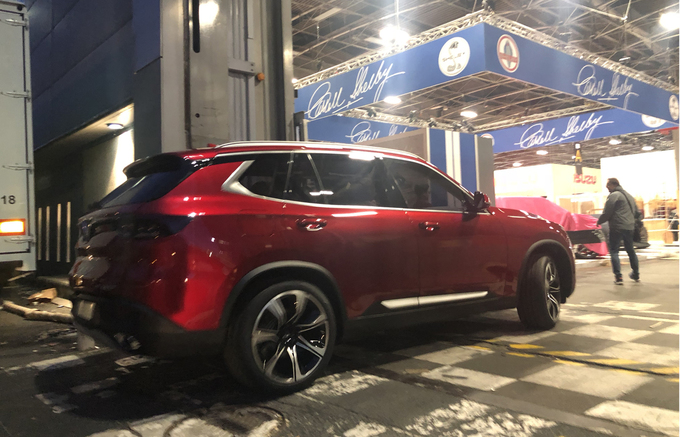
    VinFast, a unit of Vingroup JSC (VIC.HM), Vietnam’s largest business conglomerate, officially showcased its first two vehicles: the LUX A2.0 sedan and the LUX SA2.0 SUV at the Paris Motor Show on Tuesday.

    The new carmaker impressed everyone by doing this just one year after kicking off production in northern Hai Phong City. It received much praise for completing design and development of its models, as well as putting together a production line at an astonishing pace.

    Supporters pointed to the company’s ‘daring’ strategy of gaining a head start by taking a shortcut, by signing agreements with a strong list of global partners.

    The company uses Siemens’ plant construction expertise; BMW’s intellectual property; Pininfarina’s design; and Bosch for hardware, software and service solutions.

    Experts say that VinFast’s car falls into the mid-luxury segment. Automobile expert Le Anh believes the sedan can sell for VND1.4 billion ($60,869) and the SUV for VND1.8 billion ($78,260).

    However, amidst all the praise and euphoria, many people have advised caution in assessing VinFast’s progress.

    An expert with many years of experience in the luxury car sector in Hanoi said: “Initial images and figures do not say much about the product line’s final performance. The commercial version of the models have not even been completed yet.”

    “The fact that VinFast could develop the models so quickly is easy to understand given that it has bought most of the required technology, designs and engineering from other carmakers,” the expert said.

    This observation matches that of Bill Russo, head of Shanghai-based consultancy Automobility Ltd and a former Chrysler executive.

    “The key question is why the world needs yet another car brand in an era when hardware is commoditising. The fact that they have outsourced design and manufacturing and are relying on foreign R&D tells me they are following a traditional path that may not be competitive in an era of digital mobility services,” Russo said.

    Meanwhile, a former Vietnamese engineer who has worked for Volkswagen in Germany for many years, said Vietnamese people have the right to be proud at the birth of a new Vietnamese brand.

    “But what comes next? Quality, reliability and price are the real problems that VinFast needs to overcome when approaching customers,” he added.

    Bui Sinh, who has many years of experience with other luxury car brands, said that there were no grounds to trust the two new models.

    “The information provided is one-dimensional, and there is no actual car to verify these claims. Only when we know the car works, should we move on to analyse the quality of the car and the calibre of its technology.”

    Sinh also pointed out that if VinFast were to position the first two models in the luxury car market segment, ‘national pride’ would just form part of the brand, and have little effect in the actual selling.  For wealthy customers used to driving luxury or mid-luxury vehicles, patriotism cannot replace actual function, he said.

    Other experts have also said people should be careful in assessing VinFast’s progress. Previously, two other automobile makers in Vietnam– state-owned VEAM Motor and private venture Vinaxuki– have flopped.

    Bui Ngoc Huyen, chairman of Vinaxuki, which tried to produce a domestic car but ceased production just before its first car was to be officially released in 2012, said VinGroup’s deep pockets would help, but warned that building a brand takes time.

    “You have to move from producing small and cheap cars to luxury ones,” he said. “It will take several years for a new carmaker to fine tune its products and win the confidence of consumers. It will take between 10 and 20 years.”

  • David Beckham introduces first made-in-Vietnam cars

    David Beckham introduces first made-in-Vietnam cars

    Former Manchester United football star David Beckham introduced the first made-in-Vietnam cars in Paris on Tuesday.

    VinFast, a unit of Vietnam’s largest conglomerate Vingroup, invited Beckham to attend the opening of its new cars at the Paris Motor Show in France.

    Beckham is also known for his collection of rare, valuable cars including an Aston Martin V8 and a Porsche 911 Cabrio.

    His fame as a car connoisseur was a major factor in VinFast choosing to invite Beckham to appear on stage with its new cars, the seven-seater SUV and the four-Sedan, a source said.

    Beckham will also share his first-hand experience driving these cars, the source added.

    VinFast plans to up its to produce 250,000 cars annually in the next five years or so, equivalent to 92 percent of all the cars sold in Vietnam last year, according to Vietnam Automobile Manufacturers’ Association (VAMA) data.VinFast is set to become Vietnam’s first full-fledged domestic car manufacturer when its first models hit the streets next August.

  • Vietnam’s VinFast in deal with Siemens for technology to make electric buses

    Vietnam’s VinFast in deal with Siemens for technology to make electric buses

    VinFast Trading and Production LLC has signed two contracts with Siemens Vietnam, a unit of Siemens AG.

    The contracts involve the supply of technology and components to manufacture electric buses in the Southeast Asian country.

    VinFast, a unit of Vietnam’s biggest private conglomerate, Vingroup JSC, said on Monday the deals will enable it to launch the first electric bus by the end of 2019.

    “Electric buses are an essential element of sustainable urban public transportation systems,” Siemens Vietnam President and CEO Pham Thai Lai said in the statement.

    VinFast will also produce electric motorcycles, electric cars and gasoline cars from its $1.5-billion factory being built in Haiphong City, it said.

    In June, General Motors Co agreed to transfer its Vietnamese operation to VinFast, which will also exclusively distribute GM’s Chevrolet cars in Vietnam.

  • Vietnam cars geared for East European roads

    Vietnam cars geared for East European roads

    VinFast, the auto making subsidiary of real estate conglomerate Vingroup, will make cars suited to the domestic market first and target East Europe next.

    Built in automated facility that deploys more than a thousand robots, the cars will be of top quality, priced competitively and backed with attractive offers and good after sales service, group chairman Pham Nhat Vuong said at a recent shareholders meeting.

    Therefore, despite the presence of a number of big players in the domestic market, there was a good chance for cars produced by VinFast to succeed, he said.

    He noted that Hyundai, the South Korean carmaker, was able to gain 10 percent of the US market share in a very short period, and VinFast was well placed to emulate such a feat.

    Vuong stressed that the VinFast production line has a high degree of automation.

    “Its body shop has a fully automated spot welding system with more than 1,200 robots in service.

    Parts like crankshaft and transmission are also automatically manufactured, ensuring the car’s quality, and making engine run smoothly,” Vuong explained.

    While promoting the cars in both domestic and foreign markets, the focus will be on “down-to-earth” consumers looking for value for their money, the chairman said.

    VinFast will have a very good chance to compete well with carmakers in Eastern Europe as Vingroup understands this market very well, Vuong said. The group chairman is a former long-term resident of the former Soviet Union.

    Vuong said automobile production will be the company’s spearhead in the coming time, but did not rule out the possibility of other products once the brand was well established.

    “Given our supporting ecosystem and great capabilities, it [heavy industry] will be a new horizon for Vingroup,” said the chairman, who’s one among a handful of Vietnamese billionaires.

    Last September, Vingroup broke ground on its subsidiary VinFast’s new car manufacturing complex in the northern port city of Hai Phong. The complex would start manufacturing electric scooters in 12 months, sedans and SUVs in 24 months and electric cars in 3 years. By 2025, VinFast is expected to be producing 500,000 cars a year, making it a leading automobile manufacturer in Southeast Asia.

    The company will be working with German partners in product development and management of the new manufacturing complex. Its cars will be designed by Italian design houses, while main components such as engines will be bought in from the U.S. and European companies.

    However, VinFast will still cooperate with Vietnamese companies to manufacture most car accessories. The company’s products will have a localization rate of 60 percent, making them qualify for tax incentives when exported to other countries in the region.

    The new complex, which would also include a research and development (R&D) center, is expected to attract European experts, and will be cooperating with many large R&D centers in Europe. The company will be using technology transfer contracts to help improve its expertise in product development.

    Its cars will use eco-friendly technologies to meet Euro 5.0 and Euro 6.0 emission standards. VinFast will also be using green energy in its factories and plans to invest in a facility to treat used batteries.

    Vietnam will emerge as the second fastest-growing production hub for cars in Southeast Asia after the Philippines between 2017 and 2021, according to BMI Research, a part of Fitch Group.