Tag: Vingroup

  • Vinpearl CEO Dang Thanh Thuy Steps Down: A Turn of Tide in Vietnam’s Hospitality Giant

    Vinpearl CEO Dang Thanh Thuy Steps Down: A Turn of Tide in Vietnam’s Hospitality Giant

    Dang Thanh Thuy has stepped down from her position as chief executive officer of Vinpearl, Vingroup’s resort division. Despite her resignation, Thuy continues to hold a seat on the organization’s board. Vinpearl has not yet announced a successor or the reasons behind Thuy’s departure.

    Background of Dang Thanh Thuy

    Thuy, 56, holds a Bachelor’s degree in literature. She joined the ranks of Vinpearl in 2004 and has held significant positions in the company over the years. She served as the chairman of Vinpearl from January 2023 to March 2024, and from 2012 to 2016, she was the deputy CEO of Vingroup.

    Vinpearl’s Status in the Hospitality Industry

    Vinpearl stands as one of the foremost hospitality brands in Vietnam, boasting an impressive portfolio of 48 hotels, resorts, theme parks, and golf courses spread across 18 provinces and cities.

    Financial Performance

    In the third quarter of 2025, Vinpearl reported revenues of VND3.09 trillion (US$117.5 million), marking a 40.7% decrease year-on-year. The company’s post-tax profits stood at VND169 billion, falling 66.6%. Furthermore, its profits for the first nine months of the year saw a drastic decline, plummeting by 86%.

    Vinpearl is primarily owned by Vingroup, with an ownership stake of 85%. The conglomerate’s chairman is renowned billionaire, Pham Nhat Vuong.

    Questions & Answers

    Who was the previous CEO of Vinpearl?
    Dang Thanh Thuy was the former CEO of Vinpearl.

    What significant positions did Dang Thanh Thuy hold in Vinpearl and Vingroup?
    Dang Thanh Thuy served as the chairman of Vinpearl from January 2023 to March 2024 and was the deputy CEO of Vingroup from 2012 to 2016.

    What was the financial performance of Vinpearl in the third quarter of 2025?
    In the third quarter of 2025, Vinpearl reported revenues of VND3.09 trillion (US$117.5 million), a 40.7% decrease year-on-year. The company’s post-tax profits stood at VND169 billion, a decrease of 66.6%.

  • Vingroup Unveils Ambitious $14B Port and Logistics Complex Project in Hai Phong

    Vingroup Unveils Ambitious $14B Port and Logistics Complex Project in Hai Phong

    In a significant development plan for Hai Phong, a sprawling 4,400-hectare complex in the southern part of the city will unfold over three phases, as announced by the board of directors. The initial phase is set to kick off next year, aiming for completion by 2030, while the following phases are slated for 2031 to 2035 and 2036 to 2040.

    Vingroup intends to finance 15% of the project from its own resources, with plans to secure the remaining funds through external partnerships. In recent years, the Vietnamese conglomerate has made substantial investments in Hai Phong, including the notable $1.5 billion VinFast automobile factory located in the industrial zone on Cat Hai Island.

    The real estate arm, Vinhomes, is simultaneously broadening its footprint in Hai Phong, currently developing its fourth project across 240 hectares. This expansion complements its successful completion of three key residential projects: Royal Island, covering 870 hectares; Imperia, at 78 hectares; and Mariana, encompassing 50 hectares.

    New Industrial Parks on the Horizon

    In addition to its residential developments, Vingroup has ambitious plans in the industrial sector, as it prepares to break ground on two new industrial parks in Hai Phong next year. There’s also an upcoming liquefied natural gas-to-power project, further underscoring Vingroup’s commitment to enhancing the region’s infrastructure.

    Positioned as a burgeoning industrial hub, Hai Phong has firmly established itself as a leader in northern Vietnam’s production landscape. Following its recent merger with Hai Duong Province in July, the city now boasts 15 large industrial parks and one of the country’s most extensive deep-water port networks. This strategic geographical advantage is paying off, with cargo throughput at Hai Phong’s ports consistently rising by 12-15% annually.

    In 2024, the port facilities managed an impressive 190 million tons of cargo, and expectations are set even higher for this year, with projections reaching 212 million tons. Meanwhile, the city’s plans for a southern coastal economic zone, announced last year, indicate a need for 20,000 hectares and an investment ranging between VND 400-600 trillion (approximately $15-23 billion).

    Local leaders acknowledge that foreign industrial investment has been a pivotal factor in driving economic growth over the past decade. However, challenges remain, particularly with the Dinh Vu-Cat Hai economic zone, which, established in 2008, is nearing full capacity and struggling to accommodate new projects.

    Questions & Answers

    What are the key phases of Vingroup’s development project in Hai Phong?
    The development will unfold in three phases: the first starting next year and set for completion by 2030, with subsequent phases planned from 2031-2035 and 2036-2040.

    How much is Vingroup planning to invest in the project?
    Vingroup is set to invest 15% from its own resources while seeking additional funding through other sources.

    What challenges does Hai Phong face with its industrial zones?
    The Dinh Vu-Cat Hai economic zone, established in 2008, is almost fully developed and lacks available land for new projects, which poses challenges for future growth.

  • Vingroup Plans $4B HCMC Metro Line to Boost Retail and Consumer Demand

    Vingroup Plans $4B HCMC Metro Line to Boost Retail and Consumer Demand

    Vingroup, Vietnam’s largest private enterprise, has unveiled plans for an ambitious high-speed metro line that will connect downtown Ho Chi Minh City (HCMC) to the coastal district of Can Gio. This transformative project is set to cost $4 billion and promises to significantly boost local transportation and economic activity.

    A Vision for Urban Development

    The proposal, revealed through discussions with city authorities, highlights Vingroup’s intention to undertake the full financial responsibility for the project. Headed by Pham Nhat Vuong, Vietnam’s wealthiest individual, the company aims to finance the construction through a public-private partnership model. In return, Vingroup seeks operational permits for the metro line.

    “Vingroup has a solid history of executing large-scale infrastructure projects,” a company representative stated. This latest initiative aims to provide a seamless transit experience for HCMC residents, significantly enhancing urban mobility.

    Metro Line Details and Projections

    The proposed metro line will span 48.5 kilometers, stretching from Nguyen Van Linh Avenue in District 7 to Can Gio. This coastal district is not only noted for its stunning mangrove forests but also presents substantial tourism potential. Vingroup envisions the metro trains achieving speeds of up to 250 kilometers per hour, thereby elevating business connectivity and commuter convenience across the region.

    Currently, Can Gio is an area of significant development for Vingroup, which is working on an extensive urban project covering nearly 2,900 hectares. This development is expected to accommodate around 230,000 residents with an investment of $9 billion.

    City Approval and Future Plans

    For the metro line proposal to move forward, it requires approval from HCMC authorities. Prime Minister Pham Minh Chinh has previously endorsed Vingroup’s initiative, urging the city to collaborate with private sector firms on major projects to stimulate economic growth.

    In addition, HCMC has set forth an ambitious plan to expand its metro network. By 2035, six new routes are slated for development, alongside three additional lines by 2045, with an overall investment reaching an estimated $67 billion.

    Impact on the Retail Sector

    As Vingroup spearheads this groundbreaking infrastructure project, the potential implications for the retail sector in HCMC are substantial. Enhanced transportation options are likely to increase foot traffic in commercial districts, benefiting local businesses and attracting new investments. This aligns with emerging consumer trends that favor accessible and efficient urban mobility solutions, setting the stage for a vibrant economic landscape in Vietnam’s largest city.

  • Vingroup revenues down 5%

    Vingroup revenues down 5%

    Vingroup, Vietnam’s biggest private conglomerate, made total consolidated net revenues of VND88.191 trillion ($3.56 billion) in the first nine months, posting a year-on-year decline of nearly 5%.

    Vingroup gained after-tax profits of VND1.571 trillion, according to its latest consolidated financial statements.

    By the end of September, the firm’s total assets stood at VND555.571 trillion, up 30% against late last year, mainly due to successful transactions among new real estate projects.

    Vingroup said its property segment will continue to grow in the last quarter and next year, and its vehicle sales will rise in the last quarter. Its other segments, including trade center business, tourism, recreation, healthcare and education are also expected to recover.

    Since the beginning of this year, Vingroup has mobilized $760 million from the international capital market, including $625 million worth of international bonds and $135 million from an anti-climate change financial package from the Asian Development Bank.

  • Vingroup reports first-ever loss

    Vingroup reports first-ever loss

    Vingroup made after-tax losses of over VND7.5 trillion ($326 million) in 2021, its first-ever loss, citing funding for the pandemic fight and heavier investments in electric car development.

    Vietnam’s biggest private conglomerate’s net revenues stood at VND125.306 trillion last year, up 13 percent over 2020.

    Vingroup said some of its businesses, including real estate for rent, resort, and entertainment, were greatly affected by the prolonged social distancing campaigns in many localities. Vincom Retail, the retail real estate arm of conglomerate Vingroup, spent up to VND2.115 trillion assisting tenants, which also affected total revenues.

    Last year, the group sponsored Covid-19 prevention and other activities to the tune of VND6.099 trillion. It also decided to stop producing gasoline-powered cars from the end of 2022 to focus resources on electric vehicles.

    By the end of 2021, the group’s total assets were valued at VND427.3 trillion ($18.87 billion), up 1 percent from the beginning of the year.

    Recently the group adjusted its orientation, redefining three focus groups of activities, namely technology and industry, trade and service, and social charity.

  • Vietnam car maker VinFast to build US battery factory as it goes all-electric

    Vietnam car maker VinFast to build US battery factory as it goes all-electric

    Vietnam’s VinFast plans to build electric vehicle battery cells and packs in a new U.S. manufacturing complex, its global chief executive told Reuters, as the company pledged to transform itself into an all-electric automaker by the end of this year.

    VinFast, part of Vingroup JSC, the largest conglomerate in the country, became the country’s first full-fledged domestic car maker when gasoline-powered models built under its own badge hit the streets in 2019.

    The company, which began selling electric vehicles (EVs) in Vietnam at the end of 2021, said in a statement on Thursday it planned to become what it said would be the first car company to cease making gasoline-powered cars and transition to all-electric vehicle production from late 2022.

    VinFast is betting big on the U.S. market, where it hopes its electric SUVs and a battery leasing model will be enough to tempt consumers away from the likes of Tesla and General Motors.

    “We will build our gigafactory in the U.S. as well,” Le Thi Thu Thuy, Vingroup vice chair and VinFast Global CEO said, referring to the new battery facility in an interview during her U.S. visit to attend the Consumer Electronics Show in Las Vegas.

    The company will continue to source batteries from its suppliers, she added. Thuy said VinFast will initially assemble battery packs with cells sourced from its supplier at its U.S. complex before starting its own production there.

    “We have narrowed down from I think, over 50 sites to about three sites,” she said.

    She will visit some sites during her trip before making a decision this year, adding that the “mega site” would also include an electric bus factory.

    In December, Vingroup said it had started building a battery cell plant in Vietnam. The company is looking to initially produce 100,000 battery packs per year, with $174 million in investment, and then upgrade capacity to one million.

    VinFast previously said it had plans to start producing electric cars in the U.S. in the late 2024. The company said that on Thursday it was seeking to establish an EV plant in Germany.

    “The era of shipping cars around the world is over, especially since Covid-19. You must have the factory close to the market in order to win over your customers,” VinFast said in a statement.

    VinFast said prices for its VF8 sport utility vehicle (SUV) started from $41,000 in the United States, and that it would apply blockchain technology to record orders and confirm ownership. By comparison, a Tesla SUV sells for around $50,000. Vingroup said it was targeting global electric vehicle sales of 42,000 in 2022. Shares of Vingroup rose as much as 5.8 percent on Thursday after it revealed VinFast’s EVs line-up and the plans to go all-el

  • Vingroup launches Big Data research company

    Vingroup launches Big Data research company

    The Vingroup Corporation (VIC), Vietnam’s largest private conglomerate, has set up a new firm – VinBigData Jsc – with a chartered capital of VND470.8 billion ($20.29 million).

    The group will hold a 99 percent stake in the new company. The formation of VinBigData is based on the separation of a part of science and technology functions (scientific and technological services) of the Big Data Research Institute – under the Vintech Technology Jsc.

    This new company has registered to function in 25 fields, focusing mainly on scientific research and technological development.

    Vingroup had established last month an artificial intelligence research and application company, VinAI.

  • Vingroup sets up drug company

    Vingroup sets up drug company

    Vietnam’s largest private company, Vingroup, has established pharmaceutical company Vinbiocare with a charter capital of VND200 billion ($8.6 million).

    Its focus will be on medicine, vaccines.

    Vingroup owns 69 percent of Vinbiocare Biotechnology JSC, its formal name, which is headquartered in Hanoi, while Phan Quoc Viet, CEO of tech firm Viet A Technology Corporation, owns 30 percent. The remaining 1 percent is held by an individual investor, Phan Thu Huong.

    Mai Phuong Noi, deputy CEO of Vingroup, is its chairwoman.

    Vingroup entered the pharmaceutical industry in 2018 by establishing Vinfa JSC and setting up a plant in Gia Binh District in the northern Bac Ninh Province.

  • Vingroup shuts down smartphone, TV manufacturing

    Vingroup shuts down smartphone, TV manufacturing

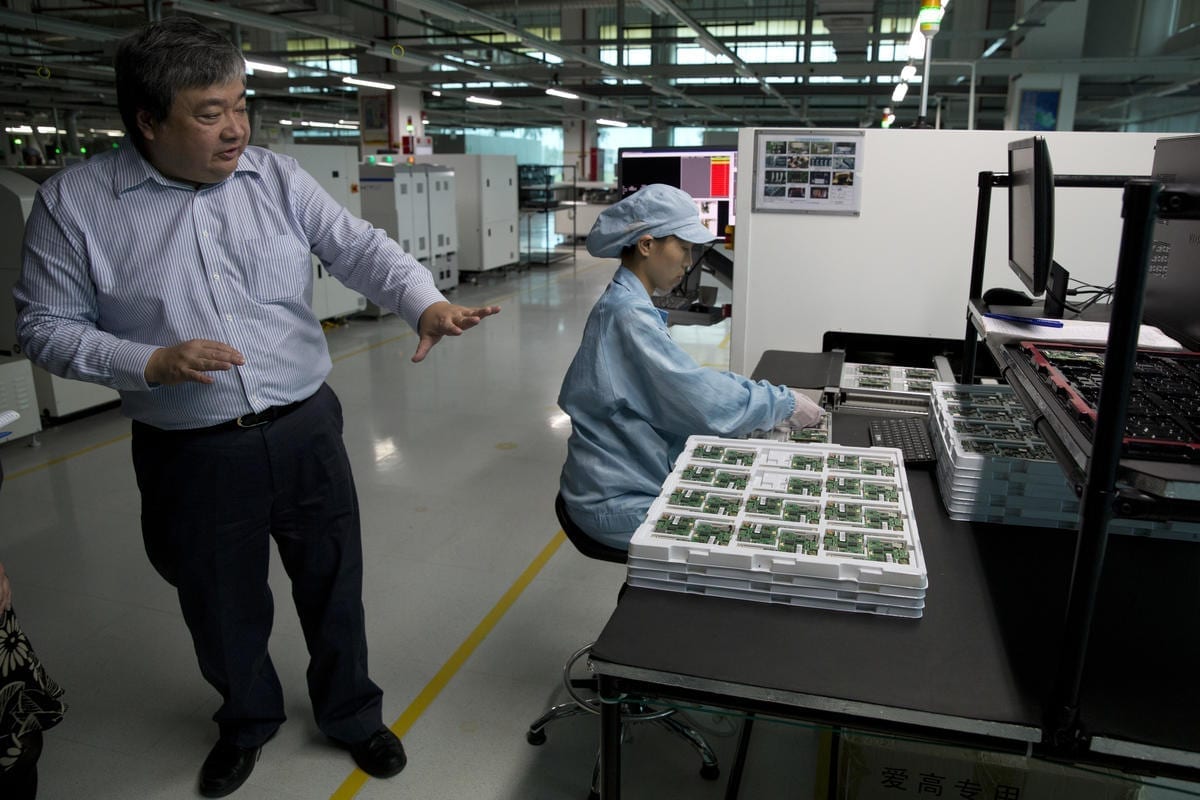
    Vietnam’s biggest private conglomerate, Vingroup, will stop manufacturing smartphones and televisions, focusing instead on producing equipment for VinFast cars.

    Its VinSmart unit, established nearly three years ago, will start making “infotainment” features for VinFast cars to make them more competitive in the global market, Vingroup said in a statement Sunday.

    VinSmart will also research, design, and manufacture electric engines, electronic parts and batteries for electric vehicles to increase the localization ratio of its products.

    The unit will also push research on devices for smart cities and smart homes.

    “The production of smartphones or smart TVs no longer brings breakthroughs and creates unique values for users,” said Nguyen Viet Quang, vice president and CEO of Vingroup.

    But developing smart cars, smart homes and smart cities will bring many “outstanding” benefits to humanity, therefore, the company wants to devote all its resources towards doing this, he added.

    VinSmart will continue to produce TVs and smartphones to complete the products’ lifecycle.

    Later, a part of VinSmart facility will be used to manufacture products for partners and the remaining part will be expanded to make its own new products.

    Since its establishment in June 2018, VinSmart has introduced 19 smartphone models and five TV models to the market.

  • Vingroup reports acquisition, sale of multiple companies

    Vingroup reports acquisition, sale of multiple companies

    Vietnam’s biggest private conglomerate Vingroup sold stakes in five companies and acquired shares in six others last year, according to its audited consolidated financial statement.

    It sold 80 percent each of MV Real Estate JSC and the MV1 Real Estate JSC to Mitsubishi Corporation and Nomura Real Estate Development of Japan, and 90 percent of S-Vin Vietnam Real Estate Trading JSC to Japanese real estate company Samty Co., Ltd.

    Vingroup earned profits of nearly VND16.9 trillion ($728.45 million) from the three deals.

    It also sold a 25 percent stake in Phu Quoc Tourism Development and Investment JSC for a profit of over VND1.4 trillion, and currently owns a 5 percent stake.

    The conglomerate signed a deal with the Phu Quoc Tourism Development and Investment JSC to operate hotels, golf courses, and beachfront villas in Phu Quoc Island’s Bai Dai ecotourism area and Vinpearl Safari.

    It sold a 40 percent stake in animal feed company Viet Thang Feed JSC and now owns 26.34 percent of it.

    Vingroup spent over VND15 trillion to buy mining company Huong Hai-Quang Ngai Company Limited, real estate companies Dai An Investment Construction JSC and Nguyen Phu Trading Investment JSC, and hotel and restaurant operating firms Hon Mot Tourism JSC and Cam Ranh Invest JSC.

    It bought a 96.5 percent stake in Bao Lai Investment JSC, which mines and processes white marble to produce ground calcium carbonate powder for VND2.7 trillion. Last year Bao Lai reported a loss of VND367 billion.

    Vingroup reported revenues of VND110.4 trillion, down 15.5 percent from 2019. Its pre-tax profit was VND13.9 trillion, a year-on-year decrease of 10.7 percent.

  • Vingroup eyes $500 mln convertible bond issue in Singapore

    Vingroup eyes $500 mln convertible bond issue in Singapore

    Vietnam’s biggest private conglomerate, Vingroup, is seeking shareholders’ approval to raise $500 million by issuing international redeemable convertible bonds.

    The bonds will be issued this year and listed in Singapore, but will not be traded in Vietnam.

    The first-ever international bond issuance by Vingroup, which has interests in property development, automobiles and smartphones, will have a tenor of five years and a fixed or floating coupon rate or a combination of both.

    Interest will be paid biannually, and the bonds can be converted into shares of Vinhomes, Vingroup’s real estate subsidiary.

    However, Vingroup has the right to redeem the bonds at the end of the third year if the Vinhomes share is above a certain price.

    The money raised will be used to pay loans and pump up the capital of its subsidiaries.

    Vingroup has so far issued VND5 trillion ($217 million) worth of bonds in the domestic market.

    It has been pouring money into expanding its manufacturing business, which it has earmarked as a main focus in the coming years. It began selling its VinSmart phones in the U.S. earlier this year and plans to sell electric cars there next year.

  • Cars, phones deliver one-fifth of Vingroup revenues

    Cars, phones deliver one-fifth of Vingroup revenues

    Automobiles and smartphones accounted for 19 percent of private conglomerate Vingroup’s revenues in the last quarter of 2020.

    This marked a 40 percent year-on-year increase to VND6.9 trillion ($299.45 million).

    The largest private conglomerate in Vietnam sold 31,500 cars last year, with its VinFast sedan and SUV models among the bestsellers in their respective segments.

    The group’s VinSmart phones were also among the bestsellers in Q4, 2020.

    The company saw revenues from real estate in the quarter rising 47 percent year-on-year to over VND22.2 trillion after handing over three major Vinhomes projects.

    Revenue from tourism and entertainment, however, fell 40 percent to VND1 trillion because of the Covid-19 pandemic.

    For the whole year, Vingroup’s pre-tax profit fell 11 percent to VND13.96 trillion, while revenue fell 15 percent to VND110.46 trillion.

  • Vingroup app to digitise 300,000 vietnamese mom-and-pop shops

    Vingroup app to digitise 300,000 vietnamese mom-and-pop shops

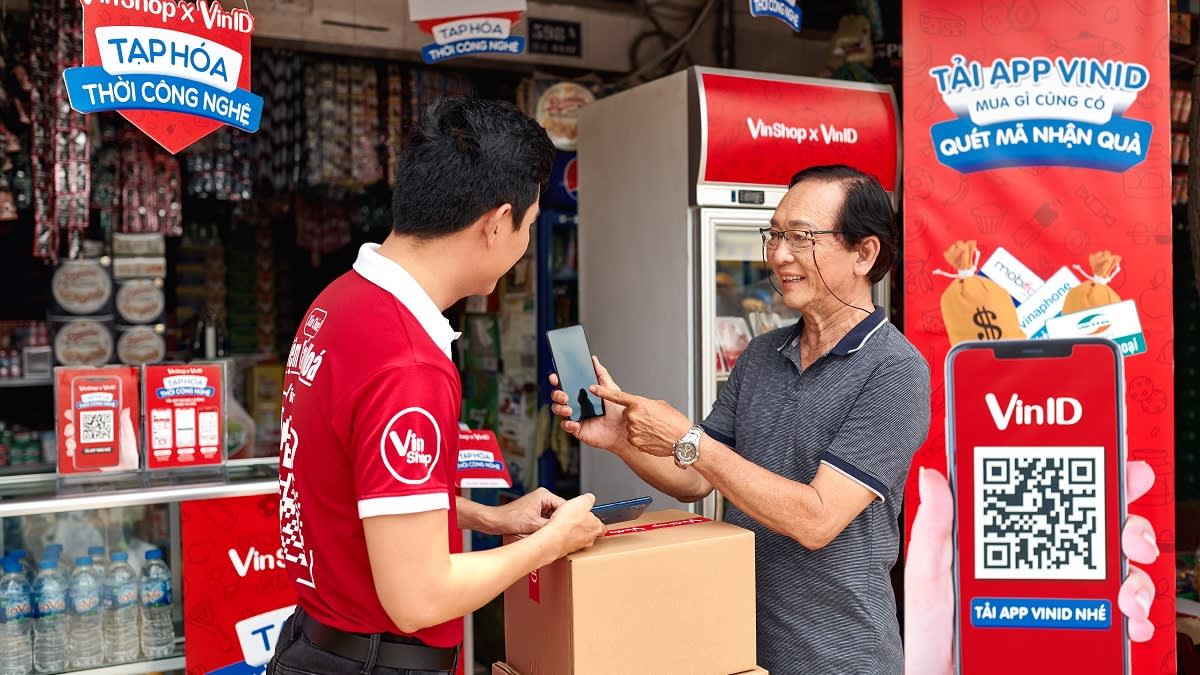
    Vietnam’s biggest conglomerate, Vingroup, has recently launched a mobile app for mom and pop retail stores, helping to digitize a traditional business that has been upended by modern convenience stores such as 7-Eleven.

    Vingroup announced Monday that its VinShop app is used by 20,000 small shops in Hanoi and Ho Chi Minh City. Those stores, called tap hoa, are typically family-run and sell sundries. Shopkeepers use the app to order hundreds of items from suppliers, eliminating the need to contact them individually. They also use it to connect to another Vingroup app, VinID, used by 10 million retail shoppers to make payments.

    VinShop began building its retail network in July, aiming to connect manufacturers and shops through the app, which includes purchase and distribution functions. “VinShop’s revenue will be based on a targeted advertising platform, financial services offerings and market development for suppliers,” Truong Quynh Phuong, business director at Vingroup’s logistics arm, One Mount Group, said last Wednesday.

    Tiny brick-and-mortar shops have long underpinned Vietnam’s “sachet economy,” an allusion to the common practice of selling single-use packets of many daily consumables, such as shampoo and coffee.

    Small shops face growing competition from 7-Eleven, Ministop, B’s Mart, and even Vinmart+, the chain of convenience stores launched by Vingroup now run by local consumer goods giant Masan following a merger in December. Sales at the major chains reached $170 million in 2019, about four times as much money as traditional shops took in, according to a July report from Deloitte, a consultancy.

    The VinShop app is the latest addition to the suite of Vingroup brands, from VinFast cars to VinSmart phones, as the company founded by Vietnam’s richest man, Pham Nhat Vuong, turns its focus to technology and manufacturing.

    Vingroup says its app will raise the income of small shops, which it calls grocery stores, by $432 a month on average by making their operations more efficient and cutting costs.

    “This solution is expected to improve the efficiency of the entire supply chain, and help overcome the current weaknesses in the distribution of products from manufacturers to grocery stores,” the company says.

    National and international convenience store chains have become hangouts for young Vietnamese, who gather to sip juice and slurp instant noodles. Traditional shops, by contrast tend to be windowless rooms that are often attached to owners’ homes, and piled high with things like chips, bottled water and laundry detergent.

    “For many rural consumers and lower-income urban consumer segments, who need to budget daily for food and make purchases in small quantities, traditional grocery retailers, such as local markets and mom and pop shops, are a convenient and affordable alternative to modern trade outlets,” according to the Deloitte report.

    Consumption has dropped across the board during the novel coronavirus pandemic, which has left Vietnamese reluctant to go out, said Infocus Mekong Research. In its July survey of shoppers, 36% said they would visit convenience stores less often, even after the pandemic ends, versus 22% who said they would shop more often.

    Similar efforts to modernize traditional shops through technology are taking off elsewhere in Southeast Asia. In Indonesia, startups BukuWarung and BukuKas have raised millions of dollars for similar smartphone apps.

  • Vingroup produces first 5G smartphones

    Vingroup produces first 5G smartphones

    VinSmart, a subsidiary of Vietnam’s largest listed company Vingroup, has produced its first 5G smartphones in cooperation with the U.S.’s Qualcomm.

    The Vsmart Aris 5G model is equipped with a Snapdragon 765G 5G module platform and a quantum security chip, the company stated, adding it also features a Super Amoled 6.39″ display, 8GB RAM and a 4,000 mAh battery.

    Nguyen Phi Tuyen, director of the measurement center of the Department of Telecommunications under the Ministry of Information and Communications, said the unit has repeatedly tested Vsmart’s Aris 5G, showing the network speed was eight times higher than 4G.

    VinSmart has not yet announced the official price of the Aris 5G, nor when it would hit the market, or how many units it intended to produce.

    No 5G smartphone has been manufactured or officially distributed in Vietnam so far, instead, they are hand-carried on overseas flights.

    VinSmart’s move came as local telecom firms compete in the 5G race. Telecom giant Viettel for the first time broadcast from its network of 5G base transceiver stations in Ho Chi Minh City last September while competitor VNPT has announced similar plans.

    VinSmart, which launched its first products at the end of 2018, is currently focusing on the low-end segment of the market, with 12 Vsmart phones all priced at below VND5 million ($212).

  • Vingroup airline expects profits in 3 years

    Vingroup airline expects profits in 3 years

    Vingroup’s Vinpearl Air, a $200 million venture, is seeking to launch its first flight in July with expectations of turning profitable by 2023.

    The new airline could also recover its investment in 5-6 years, according to an evaluation report recently submitted to the Prime Minister by the Ministry of Planning and Investment.

    The airline will have a total investment of VND4.7 trillion ($202.7 million), of which conglomerate Vingroup will contribute VND1.3 trillion ($56 million), or 28 percent. The remaining will be sourced from loans and other sources.

    Vinpearl Air is set to create 500-600 direct jobs when launched and 2,200-2,300 jobs by 2023-2024.

    It will pay a corporate income tax of VND1 trillion ($43.1 million) a year in the first five years of operation.

    Vinpearl Air plans to start off with six aircraft and increase the fleet to 30 by 2024.

    It wants to be based at the Noi Bai International Airport and park its aircraft in Hanoi as well as in other airports in Quang Ninh Province and Hai Phong City in the north, and Da Nang City and Khanh Hoa Province in the central region.

    The Ministry of Planning and Investment has said it supports the establishment of the airline, but asked the airline to provide more detailed financial calculations.

    Apart from Vinpearl Air, Vietravel Airlines and KiteAir are two other airlines seeking permission to fly this year.

    The country now has five commercial airlines: national flag carrier Vietnam Airlines, Jetstar Pacific, Vietjet Air, Bamboo Airways and Vietnam Air Services Company (VASCO).

    Airports across Vietnam served near 116 million passengers in 2019, up 12 percent from 2018, according to Airports Corporation of Vietnam (ACV).