Retail News CRM

Tag: Vingroup

  • Vietnam’s Vingroup to complete retail exit by closing VinPro chain

    Vietnam’s Vingroup to complete retail exit by closing VinPro chain

    Vingroup is to complete its exit direct retail businesses, shutting down its electronic business VinPro within this month.

    The closure of Vinpro is considered a sudden decision as the group acquired electronics chain Vien Thong A last year with more than 200 stores to strengthen VinPro’s presence. Recently, Vien Thong A’s website and Facebook page changed branding identity to VinPro.

    “VinPro outlets have very good locations in the Vincom shopping centre system,” said Quang Viet Nguyen, CEO of Vingroup. “It will be very easy to rent these premises after VinPro stops operating, without affecting the operation of Vincom centres.”

    The company has also announced the merger of its e-commerce platform Adayroi with e-payment unit VinID. According to Quang, the merger is not because its e-commerce segment was under pressure of losses as the company’s first goal is to create a platform to support the Vingroup ecosystem.

    “Merging Adayroi with VinID not only helps store data about customer behaviour but also creates a new platform where customer needs are better predicted,” Quang said.

    Earlier this month, Vingroup announced an agreement with consumer products manufacturer Masan Group, to move its VinMart supermarket and convenience-store business into Masan in a new company in which Vingroup will hold a minority stake.

    The company has said it wants to focus on industrial and manufacturing business including its motor vehicle, television, tourism and smartphone businesses. It is also about to launch an airline.

  • Vingroup, Masan to form Vietnam’s biggest retail group

    Vingroup, Masan to form Vietnam’s biggest retail group

    Vietnamese business giant Vingroup has agreed to merge its retail and agriculture unit with Masan Consumer Holdings, aiming to form Vietnam’s biggest retailer.

    The deal has the effect of spinning off Vingroup’s retail assets into a new company in which it will hold a minority stake, freeing Vietnam’s largest privately-owned to focus on its industrial businesses, including car manufacturing, smartphones and a new flatscreen television brand it is launching.

    Under the agreement, Vingroup will convert shares in VinCommerce JSC (retail) and VinEco (agriculture) into shares of the post-merger company in which Masan Group will take control while Vingroup will be a minority shareholder.

    The new company will take over VinCommerce’s retail network including 2600 VinMart and VinMart+ outlets across the country together with 14 high-tech farms of VinEco.

    The new venture will merge the country’s largest retail group with its leading FMCG player, creating a farm- or factory-to-store business entity.

    Vice-chairman and general director of VinGroup, Viet Quang Nguyen, said the main reason for the merger is that the group has changed its development strategy to focus on the technology industry, especially its new VinFast car company and VinSmart phone business.

    “Vingroup has completed its mission to create the pioneering and most effective clean agriculture and retail system in Vietnam,” says Cong Thang Truong, chairman of Masan Consumer. “And now we will carry this flag to continue our mission to serve consumers while ensuring a fair retail market for Vietnamese manufacturers.”

    VinCommerce has strengthened its retail presence by a combination of organic growth and by acquiring rival retail groups including 23 Fivimart supermarkets, 87 Shop&Go convenience stores, and the smaller Queensland convenience-store chain.

    Masan Consumer is one of Vietnam’s largest FMCG companies, manufacturing and distributing food-and-beverage products, including sauces, instant noodles and bottled beverages.

  • Vingroup unit partners with Google to make TVs

    Vingroup unit partners with Google to make TVs

    VinSmart, a unit of private conglomerate Vingroup, will produce smart televisions in partnership with Google, the company announced Wednesday.

    The partnership will allow the electronics producer to develop its Vsmart TVs on Google’s Android operating system.

    VinSmart is set to release the first five models, which have 4K resolution and Google Assistant in Vietnamese, next month.

    The TVs, which will have Dolby sound systems, will be made in Hanoi’s Hoa Lac Industrial Park.

    After Google, VinSmart will look for international partners to develop more smart products meeting global standards under a Vietnamese brand, Vingroup’s deputy director Le Mai Tuyet Trinh said in a statement.

    Tech expert Tran Manh Hiep said that VinSmart TVs will find it very difficult to compete in the high-end segment dominated by Samsung and LG. He said it is better that the Vietnamese company focuses on the affordable segment.

    VinSmart, established in June last year, has already introduced eight smartphone models, and exported them to Spain, Myanmar and Russia. It had announced in May that it has plans to expand this to India, Thailand, Laos and Cambodia this year. The company also said that it was looking into making air conditioners and refrigerators.

  • Vingroup begins making smart televisions

    Vingroup begins making smart televisions

    VinSmart, the smartphone producing unit of Vietnam’s biggest private conglomerate Vingroup, has revealed its first 55-inch smart TV.

    The smart TVs are currently being manufactured in a factory in Hanoi’s Hoa Lac Industrial Park, and are set to be released around December this year, according to a Vingroup source who wished to remain anonymous.

    They will run on the Android TV operating system, which is currently being used by smart TVs produced by Japanese electronics-maker Sony, according to information leaked on tech forums on Wednesday.

    Users will be able to install applications from the Google Play Store, as well as issue voice commands in Vietnamese.

    The new smart TV has garnered thousands of comments on internet forums, many of which said it should be affordable so that it can compete with existing products of Sony and South Korean electronics-maker LG.

    VinSmart was established by Vingroup in June 2018, and produced its first smartphones just six months after. It has produced a total of eight models thus far. Last month, the company began selling four of its Vsmart models in Russia.

  • Vingroup unit licensed to offer e-wallet services

    Vingroup unit licensed to offer e-wallet services

    Vingroup’s loyalty program VinID has been permitted to operate e-wallet services, furthering the private conglomerate’s foray into cashless payment.

    VinID acquired local payment firm People Care Jsc in May. It also owns People Care’s e-wallet MonPay, and has replaced the management board of the payment firm with its own executives since the end of last year.

    Vingroup established VinID in July last year with a charter capital of VND3 trillion ($129.4 million), in which Vingroup owns 80 percent.

    The license for VinID Pay is among the 31 certifications that the central bank has issued for payment intermediary companies.

    Economists have said that the potential for cashless payments in Vietnam is huge due to a growing middle class and rapidly improving telecom infrastructure. The government targets to make 90 percent of all transactions cashless by 2020.

    However, for now, the reliance on cash remains huge. About 80 percent of Vietnamese prefer to use cash for daily transactions

  • GIC buys into Vietnam’s Vingroup retail group

    GIC buys into Vietnam’s Vingroup retail group

    A GIC-led investment group has purchased a minority shareholding in a Vingroup JSC retail business for US$500 million.

    The Vietnamese business, VCM Services and Trading Development JSC, is a recent venture set up to oversee the group’s VinMart-branded supermarket and convenience store chains.

    A statement by the Singapore sovereign wealth fund released last week stated that the subsidiary and its parent firm had “established themselves as reputable retail companies with attractive brands in Vietnam’s fast-growing consumer market”

    GIC’s investment is intended as a signal of confidence in the growth outlook for disposable incomes and household consumption in Vietnam.

  • Vietnam’s Vingroup buys Queensland mart

    Vietnam’s Vingroup buys Queensland mart

    Vietnamese business empire Vingroup has acquired local supermarket business Queenland Mart via its retail unit Vincommerce.

    The move will expand the firm’s retail market share, following its recent purchase of the Shop&Go convenience store chain that brought 87 new locations under Vingroup’s wingspan. Queenland Mart has eight stores located in the city’s more affluent neighborhoods. The stores will now be rebranded as Vinmart outlets, as were the 23 Fivimart stores the group acquired last year.

    Following the deal, Vingroup has 120 Vinmart supermarkets and 2122 retail locations in total. The conglomerate is targeting 200 supermarkets and 4000 retail outlets by next year.

    The financial terms of the deal remain undisclosed.


  • Vietnam’s Vingroup new factory to produce 125m smartphones

    Vietnam’s Vingroup new factory to produce 125m smartphones

    Vingroup JSC, Vietnam’s biggest listed firm by market value, said on Monday it has started work on a second smartphone factory with a capacity to produce 125 million units a year.

    The new factory in the capital, Hanoi, will vastly increase Vingroup’s current capacity of five million units at its facility in the northern city of Haiphong, the conglomerate said in a statement.

    Construction is expected to be completed by early 2020 and the jump in capacity will help the company meet orders from Europe and the United States, Vingroup CEO Nguyen Viet Quang said in the statement.

    “After a period of deploying and participating in the smartphone manufacturing industry, our products have been positively received by the market,” Quang said.

    “We received many processing orders from major partners in Europe and the United States. That’s why we have invested in a factory with 25 times the capacity of our current factory in Haiphong, to meet with domestic and international demand,” he added.

    A company spokesman declined to provide the names of the European and US partners.

    Vingroup launched its smartphone brand, Vsmart, in December last year, seeking to win market share from popular brands Samsung and Apple in Vietnam, which has a population of 95 million people.

    Vsmart phones use chips from Qualcomm and run Google’s Android operating system, and went on sale at a price of 3.39 million dong ($145) to 6.59 million dong ($282).

    In March, the company began selling Vsmart phones in Spain and planned to expand into other European markets. Its phones went on sale in regional neighbour Myanmar last month.

    It is part of a diversification strategy that has seen Vingroup, once focused on real estate and retail, become Vietnam’s first fully-fledged domestic carmaker in 2018.

    Electronics is a vital part of Vietnam’s economy as firms such as Japan’s Sony Corp and South Korea’s LG Electronics and Samsung Electronics reorganise production in the face of slumping global demand.

    Samsung said in December it will close one of its mobile phone plants in China as it focuses on low-cost countries like Vietnam, where it is the largest single foreign investor.

    In April, LG Electronics said it would stop making smartphones in South Korea and move production to Vietnam.

    South Korean chips-to-energy conglomerate SK Group said last month that it had agreed to buy 6.1% of Vingroup for $1 billion as it expands its investments in Vietnam.

  • VinFast, South Korean firm to make batteries for EVs

    VinFast, South Korean firm to make batteries for EVs

    The joint venture will be located in the automaker’s factory in the southern port city of Hai Phong, where it will manufacture lithium-ion battery packs for VinFast’s electric scooters that are being made now, and for electric cars to be produced in the future, VinFast said in a statement.

    The factory, which will be built on a 2,000 square meter area, will employ Vietnamese workers who will be trained in technology provided by LG Chem.

    The automaker, a unit of Vietnam’s largest conglomerate Vingroup, rolled out its first made-in-Vietnam cars last month, the first steps in a $3.5 billion automaking venture.

    VinFast has recently sent its SUV and sedan to European and Asian countries for quality testing and is set to deliver preordered vehicles in the second and third quarter.

  • Vingroup buys Vietnam c-store chain Shop&Go

    Vingroup buys Vietnam c-store chain Shop&Go

    Vingroup has acquired 87 Vietnamese Shop&Go convenience stores for just US$1.

    Vingroup’s retail arm VinCommerce, which manages Vinmart supermarkets and Vinmart+ convenience stores, will upgrade infrastructure, staff and goods at the acquired stores by the end of next month.

    According to a VinCommerce statement, Shop&Go made the approach and offered to sell itself.

    “The competition is more intense than we imagined; that is why we’ve decided to leave,” a Shop&Go spokesperson said, admitting Vietnamese retail market still has potential for growth.

    “We have sold our stores to Vingroup so it can continue to develop them.”

    Opened in 2006, Shop&Go was one of the earliest convenience store chains in Vietnam.

    By 2016, it had aggregated losses of almost VND205 billion (US$8.81 million).

    VinCommerce runs 108 VinMart supermarkets and 1900 VinMart+ convenience stores.

    Last year, it acquired supermarket chain Fivimart with 23 outlets.

    In a report last year, Nielsen Vietnam observed a rise in visits by Vietnamese to convenience stores. The average shopper uses a convenience store 4.5 times per month – three times the frequency of 2010.

  • VinFast rolls out its first made-in-Vietnam car

    VinFast rolls out its first made-in-Vietnam car

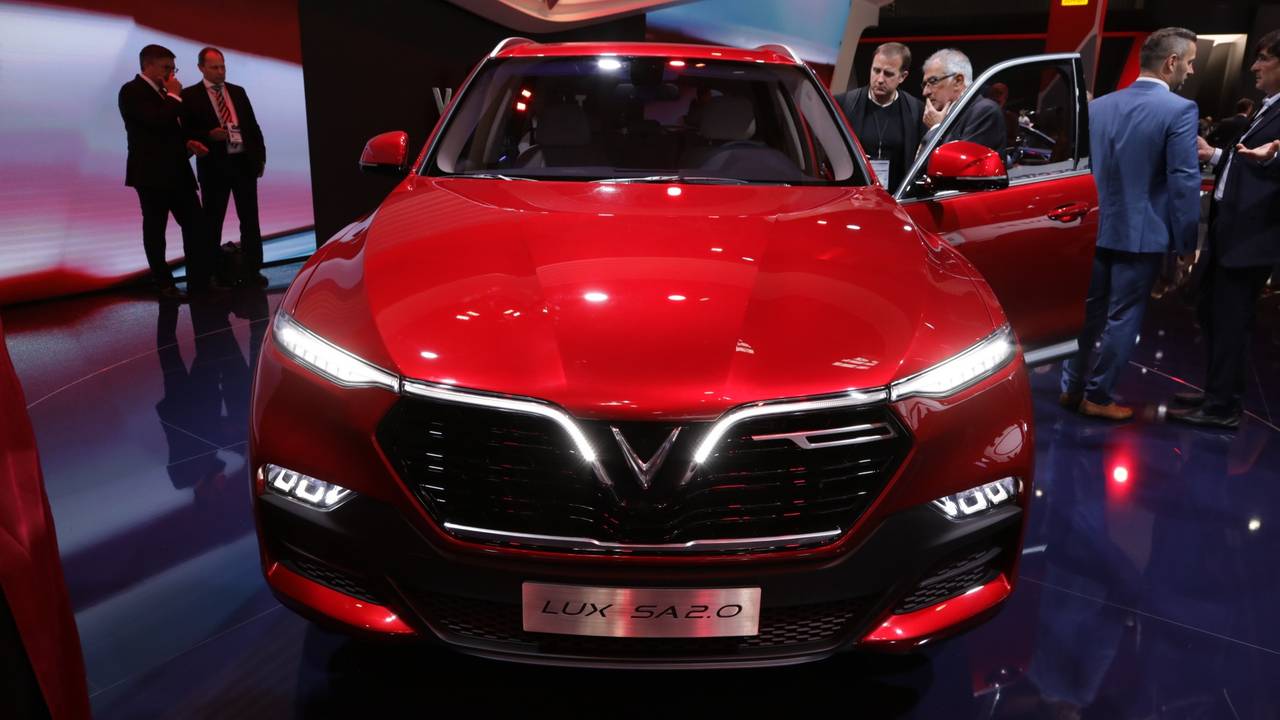
    Vietnam’s first full-fledged carmaker has started trial runs in its Hai Phong factory, preparing to deliver preordered vehicles later this year. The Lux SA 2.0 SUV, which has a 228 horsepower engine and an 8-gear automatic transmission, started its first run Wednesday at VinFast’s factory in the northern port city of Hai Phong.

    Commercial versions of both the SUV and a sedan will be delivered in the second and third quarter this year to customers who have pre-ordered.

    VinFast, a unit of Vietnam’s largest private conglomerate Vingroup, claims to be the first auto manufacturer in Vietnam with a closed, synchronous and complete cycle of production.

    The first cars will be tested in several countries including Australia, Austria and South Korea to make them European standards. They will also be tested in Vietnam for endurance in various climates and conditions.

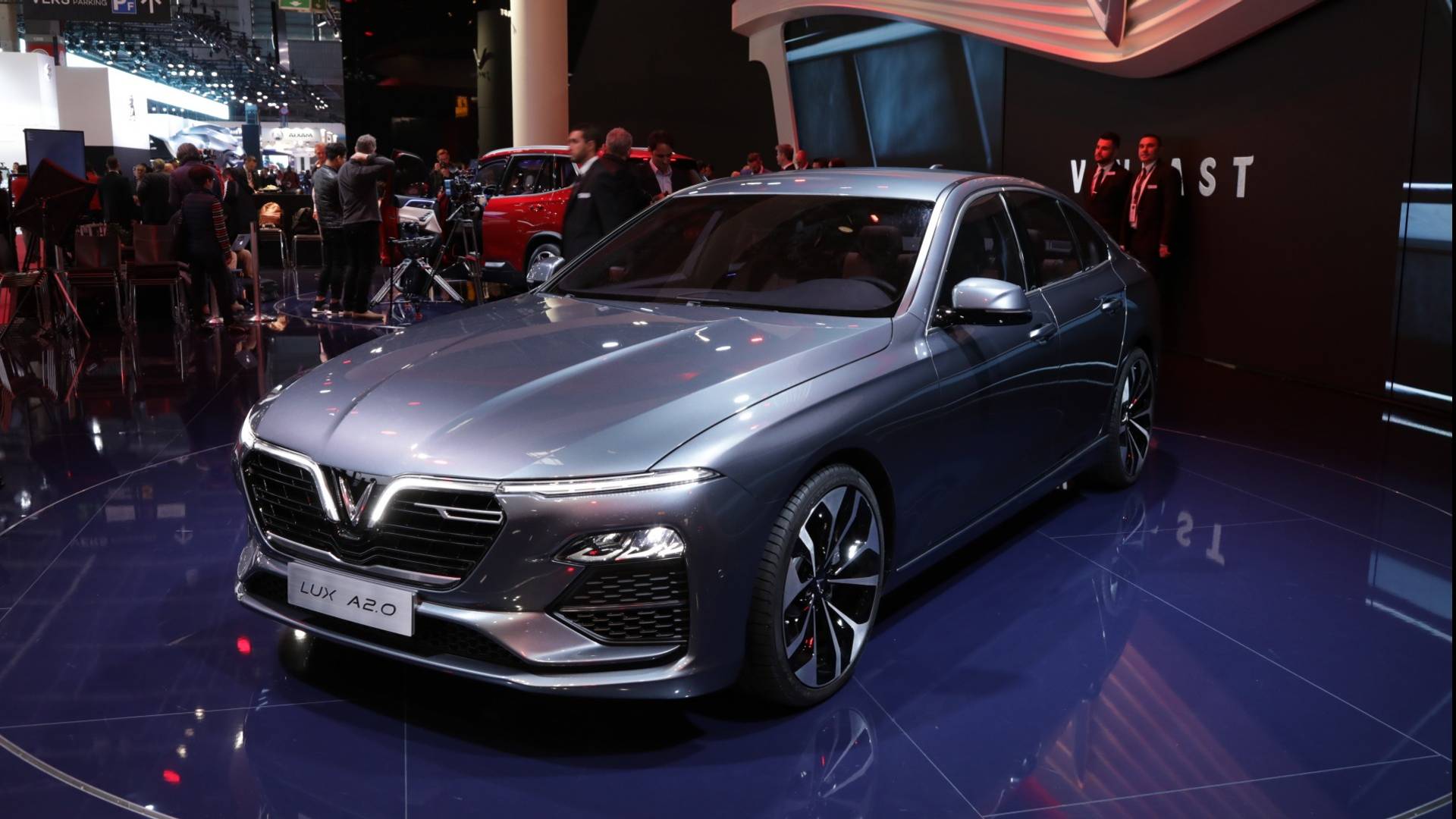
    VinFast showed off prototypes of its first two car models at the Paris Motor Show in France last October, just a year after the company’s incorporation.

    A limited edition of its Lux SA 2.0, called the Lux V8 with a 455 horsepower V8 engine, is being displayed at the Geneva Motor Show 2019 this week.

  • VinFast to test its first car for safety in Europe next month

    VinFast to test its first car for safety in Europe next month

    VinFast, Vietnam’s first indigenous car manufacturer, plans to test its first vehicle for safety parameters in Europe on March 6. According to company executives, the vehicle will be tested for international standards to ensure its highest safety. This announcement came after VinFast’s Hai Phong factory successfully manufactured the first body shell of the Lux A2.0, a sedan, Wednesday.

    Shaun William Calvert, deputy general director in charge of production, said the first body shell meets the highest quality requirements.

    VinFast, the car manufacturing unit of Vietnam’s largest private conglomerate Vingroup, showed off its first two car models, a sedan and an SUV, at the Paris Motor Show in France last October just a year after the company’s incorporation, grabbing the attention of the local and international media.

    VinFast’s first cars are expected to hit the road in August 2019.

  • First Vietnamese to enter 200 richest people in the world list

    First Vietnamese to enter 200 richest people in the world list

    Pham Nhat Vuong is the first Vietnamese to enter the list of the world’s 200 wealthiest people. He has an estimated worth of $7.5 billion. Vuong, who heads the Vingroup conglomerate, is 198th on the real time billionaires ranking updated by Forbes magazine on Saturday. His net worth has increased by $3.2 billion over last year when he topped Forbes’s list of four Vietnamese billionaires.

    A 13 percent increase in the value of Vingroup’s shares in the first week after Vietnam’s stock market reopened following a 9-day Tet (Lunar New Year Festival) break has been a factor in boosting Vuong’s net worth and catapulting him into the top 200 list.

    Price of Vingroup’s share (VIC) stood at VND112,000 ($4.82) at the end of the trading session last Friday.

    Vingroup, one of Vietnam’s largest real estate conglomerates, has been expanding rapidly into retail, logistics, agriculture, education and healthcare sectors. Vuong was first mentioned as a billionaire on the Forbes list in 2013 with a net worth of $1.5 billion, ranking 974th richest in the world.

    Nguyen Thi Phuong Thao, the other Vietnamese billionaire and owner of budget carrier Vietjet, is 1,014th on the Forbes list of global billionaires with assets worth around $2.3 billion.

    Topping the Forbes list was Amazon founder Jeff Bezos, who became world’s first centi-billionaire with a net worth of $133 billion, up $21 billion from 2018. Bill Gates, Microsoft’s co-founder, was in second place with a net worth of $97 billion.

  • From bikes to phones, ‘Made in Vietnam’ grows with foreign help

    From bikes to phones, ‘Made in Vietnam’ grows with foreign help

    Vietnamese companies are branching out into new areas, in line with the government’s goal of establishing the country as a manufacturing powerhouse by 2020. Real estate conglomerate Vingroup has started manufacturing electric motorbikes and smartphones and is set to enter the car industry in June. VinFast, a Vingroup unit, began selling its first electric motorbike in November. Designed in the mold of Italy’s Vespa, the Klara is a stylish, well-manufactured bike that can cover up to 80 km on one charge.

    Klara, like many other domestically made products, however, remains heavily dependent on foreign parts and technologies. While the collaboration with companies such as BMW, Robert Bosch and Siemens enabled Vingroup to bring the Klara to the market in just over a year after announcing plans to expand into motor vehicles, it reflects the long path the country has to travel before becoming a full-fledged industrial power.

    A group of 20 European businesses are helping Vingroup produce the bike, and around 200 German engineers are currently working at Vingroup’s plant in the northern city of Haiphong. Klara offers a glimpse into the type of outside assistance that will go into building the country’s first national car, which the company plans to launch in June.

    Some of the company’s cars will be based on a small vehicle produced by Germany’s Opel and use chassis provided by Western makers, according to local media. An Italian design studio that has worked for Ferrari and other European marques is in charge of designing VinFast cars.

    Most of the parts have to be imported, as the country lacks a developed car manufacturing supply chain.

    Vingroup’s foray into the smartphone market is also supported heavily by foreign manufacturers.

    The conglomerate has teamed up with Spanish maker BQ to launch its Vsmart model, and its smartphone plant has started operation, also in Haiphong.

    Vingroup has enlisted the help of Qualcomm and Google for its smartphone business.

    Vietnam’s first domestically made smartphone, the Bphone, was launched in 2015 by software developer Bkav and was also largely made up of components supplied by foreign makers. Its liquid crystal display, for instance, came from Sharp and its chips from Qualcomm.

    In October, Bkav put the third-generation model of the Bphone on the market.

    Truong Hai Automobile, also known as Thaco, a contract manufacturer for Mazda Motor and Kia Motors, started selling Vietnamese-made agricultural machinery in 2018. The company, which has entered a technological tie-up with South Korea’s LS Mtron, reportedly makes equipment mostly with imported parts.

    The government is seeking to develop a cycle of domestic manufacturing, hoping that sales of locally made products will help its industries climb up the technology ladder and create employment.

    It is understood that a variety of tax and other incentives are being extended to Vingroup and other companies that are cooperating with state efforts to promote domestic production.

    Some analysts, however, have questioned the sustainability of this approach.

    “What Vietnam needs to do is to accelerate technology transfers to small and midsized companies for long-term development, instead of providing special incentives to specific large companies,” said a Hanoi-based Japanese consultant.

    In addition, the “Made-in-Vietnam” label has yet to win over consumers, according to Cao Thi Khanh Nguyet at the Asia Pacific Institute of Research, and manufacturers need a well-designed brand strategy to establish a solid presence in the market.

    Samsung Electronics, which operates two massive manufacturing plants in the country, controls 40% of its smartphone market. Many consumers also opt for Japanese, Thai and South Korean products when it comes to food and daily goods.

    Manufacturers in emerging markets often look to foreign powerhouses for support in accelerating their growth and evolution.

    Generally, industries begin the shift toward domestic production after they have acquired sufficient expertise and built up a dependable network of domestic suppliers.

    Some analysts say that Vietnam’s push to establish full-fledged domestic production by 2020 is too ambitious. But the blueprint has been in place for years.

    The 2020 target was first proposed at the ruling Communist Party’s National Congress in 1996. Two decades later, in 2016, the party reiterated its pledge to make the country a modern industrialized nation, despite widespread expectations that the plan would be abandoned.

    Vingroup chose Sept. 2, 2017 to announce its entry into automotives. It was no coincidence, falling on National Day, when the Vietnamese commemorate Ho Chi Minh’s 1945 declaration of independence.

  • Vingroup reports $25 mln revenue from vehicle, smartphone sales

    Vingroup reports $25 mln revenue from vehicle, smartphone sales

    Vietnam’s largest listed private company Vingroup has reported revenues of VND600 billion ($25.77 million) from car, electric motorbike and phone sales last year. VinFast, a Vingroup subsidiary, became the country’s first indigenous car manufacturer last October and showed off its first two car models at the Paris Motor Show in France. It has begun to accept bookings and deposits for the cars, and will start selling them next August.

    Last November it launched its first two electric scooters, but has not disclosed sales figures.

    VinSmart, the Vingroup unit that produces smart electronic devices, launched four new phones in December in a market of 95 million people currently dominated by Samsung and Apple.

    Its factory in the northern city of Hai Phong is capable of making five million phones a year in the first phase.

    The company also hopes to expand to markets outside Vietnam, and will make smart TVs and other smart products soon.

    Vingroup is a conglomerate with the country’s largest real estate operations and interests in retail, healthcare and resorts.

    The conglomerate reported profit before tax of over VND13.8 trillion ($592.6 million) last year, up 52 percent from 2017, on net revenues of VND122.57 trillion ($5.24 billion).