Retail News CRM

Tag: Vingroup

  • Vincom Retail to expand business this year, masively

    Vincom Retail to expand business this year, masively

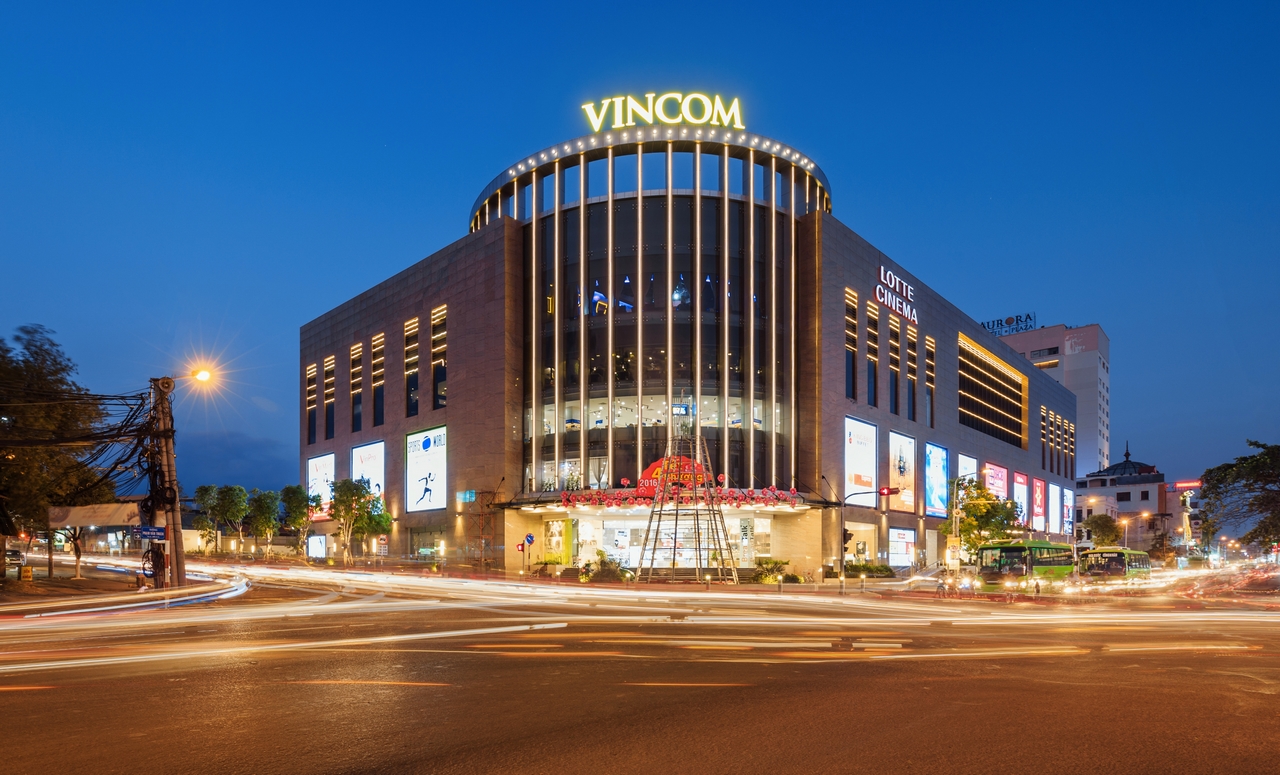
    Vincom Retail plans to open 30 more shopping centres in Vietnam this year, increasing its mall network to 200 by 2021.

    To fund the plan, the retail subsidiary of Vingroup will raise US$500 million.

    The first of the new malls to open will be Vincom Center Landmark 81 and Vincom Center Lieu Giai in Hanoi.

    Other malls will be launched around Vietnam under Vincom Plaza and Vincom + formats.

    Vincom Retail launched an IPO last October. Its total revenue last year was VND4455 billion (US$195 billion), up 17 per cent year-on-year.

    It currently operates 51 shopping malls across Vietnam.

  • Vietnam cars geared for East European roads

    Vietnam cars geared for East European roads

    VinFast, the auto making subsidiary of real estate conglomerate Vingroup, will make cars suited to the domestic market first and target East Europe next.

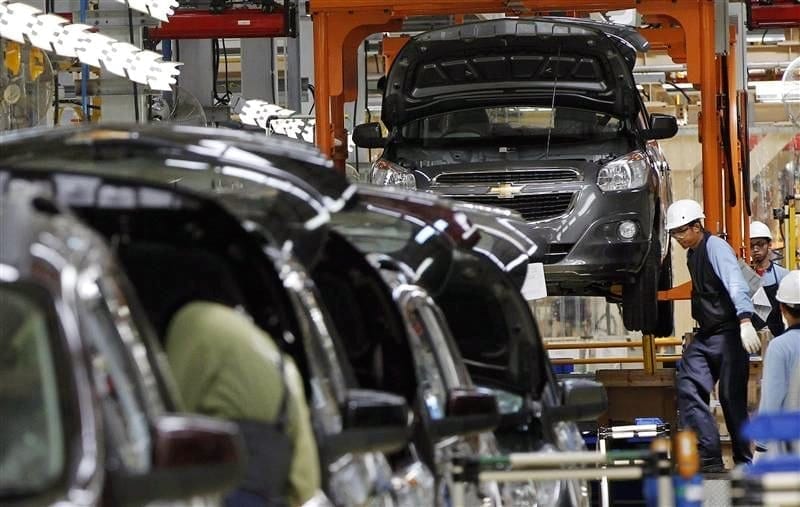
    Built in automated facility that deploys more than a thousand robots, the cars will be of top quality, priced competitively and backed with attractive offers and good after sales service, group chairman Pham Nhat Vuong said at a recent shareholders meeting.

    Therefore, despite the presence of a number of big players in the domestic market, there was a good chance for cars produced by VinFast to succeed, he said.

    He noted that Hyundai, the South Korean carmaker, was able to gain 10 percent of the US market share in a very short period, and VinFast was well placed to emulate such a feat.

    Vuong stressed that the VinFast production line has a high degree of automation.

    “Its body shop has a fully automated spot welding system with more than 1,200 robots in service.

    Parts like crankshaft and transmission are also automatically manufactured, ensuring the car’s quality, and making engine run smoothly,” Vuong explained.

    While promoting the cars in both domestic and foreign markets, the focus will be on “down-to-earth” consumers looking for value for their money, the chairman said.

    VinFast will have a very good chance to compete well with carmakers in Eastern Europe as Vingroup understands this market very well, Vuong said. The group chairman is a former long-term resident of the former Soviet Union.

    Vuong said automobile production will be the company’s spearhead in the coming time, but did not rule out the possibility of other products once the brand was well established.

    “Given our supporting ecosystem and great capabilities, it [heavy industry] will be a new horizon for Vingroup,” said the chairman, who’s one among a handful of Vietnamese billionaires.

    Last September, Vingroup broke ground on its subsidiary VinFast’s new car manufacturing complex in the northern port city of Hai Phong. The complex would start manufacturing electric scooters in 12 months, sedans and SUVs in 24 months and electric cars in 3 years. By 2025, VinFast is expected to be producing 500,000 cars a year, making it a leading automobile manufacturer in Southeast Asia.

    The company will be working with German partners in product development and management of the new manufacturing complex. Its cars will be designed by Italian design houses, while main components such as engines will be bought in from the U.S. and European companies.

    However, VinFast will still cooperate with Vietnamese companies to manufacture most car accessories. The company’s products will have a localization rate of 60 percent, making them qualify for tax incentives when exported to other countries in the region.

    The new complex, which would also include a research and development (R&D) center, is expected to attract European experts, and will be cooperating with many large R&D centers in Europe. The company will be using technology transfer contracts to help improve its expertise in product development.

    Its cars will use eco-friendly technologies to meet Euro 5.0 and Euro 6.0 emission standards. VinFast will also be using green energy in its factories and plans to invest in a facility to treat used batteries.

    Vietnam will emerge as the second fastest-growing production hub for cars in Southeast Asia after the Philippines between 2017 and 2021, according to BMI Research, a part of Fitch Group.
  • Vinhomes’ shares jump 20 percent shortly after listing on Vietnam’s stock market

    Vinhomes’ shares jump 20 percent shortly after listing on Vietnam’s stock market

    Vinhomes JSC, the residential property developer of Vietnam’s biggest conglomerate Vingroup, saw its share price rise 20 percent from VND92,100 to VND110,500 ($4.85) per share in its first trading session after it was officially listed on the Ho Chi Minh Stock Exchange (HoSE) on Thursday morning.

    The company put 2.68 billion shares on Vietnam’s main bourse HoSE, and by Thursday afternoon, its market cap jumped to more than VND296 trillion ($12.9 billion).

    This means Vinhomes is now the company with second biggest market cap on the country’s stock market, standing behind its parent Vingroup, which is currently valued at VND333 trillion.

    An initial equity offering of Vinhomes JSC, the residential property development unit of Vingroup JSC, raised about $1.35 billion in Vietnam’s biggest ever issue, sources said earlier this month.

    Existing Vinhomes investors were selling about 268 million shares, or 10 percent of the firm’s equity capital, at VND114,700 ($5.03) each, versus an indicative range of VND110,500-114,700, said the sources, who are familiar with the matter but did not want to be named as terms of the pricing were confidential.

    This eclipsed an equity offering from Vietnam Technological and Commercial Joint Stock Bank, or Techcombank, which raised about $920 million last month.

    Vingroup JSC has been looking to raise as much as $2 billion from the listing of Vinhomes.

    Last month, Singapore wealth fund GIC came in as a pre-IPO investor and took a roughly 7 percent stake in Vinhomes for about $853 million by buying shares from Vingroup and other shareholders, sources said.

    Vinhomes’ first-quarter net profit jumped five times from the same period last year to VND3.99 trillion, and revenue surged three times to VND10.54 trillion, its financial statements showed.

  • Vingroup eyes stake in mobile device retailer Vien Thong A

    Vingroup eyes stake in mobile device retailer Vien Thong A

    VinPro, the electronics retail arm of Vietnamese conglomerate Vingroup, may invest in mobile device retailer Vien Thong A.

    However, Vien Thong A GM Hoang Ngoc Vy has denied the media reports, before enigmatically adding that further information would be forthcoming.

    VinPro was launched in March 2015 as part of the property giant’s foray into the nation’s US$4.5-billion electronics retail market. It has two brands: VinPro for big stores in Vincom Retail’s shopping malls, and VinPro+ for smaller stores.

    Established in November 1997, Vien Thong A has nearly 200 stores across Vietnam and 100 warranty centres.

    Vietnam’s electronic and electrical appliances market is expected to expand by 11.9 per cent by 2020, according to Boston Consulting Group and consumer information company GFK Vietnam.

    Meanwhile, the market is dominated by FPT Retail and Mobile World, which has just acquired about 95 per cent of Hanoi-based Tran Anh Digital World. Earlier, Thailand’s Central Group bought a 49 per cent stake in electronics retailer Nguyen Kim Trading.

  • Vietnam to celebrate its new retail sales highest record US$129 billion

    Vietnam to celebrate its new retail sales highest record US$129 billion

    Spurred by a rising middle class and influx of international retailers, Vietnam retail sales hit a record US$129.6 billion last year.

    This was growth of 10.9 per cent over 2016, according to the Vietnam General Statistics Office (GSO).

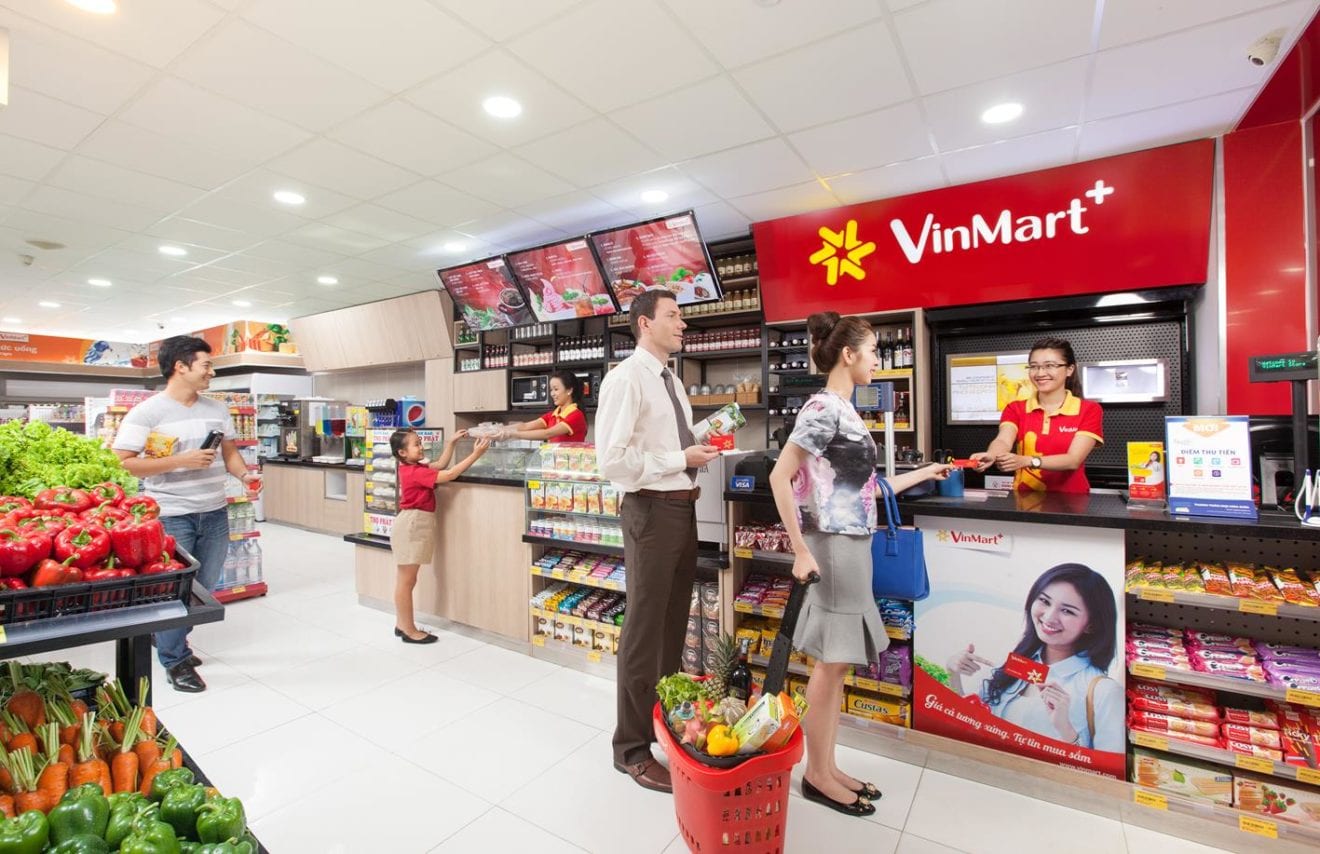
    Vietnam’s largest real estate company, Vingroup, starting expanding its Vinmart Plus convenience store chain in 2016 and has already topped 1000 stores – it opened 100 last month alone. It is predicted the store network could reach 3000 this year.

    Meanwhile, Vietnam last year saw the arrival of a slew of foreign retail brands, headed by Japan’s Seven & I Holdings opening its first Vietnamese 7-Eleven convenience store in Ho Chi Minh City in June.

    Swedish fast-fashion brand H&M followed in September with a store in the same city, while Zara, the chain of Spanish rival Inditex, opened its second Vietnam location in Hanoi in November (its first store, covering two levels, launched at Vincom Centre Dong Khoi in Ho Chi Minh City in September 2016).

    Thailand’s Central Group has made several acquisitions in Vietnam, including the Big C supermarket chain and electronics retailer Nguyen Kim Trading. It also launched its first stationery and office supplies store in Vietnam last year.

    South Korea’s GS Retail partnered with Vietnam’s Son Kim Group 12 months ago to open the first of their convenience stores in Ho Chi Minh City this month. They plan to open 2000 locations within 10 years.

    Double-digit growth

    Since joining the World Trade Organisation in 2007 and opening up to foreign goods and businesses, Vietnam has seen continued double-digit growth, led by a 31.5 per cent spike in 2008. With the Association of Southeast Asian Nations Economic Community taking full effect this month, Vietnam has eliminated nearly all tariffs on goods from within the region.

    Meanwhile, supermarkets and convenience stores are selling meat and vegetables at prices that are 20 to 30 per cent higher than at traditional markets, and the number of specialty shops selling organic vegetables is growing.

    Spending on cars, home electronics and other consumer durables is also brisk, with 70 per cent of Vietnam’s GDP coming from personal consumption.

    The GSO says auto sales grew by 14 per cent in value, gemstone and precious metals by 13.2 per cent, food and foodstuffs by 11.1 per cent, cultural and educational products by 10.2 per cent, apparel by 9.6 per cent, and home products by 8.5 per cent.

    Vietnam still has room for growth as modern retail channels like supermarkets and shopping centres account for only a quarter of total retail sales, and most of these businesses are in big cities, reports VIetnamNet. By 2020, the proportion of modern retail channels is forecast to rise to 45 per cent.

  • Vietnam’s richest man makes huge jump up global billionaires list

    Vietnam’s richest man makes huge jump up global billionaires list

    Pham Nhat Vuong, Vietnam’s first billionaire and owner of giant conglomerate Vingroup, has leapt 97 positions to become the 543rd richest person in the world, released on Tuesday.

    The magazine’s real-time list of the world’s billionaires showed that Vuong’s assets had expanded by more than 14 percent to $4 billion in just 13 days.

    He’d already marked a milestone on November 8 by climbing 227 places in eight months to 640th on the list, with his net worth growing by more than $1 billion.

    His rise came following the IPO of Vingroup’s retail unit Vincom early this month, which was hailed as the biggest IPO debut ever in the country after raising nearly $709 million and valuing the mall operator at around $3.4 billion.

    Vingroup’s shares have also gained nearly 100 percent since mid-2017, closing at VND77,000 ($3.40) on Tuesday. Vuong, 49, owned more than a 27 percent stake in Vingroup as of June this year.

    Vingroup is one of Vietnam’s largest real estate conglomerates, and has been expanding rapidly into retail, logistics, agriculture, education and healthcare. As of the end of September, its subsidiary Vincom Retail was managing, operating and renting 41 shopping malls with a total area of over 1.1 million square meters (272 acres). It also has 22 projects under construction and another 50 in early development.

    Nguyen Thi Phuong Thao, the only other Vietnamese billionaire and owner of budget carrier Vietjet, now ranks 1,177th on the Forbes list with assets worth around $2 billion.

    At the top of the list are Amazon’s founder Jeff Bezos with a net worth of $94.9 billion, followed by Microsoft co-founder Bill Gates with $89 billion and Warren Buffet with $77.9 billion.

  • Vingroup to invest in HCM City sports complex

    Vingroup to invest in HCM City sports complex

    HCM City’s People’s Committee had given Vingroup Joint Stock Company (Vingroup JSC) the go-ahead to invest in a sports and entertainment complex in District 2’s new Thủ Thiêm urban area.

    The complex would be located on 31.39 hectares, and the People’s Committee has approved a district planning scale of 1/2,000, the city’s department of planning and architecture (DPA) said on Monday.

    The project would require an estimated total capital of VNĐ6.77 trillion (US$305.1 million), excluding compensation for site clearance.

    So far, 99 per cent of the land in Thủ Thiêm urban area had been cleared, with 382 hectares set aside for residential purpose and another 334 hectares for commercial purpose. Once Thủ Thiêm had been developed, it would be able to house 150,000 residents and attract 220,000 workers.

    Vingroup JSC had acquired approval to build the complex as part of the second functional area in Thủ Thiêm and An Lợi Đông wards, Disctrict 2. The total construction is expected to take 36 months; the project utility period would be 50 years.

    Vingroup JSC’s sports complex would have infrastructure so it could be used as a multifunctional sporting halt and an amusement park. It is considered to be one of the key high-value projects in the planning of Thủ Thiêm urban area.

    Recently, many domestic and foreign investors had expressed interest in putting money into housing, commercial and office projects in Thủ Thiêm.

  • 7-Eleven plans in Vietnam

    7-Eleven plans in Vietnam

    Convenience-store giant 7-Eleven plans to enter Vietnam by taking over VinGroup’s VinMart+ chain, marketplace sources say.

    In a statement from the US last year, 7-Eleven said it would build stores as well as convert “existing locations”. Now industry insiders are saying the group will swallow VinMart+, but there has been silence from both brands.

    The 7-Eleven Vietnam franchise is a partnership between IFB Vietnam, which owns Pizza Hut Vietnam, and Seven System Vietnam. The chain has announced plans to establish 100 stores in its first three years, with 1000 outlets within a decade. Its initial store will be in Ho Chi Minh City, scheduled for early next year.

    VinMart+ is Vietnam’s largest c-store chain with more than 700 outlets. It has plans to expand to 10,000 stores in next 10 years.

    Vietnam is 7-Eleven’s second Pacific Rim market after Indonesia, where it launched in 2009. It also has stores in Australia, China, Japan, Malaysia, Singapore, South Korea, Taiwan, Thailand and the Philippines.

  • K-Market to expand network with VinGroup

    K-Market to expand network with VinGroup

    Korean chain K-Market is in talks with VinGroup to expand its network.

    K&K, the owner of K-Market supermarket chain and K-Food, wants to expand by opening inside VinGroup’s commercial centres.

    K-Market currently locates its retail stores inside Lotte Mart and Fivimart outlets.

    The retail operators plans to expand its network to 100 supermarkets by 2020, and eyes a turnover of  more than US$100 million in 2017.

    Ko Sang Goo, chairman of K&K, said the company has been researching the Vietnam retail market carefully.

    The group aims to add more services to its chain such as laundry and eateries and to import more Korean products to serve local needs.

    K-Market currently has four stores in Hanoi and nine in Ho Chi Minh City.

  • South Korean retailer E-mart to invest $200m for retail chain ops in Vietnam

    South Korean retailer E-mart to invest $200m for retail chain ops in Vietnam

    A memorandum of understanding between E-mart and Vietnam’s Ho Chi Minh City was signed on September 9. Emart will make the investment over the next four years.

    The investment is expected to be used for building new supermarkets and commercial facilities, as well as local social development. E-mart opened a supermarket worth $60 million in Ho Chi Minh City last year, in addition to a toy library in the city.

    The Korean company had earlier said it planned to open 52 stores in Vietnam by 2020.

    E-mart is betting the country’s rapid growth, averaging 5.2 per cent since 2013, driven by a young and urban demographic with higher spending power.

    Vietnam’s growth was the highest among Southeast Asian peers featured in the 2016 Global Retail Development Index conducted by US management consulting firm AT Kearney. Vietnam was seen as the 11th fastest emerging retail market, up from 28th spot two years ago.

    Government data showed that retail sales in the country rose 7.4 per cent year-on-year in August 2016. Consumer spending rose to $116.2 billion, while the retail market was forecast to be worth $109 billion in 2017.

    Free trade pacts signed by Vietnam have encouraged foreign retailers to tap into this liberalizing market. Vietnam fully opened its retail industry in 2015, which is coupled with a lot of tax preferences for investors.

    Japan’s Takashimaya and Miniso have set up retail shops in Vietnam in July. Meanwhile, 7-Eleven is planning a local presence through the franchising route.

    Existing players are opening new outlets, as well as acquiring local businesses. Vingroup, the most active domestic company which launched over 90 stores in 2015, aims to introduce twice as many in 2016. It acquired Maximark and Vinatexmart, two Vietnamese operators, as part of this strategy.

    Thailand’s Central Group had acquired Big C Vietnam for $1.05 billion, along with electronics store chain Nguyen Kim and e-commerce site Zalora Vietnam. Other M&A deals include TCC Holdings buying Metro Cash&Carry Vietnam, and AEON acquiring Fivimart and Citimart.

    Central has since announced that it has halted further investment in  the country and would focus on consolidation.

  • Expansion brings some cash for VinMart

    Expansion brings some cash for VinMart

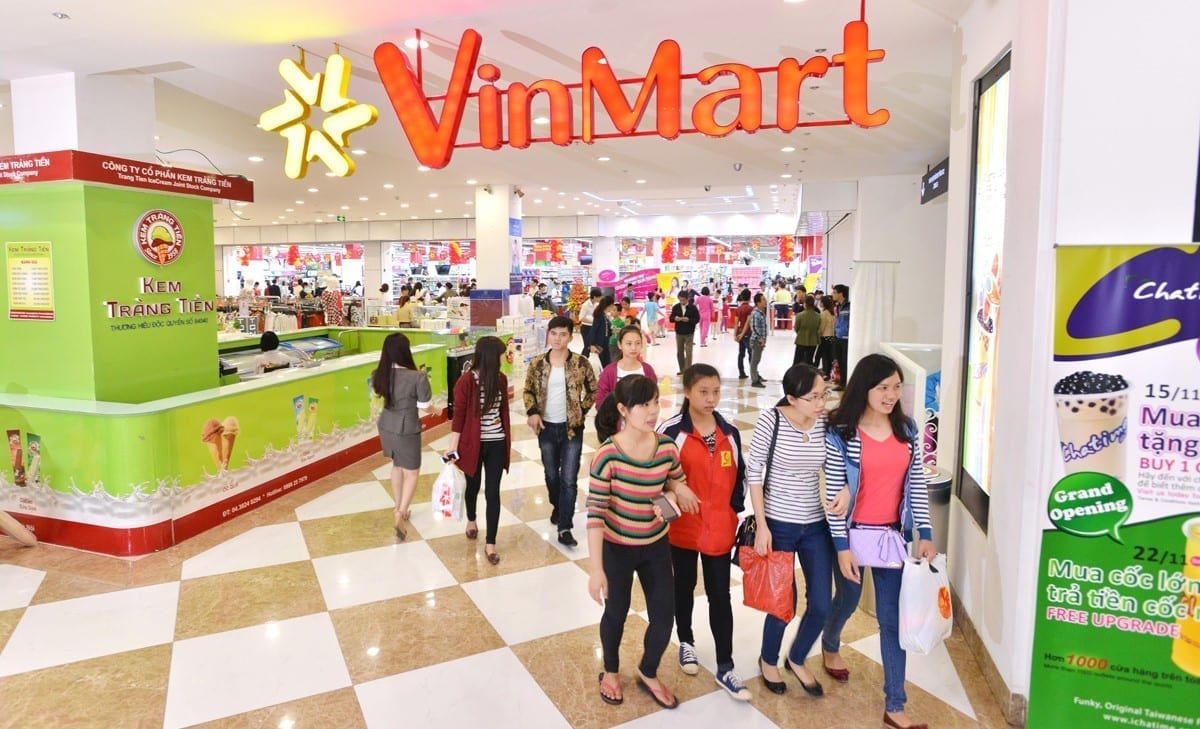
    Vietnamese supermarket chain VinMart has tripled its revenue in the second quarter of this year.

    Parent VinGroup says the group achieved VND2,465 billion (US$110.6 million) in sales of its supermarkets and convenience stores, a 226 per cent increase compared to the same period last year.

    One of the reasons for VinMart’s growth is the group’s strategy to bring its convenience stores VinMart+ to “every corner of Vietnam”, making it a part of consumers’ daily shopping routines.

    Up until July, after almost two years of operation, VinMart has 50 supermarkets and 830 convenience stores nationwide, which means the company has been opening three supermarkets a month and 46 c-stores.

    A standout of VinMart+ is the fresh food, distributed by green brand VinEco. The products are exclusive greenhouse vegetables, grown using Israeli technology.

    With this self-supply and self-control strategy, VinGroup has been creating a strong competitive strength in the market.

    Besides VinMart, its other divisions contributed to VinGroup’s profit in the quarter of VND 2,926 billion ($131.2 million): VinHomes, Vincom Retail, Vinpearl Land, Vinschool, Vinmec, and VinPro.

  • Vietnam retail on brink of  convenience store boom

    Vietnam retail on brink of convenience store boom

    Vietnam retail is on the brink of a convenience store boom as multinationals muscle up against fast-expanding local players.

    The increasing pace of life in urban Vietnamese cities is fuelling demand for convenience stores which, until three to four years ago, seemed few and far between on the streets of Ho Chi Minh City and Hanoi.

    Since then, numerous c-stores have been opened by foreign retailers, such as Japan’s Family Mart, Thailand’s B’smart and US-founded Circle K, competing against local ones, such as C-Express, VinMart, and Co.op Food. According to a Nielsen survey, six out of 10 Vietnamese buyers shop at c-stores because of their advantageous location and five out of 10 because of good design and displays. Local students are the main customers during lunchtime, attracted by comfortable dining spaces, cool temperature and free wifi.

    Pham Ngoc Hung, VP of HCMC Business Association, said the HCMC market is attractive to Thai retailers with 98 B’smart stores and 10 C-Express by Big C stores already trading. In the meantime, local chain VinMart by VinGroup, is approaching 700 stores and is reportedly opening an average of two new stores nationwide each day.

    The fastest-growing chain in the HCMC is Circle K, the local rights owned by Vong Tron Do company. It has 150 stores and promises for further expansion. Today, in every residential quarter, there are two or three Circle K  stores, usually less than 600m apart.

    But the c-store boom is only just beginning. Last year, Japanese c-store giant 7 Eleven signed a master franchise agreement with Seven System Vietnam to expand across the country. The first stores are scheduled to open in 2017, and the target is 1000 within 10 years. CP All, which operates more than 8000 7-Eleven stores in Thailand, is a partner in the Vietnam venture and says it plans for 40 per cent of its stock to be locally sourced, with the balance from Thailand and elsewhere.

    Existing operators are waiting to see what type of stores 7-Eleven will roll out in the Vietnam market – given the considerable difference in sizes of its Thai stores – and the morphing of the format by Circle K in Vietnam to include dining area and fast food focus.

  • Vingroup more than triples revenue to $98m

    Vingroup more than triples revenue to $98m

    Retail has proved the shining segment for Vietnamese conglomerate Vingroup, with revenue jumping 363 per cent year-on-year to VND2.19 trillion (US$98.3 million) for the first quarter.

    Vingroup has been investing in retail properties for more than a decade, and since announcing two years ago that it aims to become Vietnam’s largest retailer has opened 50 supermarkets under the VinMart brand and 750 convenience stores under VinMart+ brand.

    Its other retail businesses include Vincom shopping centres, VinFashion stores, VinPro electronics shops and Adayroi eCommerce platform.

    With interests also in education, health, entertainment and real estate, the group reports an after-tax profit of VND1.04 trillion – three times higher than the same period last year. Its revenues more than doubled to hit VND15.16 trillion.

  • Zara Vietnam to launch in July

    Zara Vietnam to launch in July

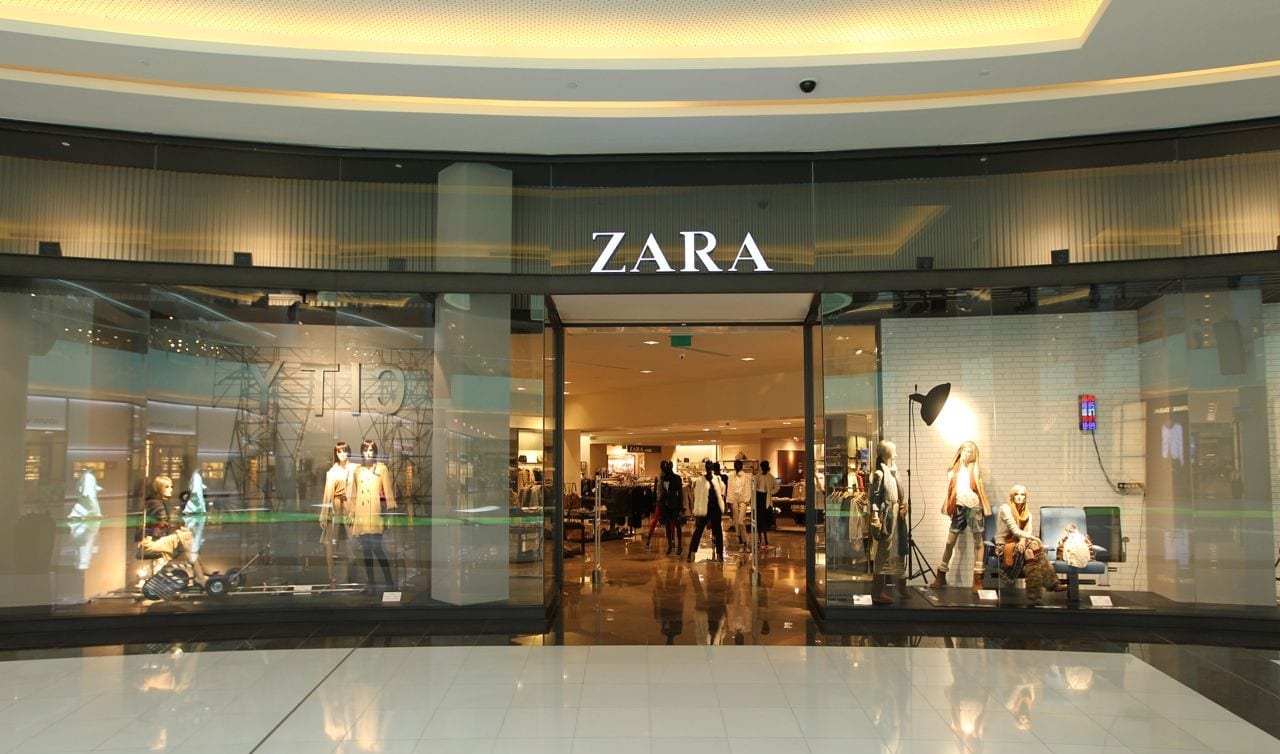
    Zara Vietnam says it will open its first store in July, just as Euromonitor International reveals the Vietnamese branded goods market may reach $2.7 billion in value by next year.

    As more than more people can afford branded goods, international fashion brands such as Gap, Mango, Nine West, Ralph Lauren and Topshop have become the choice of many young Vietnamese, especially office workers, says Euromonitor.

    Zara is owned by Inditex, which at the end of its latest fiscal year on January 31 had 7013 shops in 88 markets, including 2000 Zara outlets. If the Spanish fast fashion giant follows its normal international expansion course, it will likely roll out some of its other brands in the market, including Bershka, Pull & Bear, Massimo Dutti, Stradivarius and Zara Home.

    There is already a Vietnamese website selling Zara items, with a showroom in Ho Chi Minh City, but the shop sells alternatively-sourced and end-of-season lines.

    Mango, which targets customers between 18 and 40 years old, has been in Vietnam since 2004 through a franchise contract signed with Maison JSC. It also has other franchise partners, including DAFC, a subsidiary of IPP, and BFF, belonging to Vingroup.

    In 107 markets internationally, Mango had $2.6 billion in revenue last year.

    A survey by Nielsen on Vietnamese consumer confidence has shown that Vietnamese are willing to spend money on holidays, tourism, fashion and high-technology products.

    Meanwhile, Mango and Zara are among brands that have garment factories in Vietnam.

  • Index Living Mall plans ASEAN expansion

    Index Living Mall plans ASEAN expansion

    Home-furnishing retailer Index Living Mall has announced its 2020 vision to continue its push beyond Thailand into other ASEAN countries.

    With franchised stores already trading in Malaysia, Thailand and Vietnam, the company believes the region’s urbanisation has shifted consumers toward a more modern lifestyle, including the way they buy and use home-furnishing products. It also notes a rise in the number of middle-income earners throughout the ASEAN Economic Community.

    MD Kridchanok Patamasatayasonthi says the company aims to double the present 5 per cent contribution to its total revenue from AEC markets by 2020. The company’s total revenue of Bt9.5 billion (US$264.8 million) last year was 5 per cent up on 2014.

    “Our market expansion through international franchisees is the result of growth in the home-furnishing and accessories sectors among ASEAN member countries,” says Kridchanok. “Other positive factors, including the bustling economic outlook, rising gross incomes and similar customer behaviour, helped accelerate our decision to look for investment opportunities in new markets.”

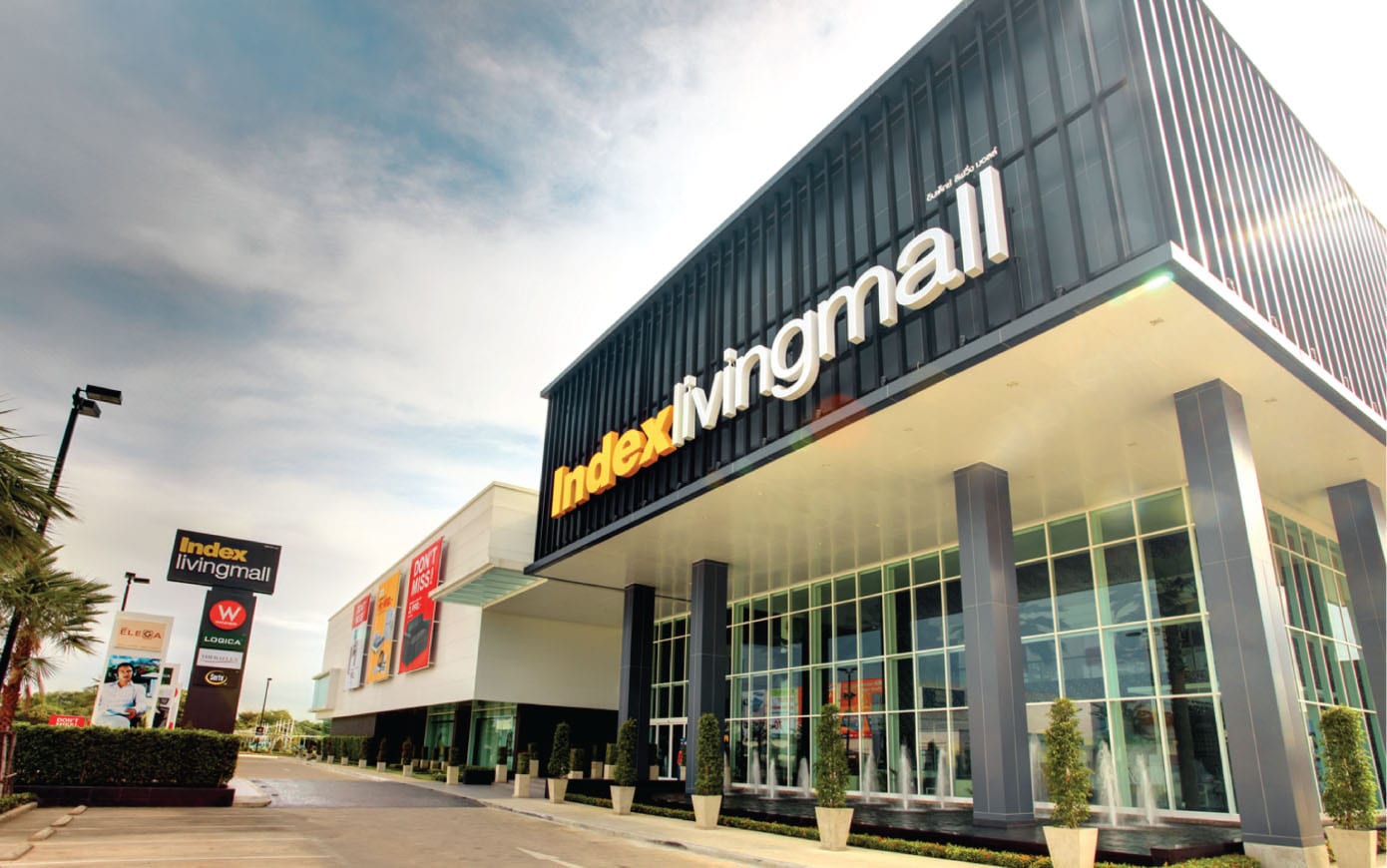
    She says the company has appointed VinDS, the retail investment arm of Vietnamese commercial property developer Vingroup, as its franchisee to tap into the home-furnishing and accessories retail market in that country. The first Index Living Mall under that partnership had a soft opening last month in Ho Chi Minh City, occupying 7000 sqm in Vincom Mega Mall Thao Dien. Costing more than Bt200 million, the store is expected to achieve Bt350 million in sales in its first year.

    Index Living Mall has had a store trading in Ho Chi Minh for more than four years, effectively testing the market. Now with VinDS it expects to open 10 more stores in major cities in Vietnam, including Ho Chi Minh, Hanoi and Da Nang, within five years.

    “Economic growth indicators show that the Vietnamese retail market is number two in Asia, after only China,” says Kridchanok.

    “During the first half of last year, the Vietnamese economy posted 6.28 per cent growth, the highest since 2008. With a population of 90 million, this will continue to grow, thanks to per capita income rising more than 10 per cent over the past decade.”

    Kridchanok says it is expected that the number of Vietnamese earning a median income of 15 million dong ($673) a month will grow to 33 million by 2020.

    Index Living Mall’s director for international business development Ekaridhi Patamasatayasonthi says the company’s venture into Vietnam highlights its marketing direction to tap into emerging CLMV (Cambodia, Laos, Myanmar and Vietnam) markets, aimed at strengthening its leadership position in the home-furnishings and accessories retail market in the ASEAN region.

    Ekaridhi says the company plans to open store in Manila in September via a joint venture with SM Retail, a Philippine business conglomerate involved in shopping mall, property development, banking and retailing. Index Living Mall has a 30 per cent stake in the venture.

    In Malaysia, Index Living Mall opened its first home-furnishing store in Putrajaya last year in a joint venture with AEON. Three more stores are planned for Malaysia this year – in Kuala Lumpur in March, Kota Bharu in April and Johor Bahru in the fourth quarter.

    Ekaridhi says there are six franchised stores in five countries – Malaysia, Russia, Maldives, Nepal and Vietnam – as well as dealers in Laos and Myanmar. In its home country, the company has 25 stores in 17 provinces, of which nine are in Bangkok. It plans to invest Bt470 million this year to open two stores, in Nakhon Pathom and Chachoengsao.

    Index Living Mall expects to post Bt10 billion in revenue this year and to grow its annual sales by 10 per cent over the next five years.