Tag: voice

  • Spotify starts testing voice ads on Android and iOS devices

    Spotify starts testing voice ads on Android and iOS devices

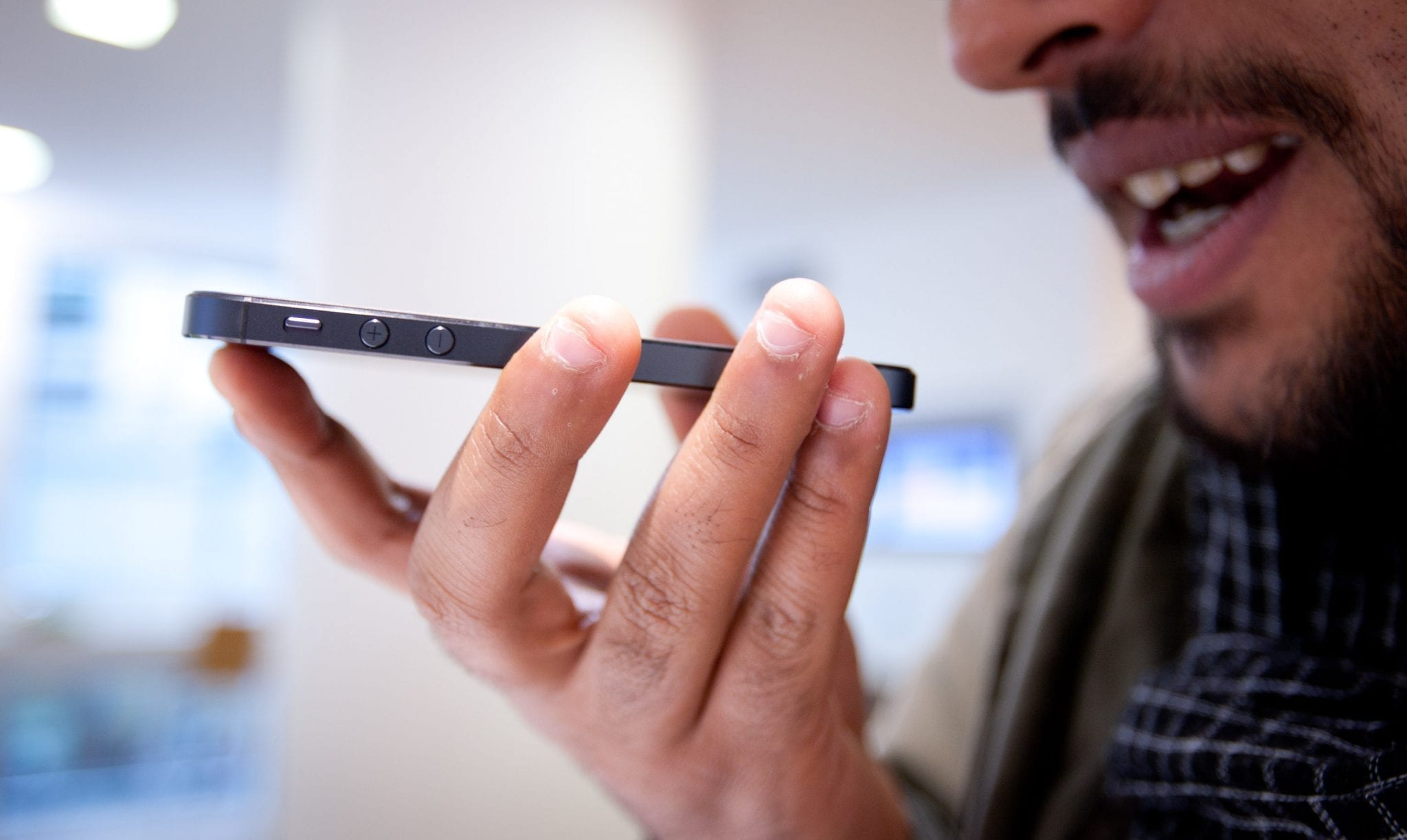
    Spotify has decided to be more aggressive with its ads and announced over the weekend that it will launch voice-enabled advertisements. They are meant to encourage customers to use verbal commands to take action on the ad’s content available through Spotify.

    TechCrunch reports the audio ads will initially redirect listeners to a branded Spotify playlist or a podcast. These voice ads will only be available to a limited number of Spotify’s free mobile listeners on both Android and iOS platforms, but they required users to have voice controls enabled.

    The good news is Spotify users can opt out of voice ads in the Settings menu by turning off the Voice-Enabled Ads option. Moreover, the app will also allow users to completely disable microphone access via the mobile device’s Settings.

    The voice ads will enable Spotify users to check out the content advertised by saying “Play Now.” If the user doesn’t say the voice command within the required amount of time or says something else, the mic will be turned off and the ad break will continue.

    The voice ads test is live in the United States for free users of the Spotify app and uses the company’s built-in house technology. It doesn’t have a pricing model yet since it’s too early at this time.

  • Facebook is building a Voice Assistant

    Facebook is building a Voice Assistant

    Sometimes it feels like Facebook has no awareness of its public perception at all. There are already proven stories about how Facebook has been gathering more data than they claim and using that data in ways you might not expect. There are conspiracy theories that Facebook is spying on users and listening to conversations.

    Even so, Facebook built the Portal – a camera that follows you around your room for video chats – and now there are reports that Facebook is building its own voice assistant to compete with Google, Alexa, Siri, and Cortana (and Bixby, if you want to be a completionist about it). The Facebook Portal actually uses Alexa for voice commands, but it seems Facebook has been working on its own voice assistant. Ex-employees from Facebook told that a team in Facebook’s augmented reality and virtual reality group has been quietly working on the project since early 2018.

    There’s no indication of how Facebook would position the assistant, whether in the Facebook app itself or more as a replacement for Alexa in Portal hardware (assuming that hardware line continues.) It’s also unclear how far along Facebook is in building the assistant or even where it’s getting the voice data it would need to build the voice recognition piece.

    Also unclear is whether or not anyone actually wants a Facebook voice assistant. The Portal cameras have been failures by all accounts. Facebook’s last attempt to make a human-powered assistant (M) failed as well. Add to that the general erosion of trust in Facebook, it’s hard to imagine how the company could sell a product that actually does listen to you at all times.

  • RCom to stop offering 2G voice in eight circles

    RCom to stop offering 2G voice in eight circles

    Struggling Indian operator Reliance Communications will stop offering 2G voice services in eight circles from December as a cost saving measure.

    Telecoms regulator Trai has issued a direction stating that RCom plans to discontinue 2G GSM services in eight telecoms circles after the closure of the merger between RCom and Sistema Shyam Teleservices (SSTL), providing only 4G data services.

    RCom also plans to use the merger to upgrade its network from CDMA to LTE using the 800-MHz band in nine circles including Delhi.

    Trai has requested that all operator honor any porting requests from existing RCom customers and directed RCom not to deny any such requests from its own subscribers until the end of the year.

    RCom has been reconsidering its operations after failing to clinch a proposed merger with Aircel due to regulatory uncertainty and the objections of some creditors.

    The operator is grappling with debt of around 450 billion rupees ($6.95 billion) and had been hoping that the merger could help it reduce this burden.

    The RCom-SSTL share swap merger by contrast was approved last month. RCom will acquire around 2 million new customers, as well as 30 MHz of 800-MHz spectrum in eight of India’s 22 telecoms circles including Delhi.

  • Alexa allies with Cortana to take on Google Assistant, Siri

    Alexa allies with Cortana to take on Google Assistant, Siri

    It’s the first time two tech giants, Amazon and Microsoft open up their AI powered virtual aides to each other. Amazon.com Inc and Microsoft Corp have joined forces to let their voice-controlled virtual assistants talk to each other, offering users the ability to seamlessly tap into work, their homes and shop online.

    The partnership is the first time two technology companies open up their artificial intelligence-powered virtual aides to each other, and will be aimed at outsmarting rivals Google Assistant and Apple’s Siri.

    The move in itself is rare as most virtual assistants are known to use data from their own ecosystems and not talk to one another.

    Users of Amazon’s Alexa will be able to ask Microsoft’s Cortana to do a range of activities — from booking a meeting to reading work email. And Cortana users will be able to call on Alexa to play music or turn on house lights.

    Not to be left behind, Alphabet Inc said on Wednesday Google Assistant will soon be available on third-party speakers and other home appliances.

    “Starting later this year, with manufacturers like LG, you’ll be able to control your appliances, including washers, dryers, vacuums and more from your Assistant on your smart speaker, Android phone or iPhone,” Google said.

    Several technology companies are trying to grab a share in smart homes, which allow consumers to control various connected appliances such as refrigerators and lights from a central hub or a smartphone.

    “In the long run it would seem that Amazon has more to gain from this deal, as Cortana remains trapped within the PC…while Amazon has won a powerful ally in its battle against Google,” Atlantic Equities analyst James Cordwell said.

    While Amazon introduced voice-controlled Alexa with its Echo speakers in 2014, Google launched Assistant on its Google Home speakers last year. Apple Inc in June introduced HomePod, powered by Siri.

    Amazon Echo devices will claim a 70.6 percent share of the U.S. market this year compared with a 23.8 percent share for Google Home, research firm eMarketer said in May.

    Users will be able to turn to their Echo device later this year and say, “Alexa, open Cortana,” or turn to their Windows 10 device and say, “Cortana, open Alexa,” the companies said.

    “It is surprising to me that these competitors have collaborated, that speaks to the quality of their respective CEOs,” Wedbush Securities analyst Michael Pachter said.

    “They understand that they will benefit more by working together than trying to destroy one another.”

  • Alibaba launches low-cost voice assistant amid AI drive

    Alibaba launches low-cost voice assistant amid AI drive

    The Chinese device costs significantly less than counterparts by Amazon and Google. China’s Alibaba Group Holding Ltd launched on Wednesday a cut-price voice assistant speaker, similar to Amazon.com Inc’s “Echo”, its first foray into artificially intelligent home devices.

    The “Tmall Genie”, named after the company’s e-commerce platform Tmall, costs 499 yuan ($73.42), significantly less than western counterparts by Amazon and Alphabet Inc’s Google, which range from $120 to $180.

    These devices are activated by voice commands to perform tasks, such as checking calendars, searching for weather reports, changing music or control smart-home devices, using internet connectivity and artificial intelligence.

    China’s top tech firms have ambitions to become world leaders in artificial intelligence as companies, including Alibaba and Amazon, increasingly compete for the same markets.

    Baidu, China’s top search engine, which has invested in an artificial intelligence lab with the Chinese government, recently launched a device based on its own siri-like “Duer OS” system.

    The Tmall Genie is currently programmed to use Mandarin as its language and will only be available in China. It is activated when a recognized user says “Tmall Genie” in Chinese.

    In a streamed demonstration on Wednesday, engineers ordered the device to buy and deliver some Coca Cola, play music, add credit to a phone and activate a smart humidifier and TV.

    The device, which comes in black and white, can also be tasked with purchasing goods from the company’s Tmall platform, a function similar to Amazon’s Echo device.

    Alibaba has invested heavily in offline stores and big data capabilities in an effort to capitalize on the entire supply chain as part of its retail strategy, increasingly drawing comparisons with similar strategies adopted by Amazon.

    It recently began rolling out unstaffed brick-and-motor grocery and coffee shops, using QR codes that users can scan to complete payment on its Alipay app, which has over 450 million users. Amazon launched a similar concept of stores in December.

  • Singtel expands ReadyRoam to 26 countries

    Singtel expands ReadyRoam to 26 countries

    Singtel has expanded its ReadyRoam mobile data roaming service to cover multi-destination roaming across 26 countries in Asia, Europe and North America.

    The ReadyRoam 1GB for 30 days service will allow customers to use the same pool of data while traveling between any of the supported countries.

    The base service supports roaming between 11 Asian markets – China, Hong Kong, India, Indonesia, Japan, Macau, New Zealand, the Philippines, South Korea, Taiwan and Thailand – for S$20 ($14).

    For customers traveling further afield, ReadyRoam USA and Europe supports roaming to the above countries, as well as Canada, Denmark, France, Finland, Germany, Ireland, Italy, the Netherlands, Norway, Portugal, Spain, Sweden, Switzerland, the UK and the USA.

    Excess usage will be charged at S$0.019 per MB or S$0.034 per MB depending on a customer’s plan.

    “It’s the holiday season and many of our customers and their families will be traveling,” Singtel VP of mobile marketing consumer Singapore Diana Chen said.

    “Our enhanced ReadyRoam 1GB for 30 days will allow them the convenience of remaining contactable via their Singtel SIM card number while roaming seamlessly across multiple destinations.”