Retail News CRM

Tag: wealth

  • UBS Profits Double in APAC Wealth Unit

    UBS Profits Double in APAC Wealth Unit

    Asia Pacific profits in the fourth quarter of 2020 more than doubled year-on-year at UBS, driven by a strong increase in invested assets.

    Profits before tax at UBS’s APAC unit increased by $95 million to reach $169 million – a nearly 130 percent increase – driven by an increase in both transaction-based income and recurring net fee income from a strong increase in invested assets.

    Asia’s largest private bank by far, UBS saw another strong quarter of net new money with $13.2 billion, outpacing all other regions. Invested assets in the region reached $560 billion, a $57 billion increase compared to the last quarter.

    Worldwide, invested assets at UBS Global Wealth Management grew an additional $262 billion to reach $3 trillion, a 10 percent increase compared to the third quarter, as markets continue to reach new highs amid a coronavirus pandemic.

    Overall, the world’s largest wealth manager also posted net new money of $21.1 billion, with net inflows from all regions.

    Asia’s lead over other regions was helped in no small part by a single inflow of $4 billion, already more than the combined net inflows of the Americas ($1.4 billion) and Switzerland ($700 million).

    While an operating income increase of $60 million played no small role in the surge in profits, cost control was also a significant factor.

    Cost/income ratio at UBS’s Asia wealth unit saw a sizable decrease from 85.6 percent to 70.5 percent.

  • Goldman Sachs Proffers Affluent Wealth App

    Goldman Sachs Proffers Affluent Wealth App

    The U.S. investment bank plans to expand its wealth offering to affluent clients. The move represents a further departure from its Wall Street roots.

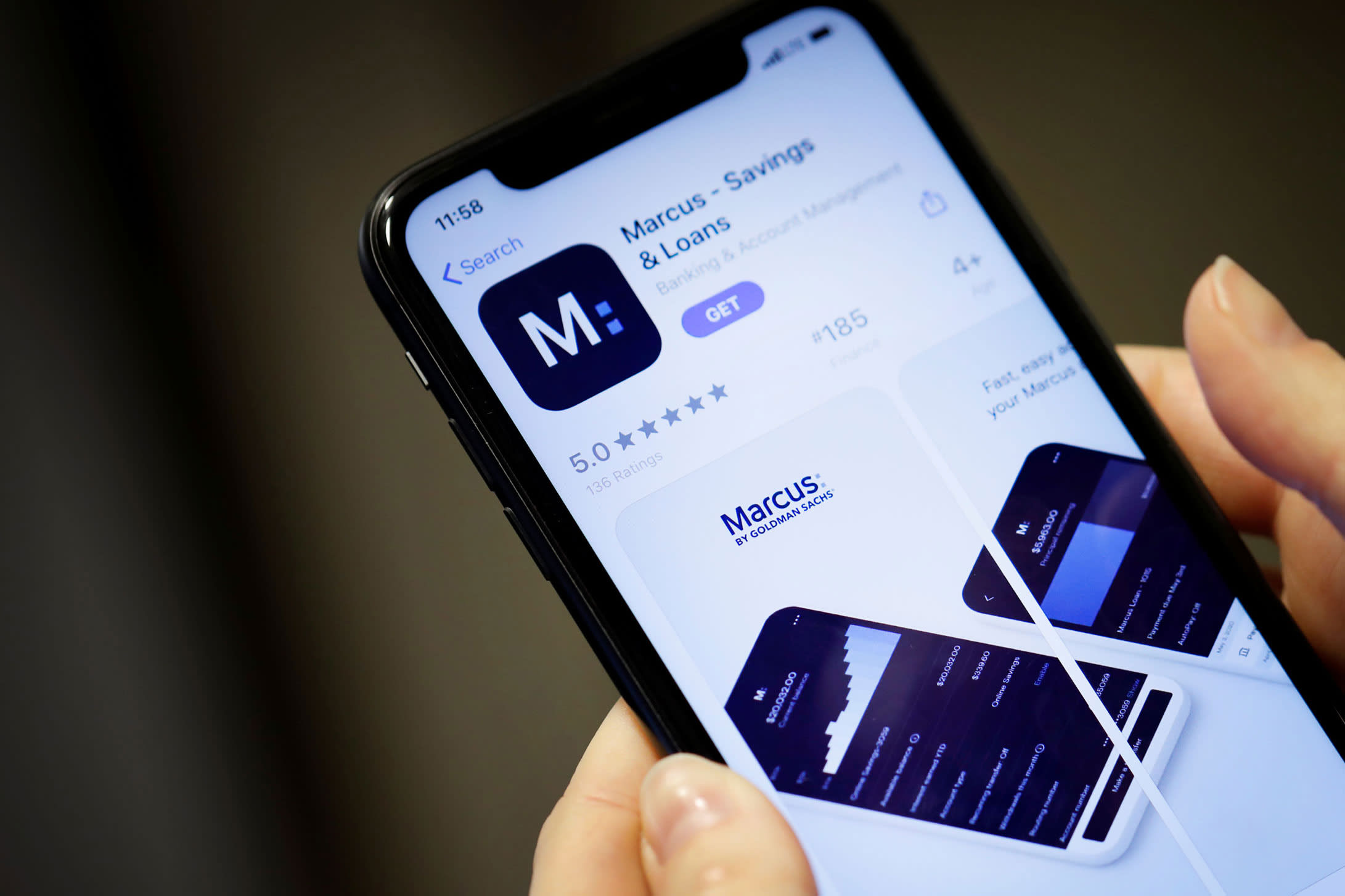
    Goldman Sachs, the best-known investment bank in the world, is pushing deeper into mass-market banking. Four years after launching Marcus for retail clients, the New York-based company is now releasing an app for affluent clients to invest, according to a report by CNBC which cites an internal memo.

    A beta version of the app – Marcus Invest – has already started and a wider launch is planned for the first quarter. Employees are the first to test Marcus Invest, which charges an annual fee of 0.15 percent of assets.

    The move is emblematic of how Goldman, known as Wall Street’s most voracious trading house, is quietly seeking a reinvention as a trusted wealth manager under CEO David Solomon. Though still minute in comparison to its investment banking activities, the wealth arm has steadily expanded in recent years – including returning to the world’s largest offshore center.

    Goldman’s entrance into the mass affluent market was foreshadowed by Marcus, which it launched in 2016 in the U.S. and expanded to the U.K. two years ago. Marcus was so successful in hoovering up British money that Goldman reportedly shut it to new clients this year. The app was meant to be launched in Germany as well, a move which was pushed back due to Brexit as well as the pandemic.

    Until recently, Goldman’s wealth managers catered only to the wealthiest of clients and those who also commanded investment banking-grade services (generally from $25 million in assets and up).

    Unlike traditional wealth managers, Goldman is making technology a backbone of its efforts to court the wealthy – plowing billions into its own development as well as into deals. It bought United Capital, a tech-backed wealth manager, last May, but has been quietly acquiring consumer banks and wealth managers since 2016.

  • Citi Registers Record-High Wealth Inflows in APAC

    Citi Registers Record-High Wealth Inflows in APAC

    Citi in Asia Pacific posted record-high net new money of $20 billion across its wealth management business in the region. This represents a 10 percent year-on-year increase, according to a statement from the bank, and pushes total assets under management across the wealth business to $238 billion with approximately one-third of billionaires in the region as its clients.

    The figures include the whole wealth business covering from emerging affluent to ultra-high net worth clients including Citi Priority, Citigold, Citigold Private Client, and Citi Private Bank.

    The Asia Pacific wealth market stands out in its scale and growth potential. And this is not a cyclical opportunity – it is structural, driven by the emergence of a vast middle class and the rapid development of regional capital markets, said Peter Babej, Citi’s APAC CEO. Along with macro-level asset growth, Asian customers increasingly require portfolio advice, design and allocation geared toward diversification of asset types and geographic exposures.

    Not unlike its industry competitors, Citi is also boosting investments in technology with a new mobile banking platform that boasts enhanced wealth management tools and user growth of over 1 million.

    As we grow our wealth operations, we are focused on first-rate service – and that means staying ahead in technology, Babej said.

    Clients increasingly want world-class advisory delivered on their preferred terms – online, face-to-face, or both. Our wealth centers, with world-class RMs leveraging digital wealth management solutions, are geared to delivering the customized value propositions that our clients require.

    Also not unlike others, Citi also believes that the human touch remains very much relevant in the wealth management industry despite rapid technological advancements. The bank’s relationship managers are currently trained by the Citi Wharton Global Institute, a joint executive education program launched with business school Wharton in 2015.

    We continually invest in both our people and our technology to remain at the forefront of this fast-moving business,” Babej added.

  • Singapore Launches World’s First Public Digital Infrastructure

    Singapore Launches World’s First Public Digital Infrastructure

    The Monetary Authority of Singapore and the Smart Nation and Digital Government Group launched the Singapore Financial Data Exchange. This initiative will enable Singaporeans to consolidate their financial information for more effective financial planning.

    The Smart Nation and Digital Government Group (SGFinDex) is the world’s first public digital infrastructure to use a national digital identity and centrally managed online consent system. This enables individuals to access, through applications, their financial information held across different government agencies and financial institutions.

    Built on Singapore’s National Digital Identity (SingPass), SGFinDex was developed by the public sector in collaboration with The Association of Banks in Singapore and seven participating banks.

    Banks in Singapore have always been at the forefront of digital innovation, creating online products and services that serve our customers well in a seamless and convenient manner. ABS and the 7 participating banks are pleased to have participated in the world’s first public-private-partnership in building a public digital infrastructure, that is underpinned by a national digital identity and online consent framework, to help our customers manage their finances holistically. SGFinDex not only showcases Singapore banks’ digital abilities but also our financial planning capabilities,» Samuel Tsien, Chairman, ABS and Group CEO of OCBC Bank, said.

    With SGFinDex, individuals can use their SingPass to retrieve their personal financial information (such as deposits, credit cards, loans, and investments) from the participating banks and their financial information (such as HDB loans and CPF balances) from the relevant government agencies. This will help individuals better understand their overall financial health and plan their finances holistically.

    In the next phase of SGFinDex, individuals will be able to access information on their insurance policies held with insurers and their holdings of stocks at the Central Depository.

    The Ministry of Manpower and GovTech have developed a digital financial planning service, MyMoneySense, that makes use of SGFinDex to provide Singaporeans with an overview of their finances. It will offer trusted, personalised and actionable guidance for more effective and comprehensive financial planning. Members of the public can use MyMoneySense to plan their finances at www.mymoneysense.gov.sg.

    Today, our personal financial information is fragmented across multiple entities, and we often take financial decisions, like making an investment or buying a house, without a holistic view of our financial situation. SGFinDex empowers the individual to consolidate his financial information for a comprehensive view of his portfolio, and use digital tools like MyMoneySense to make better financial decisions. SGFinDex is a tangible expression of harnessing digital technology to enhance the financial well-being of Singaporeans, Ravi Menon, Managing Director, MAS, said.
  • Singapore Beefs Up Wealth Management Talent Pipeline

    Singapore Beefs Up Wealth Management Talent Pipeline

    The Private Banking Industry Group launches a talent development initiative aimed at undergraduate students in Singapore.

    The Private Banking Industry Group (PBIG) in Singapore will look to «enhance the employability and job readiness of students entering the workforce» by offering 200 undergraduate traineeship positions over the next three years, according to a statement.

    Training will be related to in-demand roles such as relationship managers, product managers, data analysts, business risk managers and cybersecurity analysts.

    The PBIG is made up of industry leaders in the city-state, including 14 banks, and is currently co-chaired by the Monetary Authority of Singapore (MAS) and UBS.

    Candidates will be selected from a relevant program, of which 30 percent of the duration will be dedicated to the traineeship.

    The longer traineeship period will allow banks to develop more meaningful structured on-the-job training to complement the academic courses taken by the trainees, allowing them to be better equipped for full-time roles upon graduation, and stand a better chance to pursue a career in the wealth management sector, the statement said.

    Supporting financial institutions will benefit from a scheme that will fund 80 percent of the internship stipend, capped at $1,000 ($750) per month, for each trainee.

    The initiative, entitled Build, Encourage, Nurture (BEN), is being driven in response to both the growth and diversity in demand for talent within the financial services.

    The initiative will provide a sustainable pipeline of job-ready talent to Singapore’s private banking industry, which is essential for the sector’s growth, said Gillian Tan, an assistant managing director at MAS.

    We believe that to stay competitive in an ever-changing and disruptive future, it is critical for the industry to develop and nurture a workforce of the future with the right sustainable skills that can further enhance the financial industry and Singapore’s role as a key global financial center, added August Hatecke, APAC co-head of wealth management at UBS.

  • Lu Launches Wealth Management Platform in Thailand

    Lu Launches Wealth Management Platform in Thailand

    Lu International, a Singapore-based subsidiary of leading Chinese retail fintech Lufax, is expanding its reach in the region via a strategic partnership with Kasikornbank.

    The FinVest digital investment platform aims to cater to the growing market of retail investors in Thailand by providing access to a full spectrum of onshore and offshore investment products with low minimum investment amounts and management fees, according to an announcement on Tuesday.

    The partnership was previously announced in August. The platform currently offers investors access to more than 600 funds from 15 asset management companies in Thailand, with a minimum of 1,000 baht ($35).

    Established in 1945, Kasikornbank is the fourth-largest commercial bank in Thailand, with 17.3 million customers. The bank also works closely with Geneva-based private bank Lombard Odier, which manages global investment funds on behalf of its private clients. Lombard Odier also acts as an exclusive offshore custodian for Kasikornbank clients, using Singapore as a booking center.

    Thailand is one of the fastest-growing markets in Southeast Asia and continues to see rapid wealth growth and economic development,» Greg Gibb, CEO of Lufax Holding, said in the announcement.

    Thailand’s total outstanding capital market value stands at around 44 trillion baht ($1.46 billion), of which 4.8 trillion baht, or around 10 percent, is invested in mutual funds, Kasikornbank noted.

    Of late, the younger generation has shown increasing interest in mutual funds, preferring to conduct transactions via digital channels and seeking products related to Thai and foreign equity instruments. Moreover, open-architecture investment is growing every year, Patchara Samalapa, Kasikornbank CEO, said.

  • New Wealth to Grow Distribution in Indonesia

    New Wealth to Grow Distribution in Indonesia

    The Singapore-based digital wealth engagement solutions provider has its sights on the retail and affluent banking segments in Indonesia.

    New Wealth has inked a strategic partnership with digital engineering firm HAXtech to distribute its solutions to banks, insurance, and fintech firms in Indonesia, the company announced in a press release on Friday.

    The partnership promises improved market access, faster project delivery, and enhanced in-country client support, New Wealth said in the announcement.

    CEO Löic Pitrou said the company is currently expanding its ability to deliver multiple digital finance projects in Indonesia to support the fast-growing digital savings and wealth management sector there.

    Pitrou, a digital finance strategy and Robo-advisory specialist, founded New Wealth company in 2018. Its senior management team includes head of the experience lab Sudhir Nain and chief technology officer Simon Mazas. The company provides sales and advisory tools and applications for both relationship managers and self-directed investors.

    Its clients and partners include Commonwealth Bank, Standard Chartered, Morningstar, Eastspring, and Savio, according to its website.

  • Gold continues to scale new peaks

    Gold continues to scale new peaks

    Gold prices in Vietnam climbed to a new peak, as global rates hit an all-time high. State-owned Saigon Jewelry Company sold its popular SJC gold at VND60.7 million ($2,628) per tael of 37.5 grams (1.2 ounces) on Thursday morning, up 2.88 percent from Wednesday.

    Major jewelry company DOJI sold at VND60.3 million ($2,611). The State Bank of Vietnam said it has the resources to stabilize the gold market and would closely monitor the price movements.

    Global rates edged down to $2,041 on Thursday after reaching an all-time high of $2,055 on Wednesday. Analysts said the rapid rise in Covid-19 cases has dented hopes of a swift economic rebound, driving inflows into safe-haven assets such as gold, which has gained more than 34 percent this year.

    Vietnam’s gold bar and coin demand in the first quarter fell 8 percent year-on-year to 12.3 tonnes, according to the World Gold Council.

  • Australian Wealth Fintech Eyes Growth

    Australian Wealth Fintech Eyes Growth

    Picture Wealth has completed a A$12 million equity and debt funding round, at it sets its sights on reinventing the country’s financial advisory and superannuation landscape.

    The fast-growing company has completed late-seed funding round and acquired 100 percent of financial services licensee NEO Financial Solutions (NFS) for an undisclosed sum, it announced on Friday on its blog.

    With the acquisition, NFS managing director Mark Edman will become chief operating officer, and give the group a combined footprint of 94 advisers and $2 billion in funds under advice.

    We felt acquiring NFS with its robust compliance protocols was the way forward so that we could offer advisers and their clients a new home amidst very turbulent market conditions, said Pettit in the statement.

    Picture Wealth was co-founded in 2018 by chairman Neal Cross, who was previously DBS Bank’s innovation chief, and CEO David Pettit, a private wealth entrepreneur, aiming to use technology to empower people to understand and manage their finances.

    The hybrid wealth manager brings together digital automation and licensed, human financial advisers to provide users with personalized actions and insights based on their financial profile. It highlights gaps and opportunities to grow their wealth, and helps users with the changes required for them to reach their targets. It also has an adviser side, which allows the needs and expectations of clients to be met through structured servicing protocols and bespoke financial advice.

    It now has revenues of A$20m, A$2 billion of funds under advice and over 40,000 clients.

    As others are running out of the industry, we are running in…We have the technology, the business model and the people behind us to make a significant dent in the wealth industry in Australia, Cross said in an interview.

    Australia’s wealth management industry was shaken up with the Hayne royal commission into misconduct, leading the big four banks to exit the sector.

  • BNP Paribas Exits Onshore Wealth Business in India

    BNP Paribas Exits Onshore Wealth Business in India

    The French lender will exit the domestic wealth management business in India but stressed that it remained committed to Asia.

    The bank will exit the market in order to focus on areas where its global footprint and diversified business strengths allow it to provide clients with more value-added services, a spokesperson for the bank said.

    BNP Paribas Wealth Management in the market has around $14.5 billion in assets under management (AUM), according to media reports in India. In the broader Asia Pacific region, the bank has $98.3 billion in AUMs.

    The bank said that a number of role should be affected but that it was seeking redeployment opportunities for staff within the group. Existing onshore India clients will be transferred Sharekhan – a wholly-owned subsidiary – which will provide brokerage and investment services.

    This decision is unrelated to the current pandemic and has no impact on our continued wealth management growth strategy in Asia, which remains an important growth engine for our global franchise, the bank added.

  • OCBC Brings Wealth Advisory Online

    OCBC Brings Wealth Advisory Online

    The bank launched its virtual wealth advisory service in April, at the height of Singapore’s partial lockdown, and saw a 45-percent increase in the sale of wealth products in the first 10 days, compared with the 10 days.

    OCBC Bank has seen a positive response from its customers to non-face-to-face wealth conversations, as sales of wealth products, including unit trusts to bancassurance products, and from structured investments and bonds to foreign exchange products, grew when it moved the wealth advisory process online as a result of the Covid-19 outbreak.

    This has allowed customers to review their investment portfolios during a time of market volatility and seize investment opportunities, OCBC said in a press release on Tuesday.

    The highly regulated wealth advisory process was previously a complex face-to-face process involving over 50 pages of documents and a comprehensive Financial Needs Analysis. But since April 18, the bank’s financial and wealth advisors have been conducting meetings and sales advisory via video and screen-sharing facilities in place of physical face-to-face interactions, using e-signatures and pdf documents sent via encrypted email instead of paper.

    The bank highlighted growing digital adoption for both banking and wealth solutions in the first quarter of the year, including investments made on its RoboInvest platform, as well as online time deposit placements and unit trust purchases.

    While many customers are still accustomed to face-to-face interactions with our bankers, even after the Covid-19 outbreak, this virtual process will become a new normal, Sunny Quek, OCBC Bank’s head of consumer financial services, Singapore, said.

    OCBC previously said it is rethinking its branch network strategy Covid-19 circuit breaker has diverted traffic from physical branches and prompted a surge in the adoption of digital baking services.

  • UBP Hires Singapore COO

    UBP Hires Singapore COO

    UBP hires a new chief operating officer for Singapore from a rival private bank in the city-state.

    Jérôme Thuillier joins UBP as its new Singapore COO, effective as of yesterday. Thuillier most recently with Bank of Singapore where he was a program director responsible for building an integrated wealth management tech platform. Pervasively, he had also held leadership roles with Barclay Wealth including COO of its global investment solutions arm.

    Thuillier’s predecessor, Michael Moncarz, was named the Singapore COO in February 2017.

    According to the release, Thuillier joins not only with most of his financial career in Asia but also some local language skills including «a good understanding of Mandarin and basic Japanese,» according to a release.

  • UBS in Asia Undergoes Major Khan-Led Shakeup

    UBS in Asia Undergoes Major Khan-Led Shakeup

    UBS’s wealth management arm undergoes a major restructuring exercise led by the business’ global co-head Iqbal Khan and Tom Naratil. Through the reorganization, Khan will make his mark on the wealth management business’ highest growth market by region with the goal of improving costs and efficiency at the bank.

    According to a report, the bank has appointed LH Koh, head of the China business, as the APAC co-head of the global family office, alongside the current head of the unit, Anurag Mahesh. David Man, a UBS veteran since 1996 credited for building a sizable international wealth business in Taiwan, was also appointed as vice-chairman of wealth management for Greater China.

    Post-restructuring, the Asia Pacific wealth business will be led by co-heads Amy Lo and August Hackete. In Hong Kong, Marina Lui will be sector head for China likely absorbing Koh’s former responsibilities overseeing the bank’s international China business. Succeeding Man to man the Taiwan helm is Francis Liu who was previously focused on the ultra-wealthy segment for Greater China. Also joining them in the city is Adeline Chien, sector head for Hong Kong and Southeast Asia.

    And in Singapore, the bank named Patricia Quek, as sector head for Singapore and Malaysia; Tian-Ong Foo, sector head for Thailand and Philippines; and Raymond Ang, sector head for Indonesia, Greater China and offshore Japan.

    Asia’s restructuring follows EMEA where Khan and Naratil divided the business into three parts to better responds to changing client needs. The restructuring is reportedly expected to help shed 500 jobs globally with affecting management layers in Asia alongside noteworthy portions of Europe. Switzerland and the U.S. are expected to be less impacted by the cuts.

  • Deutsche Bank Appoints Discretionary Wealth Head

    Deutsche Bank Appoints Discretionary Wealth Head

    She takes over from Tuan Huynh, who was appointed Deutsche Bank’s Chief Investment Officer, Europe, several months ago.

    The wealth management division of Deutsche Bank has appointed Siok Kuan Tham as head of Wealth Discretionary (WD) for Emerging Markets, it announced in a statement on Thursday.

    Based in Singapore, Tham will report globally to Gregor Hirt, global head Wealth Discretionary, and locally to Lavanya Chari, global head of Global Products & Solutions (GPS).

    Tham has extensive experience in portfolio and fund management. She was most recently head of Fixed Income at DWS, Deutsche Bank’s asset management arm, based in Singapore, where she also chaired the Asian Fixed Income Portfolio Construction Committee.

    Tham’s hire comes as the German lender aims to expand its footprint in the region. Last week, Deutsche Bank Wealth Management announced that it is hiring Boris Kwok as Group Head, North Asia, with a focus in China.

    Along with Kwok, it brought in 20 other talented front-facing wealth management professionals, six of whom are directors, as part of the firm’s expansion strategy in North Asia to increase the number of relationship managers by 40-50 percent in three years.

  • UBS Wealth Management Starts Job Cull

    UBS Wealth Management Starts Job Cull

    A new organizational structure, intended to speed up decision making, is being introduced in Asia, with other regions to follow.

    UBS has begun cutting jobs at its wealth management unit in Europe and Asia, with as much as 20 percent of its workforce in European regions and management layers in Asia affected.

    The round of cuts will affect about 500 employees, with cuts affecting staff at every level, from managing directors to assistants, according to people familiar with the matter. However, staff in the U.S. and Switzerland are less likely to be affected by the cuts, the report said.

    In December, UBS announced it would dismantle its ultra-high net worth business, the first major move under new private bank co-head Iqbal Khan, who joined from Credit Suisse in September 2019.

    Earlier in January, it said it would be restructuring its private bank and break up its European, Middle East, and African wealth business into three regions to speed up local decision making.