Tag: whatsapp

  • WhatsApp removes online requirement for use on multiple devices

    WhatsApp removes online requirement for use on multiple devices

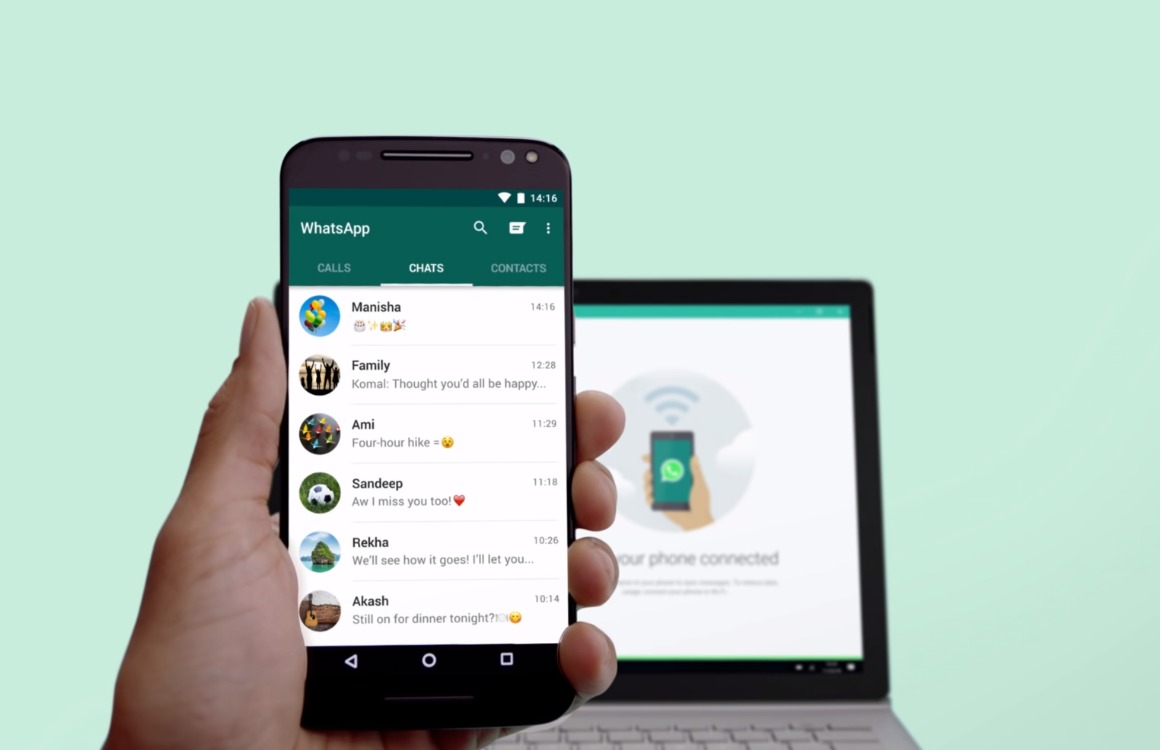
    WhatsApp is finally introducing an important feature that’s been promised since July, the option to remove the online requirement for use on multiplayer devices. As some of you may already know, if you want to use WhatsApp on a desktop, you must have your smartphone connected to the internet to have your conversations synced.

    The new feature that’s been in beta testing for several months allows WhatsApp users to disable the requirement and have WhatsApp run on any linked device without your smartphone being connected to the internet.

    For the time being, there’s a limit of four devices that can be connected to WhatsApp at the same time. Those who received the update should find the new feature under the “Linked devices” tab. Once enabled, WhatsApp will remove all previously connected devices, so you’ll have to add them again following the app’s instructions.

    After adding all devices that you’d like to use with WhatsApp, you won’t be needing your smartphone to be connected to the internet to sync the conversation or have access to the app. Keep in mind that the feature will not work on tablets and that there are some limitations on iPhones, such as the fact that you can’t clean or delete conversations on connected devices if your main device is an iPhone.

    Last but not least, for security reasons, if you don’t open WhatsApp on your phones for 14 days, the app will automatically disconnect all other devices and you will have to add them again.

  • WhatsApp now lets users transfer chat history from iPhone to Pixel, other Android devices

    WhatsApp now lets users transfer chat history from iPhone to Pixel, other Android devices

    If you switched from an iPhone to a Samsung Galaxy device in the last couple of months, then you shouldn’t have had any issues transferring your WhatsApp chat history from one phone to another. However, this specific feature is limited to Samsung Galaxy devices, or at least it was until recently.

    Google announced that it has finally managed to bring the same feature to Pixel and all other Android 12 smartphones. Starting today, iPhone users can safely transfer their chat history and memories from their WhatsApp account to Android.

    If order to successfully bring your WhatsApp chat history from an iPhone to a compatible Android device, you’ll need a USB-C to Lightning cable. After connecting the two phones, you will be prompted to scan a QR code with your iPhone to open WhatsApp and move all your conversations, media and any other memories to your new Android device.

    As mentioned earlier, this feature is already available on Samsung Galaxy devices, and now it’s fully supported on all Pixel phones. Google also confirmed that the transfer capability it will become available on new smartphones that launch with Android 12 too.

  • WhatsApp rolls out end-to-end encryption for backup services

    WhatsApp rolls out end-to-end encryption for backup services

    Although WhatsApp already offers end-to-end encryption for messages sent, received, and stored on a device, many users are taking advantage of the backup functionality to save the history of their chats in case they lose their phones.

    Up until today, these backups did not feature end-to-end encryption like the messages stored on the phone but going forward that will no longer be the case. WhatsApp announced that it’s now rolling out an extra, optional layer of security meant to protect backups stored on two specific services with end-to-end encryption: Google Drive and iCloud.

    Those who’d like to start using the new feature and secure their end-to-end encrypted backup with either a password or a 64-digit encryption key can do so now. Obviously, neither WhatsApp nor the backup service provider will be able to read backups or access the key required to unlock it.

    End-to-end encryption for backup stored on Google Drive and iCloud will be rolled out gradually to those using the latest version of WhatsApp. Once you update your app, head to Settings / Chats / Chat Backup / End-to-end Encrypted Backup, tap Continue and follow the prompts to create a password or key.

    Keep in mind that you won’t be able to restore your backup if you lose your WhatsApp chats and forget your password or key. WhatsApp won’t reset your password or restore the backup for you, so keep them safe.

  • WhatsApp to get iPad, multi-phone support

    WhatsApp to get iPad, multi-phone support

    WhatsApp has been the number one messaging in the world for a while—which is no small thing—but it isn’t without its own set of drawbacks.

    For one, it can only be activated on one phone at a time, despite the beta version allowing a limited pool of testers to download it to 3 other devices (not including phones or tablets). Another nuisance is that it has never been supported on iPads or other tablets—making this one less way you can communicate on your brand new iPad mini 6, unfortunately.

    However, both of these things may be about to change, if a new rumor by WaBetaInfo is to be believed. The media outlet reports, based on exclusive screenshots provided by WhatsApp, that the company is actively working on integrating iPad support for the messaging app, as well as a second phone.

    So far, users have only had the ability to link up to 4 devices to their WhatsApp account, but only a single phone. The new screenshot provided by WaBetaInfo shows the syncing screen of WhatsApp messages being downloaded to a second device, which is clearly a phone by its rectangular shape.

    Anyone who is already a lucky beta user of the multi-device support feature that’s being developed right now may have seen this screen before on WhatsApp for desktop or WhatsApp Web, but never before on a second phone.

    As is visible in the screenshot, just like any other WhatsApp chat history backup or transfer, the whole syncing process of the messages is protected with end-to-end encryption.

    If you are one of the millions of people who both own a tablet and regularly use WhatsApp, the lack of this important feature has probably annoyed you at some point as well.

    But another screenshot by WaBetaInfo doubtlessly points to the fact that WhatsApp is hard at work creating a compatible version of the app for iPadOS and, by the looks of it, making progress.

    Although it’s an iPad in the screenshot, WaBetaInfo has tweeted that the Android tablet version is also definitely in the works.

    Competing messaging app Telegram already supports the addition of as many phones, and tablets, as you own—which has been one of the reasons some WhatsApp users have turned towards that platform instead, despite it ranking lower on the popularity tier.

    It’s definitely about time that WhatsApp got to work on including multi-phone and tablet support and, as it does currently sit at the top of the hill when it comes to messaging apps, it can hardly afford to lag behind in such important features for its users.

  • WhatsApp makes it possible to move chats from iOS to Android using Android’s Data Restore Tool

    WhatsApp makes it possible to move chats from iOS to Android using Android’s Data Restore Tool

    The standard Android tool for transferring data from one device to another, Google’s Data Restore Tool, is preparing a nice addition to its transferring arsenal. The Tool might soon be getting the capability to transfer WhatsApp chats from iOS to Android.

    WhatsApp has a sometimes inconvenient limitation that it can be installed on only one smartphone per account. Despite the multi-device support that got recently introduced in a beta version of the app, the limitation for only one smartphone still stayed. This means there is no easy way for you to transfer your WhatsApp messages from iPhone to Android.

    However, Android’s built-in transfer app Data Restore Tool is getting ready to obtain the capability to do just that. The Data Restore Tool app’s version 1.0.382048734, available on the Google Play Store, will soon be able to transfer WhatsApp chats and history from iOS to Android.

    This feature does not currently work because WhatsApp first needs to launch the needed migration settings. This might happen sooner than later as WhatsApp has been spotted to be working on transfer options.

    When WhatsApp introduces the needed changes, in order to start the WhatsApp chats’ transfer between iOS and Android using the Tool, you need to follow these steps from the app itself:

    Transfer WhatsApp Chats > Scan the QR code with your iPhone to open WhatsApp > Start > Keep your iPhone unlocked and WhatsApp open.

  • WhatsApp is working on a simpler way to request a banned account review

    WhatsApp is working on a simpler way to request a banned account review

    WhatsApp has been suffering from some intensive spam, and for that reason, it has been taking banning accounts seriously. With this, though, some users might have actually gotten their account banned without spreading spam. Now, a new feature, currently under development, will make un-banning your account easier.

    The feature is currently seen as a hidden one in the beta version of WhatsApp and is yet to become publicly available. It will allow a user with a banned account to request a review of the situation from WhatsApp’s team.

    Once you have submitted a request, you will receive an in-app notification once it has been reviewed and whether your account has been restored. Reviews typically would take up to 24 hours, while, in the meantime, chats will not be deleted.
    As you may probably know, to battle spam and illegal activities, WhatsApp has automated systems for banning suspicious accounts. However, these systems aren’t always accurate and your account might get banned without any wrong activity whatsoever. Although this is a very rare occasion, it still can happen. If that’s the case, the reviewing of the ban will restore your account.

    Of course, if WhatsApp finds the ban was accurate, it will not remove it and you will need to register another phone number if you want to use the chat service. The feature has been spotted in the beta for iOS, but it will most likely be developed for Android as well.

    At the moment, it is unclear when this feature will make its way to the general public.

  • WhatsApp developing a way for users to send hi-res videos without attaching them as documents

    WhatsApp developing a way for users to send hi-res videos without attaching them as documents

    WhatsApp is developing an improvement to the options that users have when they send videos from the app. Unless they send a video through WhatsApp as a document, their clips will be automatically compressed on its way to recipients which negatively impacts its quality. At the beginning of this month, WABetaInfo discovered that WhatsApp is working on a way for Android users to customize the quality of their video uploads on WhatsApp and send hi-res video to others.

    The options being developed for WhatsApp beta users include “Auto,” “Best quality,” and “Data saver.” The “Auto” setting is the one recommended and continues using compression to send videos through a slower data network. “Best quality” will allow a WhatsApp user to share a higher resolution version of a video without having to send it as an attached document. Instead, with this setting, a high-res video can be sent through the app’s gallery (perhaps taking a little bit longer to disseminate because it is a larger file size) without a huge loss in quality.

    “Data Saver” will send a video without you worrying that you are about to run through your data cap. Of course, saving data while sending video means that the quality of the clip is going to be lower. And today, WABetaInfo found that in beta version 2.21.14.16, WhatsApp users get the ability to not only improve the quality of video that they are sending, but also improve the resolution of photos being uploaded.

    The three options for still photos are the same as the three offered for video: Auto (Recommended), Best quality, and Data saver. WhatsApp reminds users that “Best quality photos are larger and can take longer to send.” These options will be found in the “Media upload quality” section in “Storage and data” although this cannot be found yet on the current version of WhatsApp available from the Google Play Store.

    WhatsApp users are hoping that this update will be arriving very soon.

  • WhatsApp gets View Once messages in its beta version

    WhatsApp gets View Once messages in its beta version

    Last year, Facebook introduced Vanish Mode to Messenger and Instagram, a feature that allows users to send ephemeral messages. Now, the company is extending the feature to WhatsApp, and it is already available in the app’s beta version.

    The Vanish Mode in WhatApp has been dubbed “View Once”. Before you send a photo, video, or text, you have the option to tap on a little circle icon with the number one inside. That way, your message will automatically delete itself once viewed by the recipient. Additionally, you will receive a notification when your media has been opened.

    However, there is a crucial caveat to take note of. Unlike Messenger’s vanish mode, if the person on the other end of the conversation decides to screenshot or screen record your message, you will not be notified. Unfortunately, in its beta WhatsApp still does not support screenshot detection. We will have to wait and see if it gets added.

    There are also a couple of details in regards to disabling read receipts. Firstly, if read receipts are disabled, the person you’re chatting with will still be able to see whether you’ve opened View Once content. However, you won’t know if they have opened yours.

    On the other hand, you will still have the ability to see who has opened your message in group chats despite having read receipts disabled. Another important detail for group chats to remember is that blocked users can open the photos and videos you send to them. You can view who’s looked at the content by going to “Message Info”.

    View Once will work even for those who haven’t received it yet. Facebook hasn’t reported when View Once will graduate from the beta version to the stable one. Currently, it is available only on Android and will be introduced to iOS at a later date.

  • WhatsApp beta: encrypted backup feature will reportedly become available in the future

    WhatsApp beta: encrypted backup feature will reportedly become available in the future

    A recent policy change of WhatsApp’s privacy settings had the world start to turn its back on the popular messaging app. Now, however, WhatsApp has reversed its decision about that and seems to be working on bringing even more privacy-related features to its users.

    A WhatsApp beta version gives us a sneak peek of a privacy feature that will allow encryption of backups that are stored in Google Drive. You will be able to protect your backups, even the images, with a password, and reportedly the feature is in the works to become available for all WhatsApp users on Android.

    As we already stated, the feature is under development, so it’s not available to the public, but WABetaInfo states it will come in a future update. The password will protect your backup while it’s in Google Drive from unauthorized access, so you can be calm that your sensitive data, messages, and images are tightly encrypted and hidden from malicious users.

    We don’t have any information about when this feature will be made available. If you want to test new features, you can sign up for WhatsApp’s beta program from here.

  • WhatsApp disappearing messages feature may offer more time options in the future

    WhatsApp disappearing messages feature may offer more time options in the future

    Facebook-owned messaging service WhatsApp currently allows users to set their messages to disappear 7 days after they are sent. WhatsApp-centric website WABetaInfo reports that the platform may soon expand the functionality.

    WhatsApp appears to be testing a new option that would make messages vanish automatically 24 hours after they have been sent. The feature has been in development for around a month and even though the screenshot uploaded by the site only shows it’s being tested on an iPhone, it will likely be rolled out to Android users too.

    When the new version will be available is still a point for speculation.

    Ephemeral content was popularized by Snapchat, and WhatsApp’s rivals Signal and Telegram also let users send self-destructing messages. Tweet’s new fleets feature works similarly.

    When WhatsApp initially launched the feature last year, it said it was starting with seven days to offer “peace of mind that conversations aren’t permanent, while remaining practical so you don’t forget what you were chatting about.” This suggests it had plans to offer more options all along, which is hardly surprising.

    The new option will presumably be an addition to the existing 7-day option and will work the same way: posts in a chat, including photos and videos, will be deleted after a predetermined period of time and group admins will be able to turn disappearing messages on or off in group chats.

    There is still no way to prevent the other party from copying or screenshotting your messages, so be on your guard.

  • How luxury brands embraced WhatsApp during lockdowns

    How luxury brands embraced WhatsApp during lockdowns

    As Italy entered a new coronavirus lockdown and shut shops in March, Genoa-based jeweller Gismondi 1754 turned to messaging service WhatsApp to sell a 300,000 euro diamond ring to a wealthy Swiss client.

    At the same time, sales assistants at luxury puffer jacket brand Moncler were arranging gourmet dinner deliveries to customers homes so they could dine in style while watching a video streaming of the brand’s latest collection.

    The pandemic has forced luxury goods companies to use social media, video and virtual showrooms to woo their wealthy customers in Europe and keep them shopping at a time when tourists, especially from China, have been absent for more than a year.

    Retailers reopened in Britain and most of Italy on Monday, but they remain shut in France and access is restricted in Germany, where in Berlin, for example, a negative COVID test is required to go into most shops.

    Senior executives in the industry said this trend of selling outside the traditional store network, while not replacing the need for physical shops, is here to stay.

    “We are learning that we can also have a high level of service with a low level of physical contact,” Moncler’s boss Remo Ruffini told Reuters. “Distant sales are a new frontier, something in the middle between e-commerce and a traditional store.”

    Analysts say that lockdowns and “staycationing” mean that wealthy Europeans have money to spend that they are not splurging on fancy hotels or Michelin starred restaurants.

    High-end labels such as Hermes, which used to be more reticent to sell online, have had to fully embrace e-commerce. Online revenues for the industry have doubled to nearly 20% of sales in the past year alone, based on analyst estimates. Boston Consulting Group expects that percentage to rise to 25% by 2023

    Luxury labels have also invested in transforming store assistants into personal shoppers who pamper their VICs – very important clients – by sending them products at home and keep in touch regularly. Most brands now stream products on social media and show customers specific product videos.

    Before the pandemic, Gismondi would not have sold a 300,000 euros, 10-carat diamond ring without showing it to the client in person. “I was on the phone chatting with the lady who is buying it, and it came up that this was the dream of a lifetime for her,” Massimo Gismondi, chief executive of the jewelry group, said.

    From that moment, an exchange started with the lady via WhatsApp and video calls to find the perfect design for the ring that will be delivered to her home.

    “People are craving for leisure, for returning to savor life and spending,” Gismondi told Reuters.

    French luxury group LVMH’s star label Louis Vuitton in addition to online sales has started taking its shops to wealthy clients’ doorsteps in the United States.

    The “LV by Appointment” campaign essentially brings a tailor-made shop on wheels to the customer, curated with a personalized selection of pieces – from leather goods to watches and perfumes – for those who opt for the service.

    LVMH, the first to report results for the first quarter, set a very bullish tone for the industry. Revenues bounced back strongly, with its fashion and leather goods division surging 52% – double analysts’ forecasts. Sales in Europe remained in negative territory, but the 9% decline was a major improvement from the minus 24% seen in the fourth quarter.

    Luxury brands have had a strong recovery in China since shops began to reopen there last spring. But in Europe and the United States finding new ways to connect with customers has helped them to mitigate last year’s sales declines.

    Analysts say that improving sales in those two regions should also help revenues this year. Sales in Europe and the United States accounted for 60% of the total in 2019, and should come in at just under 50% by 2025, consultancy Bain said.

    Francois-Henri Pinault, CEO of Gucci owner Kering, said in February that the group’s revenues from “distant sales” – or sales outside its global store network – had risen sharply last year. The group had trained 400 sales assistants in 16 countries for this purpose, he said.

    One source at an Italian luxury fashion label said typically a brand’s marketing department will provide a list of clients to contact, based on what they have bought over the previous year.

    The sales assistants then phone customers, show them the latest arrivals via video chat, and send them clothes or shoes to try on.

    “You create a strong relationship between the salespeople and the customer,” Prada’s CEO Patrizio Bertelli told Reuters.

    “We have gone from the shop assistant that simply shows you a product to someone who also does a bit of marketing, knows customers, their taste and their habits, reaches out to them, and sends them stuff home.”

    A Milan-based PR executive who spends on average 40,000 euros ($47,552.00) a year in Prada’s stores said that since last year Prada has regularly sent her videos about its clothes.

    “If there is something I like they send it home. They know my size and if in doubt they send more than one size. I buy what I like and I send back the rest,” she said.

    Over the past year, cashmere sweater label Brunello Cucinelli has been organizing video calls with 30-40 customers at once to keep them engaged.

    “It allows us to have a dialogue with a number of people which, if we had to arrange a physical appointment, would take us perhaps 3-4 years,” the brand’s co-CEO, Luca Lisandroni, told Reuters. He also said that brands should not become too insistent in trying to sell their wares.

    “Some people like being contacted and stimulated, others don’t want to be solicited too much,” he said.
  • WhatsApp is working on encrypted chat backups, disappearing photo feature

    WhatsApp is working on encrypted chat backups, disappearing photo feature

    We’ve got a bit of welcome news from a WhatsApp leak today, especially in this era of constant bombardment with news about data spills and app security breaches all over the place.

    “WhatsApp is working on cloud backups encryption,” the independent but reliable source WABetaInfo claims in the Twitter leak. Apparently, WhatsApp is introducing a new password-protected chat backup feature on their messaging app. You can choose to lock any of your chats behind a password, and not even WhatsApp will have access to these private passwords. Upon reinstallation of WhatsApp, or installation on a new device, you will receive a password prompt to unlock your protected messages.

    Although the chat database is already encrypted, the encryption does not extend to shared media, and according to WABetaInfo, the algorithm is reversible and not end-to-end encrypted.

    The cloud-backup encryption feature should become available on a future update for both Android and iOS.

    This is not the only security update news we’ve got from WhatsApp, however. A few days ago, it was revealed WhatsApp is also testing a function for sending messages which disappear after 24 hours, as well as self-destructing photos—Snapchat-style.

    In order to use any of these features, though, you will have to agree to WhatsApp’s new privacy policy before the May 15 deadline. Failing to do so will make you lose the functionality of the app and all upcoming features.

  • WhatsApp now lets you import third-party sticker packs

    WhatsApp now lets you import third-party sticker packs

    For those of you who will agree with WhatsApp’s updated privacy policy so that you can still be able to use the app, here is one new feature that’s coming to you in the next few days. For a very long time, WhatsApp only allowed customers to use the sticker packs available through its app.

    However, that’s about to change very soon, as WhatsApp is now rolling out a new feature that will allow users of its app to import third-party sticker packs. WaBetaInfo discovered that WhatsApp is testing such a feature many months ago, and now they’re reporting that the company is finally rolling it out to users in select countries.

    For the time being, the option to import third-party sticker packs is only available in Brazil, India, and Indonesia, but you have to update WhatsApp to version 2.21.5.6 Android beta and 2.21.40 iOS. It’s probably going to be made available in other countries in the coming days, so be patient if you’re not living in one of these countries.

  • Here’s what WhatsApp subscribers face if they don’t opt-in to the new Privacy Policy by May 15th

    Here’s what WhatsApp subscribers face if they don’t opt-in to the new Privacy Policy by May 15th

    WhatsApp is not planning on making any changes to its new Privacy Policy and users must opt-in to the update by May 15th. In an email from WhatsApp to one of its merchant partners , WhatsApp will “slowly ask” users to agree to its new terms. Those who do not comply with the new terms will lose full functionality of WhatsApp starting on May 15th. Those subscribers not agreeing to the new policy by that date will face a punishment. In its newly posted FAQ page, WhatsApp says, “To give you enough time to review changes at your own pace and convenience, we’ve extended the effective date to May 15th. If you haven’t accepted by then, WhatsApp will not delete your account.
    However, you won’t have full functionality of WhatsApp until you accept. For a short time, you’ll be able to receive calls and notifications, but won’t be able to read or send messages from the app. By “a short time,” WhatsApp means “for a few weeks.”
    After May 15th, you can still accept the updates although WhatsApps rules regarding inactive users will apply. Those rules say that after 120 days of inactivity, accounts are usually deleted. And if you do decide to delete your WhatsApp account, there is a price to pay. The WhatsApp Help Center says, “If you’d like to delete your account on Android, iPhone, or KaiOS, we hope you reconsider. It is something we cannot reverse as it erases your message history, removes you from all of your WhatsApp groups, and deletes your WhatsApp backups.”
    So what is this whole thing about? WhatsApp has been forced to update its privacy policy after deciding that it will allow users to directly message businesses on its platform. The problem is that there is a grave misunderstanding with some subscribers believing that by agreeing to the new Privacy Policy update, WhatsApp users will be sharing their personal data with Facebook. But this is not true and private messages will remain encrypted from end-to-end. This won’t be the case for messages sent to businesses over WhatsApp. Data used in business messages can be used for ad targeting with some data kept on Facebook’s servers.
    WhatsApp once described end-to-end encryption in this way: “Strong encryption acts like an unbreakable digital lock that keeps the information you send over WhatsApp secure, helping protect you from hackers and criminals. Messages are only kept on your phone, and no one in between can read your messages or listen to your calls, not even us. Your private conversations stay between you.”
    The misplaced belief that Facebook was getting to see encrypted messages between WhatsApp users led a number of subscribers to make the decision to leave WhatsApp for rival messaging apps like Signal and Telegram. But had users understood that their personal messages remain encrypted, the rush for the exits would not have happened. Talking about the confusion and the mistaken beliefs about Facebook, a WhatsApp spokesman said, “We’ve heard from so many people how much confusion there is around our recent update.
    There’s been a lot of misinformation causing concern and we want to help everyone understand our principles and the facts.” So in the weeks leading up to the May 15th deadline, WhatsApp is going to post an in-app banner that will allow users to re-read about the new privacy update so that they will accept the changes allowing them to continue using the app. An image of that banner accompanies this article.
    The new privacy policy will allow WhatsApp and Facebook to share payment and transaction data to target ads better. For the last five years, WhatsApp has shared user phone numbers and device information with Facebook.  The latter bought WhatsApp for a final price north of $19 billion in February 2014. WhatsApp has over 2 billion users in over 180 countries.
  • Telegram update makes it easier to switch from WhatsApp

    Telegram update makes it easier to switch from WhatsApp

    It looks like the WhatsApp exodus caught its rivals by surprise, as apps like Telegram and Signal had to accommodate a lot more users than their servers could handle. Moreover, switchers weren’t allowed to carry over their conversations to the new messaging service.

    Starting today, WhatsApp users who wish to switch to Telegram will be able to do so without losing any of their messages and memories that typically remain in older apps. Telegram announced that the new feature allows not just WhatsApp, but also Line and KakaoTalk users, to bring their chat history, including videos and documents to its app.

    WhatsApp users on iPhone who wish to switch to Telegram can do so by opening the Contact Info or Group Info page in WhatsApp, tap Export Chat, then choose Telegram in the Share menu. As for Android users, they should open a WhatsApp chat, tap More / Export Chat, then choose Telegram in the Share menu.

    According to Telegram, all the messages and media moved from WhatsApp don’t need to occupy extra space. Telegram users can free up space and control their cache size from the Settings menu, under Data and Storage / Storage Usage.

    In addition to making it easier for WhatsApp users to switch to Telegram, the app’s latest update provides users with more control over security features like secret chats, groups created and call history, which can now also be deleted for all sides at any time.