Tag: whatsapp

  • Facebook, Instagram, and WhatsApp will no longer be pre-loaded on Huawei phones

    Facebook, Instagram, and WhatsApp will no longer be pre-loaded on Huawei phones

    While Huawei continues to see a road ahead for its US government-threatened smartphone division, the exodus of major business partners, key components suppliers, and allies is far from over, posing new difficulties and creating bigger and bigger problems almost every single day.

    The latest bridge to be reportedly burned as a direct consequence of President Trump’s controversial executive order last month (which was since suspended for a period of 90 days) is arguably less critical than similar decisions previously made by the likes of Google, Qualcomm, Intel, and Arm. But it’s yet another thing that complicates Huawei’s existence, threatening to severely damage its Western brand image.

    Facebook is getting ready to pull out its support for future Huawei handsets, planning to no longer allow the pre-installation of the social networking giant’s crazy popular apps on the Chinese tech behemoth’s mobile devices. We’re obviously talking about the main Facebook platform first and foremost, but also WhatsApp and Instagram, all three of which are typically available for users of existing Huawei phones at first boot.

    The handsets that are already in circulation are unlikely to be affected by Facebook’s decision, as they will continue to receive any and all updates delivered to social networking and instant messaging apps. But Huawei phones that are not yet released and have not yet left factories are expected to come without the aforementioned services pre-loaded. That wouldn’t be such a big problem if Google wasn’t intent on cutting off access to the Play Store for future Huawei devices as well in compliance with the US ban expected to be enforced in a couple of months.

    Without Facebook, possibly Twitter, and other Western-leading apps and services, it seems Huawei truly needs to build its Android and Google Play alternatives from scratch. That’s probably going to take a while (if it’s even doable to begin with), during which time the company’s sales numbers could fall off a cliff. Of course, Facebook is still blocked in China, so at least there’s that.

  • WhatsApp vulnerability allowed government-grade spyware to be installed

    WhatsApp vulnerability allowed government-grade spyware to be installed

    WhatsApp, one of the most popular messaging apps out there, has once again been the subject of hacking, but this time the method used involves government-grade spyware. Although we have no information that would confirm who’s behind the attack, the spyware used is usually sold to governments.

    The vulnerability discovered by WhatsApp just a few weeks ago would allow a caller to install spyware on the device being called, regardless of whether or not the could be answered.

    The spyware installed was made by Israel-based NSO Group Pegasus, and is usually licensed to governments that want to hack targets of investigations and gain access to multiple aspects of their devices.

    It’s unclear how many Android and iOS devices were affected by the vulnerability, but as you can imagine, anyone with access to the spyware could hack any WhatsApp user. On the bright side, WhatsApp said that it took less than 10 days after it discovered the security issue to patch it. The company also believes that only a relatively small number of users were targeted by the attack.

    This attack has all the hallmarks of a private company known to work with governments to deliver spyware that reportedly takes over the functions of mobile phone operating systems. We have briefed a number of human rights organizations to share the information we can, and to work with them to notify civil society.

    If you have WhatsApp installed on your phone, installing the latest version of the app will render the attack inoperable, even if it was infected with the government-grade spyware.

  • WhatsApp to end support for Windows Phone

    WhatsApp to end support for Windows Phone

    WhatsApp has just confirmed that it will end support for Windows Phone, as well as some older versions of Android and iOS. Starting from December 31, 2019, WhatsApp for Windows Phone will stop working, while next year the developer will no longer support devices running older versions of Android and iOS.

    In case you’re wondering why WhatsApp has decided to turn off support for Windows Phone ahead of 2020, it’s worth mentioning that this is consistent with Microsoft’s decision to end support for their mobile operating system.

    Concerning the other two operating systems, WhatsApp will stop working on devices running Android version 2.3.7 and older starting February 1, 2020. Also, devices powered by iOS 7 and older will no longer be compatible with WhatsApp effective February 1, 2020.

    However, since WhatsApp won’t be developing for these operating systems anymore, some features that are now available might stop working even before the deadline, so you might want to switch to a newer device if you want to continue to use WhatsApp.

    Moreover, if you’re using a device that runs these older Android and iOS versions, you won’t be able to create new accounts, nor reverify existing accounts, as of right now.

  • Facebook expects to be hit hard by the FTC

    Facebook expects to be hit hard by the FTC

    After word got out last year that 87 million Facebook members had their profiles sold to political consultant Cambridge Analytica without permission, the Federal Trade Commission started an investigation. After all, this action violated an FTC consent decree that Facebook signed off on back in 2011, promising not to use subscribers’ personal data without consent.

    Facebook announced its first-quarter results today and took a charge of $3 billion to cover an anticipated fine from the Federal Trade Commission (FTC). Neither side has reached an agreement, but clearly, Facebook expects to be spanked pretty hard by the FTC. The company noted in its report that it faces a fine as high as $5 billion from the FTC. The 87 million profiles received by Cambridge Analytica were reportedly used to created profiles of voters used by the 2016 Trump campaign to determine the areas of the country where more money needed to be spent for advertising.

    Facebook also announced today that 2.1 billion people use Facebook, WhatsApp, Messenger or Instagram on a daily basis, and 2.7 billion use one of these members of the Facebook family at least once a month. At the end of the three months that included January through March of this year, Facebook had $45.42 billion in the vault. That’s after the company spent $3.96 billion on capital expenditures during the quarter.

    For the first quarter of 2019, Facebook had $15.1 billion in revenue. That was up 26% from the $12 billion it raked in during the same quarter a year earlier. Net came to $2.4 billion (or 85 cents a share) against $5 billion earned during the first quarter of 2018. But those results include the $3 billion charge. Without the charge, Facebook would have earned $1.89 per share vs. the $1.69 it reported for the first three months last year.

  • Subscribers to Facebook, Instagram and WhatsApp faced over 2 hours Downtime

    Subscribers to Facebook, Instagram and WhatsApp faced over 2 hours Downtime

    If you mosey on over to DownDetector.com you’ll notice something interesting. The graphs that measure the number of complaints received by Facebook, Instagram, and WhatsApp users all look the same. That’s because the trio was down world-wide for over two hours today. And of course, all three apps are owned by Facebook.

    Starting at about 6:30 am EST, complaints about all three started to roll in, peaking about 90 minutes later. Some Facebook users could not access the app at all, and others could not refresh their news feeds. Instagram users had the same issues, and WhatsApp members could not send or receive messages. Almost a month ago to the day, all three were down in North America, Europe, and Latin America for as long as 24 hours. Facebook blamed the problem on a “server configuration change.”

    After the issue was resolved today, Facebook released a statement apologizing for the inconvenience. So far though, the company has not revealed the reason for Sunday’s outages.

    “Earlier today, some people may have experienced trouble connecting to the family of apps. The issue has since been resolved; we’re sorry for any inconvenience.”-Facebook

    Facebook purchased Instagram for $1 billion back in April 2012. It closed on the purchase of WhatsApp in October 2014. The final purchase price amounted to more than $21 billion.

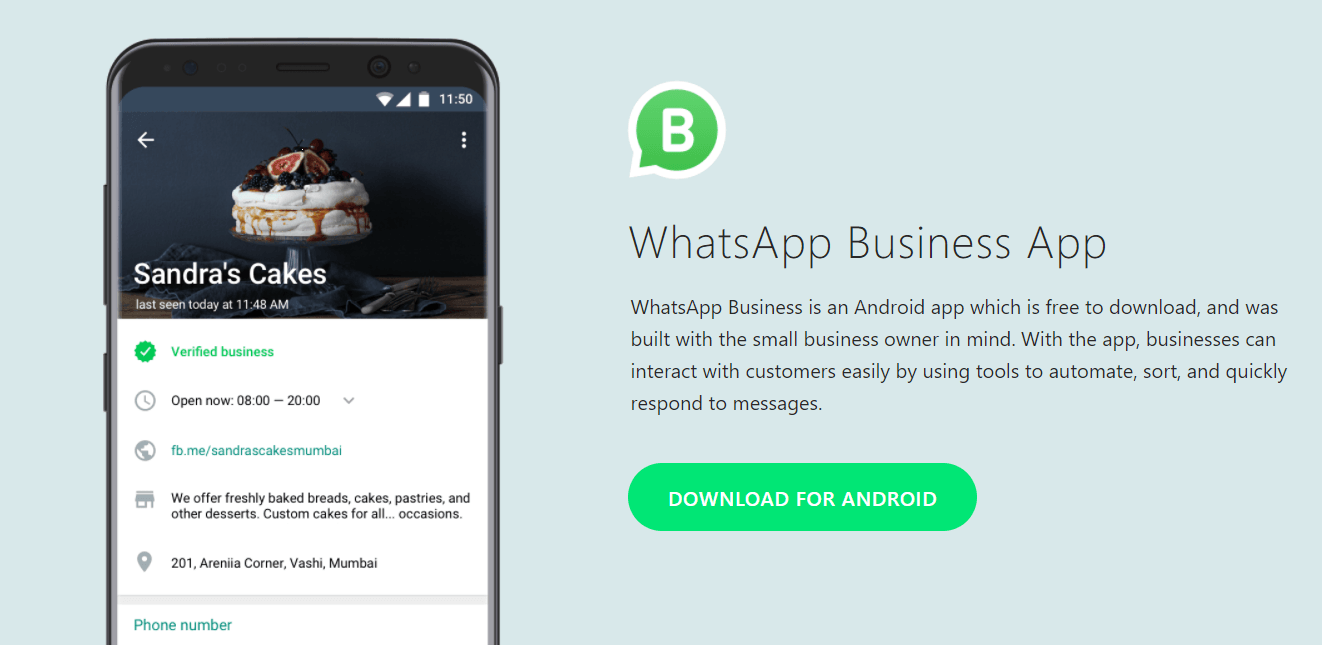
  • WhatsApp Business officially rolling out for iPhone

    WhatsApp Business officially rolling out for iPhone

    We reported two weeks ago that WhatsApp Business might be finally coming to iOS devices, as many users from several countries found the app listed in the App Store. Initially launched on Android, WhatsApp Business is now officially rolling out for iPhone, the company announced in a blog post

    Of course, the app is available for free via App Store, but you’ll have to create an account before you can take advantage of all the business-centric features it has to offer. Keep in mind that WhatsApp Business will first be available in Brazil, Germany, Indonesia, India, Mexico, the UK, and the United States, but WhatsApp said the app will be made available worldwide in the coming weeks.

    With WhatsApp Business, you’ll be able to share useful information about your business, including its description, email and store addresses, as well as website. Also, thanks to the integrated messaging tools, you’ll be able to respond to customers very easy via quick replies, greeting messages, and away messages.

    Last but not least, WhatsApp Business is a cross-platform service, which means you’ll be able to chat from your desktop to manage conversations and send files to customers, not just from your iPhone or Android smartphone.

  • The dying art of a good conversation

    The dying art of a good conversation

    What with Facetime, Skype, Whatsapp and Snapchat, for many people, face-to-face conversation is used less and less often.

    These apps allow us to converse with each other quickly and easily – overcoming distances, time zones and countries. We can even talk to virtual assistants such as Alexa, Cortana or Siri – commanding them to play our favourite songs, films, or tell us the weather forecast.

    Often these ways of communicating reduce the need to speak to another human being. This has led to some of the conversational snippets of our daily lives now taking place mainly via technological devices. So no longer do we need to talk with shop assistants, receptionists, bus drivers or even coworkers, we simply engage with a screen to communicate whatever it is we want to say.

    In fact, in these scenarios, we tend to only speak to other people when the digital technology does not operate successfully. For instance, human contact occurs when we call for an assistant to help us when an item is not recognised at the self-service checkout.

    And when we have the ability to connect so quickly and easily with others using technological devices and software applications it is easy to start to overlook the value of face-to-face conversation. It seems easier to text someone rather than meet with them.

    Bodily cues

    My research into digital technologies indicates that phrases such as “word of mouth” or “keeping in touch” point to the importance of face-to-face conversation. Indeed, face-to-face conversation can strengthen social ties: with our neighbours, friends, work colleagues and other people we encounter during our day.

    It acknowledges their existence, their humanness, in ways that instant messaging and texting do not. Face-to-face conversation is a rich experience that involves drawing on memories, making connections, making mental images, associations and choosing a response. Face-to-face conversation is also multisensory: it’s not just about sending or receiving pre-programmed trinkets such as likes, cartoon love hearts and grinning yellow emojis.

    When having a conversation using video you mainly see another person’s face only as a flat image on a screen. But when we have a face-to-face conversation in real life, we can look into someone’s eyes, reach out and touch them. We can also observe the other person’s body posture and the gestures they use when speaking – and interpret these accordingly. All these factors, contribute to the sensory intensity and depth of the face-to-face conversations we have in daily life.

    Speaking to machines

    Sherry Turkle, professor of social studies of science and technology, warns that when we first “speak through machines, [we] forget how essential face-to-face conversation is to our relationships, our creativity, and our capacity for empathy”. But then “we take a further step and speak not just through machines but to machines”.

    In many ways, our everyday lives now involve a blend of face-to-face and technologically mediated forms of communication. But in my teaching and research I explain how digital forms of communication can supplement, rather than replace face-to-face conversation.

    At the same time though, it is also important to acknowledge that some people value online communication because they can express themselves in ways they might find difficult through face-to-face conversation.

    Look up from your phone

    Gary Turk, is a spoken word poet whose poem Look Up illustrates what is at stake by becoming entranced by technological ways of communicating at the expense of connecting with others face-to-face.

    Turk’s poem draws attention to the rich, sensory aspects of face-to-face communication, valuing bodily presence in relation to friendship, companionship and intimacy. The central idea running through Turk’s evocative poem is that screen-based devices consume our attention while distancing us from the bodily sense of being with others.

    Ultimately the sound, touch, smell and observation of bodily cues we experience when having a face-to-face conversation cannot be fully replaced by our technological devices. Communicating and connecting with others through face-to-face discussion is valuable because it is not something that can be edited, paused or replayed.

    So next time you’re deciding between human or machine at the supermarket checkout or whether to get up from your desk and walk to another office to talk to a colleague – rather than sending them an email – it might be worth following Turk’s advice and engaging with the human rather than the screen.

  • WhatsApp is now rolling out a renewed privacy feature

    WhatsApp is now rolling out a renewed privacy feature

    Groups are a vital part of WhatsApp, although as the Facebook-owned messaging platform has grown in popularity so has the number of unwanted group chats. But today, after testing them for a while on iOS, WhatsApp is rolling out new privacy settings which should help control this.

    Until now, group admins could add any WhatsApp user to a group without needing their consent – the only requirement being that the user is a contact in the admin’s phone. As part of this latest rollout, though, WhatsApp users will now be able to choose which people can add them to groups.

    In order to access the new feature, users need to simply head over to the Settings menu within WhatsApp and tap Accounts. Then a quick tap on Privacy and later Groups will present users with the choice of three options: ‘Everyone,’ ‘My Contacts,’ or ‘Nobody.’ Each one is pretty self-explanatory with ‘Nobody’ meaning users will have to approve every single group with ‘Everyone’ allows users to leave their group invitations completely open, as they are today.

    WhatsApp’s latest privacy feature will begin rollout out today to a select number of users before expanding globally across the coming weeks.

  • WhatsApp closer to protecting the retinas of Androids

    WhatsApp closer to protecting the retinas of Androids

    There are two words that when seen in print by a smartphone user, will instantly get him or her to react by installing a particular app, or checking to see if an update has been received for an app already installed. Those two words are Dark Mode. This is a feature that reverses the typical black text on white background so that the screen shows white text on a black background.

    Android Q is supposed to feature a system-wide Dark Mode in its final version, and iOS 13 is rumored to have the same thing. Google added the feature over the last year to a number of core Android apps that it updated to the retina melting Material Design. The latter features plenty of bright white in the background. Dark Mode, as we’ve just insinuated, helps protect users from a blinding white background that is intensified at night or in dark rooms. It also can save some battery life on phones with OLED screens since more black in the background means fewer energy consuming pixels need to be turned on. And many feel it just is a different and “cool” look.

    Those with the beta version of WhatsApp installed on their Android phone have received version 2.19.82 of the app. The feature, while still under development, is hidden in the latest update, and right now it is being tested on the settings pages only. The iOS version of WhatsApp already has a Dark Mode. What might not seem obvious from the screenshots is that a dark gray, and not black background is being used by WhatsApp for its Dark Mode, which means you can scratch out the additional battery life you were hoping to achieve when the new feature is fully enabled on the regular Android version of the app.

    Besides Dark Mode, the new beta update adds the name of an audio file to the bar found on the display that includes the play button.

  • WhatsApp building a New Feature Allowing Users to detect spam and fake news

    WhatsApp building a New Feature Allowing Users to detect spam and fake news

    Facebook owned WhatsApp is testing a new feature that will allow a user to see how many times a message has been forwarded. The beta update to version 2.19.80 includes a new functionality allowing a user to view how many times a message he or she received has been forwarded. To obtain this information, the user needs to forward a received message, open up the Message info section, and the data will be there. A message that has been forwarded five or more times will receive a bubble that says “Frequently Forwarded.”
    The number of times that a message you sent via WhatsApp has been forwarded is something that can already be found in the Message info section. If you install the beta version of the messaging app on your Android or iOS phone (via TestFlight) you will be able to see the number of times both a sent and received message has been forwarded. WhatsApp is adding this feature to help a user see whether a message is spam. Some messages that have been forwarded a number of times are spam, or might be “fake news.”
    Facebook acquired WhatsApp in a blockbuster deal that closed in October, 2014. Originally valued at what was considered an outrageous amount of money at the time the deal was announced ($16 billion), by the time the transaction closed eight months later the purchase was valued at $21 billion.
  • RCS and OTT to fuel A2P business messages to 3.5tr by 2023

    RCS and OTT to fuel A2P business messages to 3.5tr by 2023

    A new study from Juniper Research found that 3.5 trillion business A2P (Application-to-Person) messages will be delivered by 2023, up from an estimated 2.5 trillion in 2019, a 40% growth.

    The new Juniper Research paper, A2P Messaging: SMS, RCS & OTT Business Messaging 2019-2023, forecast that the rich media interactivity of RCS (Rich Communications Suite) would make the emerging messaging technology popular for retail and marketing business use cases.

    It claimed that this enhanced functionality will drive RCS traffic to an average annual growth of 290% over the next 4 years, to help the growth of operators’ total messaging revenues.

    Not enough

    However, despite strong growth, RCS will account for only 2% of all A2P traffic by 2023, reaching 56 billion A2P messages. The research suggested that A2P messaging users will continue to use SMS owing to the familiarity of the protocol. As a result, it claimed that the growth of RCS will be mostly driven by new traffic, rather than the migration of existing traffic from SMS.

    Research author Sam Barker remarked, “Future growth of RCS traffic will be driven by users migrating away from dedicated mobile apps. The technology will develop to become the first point of contact for RCS users to engage with brands over mobile devices within 5 years”.

    OTT business messages future slowed by fragmentation

    The research also found that OTT business messaging platforms, such as WhatsApp for Business, will deliver 236 billion messages by 2023. However, they will continue to suffer from a fragmented user base across multiple messaging applications.

    The research cited the use of CPaaS (Communications-Platform-as-a-Service) solutions as essential to enable fallback onto the ubiquitous SMS protocol to ensure message termination. Additionally, it found these platforms will allow the collection of insightful data, including contact preferences, to enable A2P business users to optimize messaging campaigns.

  • Facebook’s massive outage helped a rival app gaining millions of new users

    Facebook’s massive outage helped a rival app gaining millions of new users

    If you’re bothered by Facebook’s notoriously shady data harvesting methods and various other controversies surrounding the privacy and security of the social networking titan’s user base, it’s probably not a good idea to switch to Instagram. But there are actually many competing services and platforms on the market that Mark Zuckerberg does not own.

    One instant messaging app that has been growing at a pretty impressive pace for the past few years noticed a particularly large boost to its user numbers yesterday. According to its founder, Pavel Durov, a whopping 3 million people signed up for new Telegram accounts “within the last 24 hours.” It’s safe to assume that doesn’t happen every day for an IM and VoIP service that boasted a grand total of 200 million monthly active users around a year ago.

    While Durov doesn’t spell it out for us on his personal Telegram channel, the surge in sign-ups is naturally believed to be connected with Facebook’s most recent worldwide outage. A massive number of Facebook, Instagram, and WhatsApp users reported problems logging in to their accounts yesterday, and incredibly enough, the main social networking platform is still down for some people.

    Even though that seemed to boost the action (and jokes) on Twitter, where Facebook itself confirmed the issues, Pavel Durov suggests his app may have had more to gain thanks to its “true privacy and unlimited space for everyone.” Then again, Telegram had its fair share of scandals and controversies back in the day as well, disappearing from the iOS App Store at one point due to suspicions of rampant child pornography content spreading.

    The app is also banned in countries like Russia and China, although the reason for that might actually convince more people in the Western Hemisphere to switch from Facebook or WhatsApp to Telegram. Namely, a strict policy on sharing user information with government authorities.

  • YSL opens pop-up store to celebrates Valentine’s Day

    YSL opens pop-up store to celebrates Valentine’s Day

    YSL launched a limited store for Valentine’s Day 2019 in Central, Hong Kong, featuring on WhatsApp sticker, photo booth, and games. Obviously, pink and cosmetics are many girls’ favourite. So pink lovers will fall in love with YSL latest limited pop-up store in Central as the store is fully decorated in pink. Not only visitors will have the opportunity to get the cosmetics products, but they will also be able to take Instagrammable photos in front of different props and beautiful background.

    To participate in this event, visitor only need to register online to get a designated QR code and go during the reserved time slot. In addition to taking pretty pictures, visitors can also try YSL new collection of perfumes, blush, and lipsticks.

    One of the most attractive activities is to tailor-made unique WhatsApp stickers.

    In addition, making WhatsApp stickers, printing photos or buying any products in the pop-up provides points for playing the YSL’s clip doll machine. The higher the points, the more opportunities, so you can clip away YSL cosmetics products and take them home.

    The pop-up closes its doors just after Valentine’s Day.

  • India’s Shop101 in talks for funding boost

    India’s Shop101 in talks for funding boost

    Indian online marketplace Shop101 is seeking to raise $11-12 million in a Series B funding round. Talks concerning the investment are being led by Kalaari Capital and Unilever Ventures, with participation expected by current backer Stellaris Venture Partners, which invested $5 million several months ago. Investment capital is likely to assist the firm in technological development and expansion into new business categories.

    Shop101 uses Whatsapp, Facebook and Instagram functionality to support online entrepreneurs. WhatsApp and Facebook each have more than 200 million users in India. The Shop101 app has been downloaded about 1 million times and has experienced growth of 50 per cent month on month since its launch.

    A joint report by Google and KPMG last year indicated online SMEs could boost Indian economic growth by 10 per cent by 2020.

  • A2P SMS to bring new life to aging messaging market

    A2P SMS to bring new life to aging messaging market

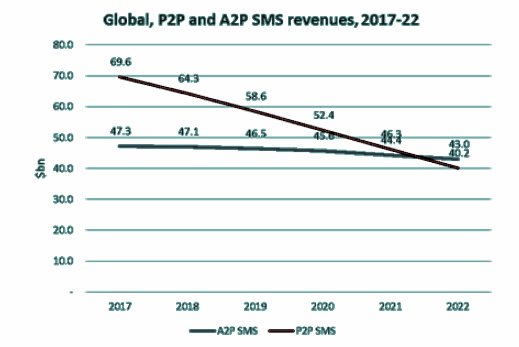
    SMS is not dead – not yet anyway. Ovum’s Mobile Messaging Traffic and Revenue Forecast: 2017-22 forecasts global revenues from application-to-person (A2P) SMS will finally exceed revenues from person-to-person (P2P) SMS by 2022, totalling $43 billion, even though A2P SMS traffic will be less than half of P2P SMS traffic by that time.

    P2P SMS revenues will generate just $40.2 billion in revenues by the end of the forecast period, but P2P SMS traffic will total 3.4 trillion messages in 2022, by comparison to 1.5 trillion A2P SMS.

    Figure 1: Global P2P and A2P SMS revenue, 2017-2022

    Figure 1: Global P2P and A2P sms revenue, 2017-2022Source: Ovum 2018

    The bulk of P2P and A2P SMS traffic and revenues will come mainly from the mobile-first, powerhouse markets of China, India and Indonesia.

    “Unfortunately for most telcos, P2P SMS has become essentially value-less, since they have had to bundle unlimited SMS into mobile tariffs to remain relevant to their customers, an increasing number of whom use chat apps such as WhatsApp, WeChat and Facebook Messenger. However, telcos can still charge a per-message termination rate for A2P SMS, which means it remains a more valuable source of revenues, since enterprises still value SMS for its global reach, affordability and mature ecosystem,” said Pamela Clark-Dickson, practice leader of Ovum’s communications and social team.

    Ovum forecasts chat apps will have 3.2 billion unique monthly active users (MAUs) by 2020, connecting enterprises with consumers via their platforms. Telcos and the wider ecosystem are therefore under pressure to protect their A2P revenues, driving them to upgrade from SMS to Rich Communication Services (RCS).