Retail News CRM

Tag: wireless

  • Oppo Outpaces Samsung: Next Flagship Phone May Introduce Game-Changing Qi2 Magnetic Wireless Charging

    Oppo Outpaces Samsung: Next Flagship Phone May Introduce Game-Changing Qi2 Magnetic Wireless Charging

    Wireless charging continues to be a topic of contention for modern smartphone users. The feature provides the convenience of powering up your device without the need for cables. However, past experiences have proven to be less than satisfactory. This started to shift with the introduction of Apple’s MagSafe, leading to the development of Qi2. The latter is anticipated to gain more widespread acceptance in the near future.

    Potential Adoption of Qi2 by Oppo

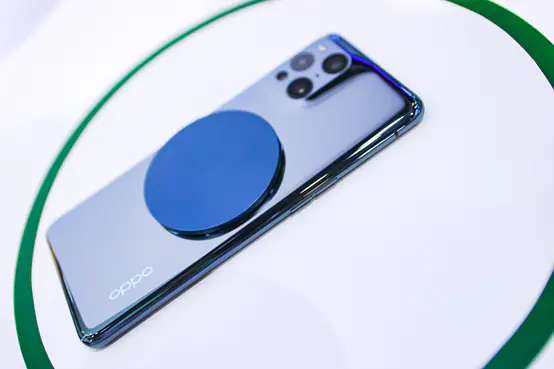
    The launch of the Oppo Find X10 series is anticipated to be months away, but initial whispers about the device have begun to circulate. Speculation suggests that the new smartphone may incorporate magnetic wireless charging. The exact features are not clear at this time, but there is a possibility that the device could support Qi2 upon its launch in the latter half of 2026.

    Assuming these rumors hold true, Oppo will be the first Chinese smartphone manufacturer to incorporate magnets into their device. This will enable the Find X10 series to be compatible with the magnetic accessories that are part of Apple’s MagSafe and Google’s Pixelsnap ecosystem. However, there is still uncertainty as to whether the devices will support the latest Qi2.2 standard.

    Missed Opportunity by Samsung

    Apple and Google are currently the only major brands that offer smartphones equipped with built-in magnets. Samsung had been rumored to include native Qi2 support in their upcoming flagship, the Galaxy S26 Ultra. Despite this, recent leaks of potential official cases for the device suggest that there will not be integrated magnets.

    Apple stands as a pioneer in terms of magnetic wireless charging, having introduced MagSafe with the iPhone 12 series. Google has followed suit, launching its Pixelsnap system with the Pixel 10 series. However, no other major brand currently supports built-in magnetic charging.

    Samsung’s Galaxy S25 series and the Galaxy Z Fold 7, Galaxy Z Flip 7, and Galaxy Z Flip 7 FE are all Qi2-Ready. This means that users can purchase a Qi2-Ready case for these devices and take advantage of the improved charging speeds provided by the magnets in the case.

    The Oppo Find X9 series, which includes the Find X9 Pro and the upcoming Find X9 Ultra, support wireless charging. However, they do not have magnets and are not Qi2-Ready. Despite this, the Find X9 Pro outperforms the wireless charging speeds of the Galaxy S25 by offering 50W wireless charging, as opposed to Samsung’s 15W.

    While Oppo is not available in the US, OnePlus, another brand under the same company, is sold stateside. If past trends hold, we may see features from the Find X series make their way to OnePlus devices. This could be a major selling point for a brand that has been struggling recently.

    Questions & Answers

    What is the expected feature of the Oppo Find X10 series?
    The Oppo Find X10 series may include magnetic wireless charging, potentially supporting Qi2.

    Which major brands currently offer smartphones with built-in magnets?
    Currently, only Apple and Google offer smartphones with built-in magnets.

    Do the Oppo Find X9 series devices support wireless charging?
    Yes, the Oppo Find X9 series devices do support wireless charging, but they do not have built-in magnets, nor are they Qi2-Ready.

  • Wi-Fi is old school; get ready for faster, more secure Li-Fi

    Wi-Fi is old school; get ready for faster, more secure Li-Fi

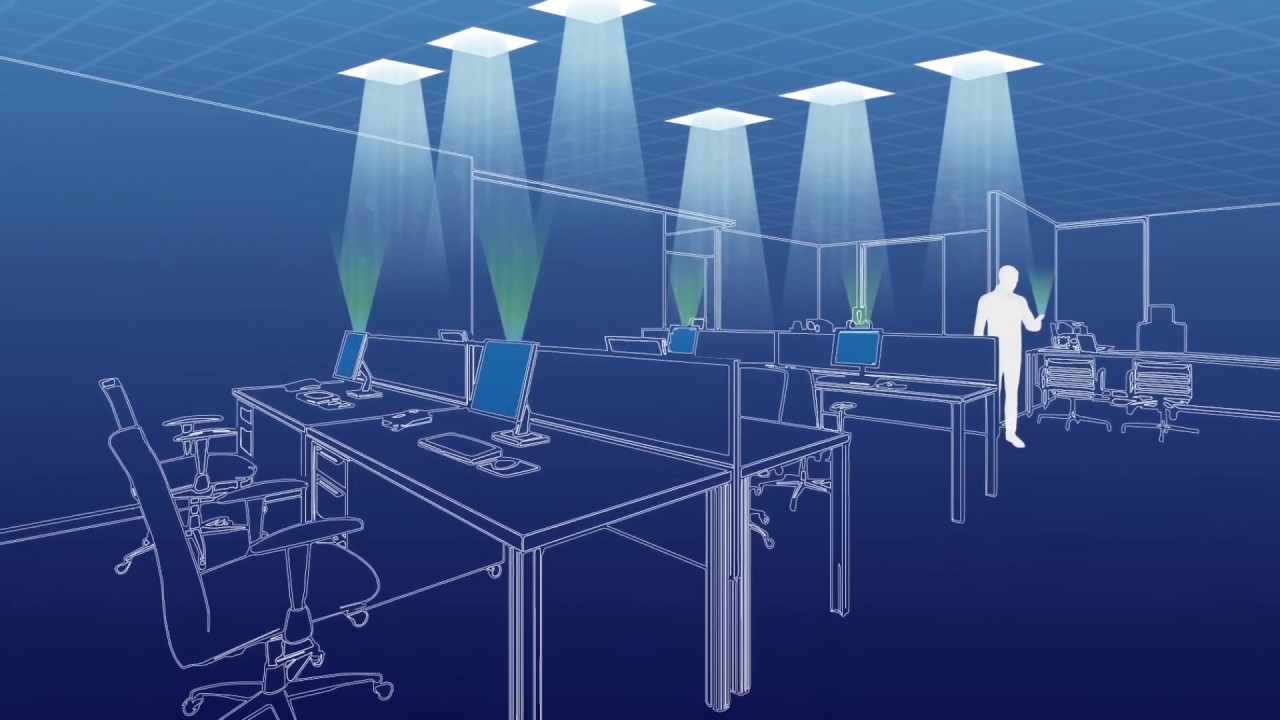
    Wi-Fi might be on the way out even though Wi-Fi 7 is on the way in. The IEEE standards body that oversees Wi-Fi has released the IEEE 802.11bb light communications standard that will cover the emerging Li-Fi technology. Instead of using wireless network signals, Li-Fi uses invisible (to the human eye, anyway) infrared light to deliver light-based wireless optical connectivity at speeds up to 100 times faster than Wi-Fi.
    Light can deliver signals free of radio interference and Li-Fi already has a competing standard, the International Telecommunication Union’s G.9991. The Verge notes that this standard is used with data-beaming bulbs from Signify. Another company called pureLiFi released the Light Antenna One system in February which already meets 802.11bb standards. This is a module that could fit into smartphones and the manufacturer claims that it can deliver data speeds exceeding 1Gbps.
    However, Light Antenna One is rated to communicate with devices less than 10 feet away and when transmitting back it has only a 24-degree field of view. Still, the manufacturer of the Light Antenna One says that it is ready “to enable mass integration of Li-Fi for the first time.” Despite the 1Gbps claim from pureLiFi, download data speeds for Li-Fi are said to be as high as 224Gbps which tops the average 40Gbps download speed expected for Wi-Fi 7.
    Some of the advantages of Li-Fi includes better security as signals are less likely to leak through walls. Li-Fi transmitters can be easily installed in light fixtures used in offices, and Li-Fi’s higher data speeds certainly would deliver the fast connectivity that Augmented Reality, Virtual Reality, and gaming devices could benefit from. And besides the faster download speeds, Li-Fi promises to deliver low latencies.
    This is just the beginning of Li-Fi and in a few years, we might be talking about the technology with the same familiarity we use when talking about Wi-Fi.
  • Reliance Jio gains wireless subscribers contrary to rival operators

    Reliance Jio gains wireless subscribers contrary to rival operators

    According to data issued by the Telecom Regulatory Authority of India (TRAI), total wireless subscribers reached 1,166.30 million at the end of October 2021, with the urban areas accounting for 637.44 million and rural areas totaling 528.86 million.

    As on 31 October, 2021, private access service providers held 89.99% market share of wireless subscribers, with the two PSU access service providers, namely BSNL and MTNL possessing a 10.01% market share.

    Reliance Jio had the largest market share at 36.58%, followed by Airtel at 30.35% and Vodafone at 23.07%.

    Reliance Jio reportedly added 1.7 million subscribers in October, bringing its subscriber base to 426.59 million. Airtel, however, has a subscriber base of 353.97 million after shedding some 0.48 million in the same month. Vodafone’s subscriber base also dropped, totalling 269.02 million after losing 0.96 million subscribers.

    Data published by TRAI previously revealed that Reliance Jio has the highest average data download speed of 24.1 MB/s among 4G service providers in India.

  • Infinet Wireless seals new distribution partnership with Terra Matrix in Malaysia

    Infinet Wireless seals new distribution partnership with Terra Matrix in Malaysia

    Infinet Wireless, the global leader in fixed wireless broadband connectivity, announces a new distribution partnership with Terra Matrix, the major player in the Malaysian telecoms space. Terra Matrix Sdn. Bhd. Specializes in the wholesale distribution of wireless communications and CCTV solutions, leading from the front with strategic projects across the country. It has a highly qualified and internationally certified team of engineers and specialists with a reputation for reliability and best-in-class business efficiency gained over the past decade. From engineering to design and implementation, its highly experienced team has delivered cutting-edge technological solutions to many projects all over Malaysia.

    Terra Matrix chose Infinet Wireless as its preferred wireless business partner to help accelerate its efforts in the networking arena, where it delivers turnkey solutions from the engineering stage, through to design and supply, field implementation and ongoing maintenance services. This partnership will make it possible for Terra Matrix to offer its customers the best broadband wireless technology available in today’s marketplace and boost its growth objectives across a range of verticals markets.

    “We are very pleased to partner with Infinet Wireless”, Mohd Daniel Kooy Bin Abdullah, CEO at Terra Matrix, commented on the new collaboration. “We use Infinet Wireless’ technology to provide voice, Internet and video surveillance services for small and large companies across a number of different industries, including the energy sector, telecommunications, homeland security and health sector.”

    Founded in 2010 and based in Penang, Terra Matrix has been at the forefront of the system integration industry in Malaysia. Its core competencies are in system integration and complete network delivery, from the design, supply, installation to maintenance of private networks of all sizes. Terra Matrix focuses on gaining an in-depth understanding of the latest available technologies to guarantee that it can meet and exceed the specific requirements of its customers.

    Terra Matrix has been using Infinet Wireless technology since 2013, implementing it in the scope of the successful safe city project of Pulau Pinang City Council (MBPP) and Seberang Perai City Council (MBSP). Over a period of 8 years, 6 phases of the MBPP project and 2 phases of the MBSP projects, consisting of more than 300 sites, have been implemented state-wide in Penang, significantly improving safety in the communities.

    Terra Matrix has successfully integrated all the legacy CCTV systems as well as new ones into one single integrated and reliable platform, able to stream high-definition video streams coupled with an public announcement system to 9 control centers in Penang. This video-surveillance infrastructure had enabled the local authorities and law enforcement agencies to monitor hotspot areas for criminal prevention, flood areas, traffic violations, etc. This same platform is currently being extended to provide monitoring and compliance of all government restrictions imposed by the COVID-19 pandemic.

    Terra Matrix will distribute Infinet Wireless’ entire range of products and offer its customers unparalleled quality of service thanks to innovative, reliable, easy-to-integrate and high-performance technology.

    Infinet Wireless’s deep experience of radio frequency innovation – and translating that into the real world needs of customers – ensures that its products combine unsurpassed reliability and technical functionality, enabling the delivery of truly flexible wireless networks with unparalleled quality of service.

  • ZTE provides wireless coverage to the second highest peak in the world

    ZTE provides wireless coverage to the second highest peak in the world

    ZTE Corporation, a major international provider of telecommunications, enterprise and consumer technology solutions for the mobile internet, together with a local operator in Pakistan, has built a base station and completed several kilometers of wireless coverage around the station at the K2 base camp for the world’s second-highest peak on the border between China and Pakistan, with the aim of building a strong communication network for climbers.

    The altitude of K2, the second-highest peak in the world after Mount Qomolangma, is 8611 meters. It’s about 200 kilometers from the villages at the foot of the mountain in northern Pakistan to the K2 base camp. On the way to the K2 base camp, the mountain is steep and the environment is harsh. Compared with Mount Qomolangma, its difficulty and risk for climbers are higher and more challenging. It is one of the most popular peaks that climbers hope to conquer. However, there was no signal coverage along the K2 before April 2020, so it was very difficult for climbers to communicate in case of an emergency. The death rate of the climbers, who trek toward the K2’s summit, is as high as 25%.

    In order to fill the signal gap along the climbing route of K2, ZTE assisted the local operator in completing the construction and provisioning of the base station at the K2 base camp with an altitude of 5100 meters before the peak climbing season in 2021, so as to provide 24×7 stable network services for climbers in the area.

    The signal strength, speed rate, effective coverage distance, and other technical indicators of the base station have reached the desired level, providing stable and high-speed communication experiences for climbers, and effectively guaranteeing high-quality communication and timely information transmission for climbers.

    Since the establishment, the base station has provided communication services for hundreds of climbers. ZTE and the local operator will continue to work together to ensure the communication quality of the station, so as to protect the life security of climbers in this harsh environment.

  • More Spotify users can now stream their music on popular Sonos sound systems

    More Spotify users can now stream their music on popular Sonos sound systems

    Unlike arch-rival Apple Music, Spotify has both free and paid service tiers, which explains why the industry-leading streaming platform jumped to a mind-blowing 248 million monthly active users at the latest quarterly count while racking up “only” 113 million premium subscribers.

    Of course, it can be profitable to get people to use Spotify without paying a $9.99 standard monthly fee too, both because those users are likely to be inclined to upgrade to a Premium subscription in the long run and because one of the downsides of not paying for unlimited music streaming is being served the occasional ad, which naturally makes the company quite a bit of moolah.

    As such, it shouldn’t come as a big surprise that a basic feature previously offered exclusively with Spotify Premium accounts is finally extending to Free users. Starting now, you can play your tunes on Sonos sound systems without having to sign up for a premium Spotify subscription. All you need to do after updating the Sonos app to its latest version is head to its Settings menu, then Services, and finally, tap the Spotify option to link your free account.

    Apart from having to learn to live with ads constantly interrupting your jam sessions, opting for free Spotify access means listening to (most) tracks on shuffle and being unable to skip songs at will.

    Like Spotify, Sonos has been taking a number of steps meant to further widen the appeal and reach of its high-quality but often expensive speakers and soundbars recently, adding Google Assistant support at long last and releasing the company’s first portable model that’s unsurprisingly costly.

  • Apple and Google are the top two most valuable brands in wireless tech

    Apple and Google are the top two most valuable brands in wireless tech

    Quick. Name the most valuable brand name in the world. Apple? nope. Google? That answer is so 2018. According to the 2019 BrandZ Top 100 Most Valuable Global Brands rankings computed by WPP and Kantar, Amazon is the most valuable brand with a value of $315 billion. Since the report considers Amazon to be a retailer, Apple is the leader among tech brands just edging out Google with valuations of $309.5 billion and $309 billion respectively. Google was the most valuable overall brand last year.

    Besides Apple and Google, other wireless giants in the top ten include Microsoft (#4, valued at $251.2 billion), Facebook (#6, $159 billion), and AT&T (#10, $108 billion). The value of Microsoft’s brand rose 25% from last year while more modest gains were seen for Apple (+3%) and Google (+2%). The value of brands in the tech sector rose 4% on an annual basis while telecom providers saw their brands increase by 1%.

    Looking at the remaining names on the list, those with a connection to the wireless industry include Verizon (#11), Xfinity (#20), T-Mobile (#25), China Mobile (#27),  Intel (#36), Samsung (#38), YouTube (#39), Instagram (#44), Adobe (#45), Huawei (#47), Vodafone (#49), LinkedIn (#58), Xiaomi (#74) and HP (#93).

    Xiaomi made the Top 100 for the first time at number 74. The brand is estimated to be worth $19.8 billion. Among the fastest rising brands, Instagram led everyone with a 95% year-over-year increase that took the valuation of the Instagram name to $28.2 billion. Adobe (+57% to $27.9 billion) and LinkedIn (+46% to $22.8 billion) also were among the brands having the largest increase in value from 2018 to 2019.

  • Mobile phone sales drive wireless power market

    Mobile phone sales drive wireless power market

    It used to be that wireless charging was a nice-to-have but not got-to-have feature. These days, however, high-end smartphones have started to pick up on the interest and including this as standard feature.

    So when IHS Markit made its forecasts of the wireless power market, the analyst made it clear that mobile phones were an important factor driving the growth in this segment in 2018, comprising 71% of all receiver units shipped.

    The latest IHS Markit Wireless Power Market Tracker report put annual unit shipments of wirelessly charged mobile phones up by nearly 40% in 2018, reaching 300 million units, mainly driven by flagship models. The growth is expected to build in the mid-range smartphone category, as mobile phone companies plan to extend the adoption of wireless charging in that price band.

    Fortified by the growth in the sales of wirelessly charged mobile phones, global shipments of wireless power receivers and transmitters across all applications and product segments grew by 37% in 2018 to 600 million units, compared to the previous year. Global shipments will continue to grow to approximately 2.1 billion units in 2023, according to HIS Markit.

    “Wireless power technology continues to evolve rapidly, with reach expanding beyond smartphones to wider applications and product segments,” said Dinesh Kithany, wireless power and power supplies analyst, IHS Markit. “Wireless power technology is also undergoing further sub-segmentation, with regard to wider power levels and distance range.”

    He noted that wireless charging feature is used as a market differentiator to promote flagship models. “For example, Huawei and Samsung both included some cool innovations in their smartphones, with features like reverse-charging, wireless power-sharing, multi-device charging and the introduction of NFC wireless charging,” Kithany said.

    Opportunity outside mobile

    Beyond the mobile ecosystem – which also includes smartwatches, wireless earphones, and wearables – wireless charging is expanding into computing devices, smart home devices, IoT sensors, medical devices, small home appliances, power tools, robots and drones, augmented reality and virtual reality devices, gaming applications, industrial sector, 5G applications, electric vehicles and public infrastructure.

    “This wireless charging expansion creates opportunities for emerging wireless power solutions such as high-frequency-based resonant and radio-frequency, infrared and other uncoupled solutions to gain entry into the overall wireless power market,” Kithany said.

    According to IHS Markit, the smart home devices market is an especially promising segment for wireless power, because of the opportunities it presents to manufacturers and the benefits that accrue to consumers. Led by smart speakers, the wireless charging enabled smart home market is expected to grow to more than 100 million units in 2028.

    “Smart thermostats, air-control devices, electronic door locks, garage-door systems, intruder alarms, video cameras, video doorbells and other smart home devices will follow,” Kithany said. “The IoT sensors market alone is expected to add more than one billion wireless charging devices to this market in the next five years.”

  • Verizon expands 5G to 20 more cities

    Verizon expands 5G to 20 more cities

    Following the launch of 5G services in Chicago and Minneapolis, US operator Verizon announced 20 new cities where it will turn on its 5G Ultra Wideband network this year. Verizon previously said it will launch 5G services in parts of at least 30 cities in 2019.

    The new cities include Atlanta, Georgia; Boston, Massachusetts; Charlotte, North Carolina; Cincinnati, Cleveland, and Columbus, Ohio; Dallas and Houston, Texas; Des Moines, Iowa; Denver, Colorado; Detroit, Michigan; Indianapolis, Indiana; Kansas City, Missouri; Little Rock, Arkansas; Memphis, Tennessee; Phoenix, Arizona; Providence, Rhode Island; San Diego, California; Salt Lake City, Utah; and Washington, DC.

    Verizon also said it will roll out its fixed wireless 5G Home broadband service to some of those markets, but didn’t specify which ones would see the service. The 5G Home service delivers 300 Mbps to subscribers for $50 per month for customers with Verizon wireless service or $70 per month for those without.

    Verizon said it’s now taking pre-orders for the Samsung Galaxy S10 5G, the first 5G-capable phone to launch in the US. Verizon has a limited period of exclusivity for the phone before carriers T-Mobile and AT&T can begin offering the device.

    “The Galaxy S10 5G on Verizon’s 5G Ultra Wideband network will give our customers access to incredible speeds and the latest and greatest streaming, augmented-reality, gaming, and consumer and business applications that bring us into a future powered by 5G,” said Brian Higgins, Verizon’s vice president, device and consumer product, in a statement.

    Verizon is offering new and existing customers the opportunity to trade in an eligible smartphone and save up to $450 off the S10 5G, which retails for $1,300. Verizon is offering the 256GB version of the device for $54.26 per month for 24 months with its device payment plan; while the 512GB version is available for $58.33 per month for 24 months.

    Access to Verizon’s 5G network is available only to customers who have an “Above” and “Beyond Unlimited” plans and a 5G phone. Both plans include unlimited 5G Ultra Wideband data, hotspot and 4K HD video streaming in areas where the 5G network is available. During the company’s first 5G network launches in Chicago and Minneapolis, Verizon was charging customers an extra $10 per month, but the carrier will waive that fee for a limited as a promotion.

  • ZTE swings back to black in Q1

    ZTE swings back to black in Q1

    ZTE expects to have swung back to profit in the first quarter, after reporting an annual loss in 2018 as a result of the temporary ban on its import of components from US vendors.

    The Chinese vendor estimates a net profit for the first quarter of 800 million yuan ($118.9 million) to 1.2 billion yuan, which compares to a profit of 1.69 billion yuan in the first quarter of 2018.

    The first quarter results are nevertheless an improvement on the 6.98 billion yuan ($1.04 billion) loss the company recorded for the full year 2018.

    ZTE blamed its performance on the impact of the ban on the import of components from US companies imposed by the US government due to ZTE allegedly violating US sanctions on Iran by conspiring to sell equipment with US components in the market, as well as the $1 billion settlement agreement ZTE reached to have this ban overturned.

    Revenue for the year  meanwhile fell 21.4% to 85.51 billion yuan despite signs of recovery in ZTE’s major businesses of wireless networks, wireline networks and mobile devices.

    ZET has meanwhile announced it has been intensifying its investment in 5G research and development.

    The company has so far submitted more than 7,000 5G standard proposals and 3,000 5G patent applications to international organizations, and has declared over 1,200 standards of 5G standard-essential patents to the European Telecommunications Standards Institute (ETSI).

  • Oslo Becomes The First City In The World To Get Wireless Charging Systems For EVs

    Oslo Becomes The First City In The World To Get Wireless Charging Systems For EVs

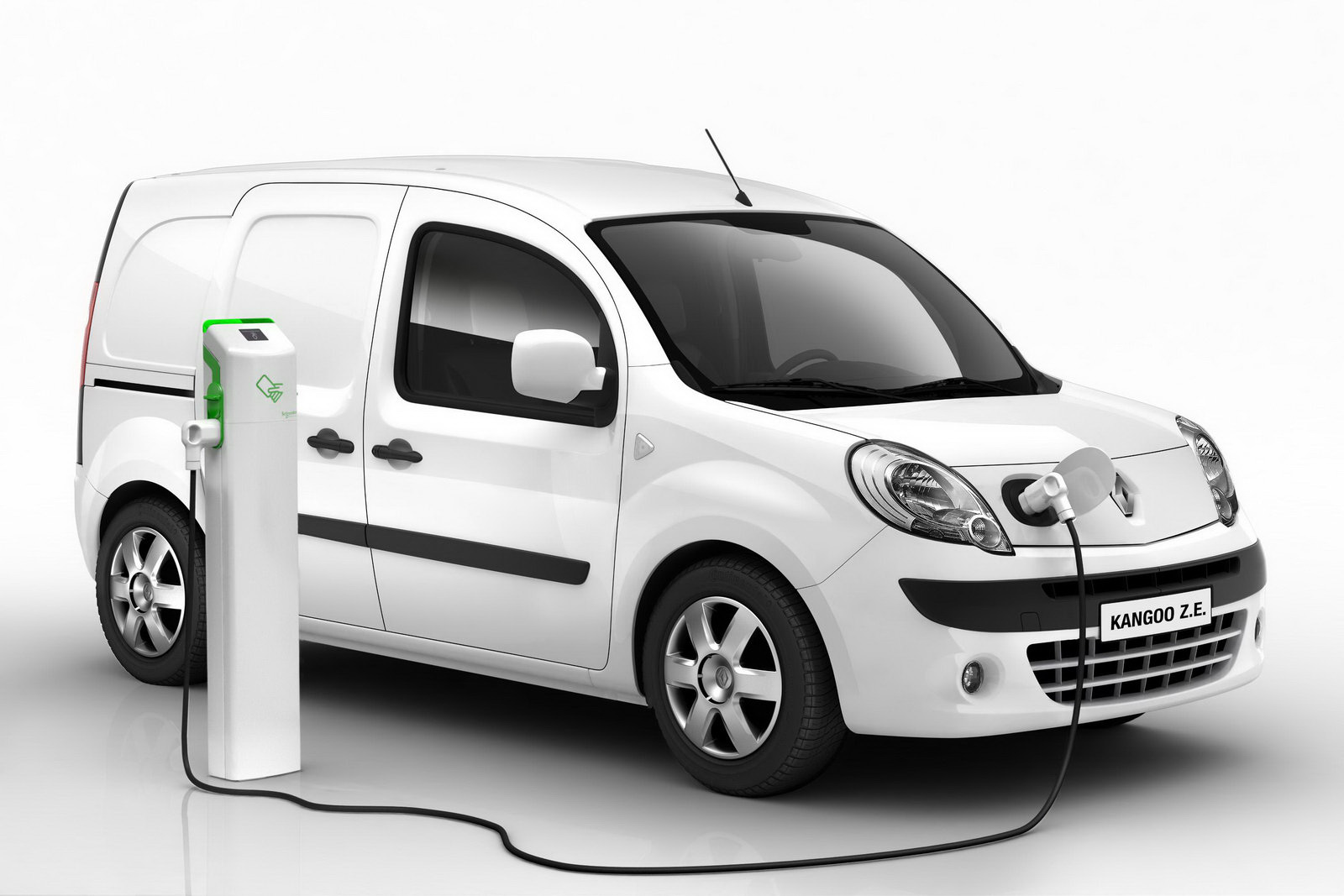
    Norway’s capital Oslo will become the first city in the world to install wireless charging systems for electric taxis, hoping to make recharging quick and efficient enough to speed the takeup of non-polluting cabs. The project will use induction technology, with charging plates installed in the road at taxi ranks linking to receivers installed in the vehicle, Finnish utility Fortum said.

    From 2023 onward all taxis in Oslo will have to be zero emission and Norway wants all new cars to be zero emission by 2025. Among other nations, Britain and France have similar goals for 2040. Fortum, which is working with U.S. firm Momentum Dynamics and the City of Oslo on the scheme, said the greatest hurdle for electrification of taxis had so far been the infrastructure, as it is too time consuming for cabbies to find a charger, plug in, then wait for the car to charge.

    Induction is more energy efficient and enables charging the taxis while they are in the slowly moving queues at taxi ranks. “Time equals money when taxi drivers are working,” said Ole Gudbrann Hempel, head of Fortum’s public charging network in Norway.Norway has the world’s highest rate of electric car ownership, partly thanks to long-term perks such as free or discounted road tolls, parking and charging points. Last year, almost one in three new cars sold was electric.

    The government also exempts electric vehicles from taxes on traditional vehicles that are very high in a country which does not have its own fossil fuel car industry to lobby against them. With just five million people, Norway bought 46,143 new battery electric cars in 2018, making it the biggest market in Europe, ahead of Germany with 36,216 and France on 31,095, according to the European Automobile Manufacturers’ Association.

  • Juniper Networks to buy Mist Systems for $405m

    Juniper Networks to buy Mist Systems for $405m

    Juniper Networks has arranged to acquire Mist Systems, a provider of cloud-managed wireless network solutions powered by artificial intelligence, for $405 million. Juniper Networks plans to use the acquisition to fill wireless gaps in its enterprise networking portfolio through the addition of Mist’s WLAN platform.

    Mist’s AI-driven wireless platform is designed to enhance the reliability of Wi-Fi networks. The company has also developed an AI-driven virtual assistant to simplify wireless troubleshooting.

    The company also uses virtual Bluetooth low energy technology, combined with Wi-Fi and IoT connectivity, to provide location-based wireless services to customers, including indoor wayfinding, proximity notifications, traffic analytics and asset tracking.

    Juniper Networks CEO Rami Rahim said he expects the acquisition to enhance the company’s presence in the cloud-managed segment of the wireless networking market, and to allow it to expand AI-driven network management capabilities across the end-to-end enterprise network.

    “Mist Systems is a great fit for Juniper and for our enterprise customers,” explained Rami Rahim, CEO of Juniper Networks,” he said.

    “Juniper and Mist share a common strategic goal. We believe in the Software-Defined Enterprise and Mist’s focus on bringing AI to IT is consistent with our core belief that we need to simplify operations and improve customer experience while lowering costs.”

    The acquisition still requires regulatory approvals and is expected to close by the end of the second quarter.

  • 5G to change life, drive innovation

    5G to change life, drive innovation

    Korea’s Finance Minister Hong Nam-ki said once the world’s first 5G smartphone is introduced at the end of March and 5G connectivity is in full swing, life will improve significantly.  “Commercialized 5G is a core infrastructure of the fourth industrial revolution as it superconnects everything in real time and transfers massive amounts of data at high speeds,” Finance Minister Hong said during a meeting on innovation-led growth Wednesday. “The 5G smartphone, which is to be launched for the first time in the world in March, and 5G telecommunications services will be used in interactive education and digital health care, which will contribute significantly to the quality of life.”

    He said the government has been working on establishing the foundation for the commercialization of 5G, including distributing the 5G frequency to telecommunication companies in June 2018, expanding R&D investments and even setting a new tax rate – a maximum of 3 percent – for companies building the 5G network.

    “This year, the three telecommunication companies – SK Telecom, KT and LG U+ – are expected to invest more than 3 trillion won [$2.67 billion]” in 5G, Hong said.

    Samsung Electronics is expected to hold an event at the end of March to introduce its first 5G smartphone, dubbed the “Galaxy S10 X.” It will also be celebrating 10 years since the mobile phone manufacturer released its first Galaxy phone.

    In December, the company tested its 5G smartphone as the three Korean mobile telecommunication companies officially switched on 5G-network services for clients in the greater Seoul area and in some of the larger cities in the country.

    Finance Minister Hong said the commercialization of 5G services will spark innovation and convergence in various industries, including manufacturing, logistics, health and medical services, even in disaster prevention and management.

    5G is estimated to have maximum data transmission speeds 20 time faster than 4G.

    According to the government, 5G connectivity will not only increase the access to virtual and augmented reality, including wireless holograms for education or entertainment, but with the help of 5G, autonomous vehicles will roam the streets while traffic control will be managed more efficiently by applying artificial intelligence technologies in real time.

    Smart factories with wireless robots and quality control and delivery by drones will become a reality.

    By 2026, the global 5G equipment and device market is expected to be worth around 344 trillion won, while the telecommunication service market will be worth around 410 trillion won and the 5G-based convergence market about 1,440 trillion won.

    By 2030, the economic effects of 5G will be valued at an estimated 47.8 trillion won in Korea, which is equivalent to 2.5 percent of the country’s economy.

  • SK Telecom launches IoT-based cattle healthcare service

    SK Telecom launches IoT-based cattle healthcare service

    SK Telecom has developed a new IoT-based solution which allows farmers to monitor the health of their cattle in real-time using Semtech’s LoRa devices and wireless radio frequency technology (LoRa Technology). Dubbed “LiveCare”, the product is a LoRa-equipped biocapsule which is implanted into a cow’s gastrointestinal tract to monitor a variety of health indicators. The new service will see biocapsules packed with a communication module connected to the operator’s LoRA-based IoT network. The smart biocapsule is then injected into the stomach of a cow, monitoring body temperature and potential hydrogen levels, with data recorded and then sent to a central server as well as cattle farm owners via a smartphone or computer.

    Thus, ranchers can monitor the data transmitted from the devices for anomalies in a cow’s body temperature and other vitals to detect the onset of disease, estrus and to forecast delivery of calves.

    The LiveCare device is shielded from being tampered with by outside conditions due to its strategic position inside the cow itself. This solution is expected to drastically improve the quality of life for the cow and by extension the cattle as a whole on the dairy farm.

    “Our unique solution lets farmers know immediately when a cow’s health is compromised. It takes the guesswork out of farming and lets the rancher focus on preventing cattle disease,” said Taehee Moon, project leader for the small farm project group of SK Telecom. “Healthier cows mean more milk can be produced and dairy farms can focus more on growing their business.”

    According to SK Telecom, a trial run on a South Korean farm using the technology showed an increase in annual milk harvest of 1,200 liters per cow, an increase of $1,100 in income per cow for the farmer and an additional $400 in savings for each estrus successfully planned using the LiveCare solution.

    SK Telecom plans on extending its services to provide automatic notification to ranchers of contagious disease as well as location tracking in the near future.

  • Diebold Nixdorf and Mastercard launch cardless ATMs

    Diebold Nixdorf and Mastercard launch cardless ATMs

    Diebold Nixdorf is teaming up with Mastercard to trial two services that provide cash banking users on the go – Mastercard Cash Pick-Up and Cardless ATM powered by Mastercard.

    The cash pick-up service allows banks to deliver cash more quickly, securely and easily to any authenticated consumer – banked or unbanked – through enabled ATMs, without the use of a card. This opens the ATM channel to even the under-banked consumers and allows financial institutions and ATM deployers to increase their revenue through new transaction volumes.

    Cardless ATM powered by Mastercard meanwhile allows account holders to withdraw cash from the nearest ATM using the convenience of their mobile banking app.

    Once consumers are at the ATM, they can quickly move through the authentication process to receive their cash. Since the majority of the transaction is handled through the banking app and the cloud, sensitive information is never exposed.

    “As a technology company, we are always considering what the future can bring, and today we have a great opportunity with Diebold Nixdorf to define the next wave of digital products to the ATM channel,” Mastercard SVP of ATM product management Daniel Goodman said.

    “By bringing together the Mastercard network and Diebold Nixdorf’s large global scale, we can help move the ATM industry towards a globally scalable standard for driving digital innovation in the ATM channel.”

    “This partnership with Mastercard is another way we are continuing to securely bridge the digital and physical worlds of cash by innovating the ATM experience for consumers through our Vynamic suite of software solutions,” Diebold Nixdorf SVP for software Alan Kerr said.

    “Many of our customers are looking to retain consumers and drive incremental transactions to their self-service channels, and this partnership with Mastercard delivers on both of these fronts.”