Retail News CRM

Tag: wireless

  • The Different Advantages And Disadvantages Of Cell Phone Charging For Retail

    The Different Advantages And Disadvantages Of Cell Phone Charging For Retail

    Living in a digital society, wireless phone charging has become a commonplace daily activity.  Technology is becoming more advanced in the 21st century and it is creating an ecosystem of various wireless charging gadgets that are not just for smartphones.  Nowadays, wireless phone charging can be done not only at home but also at public companies.  While the advantages of wireless phone charging are quite obvious, there is a negative side to this feature.  If you are planning to switch to wireless charging, it may be useful to read this article on its benefits and drawbacks.

    Before heading further into this discussion, you should have some idea of how wireless chargers operate.  Through an elimination of cables and connectors, the wireless charging has various benefits over wired chargers.  In this fast-changing digital society, it is obvious that people need “smart chargers” to charge the “smart phones”.

    What Are The Different Benefits Of Phone Charging?

    1. Convenience

    The first benefit to using wireless charging devices is that you will not need to deal with cables or cords.  By removing the need for cords, it becomes far simpler to place the phone at a charging station.  Furthermore, you will not have to concern yourself with where you left the cable or the need for different types of chargers.  Wireless chargers are also able to charge different phones simultaneously. Cell Phone Charging Stations with Lockers are also safe, providing you with peace of mind.

    1. Integration

    One of the greatest advantages to using wireless chargers is that it can integrate with almost all mobile phones regardless of the size or shape of the phone’s charging socket.  It should also be mentioned that other devices beyond a smartphone can be charged using the wireless charging option.

    1. Multiple Device Charging

    Nowadays, it is common for several smartphones to be within the same room.  In many cases, the smartphones will have the same or similar chargers; however, there are still differences when it comes to Android and Apple cell phones.  By using a wireless charging pad, you will be able to charge numerous types of smartphones at the same time.  It is also possible for you to charge other devices using the wireless charging pad including laptops and tablets.  This is beneficial because you will reduce the number of cables required and other international power adapters used at the workplace or at home.

    What Are The Disadvantages Of Wireless Phone Charging?

    Despite the different benefits of wireless charging, everyone knows that this concept is not perfect and there are several drawbacks.  To make an informed decision regarding this item, it is important that you know these drawbacks.

    1. Performance

    Unlike traditional device chargers, wireless chargers are not fully integrated for all devices.  This is because it lacks efficiency and the charging process is much slower than traditional charging options.  Furthermore, wireless chargers generate heat that is higher than traditional options which can be highly detrimental.  Click here to read tips on how to boost a smartphone’s battery life.

    1. Mobility

    While the signals transmitted between a phone charger and the mobile phone are wireless, it is still necessary to plug the wireless charging station into a wall socket.  This means that the charging station is not portable.  In addition, you will need to keep the device (mobile phone, tablet, or laptop) on the charging pad at all times for it to be charged.  If the device is moved from the pad, it is no longer being charged.  This can cause difficulties to operate the phone when it is being charged.

    1. Compatibility

    Despite the fact that charging stations can be used for different gadgets, people have experienced issues when charging different devices at once.  Reports claim that there are compatibility problems with smartphones not being charged or drawing power from the wireless power station.
     

  • Cobham debuts 5G network test solution

    Cobham debuts 5G network test solution

    Cobham Wireless has made available of its new network test solution dubbed TM500 which can validate 5G network performance.

    Touted as an industry first, the TM500 provides operators and network equipment manufacturers with a scalable system to test network performance as experienced by end users.

    The TM500 5G test solution simulates multiple devices connecting to a 5G network, modelling real world conditions. When used in combination with Cobham Wireless’ application emulation and security performance solution, the company is providing a complete, end-to-end 5G test solution to the market.

    “Cobham Wireless’ 5G test solution directly addresses the immediate KPIs for 5G, helping the industry accelerate the development and deployment of next generation mobile and broadband services,” said Ian Langley, SVP and GM at Cobham Wireless.

    “Developing and validating their 5G networks using the TM500 will give our customers the confidence to deploy the infrastructure needed to support next generation technologies, such as mobile edge computing,” said Langley. “This will offer reduced latency and faster processing for new services, expediting the commercial roll-out of IoT applications such as connected cars, smart healthcare devices, and advanced AR and VR.”

    Easily incorporated into a user’s existing workflow, the TM500 solution facilitates the transition from legacy to future standards, in line with the industry’s progression to 5G.

    With flexible deployment options, it allows the user to upgrade or adapt functionality and test parameters, tailoring the solution to specific scenarios and requirements.

  • NBN achieves 1.1Gbps speeds in fixed wireless trial

    NBN achieves 1.1Gbps speeds in fixed wireless trial

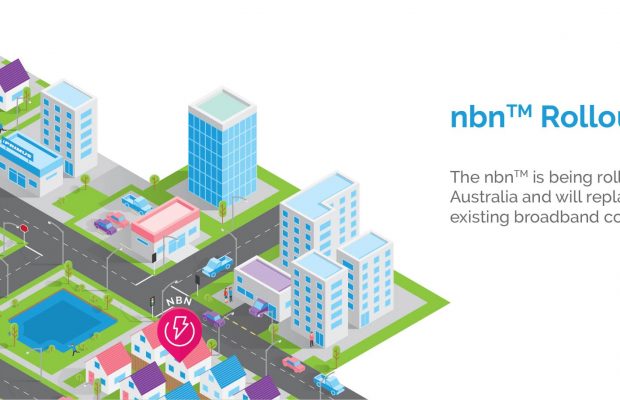
    Australia’s nbn, the state-owned company building the National Broadband Network, has achieved speeds of over 1Gbps during a trial of fixed wireless technology.

    The company used carrier aggregation to combine seven 3.4-GHz carriers with four in the 2.3-GHz bands, achieving a downlink speed of 1.1Gbps and upstream speeds of 165Mbps.

    Using a range of various carriers across the two bands, nbn also demonstrated trial peek speeds of 400Mbps/55Mbps, 250Mbps/50Mbps and 100Mbps/400Mbps.

    The fastest 1.1Gbps speed was achieved by using three next generation Wireless Network Termination Devices (WNTDs) while the others were achieved with a single such device.

    The trial was conducted with Ericsson, NetComm Wireless and Qualcomm, and used speed testing technology from Mill Software.

    nbn has pledged to launch a 100Mbps fixed wireless product for the regional business segment in 2018.

    “Our ability to deliver gigabit speeds on fixed wireless demonstrates our continued focus on identifying and implementing tech advancements as and when they are needed, across all technologies,” nbn CEO Bill Morrow said.

    “It’s particularly exciting to be able to reaffirm our commitment to delivering a great experience to the 600,000 premises in regional Australia that will be served by the fixed wireless network. Our fixed wireless network has already been recognised as a world leader and we are determined to maintain that position by making sure regional Australians get access to the same high speed broadband available in our cities.

  • 5G indoor wireless market to be worth $509m by 2025

    5G indoor wireless market to be worth $509m by 2025

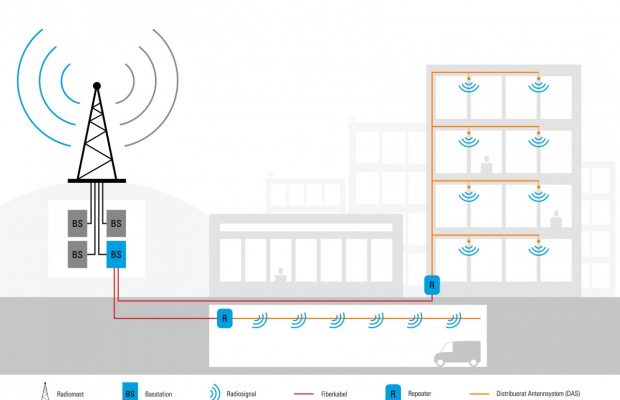
    The global equipment market for in-building wireless system, including active distributed antenna systems (DAS), passive DAS, and repeaters, is expected to grow to $10 billion in 2025, according to ABI Research.

    Yet, out of this market, 5G in-building wireless equipment will account for only 5% or $509 million in 2025, due to one year or more delay of 5G deployments indoors and in venues compared to outdoor 5G deployments starting from 2020, the research firm says.

    “As 5G nears full specification, mobile network operators will face challenges for indoor mobile coverage, including signal propagation, next-generation fronthaul/backhaul, and massive MIMO,” says Nick Marshall, research director at ABI Research.

    According to Marshall, early 5G deployments indoors and in venues will be a migration building on the features of LTE-Advanced and LTE-Advanced Pro. This will happen technology by technology and frequency by frequency, avoiding costly ‘rip and replace’ style deployments, the analyst notes.

    Marshall further points out that future 5G networks – which will comprise of a combination of different cell types and access technologies to seamlessly adapt to an array of use cases and applications – will rely on network functions virtualization (NFV) and mobile edge computing (MEC) to alter the architecture and topology of the RAN by leveraging telco data centers to virtualize signal processing in the cloud.

    NFV migrates cellular signal processing to a remote telco data center, while MEC, in a countervailing trend, migrates IT compute and storage to the network edge within the building or venue for low latency use cases and applications.

    With 5G standards yet to be finalized, many equipment vendors are actively researching and developing 5G equipment with a variety of approaches. These companies include Nokia with its AirFrame/AirScale Radio Access, Ericsson with its ERS, and CommScope with its OneCell.

  • Softbank, Wireless City kick off 5G project

    Softbank, Wireless City kick off 5G project

    Softbank and its affiliate company, Wireless City Planning, have officially launched the ‘5G Project’.

    As the first phase of the project, which was announced in Tokyo last week, Softbank plans to roll out commercial services based on Massive MIMO technology from September 16, a move which Softbank says will make it the world’s first cellco to provide such services.

    Under the plan, SoftBank will be deploying the technology across 100 base stations in 43 cities across Japan, of which 30-40% will be deployed in downtown areas of the Tokyo capital.

    At the media conference for the launch last week, Shubun Kitahara, director of the network planning department of SoftBank’s mobile technology division, tested at four locations in downtown Tokyo, which showed that massive MIMO increased communications speed by 6.7 times on average.

    According to Softbank, corresponding terminals only need to support SoftBank 4G (compatible with TD-LTE). The service is also available on the SoftBank 4G terminals customized for Y!mobile.

    Aiming for 5G commercialization in 2020, Softbank last year signed separate research collaboration agreements with Huawei and ZTE covering the development of stopgap technologies on the road towards 5G.

    SoftBank has teamed with ZTE to help develop networking equipment based on ZTE’s Pre5G technology, such as the vendor’s Massive MIMO base stations.

    Massive MIMO base stations have the capacity to support more than 100 antenna elements, allowing up to eight users to transfer data simultaneously.

    SoftBank already has cooperation agreements covering Massive MIMO as well as ultra-dense networks and multi-user shared access technology.

  • AccorHotels picks Ruckus Wireless as Wi-Fi vendor

    AccorHotels picks Ruckus Wireless as Wi-Fi vendor

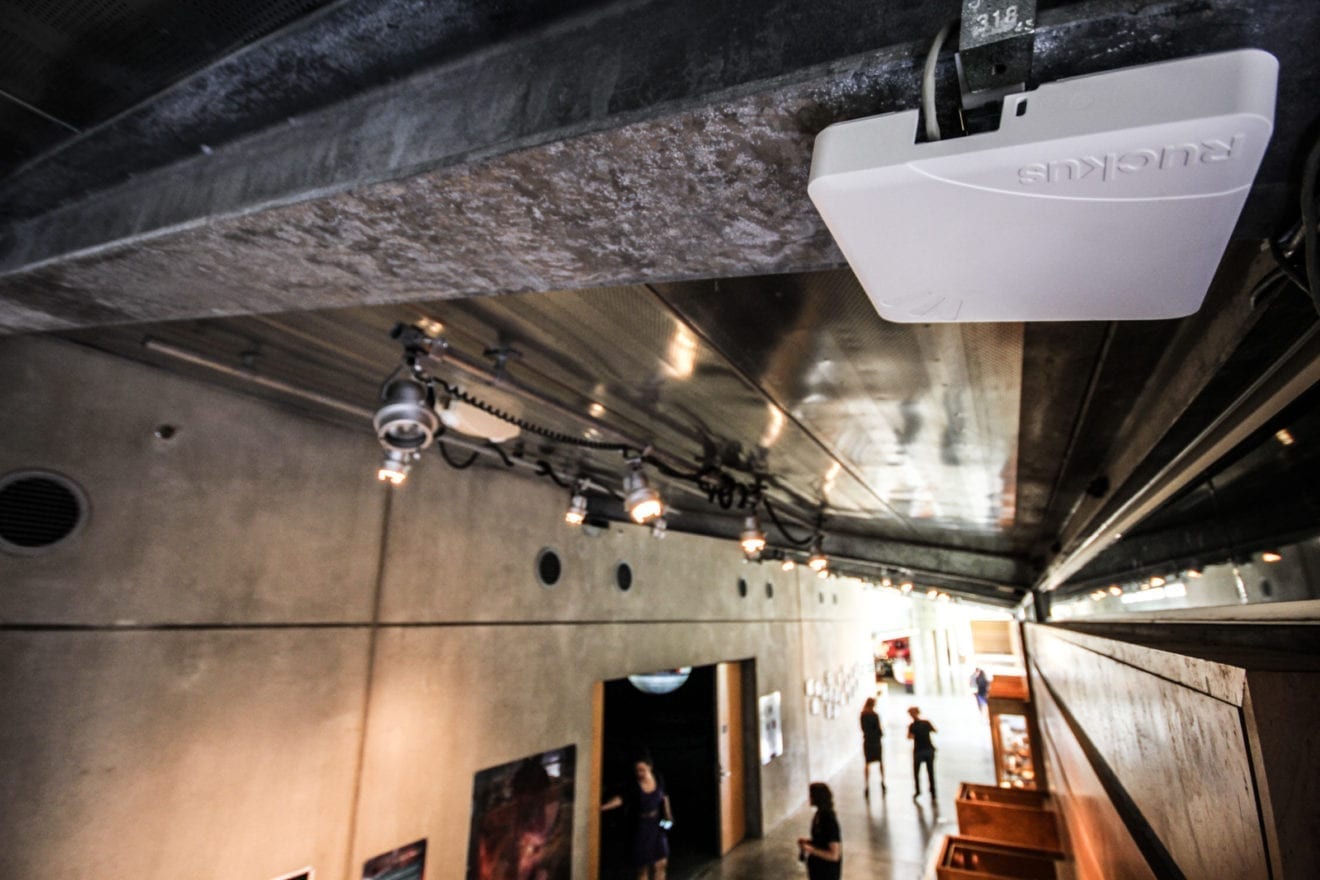
    AccorHotels Group  has selected Ruckus Wireless as the preferred Wi-Fi partner for its chain of more than 3,700 hotels in 90 countries.

    The company has started implementing 802.11ac access point technology from the vendor at hotels including Novotel Hong Kong Nathan Bay Kowloon to improve performance for both customers and staff.

    As part of the agreement, Ruckus ill also update the hotel group’ technical infrastructure to help support new standards and customer requirements.

    “Our digital strategy is hyper-focused on our customers and owners—and their expectations for high-performance, multi-access, personalized Wi-Fi services,” said David Esseryk, vice president of guest technology and innovation at AccorHotels.

    “Ruckus’ understanding of the hospitality industry and close relationship with global HSIA services providers made the choice clear-cut. We look forward to working together, streamlining processes and ultimately further enhancing our powerful brand DNA.”

    Hotels require strong Wi-Fi infrastructure to support what is often a large number of concurrent users. Guests have also come to consider Wi-Fi as a must-have requirement.

    Ruckus Wireless Wi-Fi technology includes unique selling points including directional, high-gain RF signal routing to improve coverage, performance and cost-effectiveness, making the company a popular choice for the hospitality sector.

  • New Zealand’s Woosh Wireless enters administration

    New Zealand’s Woosh Wireless enters administration

    New Zealand wireless broadband provider Woosh Wireless has entered voluntary administration after burning through more than NZ$100 million ($67.7 million) in cash since it was founded.

    The operator has appointed local advisory and investment firm KordaMentha as administrators for the proceedings. The first meeting of creditors will be held early next month.

    Woosh was founded in 1999 and bought out by California-based Craig Wireless for $5 million in 2011.

    The company sold its fixed line network to rival Slingshot last year, and sold one of its three spectrum blocks – a 70 MHz lot of 2300-MHz spectrum – to Spark New Zealand for NZ$9 million in April.

    A KordaMentha partner said the company will be mindful of customers who rely on Woosh Wireless for their broadband services, particularly in remote areas in rural parts of Southland, where there is a strong concentration of subscribers.

  • Ikea reveals wireless charging furniture

    Ikea reveals wireless charging furniture

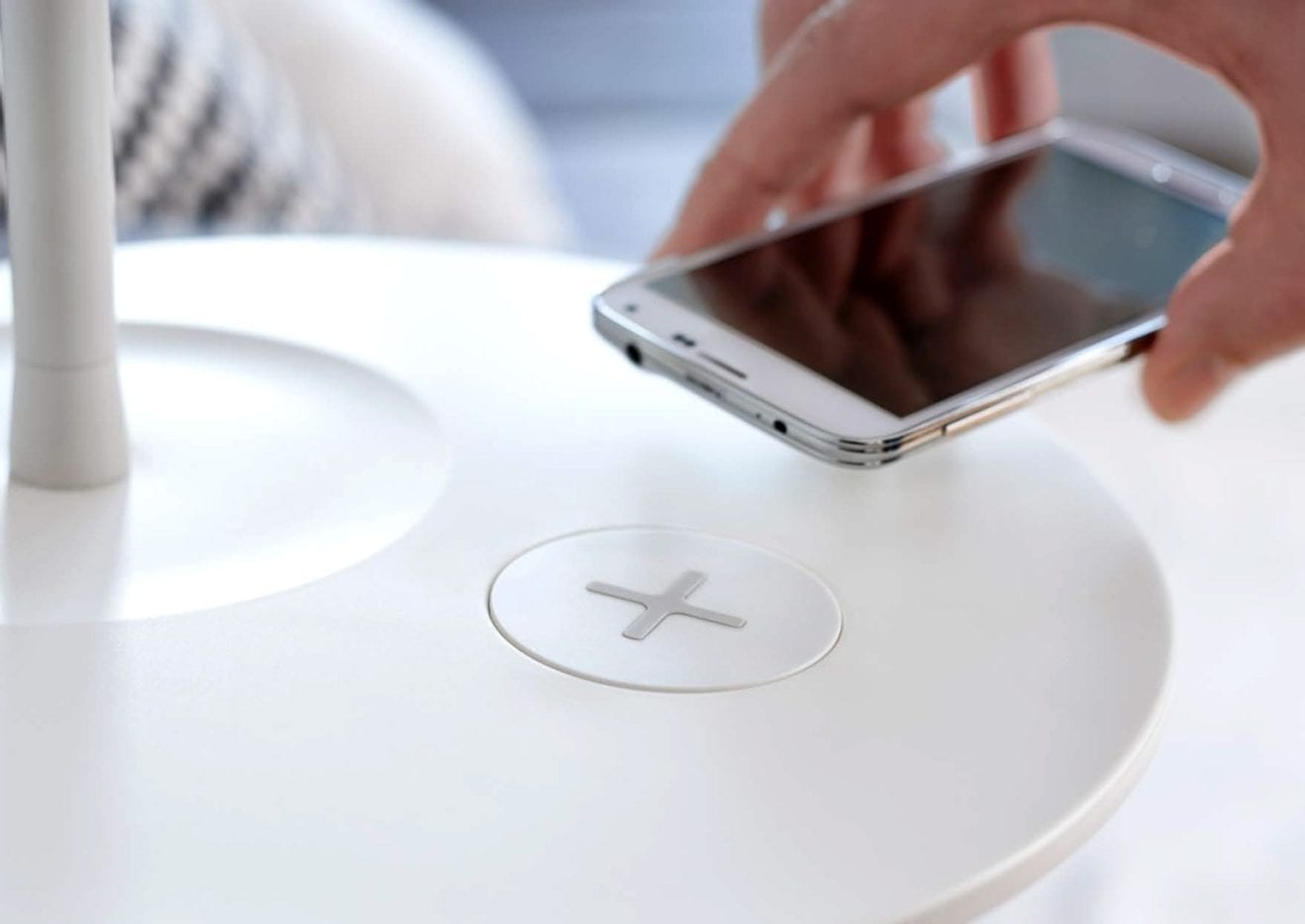
    Ikea is to launch a range of furniture which will allow consumers to charge phones and other devices wirelessly.

    The Swedish retailer says wireless charging furniture will be available in Europe and North America this April, followed by a global rollout.

    Bedside tables, lamps and desks will be fitted with Qi technology that eliminates cables and makes it easier to stay connected with always-charged mobile devices.

    The announcement girds support for Qi – the leading global wireless charging standard from the Wireless Power Consortium, a group of companies developing wireless charging technology which includes Belkin, Haier, HTC, LG, Microsoft, Motorola, Nokia, Panasonic, Samsung, Sony and ZTE.

    “Ikea is delivering on its vision of making life at home better with this innovative, stylish and useful new collection that show consumers the beauty and simplicity of wireless charging,” said Menno Treffers, WPC chairman.

    “We applaud Ikea for its insight and unique passion for making wireless charging affordable and simple for consumers.”

    Qi is the most widely deployed wireless power standard, available in 3000 hotels, restaurants, airports and public locations worldwide. There are now more than 80 Qi-enabled smartphones, 15 models of Qi-enabled cars and countless Qi mobile accessories in the market.

    “Our belief is that mobile phones are vital parts to people’s lives at home and their desire to stay connected, and Qi addresses an unmet need to keep devices powered,” said Bjorn Block, range manager for lighting and wireless charging at Ikea.

    “As a member of WPC, we value the access to the leading and most advanced global standard for wireless charging.”

    Established in 2008, the Wireless Power Consortium is an open, collaborative standards development group of more than 200 company members – large and small competitors and ecosystem partners, from all parts of the industry and all parts of the globe – collaborate for a single purpose: to design and evolve the world’s most useful, safe and efficient standard for wireless power. This global standard is called Qi, and it has become the world’s leading method for transferring electrical power without wires. Qi is designed into 80+ mobile devices, 15 models of cars, has more than 700 registered products that are enjoyed by more than 50 million users worldwide.