Retail News CRM

Tag: workers

  • Middle-aged workers struggle finding new jobs after layoffs

    Middle-aged workers struggle finding new jobs after layoffs

    Thanh Tung thought his job interview went well and his unemployment would finally end, but he was eventually turned down for the position because he was “too old.”

    The 37-year-old game artist in Go Vap District, HCMC was laid off at the beginning of the year, only a few months after he started working for a game design company.

    He was disappointed, but he didn’t feel rushed and pressured because he still had savings and income from his freelancing jobs, which he thought would be enough to cover his living expenses until he found a new job.

    But finding work was not as easy as he thought.

    After three months of job searching, he’d been able to land only a few screening calls and no potential employer had wanted to make an interview appointment with him. Compared to that, around 60% of the companies he applied to last year scheduled interviews with him.

    When he eventually got an interview with a game company, he was turned down because of his age. The chief marketing officer of the company, who was 27, said people of Tung’s age might “be stubborn and find it hard to adapt.”

    He disagreed with this comment, explaining that he was always willing to improve himself, and he could prove that during a probationary period, to which the interviewer said: “You seem to disagree with a lot of things we have discussed throughout our interview. I’m afraid that if we work together, you will not follow my orders.”

    Tung gave up. He now believed in age discrimination at the workplace. And future experience only confirmed things further.

    “Then I got a phone call from a friend of mine who was working as a headhunter,” he says. “That friend saw my profile and confirmed that my age was preventing me from getting called for interviews.”

    Many middle-aged workers are struggling to find jobs. Tra My, a former construction engineer, said she felt hopeless as she had been unemployed for over six months and had to attend a job fair as one of her many efforts to find a career opportunity. She also said she was learning a foreign language and studying software at age 45, hoping that doing so would increase her chances of finding a job.

    Van Quang, 53, was working as a delivery man for a third the salary of his previous job as a warehouse supervisor at a Hanoi-based supermarket. He chose the path after repeated failed attempts looking for vacancies similar to his former positions.

    Thanh Hien, 45, said that all of the job announcements she came across were looking for applicants under 35 only.

    Hien had never thought she would have to search for a job, as she had always worked at a state-owned company. But in March, her employer’s business problems forced Hien to get laid off.

    Hien tried to bargain by offering to cut her salary down to VND5.6 million (around $237), a third of what it had been.

    “But the company insisted on cutting down on middle-aged workers,” she recalls. “They asked me to sign another contract, in which my position was changed from an accountant to housekeeping staff.”

    Hien told the company she would consider the offer. She hadn’t even given her final decision yet when the company informed her they would lower her salary from VND5.6 million to VND4.9 million. She had no other choice than to quit.

    Age is one of the strongest barriers for those working in Vietnam. Among the job announcements by the 36 companies at the fair, 41% of them targeted the 18-25 age group and 35% targeted the 26-35 age group, compared to 24% targeting the 36 and over age group.

    There have been ongoing factory workers layoff in southern Vietnam, starting late-2022. According to data, the majority of the workers laid off were middle-aged females. For example, over 50% of those laid off at the HCMC-based company Pouyuen were over 40 and around 60% of them had worked at the company for at least 10 years.

    Responding to a survey conducted late-June, as many as 90% of the respondents answered “Yes” to the question: “Do you think workers aged between 35 and 40 in Vietnam struggle to get a job?”

    Pham Minh Huan, former deputy minister of Labor, Invalids and Social Affairs, considers age discrimination at workplaces a downside of the market-oriented economy, in which businesses have to optimize their human resources to maximize their productivity and minimize their costs, which in turn makes aged low-skilled workers the first target to be laid off.

    “Aged workers tend to have lower productivity while requiring higher salaries,” Huan explains. “Businesses that revolve around financial reward are likely to lay this group of workers off, even if they have contributed to the company for a long time.”

    Nguyen Phuong Mai, former CEO of Navigos Search, a recruiting service in Vietnam, says employing middle-aged workers has both strengths and challenges. On the one hand, employers don’t have to spend too much on training costs and could be able to make use of these workers’ experience. On the other hand, middle-aged employees may be less creative, less flexible, less familiar with technologies, and less likely to blend in with co-workers of younger generations.

    Mai says a story which she will never forget: “I once worked with an outstanding applicant who met all of the requirements that the company was looking for.”

    “But he still got turned down, as throughout his whole career up until that moment, he had worked for one company only, which was considered a sign that it may be hard for him to adjust and adapt.”

    Experts suggest that workers have to constantly improve their skills and be ready for every possible scenario regardless of their age, in order to be able to grab opportunities that come to them.

    Huan also says the government should create a varied labor market, so that middle-aged people could change their jobs more easily if they are laid off.

    He suggests businesses appreciate workers that have dedicated their youths to the companies and treat them with respect, including avoiding sudden layoffs without any kind of compensation.

    “Middle-aged people may find it challenging to start over, but that doesn’t mean it’s impossible,” he says.

    Tung’s recruiter friend pointed out things he needed to change in his Curriculum Vitae, including removing his year of birth and irrelevant degrees while emphasizing more his practical skills.

    He was also suggested to reply “I want to be an employee till I retire” when interviewers asked about his career goal, instead of showing his determination to achieve a leading position.

    Tung indeed got more calls for interviews after adapting his application documents based on his friend’s suggestions. His unemployment period ended in May. He now works for a foreign company that he says “values skills over age.”

    Hien is still looking for a new job. She says if things do not work out, she will consider lowering her requirements regarding salaries and benefits.

  • Laos raises minimum wage for workers

    Laos raises minimum wage for workers

    The Lao Government has decided to raise the monthly minimum wage from LAK1.2 million (nearly US$70) to LAK1.3 million starting May 1 to ease workers’ difficulties amid soaring inflation and economic uncertainties.

    The decision was made at the Lao Government’s meeting held on April 25 – 26 under the chair of Prime Minister Sonexay Siphandone.

    In 2022, as workers’ lives were hit hard by soaring inflation, the Lao Federation of Trade Unions Central Committee proposed increasing the monthly minimum wage to 1.5 million LAK.

    However, the Lao National Chamber of Commerce and Industry opposed it, saying that the wage hike would negatively impact enterprises that were also struggling with difficulties.

    Aside from the minimum wage rise, PM Sonexay Siphandone told the Ministry of Labour and Social Welfare to work with related sectors to consider how the increase is relevant to the current economic situation.

    He also asked ministries and sectors to conduct an in-depth study on wage hikes and report results to the Government in the third quarter of this year.

  • Vietnamese tech workers high and dry amid layoffs in Silicon Valley

    Vietnamese tech workers high and dry amid layoffs in Silicon Valley

    Hoang Tu said his “American Dream” lasted only six months. He was let go from Google two days before the Lunar New Year.

    “This is the worst Tet (Lunar New Year) of my life,” he said.

    The 27-year-old joined Google’s new project development team in Silicon Valley last year after passing a series of rigorous interviews.

    This Tet, which began on January 22 this year, he took time off work to visit his family in Vietnam.

    On January 20, however, he received a shocking email dismissal letter.

    “Before I was fired, I didn’t hear a word from the management team. I didn’t have time to ask my coworkers what was going on because I was too busy with other things during Tet. I didn’t know what to tell my loved ones about this news,” he lamented.

    Since his H-1B visa, a work visa with a cumulative maximum duration of six years, is set to expire in 60 days, he cut short his vacation and came back to the U.S. to complete the paperwork and get ready to start looking for a new job.

    Similar frustrations were felt by former Meta employee Hong Anh, who was in the U.S. with only a few weeks left on her visa when she was let go by the company.

    She said the Vietnamese engineering community in Silicon Valley isn’t as worried about money as it is about finding work in order to keep visas valid.

    “Getting an H-1B visa is really hard now, especially for recent graduates,” she said, adding that she had recently applied for positions at more than twenty companies but hadn’t heard back from any of them.

    Tech workers from Vietnam face tough competition from their counterparts in China, India, and even within the U.S.’s own IT community.

    Anh, an IT professional with three years of experience, said she would accept lower pay at smaller companies in exchange for a sponsorship that would allow her to remain in the country.

    There are no official numbers yet on how many Vietnamese tech workers were laid off during Silicon Valley’s record downsizing, but experts estimate the figure to be in the thousands.

    Meta software engineer Tai Nguyen revealed that even those such as himself who haven’t been laid off are anxious and making plans for the worst.

    He said that in his more than 15 years living in the U.S., this is the worst job cut he has ever seen.

    Those who are already working in the U.S. on an H-1B visa and whose spouses are able to lawfully remain in the country with the help of the sponsorship program are under even more stress, he added.

    “If the sacked H-1B worker doesn’t find a new job within 60 days, the whole family will have to leave the U.S.,” he said.

    The great downsize

    Mass layoffs have hit the tech industry in Silicon Valley recently.

    Both small businesses and multinational conglomerates like Microsoft, Google, MetaAmazon, etc., have announced job cuts.

    Around 150,000 tech workers in the U.S. may have lost their employment in January. Many engineers and skilled workers who entered the U.S. on H-1B visas are anxious they could lose both their jobs and their visas at the same time.

    From October 2020 through September 2021, United States Citizenship and Immigration Services (USCIS) reported that around 407,000 H-1B applications had been approved. Citizens of Asia submitted the vast majority of applications.

    Some 74.1% were of Indian descent, 12.4% were of Chinese descent, and the rest were citizens of other countries.

    Vietnamese tech workers who have been laid off now have three choices.

    Firstly, they need to start by rapidly securing new employment before their H-1B visas expire. In an effort to streamline the application process, they frequently target small and medium-sized companies. If they are not married to anyone, they can “prolong the American dream” by changing their visa status to that of a tourist and continuing to look for work in the U.S. under the B-2 category.

    Then there’s a second option for recent graduates like Hoang Tu.

    While waiting for an opportunity to present itself, he intends to return to school in order to renew his visa and further his education. He will be able to keep studying for over a year thanks to his savings and the severance pay he will receive from the company after being let go. However, he’ll have to apply and get into school first, which is no easy task, and also takes time.

    The third option is going back to Vietnam to look for jobs at home or elsewhere in Southeast Asia, like Singapore.

    If her visa deadline passes and Hong Anh still hasn’t landed the job she wants, she plans to return to Vietnam to take a break before looking for work again.

  • Foxconn chaos to leave Apple short 6 million iPhone 14 Pro and Pro Max units this year

    Foxconn chaos to leave Apple short 6 million iPhone 14 Pro and Pro Max units this year

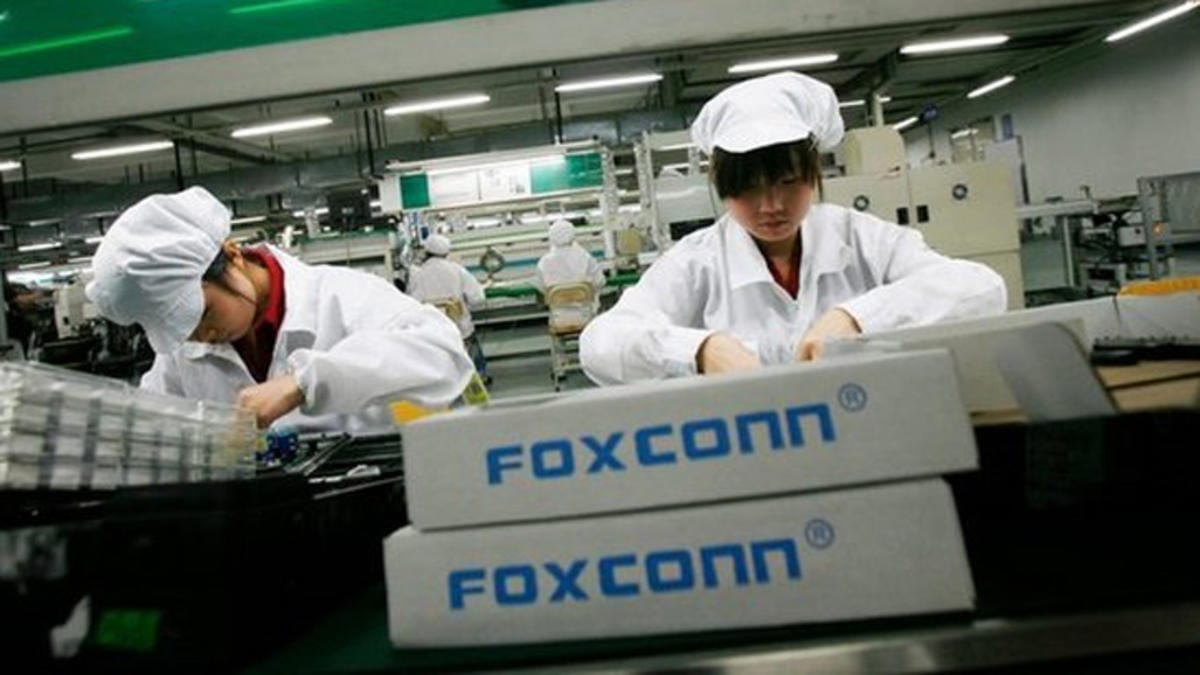
    We’ve closely monitored the events at Foxconn’s largest iPhone assembly facility in Zhangzhou, China. The factory reportedly produces half of the iPhone units made worldwide, and this year the plant is turning out iPhone 14 Pro and iPhone 14 Pro Max models. But production has slowed thanks to the exodus of workers who weren’t enamored with China’s COVID lockdown in the city.
    COVID has returned to China, forcing the country to lockdown certain areas. As a result, Foxconn now bans the consumption of meals in the communal dining room, forcing everyone to eat in their dorm. Workers also felt closed in, forced to stay on campus 24/7. After a large number of workers escaped, even Apple had to admit that the production of its pricier iPhone 14 Pro models this quarter would be less than expected. Apple did not specifically give an estimate of how many units it will be short but it did say, “customers will experience longer wait times to receive their new products.” Some reports called for as much as a 33% shortfall.
    Foxconn tried to entice new and former workers to man the assembly lines by offering bonuses for employees who stay for 30 and 60 days, and the Chinese government asked veterans and Communist party members to recruit new employees for Foxconn. And all of these things, the bonuses and the pressure from the government might have worked until last Tuesday night. That’s when a major clash between workers and security guards at the Foxconn grounds in Zhengzhou occurred.

    Workers said that the contracts they were offered would have paid them bonuses only after more than 60 days had gone by, and the employees also said that they weren’t being separated far enough away from older workers who might have COVID. In an attempt to quell the violence, Foxconn offered new employees cash to quit their jobs and leave the Foxconn campus. The company later said that a “technical error” was made relating to the bonuses and it apologized. Supposedly, 20,000 workers took the offer.

    Today, a new report from Bloomberg gives us a better idea about how Apple will be impacted by the chaos we’ve seen in Zhengzhou. The report indicates that Apple will be short nearly 6 million iPhone 14 Pro units this year. And make no mistake about it, the iPhone 14 Pro and iPhone 14 Pro Max are the more expensive 2022 iPhone models. Apple could take a $6 billion revenue hit during the current quarter. That would be 8.4% of the $71.6 billion in iPhone revenue generated during the fiscal first quarter of 2022 (October-December 2021).

    Considering that this shortfall would occur during the holiday shopping season, consumers worldwide could end up frustrated in their attempt to purchase one of the 14 Pro models as a holiday gift. Two weeks ago, even before the issues in Zhengzhou reached a fever pitch, UBS analyst David Vogt said that wait times for the iPhone 14 Pro and iPhone 14 Pro Max in the U.S. and China had hit “extreme levels.” In the U.S., the wait time was 34 days for these models while in China the wait was up to 36 days.

    Vogt pointed out that 35% to 40% of Apple’s calendar fourth quarter iPhone production is assembled during December which could lead to shortages during the fourth quarter of this year and extending into the first quarter of 2023. The analyst expects Apple to ship 83 million iPhone units during the fiscal first quarter of 2023 which already takes into account “recent disruptions.”
    However, Vogt made this comment before the violence broke out at the factory and before Foxconn paid 20,000 workers to leave the facility. If he does have a new updated figure, we will update this story.
  • Workers worry about pink slip as global economic woes dry up orders

    Workers worry about pink slip as global economic woes dry up orders

    With her company planning to cut its payroll from 300 to 20, Ngoc has a constant dread of being fired, and does not even dare take sick leave.

    “Everyone goes to work with a constant worry, not knowing who will be fired next,” she says.

    She returns home at 9 p.m. after four straight shifts. “Our company does not have new orders, and so people have to manage existing ones.”

    She works for a steel company in the southern province of Long An that does not have enough cash flows to pay salaries and so is laying off workers gradually.

    Those still with jobs have to work harder and harder.

    Ngoc works overtime, but does not get extra pay though the law requires payment of 150-300% of normal wages for overtime.

    “My salary is VND250,000 (US$10) per day. My overtime rate remains the same. But I don’t dare quit since I don’t know what to do next.”

    Ngoc is one of many workers worried about losing their job amid the fewer orders due to rising global inflation and economic instability.

    The Long An Province Trade Union of Industrial Parks recently reported that more than 4,100 workers in local industrial parks have been sacked or had their working hours reduced.

    In another province next to HCMC, Binh Duong, some 28,000 workers have been laid off without compensation this year, and 240,000 others have cut their working hours.

    In Ho Chi Minh City, 2,858 workers have been let go from 27 companies.

    More than 61,400 people in Hanoi applied for unemployment benefits in the first 10 months of this year, up 14% from the same period last year, according to the Hanoi Employment Service Center.

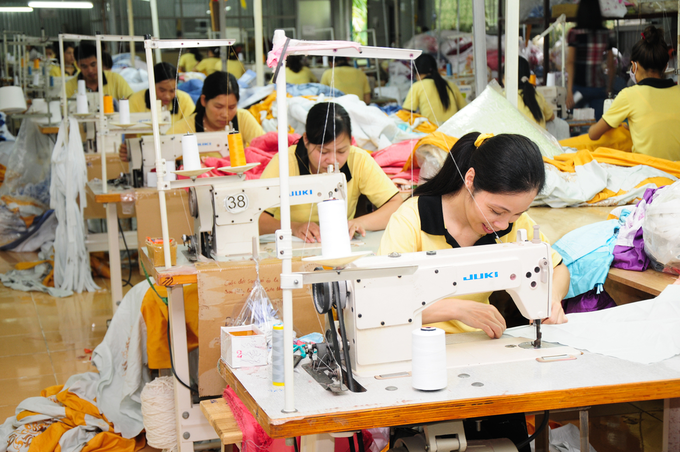
    The HCM City Business Association said a number of textile and apparel businesses have had to downsize their workforce and production as a result of lack of orders and financial challenges.

    As the pandemic faded away orders had surged from the fourth quarter of 2021, and this lasted until July this year.

    But recently consumption has declined drastically as a result of high inflation, particularly in Vietnam’s major textile and apparel export markets such as the U.S. and E.U.

    The conflict between Russia and Ukraine has had a significant impact on logistics and raw material costs. Some 95% of textile and apparel exports to Russia have come from Vietnam, but shipments have fallen by 42% during the conflict.

    Other challenges businesses must deal with include the strengthening dollar, rising oil prices and surging bank interest rates.

    Le, a garment worker in Binh Duong, has also been particularly worried since her company has laid off close to 1,000 employees recently.

    Those remaining are rotated due to the lack of orders at the moment.

    She says: “There is far less work to do. It will take us just two to three hours to complete the work. The salary is not enough for daily expenses, but I don’t know where to apply for a new job since all companies face the same challenges.”

    Mai, a worker at a leather footwear company in Ho Chi Minh City, is not so lucky and is set to get a pink slip this month.

    She says: “Many of our company’s products are unsold. Frequently buyers complain about and return products, which causes the inventory to swell. Before Covid sometimes I would not have time to relax, but now I spend way too much time not working.”

    Most people are trying to retain their jobs at least until Tet so that they can get the annual bonus.

    “After a year of hard work, everyone looks forward to the Tet bonus to take care of our family. If I quit now, there will be no Tet bonus, and getting a new job at year-end is incredibly difficult.”

    A loan package worth VND10 trillion ($402.37 million) out of a total of VND20 trillion has been urgently rolled out to provide immediate support to workers at industrial parks across the country since tens of thousands are losing their jobs or having their working hours and wages reduced.

    The union is also making an effort to assist workers during this Lunar New Year.

    The Binh Duong Province Confederation of Labor is trying to mobilize resources along with union funding to support workers through the difficult period until they can return to work.

    Le and other workers hope things will get better in the new year.

    The Bac Giang Province native says she will try to stay at this job at least through Tet. She feels luckier than others for still having a job though it does not pay too well.

  • Workers laid off as global demand falls

    Workers laid off as global demand falls

    Textile and electronics companies are cutting overtime and working hours to their workers’ dismay as global consumer demand fall.

    Tran Thu Huong and her husband were working at a garment factory in HCMC’s Go Vap District when last month, their income fell by 20% to VND15 million ($640.75) as new orders shrunk.

    Huong said their income was barely enough any more as they paid VND2.2 million for house rent, VND2.7 million for tuition for their five-year-old child and loan interest, and had to tighten their belt by “not buying miscellaneous things” such as fruits.

    Her husband, Hung, 33, recently quit his job after working at the factory for five years.

    “I can’t work in the garment industry anymore,” he said.

    He used to be paid VND13-14 million a month when he started working, but the amount had halved by the time he quit.

  • Samsung workers in Vietnam bear brunt of slowdown in global demand for electronics

    Samsung workers in Vietnam bear brunt of slowdown in global demand for electronics

    Samsung Electronics Co Ltd has scaled back production at its massive smartphone plant in Vietnam, employees say, as retailers and warehouses grapple with rising inventory amid a global fall in consumer spending.

    America’s largest warehouse market is full and major U.S. retailers such as Best Buy and Target Corp warn of slowing sales as shoppers tighten their belts after early Covid-era spending binges.

    The effect is acutely felt in Vietnam’s northern province of Thai Nguyen, one of Samsung’s two mobile manufacturing bases in the country where the world’s largest smartphone vendor churns out half of its phone output, according to the Vietnam government.

    Samsung, which shipped around 270 million smartphones in 2021, says the campus has the capacity to make around 100 million devices a year, according to its website.

    “We are going to work just three days per week, some lines are adjusting to a four-day workweek instead of six before, and of course no overtime is needed,” Pham Thi Thuong, a 28-year-old worker at the plant said.

    “Business activities were even more robust during this time last year when the Covid-19 outbreak was at its peak. It’s so tepid now.”

    Reuters could not immediately establish whether Samsung is shifting production to other manufacturing bases to make up for reduced output from the Vietnamese factory. The company also makes phones in South Korea and India.

    Samsung told Reuters it has not discussed reducing its annual production target in Vietnam.

    The South Korean tech giant is relatively optimistic about smartphone demand in the second half, saying on its earnings call last week that supply disruptions had mostly been resolved and that demand would either stay flat or even see single-digit growth.

    It is aiming for foldable phone sales to surpass that of its past flagship smartphone, the Galaxy Note, in the second half. It is expected to unveil its latest foldables on Aug. 10.

    But a dozen workers interviewed by Reuters outside the factory almost all said business is not good.

    Thuong and her friends who have been working for Samsung for around five years said they had never seen deeper production cuts.

    “Of course there is a low season every year, often around June-July, but low means no OT (overtime), not workday cuts like this,” Thuong said.

    She said managers had told workers inventories were high and there were not many new orders.

    Research firm Gartner expects global smartphone shipments to decline by 6% this year due to consumer spending cuts and a sharp sales drop in China.

    Samsung town

    Samsung is Vietnam’s biggest foreign investor and exporter, with six factories across the country, from northern industrial hubs Thai Nguyen and Bac Ninh where most phones and parts are manufactured, to Ho Chi Minh City’s plant making fridges and washing machines.

    The South Korean company has poured $18 billion into Vietnam, powering the country’s economic growth. Samsung alone contributes one fifth of Vietnam’s total exports.

    Its arrival nearly a decade ago in Thai Nguyen, about 65 km (40 miles) from the capital Hanoi, transformed the area from a sleepy farming district into a sprawling industrial hub that now also manufactures phones for Chinese brands including Xiaomi Corp.

    Generous benefits including subsidised or free meals and accommodation have lured tens of thousands of young workers to the region, but reduced workhours have now left many feeling the pinch.

    “My salary was cut by half last month because I just worked four days and spent the remaining week doing nothing,” said worker Nguyen Thi Tuoi.

    Job cuts are on some workers’ minds but so far none have been announced.

    “I don’t think there will be job cuts, just some working hour cuts to suit the current global situation,” said one worker, declining to be named because she did not want to risk her team leader role.

    “I do hope that the current cut will not last long and we will soon be back to normal pace.”

  • Adidas, Reebook supplier in HCMC faces worker shortage

    Adidas, Reebook supplier in HCMC faces worker shortage

    Footwear maker PouYuen Vietnam, the largest employer in HCMC, faces a shortage of workers after 6 percent quit due to Covid-19 restrictions and resultant problems.

    The Taiwanese company, a supplier to Adidas and Reebok, has sought the city’s support for finding new workers, according to the HCMC Media Center.

    Its plant, situated in Binh Tan District, was among many required to scale down production during the third quarter as the fourth wave of Covid hit HCMC.

    When the city lifted restrictions on October 1, workers who had left for their hometowns returned to work, with more 47,000, or 87.4 percent of the number that left, back as of Nov. 8, it said.

    Around 77.4 percent of workers are fully vaccinated.

    The American Apparel & Footwear Association, which represents more than 1,000 brands, in July urged the U.S. government to quickly provide vaccines to Vietnam to enable its apparel and footwear industries to resume production.

    Vietnam is the second largest supplier of apparel, footwear and travel goods to the U.S., accounting for a fifth of all imports, it said.

  • Kia Workers Accept Wage Deal Without Strike For The First Time In A Decade

    Kia Workers Accept Wage Deal Without Strike For The First Time In A Decade

    Workers’ Union at Kia Motors has voted to accept the company’s wage proposals without a strike for the first time in 10 years. According to a report from IANS, the carmaker said that 68 percent of 26,945 workers have voted in favor of the wage, which includes an increase of 75,000 won ($64.30) in monthly basic pay, two months of wages in performance-based pay, and cash bonuses worth 5.8 million won. The report also mentioned that over 1,600 out of the 28,604-member union abstained.

    The company has rejected the Union’s demand to extend the retirement age from current 60 to 65, however, the company reinstated fired workers.

    The automaker and the workers’ Union reached a tentative wage deal early this week without staging a strike amid the ongoing COVID-19 pandemic. This is the first time that Kia will sign a wage deal without industrial actions. They will sign the wage agreement on Monday.

    Last month, Hyundai Motor Company and its union signed this year’s wage deal without strikes for the third consecutive year.

  • UBS Rolls Out Permanent Hybrid Working Option

    UBS Rolls Out Permanent Hybrid Working Option

    UBS will allow up to two-thirds of its staff to permanently split working hours between home and the office, in hopes that the approach could help outdo U.S. rivals in requirement.

    An internal analysis of the 72,000-strong global workforce identified that around two-thirds had roles that were fit for hybrid working, according to a report citing unnamed sources, equivalent to more than 48,000 employees.

    The arrangements will be based on an individual’s role, tasks, and location with some, such as traders and branch staff, offered little flexibility with requirements to work on site. For certain activities, even hybrid workers will be required to come into the office to attend.

    No date has been set for a return to the office, according to the plan which is being led by chief executive Ralph Hamers.

    UBS’commitment to more hybrid working contrasts with that of major U.S. rivals which are not only increasingly asking workers to return but also demonstrating relatively critical views about the state of affairs.

    If you can go to a restaurant in New York City, you can come into the office and we want you in the office, Morgan Stanley CEO James Gorman said at a recent conference.

    Last year, UBS even explored the potential to have traders operate outside of the office, experimenting with virtual reality headsets for its London-based staff.

  • Nearly half of Vietnamese fear job losses due to automation

    Nearly half of Vietnamese fear job losses due to automation

    Forty-five percent of Vietnamese are worried about losing their jobs to machines in the future, a survey has found.

    Most respondents, 83 percent, think technology would change their jobs in the next 3-5 years, and 90 percent think that would happen in the next 6-10 years, according to the survey by global accounting giant PwC, which polled over 1,100 people in November and December last year.

    This poses a demand for enabling a future-ready workforce, it said.

    Dinh Thi Quynh Van, general director of PwC Vietnam, said: “While an upgrade or investment in technology can be immediate, equipping people with the right skills to meet the needs of the future, helping them thrive in the changing conditions of the digital world require time and constant effort.”

    The evolution of technology also caused for optimism, with 90 percent saying it would improve their job prospects in the future.

    In comparison, a 2019 PwC report said the global rate was 60 percent.

    Grant Dennis, chairman PwC Vietnam, said: “Our survey findings reflect the accelerated presence and influence of technology in the workplace and the pace of change that is to come in Vietnam.”

    Nearly nine out of 10 people said they are provided with opportunities to various extents to improve their digital skills at work, indicating that businesses are doing their part to meet the upskilling needs of their workforce.

    Some 93 percent of respondents said they are already making efforts to reskill and upskill to adapt to technological changes.

  • 35 pct of businesses lay off workers due to pandemic

    35 pct of businesses lay off workers due to pandemic

    Thirty-five percent of businesses had to let staff go after being hit by the effects of the Covid-19 pandemic, which disrupted supply chains, a survey has found.

    The dwindling number of workers was one of the four major difficulties businesses faced during the pandemic, the others being difficulties in approaching customers and disruptions in cash flows and supply chains, the survey, done by the Vietnam Chamber of Commerce and Industry (VCCI) and the World Bank, said.

    Textile and garment was the sector with the highest number of companies reporting negative impacts (97 percent), followed by information and communications (96 percent) and electrical equipment (94 percent), the survey, which polled nearly 10,200 businesses, said.

    Overall, 87 percent of companies reported negative impacts.

    Small and micro businesses established less than three years ago were most affected by the Covid-19 pandemic, Dau Anh Tuan, head of the VCCI’s legal department, said.

    But the government’s support policies were helpful, 70 percent of respondents said.

    Businesses called for more long-term solutions such as increasing public investment, completing ongoing infrastructure works, and providing stimulus packages.

    The VCCI has called on the government to provide financial support to companies that maintain a high employment rate and subsidize the cost of training to improve workers’ skills.

    Vietnamese businesses should take the opportunities thrown up by the pandemic as major Japanese, U.S., E.U., and Australian companies are looking to shift their supply chains out of China, it added.

    The VCCI also did a survey of 1,564 foreign companies in Vietnam and found 87.9 percent were affected by the pandemic and 22 percent had to lay off workers.

  • Workers in high demand as factories expand production

    Workers in high demand as factories expand production

    Several localities have reported demand for thousands of workers as manufacturers seek to scale up production.

    In some industrial parks in the southern provinces of Dong Nai and Binh Duong, hundreds of companies have put up hiring notices this week.

    South Korean textile firm Taekwang Vina in Dong Nai is looking for 3,000 workers as it plans to establish four more production chains this year.

    The company offers a minimum monthly salary of minimum VND7 million ($304). Anyone with basic literacy can apply.

    Another South Korean textile firm in the province, the Chang Shin Vietnam Company, which has 35,000 workers, is also recruiting an unspecified number of new workers as the number of orders received by the end of this year has already exceeded capacity, prompting it to build two new workshops.

    In Binh Duong, official data shows local companies are looking for nearly 40,000 workers in several sectors including textiles, wood processing and household products manufacturing.

    Companies are sending recruiters to sit near main roads to increase the chances of contacting candidates.

    “Businesses are struggling to find workers even though they are offering high salaries of VND7-13 million a month plus benefits,” Nguyen Kim Loan, chairwoman of the Binh Duong Labor Federation, told local media.

    In the northern province of Bac Ninh, where many multinational manufacturers have set up plants, the demand for workers is estimated at 15,000.

    Foxconn, a major supplier for Apple, is hiring 1,000 workers in Bac Ninh and the neighboring province of Bac Giang. It received a license in January to build a $270-million plant produce laptops and tablets in Bac Giang.

    Nguyen The Quyet, chairman of the union of workers at industrial parks in Bac Ninh, said that many companies were unable to complete orders last year due to disruptions caused by the Covid-19 pandemic and were seeking to make up now.

    Another reason is a surge in new orders this year from many countries, pushing factories to expand production and employ more people, he added.

    Recruitment demand was highest among electronics and vehicle parts producers, he said.

    Vietnam’s industrial production index rose over 22 percent year-on-year in January as the economy recovered from Covid-19 impacts, according to the General Statistics Office.

    The country’s GDP growth could hit 7.5 percent this year, compared to 2.9 percent last year, according to credit rating company Fitch Ratings.

  • More domestic firms enter list of best workplaces

    More domestic firms enter list of best workplaces

    Though foreign firms continue to dominate the best workplace list, things are changing with more and more Vietnamese companies making the cut.

    The latter accounted for half of this year’s top 20 in the 100 Best Places to Work survey released on Thursday by career network service Anphabe and market researcher Intage Vietnam.

    Vietnamese dairy giant Vinamilk remained the best company for the third year in a row, followed by lender Vietcombank, Swiss-based food giant Nestle, telecom giant Viettel, and American multinational medical devices and health care company Abbott Laboratories.

    Last year there had been only eight Vietnamese firms in the top 20.

    The survey polled 71,450 employees at 559 international and domestic companies and ranked the latter based on employees’ salaries and bonuses, welfare, and work-life balance.

    Many Vietnamese firms made leaps up the list, including private conglomerate Vingroup (23rd to 11th), food giant Masan Group (32nd to 17th), dairy producer Nutifood (31st to 25th), and technology company FPT (35th to 15th).

    Real estate firms Hung Thinh Group and Nam Long Group and telecom operator Vietnam Posts and Telecommunications Group made the list for the first time.

    Overall, there were 35 local firms in the top 100. Once again multinational Unilever failed to make it.

  • Vietnam workers’ wage rises lowest in a decade

    Vietnam workers’ wage rises lowest in a decade

    Average wages at multinationals and domestic enterprises in Vietnam respectively rose 6.5 percent and 5.2 percent this year, the lowest levels in a decade.

    Over the past 10 years, average salaries in both groups had risen at least 8 percent a year, according to a report by human resources solutions firm Talentnet Vietnam and American human resources consulting firm Mercer.

    The report surveyed 600 businesses in 16 different industries including technology, consumer goods, pharmaceuticals and manufacturing. Average wages were calculated off the firms’ total salary budget for each year.

    According to the report, 14 percent of multinationals surveyed said there will be no increase in employee salaries this year, and 34 percent of domestic firms said the same. Six percent of multinationals and 3 percent of domestic enterprises also said they will continue to implement the same “austere” approach in wage policies next year.

    In 2020, the sectors with the highest wage growth have been insurance with 8.7 percent, hi-tech with 8.5 percent, and pharmaceuticals with 8.4 percent. These are sectors least affected by the Covid-19 pandemic, Talentnet said.

    Meanwhile, the oil and gas industry recorded the lowest salary growth rate at 2.1 percent, followed by banking with 5.6 percent, and processing with 6.5 percent.

    Although almost all companies said they were tightening their purse strings, many said they are willing to give special bonuses to employees who play a key role in their business. As many as 69 percent of companies surveyed said they will pay such bonuses in a lump sum by year-end, while 13 percent said they were doing this quarterly, and another 13 percent were doing it monthly.

    Due to specific industry characteristics, businesses surveyed in the financial sector including banks, consumer lending companies and fund management companies were handing out the highest performance-based rewards, with bonuses ranging between 20-20.4 percent of annual basic salary, the report said.

    As of last year, Vietnam had one of the lowest average wages in the Asia-Pacific Region. An average Vietnamese worker earned $242 per month in 2019, compared to the regional average of $1,801, according to recruitment firm ManpowerGroup’s annual Total Workforce Index 2019.