Tag: World Bank

  • World Bank approves loan for Indonesia`s logistics sector

    World Bank approves loan for Indonesia`s logistics sector

    The Executive Board of the World Bank has approved a US$400 million Development Policy Loan for the Indonesias Logistics Reform, which will be used to improve the countrys logistics system and connectivity.

    “These reforms will help Indonesia in achieving higher inclusive growth,” World Banks Country Director in Indonesia Rodrigo Chaves said in a statement received by ANTARA here on Thursday.

    Chaves explained the US$400 million loan will support Indonesia to overcome obstacles in the supply chain, such as dwelling time and trading permits.

    The inefficient dwelling time has resulted in Indonesias logistics costs accounting for 25 percent of the total costs, while Thailand is only 15 percent and Malaysia is 13 percent.

    Currently, the cost of container shipping of oranges from Shanghai, China to Jakarta is cheaper than the cost of similar items shipping from Jakarta to Padang, West Sumatra.

    Though, the distance between the two cities in Indonesia is only a sixth of the distance between Jakarta and Shanghai.

    “Logistics efficiency will improve connectivity and provide a significant impact on the competitiveness of the country. Improved logistics can reduce the cost of goods and services flows, especially in remote and underdeveloped regions in Indonesia,” Chaves said.

    The Development Policy Loan will support Indonesia over a transition period from the commodity-dependent economy to manufacturing-based economy with high competitiveness.

    World Banks Senior Economist Massimiliano Cali added that the high cost and unreliable logistics are obstacles in improving national competitiveness.

    “Managing these problems will increase production and export, thus lifting economic growth,” he said.

    The three main objectives of this funding is increasing the performance of the ports, improving the competitiveness of logistics services and strengthening trade facilitation.

    World Banks support for the logistics reform is an important part of the Partnership Framework of World Bank Group States, which is centered on the governments priority to bring significant changes.

  • IFC to extend $21m debt to half a dozen MFIs in Myanmar

    IFC to extend $21m debt to half a dozen MFIs in Myanmar

    IFC will extend from $3 million to $6 million financing to each selected MFI as a kyat-denominated loan. The move will deepen access to finance to the bottom of the pyramid market.

    The move will also enable the microfinance industry to commercially operate in the country.

    The IFC loan is expected to enable disbursal of 112,500 to 127,500 loans to low income households in the country, improving the underserved segment’s access to finance and create jobs, according to the IFC disclosure.

    “Microfinance in Myanmar has grown up on a lot of donor funding. IFC is trying to help formalise the sector and provide sustainable local currency debt to MFIs to expand their loan portfolios,” said Julie Earne, Lead, Financial Institutions Group of IFC in Myanmar.

    IFC is working across the financial sector with banks, microfinance institutions and digital finance companies to ensure all segments of the market are served.

    IFC stated that there are about 250 microfinance institutions in Myanmar that are yet to commercially operate. The proposed loan facility will provide the scarce and much needed commercial funding to those institutions. It is also into providing advisory services to the candidates to build internal capacity.

    Some of IFC’s existing microfinance clients include Acleda, Fullerton, Proximity Designs, Pact Global Microfinance Fund (PGMF) and VisionFund Myanmar.

    “We are looking at our existing investment and advisory relationships (on microfinance), as well as other clients that we were not working with yet, to put together a diverse group of institutions,” said Earne.

    IFC is currently in the process of reviewing the MFIs for participation in the debt facility.

    Back in 2014, the IFC launched The Myanmar Microfinance Development Programme with the funding support from the Canada Department of Foreign Affairs, Trade and Development and funding from Livelihood and Food Security Trust Fund (LIFT). It expects to improve financial access for over 270,000 clients with an aggregate loan of over $70 million by 2017.

    “Our existing programme provides technical assistance focused on formalising microfinance institutions, building capacity in treasury management, human resources, risk management, product development, assisting key players in the market to mature as they look to grow and scale their operations,” said Earne.

    Building on this programme, IFC is supporting MFIs to borrow local currency Kyat funding.

    “Right now the most critical issues for microfinance in Myanmar is to help facilitate local currency financing to MFIs so that they can expand their portfolios. We need to also crowd in and enable local banks to lend to MFIs. Local banks have kyat liquidity and it is important to facilitate them to lend to MFIs,” said Earne.

    The Central Bank of Myanmar just issued a mobile financial service rules and telecom operators like Telenor are in talks with some MFIs to use their mobile financial service for microfinance lending.

    IFC is engaged in the MFI operations for Myanma Awba, an agri-based business in Myanmar, in an advisory role, giving corporate governance assessment and drafting and implementing policies and training. Myanma Awba received a finance facility of $10 million in February 2016.

    IFC has been active in debt and equity investment to Myanmar corporations. Some recent involvements include a $-million support for Myanmar Industrial Port enhancement, a $25-million financing to retail group City Mart and $40-million funding to Sembcorp and MMID Utilities Pte Ltd’s gas turbine project.

  • 2C2P helps Myanmar revolution

    2C2P helps Myanmar revolution

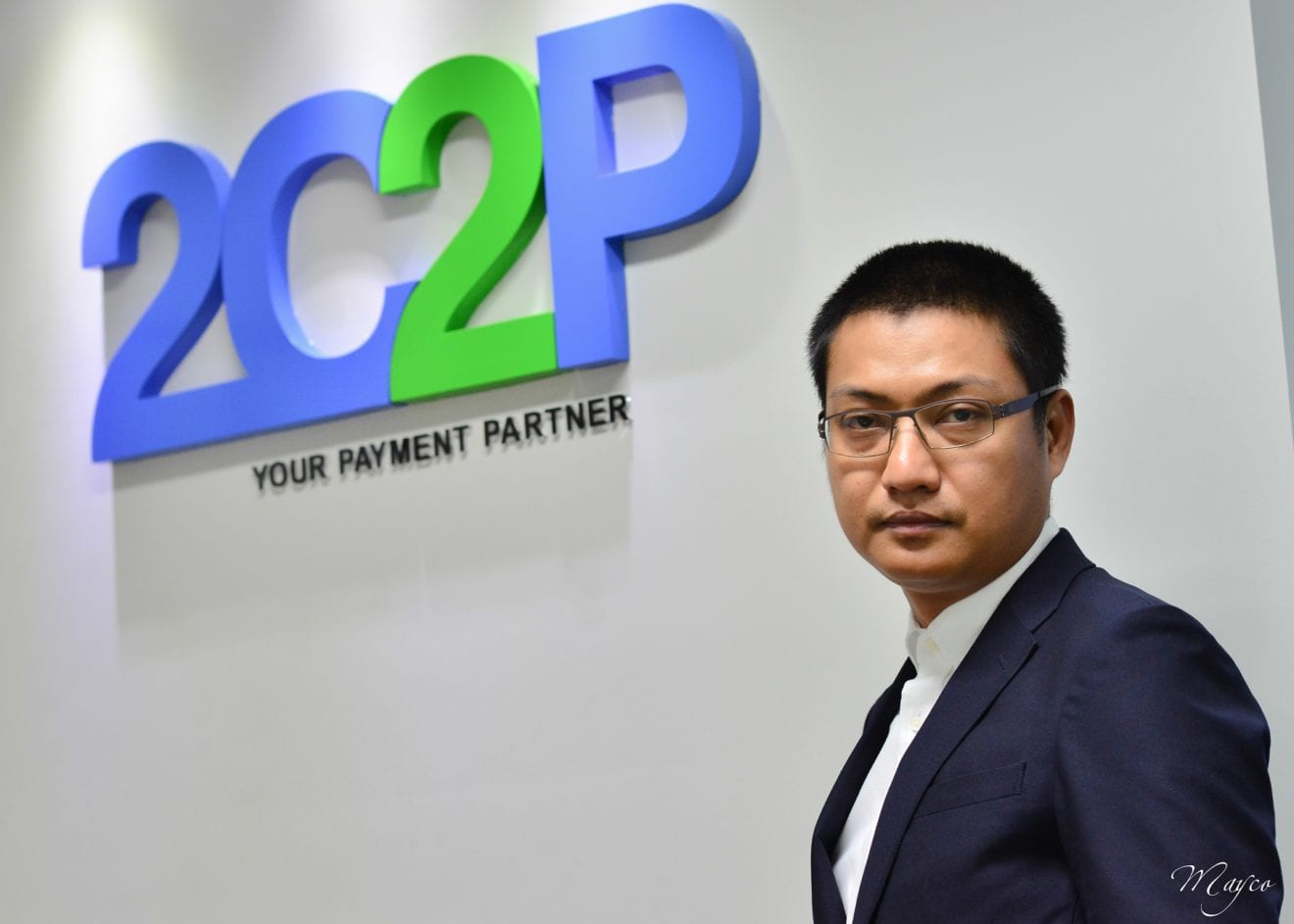
    Southeast Asia payments company 2C2P of Singapore, with its Burmese founder and CEO Aung Kyaw Moe, has taken a step to modernise Myanmar’s economy with the country’s first co-branded debit card so its citizens can shop with international merchants.

    The new UnionPay and Myanmar Payments Union (MPU) co-branded debit card is being introduced along with the launch of 1-Stop, a cash acceptance network of sellers and buyers, bringing digital commerce to Myanmar, especially helpful for its rural communities. Also a partner of the debit card is Myanmar’s Asia Green Development Bank (AGD Bank).

    Anyone in Myanmar can now set up a microbusiness to sell goods and services online. Domestic transactions are processed by MPU, while international transactions go through UnionPay International, which is recognised by more than 4000 merchants domestically and more than 26 million across 150 countries, as well as at 1.8 million ATMs internationally.

    MPU is Myanmar’s national payment network, authorising the issuance and acceptance of all payment cards within the country, of which there are more than 1.2 million. With UnionPay International, a subsidiary of China UnionPay, cardholders can shop with international merchants for the first time. UnionPay is the largest global payment card company with more than five billion cards issued.

    Myanmar is expected to quadruple the size of its economy from $45 billion in 2014 to $200 billion by 2030 (McKinsey), with a reboot of its cash-based economy seen as the key to growth. This will be driven by Myanmar’s young population (47 per cent of its 51.4 million citizens are 24 years old or younger). The World Bank pegs Myanmar’s annual growth rate as leading Asia at 8.3 per cent annually between 2014 and 2017.

    Myanmar’s millennials are also responsible for the country’s spike in outbound tourism. This sector grew from $29 million in 2002 to $257 million in 2012, a rise of 24 per cent, according to the World Trade Organisation.

    “2C2P is committed to support Myanmar’s financial institutions,” says CEO and founder Aung Kyaw Moe. “We do this by bridging the gap between local and international infrastructure.

    “We bring our robust platform, as well as our experience and knowledge in international payments, making it possible for Myanmar’s banking and financial institutions to innovate – offering new services that leapfrog legacy financial technologies.”

    AGD Bank customers can download an app to manage card transactions in real time with online support. A loyalty program offers discounts and privileges from more than 4000 merchants domestically, across food and beverage, retail, hospitality, and travel and tourism.

    “We are committed to innovate, offering Myanmar’s young, fast-growing and connected population the financial services that meet their evolving needs,” says AGD Bank chairman U Than Ye.

    Meanwhile, 1-Stop’s network has more than 3000 locations through 2C2P’s strategic partnerships with the country’s largest distribution network for the agriculture sector Myanmar AWBA Group, retail and convenience store chains Capital Hyper Mart and Grab & Go, mobile stores eCity, Lu Gyi Min andMr.Fone, as well as independent stores.

    It is aiming to contribute to modernising the economy through its online-to-offline commerce approach in a market with relatively high smartphone penetration but limited e-payment infrastructure.

    Myanmar is the fourth-fastest growing mobile market globally, according to Ericsson. In the third quarter of last year, it accounted for nearly 6 per cent of the world’s 87 million new mobile subscribers. Research firm Ovum estimates mobile subscriptions in Myanmar grew by 87.4 per cent in 2014 to 10.7 million. This is forecast to grow at a 21 per cent compounded annual growth rate to reach 38.5 million by the end of 2019 as networks expand to rural areas.

    Last year, 2C2P also launched easyBills, the country’s first online bill-payment system. Previously, along with Myanmar Citizens Bank, 2C2P launched the Citizen Card, a reloadable prepaid card accepted by MasterCard and merchants globally.

    2C2P has offices across Southeast Asia, including Cambodia, Indonesia, Laos, Malaysia, Myanmar, Singapore, Thailand and The Philippines, as well as in Hong Kong.