Retail News CRM

Tag: World

  • JK Tyre Enters Limca Book Of Records With India’s Largest Off-Road Tyre

    JK Tyre Enters Limca Book Of Records With India’s Largest Off-Road Tyre

    Defining upsizing in an all new way, tyre maker JK Tyre has entered the Limca Book of Records with India’s largest off-road tyre. The 40.00-57 VEM 045 was launched in 2014 and stands at 12 feet tall while weighing around 3.4 tonnes. Before off-roaders get their hopes up about upsizing their SUVs, the VEM 045 has been specifically developed for the country’s biggest rigid dump truck that has a payload capacity of up to 240 tonnes.

    Commenting on the occasion, JK Tyre and Industries Ltd – Marketing Director, Vikram Malhotra said, “JK Tyre has been at the forefront of driving innovation in the Indian tyre industry and recognition from the Limca Book of Records is clearly reflective of our unwavering efforts in that direction. The VEM 045 has been widely appreciated for its sturdiness and functionality over these years. We are thrilled and further encouraged to introduce more such category-defining products and solutions in the future.”

    The JK Tyre VEM 045 is sold alongside a range of tyre options from the tyre maker. The company has been the pioneer of developing radial tyres in India and last year inaugurated a new and massive research and development centre in Mysore, Karnataka, which will be consolidating all of the company’s efforts globally to develop new products. JK Tyre’s range comprises passenger vehicles as well as industrial and mining segments.

  • MWC2019 was a “reality check” for telcos

    MWC2019 was a “reality check” for telcos

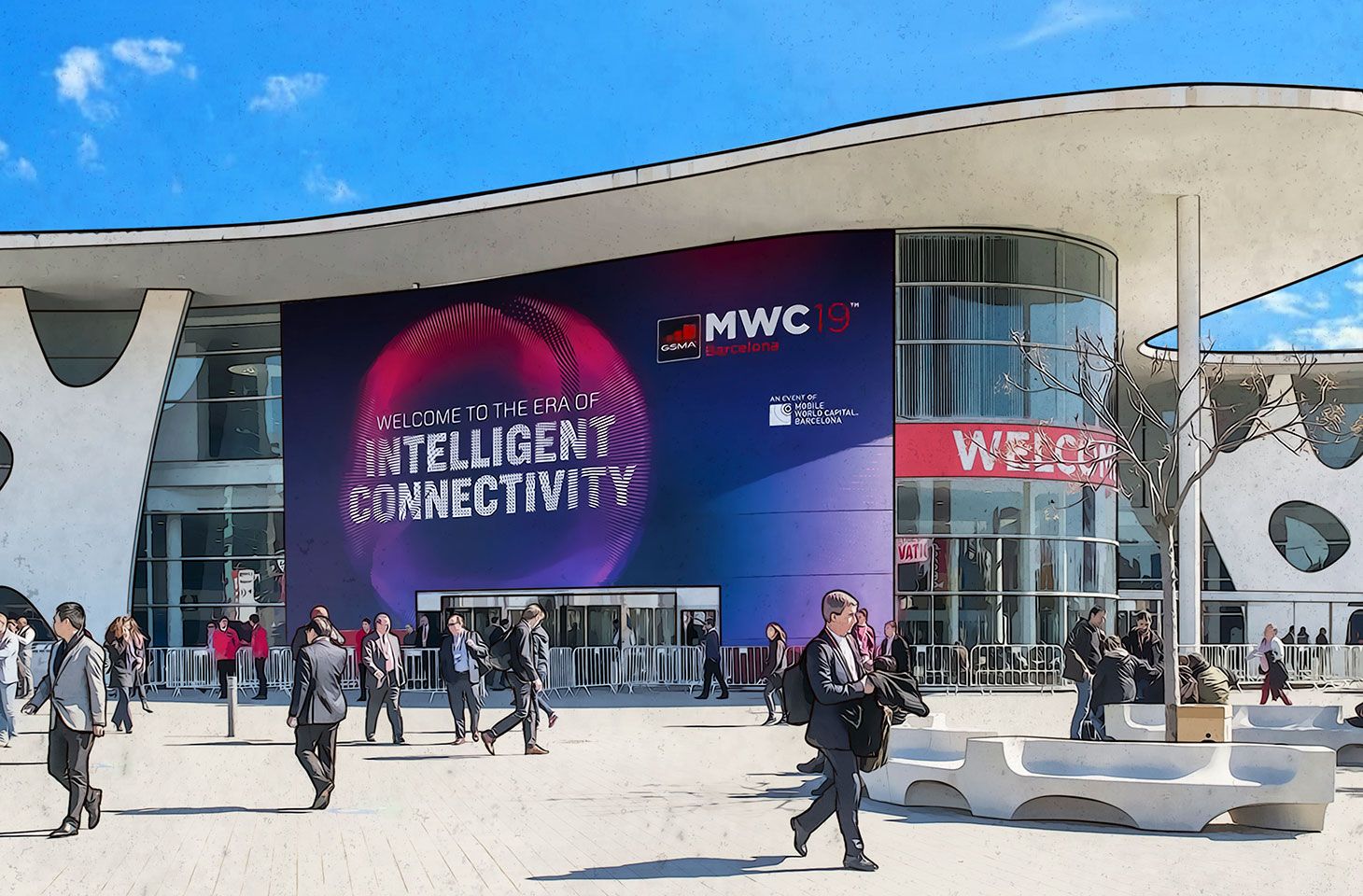
    MWC 2019 demonstrated the mobile industry knows it needs to change and without that change and a massive recalibration of its fundamental business model and modus operandi, it will become obfuscated, according to ABI Research.

    “MWC 2019 could best be characterized as displaying an anxiety borne from an industry suffering from a combination of split personality disorder and ADHD,” wrote Stuart Carlaw, Chief Research Officer at ABI Research, in the firm’s post-conference whitepaper: A Reality Check from Mobile World Congress 2019.

    One half of the industry encompasses an emerging band of technology companies that are addressing some pressing industry-centric issues with real-world solutions based on direct vertical market customer need.

    “The other half of the industry is made up of a carrier community that is moving at the same pace as the Titanic attempting to turn and avoid the iceberg. Too slow and too late,” added Carlaw.

    ABI Research had seven analysts at MWC 2019, which was held in Barcelona, Spain, between Feb. 25-28, 2019. The analysts focused on the following compelling transformative technologies:

    • 5G & Mobile Network Infrastructure
    • Digital Security
    • M2M, IoT & IoE
    • Smart Cities & Smart Spaces
    • Smart Mobility and Automotive
    • Smartphones and Wearables

    Some of the analysts’ conclusions about 5G and mobile network infrastructure from the whitepaper include:

    • Mobile Service Providers (MSPs) are becoming more rational in discussing what 5G can and cannot do. And, are realizing that 5G will be a slow affair.
    • Telcos and their partners will first use 5G to target the consumer market as that is the area where telcos have the know-how, reach, and experience.
    • Private LTE is slowly getting momentum in a market where 5G takes all the headlines. MSPs and network vendors already have well-tested and reliable technologies that can be used to deliver solutions in the enterprise space.
    • A new trend is emerging in the convergence of MSPs and cloud giants as the two categories need each other. This is part of the wider discussion around edge computing, network cloudification, and the role of 5G in creating new applications and supporting the growth of vertical markets.
  • Regulating Facebook could hinder small businesses

    Regulating Facebook could hinder small businesses

    Digital platforms provide a host of challenges for governments. Questions about how to best protect privacy, democracy, and speech online become more pressing every year.

    But policies that affect online platforms also affect international trade. Many Australian small businesses rely on digital platforms to stay on par with their international competitors.

    As Australia starts tackling the challenges wrought by digital platforms, policymakers should be careful not to undo the good things that stem from an evermore connected world. That includes the critical role of these platforms in helping retailers sell their products to overseas customers.

    Platforms facilitate exports

    As my new research with colleague Danielle Parks shows, digital platforms appear to significantly reduce the economic distance and trade costs between buyers and sellers.

    Take Facebook, for example. Facebook is both a social networking platform and digital market platform, where Facebook’s Marketplace helps business owners connect with potential customers.

    The social networking interface allows buyers and sellers to message each other and exchange information about what the seller has, and what the buyer wants. Meanwhile, Marketplace features like identity verification and buyer ratings help to facilitate connections more quickly, and with more trust, than might otherwise be possible.

    There isn’t a lot of large-scale data on cross-border e-commerce, so researchers must get creative to study digital platforms and trade. The findings are extraordinary.

    One study found that 97% of US-based eBay sellers export product to overseas buyers. Another found the “economic effect of distance” to be 65% smaller on eBay. In other words, the digital platform reduces the challenges of selling to people in other countries.

    Research conducted by PayPal showed that 79% of US small businesses on its platform sell to foreign markets. And PayPal merchants that exported, outperformed businesses in general. Interestingly, that finding held for coastal and non-coastal businesses, and for rural and urban businesses alike.

    In our new study, we surveyed Australian businesses on Facebook. We found that those with a Facebook presence were 63% more likely to export their products internationally than other businesses. The propensity to export was higher across all business sectors and nearly all company sizes.

    This emerging pattern shows how world markets are opening up to smaller businesses that might not otherwise be able to compete with their larger, multinational rivals. These findings can partly be attributed to export-prone firms being more likely than others to use digital platforms. But there is no question that the platforms can also enable trade.

    Most governments recognise the need to dismantle barriers to foreign market access, and any new policies regarding digital platforms should not make it harder for small and medium sized businesses to engage in trade.

    How regulation could hurt small businesses

    The Australian Competition and Consumer Commission (ACCC) is currently conducting an inquiry into digital platforms at the request of the treasurer.

    The ACCC’s preliminary report recognises how digital platforms have revolutionised the ways consumers and businesses communicate with one another. The report also highlights concerns over data privacy and the influence of bad actors producing and spreading misinformation.

    The final report, expected in June, will make policy recommendations that aim to address these concerns. But these policies could also inadvertently threaten the revenue streams of businesses that advertise on these platforms or that use them to facilitate online sales.

    Restrictions on the cross border flow of consumer information could interfere with everyday business practices. For example, a key advantage of e-commerce, especially for small businesses, is using search engine techniques to reach larger audiences, and target potential customers. So, search engine restrictions could limit the way businesses target customers with advertising, therefore limiting a business owner’s ability to reach customers abroad.

    Other regulations could restrict business owners from storing the personal information of customers – such as credit card information, consumer preferences and purchase history. That would then limit businesses in how they interact with customers at home and abroad.

    What’s happening at the moment

    Australia is not alone in considering these tough issues. The landscape of digital data flows, data privacy, and e-commerce is a work in progress for governments across the globe.

    The EU recently enacted data privacy regulation called the General Data Protection Regulation (GDPR), which is designed to:

    […] fundamentally reshape the way in which data is handled across every sector, from health care to banking and beyond.

    Meanwhile, the United States Congress will likely consider new internet privacy legislation this year.

    Provisions on digital data flows have been included in major recent international trade agreements. Both the United States-Mexico-Canada Agreement (USMCA) and the Trans Pacific Partnership (TPP) bar data localisation requirements. That means foreign companies would only be allowed to work in a country if they built out or leased separate data infrastructures in that country – a costly endeavour, especially for smaller businesses.

    On the other hand, USMCA and TPP do not allow participating countries to require that platforms disclose their source code or algorithms. These provisions do not necessarily preclude countries from adopting privacy protections, but they do make it easier for platforms like Facebook to operate without fear that they will be asked to handover important intellectual property.

    As the government considers the Australian Competition and Consumer Commission report, one thing should be clear: any policy changes should not overlook the role of these platforms in helping Australian small businesses sell goods to customers in the global marketplace.

  • Innovation for a smarter world: ITU Telecom World 2018

    Innovation for a smarter world: ITU Telecom World 2018

    Creativity and innovation have driven human development throughout the course of history.  From agriculture to industry to the information age, revolutionary innovations in technology have marked major leaps forward in the development of our societies. As the pace of technological innovation increases, the gaps between those revolutions reduce, so that today, just ten years after the arrival of the smart phone, we are already on the cusp of the next major leap: the smart revolution.

    Two aspects of the smart revolution stand out as significantly different. It provides the possibility for less developed markets and nations to leapfrog in developmental terms, not just to leap forward. And the creativity and innovation driving it will not only be human.

    Artificial intelligence (AI) is one of the great enablers of smart society. AI is a blend of advanced analytical and machine learning applications which can perform processes or actions that would traditionally require human intelligence – and at an often greatly accelerated pace.

    The use cases and benefits of AI are multiple, varied – and developing rapidly, with tremendous potential to serve purposes and provide solutions to problems we are not yet aware of, in ways we cannot yet imagine.

    One key aspect is AI’s ability to swiftly and effectively analyse the ever-increasing wealth of sensor data available as the growing power and falling costs of computing provides for much faster and richer data analysis. Practical outcomes include identifying and treating disease, accelerating financial and machine to machine transactions, enhancing public safety, and improving city services, from provision of utilities to driverless public transport and city management. The aim is to save energy, time and lives through AI-enabled smart solutions.

    AI will not be working alone, however. The data it feeds from is set to grow exponentially in volume as the Internet of Things continues to connect billions of sensors and devices to each other, to the internet and to humans. As the IoT develops and refines, it opens the door to innovation across all vertical sectors, including health, media, transport and energy – and manufacturing, as the paradox of personalized mass production increasingly becomes a reality.

    Innovation needs new tools to thrive, and 5G software-defined networks promise a rich playing field for creative minds. The exponential increases in bandwidth, speed, reliability and flexibility offered by 5G will create a powerful critical infrastructure capable of providing solutions to the economic, social and environmental needs of an expanding and increasingly urbanised global population.

    Our smarter world will be enabled by these three key technological developments, in parallel and in overlap: AI, IoT and 5G. Three acronyms driving innovation, with the potential to drive human development at a greater speed and with greater impact than ever before. In developing markets and nations in particular, smart can power the leapfrog effect, bypassing earlier stages of development, taking villages in Asia or Africa straight from no connectivity to 3G or 4G networks, from no access to education or health to world-class professionals available online, providing entry to the knowledge economy for the millions of digitally disenfranchised.

    But for innovation to flourish, it needs to work in a supportive and positive environment. And for innovation to be fair, it – and the services, applications and products it ultimately produces – must be open to all.

    Providing modern and fit-for-purpose regulatory frameworks as far as possible throughout the world of tech is critical to the success of smart innovation. Taking ideas to scale and maximising impact can only happen with international standardization. Privacy, security, trust and reliability are all huge issues when discussing or dealing with data as the life blood of innovative products and services. And the debate on ethical and regulatory frameworks for AI has only just begun.

    Making a smarter world for all, not just for the elite minority, is an even greater, multi-faceted challenge. It starts, of course, with connectivity for all as a basic human right. Just providing access to the internet and the benefits of the services, applications and knowledge it offers, is not enough, however – even if this can be done at affordable prices, with available devices. There is an urgent need to create awareness of, and demand for, the internet; to provide apps and services in local languages, with local contexts and the needs of local communities at the forefront; and to train, educate and develop the skills to use the internet and bring whole new populations and generations online, releasing untapped human potential for innovation across the world.

    Exploring the innovations in technology, policy, and strategy that are driving a smarter world – and the challenges we face in getting there – is at the heart of ITU Telecom World 2018. The leading tech event for governments, large businesses and SMEs, it is organized each year by ITU, the UN’s key agency for ICT matters. This year’s event will be held at the Durban International Conference Centre, Durban, South Africa, from 10 – 13 September, 2018.

    The event features an international exhibition of tech solutions and projects, a world-class forum of interactive, expert-led debates, a networking programme connecting organizations, individuals and ideas, and an acclaimed Awards programme recognising innovative ICT-based solutions with real social impact.

    As an important regional commercial hub with a diverse, multicultural outlook and a dynamic, growing economy, Durban offers an invaluable perspective as a venue for experts and leaders from public and private sectors around the world.  And given ITU’s key role in allocating spectrum and establishing international consensus on industry standards, as well as supporting the critical role of ICTs and smart technologies in meeting the UN’s Sustainable Development Goals, the event is certain to provide informed, interesting and valuable input on the power of innovation to drive a smarter world.

    ITU’s authority and expertise enable it to convene a unique and influential global audience. Heads of state and government will come together with ministers, regulators, leading industry CEOs from major players and SMEs, organizations, associations and consultants. As a UN event, it delivers a truly international perspective on innovation in technology, policy and regulation from emerging and developed markets from all around the world.

    Visit telecomworld.itu.int to find out more ITU Telecom World 2018 and how to take part in Durban this September.



  • Vietnam’s Mobile World plans pharmacy chain

    Vietnam’s Mobile World plans pharmacy chain

    Vietnam’s Mobile World is recruiting pharmacists, with a plan to expand into pharmacy retailing.

    In a job ad on Pharmalink, Mobile World is seeking experienced pharmacists to set up business, train employees and help operate a pharmacy chain.

    Mobile World’s representative confirmed its plan to test new business model without revealing the numbers of stores to be set up.

    In shareholders’ meeting in March, Mobile World’s president Ngo Duc Tai shared the group’s expansion plan by merger and acquisition (M&A) deals in groceries, pharmacy and others, with a budget of US$110 million.

    Ngo revealed that in upcoming years, the group might test medicine retailing via M&A with some pharmacy chains which already has 10-15 stores, and would expand to 500 stores.

    In August, Mobile World finished its first M&A deal with Tran Anh electronics chain.

  • UPS expands alcohol shipping to consumers around the world

    UPS expands alcohol shipping to consumers around the world

    UPS is expanding its ability to ship alcohol, wine and beer to consumers around the world. Using one of the UPS Express shipping services, wine connoisseurs can have their favourite cases of wine shipped directly from the vineyards to their home.

    UPS is helping wineries reach consumers living in 24 of the top 35 wine importing countries, and distilleries in 9 of the top 25 spirit importing countries. Depending on the destination, orders can arrive at the business or consumer’s home within 3 days. All alcohol shipments require an adult signature upon delivery.

    According to the International Organization of Vine and Wine, 43% of all wine is consumed in a country other than where it is produced. The global wine market is expected to reach US$380 billion by 2022.[1] The countries producing and exporting the most wine include Italy, Spain, France, Chile, Australia, South Africa and the United States.[2]

    Europe is the market leader in wine production and consumption. UPS will ship to 23 countries in Europe including these primary markets: Belgium, France, the Netherlands, Switzerland and the United Kingdom.

    Wine consumption is growing rapidly in Asian markets. By 2020, China is expected to surpass the U.S. as the world’s third-largest largest wine importer.[3] The fast growing middle class is driving the demand for premium alcohol. Last year, China imported US$890 million worth of spirits globally.[4]

    UPS will now ship wine, beer and liquor to consumers and businesses in 11 countries throughout Asia Pacific including: China, Hong Kong, Japan, Macau, New Zealand, Philippines, Singapore, South Korea, Taiwan and Thailand. In Malaysia, only businesses can import wine and beer.

    Mexico is earning its place at the table of major wine countries, as consumption has increased by more than 40% in the last 10 years.[5] UPS is shipping wine to Mexico, Argentina and the Dominican Republic. Mexicans are also thirsty for America’s beer, importing $187 million worth in 2016.6

    Canada and the U.S. are key trade partners and as more Canadians buy products online they’re also adding alcohol to their shopping carts. With the expansion, UPS can deliver to 5 of the Canadian Provinces covering 95% of all alcohol imports.[7] The Provinces include Alberta, British Columbia, Manitoba, Ontario and Quebec.

    Boeger, a small family-owned winery in Northern California, recently started global shipping. “It was hard telling our international visitors they couldn’t have our wine because we couldn’t get it to them,” said Tara De La Rosa, hospitality and logistics manager. “We are always looking for ways to expand globally and have our wines on tables around the world.”

    De La Rosa and her team use Paperless Invoice to simplify customs clearance. The UPS shipping system helps wineries, breweries and distilleries avoid delays by uploading all of the required alcohol-related documentation for each country electronically.

    UPS provides automatic tracking and visibility allowing the consumer to follow an order on its global journey. Boeger winery visitors will receive an email notification, in their own language, the day before the scheduled delivery.
    The UPS Express shipping portfolio features three unique service levels: UPS Worldwide Express Plus for early morning delivery, UPS Express for midday deliveries and UPS Express Saver for end-of-day deliveries.

  • Half the world is now online

    Half the world is now online

    Internet penetration increased by 10% in the last 12 months to hit 3.773 billion, or 50% of the world’s population, according to a report from social media management platform Hootsuite and social media agency We Are Social.

    The report also showed that global social media use has increased by 21% in the last 12 months, reaching 2.8 billion users globally.

    Another finding is that mobile social media use has increased by 30% year-over-year to surpass 2.5 billion users globally, with 91% of social media users accessing social from mobile.

    In APAC, mobile data traffic leads significantly over other regions, with 4.12 billion gigabytes consumed, compared with 1.24 gigabytes from North Europe, Middle East, and Africa.

    Social media growth rates increased by over 50% year-on-year. More than 1.5 billion people across APAC now use social media on a monthly basis, 95% of whom access social via mobile devices – the highest ratio in the world.

    As a result, organizations in APAC should plan to transform their communications strategy to increase customer engagement and real-time interaction across the customer journey.

    “Half of the world’s population is now online, which is a testament to the speed with which digital connectivity is helping to improve people’s lives,” We Are Social’s Simon Kemp said.

    “Given this latest data, it’s probably time for us to stop referring to social as ‘new media’, and integrate it more seamlessly into our day-to-day activities.”

    The report compiles data from the world’s largest studies of online behavior, conducted by organizations including GlobalWebIndex, GSMA Intelligence, Statista, and Akamai.

  • AirAsia bags two honours at World Travel Awards in Maldives

    AirAsia bags two honours at World Travel Awards in Maldives

    AirAsia has been named the World’s Leading Low-Cost Airline for the fourth year in a row and its maiden title as the World’s Leading Inflight Service at the 23rd World Travel Awards (WTA) Grand Final held in Male, Maldives. Asia’s largest low-cost carrier beat contenders from five continents to secure the award, including Ryanair, easyJet, Jetstar Airways, Southwest Airlines, JetBlue Airways, Norwegian, Kulula, Mango, fastjet, flydubai, Air Arabia, flynas and West Air.

    “What a thrill to win World’s Leading Low-Cost Airline for the fourth straight year. It’s a great honour to round out what has been a great year for AirAsia, not just financially but in terms of recognition from the industry,” Group Chief Executive Officer, Tan Sri Tony Fernandes said today. AirAsia also won the World’s Leading Inflight Service title for the first time ever, beating full-service carriers Etihad Airways, Japan Airlines, Singapore Airlines, Thai Airways, Qantas Airways, Lufthansa, American Airlines and Air Canada. The win builds on AirAsia’s success earlier this year when it secured Asia’s Leading Inflight Service award from WTA for the first time. “I’m also super proud of our first World’s Leading Inflight Service award.

    I’ve always said we have amazing crew and amazing inflight products, and we’ve proven it by beating not one, not two, not three, but eight full-service carriers for the prize,” he said in a statement. He said there are more to come for AirAsia as the airline is always working on more innovations, and not just for inflight. “Right now, we are exploring ways to make the airport experience better. One thing we’re looking at is fast-tracking guests who share their travel profile with immigration authorities. We expect to run the trial at selected airports in Asean in the not-too-distant future, so keep an eye out for it,” he said.

    The WTA serves to acknowledge, reward and celebrate excellence across all sectors of the travel and tourism industry, as chosen by thousands of travel professionals and high-end tourism consumers. Airlines are judged on customer satisfaction and service quality, overall business performance, product innovation, staff relations and development, corporate social responsibility and contribution to local community, commitment to sustainable policies and fulfillment of long-term corporate vision.

    AirAsia is Asia’s leading low-cost carrier, with an extensive network of more than 120 destinations in Asia, Australia and New Zealand, the Middle East and Africa. It is also the only airline to fly direct to all 10 Asean countries, including some 60 unique routes in the region. AirAsia was also named World’s Best Low-Cost Airline for the eighth year in a row at the 2016 Skytrax World Airline Awards in July.

  • ITU Telecom World Awards 2016 winners announced

    ITU Telecom World Awards 2016 winners announced

    ITU today announced the winners of its prestigious ITU Telecom World Awards, which recognize excellence and innovation in ICT solutions with social impact. The Awards were announced by ITU Secretary-General Houlin Zhao at a buzzing ceremony in the presence of H.E. Air Chief Marshal Prajin Juntong, Deputy Prime Minister and Acting Minister of Digital Economy and Society, Air Chief Marshal Thares Punsri, Chairman NBTC and ITU elected officials at the close of ITU Telecom World 2016. 

    “It is tremendously exciting to see so many ideas, innovations and so much talent and creativity all in one place,” Zhao said. “I hope that winning our Award and having their innovative solutions recognized by global experts will help these talented innovators grow and scale up their businesses, contributing fresh ideas and vision to our digital economy. I wish them every success.” 

    “We are making education accessible to all children around the world,” said Alex Masika, head of business development at BRCK, the maker of rugged wireless and mobile wifi devices in Kenya and the winner of Telecom World 2016’s Global SME Award. “I am happy that the impact we are making has been recognized.”   

    Winners, who took turns pitching their innovations during the event, were selected by an expert jury. ITU Telecom World Awards were open to all exhibitors and sponsors at ITU Telecom World in Bangkok. The awards were presented in three different categories: 

    • The Global SME Award, recognising the most promising innovative solution from an SME.
    • Thematic Awards – open to SMEs and large corporations — for the most promising innovative solutions with social impact in eEducation, eHealth, eGovernment and disaster prevention/communications.
    • Host Country SME Award for the best solution chosen by Thailand.

     Recognition of Excellence Certificates were presented for the best innovative exhibitor within each National Pavilion.

    The ITU Telecom World 2016 Award winners and finalists are:

    • Global SME Award Winner: BRCK, Kenya, represented by Alex Masika 
    • Global SME Award Finalist: gnúbila (be|ys group), France, represented by David Manset
    • Global SME Award Finalist: ulalaLAB, Korea, represented by Sophia Park       
    • Thematic Award Winner eHealth: Neofect, Korea, represented by Kyuhee Lee
    • Thematic Award Winner eEducation: Academic Bridge, Rwanda, represented by Mariam M. Muganga
    • Thematic Award Winner eGovernment: Nile Center for Technology Research – E15 Project, Sudan, represented by Elwaleed Bashir Ahmed
    • Thematic Award Winner Disaster Recovery/Prevention: MasterCard, USA, represented by Umar Hashmi
    • Host Country Award Winner Finalist: ServisHero Co.,Ltd, Thailand, represented by Khun Noppol Toochinda
    • Host Country Award Winner Finalist: Anywhere 2 go Co.,Ltd.(Claim Di), Thailand      
    • Host Country Award Winner: PRO-toys Co., Ltd., Thailand, represented by Boonchai Wongbawornkiat


    Recognition of Excellence Certificates:

    • Bangabandhu Satellite Launching Project, Bangladesh, represented by H.E. Begum Tarana Halim, Minster for Posts & Telecommunications
    • 3D Factory Co.,Ltd., Korea, represented by Sang Hyun Park
    • Academic Bridge, Rwanda, represented by Mariam M. Muganga
    • BESTCOMP GROUP, Azerbaijan, represented by Najafova
    • Bisa, Ghana, represented by Dennis Addo
    • BRCK, Kenya, represented by Alex Masika
    • Fedironics Intelligent Metering Company, Nigeria, represented by Emmanuel Ifediora Ugochukwu
    • Ministry of Transport, Thailand
    • Protonics, Zimbabwe, represented by Chingore
    • NexTech, Japan, represented by Kento Takahashi
    • Potevio Company Limited, China, Luo Lin
    • Telecommunications Infrastructure Company, Iran, represented by Susan Ayerman 

    The ITU Telecom World Awards will continue to play an integral part at future ITU Telecom events, supporting innovative ICT solutions with social impact. For more information on ITU Telecom World 2016 click here.

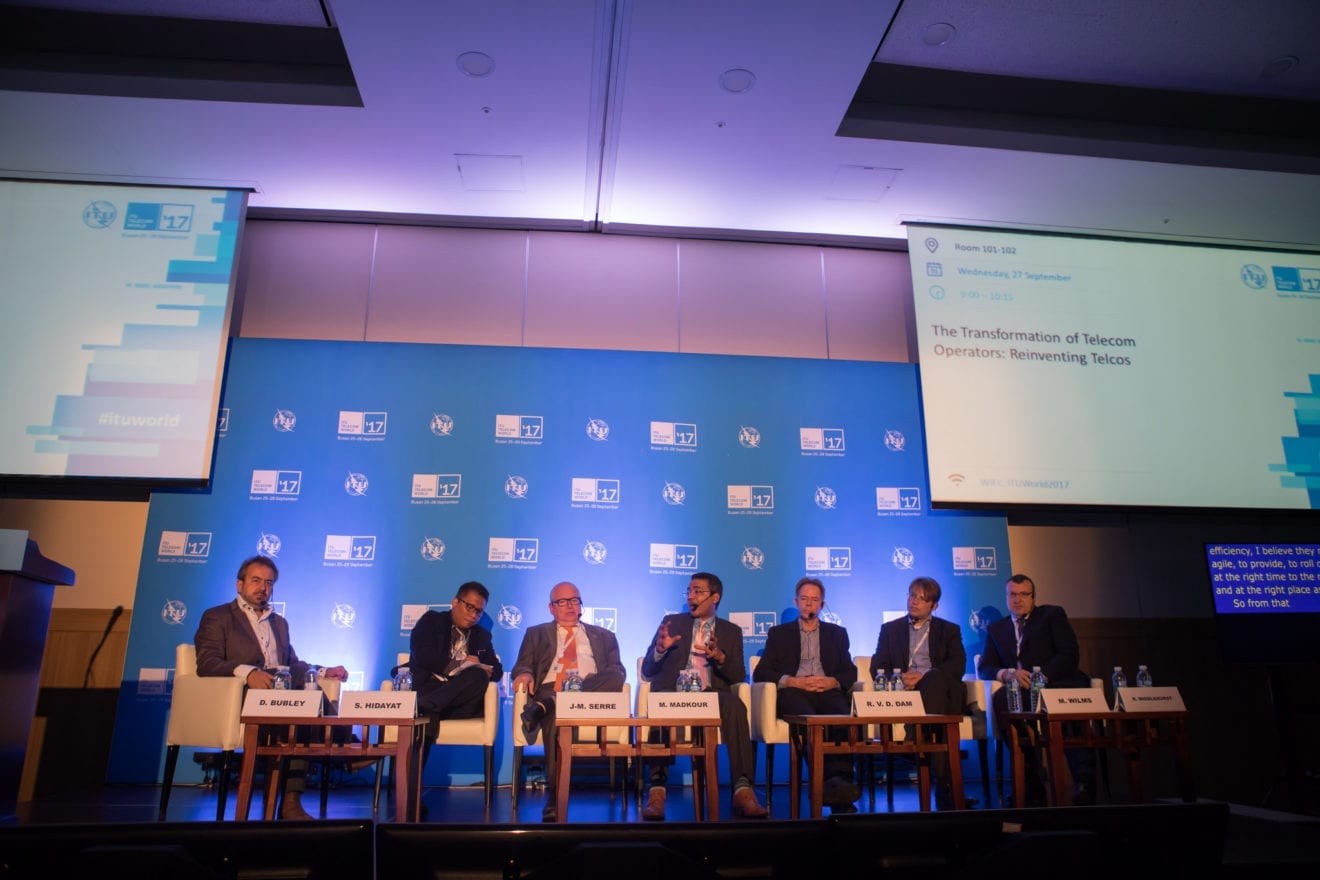
    ITU Telecom World heads next to Busan, Republic of Korea, where it will take place from 25-28 September, 2017.

  • President Jokowi leaves for Boyolali to commemorate World Food Day

    President Jokowi leaves for Boyolali to commemorate World Food Day

    President Joko Widodo (Jokowi) and First Lady Iriana left for Boyolali District, Central Java Province, to attend a function commemorating World Food Day.

    They left by the presidential plane Indonesia-1 from Halim Perdana Kusuma Air Force Base, East Jakarta, at 7:50 a.m. local time.

    They would first join a paddy grand harvesting activity in Banyudono Sub-district Boyolali, and later visit a Technological Innovation Expo.

    At noon, the 36th anniversary of World Food Day was scheduled to be held at the Boyolali square.

    Boyolali is known as a region which has successfully implemented the food production diversification program. The district produces among other things Tongkol 2 Prolific hybrid maize and Jajar Legowo-type paddy.

    Home Affairs Minister Tjahjo Kumolo and Head of the Presidential Staff Teten Masduki joined the presidential entourage.

    FAO celebrates World Food Day each year on October 16 to commemorate the founding of the Organization in 1945.

    Events are organized in over 150 countries across the world, making it one of the most celebrated days of the United Nations (UN) calendar.

    These events promote worldwide awareness and action for those who suffer from hunger and for the need to ensure food security and nutritious diets for all.

    One of the biggest issues related to climate change is food security. The worlds poorest – many of whom are farmers, fishers and pastoralists – are being hit hardest by higher temperatures and an increasing frequency in weather-related disasters.

    At the same time, the global population is growing steadily and is expected to reach 9.6 billion by 2050.

    To meet such a heavy demand, agriculture and food systems will need to adapt to the adverse effects of climate change and become more resilient, productive and sustainable. This is the only way that we can ensure the wellbeing of ecosystems and rural populations and reduce emissions.

    Growing food in a sustainable way means adopting practices that produce more with less in the same area of land and use natural resources wisely. It also means reducing food losses before the final product or retail stage through a number of initiatives including better harvesting, storage, packing, transport, infrastructure, market mechanisms, as well as institutional and legal frameworks.

    This is why FAOs global message for World Food Day 2016 is “Climate is changing. Food and agriculture must too.”

    It resonates with the crucial time in which the day will be observed, just before the next UN Climate Change Conference, COP 22, from November 7 to 18, 2016 in Marrakech, Morocco.

    FAO is calling on countries to address food and agriculture in their climate action plans and invest more in rural development.

    By strengthening the resilience of smallholder farmers, we can guarantee food security for the planets increasingly hungry global population and also reduce emissions.