Tag: zalora

  • Zalora Turns 4 this March

    Zalora Turns 4 this March

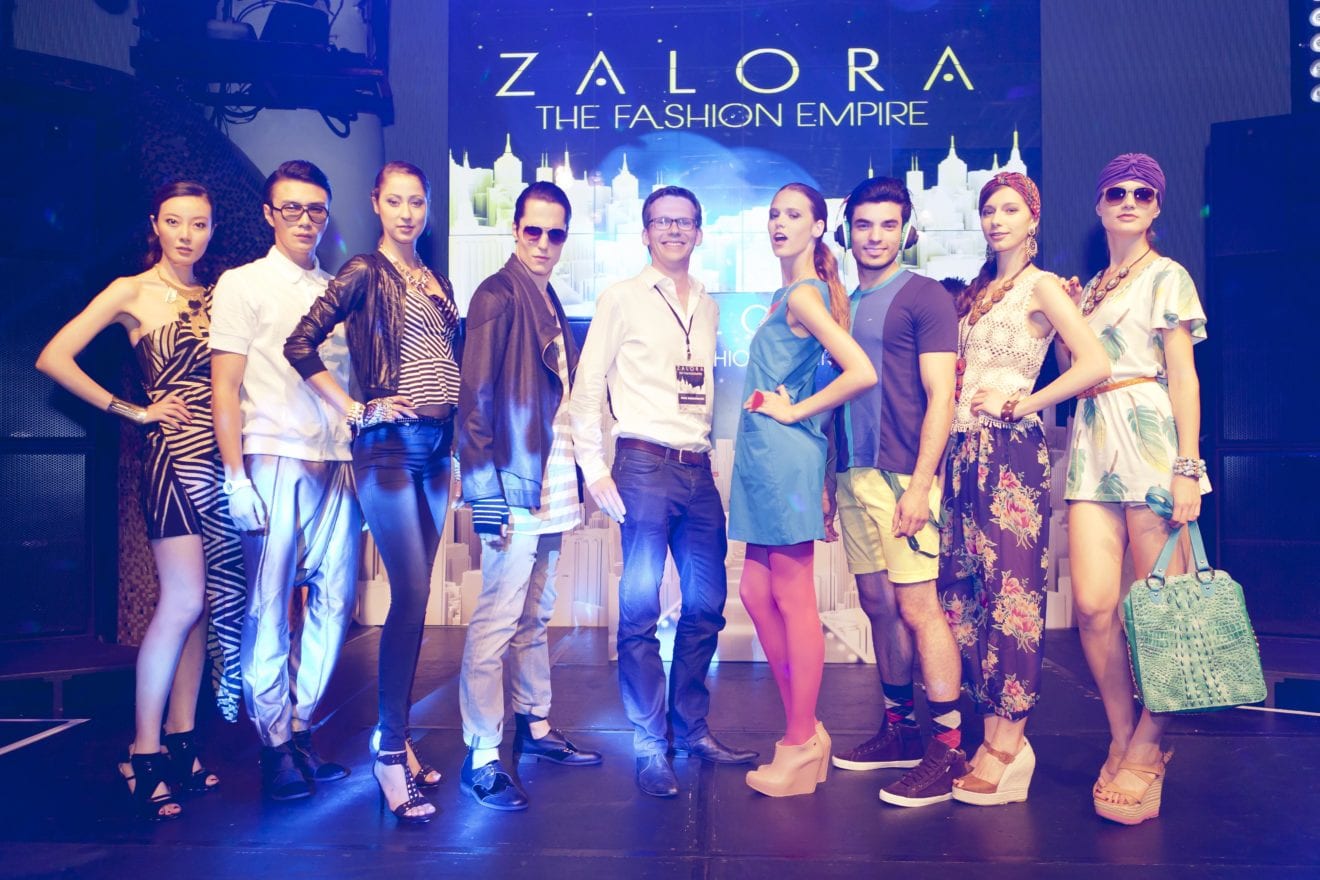
    ZALORA, Asia’s online fashion destination, is celebrating its fourth anniversary this year. To commemorate the milestone, ZALORA will host a series of events and activities for customers, media and partners in Singapore, Malaysia, Indonesia, Hong Kong, Taiwan, Philippines, Vietnam and Thailand throughout the next two months.

    “Over the past four years, ZALORA has consistently strive to improve its product offering, brand proposition and customer experience to change the online fashion retail scene in Asia. According to a research, only 40% of the Southeast Asia population have access to the internet1, this is still below the global average. As an online retailer in an emerging markets, it’s important for ZALORA to contribute to the growth of e-commerce in the region and offer a platform where brands can reach more consumers and for fashion consumers to have access to the best fashion brands anytime, anywhere,” said Michele Ferrario, CEO, ZALORA Group.

    ZALORA celebrates by giving back to fashion

    As part of the fourth year anniversary celebration, ZALORA is introducing two exciting initiatives: ZALORA Style Awards and Make Me a ZALORA Model. In its effort to encourage and support the region’s fashion community, ZALORA will honour talented individuals who made the fashion scene in Southeast Asia a hotbed for creativity and expression through the ZALORA Style Awards, which is set to debut in late March 2016. ZALORA strongly believes that fashion is a great enabler and by giving recognition to individuals in the industry who have been contributing to their respective local fashion communities, ZALORA hopes to inspire future fashion players to pursue a career in the industry.

    In April, ZALORA will launch the first ever regional model scouting competition, using Instagram and the infamous “selfies” as a platform for its search. From a modelling contract with ZALORA to fantastic gift prizes, Make Me a ZALORA Model is an opportunity for aspiring models to fast track their career and become the newest face in modelling scene. More information will be available soon.

    How ZALORA is changing the way people shop fashion in Asia

    Access

    From the start, ZALORA saw navigating the complex and fragmented Southeast Asian infrastructure – achieved with heavy investments in operations and logistics resources and strong local teams – as essential to the company’s success. This focused vision and execution have directly resulted in access to otherwise inaccessible global and local fashion and beauty brands for fans in second and third cities or remote places in Southeast Asia – many hours away from the closest offline store.

    Bridging offline and online

    To introduce ZALORA to consumers in the region and build trust with first-time online shoppers, ZALORA launched the first click-and-mortar shop in Asia that gives consumers a physical ZALORA experience where shoppers can try on products and get familiarised with shopping ZALORA’s e- commerce site. The success of the first digital pop-up store in Singapore led to the opening of more pop-up stores in the region – Penang, Malaysia, Jakarta, Indonesia, Hong Kong, Ho Chi Minh, Vietnam and Manila, Philippines. Designed to increase awareness, this omni-channel approach has proven to be a success as up to 90% of consumers who bought from the pop-up store are new customers.

    Platforms

    The number of smartphone users in Asia Pacific – more than 1 billion in 2015 – is projected to increase by almost 50% by 20192. Keeping pace with the regional growing popularity of m-commerce, ZALORA is focusing on providing a World-Class experience through its apps which are available on all Android and iOS platforms, ensuring that mobile consumers are empowered with the convenience of shopping

    anytime and anywhere they go even in areas where connectivity is not yet very fast. This results in more than 10 million downloads of the award-winning ZALORA app.

    Growth

    In developing countries/cities where hard assets infrastructure is not as developed and distribution of goods are weaker, mobile phone becomes more than a communication tool; it is a platform to procure goods. Based on MasterCard’s Mobile Shopping Survey, half of smartphone users in Asia Pacific are shopping on their device – a clear indicator of a shifting consumer habit as more people are venturing into mobile commerce. Nearly half of the respondents across Asia Pacific (49.5%) cited convenience as the most compelling reason for shopping on their smartphone. Other motivating factors include the ability to shop on the go (43.9%). Driven by this shift, ZALORA is constantly improving its apps, enhancing efficiency and ease of use for the customers. The effort has paid off: more than 50% of site visits in 2015 were from the ZALORA App or mobile site, with more than half of the orders coming from mobile devices.

    During the annual cyber event 12.12 Online Fever in December 2015, fashion thumb shoppers also gained grounds on desktop shoppers: 78.5% compared to 21.5%. Additionally, the number of customers who shopped on ZALORA through mobile had a 250% increase from 2014. This is in line with the changing consumer behaviour and the growing trend of consumers in the region shopping heavily through their mobile devices.

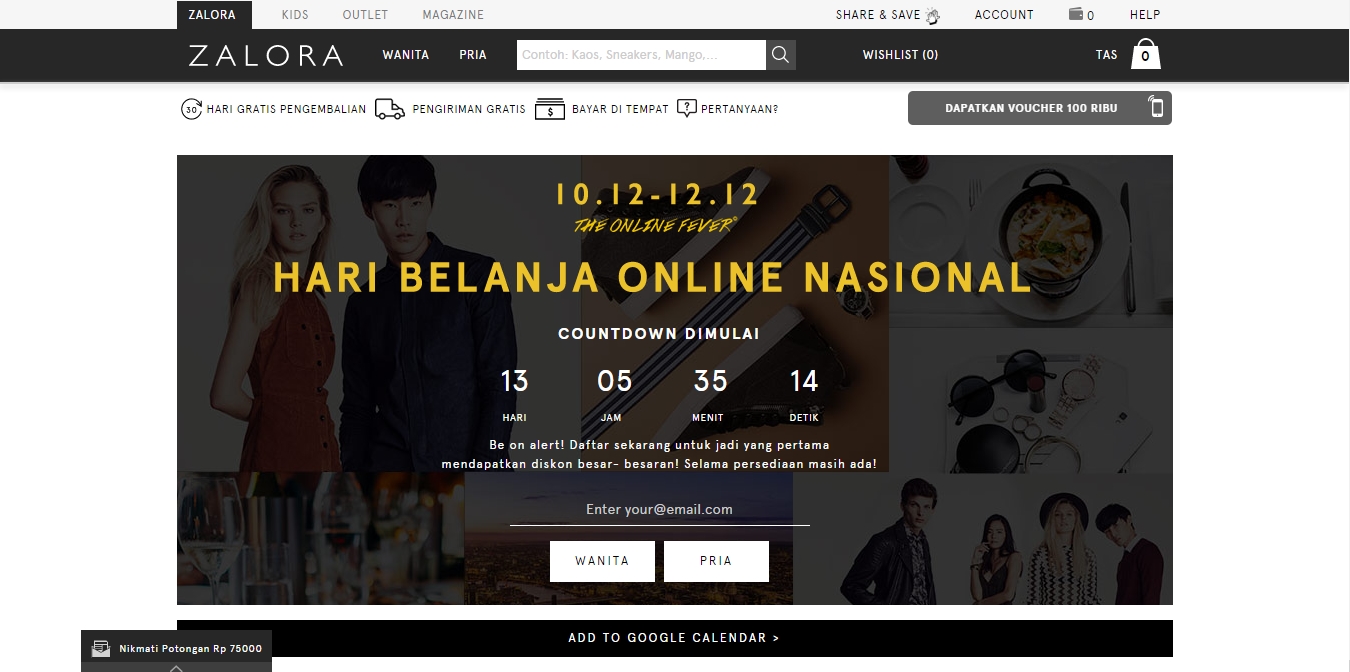
    ZALORA’s 12.12 Online Fever – Asia’s version of Cyber Monday – played a pivotal role in the boost of the regional confidence in online purchase, subsequently converting traditional consumers into e- consumers. This initiative was met with strong support from fashion consumers across the eight markets – Singapore, Malaysia, Indonesia, Philippines, Thailand, Vietnam, Hong Kong and Taiwan – with over six times the volume of any previous day, and an acquisition of 32% first time ZALORA customers in 2015.

    According to PayPal Cross-Border Consumer Research 2015, fashion emerged as the top category for both online cross-border shopping (53%) and mobile shopping (27.9%). To keep pace with the demand, ZALORA carries over 6,000 global and local fashion brands on one single site, carefully curated to provide the best fashion offering for its customers.

    In recognition of the growth in online fashion shopping, ZALORA will sustain its dedication to an ever- improving and meaningful online shopping experience: the access to favourite brands and same-day delivery, all achieved with a few clicks. Every day, ZALORA is one step closer to revolutionising the way people shop and redefining the high-street fashion accessibility in this part of the world. To date, ZALORA has served close to four million customers in just a few years.

    Driven by a team of young experts in fashion, logistics, data analytics, marketing, and design, paired with guidance from business consultants and tech geniuses, ZALORA’s vision is set on growth, making ZALORA the online fashion authority in Asia. ZALORA will continue to strive for excellence, enhance the customer experience by improving interface and customer engagement, particularly through mobile applications, boost confidence in online shopping and transform the way fashion is purchased in Asia to help build an e-commerce friendly environment.

    Follow ZALORA’s fourth anniversary celebrations at #ZALORA4You.
  • Zalora Enhances Customer Experiences Through a Single Personalization Platform from Evergage

    Zalora Enhances Customer Experiences Through a Single Personalization Platform from Evergage

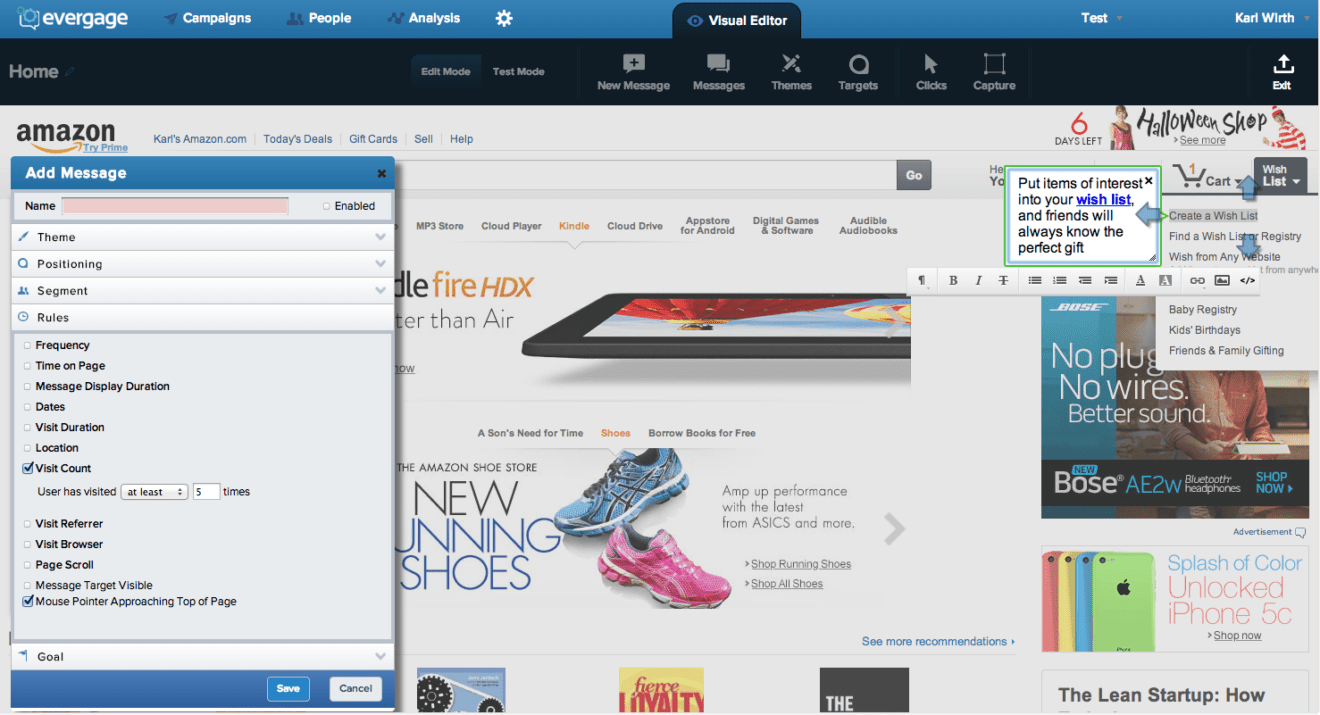
    Evergage, the real-time personalization platform company, today announced that ZALORA, Asia’s leading online fashion destination, has selected Evergage to support its real-time personalization initiatives across all the company’s digital properties. In a move to streamline its personalization efforts, which previously involved multiple vendors, ZALORA chose Evergage to easily and comprehensively manage all aspects of Web personalization for the company. 

    Established in early 2012, ZALORA has dedicated websites for fashion consumers in Southeast Asia, Hong Kong and Taiwan. Offering a wide array of items from more than 500 top international and local brands, ZALORA gives customers access to thousands of products across a variety of categories online.

    Prior to its deployment of Evergage in July 2015, ZALORA was working with multiple vendors, each providing specific elements of personalization for the company’s websites. This made tailoring the customer experience in real time a challenge for the marketing team as they could access only a fragmented view of each customer, versus a holistic perspective encompassing each interaction with the brand. By tracking and interpreting visitors’ historical preferences, in-the-moment behavior and intent across platforms and touchpoints, Evergage provides a well-rounded and actionable view of visitors – so digital marketers can deliver personalized experiences at the 1:1 level across channels.

    ZALORA’s Regional Marketing Director, Patrick Steinbrenner, said: “In line with our efforts to streamline processes and improve efficiency in ZALORA, we needed to unify our personalization program under one single solution. Evergage’s comprehensive and acclaimed platform is the perfect fit for our needs. We’re pleased with our results so far, and look forward to using Evergage to drive even deeper levels of customer engagement.”

    Within the first three months of using Evergage, ZALORA launched several personalization campaigns – to communicate and capture email addresses at optimal times during shoppers’ visits – and has already seen a significant lift in conversion rates and revenue per user for its Web-based customers. Looking ahead, as ZALORA continues to advance its efforts with Evergage, delivering real-time personalization through ZALORA’s mobile app will be a key new initiative.

    ZALORA has seen significant increases in site traffic since Q1 2015, and working with Evergage, it will be able to maximize the benefits of this influx by supporting personalized, relevant experiences to site visitors. 

    “We’re thrilled to be working with ZALORA as they take their personalization efforts to the next level,” said Karl Wirth, CEO and co-founder of Evergage. “By delivering a single platform to manage every aspect of ZALORA’s real-time personalization program, we’re able to help them better understand each individual visitor and instantaneously provide a tailored shopping experience to drive more sales.”

  • Wildcraft expands out of India

    Wildcraft expands out of India

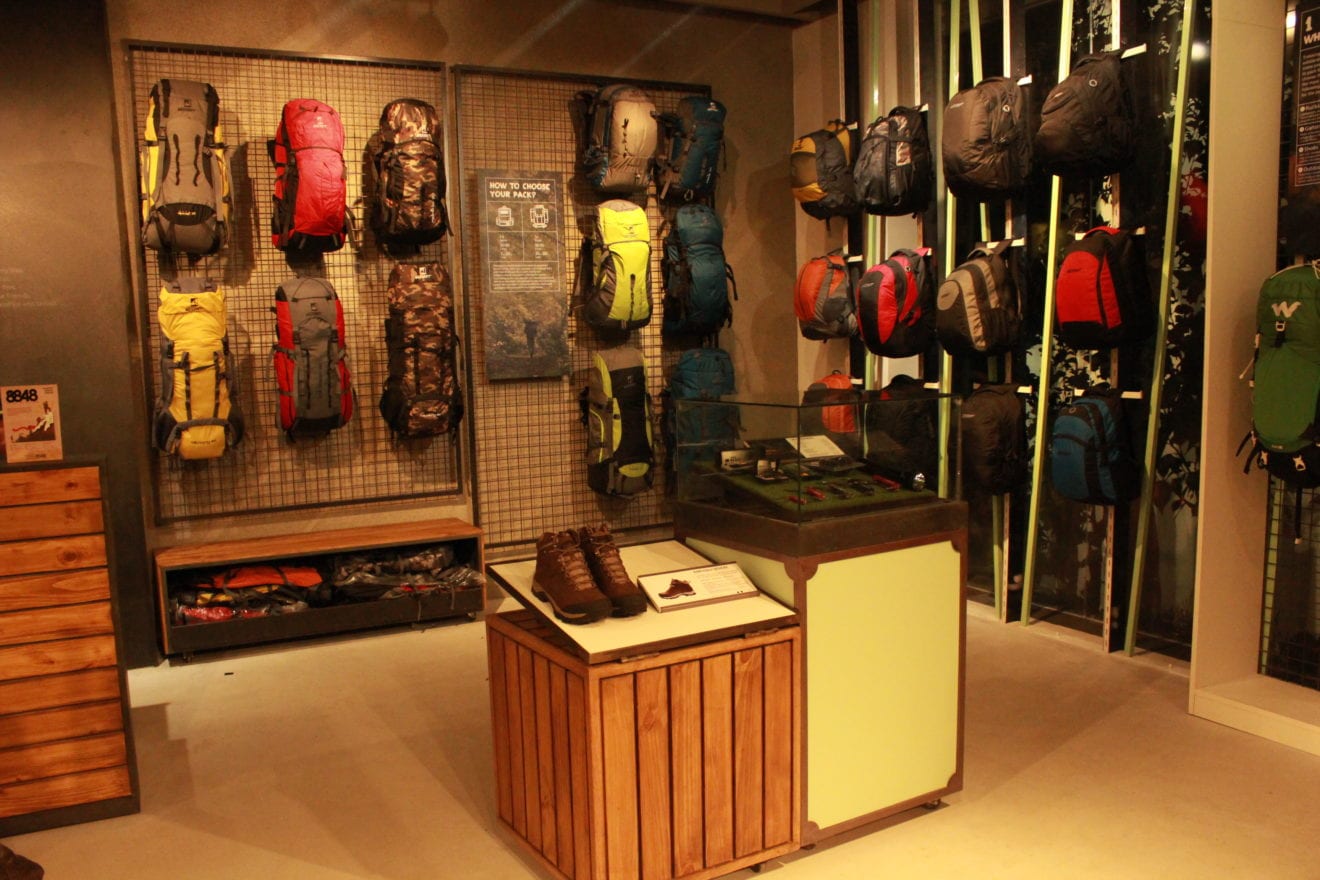
    As a first step toward growing its international presence, Indian fashion brand Wildcraft has launched into the Middle East and Southeast Asia.

    It has formed partnerships for its foray into the UAE, Oman and Muscat markets, and online partnerships for Hong Kong, Indonesia, Malaysia, Singapore and Taiwan, reports ETRetail.com.

    Wildcraft unveiled a new brand identity last year while expanding its product portfolio into clothing and footwear. It has also added 130 retail outlets in more than 50 cities across India, giving it more than 3000 distribution points in more than 400 cities in India.

    In Southeast Asia, the brand has partnered with Zalora, part of the Global Fashion Group, giving Wildcraft access to the Hong Kong, Malaysia, Singapore and Taiwan markets. It will use this alliance to initially sell its outdoor gear products.

    Co-founder Gaurav Dublish says the international expansion “is just the start of our growth plans”.

    “The focus, at this point, is to reach countries with similar climatic conditions and geo-proximity.”

  • BrandOutlet pushes Indonesian style

    BrandOutlet pushes Indonesian style

    Local brands are a focus of a new eCommerce fashion venture in Indonesia.

    Part of the PT Media Nusantara Citra Group (MNC), BrandOutlet features fashion and beauty collections for women, men and children, reports the Jakarta Post.

    Not to be confused with the UK’s Brand Outlet, the new site devotes 6 per cent of its offering to quality local brands such as Damn! I Love Indonesia, Ingrid Husodo and Nikicio. Its international labels include Michelle Worth, Oscar de la Renta and Ted Baker.
    “Most of the branded products are available only at offline shops and boutiques, making them inaccessible to people living outside big cities such as Jakarta and Surabaya,” says BrandOutlet COO Andry Huzain. “We aim to provide anyone anywhere with easy access to buy them affordably.”

    Andry says mobile applications for iOS and Android users will be available in April.
    The company also publishes an eMagazine offering features tips, tricks and updates on fashion trends.
    BrandOutlet’s COO, Valencia Tanoesudibjo, is the daughter of MNC Group CEO and founder Hary Tanoesudibjo.

    Meanwhile, a fashion eCommerce app has been launched in Jakarta that enables users to buy products for a range of online shops without having to open each individual site.

    Lyke showcases up to 100,000 products on such platforms as Berrybenka, Bobobobo and Local Brand, as well as smaller businesses that market through blogs or social-media platforms, reportsE27.

    Users can also “follow” their favourite shops and receive recommendations based on their preferences.
    “Lyke is the perfect partner for local fashion brands that want to reach out out their customers via mobile,” says CEO Bastian Purrer, who quit his MBA studies at Harvard Business School to launch the business. Future plans include features that enable social interaction between users, such as sharing the fashion products or celebrity styles they like.
    Online shopping via mobile site or app is starting to gain traction in Indonesia, with companies such as Zalora claiming that most of their sales during the national online shopping day Harbolnashappened on mobile sites and apps.

  • Zalora Takes a Look Back to 2015

    Zalora Takes a Look Back to 2015

    With less than a few days until 2015 comes to an end, ZALORA, Asia’s Online Fashion Destination, is proud to unveil its significant milestones achieved this year that changed the online fashion retail landscape in Southeast Asia. Initiated in 2012 with a mission to redefine high-street fashion accessibility in this part of the world, ZALORA has managed to run faster, play smarter and grow bigger in less than four years. Having fostered a strong presence in eight markets, and with more than 6 million followers on social media, ZALORA will continue to grow in its product offering, brand proposition, and customer experience.

    2015 was a remarkable year for ZALORA. As a leading fashion e-commerce player in the region, innovations in mobile engagement were introduced to keep up with changing fashion consumer behaviour towards mobile shopping. In recognition of this shift, ZALORA will sustain its dedication to an ever-improving and meaningful mobile shopping experience in the markets we cover.

    The Year of Mobile for ZALORA

    In an effort to boost online retail consumption expenditure while providing reassurances about the e- commerce sector and building trust with customers in Asia, ZALORA launched the region’s version of Cyber Monday, 12.12 Online Fever, in 2014. Together with more than 300 partners across the region covering different industries from food, home, entertainment, travel, to beauty, 12.12 Online Fever grew bigger on its second run in 2015.

    On 12 December this year, ZALORA enjoyed over six times the volume of any previous day, also sparking a rise in mobile shoppers. With 78.5% of 12.12 Online Fever customers shopping on their

    mobile devices, the number of mobile customers saw a 250% increase from last year. This is in line with the growing trend of consumers within the region shopping heavily on their mobile devices.

    As a retailer, it is important that ZALORA provides a seamless mobile experience for its partners. With utmost convenience in mind, the Marketplace Seller App was launched, allowing independent sellers to run their ZALORA shop while on the move. Developed to expedite transactions and the evaluation of business performance, the app is available in five languages, catering to the culturally- diverse Southeast Asian markets.

    Winning prestigious regionally-recognised awards is a testament to ZALORA’s continued success in mobile innovation. This year, ZALORA clinched the Silver award for the MBEA Best M-commerce Mobile Application of the Year and came out on top as finalist for Mob-Ex (Mobile Excellence) Awards in the categories Best Brand Awareness Campaign, Best use of QR Code and Best Integration of Mobile.

    Fashion Consumer Insights

    ZALORA understands that consumers today are seeking more options and a wide assortment of quality products. To meet this demand, ZALORA carries over 6,000 global and local fashion brands on one single site, carefully curated to provide the best fashion offering for its customers.

    Over the year, we have noticed certain significant purchasing trends. The top three most-purchased fashion items for 2015 are: Quilted wallets, flip-flops and V-neck tees. Aside from apparel, ZALORA also offers beauty products to its customers. Lipsticks topped the list as the most purchased beauty item, followed by mascara and foundation. Aligned with the goal of filling the online fashion gap in Southeast Asia, ZALORA remains a dominant player in enabling accessibility to high-street fashion for consumers in the region,

    ZALORA Milestones

    As the company grew in the last three years, ZALORA has achieved several milestones in 2015, including entering the Taiwan’s fashion e-commerce market. Growing at a significantly rapid pace, the Taiwanese consumers are driven by high internet penetration and widespread smartphone use. With close to 100 brands initially offered, ZALORA gives fashion consumers in Taiwan the best high-street fashion brands, such as Burton Menswear, Finery London, New Look, River Island, and Miss Selfridge, in addition to ZALORA’s eponymous label, exclusively distributed in Taiwan by ZALORA on one website.

    To further strengthen its position as the fashion authority in this part of the world, ZALORA is committed to continually coming up with innovative large-scale events by pioneering omni-channel consumer engagement, through working with top partners across channels (from TV to media).

    ZALORA supports Asia’s diverse forms of beauty and talent, seeking to empower men and women through fashion. By giving them the confidence to own every moment they find themselves in, they are encouraged to be the best version of themselves. ZALORA also plays a critical role in discovering and celebrating the next fashion talent in Asia through partnerships with highly anticipated television series, namely Asia’s Next Top Model, How Do I Look? Asia, and Fit for Fashion, which will air on January 7, 2016.

    Where fashion meets e-commerce, the inaugural ZALORA Scholarship was also debuted this year to attract and nurture young talent in the tertiary student crowd, providing them with valuable industry experience and a partial grant for tuition fees.

    Furthermore, designed to increase awareness of the brand among consumers in Southeast Asia, ZALORA launched The ZALORA Shop, the first click-and-mortar shop in Asia that gives consumers a physical ZALORA experience. Following the success of the first pop-up store in Singapore launched in 2014, ZALORA launched more pop-up stores around the region this year in Hong Kong and the

    Philippines. Due to popular demand, ZALORA Hong Kong opened a second pop-up store, while ZALORA Singapore is now on its third store

    ZALORA prides itself on its commitment to provide relevant fashion choices to consumers in Asia. This is channelled through the ‘Lunar New Year’ collection and ZALIA – an exclusive label created specially for women seeking trendy, conservative styles. Designed for the fashion-conscious consumer, ZALORA launched the Lunar New Year and ZALIA collections for the third year running in 2015. Both collections successfully enable fashion fans to transform their festive wardrobe into something contemporary and fashion-forward without forgetting their local roots and Asian authenticity.

    ZALORA Looks Forward to 2016

    ZALORA celebrates a successful 2015 and its incredible achievements. Entering its fourth year, the young online fashion company aims to maintain its dominant position as market leader in the online fashion sphere. ZALORA will continue to dream big and explore new opportunities and possibilities for the future to build an e-commerce friendly environment in the region.

  • Shoppers catch Zalora online fever

    Shoppers catch Zalora online fever

    Asian online fashion retailer Zalora recorded sales six times higher than any day ever before during its December 12 Online Fever promotion last weekend.

    Zalora sells in eight Asian markets: Singapore, Malaysia, Indonesia, Philippines, Thailand, Vietnam, Hong Kong and Taiwan.

    The 12.12 Online Fever promotion was positioned as Asia’s answer to North America’s Cyber Monday, with Zalora aiming to boost eCommerce across the region, offering shoppers cut-price deals to encourage online purchasing and hoping to convert traditional consumers into e-consumers. This year, 32 per cent of 12.12 Online Fever shoppers were first-time Zalora customers.

    “12.12 Online Fever 2015 was a great success not only for Zalora, but for all the partners we worked with to make this initiative possible and for consumers who got their favourite fashion brands on great price point,” said CEO Michele Ferrario.

    As Southeast Asia, Hong Kong and Taiwan are enjoying immense economic growth, we wanted to engage consumers and help boost the growth of e-Commerce in the region. This online sales day will give them a push, sparking consumer spending by offering their favourite items at the best prices. Last year’s record sales attested that such a cyber event resonates well with consumers in the region, and we are happy that we managed to engage more consumers this year.”

    To ensure timely packing and delivery of orders, Zalora increased staffing in operations working 24/7 in order to ship 100 per cent of the packages received in its warehouses within 24 hours. This resulted to having 30 per cent of packages delivered to customers within the next day and more than 50 per cent of packages by the end of yesterday, (December 14), across the region.

    One of the big surprises from the sale was the high percentage of shoppers using their mobile devices to browse and purchase – 78.5 per cent of shoppers on Saturday were using mobiles, just 21.5 per cent desktops or laptops – the number of mobile shoppers rose 250 per cent year on year.

    Females accounted for 74 per cent of shoppers.

    The most popular categories for both males and females were apparel, footwear and accessories. Favourite brands among women include Rubi, Mango, Dorothy Perkins and Something Borrowed while Sperry, Herschel, Onitsuka Tiger and Topman were popular brands for men.

    Netizens were also talking about 12.12 Online Fever in their social media posts, a few of them commending Zalora’s quick delivery service and alerting their friends to join in. 12.12 Online Fever received more than 1.6 million of impressions on popular social media sites Facebook, Instagram and Twitter.

    This year’s 12.12 Online Fever also saw an increase in number of partners with 376 participating across the region, covering industries ranging from food, home, entertainment and travel to beauty.

  • Zalora Wins Big with 12.12 Online Fever 2015

    Zalora Wins Big with 12.12 Online Fever 2015

    Zalora, Asia’s online fashion destination enjoyed strong support from fashion consumers across their eight markets – Singapore, Malaysia, Indonesia, Philippines, Thailand, Vietnam, Hong Kong and Taiwan – with over six times the volume of any previous day. A Zalora-led initiative, 12.12 Online Fever aims to drive the e-commerce industry across the region, bringing to consumers some of the best deals that will encourage online purchase, hoping to convert traditional consumers into e-consumers. This year 32% of 12.12 Online Fever shoppers are first-time Zalora customers.

    As Zalora is committed to giving customers the best online shopping experience, the team prepared for the surge of volume of orders to make sure that deliveries are fulfilled within the fastest time possible. To ensure timely packing and delivery of orders, so that excited customers can get their hands on their latest fashion purchase, Zalora increased manpower in operations working 24/7 in order to ship 100% of the packages received in its warehouses within 24 hours. This resulted to having 30% of packages delivered to customers within the next day and more than 50% of packages by end of day Monday, 14 December, across the region.

    The number of fashion thumb shoppers also increased, comprising 78.5% of shoppers who shopped through their mobile devices on Saturday 12 December compared to 21.5% who shopped on their desktops. This is in line with the changing consumer behaviour and the growing trend of consumers in the region shopping heavily through their mobile devices. The number of customers who shopped on Zalora through mobile had a 250% increase from last year.

    Female consumers had a strong showing as they cover 74% of shoppers during 12.12 Online Fever

    but the men did a lot of shopping too as they contribute 26% of the shoppers. The most popular categories for both male and female are apparel, footwear and accessories. Favourite brands among women include Rubi, Mango, Dorothy Perkins and Something Borrowed while Sperry, Herschel, Onitsuka Tiger and TOPMAN were popular brands for men. Zalora’s eponymous label was popular across markets and to both male and female shoppers.

    Netizens were also talking about 12.12 Online Fever in their social media posts, a few of them commending ZALORA’s quick delivery service and alerting their friends to join in. 12.12 Online Fever received more than 1.6 million of impressions on popular social media sites Facebook, Instagram and Twitter.

    Zalora Group CEO, Michele Ferrario shared, “12.12 Online Fever 2015 was a great success not only for ZALORA but for all the partners we worked with to make this initiative possible and for consumers who got their favourite fashion brands on great price point. We thank everyone who supported us. As Southeast Asia, Hong Kong and Taiwan are enjoying immense economic growth, we wanted to engage consumers and help boost the growth of e-commerce in the region. This online sales day will give them a push, sparking consumer spending by offering their favourite items at the best prices. Last year’s record sales attested that such a cyber event resonates well with consumers in the region, and we are happy that we managed to engage more consumers this year!”

    This year’s 12.12 Online Fever also saw an increase in number of partners with a total of 376 partners across the region covering different industries from food, home, entertainment, travel to beauty. Through large-scale online sales days such as 12.12 Online Fever, ZALORA aims to boost online retail consumption expenditure, while providing reassurances about the e-commerce sector and building trust with customers.

    12.12 Online Fever is an initiative to rally e-commerce players in the region to come together on one day and create Southeast Asia’s version of Cyber Monday. Southeast Asia is experiencing rapid

    economic growth, urbanisation and technology adoption, with 12.12 Online Fever, Zalora is bringing down barriers by making it more accessible for people in this region to buy fashion online where e- commerce is still in its infancy stage in many parts of Southeast Asia.

  • Online Sellers Tout Successful ‘Harbolnas’ Campaign

    Online Sellers Tout Successful ‘Harbolnas’ Campaign

    Anthony Fung, managing director of online fashion retailer Zalora Indonesia said in a statement on Monday that the company saw sales surge thirty-fold during the three-day shopping event, but did not give a figure.

    “Everything is going so well that we decided to extend this campaign one more day, until December 13, so that we can give consumers more opportunities to get their favorite fashion brands at Zalora,” Anthony added.

    MatahariMall.com, the e-commerce arm of the Lippo Group, with which the Jakarta Globe is affiliated, claimed that sales went up 10 times the daily average during Harbolnas, with electronic goods and smartphones leading sales, according to chief executive Hadi Wenas.

    Fair game

    The hefty discounts promised, including up to 99 percent from MatahariMall, have prompted concern from consumers and industry lobby groups.

    The Association of E-commerce in Indonesia, or idEA, issued a statement over the weekend urging Harbolnas participants to divulge the actual value of sales derived from the event. This is in order to “assert the potential of Indonesia’s e-commerce market from local and international perspectives,” citing similar practices by online retailers in the United States and China.

    “There is concern over the hype in huge discounts offered during Harbolnas,” said Tulus Abadi, chairman of the Indonesian Consumer Protection Foundation (YLKI), as quoted by Merdeka.com.

    He urged consumers to be cautious about wild-sounding deals online, noting that consumer protection was still largely unregulated by the government.

    Lazada Indonesia was among the companies under scrutiny for manipulating prices, after a customer spotted a seller on the online marketplace listing infant diapers at a pre-Harbolnas price of Rp 130 million ($9,210), before a discount of nearly 100 percent dropped the price to Rp 93,482.

    Lazada said in a subsequent statement that it was not the company’s policy to deceive customers and that the seller in question had been banned from the marketplace.

    Similarly, MatahariMall listed a PlayStation 4 game console at an initial Rp 10.8 million before discounting it to Rp 4.599 million. Other sellers list the price of the same item outside the Harbolnas at Rp 4.7 million.

    Faced with the rapid growth in online retail in Indonesia, the government is in the process of laying the groundwork for regulating the e-commerce industry, from foreign ownership and taxes to consumer protection and business models. A regulatory road map devised by the Communications and Information Technology Ministry is expected before the end of the year.

    At the same time, idEA said it was also currently devising an ethical code of conduct when offering promotions and discounts, which it aims to unveil in the first half of next year in a bid to boost consumer trust and satisfaction when shopping online.

  • HKTDC Design Gallery Wan Chai relaunched

    HKTDC Design Gallery Wan Chai relaunched

    The Hong Kong Trade Development Council has unveiled a revamped HKTDC Design Gallery shop at the Hong Kong Convention and Exhibition Centre.

    HKTDC executive director Margaret Fong was joined by famous Hong Kong actor Moses Chan and many of the city’s top designers at an opening ceremony yesterday.

    The store was created to promote products invented back in 1991.

    The diverse variety of products on offer highlights the extraordinary creativity of Hong Kong designers in areas ranging from jewellery, watches, electronics and fashion to home products, gifts and children’s items.

    The revamped HKTDC Design Gallery Wan Chai shop showcases nearly 5500 innovative products from more than 230 Hong Kong designers and brands in eight distinctly designed zones.

    Hong Kong designer brands feature in DG Discover; handbags and accessories in DG Vogue; environmentally friendly products in DG Green; baby and children’s products in DG Mini; home goods and gifts in DG Delights; electronic and digital goods in DG Smart; high-end luxury products such as jewellery, watches and leather and cashmere goods in DG Luxe; and collaborative creations by Hong Kong designers and international brands that combine the best of East and West in DG Plus.

    Featuring minimalist geometric shapes and a circular motif, the design of the revamped HKTDC Design Gallery shop creates a vibrant atmosphere to engage customers and elevate brand image. Light wood colours, grey gradients and black linear accents are used to create a comfortable, contemporary environment. The DG Luxe zone is distinguished from other areas of the shop by the use of dark wood colours and deep grey fabric lining.

    At the opening ceremony, Fong said that thanks to the support of local residents, visitors and traders, the shop has been attracting more than 1 million customers each year.

    Apart from new Design Gallery shops in Beijing, Shanghai, Chengdu, Wuhan and other mainland cities, Fong also spoke about the HKTDC’s strategy of collaborating with department stores and lifestyle shops to set up “shops in shops” in Hong Kong and on the Chinese mainland, to bring the best Hong Kong brands to more customers.

    Fong said the HKTDC is also establishing online shops on leading Hong Kong eCommerce platforms such as ShopThruPost, YesStyle and Zalora, as well as Taobao, Tmall and JD.com on the Chinese mainland, in an effort to develop eCommerce opportunities for Hong Kong businesses.

    Between now and December 2015, customers who make a one-time purchase of HK$300 or more at any HKTDC Design Gallery shop in Hong Kong will be entitled to lifetime membership with the DG Club. Members are entitled to a special shopping discount and can earn points to redeem for exclusive gifts or instant cash rebates. To celebrate the re-launch of the HKTDC Design Gallery Wan Chai shop, members will be awarded double points for purchases made between 16 and 18 November 2015.

    The HKTDC Design Gallery Wan Chai Shop is located on the ground floor of the Hong Kong Convention and Exhibition Centre, 1 Harbour Rd, Wan Chai.

  • E-commerce startups: a wild card for the industrial market?

    E-commerce startups: a wild card for the industrial market?

    THE bulls and bears of Singapore’s industrial property market often reflect the pace of economic growth and the composition of the manufacturing sector. Since its post-independence days, the manufacturing sector in Singapore has evolved to be a key contributor to gross domestic product (GDP) at approximately 20 per cent with strong support stemming from the chemicals, electronics and precision engineering clusters in 2014.

    In recent times, however, the Republic’s manufacturing activities have slowed down due to the external and internal headwinds which this export-reliant nation is highly susceptible to.

    The government has long recognised the need to boost the island’s overall productivity and export competitiveness in the region to maintain economic growth. To this end, Singapore’s manufacturing sector has been undergoing economic restructuring to shift the value-chain upwards to focus on higher value-added industries. More emphasis is placed on higher automation and less labour-intensive manufacturing activities as firms grapple with rising labour costs and lean manpower.

    Post-Global Financial Crisis, the rapid recovery in GDP in 2010 was accompanied by a spike in manufacturing output. As one of the underlying demand drivers for industrial space, the increase in manufacturing activities propelled the demand for industrial space, as indicated by the positive net absorption islandwide. On the back of limited net supply, this translated to occupancy rates hovering above the range of 93 per cent until 2011.

    Subsequently, demand for space began to soften from 2012. The softening is primarily attributed to three key factors – the hike in labour costs, rising competition from neighbouring countries that offer an alternative cheaper manufacturing base and weakening external demand from Asian economies, especially China. Cost containment became a top priority, which led to existing demand being mainly driven by renewals and consolidations.

    On the back of rental and capital value escalations in 2011, the government introduced a slew of industrial property measures such as tighter occupation requirements for industrial space, seller’s stamp duty, shortened land tenures, and ramped up supply through the Industrial Government Land Sales (IGLS) Programme to cool the market. This eventually resulted in a surge of supply which far surpassed demand from 2013 onwards.

    Furthermore, a strong supply of industrial space is expected to be completed in 2015 and 2016. In the face of decelerating economic growth and contracting industrial output, it is likely that demand for industrial space will remain subdued in the near term, as the surge in supply corresponds to twice the amount of the 10-year average demand of 10.42 million square feet (see chart).

    Given this supply overhang situation and less favourable economic conditions, it is imperative to explore other complementary uses for industrial space while adhering to existing JTC Corporation and Urban Redevelopment Authority (URA) guidelines.

    ANCILLARY USE

    Under URA guidelines, industrial properties are segregated for use by a 60 per cent-40 per cent quantum, where 60 per cent is predominantly used for core industrial activities and 40 per cent for ancillary uses. To obtain Written Permission for the 40 per cent ancillary use such as industrial canteens, showrooms and selected commercial uses, occupiers have to comply with the following requirements:

    • Capping industrial canteens at 5 per cent of total proposed gross floor area (GFA) or 700 square metres, whichever is lower.
    • Showrooms are only allowed to display products which are typically not transacted over the counter and are predominately delivered and installed off-site.
    • Selected commercial uses include clinics, banking hall/ATMs, minimarts and fitness centres and are capped at 10 per cent of total proposed GFA per development or 200 sq metres, whichever is lower, on the first storey of the building only.

    As long as the proposed ancillary uses conform to the above guidelines, it provides landlords with the flexibility to revamp the use of existing industrial space and widen the pool of potential occupiers.

    In the past, industrial spaces were primarily used for core industrial activities namely, manufacturing and warehousing. However in 2004, the Economic Development Board (EDB) introduced the Warehouse Retail Scheme – an initiative which ended in 2007 – which led to megastores such as Ikea, Giant, Courts and Big Box operating in industrial locations.

    Notwithstanding the short-lived three-year tenure of this initiative, in 2015, Gain City and NTUC FairPrice incorporated retail components into their industrial developments under the 40 per cent ancillary use.

    While adhering to the 60 per cent allocation for warehousing, Gain City’s Sungei Kadut development, for instance, sets aside 20 per cent for retail, and incorporates other uses such as offices, café, sky terraces, a children’s play area and a diesel pump area. Consolidation of uses into one location enables industrialists to enjoy cost-saving benefits, which have been passed on to consumers. Gain City, in fact, reported 20 per cent in cost savings with its consolidation exercise.

    Through a similar re-adaptation of industrial spaces, it is plausible to extend the same cost-saving benefits to entrepreneurs. For one, e-retailers could potentially benefit from a re-think on warehouse space usage. By designating 60 per cent to store e-retailers’ inventories in self-storage, the remaining 40 per cent can be further proportioned to develop an all-encompassing pro-business environment with courier services, serviced offices, Wi-Fi-equipped cafés and showrooms.

    A development that has adopted a similar concept is the Entrepreneur Business Centre, a self-storage and serviced office facility with ancillary uses, namely baby-care retail and delicatessen.

    The purpose of incorporating Wi-Fi-equipped cafes and showrooms in industrial developments is to transform industrial estates into a one- stop e-commerce hub for startups.

    Firstly, business operations and logistics are supported through having 24/7 wireless access, storing inventories in self-storage and having shared in-built courier services. Secondly, it attracts clientele as displaying products in showrooms creates an experiential retailing concept for consumers to touch and feel e-retailers’ products prior to purchasing them online.

    One retailer that offers this omni- channel retailing experience through the online-to-offline (O-2-O) concept is Decathlon, a sporting goods firm which only had an online presence in Singapore. The introduction of the Decathlon eXperience showroom has encouraged customers to have more hands-on interaction with the products before proceeding to purchase them online. Undeniably, this creates a cost-friendly working environment as it promotes the growth of e-commerce by compressing e-retailers’ risks through reduction of overhead costs and lock-in periods.

    GATEWAY FOR E-COMMERCE

    There is strong support for Singapore to grow as an entrepreneurial hub. Firstly, more industrial spaces are being slated for entrepreneurial activities such as at JTC Launchpad @ one-north, and secondly, there is rising investment interest in Singapore’s startups, especially in the e-commerce sector.

    According to Techlist, 80 per cent of venture funds raised by Internet companies are being invested in Singapore where the beneficiaries are predominantly e-commerce players such as Lazada, Zalora and Reebonz.

    This is not surprising as Singapore is ranked 14th on the 2015 Global Retail E-commerce Index, indicating the strong fundamentals which have established Singapore as the gateway for e-commerce.

    According to Euromonitor International’s June 2015 study on retailing in Singapore, Internet retail sales grew 12.5 per cent year-on-year to S$1.08 billion, while mobile Internet retail sales expanded even more significantly by 53.9 per cent to S$280.9 million.

    All these indicate that Singapore’s e-commerce sector is poised to expand further, which could potentially be the next underlying demand driver for the industrial market.

    Leveraging on the aforementioned opportunities, the pool of end-users for industrial space may be extended further to include e-commerce startups. Previously, this group of users was hindered by barriers of entry such as high occupancy costs and inability to occupy the minimum GFA requirement in industrial developments. However, by consolidating uses and re-adapting the 40 per cent ancillary use, this creates a win-win situation for landlords, consumers and entrepreneurs.

    In addition to injecting fresh demand for a muted industrial market, it creates a viable operating business environment for startups, thus promoting the development of the e-commerce scene.

    Instead of depending on external trade and manufacturing to propel demand for the industrial market, widening the list of potential occupiers to startups may potentially inject life into industrial estates. That may be the solution to cost containment which businesses are seeking.

  • Zalora Indonesia plans to expand marketplace to boost sales

    Zalora Indonesia plans to expand marketplace to boost sales

    Zalora’s Marketplace initiative was launched last year to give an online platform to independent designers and sellers, who can create their own branded storefront within the retailer’s site.

    The company currently manages 500 small medium enterprises (SMEs) and aims to increase these numbers significantly in the coming years.

    Managing director of Zalora Indonesia Anthony Fung, Marketplace is become a promising business in Indonesia following the government’s plans to boost SMEs or startup companies in the country.

    Speaking at a press conference, Fung said, the company was looking at ways to boost the customer base through mobile phone users.

    “We have seen a big shift in consumer behavior. We are investing a lot of money in marketing and add more people to do mobile apps,” he told reporters at a press conference at Zalora’s office in Jakarta.

    The company said, a lot of its customers actually access the e-commerce platform using their smart mobile phones. Hence, the company will invest more to maintain mobile apps. According to the Zalora’s head of marketing, Jo Bjordal, mobile users in Indonesia are below 1 per cent of total retail users while in China the figure is 8 per cent. In five to10 years from now, he said, Indonesian mobile users will reach that level (8 per cent).

    In Asia, Zalora has drawn up marketing campaigns and promotions to boost sales in the upcoming festive season. Zalora plans to hold several events to boost their sales in coming months in Indonesia and Southeast Asian countries. In Indonesia, Zalora will hold a month-long discount called Zalora Great Sale starting October 6.  Zalora will hold 11/11 Online Revolution on November 11 in collaboration with China’s Alibaba, Cyber Monday, Black Friday, Christmas sale November 27 to December 25, and National Online Shopping Day on December 12.

    Bjordal said, last year, during the Zalora Great Sale programme, the orders saw a 10-fold increase in one day compared to regular days.

    Zalora is a part of Global Fashion Group–which counts AB Kinnevik and Rocket Internet as lead investors–that operates through five leading fashion e-commerce companies, India’s Jabong, Latin America’s Dafiti, Russia’s Lamoda, Namshi in the Middle East, and Zalora in South East Asia and Australia.

    “We have a footprint around the world today. We are the number one fashion e-commerce platform in emerging markets. Zalora now has presence in Indonesia, Singapore, Malaysia, Thailand, Philippines, Vietnam and Hong Kong,”  Fung stated.

    Zalora started its Indonesian operation in 2012.

    So far, Fung said, Zalora offers 1,200 brands in Indonesia and there were plans to increase this number to 3,000 over the next six months.

    He noted it was easier now to add brands as consumers were now familiar with Zalora brands.

    The company revealed that 70 per cent of Zalora customers were female in the 18-40 years bracket.

    Warehouse and Brands

    Zalora Indonesia, which set up its new warehouse in Cibitung, Bekasi, West Java province in April this year, claims the warehouse can store up to 2 million products, making it possibly the largest such facility in the country. Zalora has a physical store in Kota Kasablanka and also in HK and Philipines.

    Zalora partners with over 1,000 local and international brands. Zalora plans to invest in the merchandising market and acquire local brands in Indonesia. Zalora will continue to be aggressive in brand acquisition, Anthony Fung said.

  • SE Asian consumers switch to ecommerce

    SE Asian consumers switch to ecommerce

    International information technology players have been piling in.

    Japanese telecoms group Softbank has made a string of acquisitions across Asia. It invested $250m in the region’s ride-hailing app GrabTaxi at the end of last year. In Indonesia, it invested $100m in online marketplace Tokopedia and mobile device retailer Trikomsel.

    Singaporean blue-chip companies such as Singapore Press Holdings and MediaCorp, the latter controlled by Temasek Holdings, Singapore’s government-controlled investment company, have also been involved in a raft of deals.

    This month, Temasek said it would partner with United Overseas Bank to set up a venture and debt financing fund of nearly $500m to help finance the growth of ecommerce and other technology and healthcare initiatives around the region.

    Online sales account for only 1 to 2 per cent of total retail sales in many southeast Asian countries, providing ample scope for the kind of breakneck growth that online trade has enjoyed in China — where ecommerce now accounts for 11 per cent of total retail sales, up from 2.5 per cent just five years ago, according to estimates by FT Confidential Research, a Financial Times research service.

    But ecommerce operations in Southeast Asia are often hindered by factors such as high logistics costs and the limitations of online payment systems. In Indonesia, more than 95 per cent of ecommerce transactions are settled in cash on delivery, and more than 90 per cent of visits to ecommerce sites do not result in sales.

    Nevertheless, online retailers Lazada and Zalora, both owned by German tech investor Rocket Internet, have built up robust online sales across the region. They have tackled logistical constraints by investing heavily in their own in-house logistics and supply chain providers.

    Chinese ecommerce giant Alibaba, meanwhile, is expanding its international ecommerce site AliExpress across the Asean region. It recently acquired a 14.5 per cent stake in Singapore Post, which last year announced plans to spend $145m on a regional ecommerce logistics hub. Its rivals in the logistics sector include Singapore-based aCommerce, which is backed by Japan’s NTT Docomo.

    A number of pan-Asean online payment systems are in the process of being established, meanwhile, such as 2C2p and Coda Payments.

    As ecommerce expands, consolidation is set to follow. Many domestic start-ups have focused excessively on building initial sales volume at the expense of profitability. At some point soon, a shake-out appears inevitable.

  • Goxip mixes fashion, celebrities and shopping

    Goxip mixes fashion, celebrities and shopping

    Star-gazers – those who focus on the celebrities, that is – now have an app they can use to find fashion matching what their idols are wearing.

    A Hong Kong startup has launched an app called Goxip which uses social media, photo recognition technology and news feeds to connect fashion lovers with online retailers.

    So when 25 year old Tina in a downtown Hong Kong cafe sees Fan Bingbing wearing a stunning new dress on a red carpet stroll she can copy the image on Goxip, crop the photo and wait while the app digitally searches online stores around the world for something similar.

    The app’s creators – Juliette Gimenez and YC Lau – hope Goxip will become “the commerce layer, in between the world of [celebrity news] content and the retailers,” according to an interview.

    It’s aimed at ‘ordinary people’ who cannot afford to splurge $5000 on designer rags worn by a Hollywood superstar – but want something as similar as they can. Meanwhile, fast fashion apparel brands are constantly studying catwalks and red carpets to spot new trends and cuts they can incorporate into their next weekly or fortnightly release.

    Goxip helps the two parties meet – hopefully resulting in online sales for the retailer.

    Behind the app is a system constantly searching for new trends and celebrity revelations.

    “When you read the news, you can go straight to the article. Or you can shop. We have a snap and crop function. I like this dress, so I crop. I like this red dress for my cocktail party. I crop, take a photo, type the style and a list of clothing that matches your desire is listed,”.

    Gimenez, Goxip’s CEO, worked with group-buying startup uBuyiBuy.com in 2010 which was later acquired by Groupon. Lau, Goxip’s head of product, is an investor and adviser for Chinese language web forum HKGolden.com, which boasts 6 million daily page views.

    Goxip already has relationships with over 40 retailers (including Amazon, Shopbop, Zalora, Bloomingdales and TopShelf) and estimates it already has about 1 million clothing items in its database.

  • Flipkart to use Singapore image search tech

    Flipkart to use Singapore image search tech

    Flipkart, India’s largest online marketplace, has started rolling out image searching on its mobile shopping app which it clams will revolutionise the shopping experience.

    Flipkart is using ViSenze technology developed in Singapore for visual search and image recognition.

    The image search system allows users to upload photos of fashion items and find similar products in terms of color, pattern or style inside the Flipkart merchandise database. This eliminates keywords guessing when searching for a product, thereby simplifying the search process.

    Additionally, users browsing Flipkart’s catalogue can find visually similar products with a single tap. This brings offline-like shopping experience to mobile, acting as a virtual “shop assistant” who would show products of same color or design when users see something they like.

    This simplified search experience comes handy on the online marketplace that lists over 30 million products and is accessed by 45 million registered users, 75 per cent of them via smartphones. These new features are currently in beta and are due to be released to all users in the upcoming days.

    “We are proud we have managed to offer a solution that is also capable to handle unique needs for the Indian market such as ethnic wear,” said Oliver Tan, CEO and co-founder of ViSenze.

    The tech company originates from an R&D spin-off from the National University of Singapore, and develops highly advanced visual search algorithms, combining state-of-the-art deep learning with the latest computer vision technology to solve search and recognition problems faced by businesses in the visual web space.

    The company provides its visual technology APIs through a Software-as-a-Service offering to online retailers, content owners, brands and advertisers, app developers and digital publishers, enabling their platforms to recognise products for retrieval purposes or instant purchases.

    “The partnership with Flipkart not only attests to the strength of our products, but also reinforces our mission to enable retailers to capitalise on smart innovations in visual technology to uplift conversions, while empowering shoppers with real-time ability to search without the hassle of keyword guessing. And we will continue to innovate in this area,” said Tan.

    Key clients using the company’s image search service include internet retailers and marketplaces like Caratlane, Zalora (a Rocket Internet company), Reebonz, and Rakuten Taiwan, as well as patent search engines like PatSnap.

  • Fashion-conscious can rejoice as online retailer Zalora promises to absorb Malaysia’s GST

    Fashion-conscious can rejoice as online retailer Zalora promises to absorb Malaysia’s GST

    Online fashion retailer Zalora has promised to absorb the 6% goods and services tax (GST) on all its items if customers use a special voucher code.

    Overall, it said that its prices would be lower by 5%, even with GST, because it was only raising the prices on its website by less than 1%.

    “We decided to go all in, with the new ‘GSTOFF’ voucher, prices on Zalora will be lower than they were before GST,” the online retailer’s managing director for Malaysia Giulio Xiloyannis said in a statement today.

    “Not only has Zalora decided not to increase its prices by the 6% new GST levels, with prices pre-voucher rising less than 1% across the whole website, (we) decided to also apply a storewide 6% discount available to all customers, hence actually lowering prices for all by 5% compared to pre-GST prices,” he added.

    “GSTOFF” is an online voucher that will be activated March 31, a day before the GST takes effect on a broad range of goods as part of Putrajaya’s move to increase government revenue.

    “It will be guaranteed by Zalora for the whole month of April 2015,” said Xiloyannis.

    He said the voucher would apply to all Zalora in-house labels and international brands, and to 90% of the other brands on the online retailer.

    The fashion retailer joins local hypermarket chain Mydin as one of the few retailers so far who have announced that they will absorb the GST