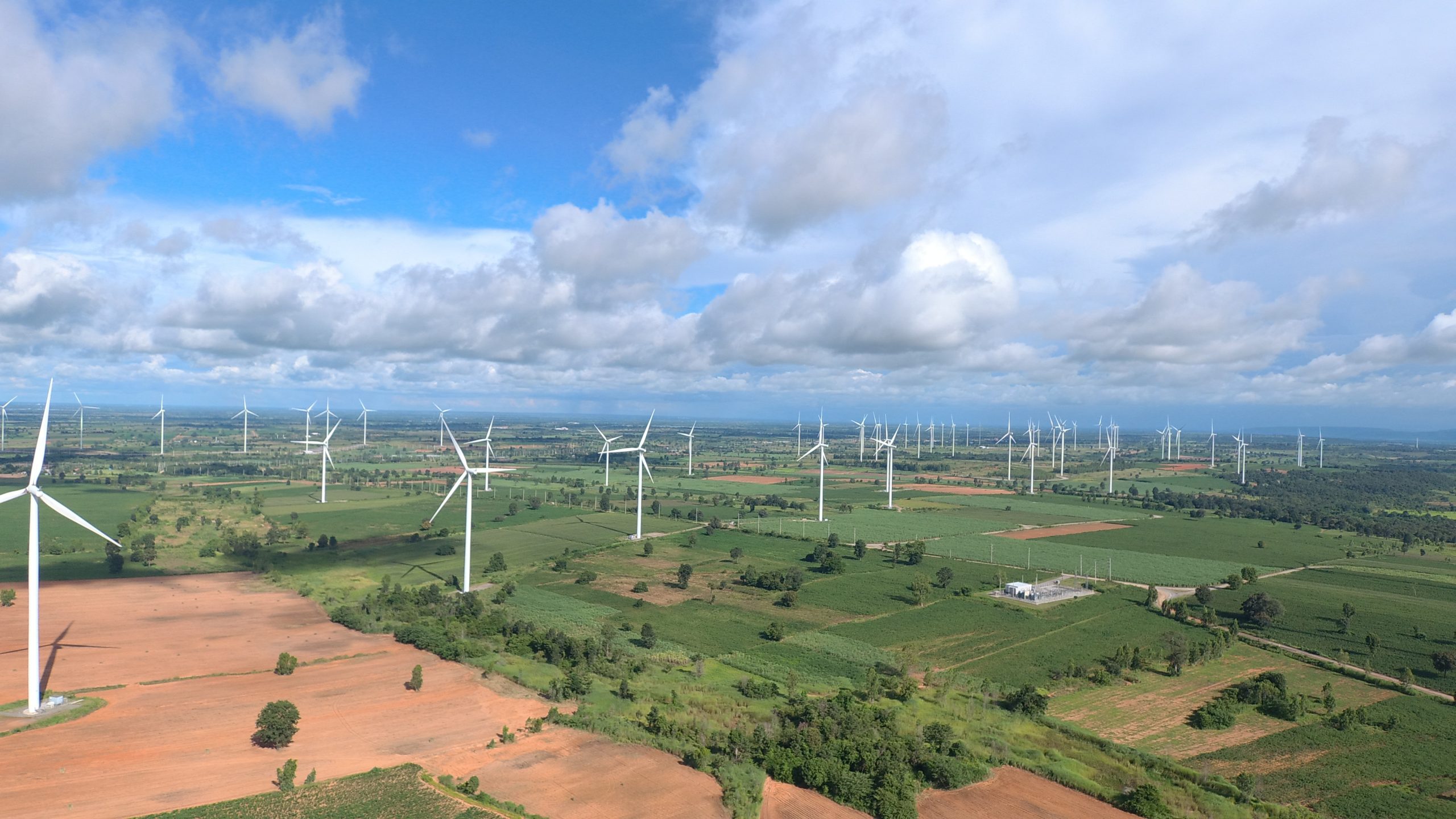
The Philippines has a natural advantage when it comes to renewable energy. An archipelago surrounded by seas, exposed to strong sunlight, crossed by rivers, and positioned along the Pacific Ring of Fire, the country has access to several renewable energy resources that can complement one another.
This potential is becoming increasingly important as electricity demand grows and the country looks for a more diversified and resilient power system. The Department of Energy (DOE) is targeting a 35% renewable energy share in the power generation mix by 2030 and 50% by 2040, with an ambition to exceed 50% by 2050.
From wind turbines in Ilocos Norte to large solar developments in Nueva Ecija and geothermal facilities in Luzon, renewable energy is already more than a future concept. It is becoming part of the Philippines’ evolving energy landscape.
Why the Philippines Is Well Positioned for Renewable Energy
The country’s geography gives it several opportunities to develop different renewable sources rather than depending on a single technology.
Solar energy can take advantage of the Philippines’ tropical climate and abundant sunlight. Wind power is particularly promising in coastal and elevated areas. Geothermal resources benefit from the country’s volcanic geology, while hydropower can utilize rivers, reservoirs, and other water resources.
The DOE’s energy planning documents also identify substantial potential across solar, wind, geothermal, hydropower, and biomass resources. A DOE investment document based on the country’s Competitive Renewable Energy Zones estimated potential capacities across these technologies, highlighting the enormous resource base available for future development.
This diversity is important. When one renewable resource experiences lower output, another can potentially help compensate.
Wind Energy: From Bangui to New Coastal Projects
Wind power is perhaps one of the most recognizable forms of renewable energy in the Philippines.
The Bangui Wind Farm in Ilocos Norte is one of the country’s best-known examples. The Philippines also has commercially operating wind farms in areas including Caparispisan and Burgos in Ilocos Norte, San Lorenzo in Guimaras, Nabas in Aklan, and Pililla in Rizal.
Ilocos Norte remains particularly significant because of its strong wind resources. In 2026, another 136-megawatt wind farm was proposed in Bangui, reinforcing the province’s role as a renewable energy hub.
The opportunity is also expanding offshore. Projects have been proposed or approved in areas such as San Miguel Bay, Cavite, and Northern Luzon.
For the Philippines, offshore wind could eventually become an important source of large-scale electricity because of the country’s extensive coastline.
Solar Energy Could Become a Major Growth Driver
Solar power may have the broadest potential for everyday adoption because it can operate at different scales.
Large solar farms can supply electricity to the grid, while rooftop systems can allow homes and businesses to generate electricity for their own consumption.
Existing examples include the Calatagan Solar Farm in Batangas and solar developments in Tarlac and other parts of Luzon. The Department of Energy also maintains updated lists of awarded solar projects across the country.
One of the most significant recent developments is the Meralco Terra Solar Project in Gapan City, Nueva Ecija. Phase I was inaugurated in July 2026, with the complete project planned to reach up to 3,500 megawatts of peak solar capacity supported by 4,500 megawatt-hours of battery storage.
Solar is also becoming more accessible to smaller consumers. In August 2026, the DOE introduced simplified rules for certain own-use solar installations, including micro-solar systems and zero-export systems.
This could make distributed solar increasingly relevant beyond large commercial projects.
Geothermal Energy: An Advantage of the Philippines’ Geology
The Philippines’ location along the Pacific Ring of Fire creates another major renewable energy opportunity: geothermal power.
Unlike solar and wind, geothermal plants can potentially provide relatively consistent electricity because they use heat from beneath the Earth’s surface rather than depending directly on daily weather conditions.
The MakBan Geothermal Power Plant, located around Laguna and Batangas, and the Tiwi Geothermal Power Plant in Albay are established examples. Current DOE records continue to list geothermal projects and service contracts as part of the country’s renewable energy development portfolio.
Geothermal energy therefore provides an important complement to variable renewable sources such as solar and wind.
Hydropower and Floating Solar
Water resources offer another avenue for renewable energy development.
The Agus and Pulangi hydroelectric facilities in Mindanao demonstrate the importance of hydropower to regional electricity supply. In June 2026, 17 of their 20 generating units were reported to be delivering dependable capacity of about 796 MW to the Mindanao grid.
The country can also combine technologies. A pilot floating solar installation was deployed on the Magat Reservoir in Isabela, demonstrating how existing water infrastructure could potentially support solar generation while making more efficient use of land. The National Irrigation Administration has also identified reservoirs such as Pantabangan and Casecnan as potential locations for floating solar development.
The Challenges Behind the Opportunity
Having renewable resources does not automatically mean they can be developed quickly.
Transmission infrastructure is one major challenge. Renewable projects need suitable grid connections to deliver electricity from resource-rich locations to population centers. The DOE has emphasized the need for stronger transmission systems alongside renewable deployment.
Permitting, land availability, environmental considerations, financing, and community participation can also affect development timelines.
Solar and wind have another technical challenge: variability. Solar generation changes with daylight and weather, while wind generation depends on wind conditions. This makes battery storage, flexible generation, stronger transmission networks, and better system planning increasingly important.
What the Future Could Look Like
The Philippines’ renewable energy future will probably not depend on one technology winning over another. Instead, the strongest approach could be a combination of solar, wind, geothermal, hydropower, biomass, storage, and potentially emerging technologies.
The government’s Green Energy Auction Program illustrates the scale of the planned expansion. In 2026, the DOE announced a 10-year program targeting at least 25 GW of additional renewable capacity from 2027 to 2035, covering technologies such as wind, solar, biomass, geothermal, and hydropower.
For Filipinos, that transition could eventually mean more diverse electricity sources, greater energy security, new investments, and employment opportunities in communities hosting renewable projects.
Even everyday digital activities, including playing GameZone Color Game, take place within a broader world increasingly shaped by digital infrastructure and electricity demand. As more services move online, reliable and sustainable power becomes increasingly relevant to households, businesses, and digital platforms alike.
Ultimately, the Philippines’ renewable energy potential is not simply about putting up more windmills or solar panels. It is about building an energy system capable of combining the country’s natural resources with modern transmission, storage, technology, and responsible development.
As the country moves toward its 2030 and 2040 renewable energy targets, places such as Bangui, Ilocos Norte; Calatagan, Batangas; Gapan, Nueva Ecija; Magat, Isabela; and the geothermal fields of Luzon demonstrate what is already possible. The next challenge is scaling these successes while ensuring that the transition remains reliable, economically practical, and beneficial to Filipino communities.
And as discussions around technology, electricity, and digital lifestyles continue, even seemingly unrelated activities such as GameZone Color Game reflect the growing importance of a reliable digital environment powered by a dependable energy system.
Leave a Reply