Author: Mei Ling Tan

  • Fruits exports to China plunge

    Fruits exports to China plunge

    Vietnam’s fruits exports to China in the first 11 months fell 13.7 percent year-on-year on the latter imposing more stringent conditions.

    Among total fruit exports to China worth $2.08 billion, coconut export value fell 34.9 percent year-on-year, while that of watermelon dropped 24.6 percent, according to the Agricultural Products Processing and Development Department (Agrotrade).

    The export value of other fruits like durian, dragon fruit and mangosteen also fell, the department said.

    Tighter import restrictions by China, the largest buyer of Vietnamese fruits, took effect on May 1, and this has led to a drop in prices, Agrotrade said.

    But thanks to rising exports to the U.S., South Korea and Japan, fruits exports in the first 11 months fell only 0.6 percent year-on-year to $3.5 billion, it added.

    The Ministry of Agriculture and Rural Development estimates Vietnam’s exports of agriculture, forestry and seafood products this year at $41.3 billion this year, short of the $43 billion target.

  • Traditional match producer to shift focus

    Traditional match producer to shift focus

    Vietnamese matchmaker Thong Nhat Match JSC plans to modernize operations due to dwindling sales. The company’s board said it would halt match production next year and delist its DTN shares from the unlisted public companies bourse (UPCoM).

    Annual match sales hit near 100 million boxes last year, down 45 percent from 10 years earlier, and set to plummet further this year, a business report shows.

    The domination of lighters is largely to blame for falling demand, along with the rising cost of wood, it added.

    The company plans to focus on lighter production, though it sold only 80 percent of a targeted 18 million units last year.

    Thong Nhat Match was established in 1956 as a state-owned company, operating the first factory in northern Vietnam. It was equitized in 2002, and now has charter capital of VND22 trillion ($950 million).

    Its after-tax profit was VND2.27 billion ($98,000) in 2018, up 10 percent year-on-year.

    The Thong Nhat matchbox, featuring a printed flying dove, boasts decades of popularity.

    Alongside other traditional companies like Thuy Ta Ice-cream and Thuong Dinh Footwear, all operating over 60 years, Thong Nhat Match has been struggling to grow in the modern competitive market.

  • Vietnam textile industry orders hit by African competition

    Vietnam textile industry orders hit by African competition

    Vietnamese textile manufacturers are seeing orders decline with buyers moving to others, cheaper developing countries.

    Normally, by the end of a year they would have enough orders for the whole of the following year, Nguyen Van Thoi, chairman of TNG Investment and Trading JSC, which makes garments, said.

    But this year many businesses have said they do not have enough orders for 2020, with some reporting a 20 percent drop in orders from last year. Besides, many have not signed long-term contracts for products, only monthly or quarterly, he said.

    A Vietnam Textile and Apparel Association (VITAS) official, who wished not to be named, said many orders have shifted to emerging countries in Africa, while competition with textiles superpowers like China, India and Bangladesh is becoming increasingly fierce.

    “Even China’s orders are being transferred to countries with preferential tariff rates such as Bangladesh and Cambodia.”

    Not only Vietnamese textile and garment producers, but also its fiber industry is facing increasing competition from foreign businesses and rivals in countries such as India, Thailand and Indonesia, he added.

    Experts had forecast at the beginning of the year that the U.S.-China Trade war and new free trade agreements (FTAs) signed by Vietnam would help it increase textile exports, but had done a U-turn by mid-year to say there would be a lack of orders, VITAS said.

    This is due to a slowdown in the global economy, affecting consumer demand, and failure by Vietnamese enterprises to adopt radical solutions to comply with FTAs’ rules of origin, VITAS explained.

    In June Vietnam signed the Vietnam-EU Trade Agreement (EVFTA), which has strict rules of origin like requiring domestic value to account for at least 42.5 percent of the ex-works price of a final textile product.

    If this condition is met, goods exported from Vietnam to the EU would be tax-free once the EVFTA comes into effect whereas the average tariff levied by the bloc now is 9.6 percent.

    Some 70 percent of the fabric used to produce garments in Vietnam is imported from mainland China or Taiwan, VITAS chairman Vu Duc Giang said.

    Other difficulties being faced by Vietnam’s textile industry include rising costs of raw materials from China and lower prices demanded by foreign buyers.

    Vietnam is losing its low labor cost edge over other countries even as its use of technology in production remains limited, leading to reduced competitiveness, VITAS said.

    Garment exports in the first 11 months of this year were up nearly 8 percent year-on-year to $30 billion, according to figures from the Ministry of Industry and Trade.

  • H&M’s Cos China to launch clothing rentals with YCloset

    H&M’s Cos China to launch clothing rentals with YCloset

    H&M Group’s higher-end clothing brand Cos is to trial renting out its clothes in China through rental platform YCloset.

    Swedish retail company H&M Group said it has partnered with YCloset to run a three-month trial to explore the circular business model.

    “The rental subscription has an additional sustainable aspect to it, as customers will be able to buy the product for a reduced price when the rental period is over, giving them another chance to enjoy the garments,” said the company.

    Cos MD Marie Honda said that the brand’s quality will lend itself well to the rental system. The brand is described by the group as one that merges high fashion attributes with ground-level pricing.

    “Cos collections are designed and made to last; longevity has been an integral part of the Cos design ethos since the brand began 12 years ago,” she said.

    H&M Group said YCloset’s 15 million registered users will enable the group to learn more about Chinese customers and their demographics.

    In November, H&M launched a rental service through its Stockholm flagship store, which also offers repair services with an atelier where customers can get their fashion favorites mended or upgraded.

    The clothing rental service market was estimated at US$1 billion last year.

  • The Shilla Duty Free unveils new brands in Singapore

    The Shilla Duty Free unveils new brands in Singapore

    Travel retailer The Shilla Duty-Free has launched a raft of new brands at its Changi Airport health-and-beauty concessions, marking its fifth anniversary in Singapore.

    The new brands are on display at a refreshed retail space at the Terminal 3 Departure Check-in Hall store (in the public area) which features a modern, tropical look, with earthy hues of woods and whites.

    The new brands are from South Korea, Singapore and Europe, ranging from Banyan Tree and Too Faced to cult beauty favorites including COSRX and Too Cool For School. They will also be stocked at selected stores airside.

    The new brands also include Annick Goutal from France, Age 20’s, Vidivici, First Aid Beauty, Too Faced, Cosme J-Cos and JM Solution.

  • PTT Philippines to open more Cafe Amazon outlets

    PTT Philippines to open more Cafe Amazon outlets

    Thai gas-stations operator PTT plans to open up to 20 new Cafe Amazon outlets across the Philippines next year, as part of the company’s non-oil expansion plans.

    PTT Philippines President and CEO Thitiroj Rergsumran said the company is allotting 80 million pesos (US$1.6 million) to expand the Cafe Amazon network, which currently stands at about 15.

    Rergsumran said the expansion is driven by the country’s vibrant economy and the strong reception it receives from customers.

    “We expect to duplicate our target next year, so you could expect us to be more visible in various areas in the Philippines especially in the provinces,” he said.

    PTT also plans to open 40 new gas stations next year, in addition to its existing 170.

    A subsidiary of Thailand-based PTT Oil and Retail Business, PTT Philippines has been operating for 20 years. It introduced Cafe Amazon into the country in 2016.

    In Thailand, there are more than 2500 Cafe Amazon outlets trading, along with more than 200 abroad, including in Cambodia, Laos, Japan, Myanmar, Oman, Singapore, China and the Philippines.

  • Indonesia retail sales growth at five-month high

    Indonesia retail sales growth at five-month high

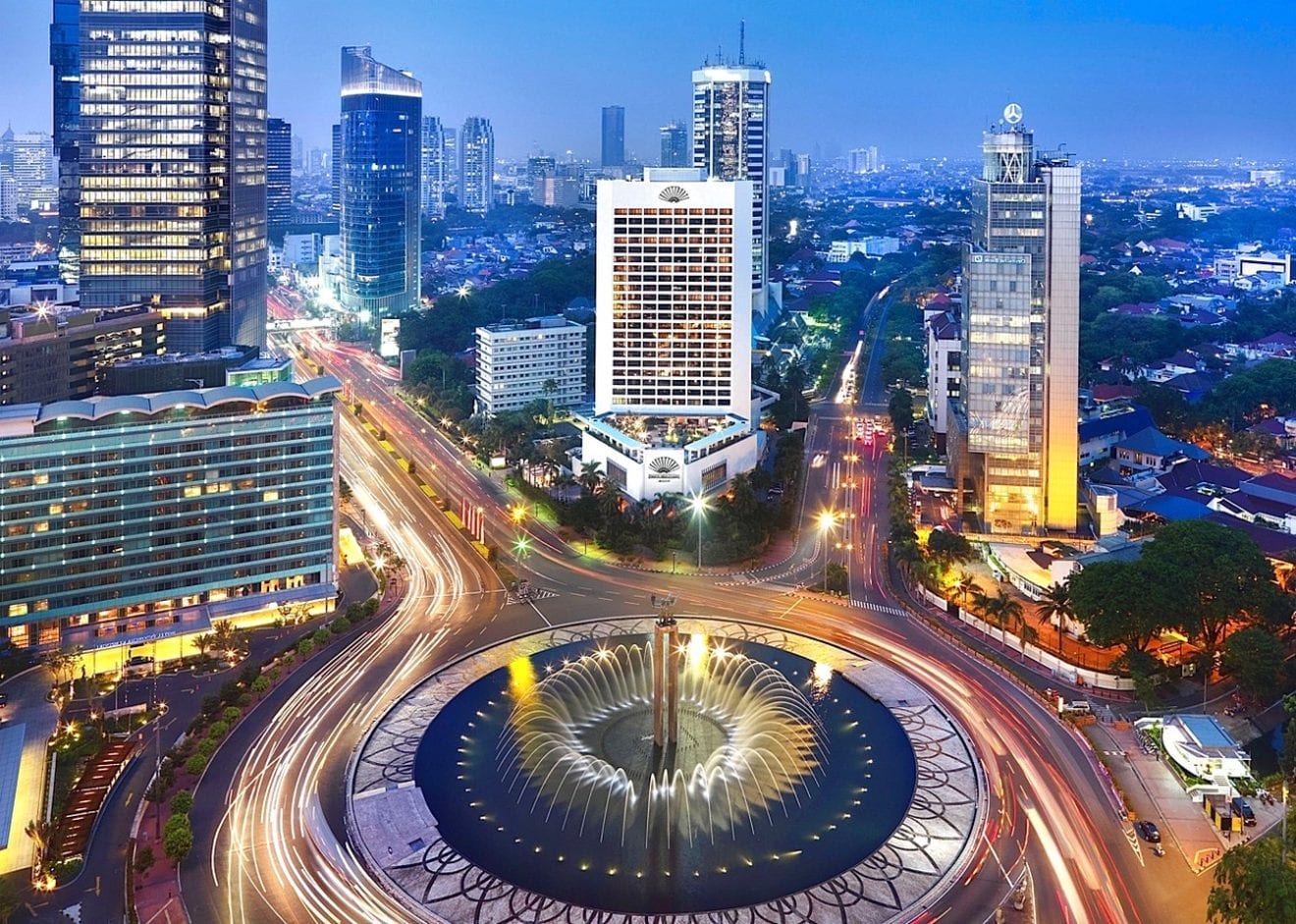
    Indonesian retail sales grew at their fastest rate in five months, according to government data.

    Growth levels are currently at 3.6 percent, the highest increase over last year’s figures in five months. Growth for the previous month stood at just 0.7 percent.

    The figures were released as part of a central bank survey, which showed that sales of food and auto parts were largely behind the measured increase. Sales of communications equipment, however, were lower than expected during the period.

    The survey results predict growth in Indonesian retail sales for November at 3.4 percent.

  • Ted Baker CEO and chairman quit as sales plunge

    Ted Baker CEO and chairman quit as sales plunge

    The CEO and executive chairman of UK fashion retailer Ted Baker have quit in the wake of falling sales and a controversy over the valuation of inventory.

    The company yesterday reduced its profit forecast for the current year to a minimum pre-tax profit of £5 million, 90 percent less than the £50.9 million it achieved in the year to March.

    That prompted a 15-per-cent drop in its already decimated share price. The company blamed a lack of consumer demand for its products, despite heavy discounting.

    The fashion company’s woes began a year ago when its founder Ray Kelvin was forced to resign after denying allegations he harassed staff and forced them to hug him, prompting an 80-per-cent plunge in the company’s share price.

    CEO Lindsay Page, a 21-year veteran at Ted Baker assumed leadership after Kelvin’s departure, lasting just nine months at the helm before yesterday’s resignation. Chairman David Bernstein followed suit.

    Last month, Ted Baker appointed external consultants to assess its inventory value after an apparent overstatement of stock in the company’s books in the range of £20 to £25 million.

    Some commentators in the UK say the company may be forced to take Kelvin back to restore the company’s fortunes. He still owns 35 percent of the business.

    Emily Salter, retail analyst at GlobalData, said the departure of the key executives and the profit warning “demonstrate the severity of its poor trading performance and how the retailer is grappling to remain popular”.

    “After an already turbulent year for its leadership team, the acting CEO and acting chair of the board must ensure that stability is maintained in the crucial Christmas trading period, as well as dealing with the impact of the overstatement of stock,” she said.

    “Trading over November and Black Friday was below expectations with lower-than-anticipated margins as consumers were still not persuaded to purchase despite the brand offering a blanket 30 percent off all items. Ted Baker must address its waning popularity, by attracting back its loyal shoppers and innovating instore and online to make the shopping experience more exciting.”

    Salter said while Ted Baker had previously been able to rely upon its online channel to drive group revenue growth with a robust multichannel proposition, its online sales fell by 0.7 percent.

    “Although its digital channels still outperformed retail revenue, declining sales while the online clothing-and-footwear market continues to grow proves just how strong the effects of weakened consumer confidence and demand for the brand have been, as well as the fallout from negative press coverage surrounding Ray Kelvin.

    “It will be a long road to recovery for Ted Baker, and it must focus on reviving previous demand for the brand and reducing its reliance on discounting to boost sales,” Salter concluded.’

  • Tata subsidiary sells two giant Indian malls

    Tata subsidiary sells two giant Indian malls

    Two giant Indian malls, in Nagpur and Amritsar, have been snapped up by Virtuous Retail South Asia for US$100 million.

    The 1 million sqft Amritsar centre and 700,000 sqft Nagpur property were bought from Tata Realty and Infrastructure’s Trilium shopping mall portfolio, according to a report on Livemint. Virtuous, which is building a portfolio of Indian malls, is the retail development subsidiary of investment company The Xander Group. The company also recently acquired a 20-acre site from Raymond Limited in Thane, near Mumbai, where it plans to develop a mall.

    “This has been a year of active investments for us to broaden our shopping centre portfolio,” said Sid Yog, VRSA’s founder and chairman told Livemint. “Going forward, we would also explore acquisition opportunities in Kolkata and Hyderabad and add properties to the cities we are already present in.

    “We believe even gateway regional cities like Nagpur and Amritsar have significant population and retail consumption to make them attractive for us.”.

    VRSA now has more than 13 million sqft of Indian malls operating or under development across Delhi-National Capital Region(NCR), Mumbai, Bengaluru and Chennai along with smaller cities such as Surat, Mohali, Amritsar and Nagpur.

    The company says it plans to renovate and rebrand the newly acquired Indian malls.

    Meanwhile, Sanjay Dutt, MD and CEO of Trilium says the sale reflects the company’s strategy of exiting tier 2 and 3 cities.

  • Amore K-beauty store pops up in Singapore with Lazada

    Amore K-beauty store pops up in Singapore with Lazada

    An Amore K-beauty store has launched in Singapore in partnership with Lazada, both online and offline.

    The store sells popular AmorePacific brands such as Sulwhasoo, Innisfree and Laneige as well as “cult” brands such as Hanyul and Iope. Amore will sell from a physical store in Funan with an online-to-offline channel on Lazada. Buying items in-store will require customers to scan a barcode and complete their purchase on Lazada.

    “We are proud to be the platform of choice for top retail brands, and are pleased to partner AmorePacific on this first-of-its-kind project to jointly develop our New Retail capabilities together,” said Lazada Singapore CEO James Chang.

    The Amore K-beauty shop will host beauty workshops by South Korean makeup artists and feature new technology from Seoul to help customers better understand their skin needs.

  • Australian fashion label Tony Bianco to launch in China

    Australian fashion label Tony Bianco to launch in China

    Australian fashion brand Tony Bianco is launching its first international location in Beijing.

    The label is partnering with verteran Chinese retail specialist firm Shanghai Smile Commercial – which has ushered multiple foreign fashion brands into China – in a joint venture to launch the brand in the territory.

    “A few years ago there was a noticeable increase in daigous sourcing the Tony Bianco brand to send back to clients and that has continued to grow, said company director Anthony Bianco in a Ragtrader report. “It was the start of our research phase into what a store in China could hold for a brand like ours.”

    The new store will officially open on December 21 at Chaoyang Joy City, showcasing the brand’s SS19 and AW19 collections.

  • Gmail update lets users send emails as attachments

    Gmail update lets users send emails as attachments

    Google is making it easier to forward emails to multiple recipients via Gmail. The latest update lets you attach emails to other emails in Gmail without having to download them. Simply drag and drop the email you want to forward inside your email. In fact, you can drag multiple emails into a new thread, which makes the new feature even more useful.

    Another method to insert emails in a new thread to select the emails from the Gmail inbox and then choose to “Forward as attachment” from the three-dot menu. You can even reply to an email by adding multiple emails in the compose window via drag and drop.

    There are a couple of important details that Google mentions in the announcement. First off, all attached emails become .eml files. Secondly, you can attach as many emails as you want. Last but not least, every attached email will open in a new window.

    The new feature revealed by Google today will be available to all Gmail users, not just Gsuite members. However, according to Google, the rollout may take up to 15 days starting on December 9, so everyone should get it by the end of the year.

  • Google Maps’ incognito mode now available for iOS users

    Google Maps’ incognito mode now available for iOS users

    You might recall that back in October, Google disseminated an update that added incognito mode to the Android version of Google Maps. First, we do need to get something straight for all of you philanderers our there. This mode doesn’t allow you to travel to your weekly rendezvous sight unseen as though you were wearing Harry Potter’s “Cloak of Invisibility.” Instead, when Maps’ incognito mode is enabled, searches made on the app and places you navigate to are blocked from being added to your Google account. As a result, you won’t receive any personalized recommendations in the Maps app (like places to dine) and your Location History will not be updated. Today, Google has announced that this feature is now available on the iOS version of Google Maps.

    In addition, Google points out that a new feature called bulk delete will be coming to Android users next month; this will allow them to find and delete multiple places from their Timeline and Location History in one fell swoop. But Google wants you to make sure that you know what you’ll be missing by not allowing it to keep your Location History. If you use incognito mode or delete Location History, you won’t be able to see wait times at restaurants and grocery stores (which is computed using “aggregated and anonymized Location History information”). You also won’t be able to see previews of the parking situation at your destination, be given a time-to-leave alert, use “Your Match” to calculate how much you might enjoy a particular eatery and use the Explore tab to find nearby coffee shops, parks restaurants and more.

    Lastly, Google is adding a much needed new feature to the Android version of the Google Opinion Rewards app. The app allows you to build up Play Store credit by answering survey questions. Depending on what is being asked, users can score 10 cents to nearly $1 each time they participate. The credit must be used within a year, something that not every user knew. Recently, there were some complaints about credits disappearing from the app after they had expired. To make sure that users don’t waste any credits, an expiration date for the oldest credit will now appear underneath the account owner’s current balance.

    We’ve used the app during the year and all it takes is a few seconds of your time. And the credit can be used to purchase videos, books, apps and to make in-app purchases. Android users can install the app from this link. Because Google Play Store credits would be useless to iOS users, this version of the app pays out in small cash credits that are deposited into a PayPal account.

  • Volkswagen Charged With Violating Vehicle Emission Standards In Canada

    Volkswagen Charged With Violating Vehicle Emission Standards In Canada

    German automaker Volkswagen AG on Monday was charged with importing nearly 128,000 vehicles into Canada contravening the country’s environmental legislation, a Canadian government agency said.

    Volkswagen was charged with 60 counts of breaching the Canadian Environmental Protection Act by importing vehicles that did not conform to prescribed emission standards, Environment and Climate Change Canada (ECCC) said.

    The charges included two counts of providing misleading information. The court hearing is scheduled for Dec. 13 in the Ontario Court of Justice.

    A Volkswagen spokesman said the company has cooperated fully with the investigation by the ECCC.

    “At the hearing, the parties will submit for the Court’s consideration a proposed plea resolution and seek its approval,” he added.In 2015, the agency launched an investigation into the importing of certain vehicle models allegedly equipped with a prohibited “defeat device”.

    In this case, the device was software that reduces the effectiveness of the emission control system during normal vehicle use, according to the agency.

    News in 2015 that Volkswagen had used such devices to cheat emissions tests has so far cost the company about 30 billion euros (26 billion pounds) in fines, vehicle refits and legal costs, and also triggered a global backlash against diesel vehicles.

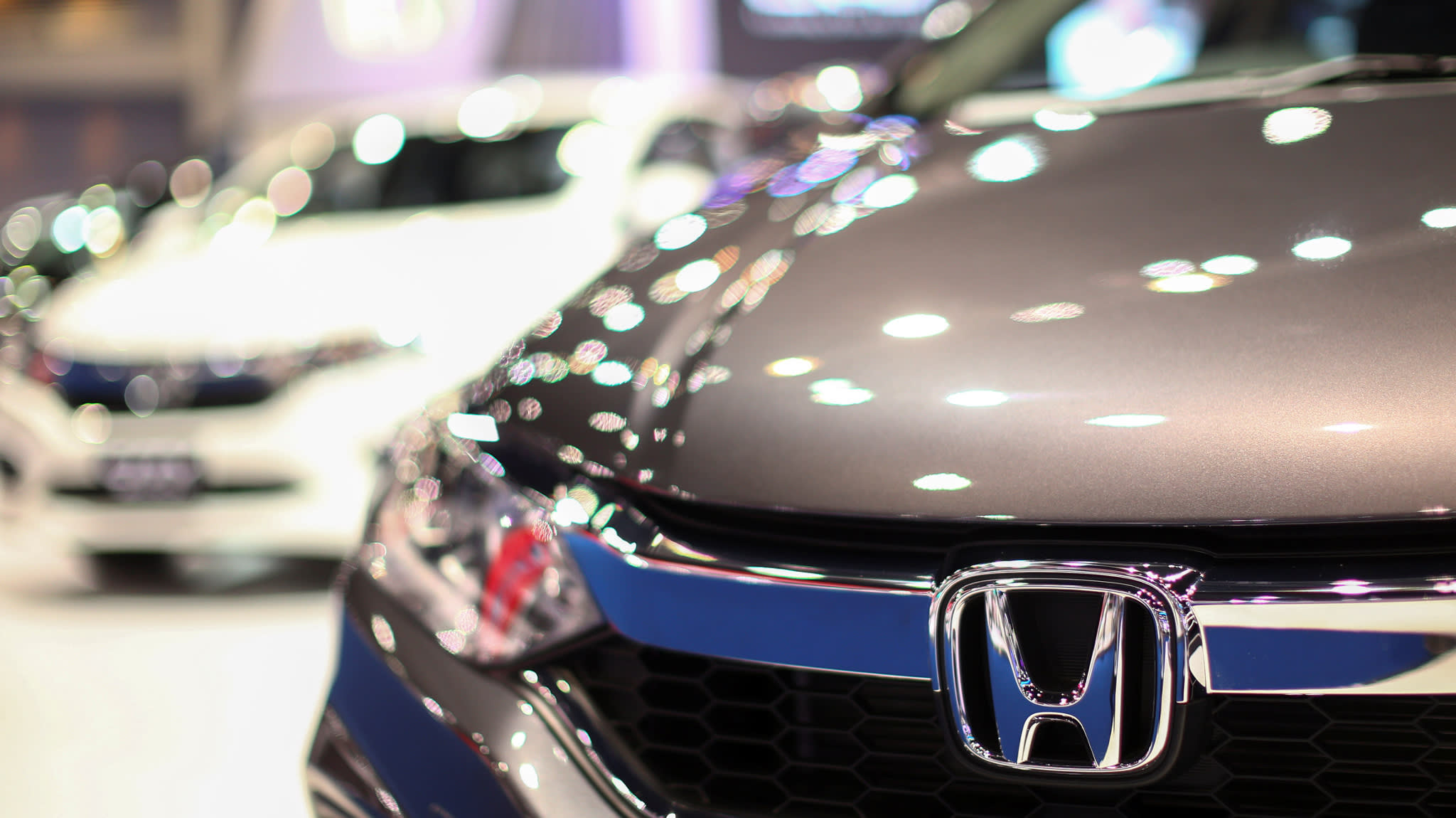
  • Honda’s Hachigo Seizes The Wheel As Quality Crisis Hits Profits

    Honda’s Hachigo Seizes The Wheel As Quality Crisis Hits Profits

    At a two-day gathering for Honda’s suppliers in March, Chief Executive Takahiro Hachigo sounded the alarm.

    At the Hotel Higashinihon in Utsunomiya, Hachigo told them the Japanese automaker was facing a crisis after a string of costly recalls and other quality blunders and it needed to plot a new course, according to two people who attended the meeting.

    Since then, Hachigo has been quietly working on reforms to centralize decision-making by bringing Honda’s standalone research & development (R&D) division in-house and cutting some senior management roles, according to three Honda insiders.

    Expected to be announced early next year, the reforms are meant to simplify the way Honda designs cars and put its engineering resources to more effective use at a time when it needs to develop cars for an electric age, the sources said.

    “Decades ago, localization… was the buzz word and our tech center independence was a key driver for innovation,” said a former Honda executive who now is the head of one of its suppliers. “Those days are over.”

    The sources said Hachigo was poised to integrate Honda R&D Co Ltd into Honda Motor Co Ltd so its technicians work more closely with key departments such as purchasing, manufacturing, quality assurance, and sales and marketing.

    “Honda believes strengthening the automotive business and reforming it in preparation for the arrival of next-generation mobility technologies are our most critical management tasks. This is a priority,” a Honda spokeswoman said in response to questions about the plans.

    In the 1980s and much of the 1990s, the name Honda struck terror into the hearts of executives at the big three U.S. carmakers in Detroit because they simply couldn’t match its low-cost, efficient, well-built cars.

    But after a slew of recalls since 2014 for problems with components such as airbags, sliding doors, and engines, Honda’s status as a benchmark for quality and efficiency has been seriously damaged – and the quality crisis is hitting profits.

    According to five Honda insiders, quality blunders have helped squeeze the operating margin at its global automotive business to 2%-3% – giving it less room for maneuver just as bigger rivals are building partnerships and overhauling their operations to become stronger.

    That’s in stark contrast to Honda’s motorcycle business which has already brought its R&D division in-house and has a margin of 13.9%.

    In J.D. Power’s study of vehicle dependability in the United States, one of Honda’s two main auto markets along with China, the Japanese brand fell to 18th place this year from 5th in 2015 and 4th in 2002, its highest ranking.

    “These moves we’re making today will decide our eventual fate: whether we’re going to be in business as an independent player 10 to 15 years from now,” a Honda source told Reuters.

    A senior engineer at a technical center north of Tokyo in Utsunomiya, where Honda does much of its development, said the root of the problem was the “crazy complexity” of its vehicle range and all the associated engineering processes.

    “Quality is acting up,” the engineer said. “Honda has created too many regional models, in addition to an array of types, options and derivatives for its global models.”

    “All that’s eating up our profit.”

    In the United States, for example, Honda’s 2020 Accord sedan comes in 13 versions, including three hybrids. GM’s rival Malibu has five, though it doesn’t have hybrid models.

    At the two-day meeting in Utsunomiya, Hachigo and his procurement managers told suppliers to help Honda slash its range of cars and dumb down model types and options.

    They called on suppliers to use more common parts, from engines and transmissions to door handles, rearview mirrors, and even knobs and switches, according to two people who attended the meeting and slides Honda used in presentations.

    Honda’s problems stem largely from an aggressive expansion before Hachigo took over in 2015. In addition to so-called global models such as the Civic, Accord and CR-V sports-utility vehicle (SUV), Honda developed a host of regional models which now account for 40% of its global car sales.

    They include the Crider sedan in China, the Brio and the Mobilio in southeast Asia, the WR-V in Latin America, which is also now sold in India, the Pilot SUV in the United States and the N-series of micro-minis in Japan.

    Its global models, which account for 60% of sales, come with an array of equipment options and vehicle trims that Hachigo, an engineer by training who has worked at Honda since 1982, has called unnecessary product derivatives.

    The explosion in the number of regional models had an unintended consequence: the engineering became more complex and the elevated workload led to lapses in quality and costly recalls, two company sources said.

    Even though the impact of the Takata airbag crisis had largely subsided by 2017, Honda still put aside 520 billion yen (3.7 billion pounds) in the 12 months through March 2017 for product warranties and over 450 billion in each of the past two years.

    In the four years before the Takata debacle, warranty provisions ranged from 171 billion to 274 billion yen, before surging to 727 billion in the year ending March 2016.

    In 2018, for example, Honda recalled about 600,000 cars in China because sludge was collecting in the engines of six models when driven in cold weather while the sliding doors on its U.S. Odyssey minivans started opening while the vehicles were moving.

    Hachigo flagged some of the issues at a news conference in May, saying he wanted to eliminate two-thirds of derivative products on global models by 2025 and wean Honda off its tendency to go overboard by creating colors, model types, and options specific to different regions.

    He said he was aiming to cut engineers’ workloads by about a third to free up time and resources for Honda’s technical divisions to research technologies for the cars of the future.

    What Hachigo and senior Honda officials haven’t discussed publicly are the planned structural reforms to help its quality and efficiency drive – and the main target is its R&D division, three company sources said.

    Besides the quality issues and engineering workload linked to the proliferation of regional models, the advent of new technologies requires Honda’s big-spending technical division to act less independently, two sources said.

    “In many ways, Honda’s tech companies behave much like university labs, and that was fine in years past,” the former Honda executive and supplier said.

    By putting decision-makers in Honda’s Tokyo headquarters, the hope is that the R&D division will deploy capital and human resources more economically.

    Honda’s R&D and engineering units are expected to spend 860 billion yen this financial year, or 5.5% of expected revenue. Toyota, whose revenue is double, is expected to spend 1.1 trillion yen, or 3.7% of its global revenue, on technology.

    Two company sources said Hachigo plans to eliminate the top management roles at Honda R&D and will probably turn some into divisional managers within Honda Motor.

    One source said the aim was: “to centralize the company’s fragmented, localized decision-making power back at the mothership in Tokyo.”

    According to the engineer, Honda has also introduced an internal quality target to cut global recalls by two-thirds in the next few years from a crisis level of 6 million in 2017.

    It was clear at the two-day suppliers’ powwow that Hachigo meant business.

    Without naming names, Honda executives discussed exemplary product development projects – and bad ones – so lessons could be learned. It was fairly obvious within Honda’s small community of suppliers who was being singled out and they weren’t happy, said one supplier at the meeting.

    So much so that some skipped golf on day two.