Author: Mei Ling Tan

  • Inmarsat, Bourbon partnership leads the way towards maritime digitisation

    Inmarsat, Bourbon partnership leads the way towards maritime digitisation

    The deal represents a breakthrough offshore contract for Fleet Xpress, which is already installed on some 7,000 vessels – mainly seagoing merchant ships.

     “This contract is substantial in its own right and underlines that Inmarsat’s Fleet Xpress solution offers the same compelling business case on vessel efficiency and crew welfare for the energy sector as it does in the merchant shipping arena,” says Eric Griffin, VP Offshore Energy, Inmarsat Maritime. “Commercial shipping is using Fleet Xpress as its pathway to maritime digitalization; now, the value of joining that journey is being acknowledged by one of the leading marine offshore Service Providers in the world.”

    Well-known for high-performance vessels and operational excellence of its services, Bourbon’s response to prolonged lower oil prices has emerged as the action plan ‘#BOURBONINMOTION’. The plan includes the Smart Shipping Programme, structured around a new vessel operational model, onshore support and a remote support center, which seeks to leverage digital and connectivity tools to reduce fleet operating costs. Set for completion by 2021, the program envisages deployment on 133 ‘smart’ vessels.

    According to Bourbon Corporation Chief Executive Officer Gaël Bodénès“The time has come for operational intelligence: connected vessels, use of predictive maintenance, shore-based control centers, rationalization of tasks, etc. Automation of onboard systems is already a reality for our seafarers and we must all innovate at speed to invent our business model and our professions of tomorrow.”

    Eric Griffin of Inmarsat also stresses that flexibility had been an essential ingredient in securing the Bourbon deal. “The service provider could raise or lower bandwidth usage as necessary, or even suspend it on a planned basis without penalty,” he says.

    “An important aspect of Fleet Xpress is that third-party charterers could run their own Fleet Xpress services via a dedicated ‘pipe’ without interrupting the primary bandwidth being provided to an OSV. Customers chartering OSVs can, therefore, manage their own ‘smart’ vessel performance with full flexibility, using existing terminals and hardware onboard.”

    All vessels covered in the agreement will feature advanced 3-axis stabilized antennas from Cobham, specifically developed for and approved by Inmarsat for the Global Xpress satellite network.

    Among the first of Bourbon’s fleet to migrate to Fleet Xpress will be a group of high-end subsea vessels whose data consumption and management needs are ready for IoT-based solutions. These vessels also feature dual satellite terminals with high-powered amplifiers for additional redundancy. The Bourbon vessels will take advantage of bandwidth, stability and reliability, in the first instance to step up the use of video conferencing. Real-time video feeds are also expected to feature in ROV operations, with digitalization ultimately expected to touch every aspect of vessel management.

  • ZTE, China Telecom and China Unicom join forces to consolidate 5G network verification

    ZTE, China Telecom and China Unicom join forces to consolidate 5G network verification

    The verification, based on the real 5G commercial network environment, covers the basic functions of network selection and anchor carrier triggering, network management functions of rights management and northbound interface in the DT environment, as well as multi-dimensional deep network sharing capability verification, such as multi-vendor, multi-operator mobility.

    The co-build co-share mode is capable of providing the broadband multi-operator 5G services on the same 5G base station, and reasonably allocating spectrum resources based on user requirements and service requirements. It fully demonstrates the system’s stability and outstanding performance, as well as its complete capacity for large-scale commercial use.

    In addition, compared with the original construction strategy that each operator builds its own 5G networks, 5G co-build co-share sites across operators will effectively save investment in 5G networks. By promoting the sharing of infrastructure between operators, the co-build co-share mode can help operators build 5G networks with lower costs and more effective methods.

    On September 9, 2019, China Telecom and China Unicom signed the 5G network co-build co-share framework cooperation agreement. As a strategic partner of China Telecom and China Unicom, ZTE fully supports its network construction and service operation. ZTE has innovatively proposed a flexible ultra-broadband spectrum application solution to support the co-build co-share mode, which helps reduce infrastructure construction costs, thereby further realizing the economic and social value of 5G.

    In the future, ZTE will continue to partner with China Telecom and China Unicom to explore the applications of new 5G technologies in commercial networks, improve network quality, build more high-quality 4/5G networks, in a bid to provide users with better services.

  • Nokia partners with Spark to bring 5G technology to New Zealand

    Nokia partners with Spark to bring 5G technology to New Zealand

    As one of the radio access network (RAN) equipment suppliers for Spark’s 5G upgrade, Nokia will deploy its AirScale RAN solution at more than 200 sites, allowing Spark to target both consumers and enterprises with new services and offers. Nokia will also deploy other products and services from across its end-to-end portfolio including digital design and deployment services.

    Spark New Zealand and Nokia have a long-standing relationship, which crosses multiple domains, including IP, optical and wireless. This new commercial 5G partnership marks the next chapter of the relationship between Spark and Nokia, providing New Zealanders with the technology that enables them to benefit from the fast-evolving digital world economy and applications.

    The agreement follows the launch earlier this year of New Zealand’s first 5G trial customer service. The trial, which took place in Alexandra, South Island, used the latest Nokia radio equipment to offer select business and consumer customers the opportunity to experience high-speed wireless broadband delivered by 5G. Nokia is currently working with Spark to deploy 5G capability to an additional 5 sites before the Christmas period.

    This Spark agreement demonstrates Nokia’s solid 5G momentum, which now reaches 50 commercial 5G contracts globally, including most early adopters. Nokia is currently powering 16 live networks globally.

    Rajesh Singh, General Manager of Value Management at Spark New Zealand, said, “We are delighted to be continuing our partnership with Nokia in building our 5G network across New Zealand. The local teams have collaborated extensively on a 5G solution that delivers on the outcomes we want to drive in 5G, not just in the RAN, but also in the end-to-end network.”

    Tommi Uitto, President of Mobile Networks at Nokia, said, “I am thrilled to see Nokia 5G equipment chosen to power 5G initially in Spark’s heartland areas. We are committed to keeping New Zealanders at the cutting edge of technology and are confident they will benefit from Nokia’s global reach, expertise and agility.

  • US gives green light to ‘several’ firms to sell to Huawei

    US gives green light to ‘several’ firms to sell to Huawei

    A Commerce Department spokesman said the agency had granted “narrow licenses to authorize limited and specific activities which do not pose a significant risk to the national security or foreign policy interests of the United States.”

    The administration earlier this week said it had extended for another 90 days the full implementation of the sanctions as part of an effort to make a transition easier for Huawei’s US partners. Commerce Secretary Wilbur Ross said any exemptions from the ban would be allowed only for older wireless systems and not for 5G networks, which have raised a range of security concerns in Washington.

    President Donald Trump in May effectively barred Huawei from American communications networks after Washington found the company had violated US sanctions on Iran and attempted to block a subsequent investigation.

    The latest 90-day extension “will allow carriers to continue to service customers in some of the most remote areas of the United States who would otherwise be left in the dark,” Ross said in a statement. “The department will continue to rigorously monitor sensitive technology exports to ensure that our innovations are not harnessed by those who would threaten our national security.”

    Huawei said Monday the decision did nothing to alter the company’s view that Washington has treated it unfairly and called on the Trump administration to remove Huawei from a foreign technology blacklist.

  • Softbank, Line merger foretells the birth of a new tech powerhouse

    Softbank, Line merger foretells the birth of a new tech powerhouse

    The alliance between the two Japanese companies is estimated to be worth $30 billion and is expected to be concluded by October next year. The merger’s combined revenue could see it totaling $11 billion, easily surpassing its domestic competitor Rakuten.

    Tech analysts have lauded the merger, stating that this agreement would give Z Holdings and Line the opportunity to extend their reach towards a larger consumer base and increased negotiating power with its advertisers. Softbank and Naver, which owns Line, will each control 50% of the share in Z holdings.

    “We were driven by a sense of crisis about global competition and the pace of change in AI,” said Takeshi Idezawa, co-Chief Executive at Line. “The timing arrived for us to move on to the next phase [with this merger].”

  • Telenor, Carousell merger will elevate the marketplace to the next level

    Telenor, Carousell merger will elevate the marketplace to the next level

    701Search owns leading general classifieds sites Mudah in Malaysia, Chotot in Vietnam and OneKyat in Myanmar. Johan Rostoft, Head of Online Classifieds at Telenor Group, said “We have built a profitable and high-growth marketplace business serving millions of users every single day. This transaction presents an attractive opportunity for us to take the next step in our marketplace journey, and it also simplifies Telenor’s portfolio. We believe that Carousell is the best partner for our online classifieds business in Southeast Asia.”

    “We are thrilled to partner with Telenor Group to cement our classifieds leadership across eight markets in Southeast Asia, Hong Kong and Taiwan,” shared Quek Siu Rui, Co-founder and CEO of Carousell, and continued, “With Telenor Group’s extensive experience in each local market, coupled with Carousell’s relentless focus to use technology to make selling and buying easy and frictionless, we are confident that together we will create an even more vibrant marketplace for the community across Malaysia, Myanmar and Vietnam. In the next few months, we look forward to working with our new teammates to learn about the dynamics of these local markets, create opportunities that are mutually beneficial for our community of users, and inspire even more people to start selling and buying.”

    Carousell is one of the most prominent start-ups in Southeast Asia, with dominant positions in Singapore and Hong Kong. The majority of its employees are based in Singapore. Following the merger, 701Search’s Singapore-based regional team will be fully integrated into Carousell. Mudah, Chotot and OneKyat will retain their individual brands and platforms, continuing operations in Malaysia, Vietnam and Myanmar respectively. The businesses will report into Carousell’s Group CEO Quek Siu Rui.

    The deal does not require regulatory approval and is closed immediately.

  • Hong Kong leather label Rabeanco opens its fifth store in Singapore

    Hong Kong leather label Rabeanco opens its fifth store in Singapore

    Hong Kong leather specialist brand Rabeanco has opened a new flagship store at Changi Jewel, its fifth store in Singapore.

    The new store features a selection of travel convertible bags which can be used as both backpack and shoulder bags. Rabeanco also offers a full range of leather footwear crafted in premium leather including mules, slingbacks, and heels.

    “We design our products for women who are constantly on the go and in need of highly functional yet chic designer leather products,” says Rabeanco’s spokesperson. “We are one of the first brands to introduce premium light-weight leather. This way, women can look stylish without feeling the weight on their shoulders.”

    The price of leather footwear products range from SG$180-330.

    Founded in 1992, Rabeanco operates more than 30 outlets across four markets including Singapore, Hong Kong, Macau and China.

  • Tigerair Cancels Flights From The Whitsundays To Sydney

    Tigerair Cancels Flights From The Whitsundays To Sydney

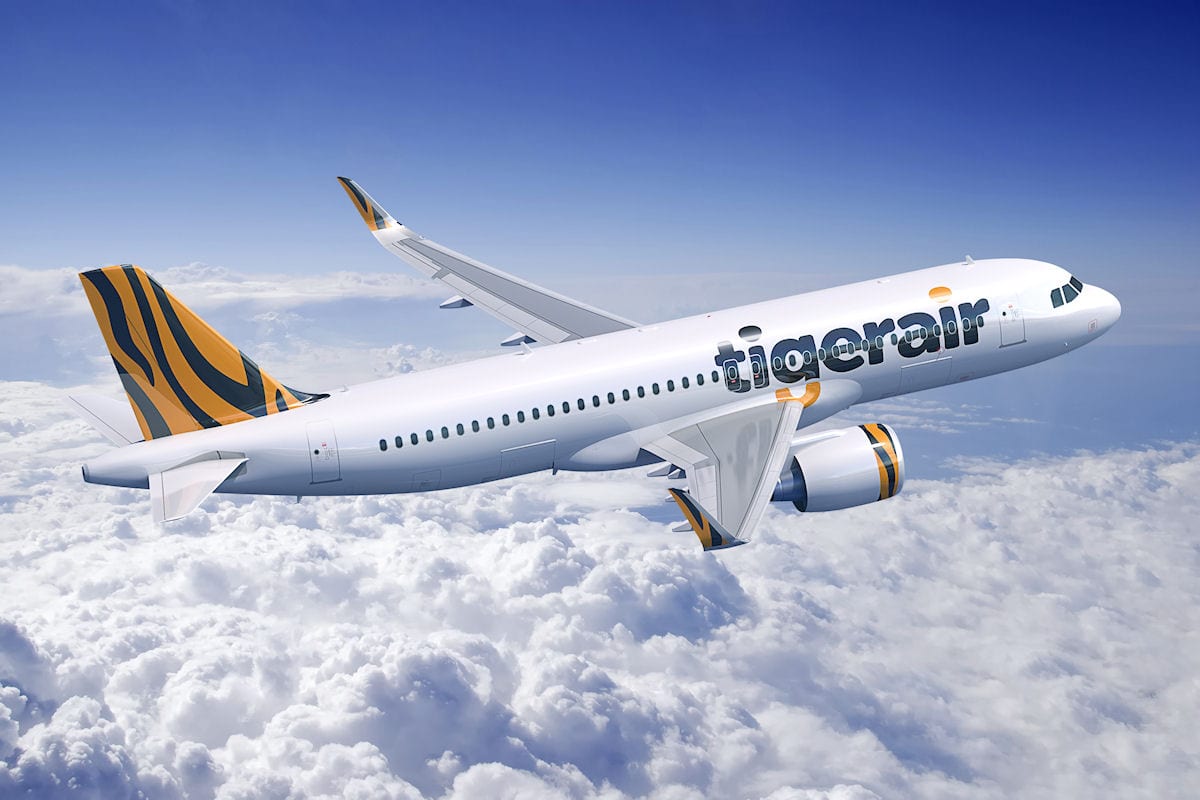
    Tigerair has announced it will cancel flights from Whitsunday airport to Sydney in early 2020. Flights will still continue over the Christmas and New Year period, but anyone who has booked the service from Feb 2020 onwards will be notified by the airline.  Direct flights will still continue to be available through Jetstar.

  • Harry Potter merchandise retailer launches in the Philippines

    Harry Potter merchandise retailer launches in the Philippines

    Scotland-based Harry Potter merchandise retailer Museum Context has launched its first Philippine store at SM Mall of Asia in Pasay City.

    The store, which specializes in licensed Harry Potter products, is operated by an avid fan of the books and movies, Katsie Llave, who during a trip with her father to Edinburgh, came across the Museum Context flagship store on Victoria Street. At the same time, she happened to meet its founder Andrew McRae, who agreed to partner with her in developing the concept in the Philippines.

    Llave, who also runs events company Patronus, describes the partnership with McRae, as a perfect opportunity “to create magical moments for fans, by fans”.

    “Every item in this shop has been selected with genuine excitement and dedication to the brand, and we are confident that fans will fall in love with this just as much as we have,” she said.

    “Our first weeks of trading have exceeded all our expectations and is proof that the magic lives on,” she said.

    Museum Context, founded in 2007, operates four stores in Edinburgh. In 2011, McRae took the concept to Hong Kong, and has since expanded to several locations including one at Hong Kong International Airport, which opened earlier this year.

    McRae sees Asia as a key growth market and says that the Philippine foray acts a gateway for future expansion in the region.

  • Hollys Coffee out-rates Starbucks in Korean poll shock

    Hollys Coffee out-rates Starbucks in Korean poll shock

    Homegrown South Korean chain Hollys Coffee has replaced Starbucks as the country’s most-loved coffee brand.

    The Korea Consumer Agency conducted a survey of 1031 consumers between September 4 and 16 who had frequented six major coffee brands in South Korea, in which Hollys Coffee received the highest score of 3.95/5 in overall consumer satisfaction.

    Starbucks, the most successful coffee brand in South Korea, received 3.93 points, ranking second.

    In terms of quality satisfaction, which includes facility management and consumer engagement, however, Starbucks received the highest score of 4.12 points.

    Hollys Coffee received the highest score of 3.99 for accessibility and convenience, and Ediya Coffee, a local low-cost franchise operator, was most acclaimed for pricing and special offers (3.62 points).

    However, roughly half of all respondents said they frequent a certain coffee brand primarily because of geographical proximity.

    Consumers believed 3055 won (US$2.60) was the ideal price for a cup of Americano.

    The data also showed that 23.2 per cent of the consumers, however, spent an average of 5000 won for a cup of coffee, suggesting that many consumers think coffee is overpriced.

  • AirAsia birthday extend to Thailand

    AirAsia birthday extend to Thailand

    Following on from the launch of low-fares and holiday deals in Kuala Lumpur earlier this week, Thai AirAsia is marking the group’s 18th birthday with more promotions.

    Promotional fares are as low as THB318 for BIG members and THB361 for a non-member on domestic routes from Bangkok to Ubon Ratchathani, Udon Thani, Chiang Mai, Phuket, Krabi, and Khon Kaen.

    On international routes, the deals include bargain fares to Can Tho, Danang, Ho Chi Minh, Macau, Jaipur and Shantou.

    A return flight plus a two-night hotel package has a starting price of THB1,999 per person.

    Other deals include 8% off all add-on baggage selections and an 8% discount on a comprehensive insurance plan.

    The special fares are available on airasia.com and the AirAsia mobile app until 1 December for travel from 27 April 2020 to 1 March 2021. All-in fares including taxes and fees

  • Rumoured Dr Martens sale could fetch up to £1.2 billion

    Rumoured Dr Martens sale could fetch up to £1.2 billion

    Private-equity group Carlyle is reportedly considering a more-than-£1 billion bid for British footwear brand Dr Martens.

    According to Bloomberg, citing internal sources, current owner Permira, a European investment company, has engaged Goldman Sachs and another firm to evaluate options for the future of the Dr Martens business. An IPO is also a possibility.

    Bloomberg stressed that no firm offer has been lodged as yet and there is no guarantee a sale will proceed. None of the three parties have commented publicly on the reports.

    Permira paid £300 million for Dr Martens in 2014 and has since rebuilt and expanded the business through both physical stores and online. It now has 109 standalone stores worldwide in addition to a presence in a vast network of multi-brand footwear retailers.

    With suggestions the footwear brand could now be worth as much as £1.2 billion, Permira is likely to earn a massive return on its investment.

    The company’s earnings before interest and tax rose 70 percent last year to £85 million.

  • K-beauty companies fined for Instagram promotions

    K-beauty companies fined for Instagram promotions

    Several major K-beauty companies were found guilty of misinforming consumers after paying influencers on social networks like Instagram to promote their products.

    South Korea’s Fair Trade Commission (FTC) ordered seven companies including AmorePacific, LG Household and Health Care and L’Oreal Korea to pay 269 million won (US$228,740) in fines.

    The K-beauty companies paid influencers on social media 1.1 billion won (US$936,000) in cash and products in exchange for promoting their products on Instagram. They gave the influencers specific instructions on what hashtags to use as well as the angles for photoshoots.

    However, as many as 4177 sponsored posts went on Instagram without any information about the sponsorship arrangement.

    The FTC obligates companies to disclose all information on recommendations, guaranties, and others that contain economic interest that may impact the level of trust.

    The commission says it plans to revise current instructions to reflect today’s practices on social networks and include provisions that clearly inform consumers on whether a post is sponsored.

  • Taiwan retail sales hit new high in October

    Taiwan retail sales hit new high in October

    Taiwan retail sales set a record in October, according to data from the Ministry of Economic Affairs (MOEA).

    Retail sales rose 4.2 percent year on year to NT$340.7 billion (US$11.16 billion), the highest ever recorded for October and following year-on-year sales increases for every month of this year to date.

    The figures indicate that global trade tensions have largely not impacted private consumption in the country.

    “Wealth effects arising from a booming local stock market prompted consumers to shop,” said MOEA’s statistics department deputy head Wang Shu-chuan, “although the domestic economy has been affected by a global slowdown amid unfavorable trade issues.”

    Taiwanese retail sales by department stores rose 2.5 percent to NT$40.6 billion ($1.33 billion) while supermarket sales grew 8.8 percent to NT$18.0 billion ($590 million).

    For the first 10 months of the year, Taiwan retail sales rose 2.9 percent.

  • Cafe de Coral sacrifices margin for profit in tough half year

    Cafe de Coral sacrifices margin for profit in tough half year

    Cafe de Coral Group sacrificed margin to maintain sales in the first half of this year, resulting in a 34.5-per-cent decline in profit attributable to shareholders.

    Group sales remained relatively stable in the six months to September, up 1.6 percent to HK$4.264 billion with profit down from $228.7 million to $149.7 million.

    Chairman Sunny Lo Hoi Kwong said weak consumer sentiment impacted the company’s quick-service restaurant network and casual-dining business in Hong Kong, resulting in declining sales.

    “In order to maintain sales and protect market share, the group launched more value meals and promotions, which affected margins in the short term. On the other hand, operating costs including labor and rent have been rising, resulting in a decline in profit during the period under review,” he said.

    The Cafe de Coral chain itself reported flat growth for the half-year. After consolidation of stores last year, the company opened seven new ones in the first half, ending the period with 165 – three more than at the end of March.

    More new stores are planned for the rest of the financial year, mainly in community areas with high potential and better returns, and the brand will launch on Foodpanda and mobile apps in the current quarter.

    The Super Super Congee & Noodles chain opened three new stores taking its network to 48, but same-store sales fell by 1 percent year on year.

    The company’s Chinese-cuisine brands, Shanghai Lao Lao and Mixian Sense, ended the period with 13 and 20 shops respectively (up from 12 and 17 in March). Kwong said the brands are expected to deliver a more solid contribution to the group’s casual dining portfolio in the future.

    Non-Chinese brands The Spaghetti House and Oliver’s Super Sandwiches, now have eight and 14 shops respectively (up from seven and 13 in March) and despite the periodic closure of some key shops during the half, The Spaghetti House’s repositioning as a family restaurant and its 40th-anniversary promotions generated a positive market response.

    Meanwhile, revenue from Mainland China increased by 3.6 percent to $611.9 million, despite a 4.5-per-cent decrease in the value of the Renminbi against the Hong Kong dollar.

    “Our Southern China fast-food business carried the strong momentum of the previous financial year into the first half of FY2019/20, achieving a 9.6-per-cent increase in revenue to RMB516 million, with same-store sales growth of 6 percent as existing outlets maintained healthy growth and new shops performed well,” said Lo.

    Five new shops opened in strategic city locations including Guangzhou, Shenzhen, and Zhuhai – taking the network to 107 as at September 30 – a net increase of 10 stores since March.

    An additional 16 shops are planned to open during the second half of the fiscal year and the group has established strategic alliances with eight real-estate developers operating in the Greater Bay Area to jointly collaborate on network expansion.