Author: Mei Ling Tan

  • Gap cuts capital spending and hunkers down to survive coronavirus crisis

    Gap cuts capital spending and hunkers down to survive coronavirus crisis

    Apparel retailer Gap Inc has revealed precautionary measures it is taking to bolster its financial flexibility during the coronavirus outbreak.

    The measures include drawing down its US$500 million credit facility, suspending this year’s quarterly dividends, reducing capital expenditure this year by $300 million and reviewing all operating expenses to reduce spending.

    “We entered 2020 in a strong financial position,” said Gap Inc president and CEO Sonia Syngal. “However, in this time of unprecedented disruption to the retail sector, we are proactively taking prudent actions to further strengthen our financial liquidity and flexibility.”

    The company had declared earlier that its first-quarter fiscal year dividend would be delayed until late April depending on the condition of the outbreak, among other factors. Gap will now review its quarterly cash dividend policy as the situation develops.

    The firm’s US North American stores are now closed in compliance with actions to slow the spread of the virus, while the firm continues to trade online.

  • How China retail is emerging from the coronavirus crisis

    How China retail is emerging from the coronavirus crisis

    Savills China Retail predicts a full recovery of the country’s retail sector post coronavirus will probably happen in the second half of the year.

    In a perspective on China retail’s recovery from the crisis, the real estate company describes the blossoming rejuvenation of shopping malls, restaurants, gyms and entertainment centers whose businesses were affected by lockdowns during and after the Chinese New Year period in late January.

    It says consumers are gingerly returning to stores as China’s coronavirus outbreak eases. Shopping malls in Shanghai are reporting footfalls at 30 percent of their pre-coronavirus levels. From this week, most shopping malls have adjusted business hours back to 10 am–10 pm and most retail tenants have reopened to the public.

    Anecdotal evidence suggested that it was already difficult to find parking or seats at coffee shops at Shanghai’s IAPM mall, and queues were reported outside some fashion stores.

    While some restaurants have shut down permanently after being unable to cover labor and rent costs during the affected period, those that survived have been allowed to reopen following an application process. Popular restaurants are once again popular after the coronavirus outbreak receeded.

    Most of the gyms in China have reopened excluding Beijing, introducing maximum capacity levels – allowing 50 people in at a time (per 30,000sqft) for a 90-minute period. After that time is up, gyms perform a full half-hour sanitization process before letting the next 50 people in to work out.

    Nightclubs and KTV venues have opened as of a few days ago in Shanghai and in most cities in China except Beijing, however, consumers are remaining hesitant to go to these places. Some entertainment parks remain closed, most likely on a voluntary basis.

    A limited number of domestic Chinese brands have collapsed at this stage, but more are likely during the next couple of weeks, due to cash flow challenges.

    Savills says international brands looking to expand in the China retail market have largely put those plans on hold.

  • AirAsia set to lose over RM1.1 billion

    AirAsia set to lose over RM1.1 billion

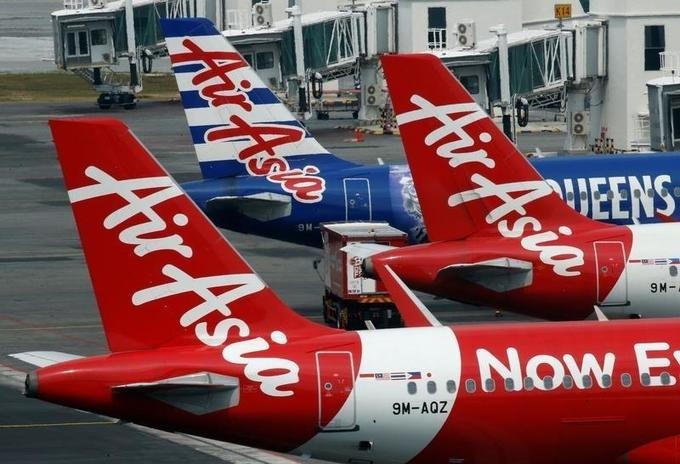
    AirAsia Group could report steeper losses in excess of RM1.1 billion in 2020, following its decision to ground its aircrafts worldwide due to the Covid-19 pandemic, according to Affin Hwang Capital.

    The research firm said in a note today that the drastic move highlights the dire operating environment faced by the airline industry.

    In tandem, it reiterated a “sell” on AirAsia’s shares with a lower 12-month price target to RM0.49.

    Meanwhile, Philippines AirAsia, Thai AirAsia, PT Indonesia AirAsia and AirAsia India have similarly reduced their flight frequencies.

    “To further manage and contain costs, the management and senior employees of AirAsia have volunteered for a salary cut, ranging from 100 percent at the very top to 15 percent,” it said.

    AirAsia yesterday announced it was temporarily suspending all international and domestic flights operated by AirAsia Malaysia from March 28 to April 21, 2020. Other airlines within the AirAsia Group will similarly reduce their flight frequencies.

    Affin Hwang Capital expects AirAsia to negotiate with its suppliers to reduce their operating costs, for instance operating leases, airport charges, fuel, operation and maintenance costs.

    “We now expect AirAsia to report larger losses in 2020-2021 after incorporating lower revenue in view of the temporary suspension of flights and dire industry outlook; and lower operating costs arising from savings in staff cost, operating leases, fuel and operations and maintenance expenses,” it said.

  • Three myths about cheating 

    Three myths about cheating 

    “8 ways to keep a man,” “How to keep a marriage” – training and seminars on such topics are often based on the idea of ​​control in relationships. Many people believe that it is in our power to control the “quality of relations” and that it depends primarily on us whether the partner will cheat. In our opinion, this belief is based on three myths. More precisely, these are not entirely myths, sometimes they turn out to be true, but they become a problem when we consider each betrayal through their prism. The human experience is much more diverse than our ideas about it. 

    Myth # 1: “Cheating appears due to relationship problems.” 

    And really, can there be a place for cheating in a happy marriage? And does not the fact of betraying automatically mean an unsuccessful marriage? Sometimes not. Often the cheating partner is not going to destroy the relationship; moreover, his partner, maybe children and the family nest, in general, are dear to him. In our culture, it is very difficult to accept the idea that adultery also happens in marriages in which there are no serious problems. Like the man saw a young pretty woman on the https://primedating.com/gallery.html  site, they met and something terrible happened. In fact, there are no relationships at all without problems. Take a closer look at the relationship, which only yesterday seemed strong, but today cracked, and there will certainly be some explanation. 

    And although cheating is what a person seems to be doing in relation to his partner this act is far from being always about a partner. Sometimes this is the way out of a very deep personality conflict. Since childhood, each of us has a dilemma every now and then – to choose the security of maternal embrace or risky exploration of the world. 

    Different parts of our “I” cannot simultaneously receive satisfaction in marriage – at least not automatically. It hurts to accept, but this is the reality of life. Some are trying to solve this dilemma in polygamous relationships, but such a compromise has many pitfalls. And by the way, keep in mind: “I am polygamous, but my wife does not know” – this is not an open marriage. As soon as cheating gets revealed, a personal conflict instantly turns into an interpersonal one, and then the question “what is wrong between us” comes to the fore. Although until the moment of finding a random text or someone else’s stuff in the spouse’s car, this was an internal conflict of one person, in fact, very indirectly related to the partner. 

    This myth follows the second, which can become destructive for the one who is cheated on. 

    Myth # 2: “We cheat because we lack something in the partner.”  

    The bitter truth is that a person sometimes enters into a relationship on the side, unconsciously rebelling against what he values ​​most in his partner. Imagine a woman who has a wonderful husband, two children, this friendly family experienced a lot of good and difficult things together. This woman insanely appreciates the care and attention of a partner. And at the same time, his courtesy and well-organized daily life suppress her. A woman falls in love with a man who has no permanent job and acts quite windy. Each of our friends, lovers reflects something special in us. Sometimes we did not suspect. 

    She, of course, feels enormous guilt, but at the same time, an incredible rise: this romance helped her to feel that she was alive again! She discovered something new in herself; she never thought she was capable of it. But at the same time, she really really appreciates her marriage. He is incredibly important to her. It’s just that a certain part of her “I” could not fully express itself in these stable relations.  

    Myth # 3: “Male and female infidelities are different in essence” 

    Men cheat easily and for the sake of drive, and women only when they feel an emotional connection, the social stereotype tells us. In fact, both men and women have emotional and sexual needs. But society, as we know, looks rather condescendingly on how a man satisfies both of them – having a reliable rear in the form of a family and sexual adventures on the side. But the woman is required to sacrifice her sexual interests for the sake of the family. 

    In fact, the role of a caring mother, which is most often chosen by a woman, turns out to be a real anti-aphrodisiac in partnerships. Responsibility for others prevents her from focusing on her desires. To reconcile the emotional connection with home reliability and comfort is not a problem to be solved, it is a paradox that needs to be dealt with somehow. And how exactly – in the form of refusal or restriction of one’s desires, polygamous relationships, open marriage – everyone already decides for himself. And no one can solve it for another. 

     

  • AirAsia to operate limited number of flights until March 31

    AirAsia to operate limited number of flights until March 31

    Low-cost carrier AirAsia Group Bhd will be operating a limited number of domestic and international flights during the 14-day Movement Control Order period aimed at curbing the spread of the Covid-19 infection.

    When contacted, a spokesperson for the airline said the limited operations are subject to change due to the fluidity of the situation.

    “Affected guests will be promptly notified via email or SMS. AirAsia strongly encourages guests to update their contact details using the “My Bookings” feature on airasia.com to ensure that they receive timely notifications.

    Guests may check on their flights via the “Flight Status” feature, as well as available flights on the airasia.com website and mobile application.

    For the further and latest information on options and eligibility related to Covid-19, guests can visit the Covid-19 “Customer Guide,” the spokesperson responded.

    In a note to investors yesterday, AmInvestment Bank Research said it is projecting a wider loss of RM985.4 million for AirAsia for its financial year ended Dec 31, 2020 (FY20), from RM784.2 million previously. For FY21, the research house is forecasting a smaller net profit of RM258.9 million, from a net profit of RM482.3 million previously.

    It said the earnings downgrade is to mainly reflect a 10% contraction in passengers for FY20, from a 5% contraction previously, against a backdrop of weak demand for air travel currently followed by the cancellation of Visit Malaysia Year 2020 (VMY2020).

    “We believe the cancellation of VMY2020 will add pressure to airlines including AirAsia that are already suffering from the weak air travel demand due to the Covid-19 outbreak. AirAsia has already seen a double-digit year-on-year decline in its passengers since February,” it added.

    The research house cuts its fair value on the budget carrier to 50 sen, from 94 sen previously and maintained its “sell” call on the airline.

    AirAsia shares closed at 52 sen yesterday after dropping nine sen or 14.8%. It saw 48.54 million shares done.

  • JD offers a helping hand to boost bookstore sales in China

    JD offers a helping hand to boost bookstore sales in China

    E-commerce platform JD has helped boost bookstore sales in China during the coronavirus outbreak.

    Last month, sales of two children’s bookstores – Caldecott Bookstore and Zhongshang Children’s Books – increased by 221.6 percent and 282 percent respectively, year on year.

    According to JD, the increased bookstore sales in China are attributed to consumers staying home during the epidemic and turning to books for inspiration and encouragement.

    JD Logistics continued to deliver products to Chinese consumers as usual during the outbreak while implementing a series of disinfectant measures to ensure consumers received their books safely.

    The coronavirus outbreak has led to the temporary shutdown of offline bookstores, a shortage of employees due to the epidemic, a sharp drop in operating revenues, and a surge in pressure on store rents and staff spending. During the period, JD has been assisting partnering bookstores in putting out live broadcasts to drive traffic and promote brand awareness, thus boosting bookstore sales in China.

    “Supporting offline bookstores to do live broadcast is a good example of how JD.com has been using its resources to help offline bookstores to transform their businesses to better cater to the needs of Chinese consumers,” said JD’s offline book team operations manager Jiao Zhang, “especially when there is limited traffic in offline bookstores during the epidemic period”.

    According to the 2019–2020 China Offline Bookstore Industry Report, there are more than 70,000 bookstores in China. Last year, more than 4000 new bookstores opened in the territory. China currently has 135 book malls that are more than 5000sqm each, of which 35 are more than 10,000sqm in size.

  • 2020 Volkswagen Golf To Come With Car2X Technology As Standard

    2020 Volkswagen Golf To Come With Car2X Technology As Standard

    We all loved the way the new Golf looks and there are many of you who have asked us on multiple occasions, about its arrival in India. Sadly, the Golf isn’t coming here, but while it’s turning a lot of heads across the world, there’s another reason why it’s become the talk of the town. The Volkswagen Golf is the first car that can help drivers to prevent accidents, and that’s thanks to its innovative Car2X technology, which allows it to wirelessly connect with other vehicles and the traffic infrastructure. Now the impressive part about this is that the technology will come standard on the Golf.

    The new Golf is the first car on the European market to come standard-equipped with Car2X technology, which is based on the Wi-Fi p wireless standard. This type of Wi-Fi is specifically tailored to local communication between vehicles and does not use the mobile phone network, which means it provides blanket coverage within the limits of the system. Within a radius of up to 800 metres, connected vehicles directly exchange positioning data and information with one another. This allows them to warn each other of danger or make contact with the traffic infrastructure within a matter of milliseconds.

    The German automotive association ADAC tested Volkswagen’s Car2X technology, during which it sent the new Golf into eight typical hazardous situations in which a driver, without being warned, would not be able to react at all, or would only be able to react much later. In all eight situations, the vehicle warned the driver reliably and in time, often even 10 or 11 seconds before the impending accident.

    In the initial development stage, which Volkswagen is introducing with the new Golf, Car2X technology is active at speeds over 80 kmph. In the future, it should also be able to improve safety in city traffic. It also offers major advantages if the car communicates with nearby traffic lights – in this way being better able to control traffic flow and protect the environment.

  • Uniqlo Vietnam opens new store in Ho Chi Minh City

    Uniqlo Vietnam opens new store in Ho Chi Minh City

    Uniqlo Vietnam is to open Ho Chi Minh’s second store this year despite the coronavirus outbreak.

    Located at SC Vivo City shopping mall in District 7, the city’s second Uniqlo Vietnam store will occupy more than 2000sqm of area, featuring its LifeWear products for males, females and kids.

    The opening date has yet to be disclosed, but the store is expected to open this spring/summer with the interior fit out well underway.

    “We are aware of the huge demand from Vietnamese customers for Uniqlo products,” said Osamu Ikezoe, Co-CEO of Uniqlo Vietnam. “We are excited to open the SC Vivo City store to introduce our fashion philosophy LifeWear to our customers.”

    Osamu said Uniqlo Vietnam plans three more stores this year. According to a prior company statement, the brand aims to operate at least three stores in Hanoi and eventually reach up to 20 nationwide.

    Earlier this month, Uniqlo Vietnam made its Hanoi debut, attracting more than 2000 people on its opening day.

  • New Crocs concept store openening in Manila

    New Crocs concept store openening in Manila

    The first modular Crocs concept store in the Philippines has opened in Estancia Mall, Metro Manila.

    Despite the “enhanced community quarantine” being implemented across Luzon, it didn’t stop the casual footwear brand from opening its 63rd store in the country.

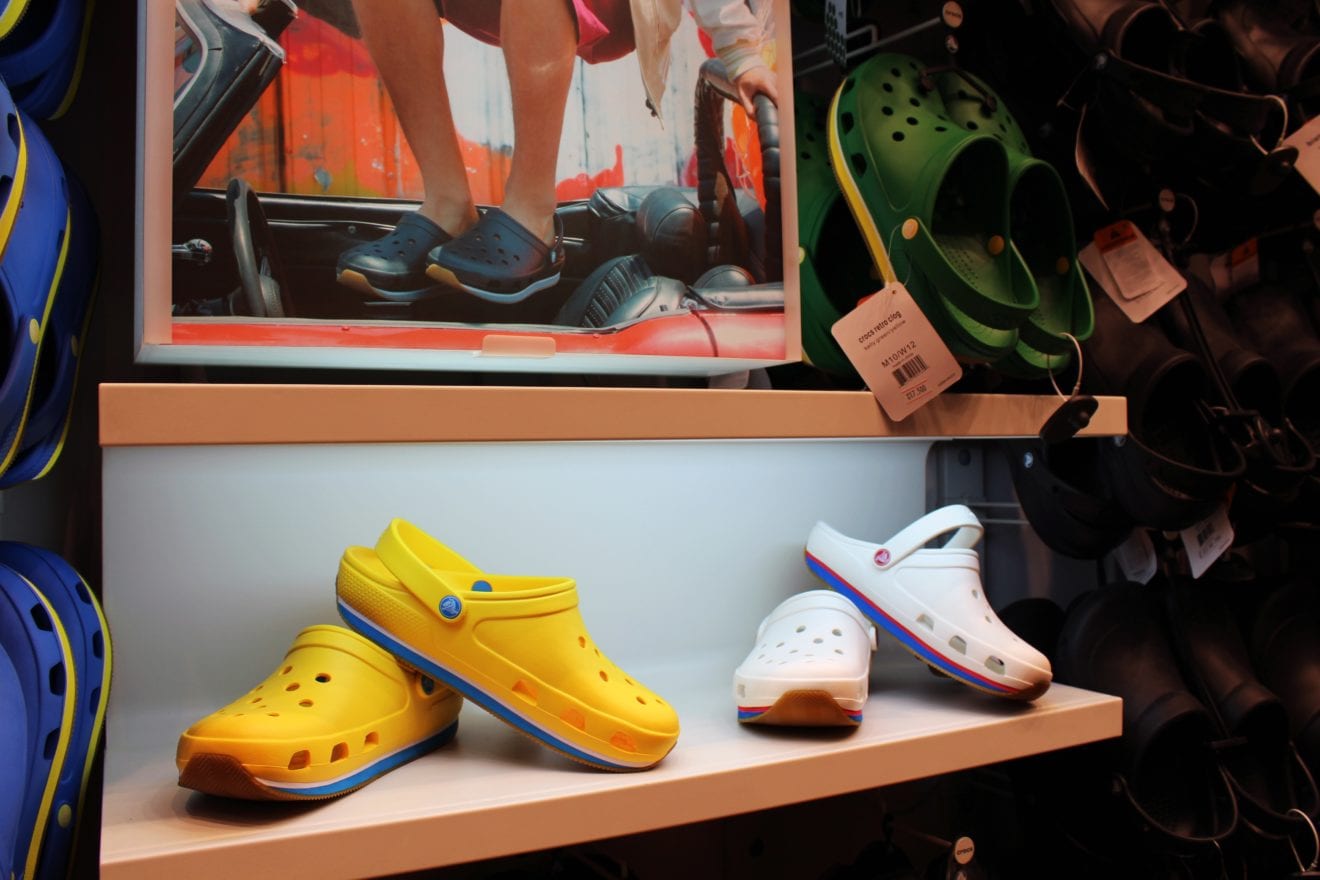
    The 85.5sqm Crocs concept store showcases the classic collection of Crocs such as clogs, slides, and flips with their Jibbitz accessories.

    Literide Collection which is the bestseller is also available in the latest spring/summer 2020.

    On its website, Crocs Philippines says it will operate a skeletal workforce which started on March 17 after Metro Manila was put into enhanced community quarantine.

    Crocs will continue to offer a delivery service, however, but customers have been warned that there might be delays in some areas where travel has been suspended due to the government’s move in fighting the spread of coronavirus.

    Crocs was founded in 2002 by Lyndon “Duke” Hanson and George Boedecker Jr in the US producing foam clog shoes. The shoe was originally developed for boaties, but later evolved into more widespread use and even for fashion.

  • Isetan Mitsukoshi closing down Ebisu department store

    Isetan Mitsukoshi closing down Ebisu department store

    Isetan Mitsukoshi is to close its 26-year-old Ebisu department store next year after failing to turn around mounting losses.

    The downtown Tokyo store will close in March or April and the company will redeploy all of its staff to other stores.

    The closure is the latest in a long string for the troubled retailer which since 2008 has reduced its network from 29 to 21. With a stagnant economy and Japan’s aging population, many large-scale retailers are finding it tough to maintain growth and some are looking offshore for opportunities.

    The company has spent two years progressively refurbishing the 18,000sqm Ebisu Mitsukoshi department store, with a special focus on its food and cosmetics departments. But the changes failed to draw enough customers to make the store viable.

    When it opened at the Yebisu Garden Place commercial center in downtown Tokyo, the store was expected to tap into a large catchment of nearby condominium residents. However, since the late 1990s, other retail developments have opened nearby, drawing customers away.

    News of the closure was broken by the Nikkei Asian Review, which says the board reached a decision this week and a formal announcement will be made by the end of this month.

    Negotiations over an orderly exit from the space have been underway for the last two years.

    “The facility has likely posted several million dollars in operating losses a year for the last two to three years,” Nikkei reported.

  • Apple iPhone production grinds to a halt in India

    Apple iPhone production grinds to a halt in India

    China is the world’s largest market for smartphones, although thanks to COVID-19, that market is shrinking. Can you guess which country represents the second-largest smartphone market? Hint: it is not the U.S. Actually, it is India; but as a developing country, Indian consumers don’t have much money to spend on top-shelf models. This explains why value for money manufacturers like Xiaomi are ripping it up in the country. It also explains why the mid-range Samsung Galaxy A series does so well in this market.

    Apple did a brisk business in India with its budget-priced iPhone SE. But an import tax (yes, a tariff) was adding $100 to the retail price of the iPhone in the country, so Apple decided to start producing the iPhone SE in India. By doing this, Apple was able to avoid the import tax in a country where every dollar counts. It also helped Apple qualify for Prime Minister Narendra Modi’s Make In India initiative designed to make India a manufacturing center and a magnet for investors.

    The iPhone SE, priced at the dollar equivalent of $250, started to get outsold by a 2-1 margin in India by the iPhone 6s. Apple stopped making the former in the country and started production of the latter; by last year, Apple was advertising “The Incredible iPhone 6s” (at the equivalent of $383 USD) even though it was then four years old. And last year, Apple added the iPhone XR to the phones it makes in India.

    Still, premium smartphones do sell in India and these sales are growing at an annual rate of 29%. A premium phone is considered to be one that sells for the equivalent of $500 or higher in the country and Apple had 75.6% of this market in India during the fourth quarter of 2019.

    What brings all of this up is the news today from the BBC that Prime Minister Modi has instituted a 21-day nationwide lockdown in India. This action is due to the continued spread of the coronavirus. The prime minister urged Indians not to panic and said, “There will be a total ban on venturing out of your homes.” And that means the production of the iPhone models made in India will come to a complete stop for three weeks.

    Bloomberg reports that both of Apple’s contract manufacturers producing the iPhone in India, Foxconn and Wistron, have followed the Prime Minister’s announcement by suspending production. In a text message it sent to Bloomberg News, Foxconn wrote that it is awaiting permission from the Indian government to resume running its assembly lines. Wistron is adhering to the Prime Minister’s lockdown, according to a company representative who wouldn’t reveal which products were affected by the shutdown.

    Besides the production of the iPhone in India, Apple has thousands of employees working out of an office in Hyderabad. These workers spend their time on Apple Maps. The office opened in 2016 and when it opened, the company said that it supported 640,000 developer jobs across the country.

    While several analysts figured that Apple would move some iPhone production out of China and into India to avoid the tariffs charged to U.S. companies and consumers on products imported from China, the fact is that the company’s production facilities in the country are too small and a supply chain would take years to build. Due to Apple’s size and the products it makes, suppliers need to deliver parts and components in the quantity and quality that Apple needs. Despite this, a supply chain source said that Apple is revving up its plans to move production outside of China with the company shifting some iPhone manufacturing to India. Assembly of AirPods and the HomePod are being moved to Vietnam, the country that many believe will eventually replace China as the center of Apple’s manufacturing universe.

  • Tesla Plans To Reopen New York Factory To Make Ventilators

    Tesla Plans To Reopen New York Factory To Make Ventilators

    Tesla CEO Elon Musk has said that Giga New York will reopen for ventilator production as soon as humanly possible. The company is also working with medical device company Medtronic to start the production of ventilators at its Fremont plant.Tesla CEO, Elon Musk has announced that the company plans to reopen its Giga New York factory “as soon as humanly possible” to make ventilators. The head of the California-based electric vehicle manufacturer was among the first carmakers in the US to offer to make ventilators for coronavirus patients, after the United States appealed for donations of respirator masks to combat the shortage. Reportedly, Tesla has started working with medical device company Medtronic Plc and is fast on track to start production of ventilators at its Fremont plant, in San Francisco Bay Area. And New York will be next.

    Other U.S. carmakers, like Ford and General Motors, have also come ahead to make ventilators and respirators needed to help combat the spread of the coronavirus. General Motors has partnered with medical equipment maker Ventec to build ventilators at a GM plant in Kokomo, Indiana. Ford, on the other hand, is partnering with GE Healthcare and will expand the production of GE’s ventilator design to support patients with respiratory failure or difficulty breathing caused by the pathogen. Ford also is evaluating a separate partnership with the British government to make additional ventilators. Furthermore, it will work with 3M as well to increase the manufacturing capacity of its air-purifying respirators.

    Right now, the situation around the world is getting serious every day. With more and more cases of coronavirus being reported each day, there is a major shortage of medical equipment around the world. And automakers from across the world are coming in to help in whatever way possible. Anand Mahindra, the Chairman of Mahindra Group, also announced plans to make ventilators and covert the company’s existing resorts into temporary case centers. We recently also reported how Renault workers in Spain have begun using 3D printers to manufacture medical visors for health workers from home.

    Others like Fiat Chrysler Automobiles and Kia have announced plans to make face masks at their Asian factories. Chinese electric vehicle manufacturers BYD, in fact, recently became the world’s biggest face mask maker, producing over five million face masks a day amidst the Coronavirus pandemic.

  • Netflix goes down and is now back up as millions breathe a sigh of relief

    Netflix goes down and is now back up as millions breathe a sigh of relief

    Although there are many streaming alternatives like Amazon Prime, Disney+, Apple TV+ and Hulu, during the current crisis with so many people stuck at home, Netflix is the service that tens of millions of shut-ins depend on for entertainment. Friends and relatives are watching movies and binge-watching television shows from separate locations and then discussing it with each other via a video chat. But many could only feel isolated and alone when Netflix went down this morning in parts of the U.S. and U.K.
    The morning outage lasted only one hour but must have felt like much longer to those who could not stream their favorite Netflix fare. According to DownDetector.com, starting at 11:43 am ET, the number of complaints received about Netflix rose from 25 to peak at 1,646 by 12:43 pm. 41% of those complaining said that they could not connect to the service. 35% had issues with the video streaming and 23% said that they could not access the service via the Netflix website.
    A Netflix spokesman said, “Some of our members in the U.S. and Europe were unable to use Netflix via our website for around an hour this morning. The issue is now fixed and we’re sorry for the inconvenience.”
    Netflix, YouTube, Disney+, and some other streamers have lowered the quality of their streams in certain markets in order to reduce the demands on the internet. With much of the world stuck inside and unable to work from home, the internet is being taxed as it never has been before.
  • DBS Postpones Annual General Meeting

    DBS Postpones Annual General Meeting

    DBS Group on Thursday said it would defer its annual general meeting (AGM) that was originally scheduled on March 31.

    The move follows government measures that imposed stricter measures to enforce safe-distancing in social settings given the novel coronavirus outbreak. From 11:59pm on March 26, all events and mass gatherings must be deferred or canceled, regardless of size.

    With this, pre-registrations previously opened by DBS to watch the webcast and for physical attendance on March 31 have ceased. Shareholders can get updates from DBS’ website regarding the AGM. «DBS apologizes to shareholders for the inconvenience and thanks them for their patience in these difficult times,» the bank said in a statement.

    DBS will update shareholders of the new date for the AGM and the procedures for participation after the legislative amendments to facilitate the holding of the meeting have been passed, and the necessary arrangements have been put in place in order to implement the safe distancing measures imposed by the Ministry of Health.

    The 24 March Ministry of Health (MOH) Notification states that with effect from 11:59 pm on 26 March 2020, all events and mass gatherings must be deferred or canceled, regardless of size.

    ACRA, MAS, and SGX RegCo have also issued a joint statement on 25 March 2020 stating that all listed issuers are expected to comply with MOH’s safe distancing measures and that legislative amendments are being proposed for Parliament sitting in April 2020 in relation to the conduct of meetings (which include allowing issuers the flexibility to hold meetings solely by virtual means). DBS’ last general meeting was held on April 25, 2019, and saw a turnout of more than 1,000 shareholders.

  • Shiseido kicked off Baum retail brand

    Shiseido kicked off Baum retail brand

    Japanese cosmetics label Shiseido has released a new skincare brand, called Baum.

    In response to consumers placing greater importance on companies’ and brands’ attitudes toward social responsibility and environmental considerations, Baum focuses on sustainability. It features a range of 27 products to be released on May 30 via Shiseido’s Prestige business category.

    The products are formulated to support healthy skin regardless of age or gender, with a focus on three key characteristics found in trees – water storage, growth, and environmental defense. The brand is positioning itself as focusing on the “power of trees, gracefully harmonizing with environmental changes and living for hundreds of years”. It ascribes to a sense of coexistence with nature that it asserts has been “valued by Japanese people for centuries”.

    Production of the Baum range is particularly attentive to sustainability concerns, with the use of upcycled wood in product packaging; actively offering to refill products; using bio-based plastics and recycled glass and participating in forest conservation activities – with plans to plant and grow oak trees scheduled to begin next year.